Mississippi Affidavit regarding default
What is this form?
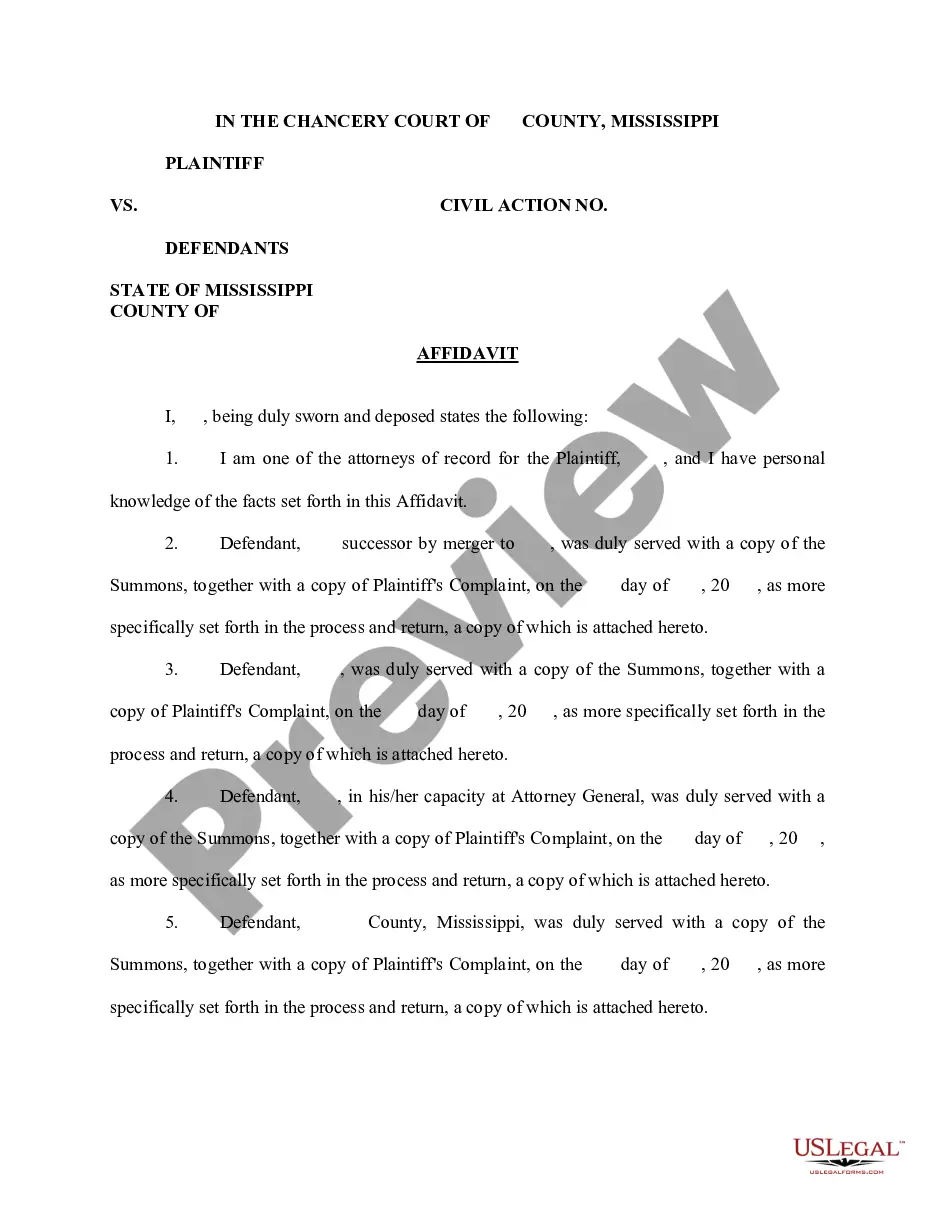
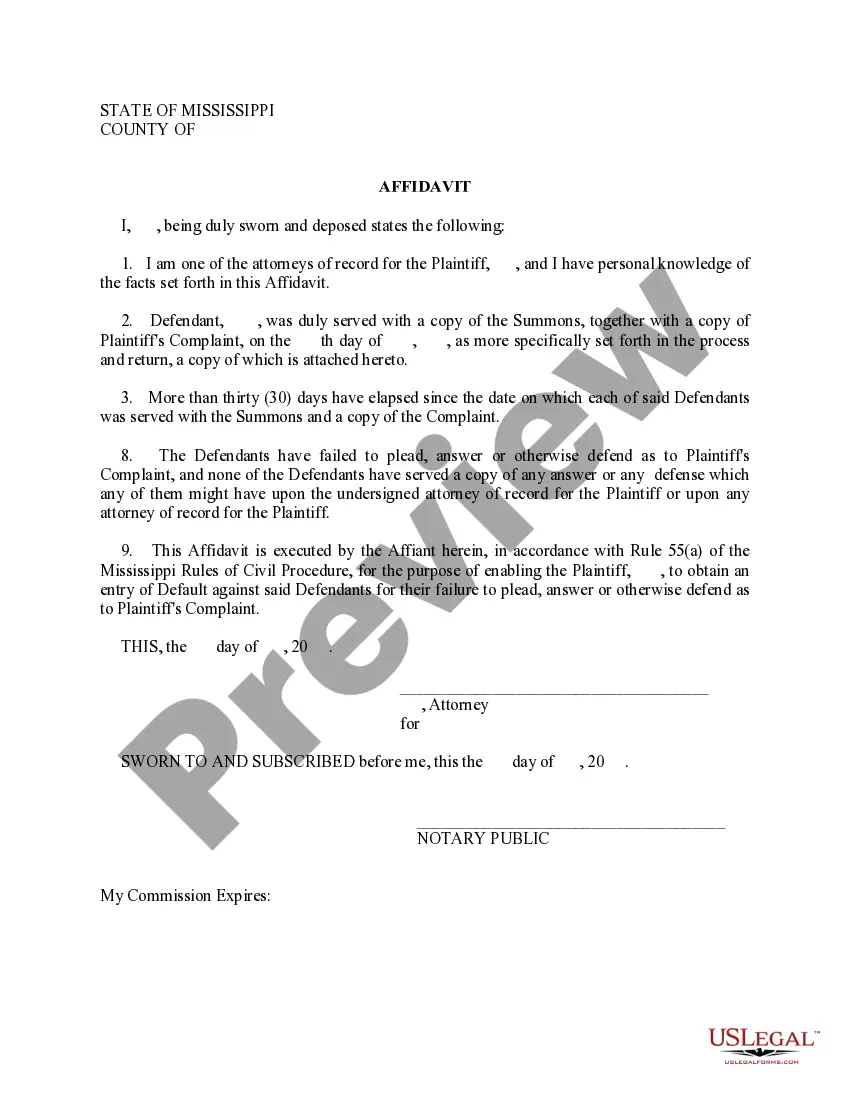
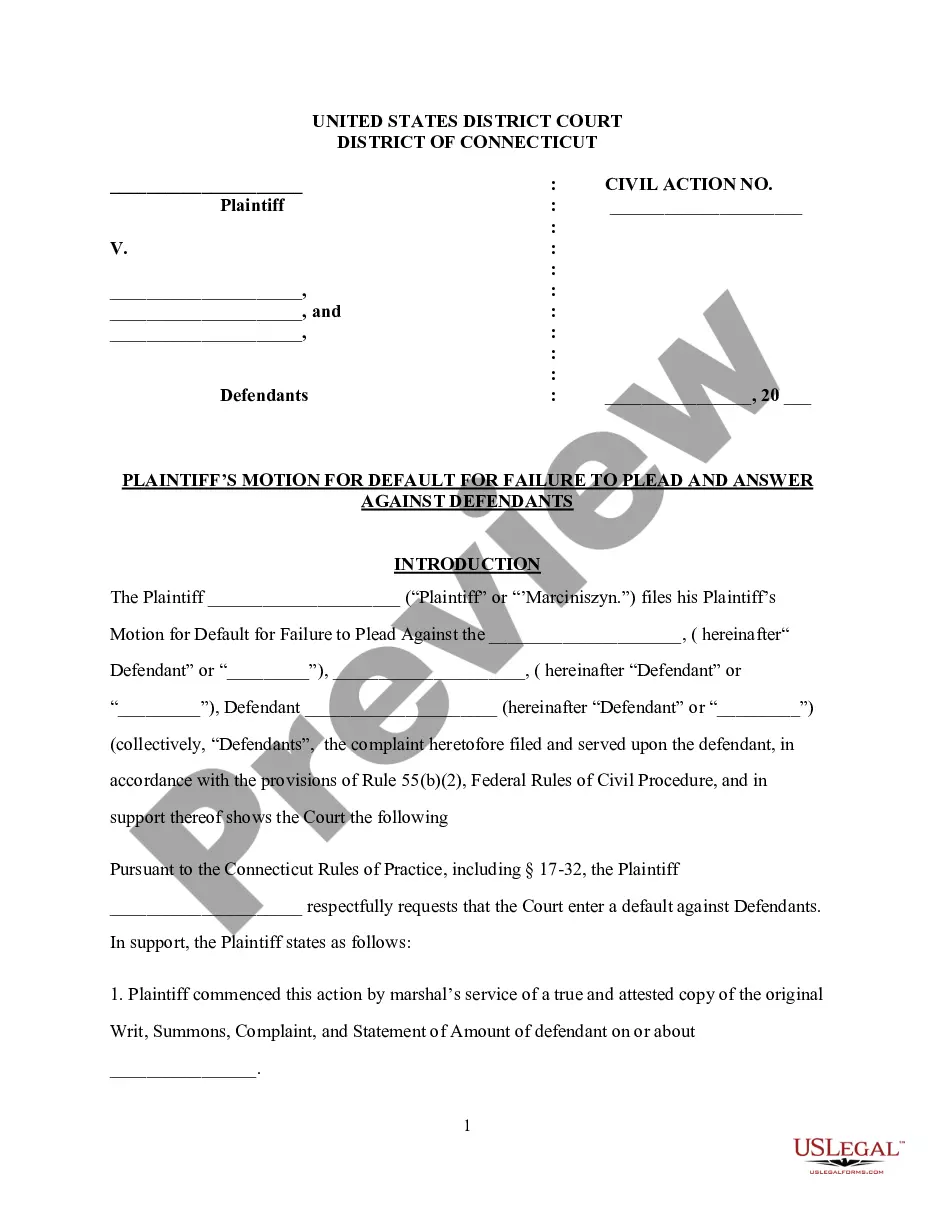
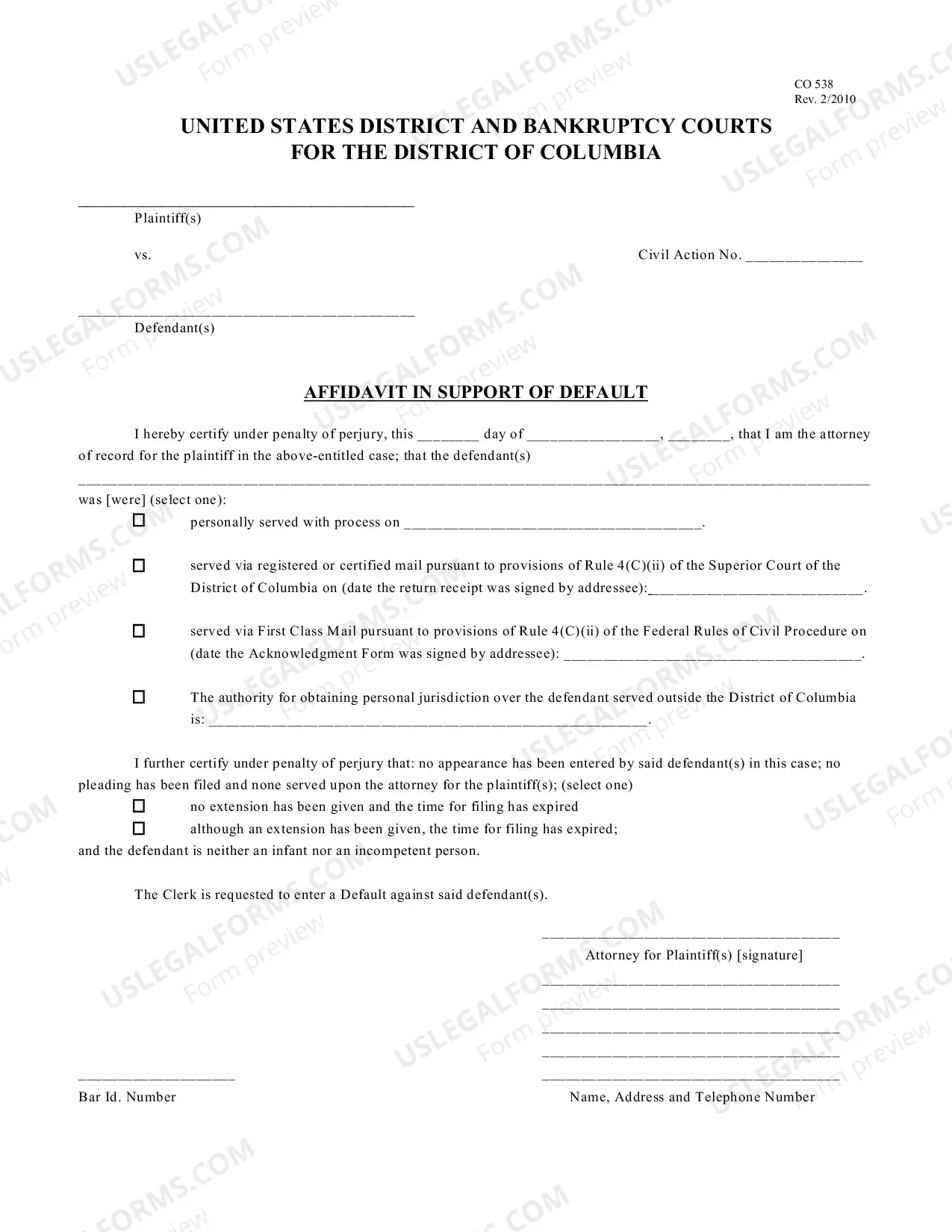
An Affidavit regarding default is a sworn statement that asserts the failure of defendants to respond to a complaint in a legal action. This form is crucial for plaintiffs seeking to obtain a default judgment when defendants do not plead, answer, or defend their position in court. Unlike similar forms, this affidavit specifically outlines the required information to support a default entry in Mississippi civil proceedings.
Key components of this form
- Affiant's personal information and role in the case.
- Details of service of process for each defendant.
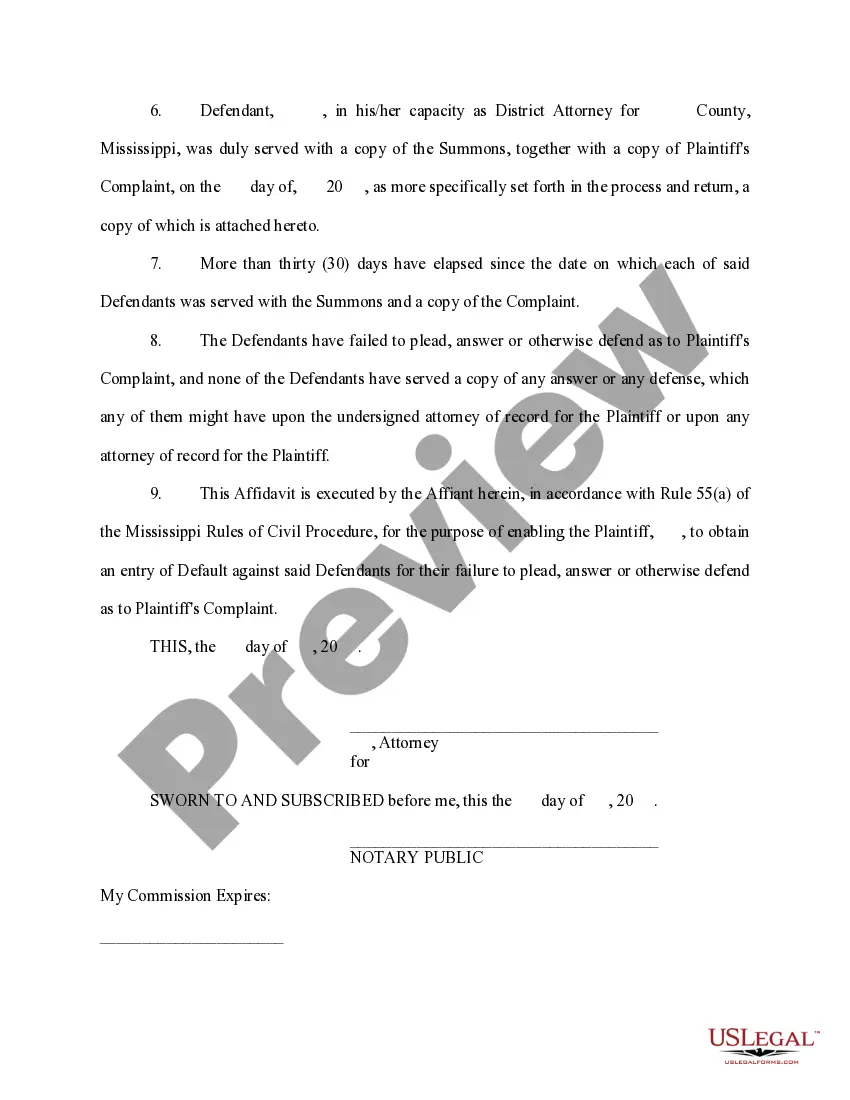
- Statement confirming the elapse of time since the service of the legal documents.
- Indication of the defendants' failure to respond or provide defenses.
- Affidavit's compliance with Mississippi Rules of Civil Procedure.
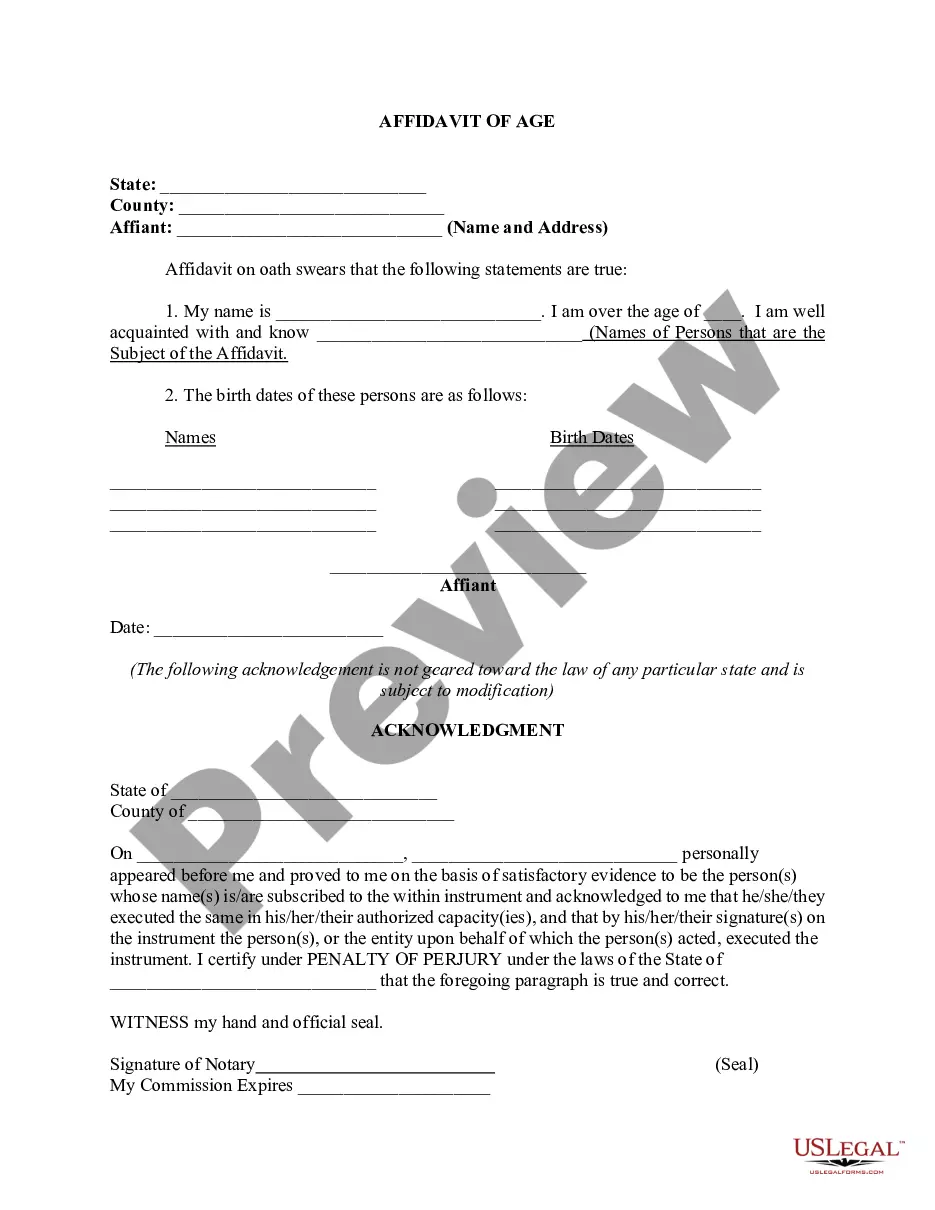
- Signature and notary acknowledgment for verification.
When to use this document
This form should be used when you have initiated a civil lawsuit, and the defendants have not responded within the time frame set by law. Specifically, it is applicable in cases where you wish to request a default judgment due to the defendants' lack of response to the summons and complaint.
Who needs this form
This affidavit is intended for use by:
- Plaintiffs in civil actions in Mississippi.
- Attorneys representing plaintiffs seeking a default judgment.
- Individuals with knowledge of the service and status of the defendants in a lawsuit.
Steps to complete this form
- Identify the parties involved, including the plaintiff and defendants.
- Document the dates when each defendant was served with the summons and complaint.
- State the elapsed time since service to demonstrate defendants' noncompliance.
- Confirm that no defenses or answers have been submitted by the defendants.
- Sign the affidavit before a notary public to validate the document.
Notarization requirements for this form
Notarization is required for this form to take effect. Our online notarization service, powered by Notarize, lets you verify and sign documents remotely through an encrypted video session, available 24/7.
Get your form ready online
Our built-in tools help you complete, sign, share, and store your documents in one place.
Make edits, fill in missing information, and update formatting in US Legal Forms—just like you would in MS Word.
Download a copy, print it, send it by email, or mail it via USPS—whatever works best for your next step.
Sign and collect signatures with our SignNow integration. Send to multiple recipients, set reminders, and more. Go Premium to unlock E-Sign.
If this form requires notarization, complete it online through a secure video call—no need to meet a notary in person or wait for an appointment.
We protect your documents and personal data by following strict security and privacy standards.

Make edits, fill in missing information, and update formatting in US Legal Forms—just like you would in MS Word.

Download a copy, print it, send it by email, or mail it via USPS—whatever works best for your next step.

Sign and collect signatures with our SignNow integration. Send to multiple recipients, set reminders, and more. Go Premium to unlock E-Sign.

If this form requires notarization, complete it online through a secure video call—no need to meet a notary in person or wait for an appointment.

We protect your documents and personal data by following strict security and privacy standards.
Typical mistakes to avoid
- Failing to include all defendants who were served.
- Not providing correct dates of service.
- Omitting the notary public's signature and seal.
- Not confirming the time elapsed since the defendants were served.
Benefits of completing this form online
- Convenience of downloading the form immediately after completion.
- Editability allows for customization according to specific case details.
- Access to reliable legal templates drafted by licensed attorneys.
- Secure and straightforward process for obtaining necessary legal documentation.
Key takeaways
- The Affidavit regarding default is essential for plaintiffs seeking a default judgment when defendants have not responded to a legal complaint.
- It is crucial to accurately document the service of process and the time elapsed since service.
- The affidavit must be notarized to ensure its legal validity.
Looking for another form?
Form popularity
FAQ
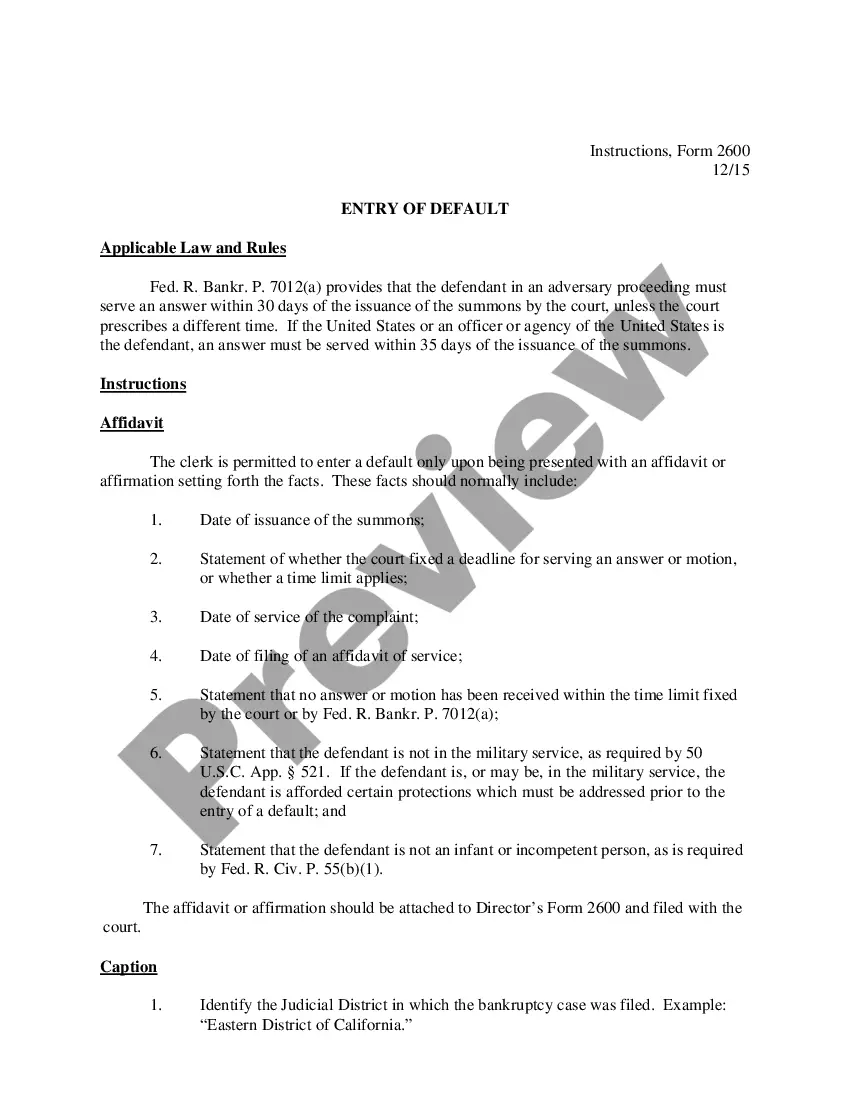
The entry of default allows you to obtain a default judgment without proving your case to the court.Some courts will provide you with a form for this. Your Application or Request for Certificate of Default should also include an affidavit setting forth your opponent's default.
Default judgments happen when you don't respond to a lawsuit often from a debt collector and a judge resolves the case without hearing your side.Next up could be wage garnishment or a bank account levy, which allows a creditor to remove money from your bank accounts to repay the debt.
You do not have to attend court. Generally, the court will give you default judgment if the notice of motion and affidavit of service show: 200bthat the defendant was properly served with the statement of claim. that it has been more than 28 days since the date of service.
A default judgment that does not dispose of all of the claims among all parties is not a final judgment unless the court directs entry of final judgment under Rule 54(b). Until final judgment is entered, Rule 54(b) allows revision of the default judgment at any time.
If you do not think the default judgment was appropriately entered against you, you must file a motion with the court asking the judge to set aside (void or nullify) the judgment. If the judge grants your motion, the case starts back up again.
Typically, a court's rules governing enforcement of default judgments include procedures for wage garnishments, attachment of bank accounts and seizure of assets. The plaintiff can usually pursue more than one of these enforcement mechanisms simultaneously.
The danger of allowing a default judgment against you is once this occurs the debt buyer can garnish your wages and your bank accounts.If you don't submit a written answer to the lawsuit the court can enter a default judgment giving the debt buyer everything they are asking for.
A default judgment occurs when the defendant in a legal case fails to respond to a court summons or does not appear in court. If this occurs, a court may rule in favor of the plaintiff by default.
A default judgment occurs when the defendant in a legal case fails to respond to a court summons or does not appear in court. If this occurs, a court may rule in favor of the plaintiff by default.