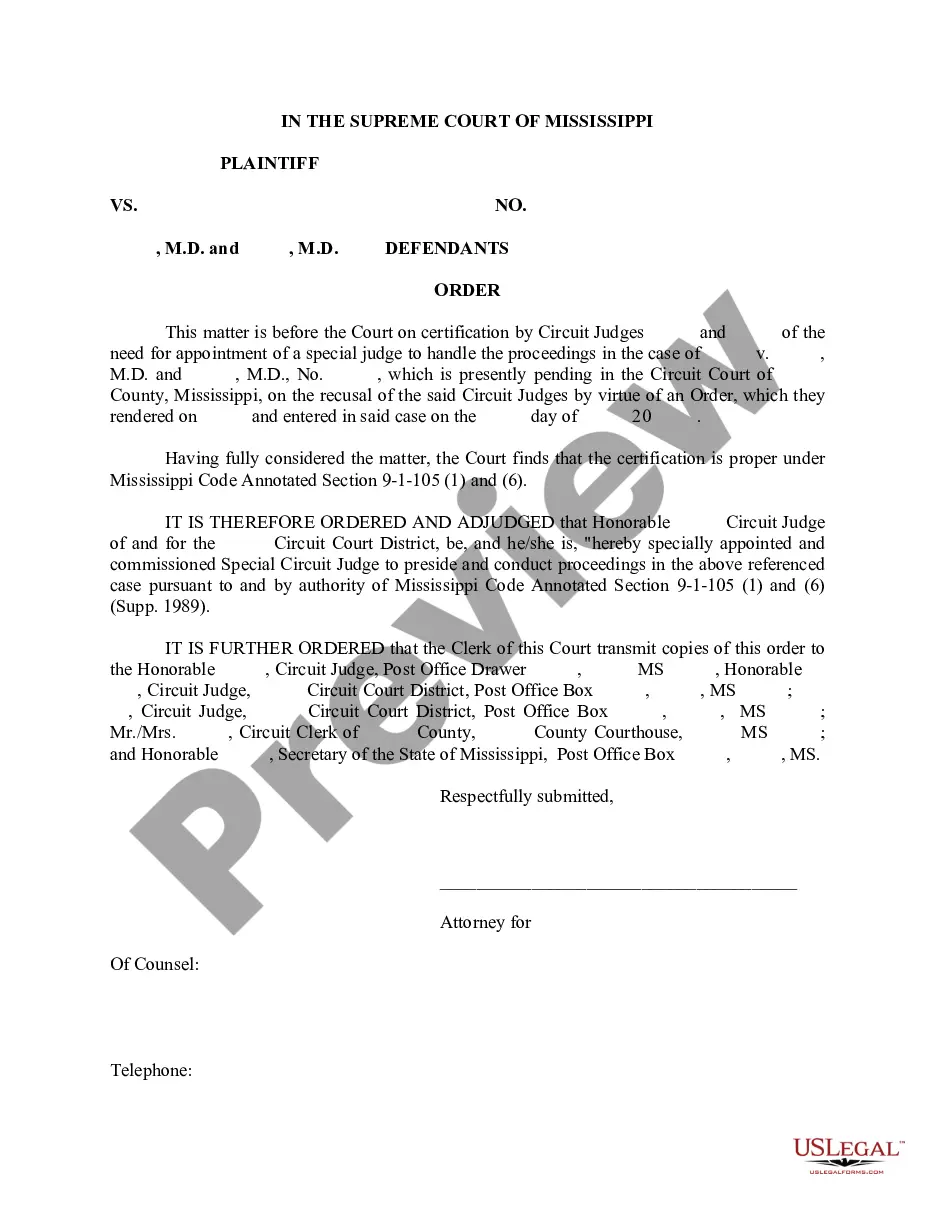
Louisiana Petition for Divorce with adult children, community property, restraining orders
About this form
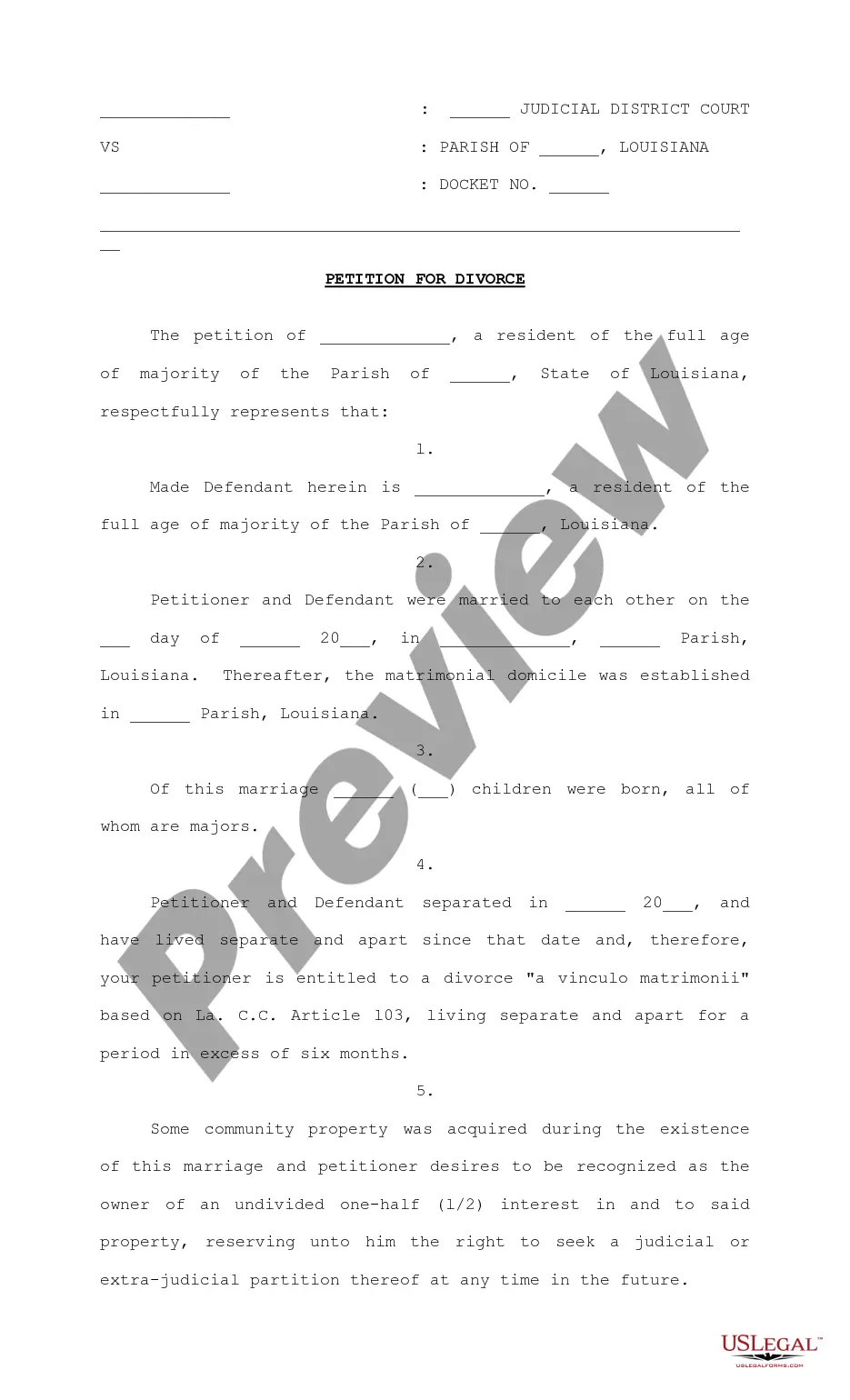
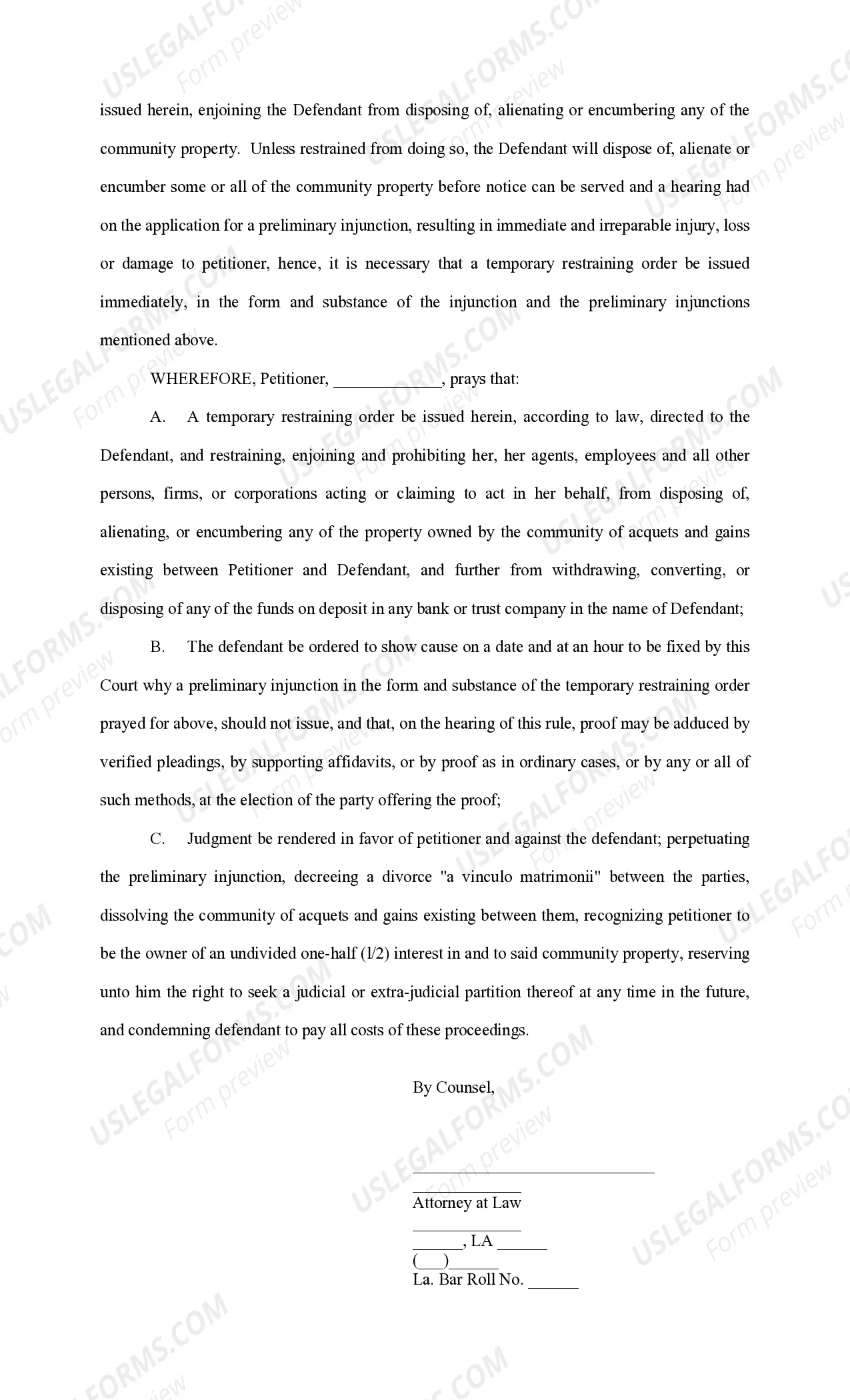
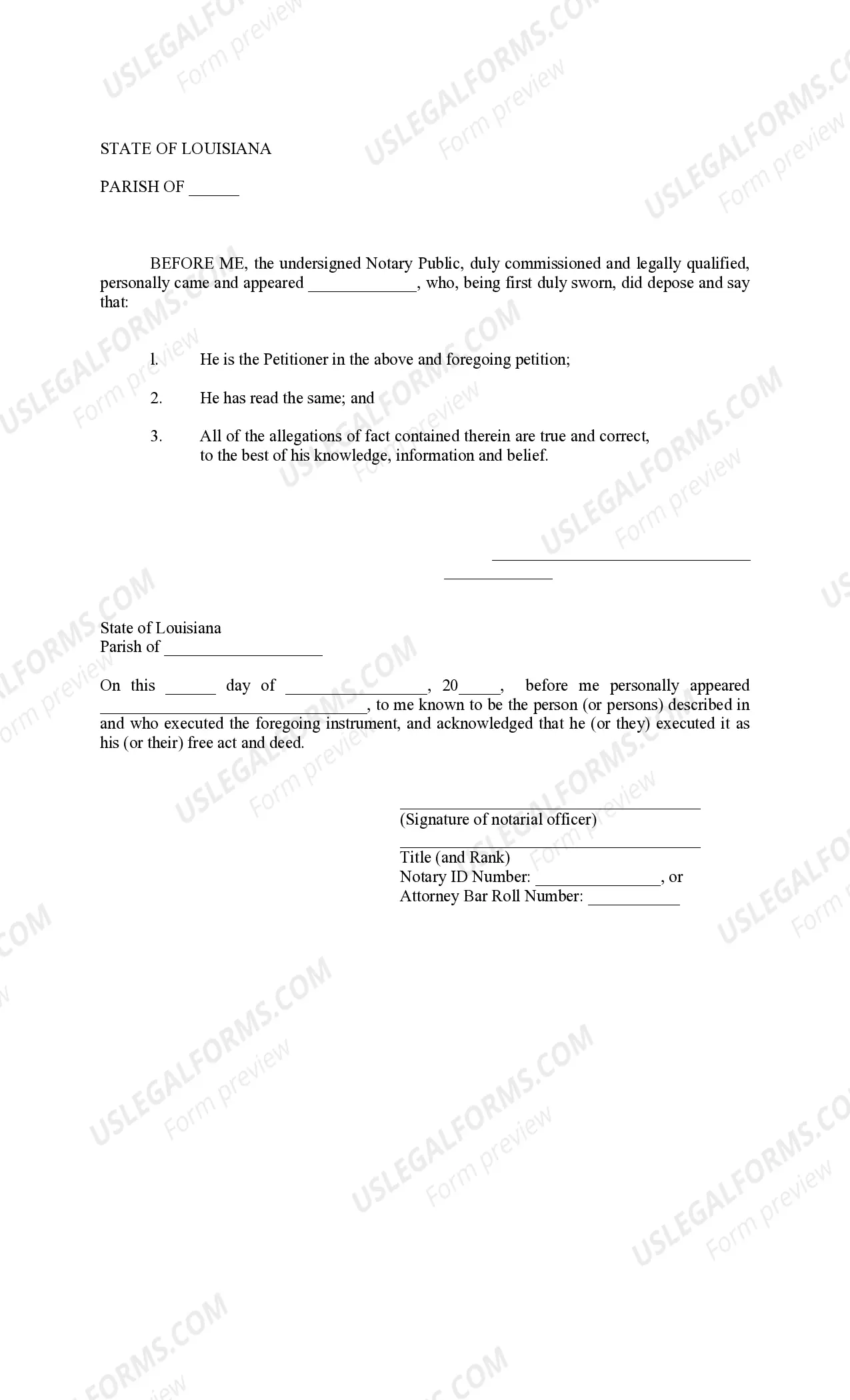
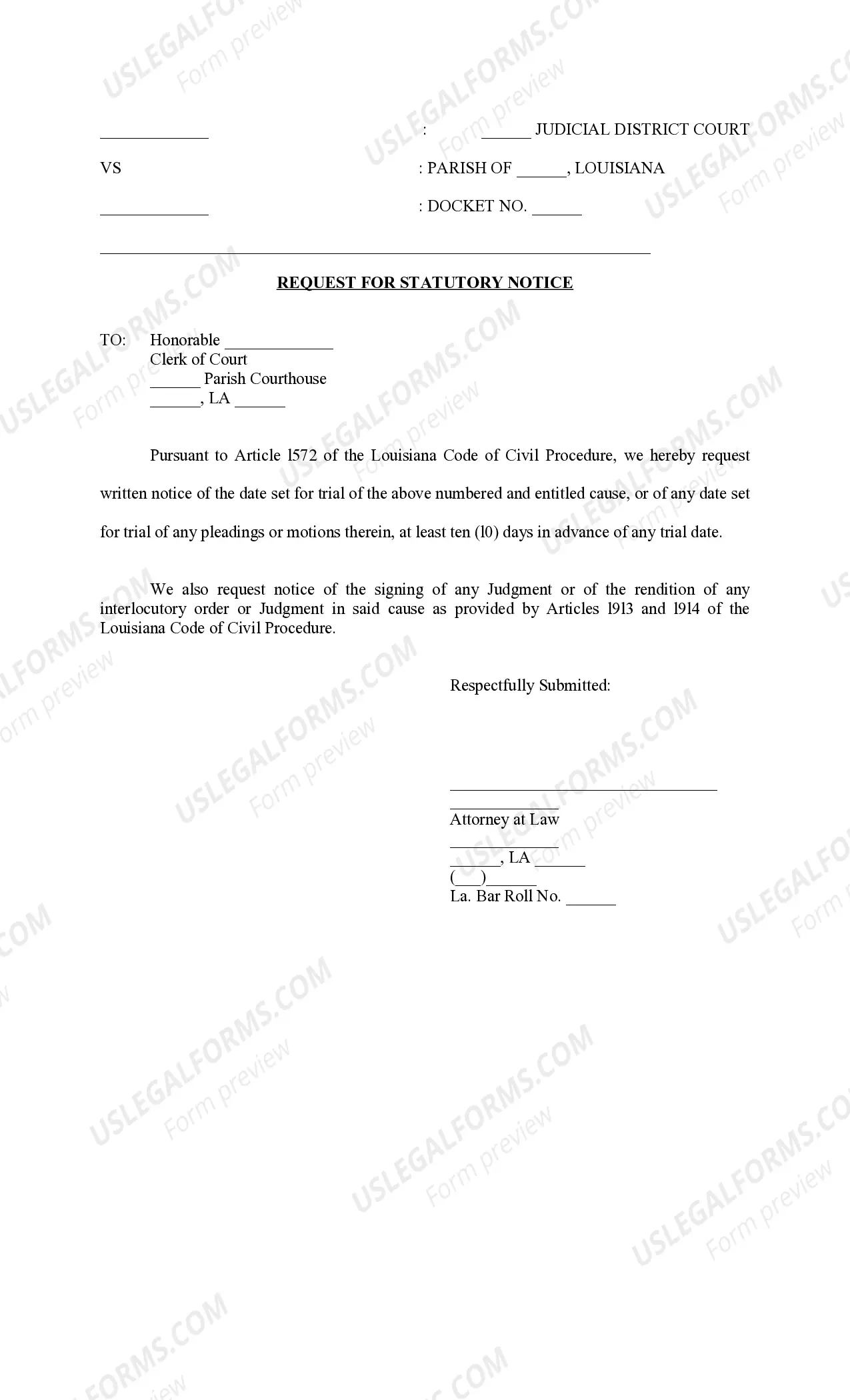
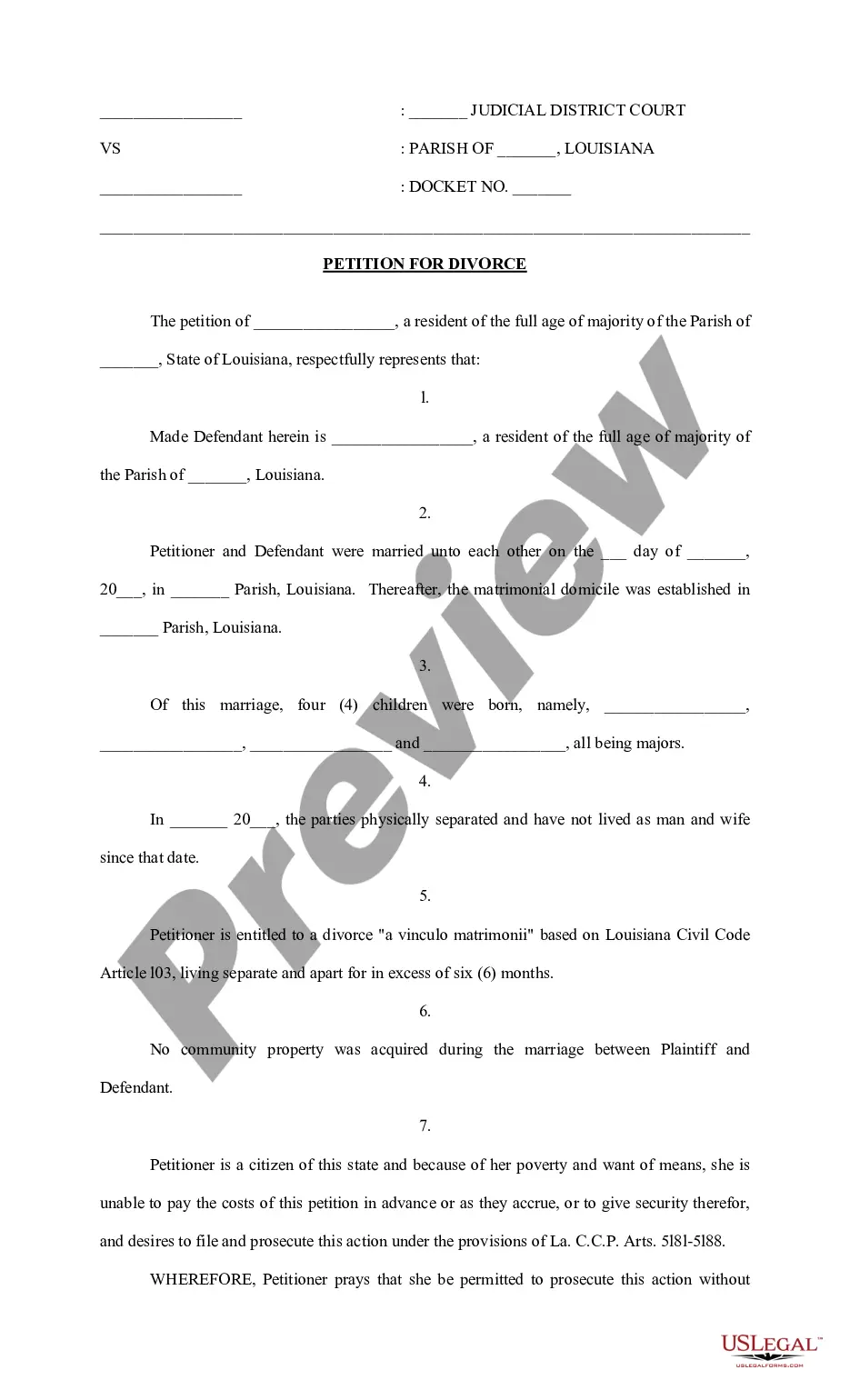
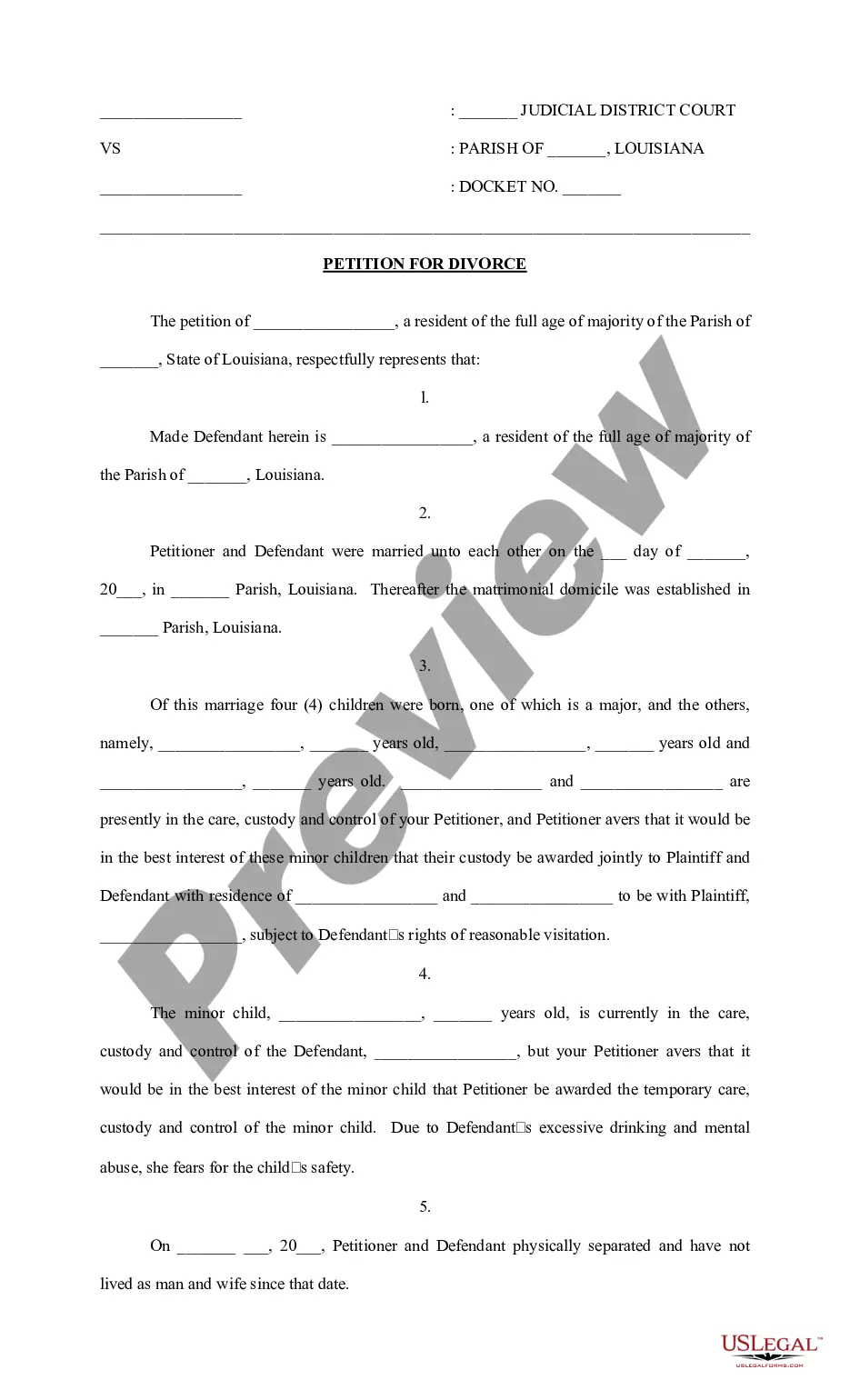
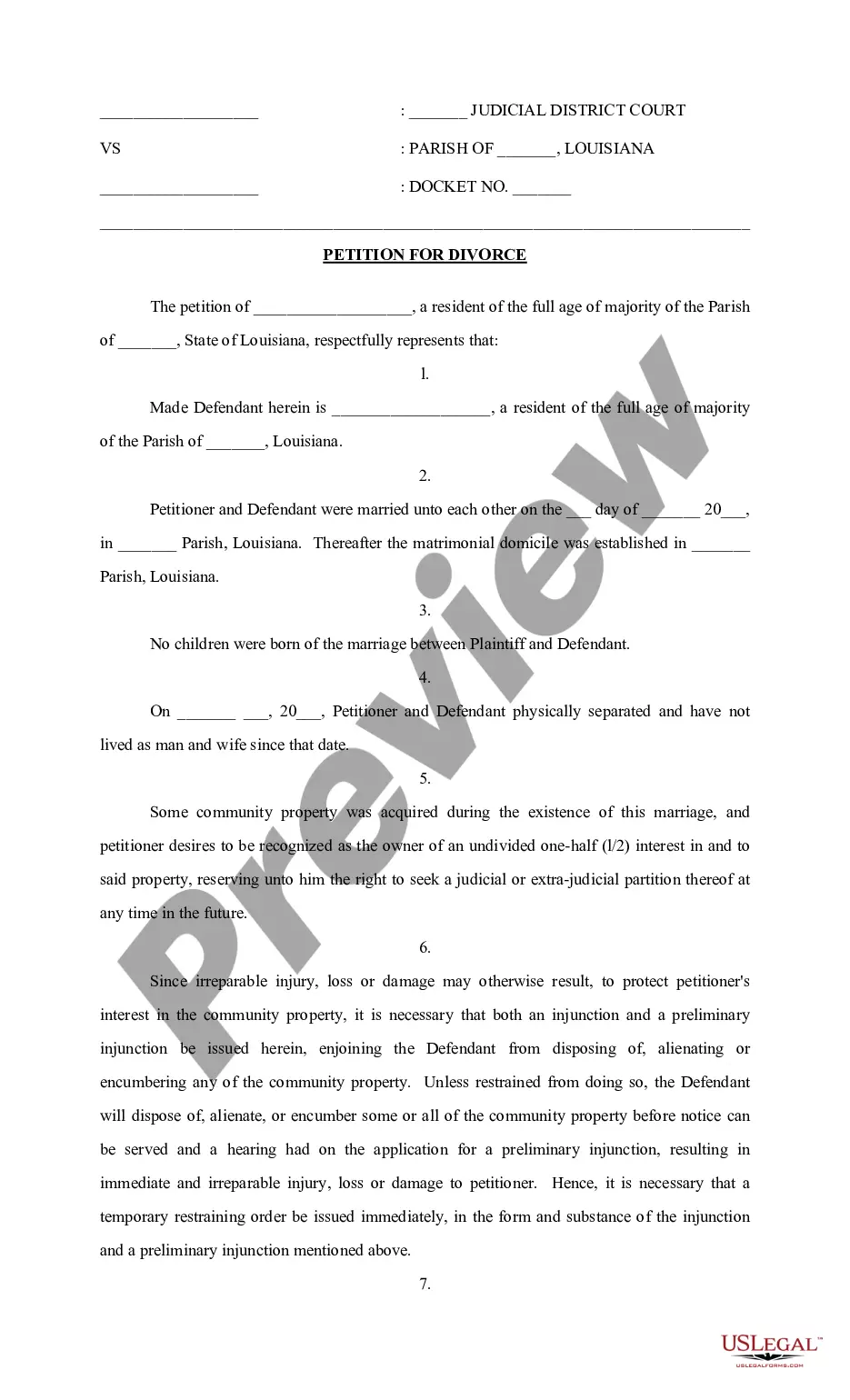
The Petition for Divorce with adult children, community property, and restraining orders is a legal document used by a petitioner to initiate the divorce process in Louisiana. This form is specifically designed for couples who have adult children and share community property. It enables the petitioner to request a divorce, the division of community property, and the issuance of temporary restraining orders to prevent the disposal of shared assets. Unlike other divorce forms, this petition addresses the complexities involved when adult children and community property are present.
Main sections of this form
- Identification of petitioner and defendant, including residence and marital history.
- Details regarding the adult children and confirmation of their majority status.
- Declaration of the separation period fulfilling Louisiana law requirements.
- Request for a division of community property and ownership claims.
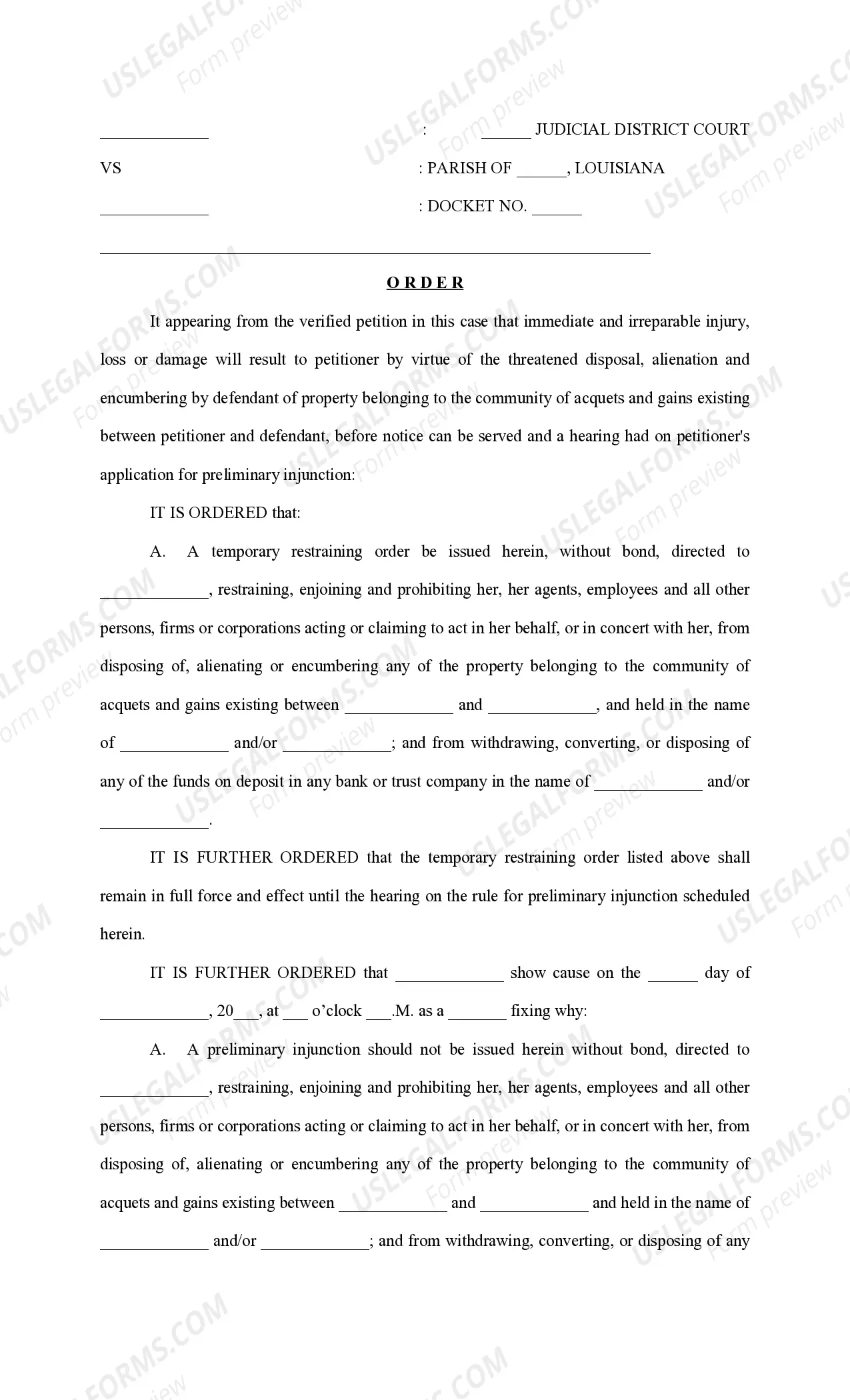
- Request for a temporary restraining order to protect community property.
- Order to show cause for further court proceedings regarding the injunction.


When this form is needed
This form should be used when a married couple in Louisiana, who have lived separately for over 180 days, decides to divorce and has adult children and community property. It is essential for cases where there is a need to protect community assets during the divorce process or when there are potential disputes over property division. If any concerns exist about the other party possibly selling or hiding community property, this petition becomes particularly important to safeguard interests.
Intended users of this form
- Individuals seeking a divorce in Louisiana with adult children.
- Petitioners who have shared community property with their spouse.
- Persons who require immediate protection of assets during divorce proceedings.
- Those who have lived apart from their spouse for more than 180 days and can meet the legal criteria for divorce.
Completing this form step by step
- Identify the parties involved by entering the names and addresses of both the petitioner and defendant.
- Specify the date and location of the marriage and provide details of the adult children involved.
- Indicate the separation date, confirming that you have lived apart for at least 180 days.
- Fill in the section requesting the division of community property and state your claim of ownership.
- Request the issuance of a temporary restraining order and include rationale for its necessity.
- Sign the petition in front of a notary, if required, and submit to the appropriate court.
Does this form need to be notarized?
This form must be notarized to be legally valid. US Legal Forms provides secure online notarization powered by Notarize, allowing you to complete the process through a verified video call.
Get your form ready online
Our built-in tools help you complete, sign, share, and store your documents in one place.
Make edits, fill in missing information, and update formatting in US Legal Forms—just like you would in MS Word.
Download a copy, print it, send it by email, or mail it via USPS—whatever works best for your next step.
Sign and collect signatures with our SignNow integration. Send to multiple recipients, set reminders, and more. Go Premium to unlock E-Sign.
If this form requires notarization, complete it online through a secure video call—no need to meet a notary in person or wait for an appointment.
We protect your documents and personal data by following strict security and privacy standards.

Make edits, fill in missing information, and update formatting in US Legal Forms—just like you would in MS Word.

Download a copy, print it, send it by email, or mail it via USPS—whatever works best for your next step.

Sign and collect signatures with our SignNow integration. Send to multiple recipients, set reminders, and more. Go Premium to unlock E-Sign.

If this form requires notarization, complete it online through a secure video call—no need to meet a notary in person or wait for an appointment.

We protect your documents and personal data by following strict security and privacy standards.
Common mistakes to avoid
- Filing the petition without verifying the separation period has been at least 180 days.
- Failing to include all pertinent information about community property.
- Not requesting the temporary restraining order if there's a risk of asset disposal.
- Omitting signatures or not notarizing where necessary.
Advantages of online completion
- Convenience of accessing and completing legal forms from home.
- Editability allows for easy customization to fit specific situations.
- Reliability of using forms drafted by licensed attorneys.
- Quick download and instant access to legal resources.
Main things to remember
- This petition is crucial for couples with adult children and community property seeking divorce in Louisiana.
- It enables the petitioner to secure their interests in shared assets during the legal process.
- Completing the form accurately and obtaining notarization is essential for its validity.
Looking for another form?

Form popularity
FAQ
You do not have to sign the papers together, at the same time and place, but the Louisiana 3StepDivorce2122 requires both spouses to sign.When spouses cannot agree about the terms and conditions of their divorce, they sometimes end up in court where a judge makes decisions for them.
If the court schedules a hearing and grants the motion, the protection order will become immediately void and unenforceable. A protection order can only be dissolved by the court.
In situations where a court issued a restraining order that lack jurisdiction, that order is also invalidated. If this is proven during the trial, you are not bound by such an order. Falsely accused. In case you are falsely accused of violating a restraining order, a defense attorney can clear you of all the charges.
When parents choose to end their marriage through divorce, they may need to address a variety of complex child custody issues.However, protective orders can also be based on false accusations, or they may be used in an attempt to gain an unfair advantage during divorce.
Instructions How to File For Divorce in Louisiana. Acceptance of Service and Waiver of Consent Form. Judgment for Divorce Form. Marital Settlement Agreement Form. Petition For Divorce Article 102 Form. Petition for Divorce Article 103 Form. Petitioner's Affidavit Article 102 Form.
The cost to file a request for restraining order is $148.50. If you are unable to pay the cost, you may fill out a Motion to Proceed In Forma Pauperis. You can obtain this form from the Civil Division Office in Room 251 or by calling 389-3017.
The process of going through a divorce takes an emotional toll on those involved, and can sometimes bring out the worst in even the nicest people. When it comes to your safety and the safety of your children, you can never be too careful, which is why restraining orders are common during a divorce.
After a full court hearing, a judge can issue a protective order. A protective order can generally last up to 18 months, and can later be renewed after a hearing in front of a judge. The parts of the protective order that tell the abuser to not abuse, harass, or interfere with you can last forever.
Emergency Temporary Restraining Orders: If you are in need of emergency protection outside of regular court hours, the court may grant you an emergency temporary restraining order if there is an immediate and present danger of abuse. The judge must consider any and all past history of abuse, or threats of abuse, in