Louisiana Interview Sheet - Indigent Defender Board
What this document covers
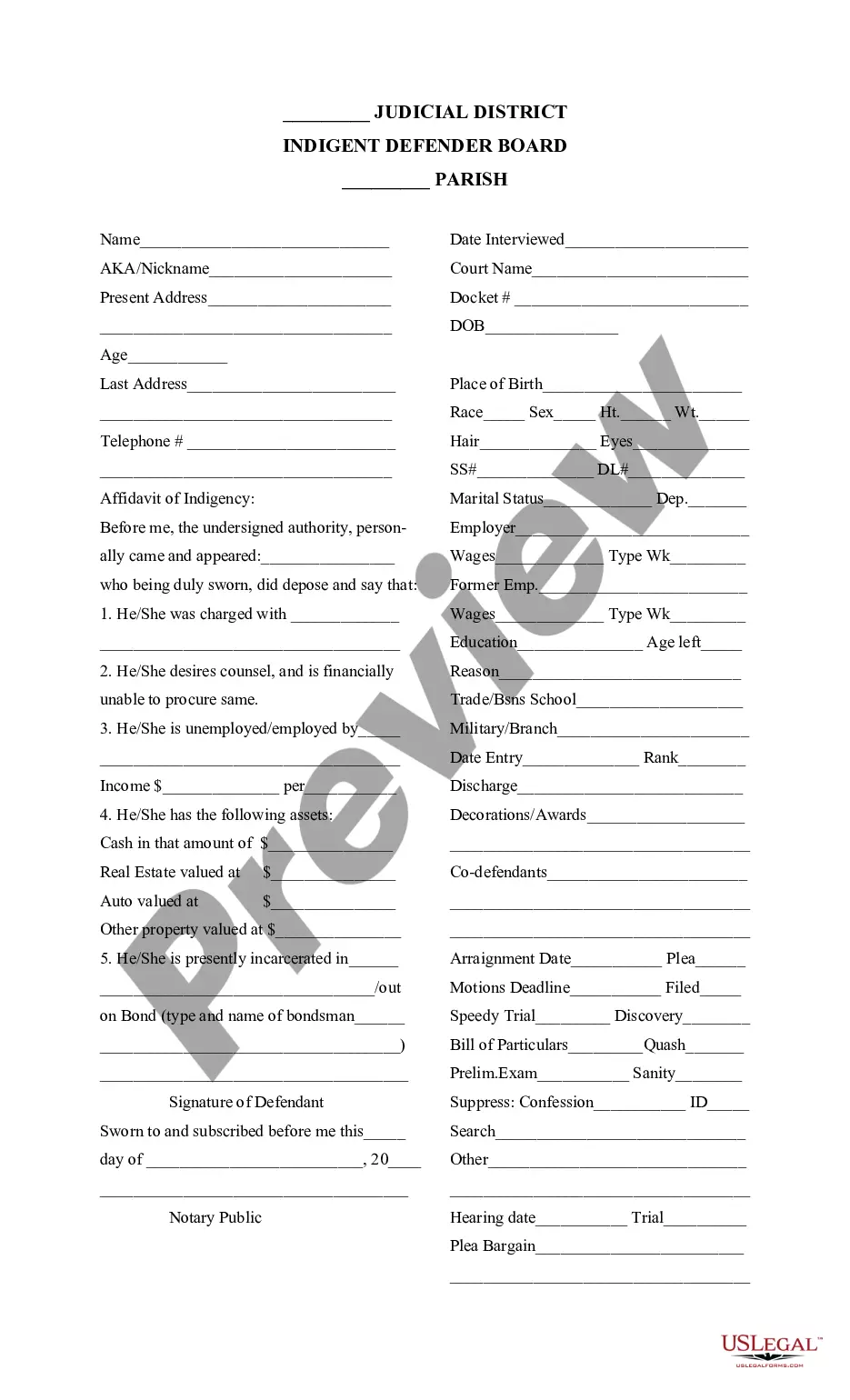
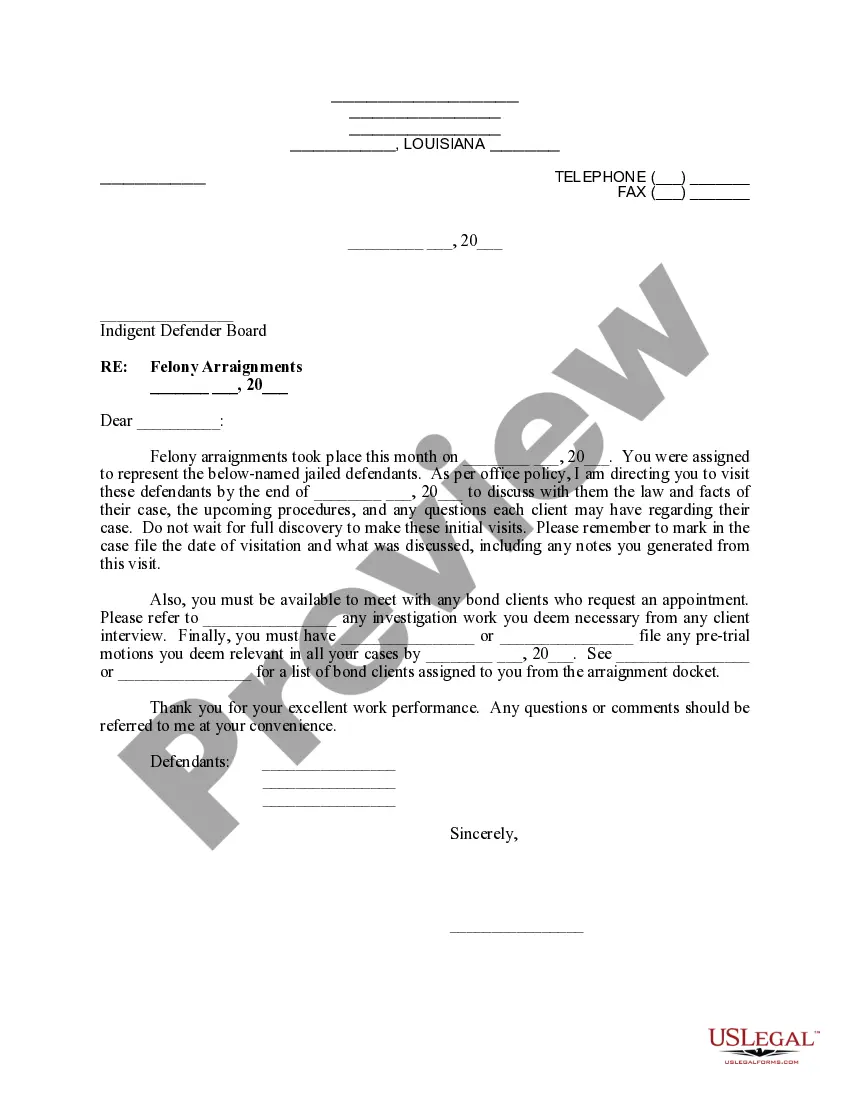
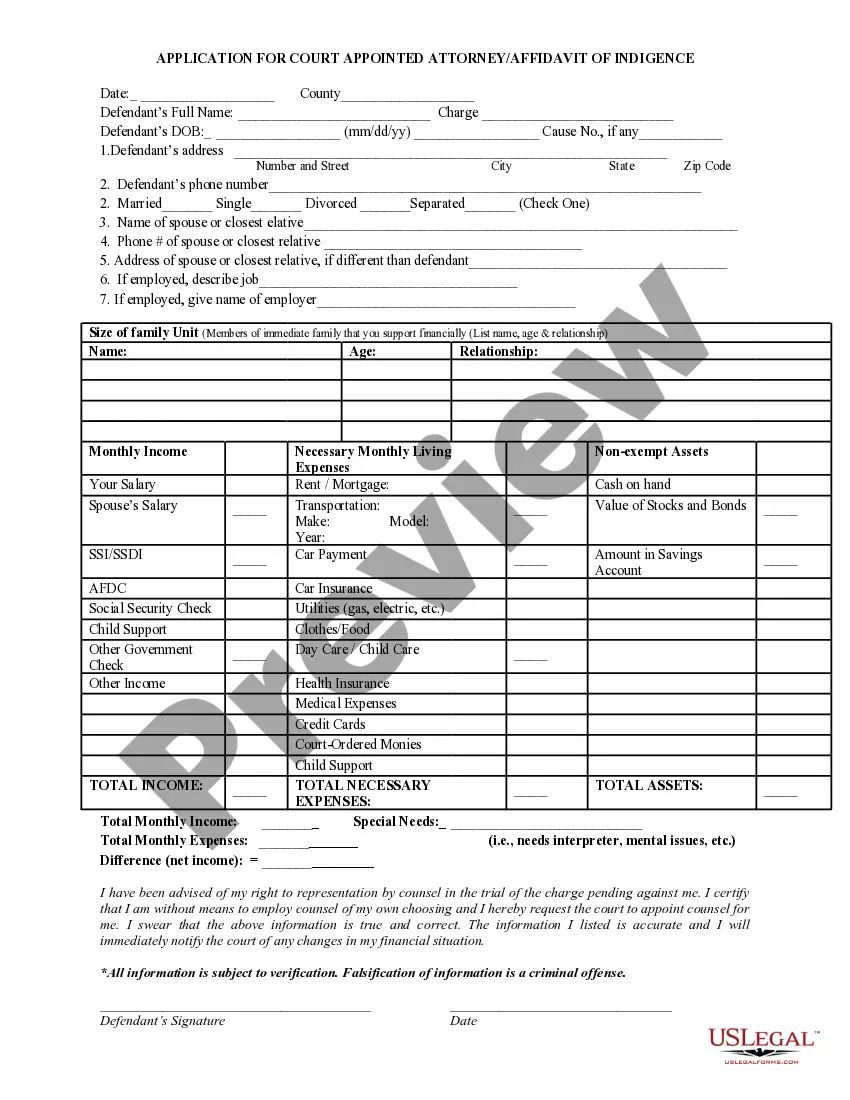
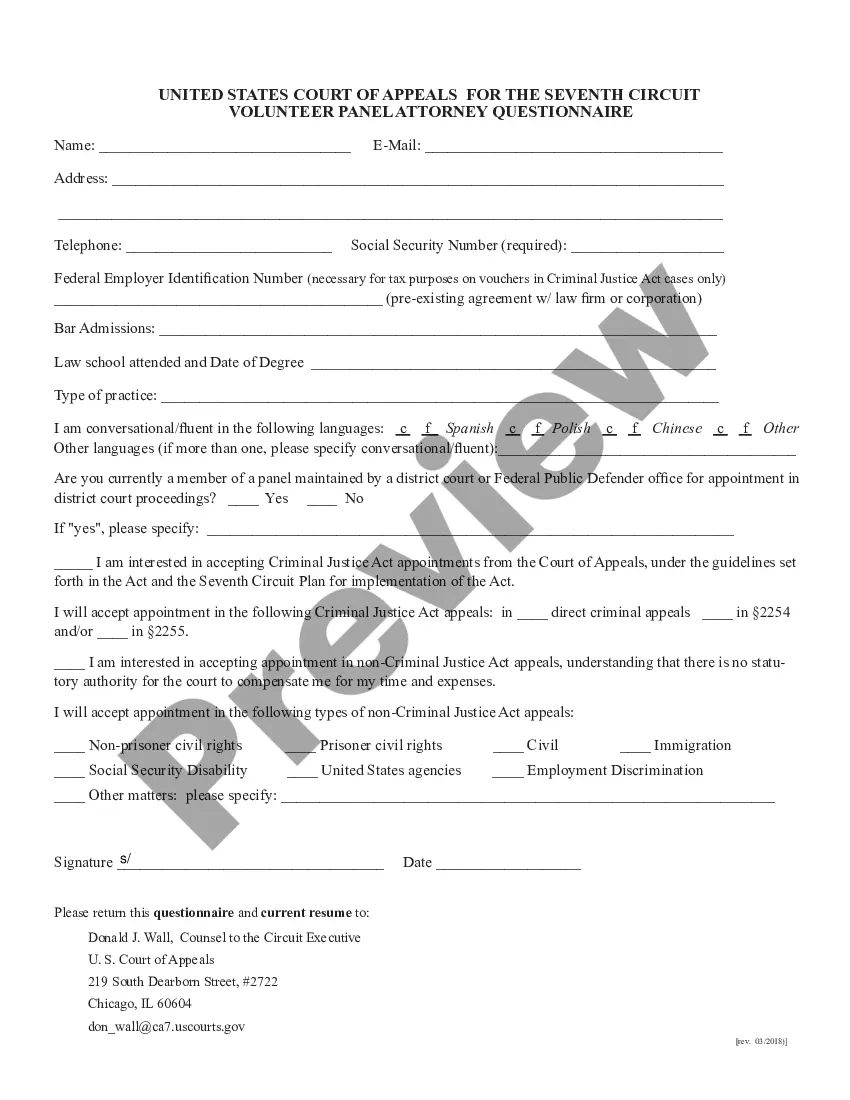
The Interview Sheet - Indigent Defender Board is a legal document used by attorneys to gather essential information about clients seeking representation based on their financial status. This form records client details and case status, differentiating it from other legal forms by focusing specifically on the needs of those who require public defense services due to indigency.
Form components explained
- Client identification: Includes name, date of birth, and contact information.
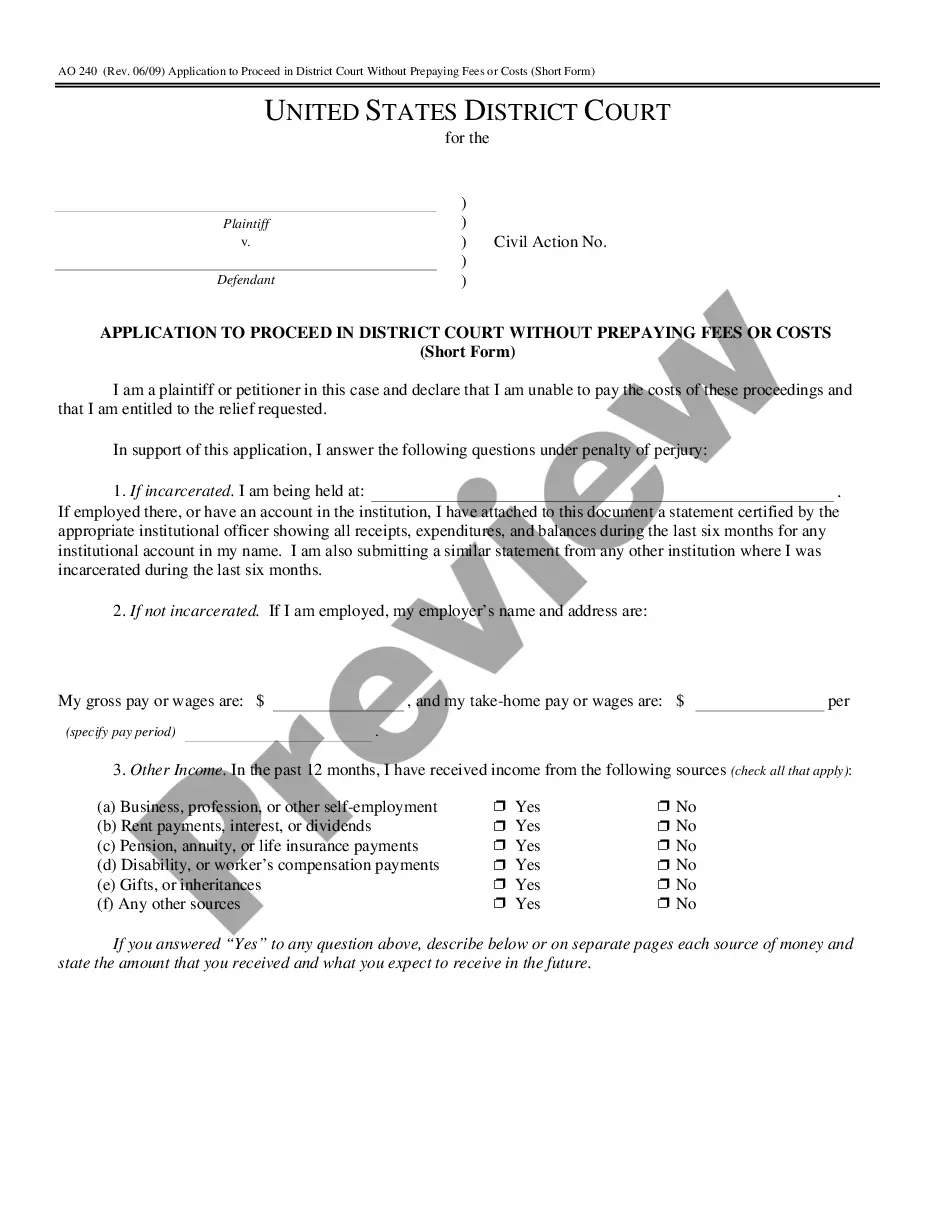
- Affidavit of indigency: A declaration of the client's financial inability to hire private counsel.
- Employment details: Information regarding the client's current and former employment and income.
- Asset disclosure: Lists the client's cash, real estate, and other assets.
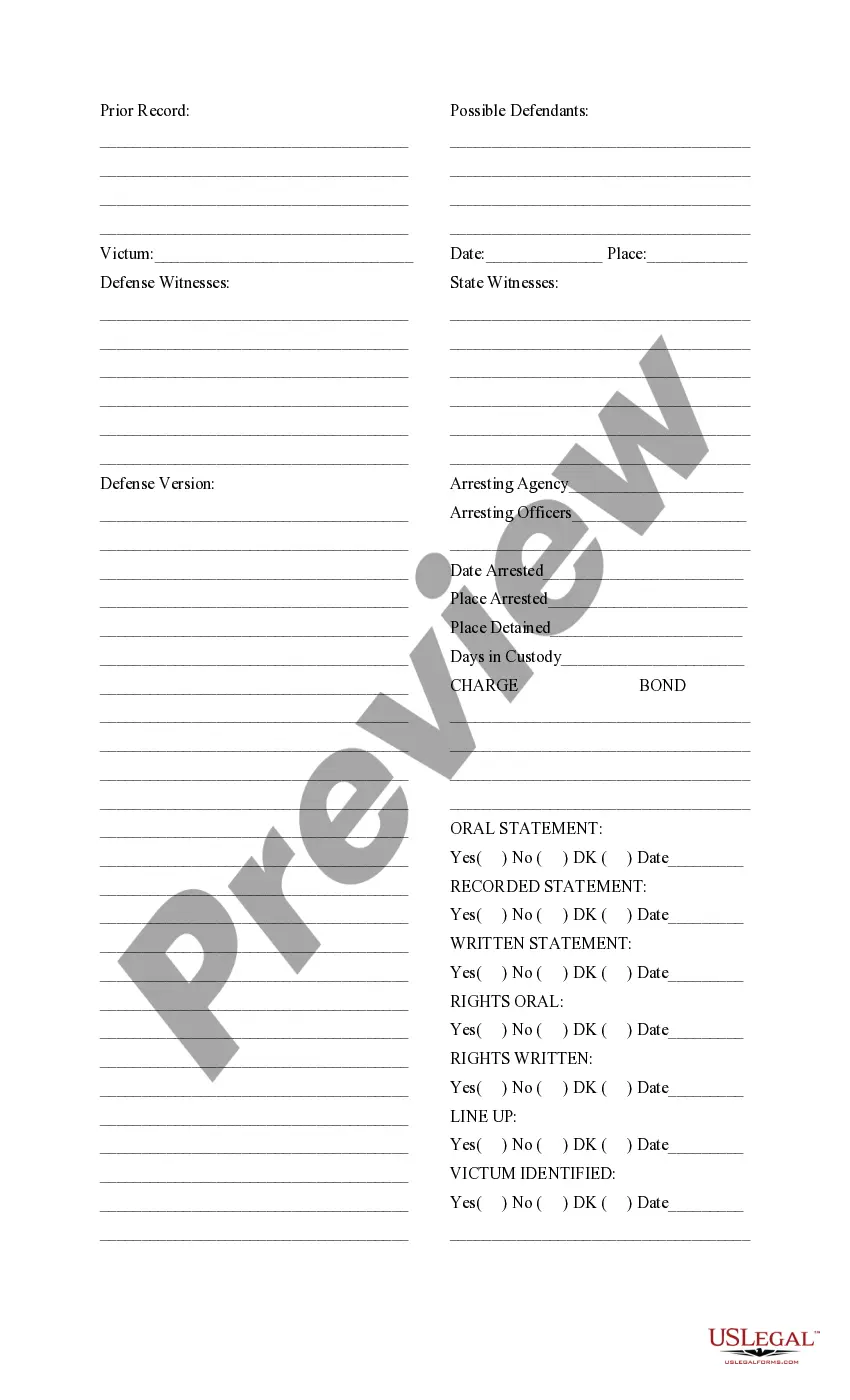
- Charges and court details: Information about criminal charges and related court hearings.
- Witness information: Sections for defense and state witnesses, and their testimonies.
When to use this form
This form should be used when an individual is charged with a crime and seeks legal representation through the Indigent Defender Board. It is essential for documenting the financial status of the client to determine eligibility for public defense services.
Intended users of this form
- Individuals unable to afford private legal counsel.
- Attorneys representing clients applying for indigent defense services.
- Members of the Indigent Defender Board involved in assessing client eligibility.
How to prepare this document
- Enter the client's personal details including name, date of birth, and contact information.
- Document the client's employment status and income details.
- Fill in the assets section, including cash and property values.
- Specify the charges the client faces and relevant court information.
- Gather witness information, detailing both defense and state witnesses.
Notarization requirements for this form
This form does not typically require notarization unless specified by local law. Always check with your state guidelines for any specific requirements regarding notarization.
Get your form ready online
Our built-in tools help you complete, sign, share, and store your documents in one place.
Make edits, fill in missing information, and update formatting in US Legal Forms—just like you would in MS Word.
Download a copy, print it, send it by email, or mail it via USPS—whatever works best for your next step.
Sign and collect signatures with our SignNow integration. Send to multiple recipients, set reminders, and more. Go Premium to unlock E-Sign.
If this form requires notarization, complete it online through a secure video call—no need to meet a notary in person or wait for an appointment.
We protect your documents and personal data by following strict security and privacy standards.

Make edits, fill in missing information, and update formatting in US Legal Forms—just like you would in MS Word.

Download a copy, print it, send it by email, or mail it via USPS—whatever works best for your next step.

Sign and collect signatures with our SignNow integration. Send to multiple recipients, set reminders, and more. Go Premium to unlock E-Sign.

If this form requires notarization, complete it online through a secure video call—no need to meet a notary in person or wait for an appointment.

We protect your documents and personal data by following strict security and privacy standards.
Avoid these common issues
- Not fully disclosing financial information.
- Omitting signatures where required.
- Failing to update information before submission, especially case status and court dates.
Advantages of online completion
- Convenience of completing the form from any location.
- Editability allows for easy updates to client information.
- Access to reliable templates drafted by licensed attorneys.
Main things to remember
- Essential for clients seeking public defense services due to financial hardship.
- Facilitates the accurate assessment of indigency by legal authorities.
- Important for ensuring the rights of clients accused of crimes are upheld.
Looking for another form?


Form popularity
FAQ
Impoverished, or unable to afford the necessities of life. A defendant who is indigent has a constitutional right to court-appointed representation, according to a 1963 Supreme Court decision, Gideon v. Wainright.
Indigent defense provides services to defendants who can't afford legal counsel on their own. It helps ensure a fair trial for the defendant. Public defender programs, assigned counsel systems, and contract attorney systems are all public service resources provided to indigent defendants.
An indigent defendant is someone who has been arrested or charged with a crime punishable by imprisonment and who lacks sufficient resources to hire a lawyer without suffering undue hardship. Determination of Indigence. 3. Juvenile Justice Guide Book for Legislators.
According to the National Legal Aid and Defender Association (NLADA), 80 percent of criminal defendants cannot afford a lawyer. Meanwhile, state and county spending on indigent defense has been falling.
A big difference between a public defender vs private attorney is the fact that if a lawyer does a poor job their business will suffer. A public defender gets more cases than they can handle no matter the outcomes.Another benefit of a private lawyer is access to more defense possibilities.
They're well educated, well trained, and fully licensed, just like private attorneys are. There are public defenders across the country handling every type of case, from misdemeanors to major felonies. Public defenders spend a lot of time in court, so most are very experienced trial lawyers.
Indigent means to be a poor or needy person. Our laws look at how much money a person has, how much debt they have and how many assets they have to determine whether or not they can afford to hire their own representation or if they need a court-appointed attorney to represent them.
The Federal justice system provides indigent defense to eligible defen- dants through the Federal Defender Services, community defender or- ganizations, and private attorneys as established by the Criminal Justice Act of 1964, as amended.
A big difference between a public defender vs private attorney is the fact that if a lawyer does a poor job their business will suffer. A public defender gets more cases than they can handle no matter the outcomes. Only trust your freedom to the best criminal defense attorney in your state.