Louisiana Affidavit of Correctness - Scriveners
What is this form?
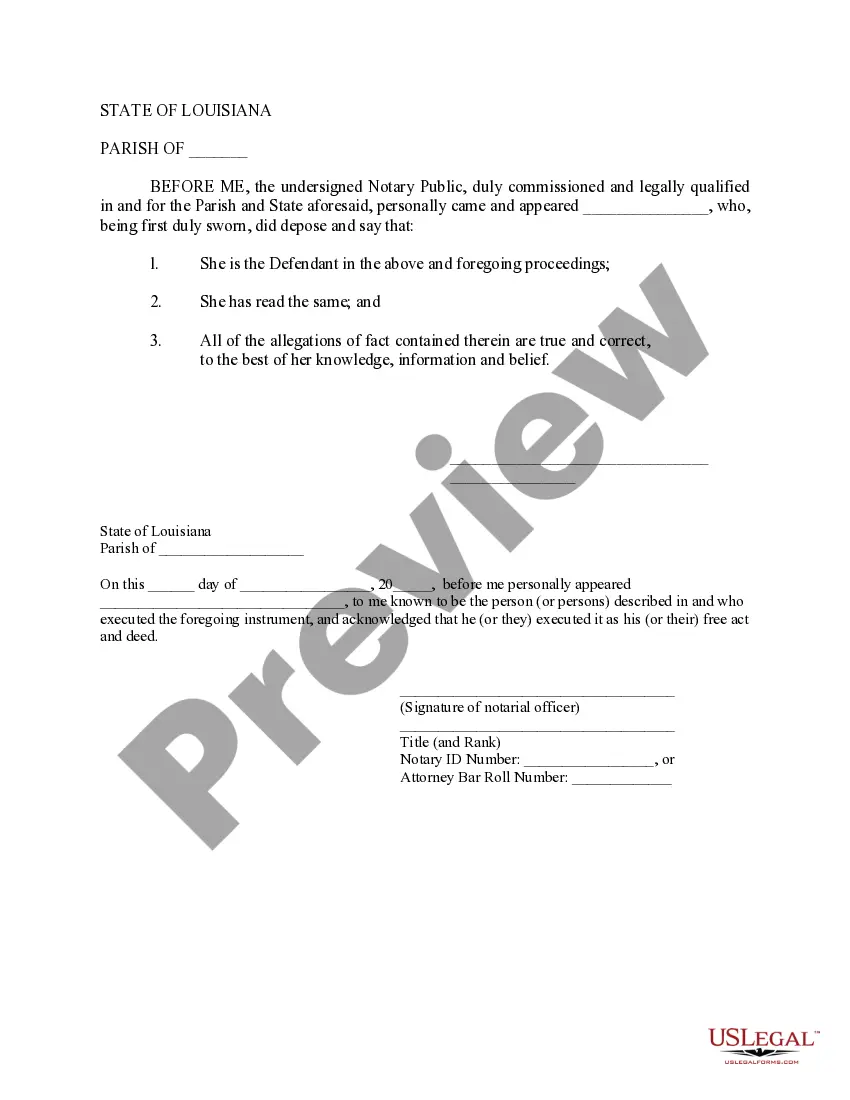
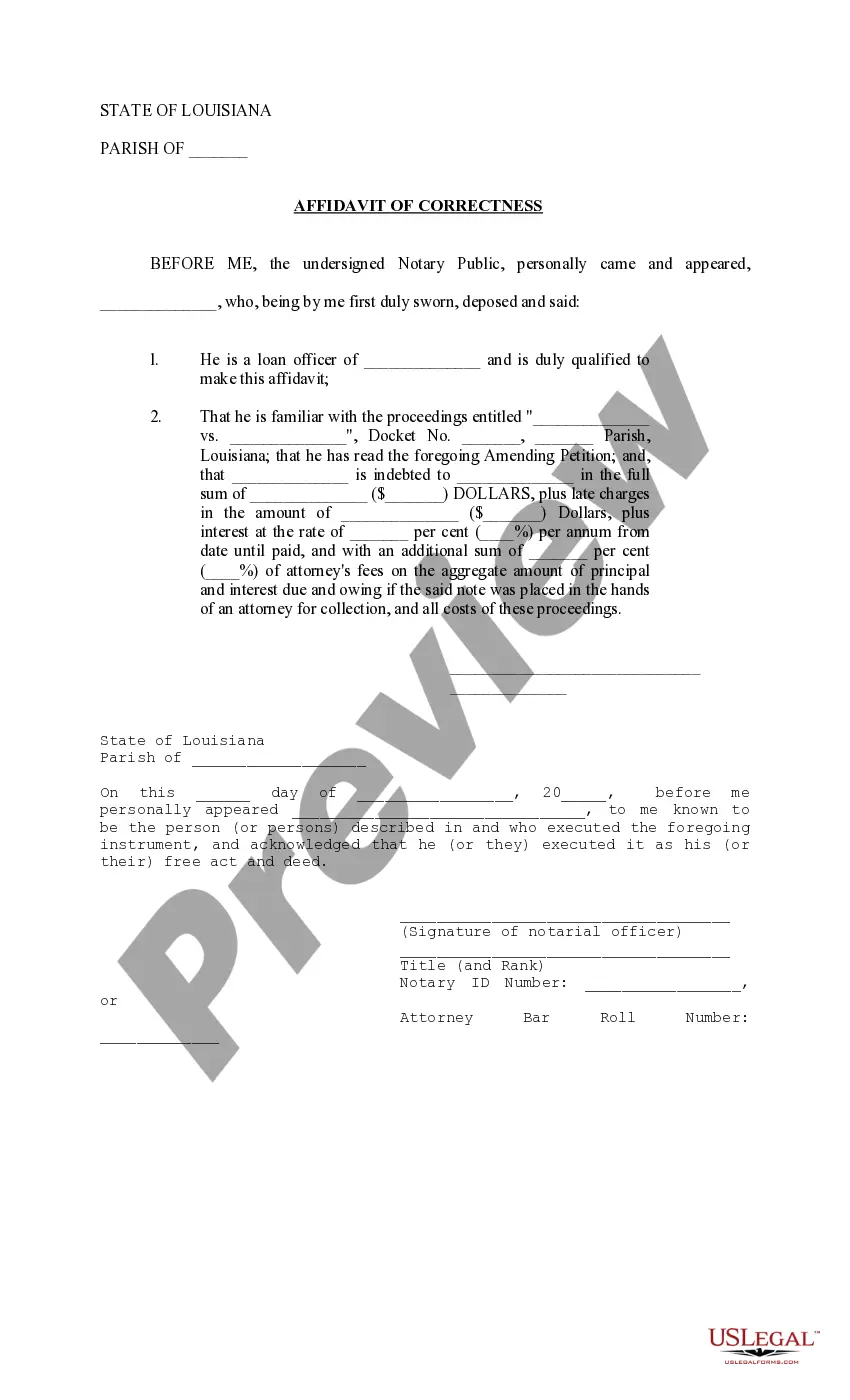
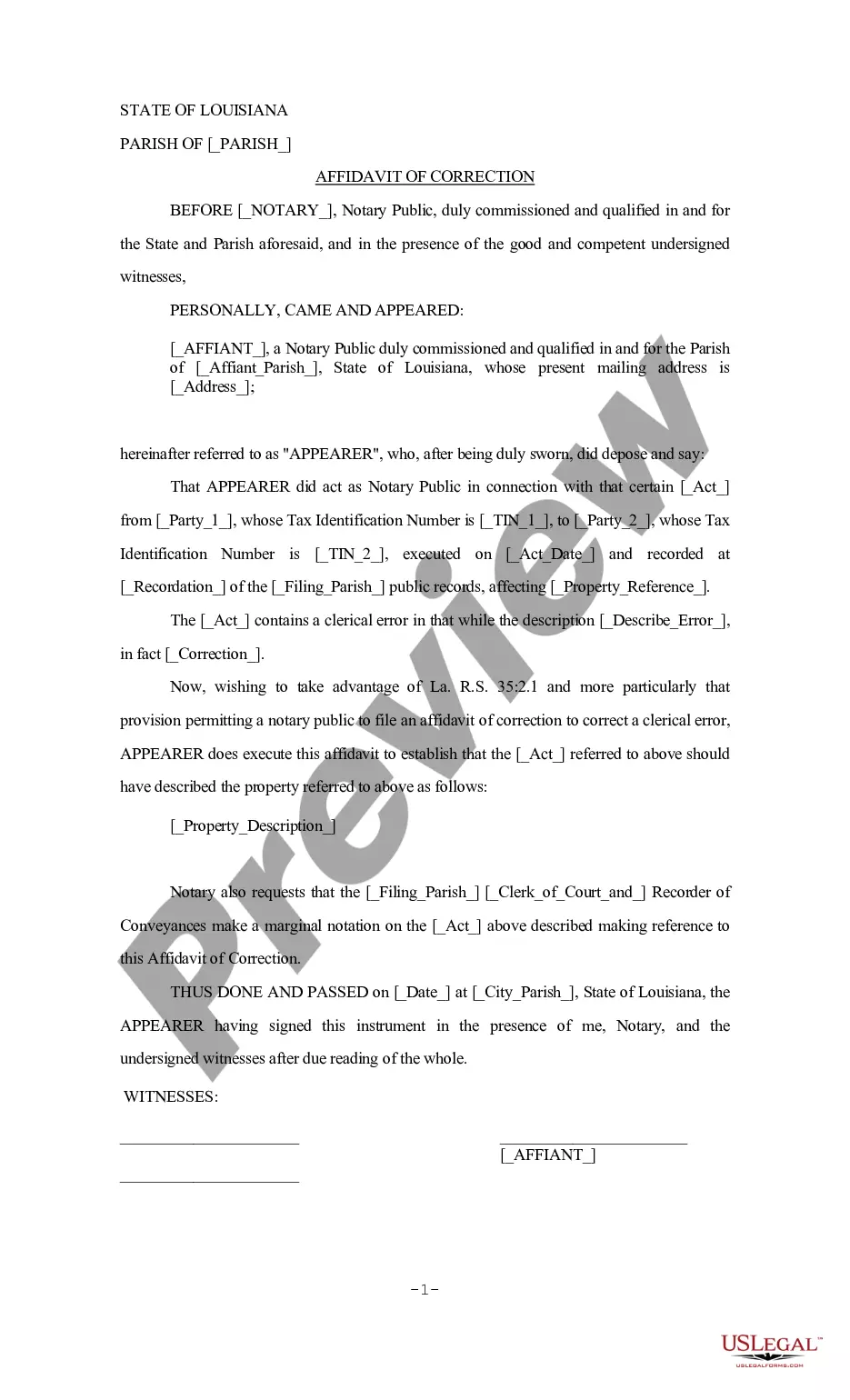
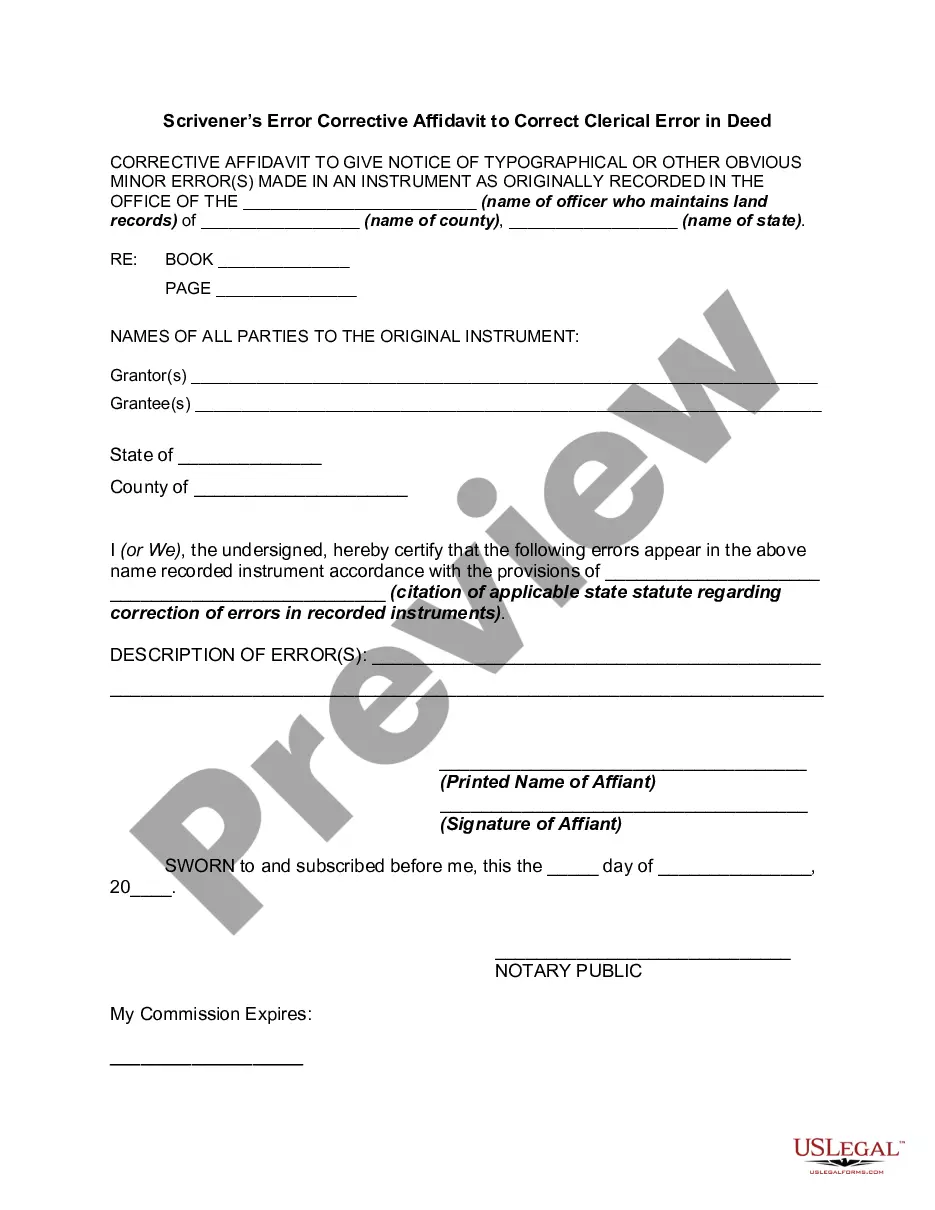
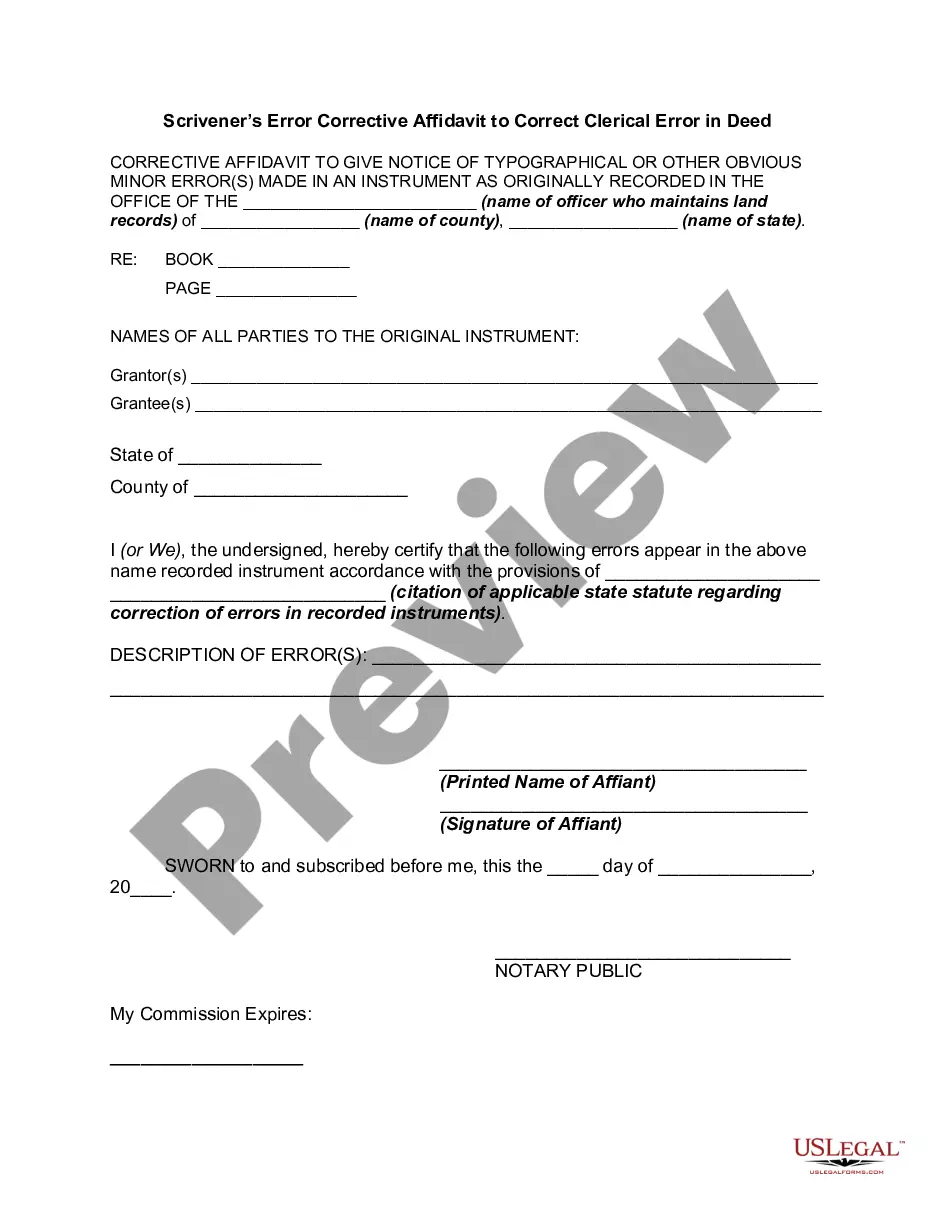
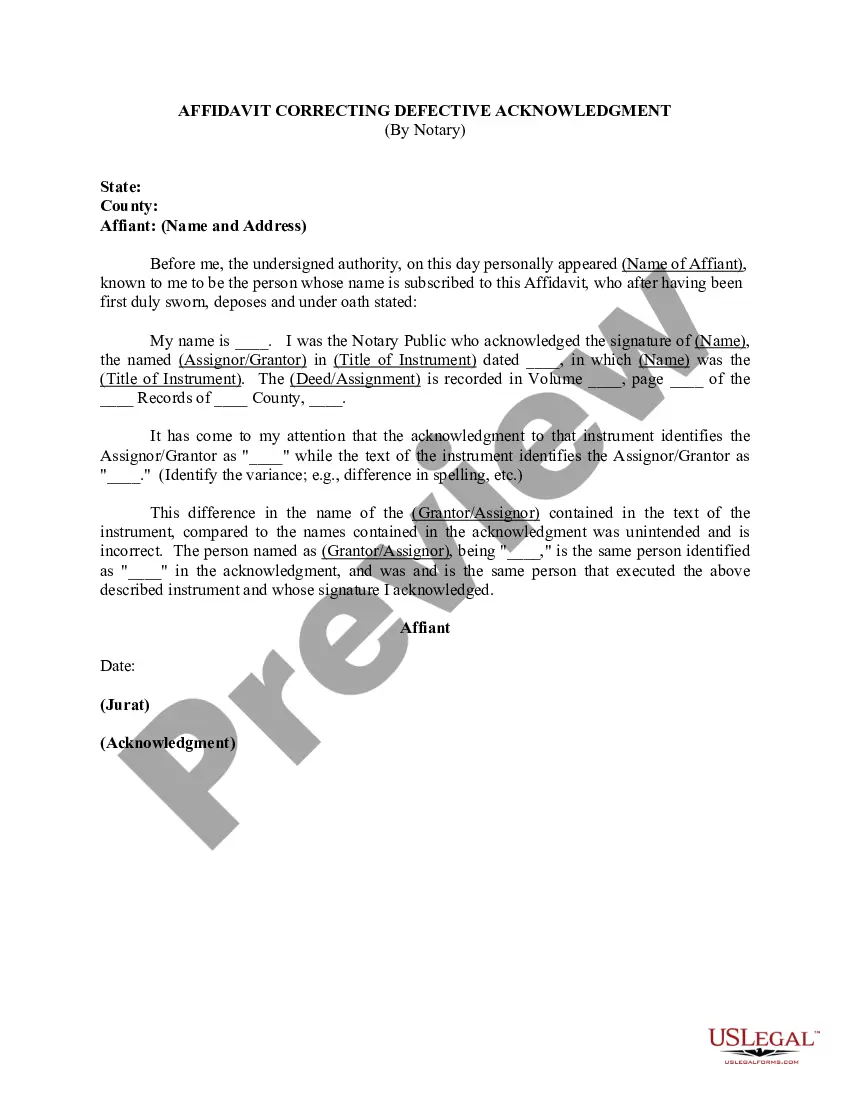
The Affidavit of Correctness - Scriveners is a legal document in which the affiant confirms the accuracy of facts presented in legal proceedings where they are a defendant. This affidavit is a sworn statement, which means it must be affirmed in front of a qualified official, such as a notary public. Unlike other affidavits that might address broader topics, this form specifically pertains to affirming the correctness of allegations in a legal case, ensuring that all statements made are true to the best of the affiant's knowledge.
Main sections of this form
- Identification of the affiant as the defendant in the proceedings.
- A statement confirming that the affiant has read the allegations.
- A clause affirming the truthfulness of the allegations to the best of the affiant's knowledge.
- Fields for the affiant's signature and the notary public's confirmation.
- Space for the date and location of the notarization.
When to use this document
This affidavit is necessary in situations where an individual is involved in legal proceedings and needs to affirm that the facts presented against them are correct. It is commonly used in court cases to provide a sworn statement about the allegations, helping to support the defendant's position or clarify facts during the legal process.
Who this form is for
- Individuals who are defendants in legal proceedings.
- Persons who need to provide swore statements supporting their claims or defenses.
- Those wishing to formally affirm the correctness of allegations made against them.
Steps to complete this form
- Identify yourself clearly in the form as the affiant and defendant.
- Read the allegations thoroughly to ensure you understand them.
- Affirm that the allegations are true and correct to the best of your knowledge.
- Sign and date the document in the presence of a notary public.
- Ensure the notary completes their section, including their signature and seal.
Does this document require notarization?
To make this form legally binding, it must be notarized. Our online notarization service, powered by Notarize, lets you verify and sign documents remotely through an encrypted video session.
Get your form ready online
Our built-in tools help you complete, sign, share, and store your documents in one place.
Make edits, fill in missing information, and update formatting in US Legal Forms—just like you would in MS Word.
Download a copy, print it, send it by email, or mail it via USPS—whatever works best for your next step.
Sign and collect signatures with our SignNow integration. Send to multiple recipients, set reminders, and more. Go Premium to unlock E-Sign.
If this form requires notarization, complete it online through a secure video call—no need to meet a notary in person or wait for an appointment.
We protect your documents and personal data by following strict security and privacy standards.

Make edits, fill in missing information, and update formatting in US Legal Forms—just like you would in MS Word.

Download a copy, print it, send it by email, or mail it via USPS—whatever works best for your next step.

Sign and collect signatures with our SignNow integration. Send to multiple recipients, set reminders, and more. Go Premium to unlock E-Sign.

If this form requires notarization, complete it online through a secure video call—no need to meet a notary in person or wait for an appointment.

We protect your documents and personal data by following strict security and privacy standards.
Common mistakes to avoid
- Failing to read the allegations thoroughly before signing.
- Not signing the document in front of the notary public.
- Omitting necessary information, such as the date or location of the notarization.
Why use this form online
- Convenience of downloading and printing the form at your convenience.
- Easy to edit and customize to fit your specific needs.
- Reliability as forms are drafted by licensed attorneys.
Legal use & context
- Affidavits are used in various legal contexts, including court cases and administrative proceedings.
- The Affidavit of Correctness serves as a formal testimony in disputes or defenses involving factual inaccuracies.
- Failure to provide a truthful affidavit could lead to legal repercussions, including penalties for perjury.
Main things to remember
- The Affidavit of Correctness allows defendants to affirm the truthfulness of allegations made against them.
- This form requires notarization to ensure legal validity.
- Clear and accurate completion is critical to avoid disputes and enhance credibility.
Looking for another form?
Form popularity
FAQ
A mistake made in a letter, paper, or document that changes its meaning, such as a typographical error or the unintentional addition or omission of a word, phrase, or figure. A mistake of this kind is a result of an oversight.
Determine if the error is harmless or fatal to the transfer of title. Decide what instrument is best suited to the error. Draft a corrective deed, affidavit, or new deed. Obtain the original signature(s) of the Grantor(s). Re-execute the deed with proper notarization and witnessing.
A correction deed is a new deed signed and acknowledged by the grantor. A correction affidavit can be signed by either party but is used in limited situations. This press release was authorized by Mark W. Bidwell, an attorney licensed in California.
N. a person who writes a document for another, usually for a fee. Money scriveners are those who are engaged in procuring money to be lent on mortgages and other securities, and lending such money accordingly.They act also as agents for the purchase and sale of real estates.
The doctrine of a "scrivener's error" is the legal principle that a map-drafting or typographical error in a written contract may be corrected by oral evidence if the evidence is clear, convincing, and precise.
First, if the scrivener's error is apparent on the face of the policy, a court may correct that error by applying the general rules of contract interpretation. Second, if a scrivener's error is not apparent on the face of the policy, a court may reform the contract to correct the error if the error is a mutual mistake.
A corrective deed is an instrument filed in the public record in addition to the incorrect deed. It's known as a confirmatory instrument since it perfects an existing title by removing any defects, but it doesn't pass title on its own.
One who drafts legal instruments such as contracts and wills. noun. 2. 0. A professional copyist; a scribe.
The buyer holds the legal rights of the property. A sale deed is registered in accordance with the Registration Act, 1908. Both the parties have to be present in person along with two witnesses with all the relevant documents in the sub-registrar's office to sign the sale deed and close the deal.