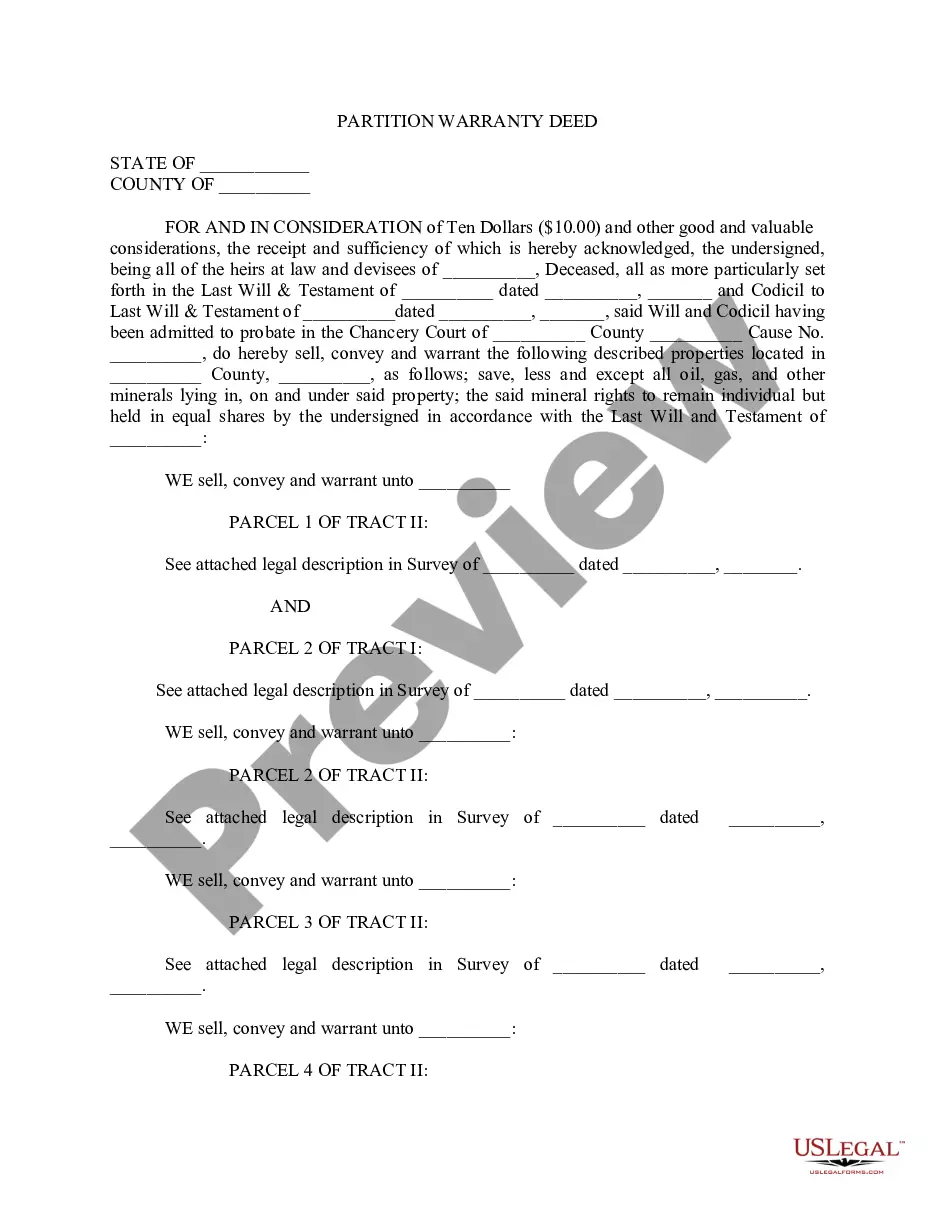
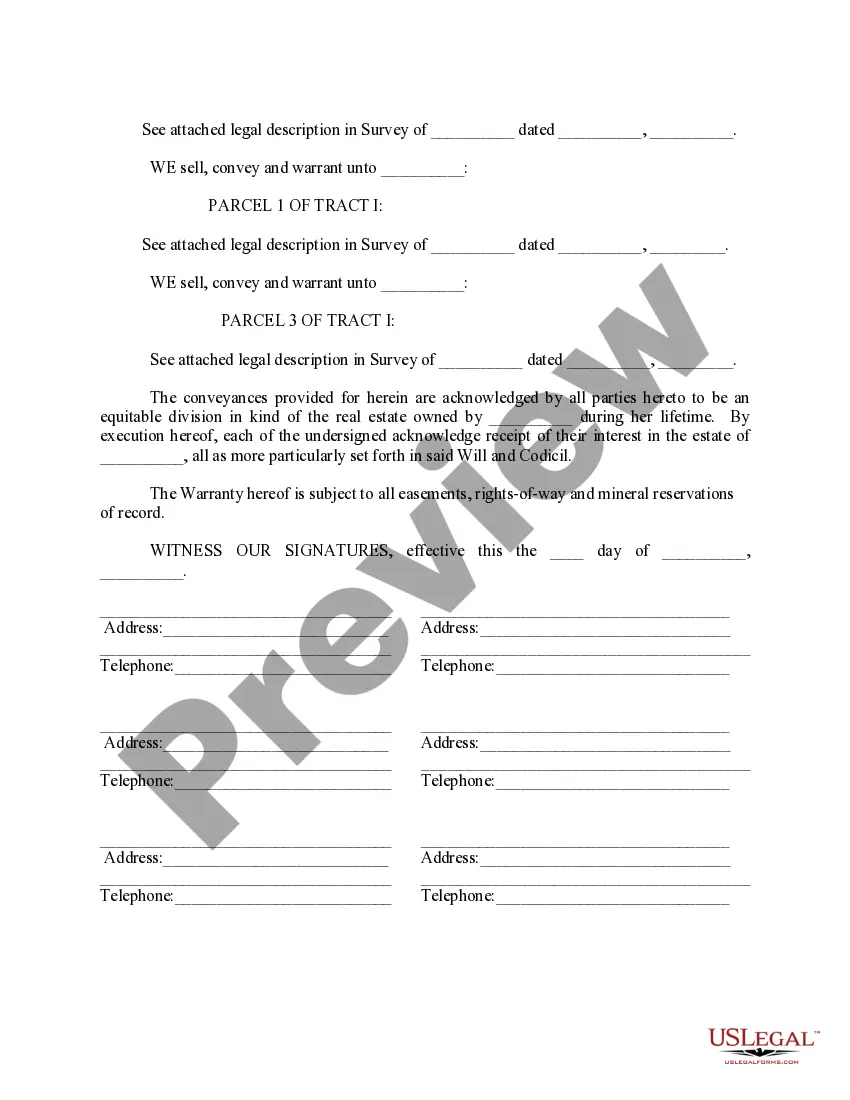
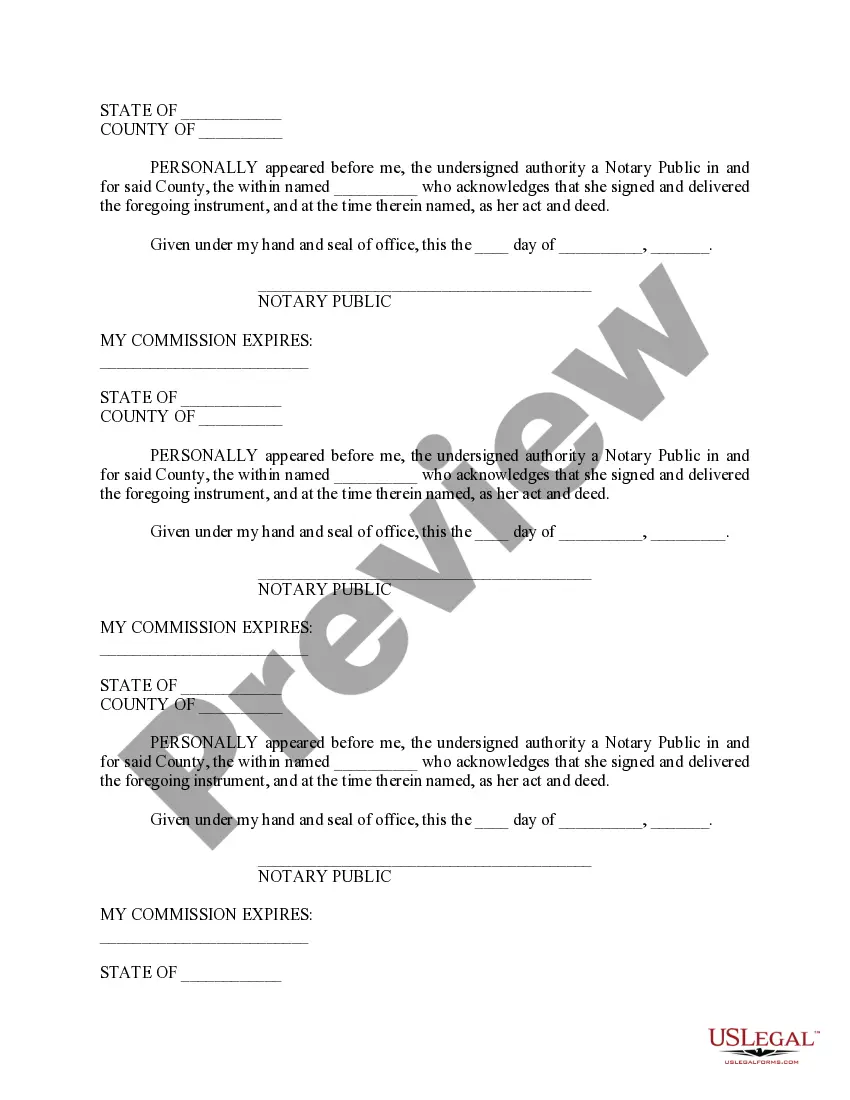
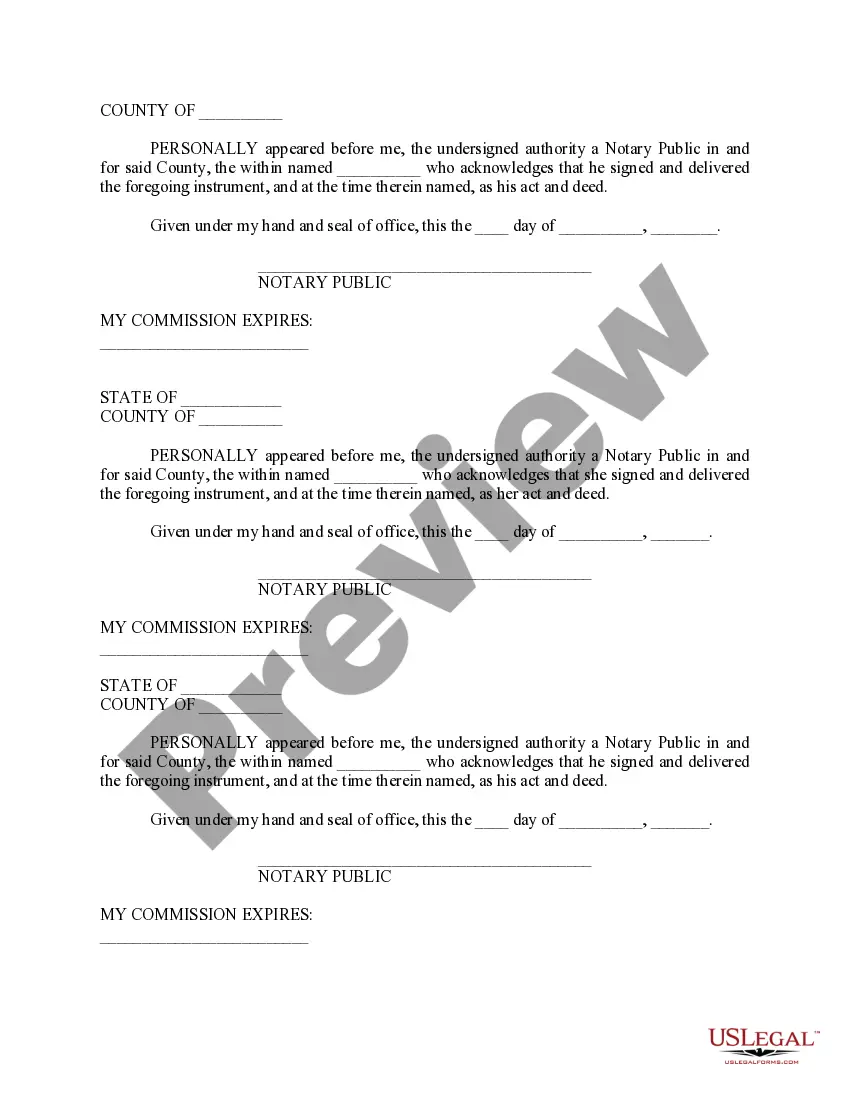
Kentucky Partition Warranty Deed
Description

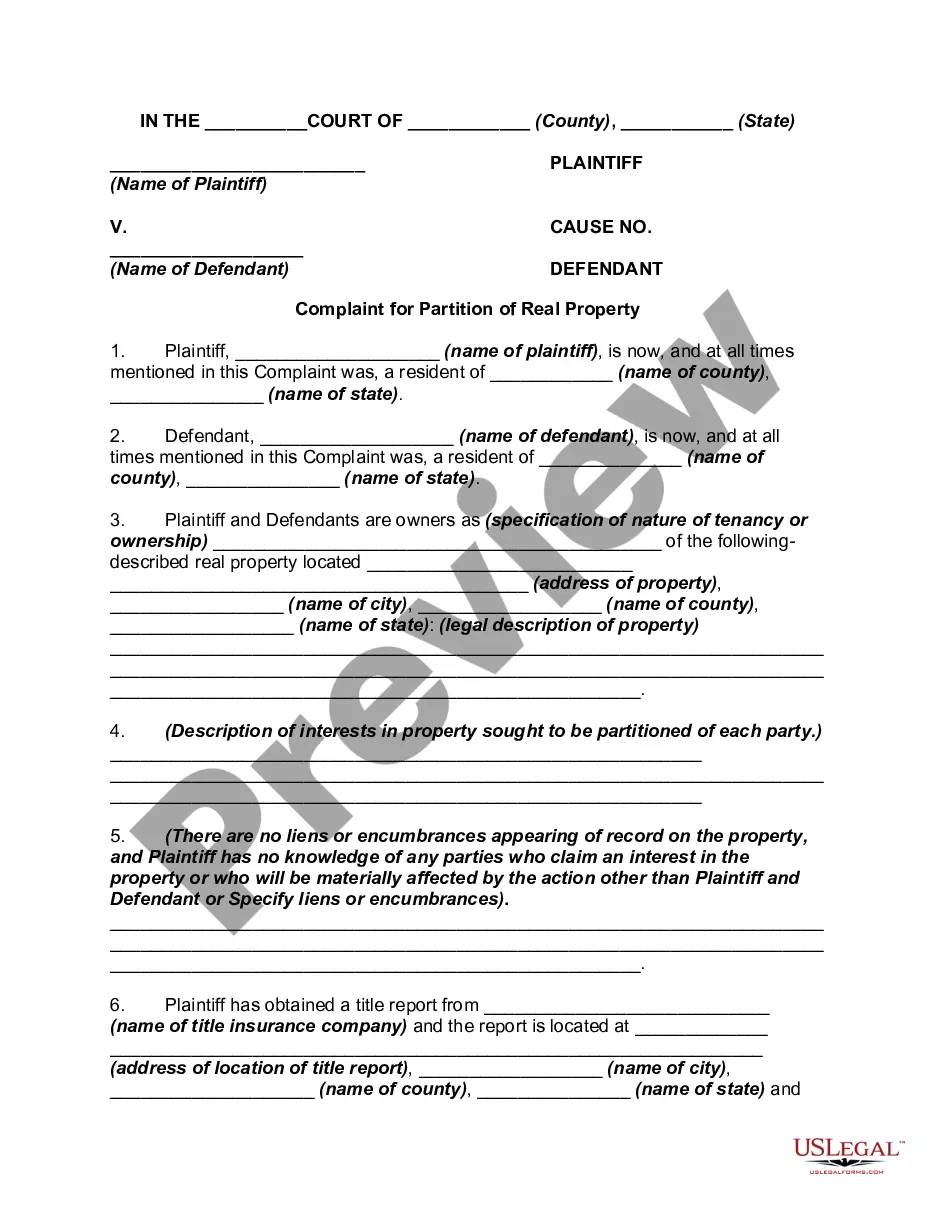
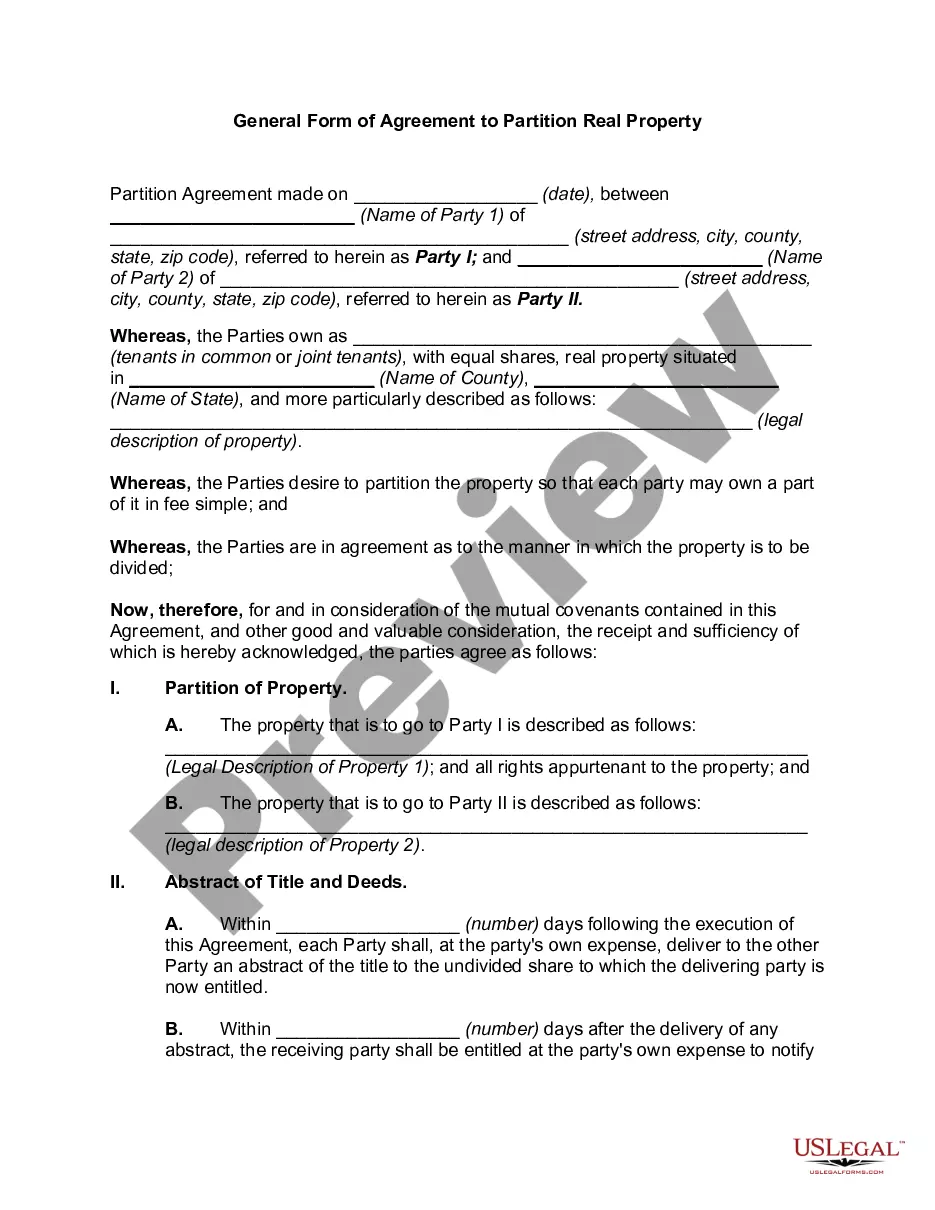
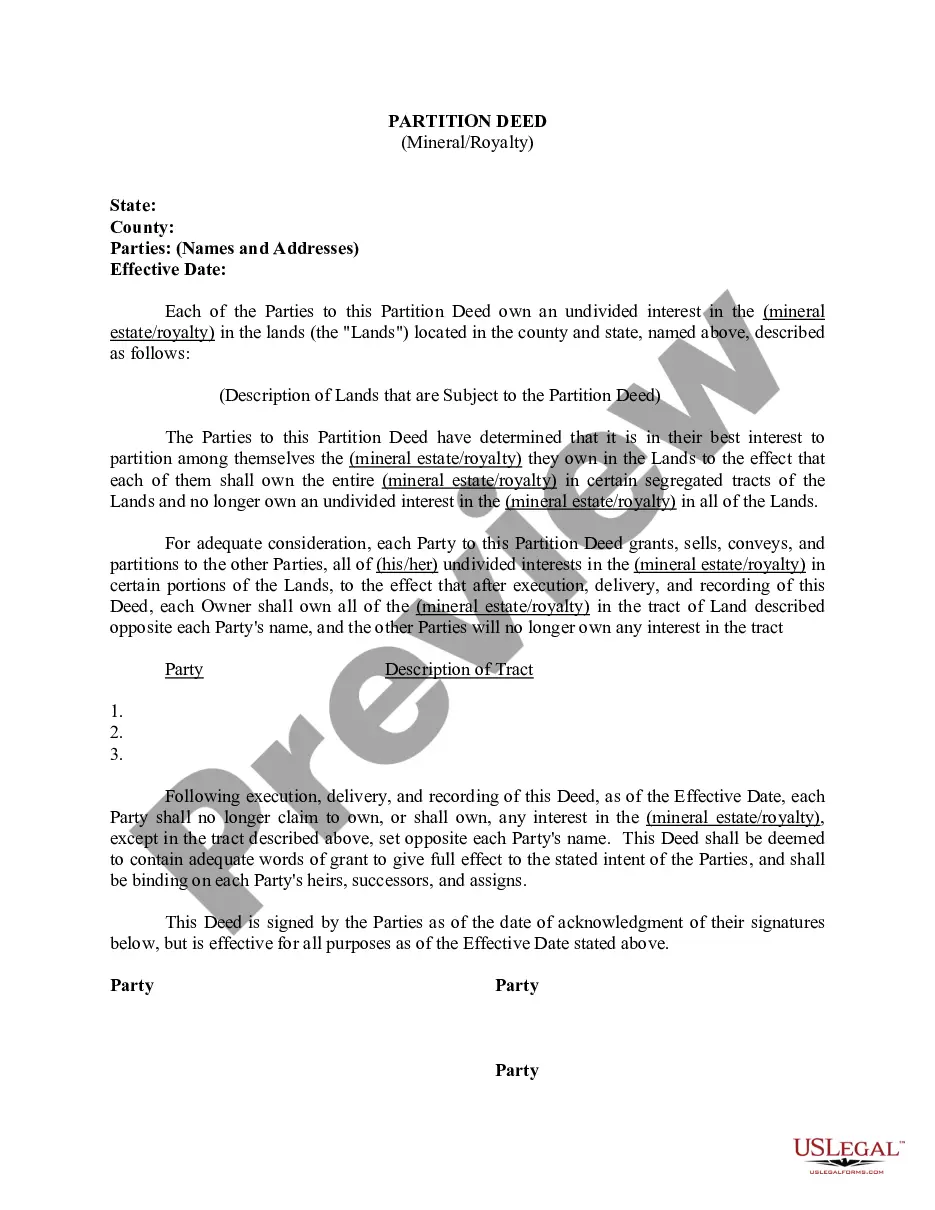
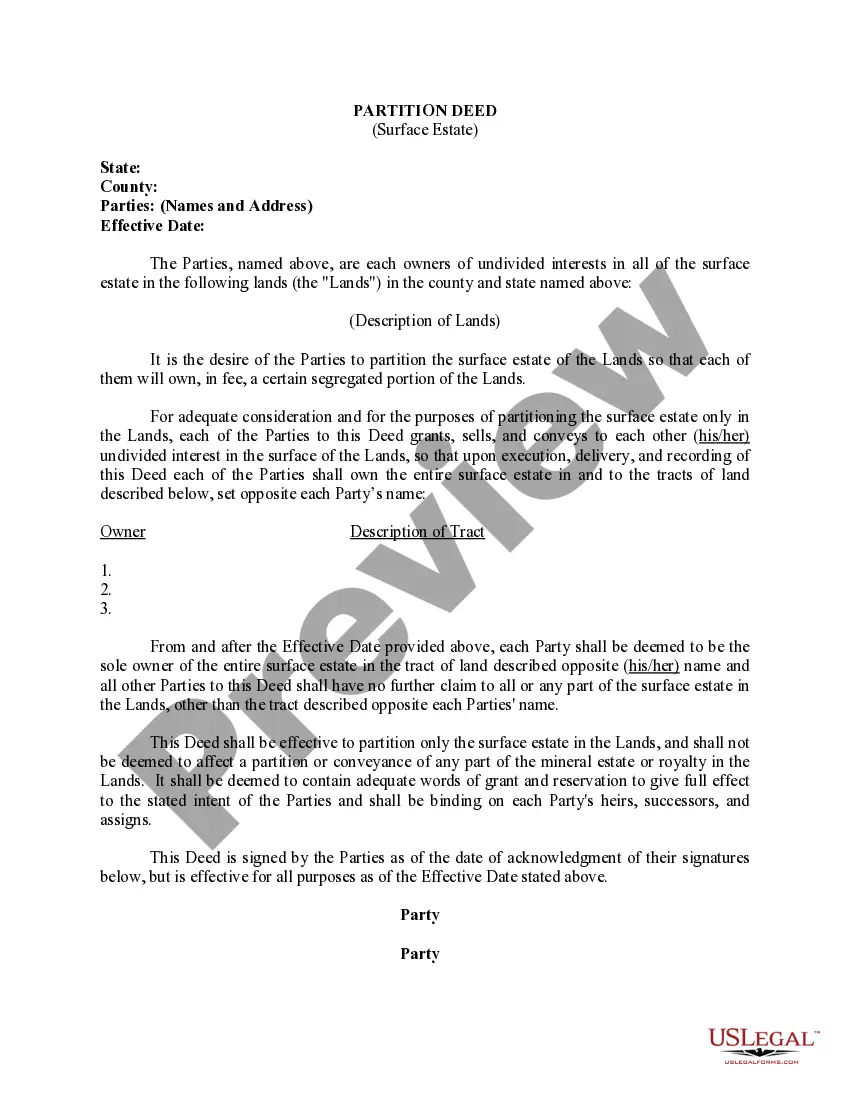
Get your form ready online
Our built-in tools help you complete, sign, share, and store your documents in one place.
Make edits, fill in missing information, and update formatting in US Legal Forms—just like you would in MS Word.
Download a copy, print it, send it by email, or mail it via USPS—whatever works best for your next step.
Sign and collect signatures with our SignNow integration. Send to multiple recipients, set reminders, and more. Go Premium to unlock E-Sign.
If this form requires notarization, complete it online through a secure video call—no need to meet a notary in person or wait for an appointment.
We protect your documents and personal data by following strict security and privacy standards.

Make edits, fill in missing information, and update formatting in US Legal Forms—just like you would in MS Word.

Download a copy, print it, send it by email, or mail it via USPS—whatever works best for your next step.

Sign and collect signatures with our SignNow integration. Send to multiple recipients, set reminders, and more. Go Premium to unlock E-Sign.

If this form requires notarization, complete it online through a secure video call—no need to meet a notary in person or wait for an appointment.

We protect your documents and personal data by following strict security and privacy standards.
Looking for another form?
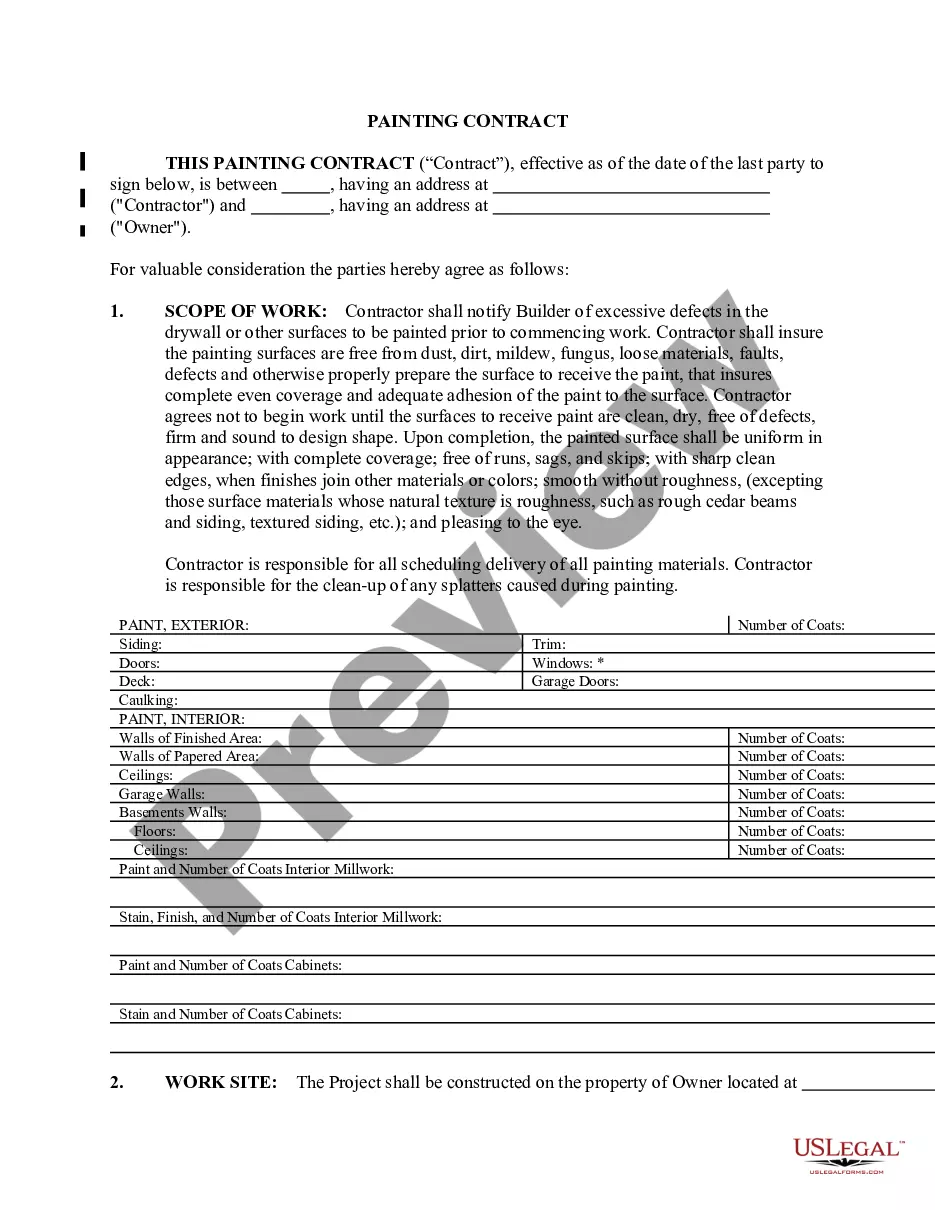
How to fill out Partition Warranty Deed?
If you need to total, download, or print legal document templates, utilize US Legal Forms, the leading collection of legal forms available online.
Make the most of the site's straightforward and user-friendly search to find the documents you require.
Numerous templates for business and individual purposes are organized by categories and states, or keywords.
Step 4. Once you have found the form you need, click on the Buy now button. Choose the pricing plan you prefer and enter your information to register for the account.
Step 5. Process the transaction. You can use your credit card or PayPal account to complete the transaction.
- Utilize US Legal Forms to acquire the Kentucky Partition Warranty Deed in just a few clicks.
- If you are already a US Legal Forms user, Log In to your account and click the Obtain button to find the Kentucky Partition Warranty Deed.
- You can also access forms you previously obtained in the My documents section of your account.
- If this is your first time using US Legal Forms, follow the instructions below.
- Step 1. Ensure you have selected the form for the correct city/state.
- Step 2. Use the Review option to examine the form's content. Don't forget to read the details.
- Step 3. If you are not satisfied with the form, use the Lookup field at the top of the screen to find other types of the legal form template.
Form popularity
FAQ
A Kentucky general warranty deed is used to transfer property from a seller (grantor) to a buyer (grantee) in Kentucky. A warranty deed provides a guarantee from the seller to the buyer that the property is clear of any title defects and that the seller has the legal authority to sell the property.
Warranty Deed for Real Estate Located in Kentucky General warranty deeds are statutory conveyances under KRS 382.030. The deed must state that the grantor "will warrant the property hereby conveyed" or contain words of import like "with warranty" or "with general warranty" (KRS 382.030).
Kentucky requires the person transferring property (the grantor) and the person receiving property (the grantee) to sign the deed. A deed from or to more than one person must be signed by all grantors and grantees. A deed involving an entity must be signed by a representative with legal power to act for the entity.
Attorney Involvement Laypersons may conduct real estate closings, but may not answer legal questions that arise at the closing, or offer any legal advice to the parties. However, preparation of deeds and mortgages constitutes the practice of law and must be prepared by an attorney.
Kentucky has not authorized transfer-on-death (TOD) deeds. Property owners in states that allow TOD deeds can record a TOD deed during life without giving up any rights in the property until the owner's death.
Kentucky requires the person transferring property (the grantor) and the person receiving property (the grantee) to sign the deed. A deed from or to more than one person must be signed by all grantors and grantees. A deed involving an entity must be signed by a representative with legal power to act for the entity.
Law shall not prevent a person (not holding himself out as a practicing attorney) from writing a deed, mortgage, or will.
The way a quitclaim deed works is that this type of transfer makes no seller guarantees. It merely states that the seller transfers any ownership interest to the buyer. So if the seller has absolutely no ownership interest in the property, that's precisely what transfers in a quitclaim deed to any buyer.