Kentucky Heirship Affidavit - Descent
Overview of this form
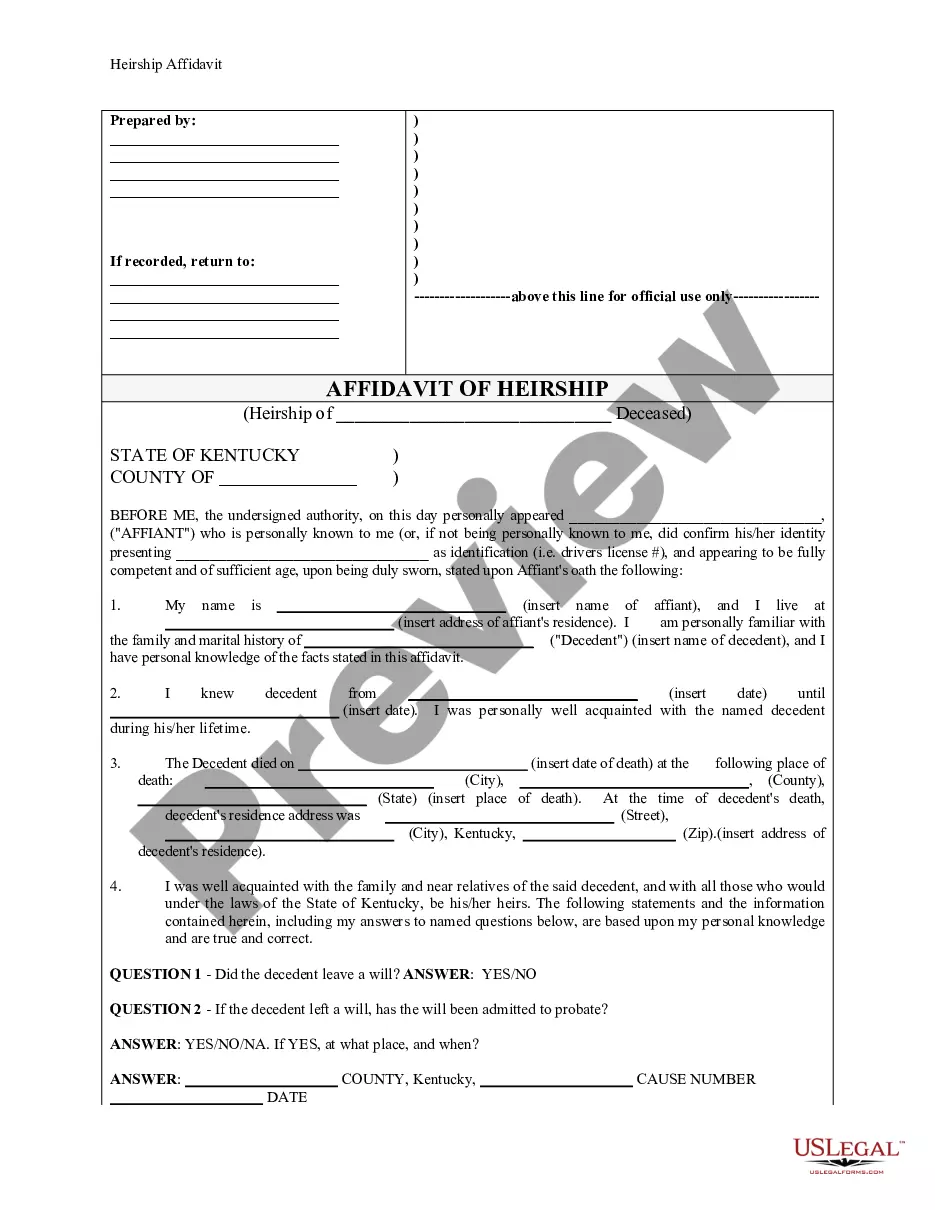
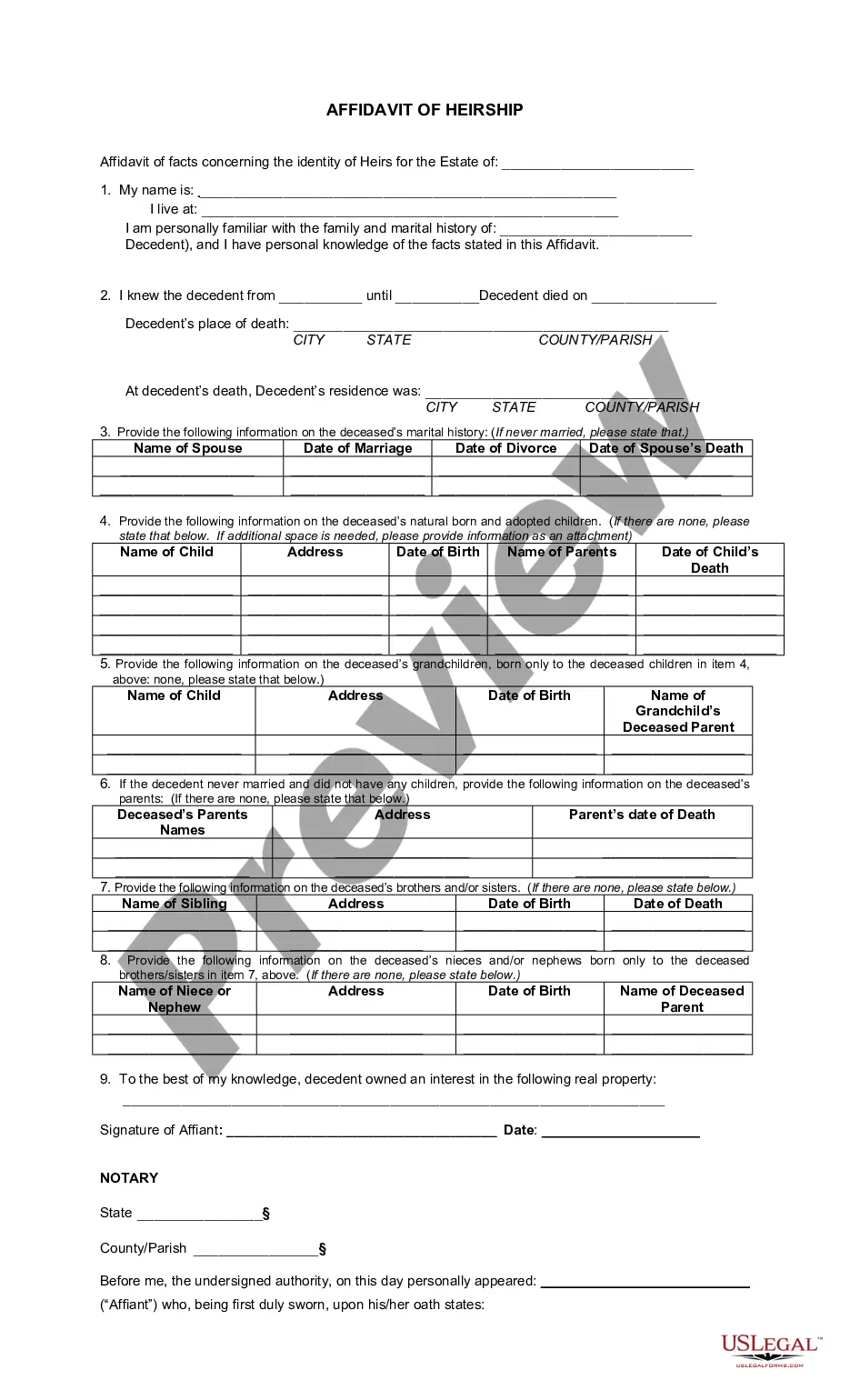
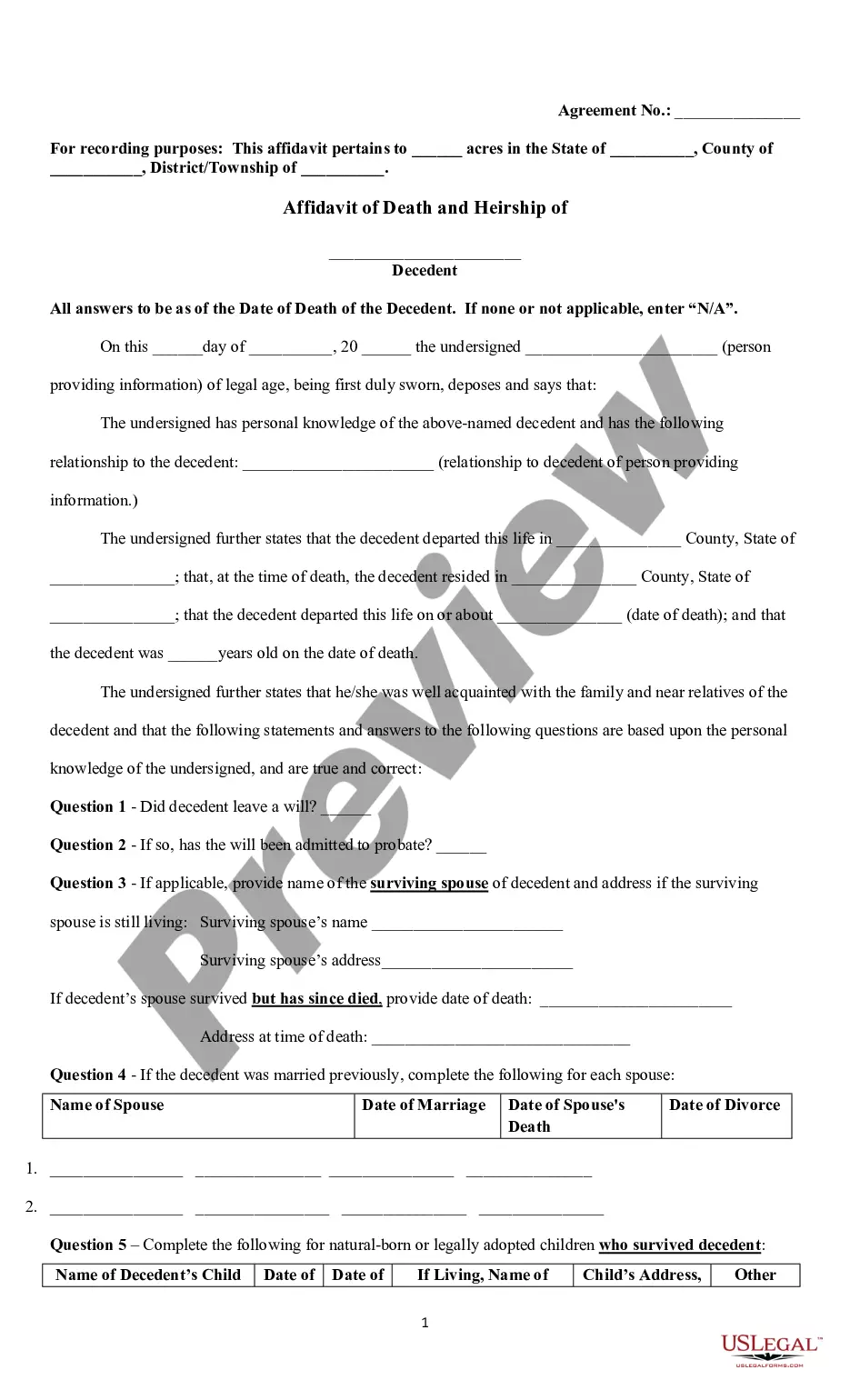
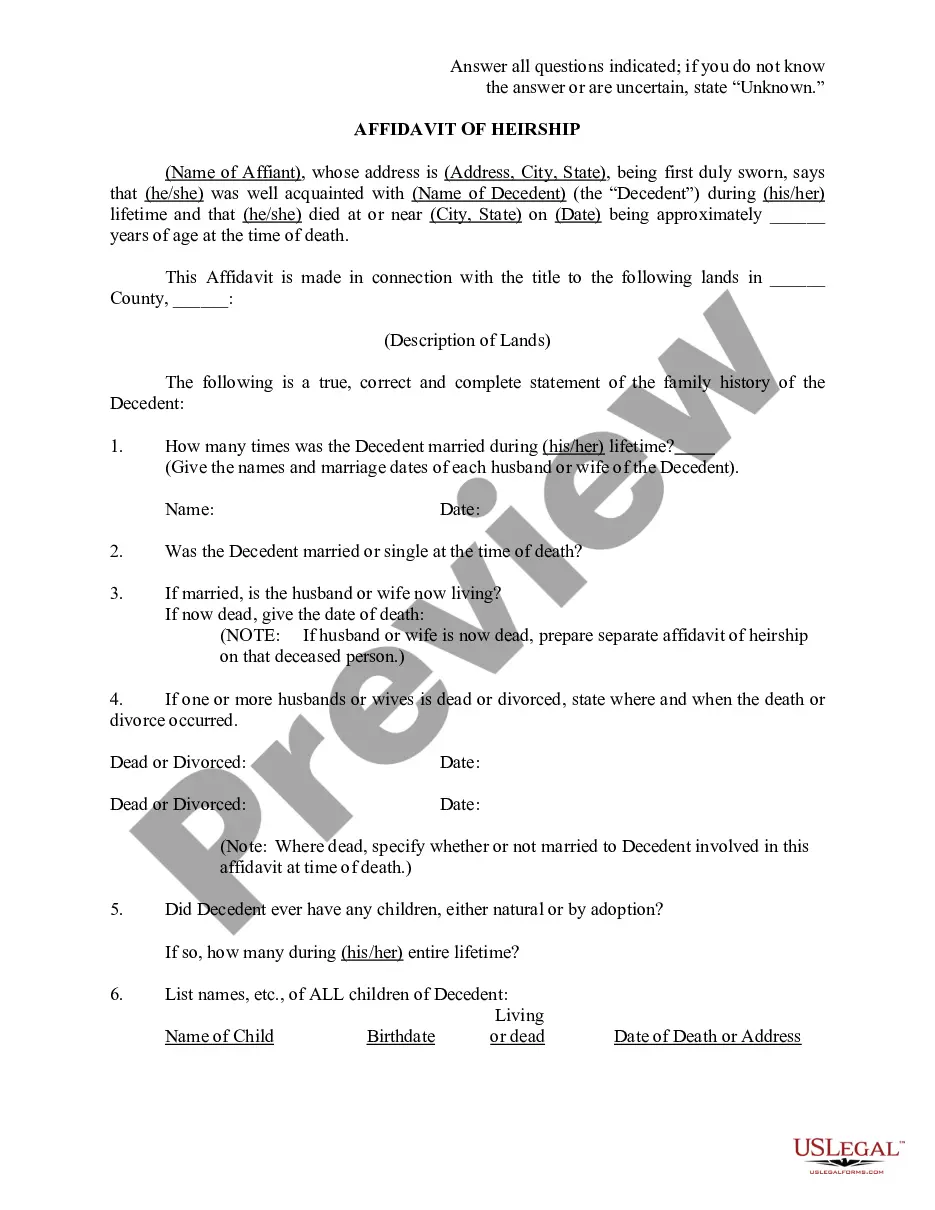
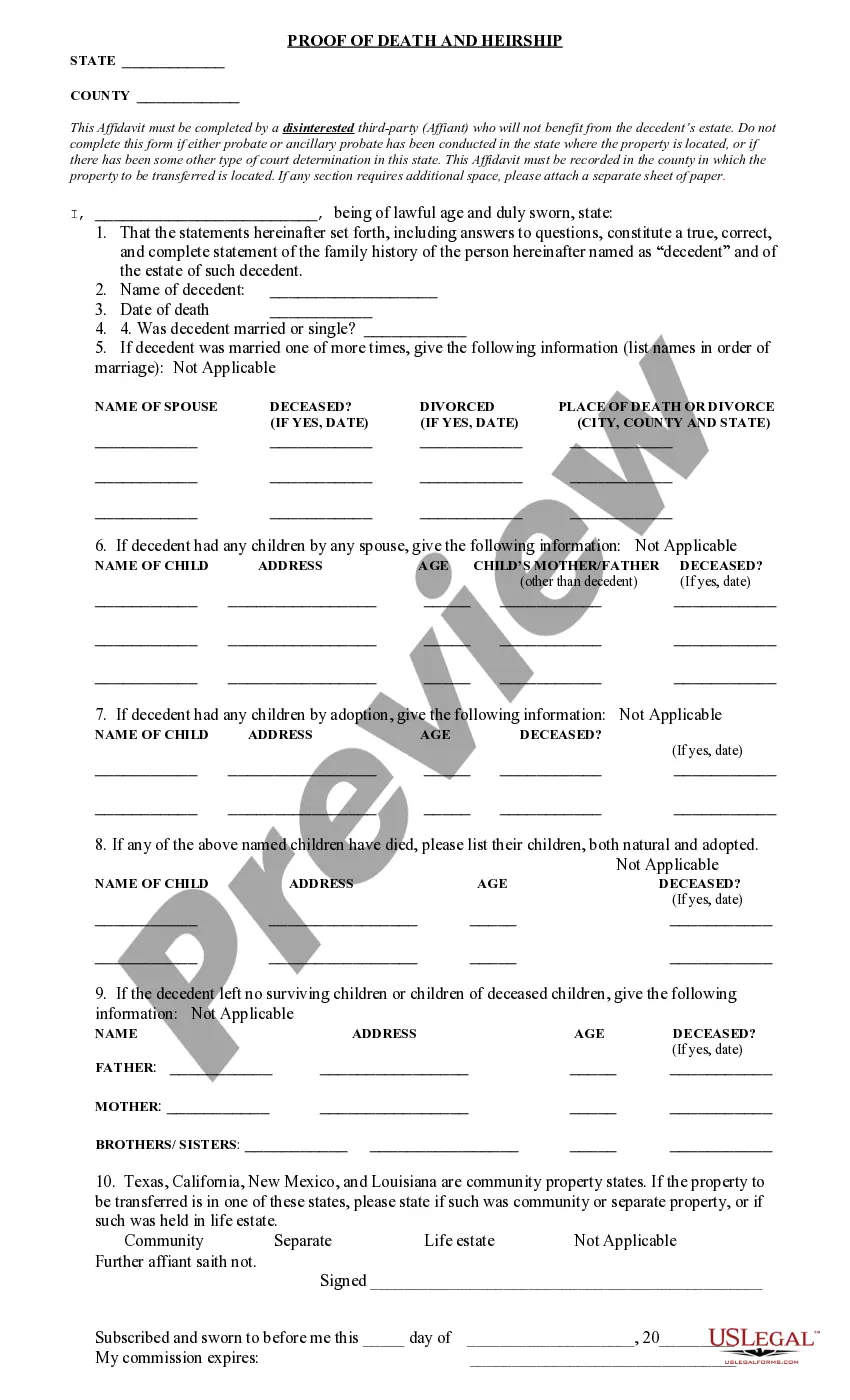
The Heirship Affidavit - Descent is a legal document used to establish the heirs of a deceased individual. This form is crucial when a person dies intestate (without a will) and helps determine the rightful heirs to the decedent's personal and real property. Unlike a will, which dictates the distribution of assets, this affidavit serves specifically to confirm the identity of heirs. It may be recorded with official land records if necessary, providing a clear legal basis for the transfer of property ownership.
Key parts of this document
- Identification details of the affiant (the person completing the form) including name and address.
- Declaration of the decedent's family and marital history.
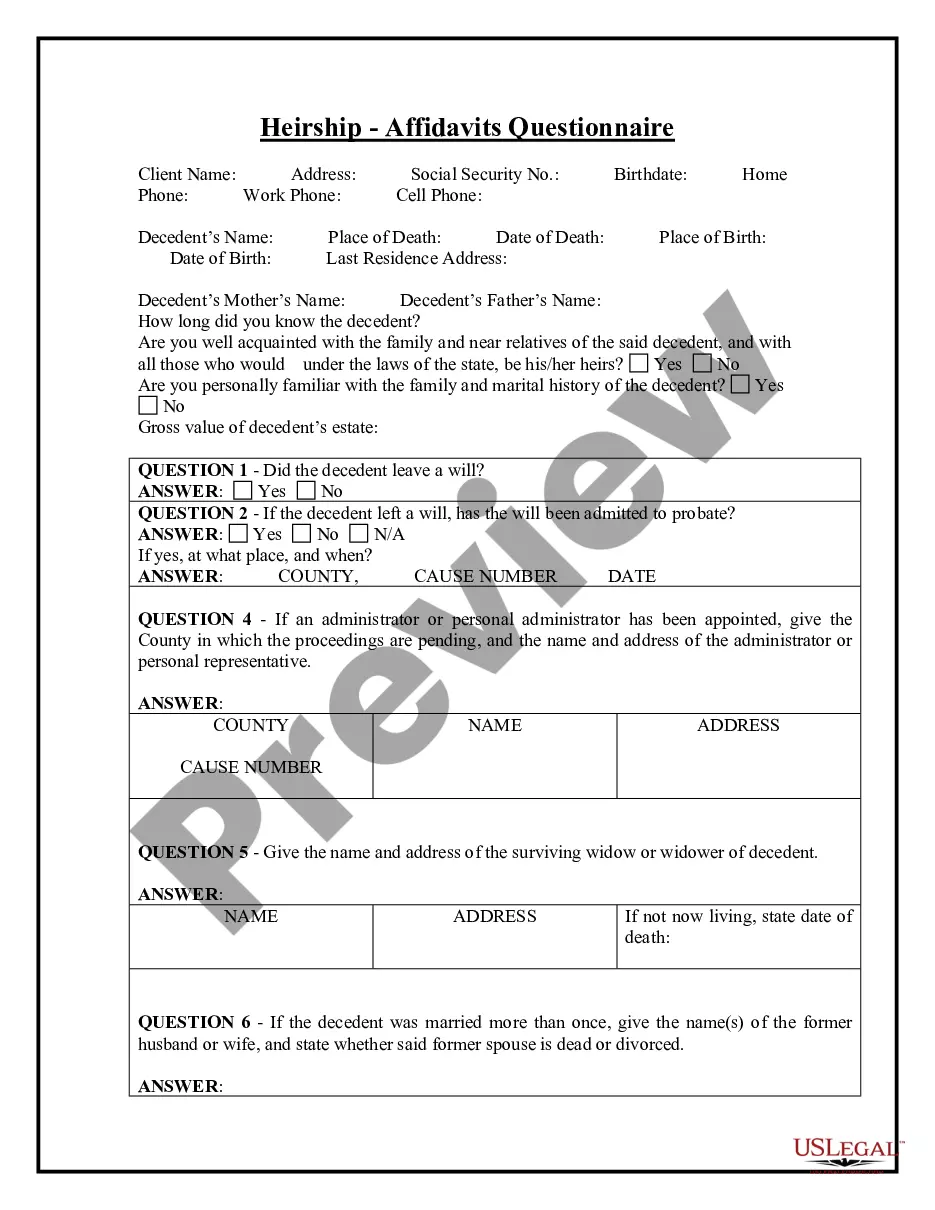
- Questions regarding the presence of a will and probate status.
- Details about the surviving spouse, children, and other heirs.
- Information on any real estate owned by the decedent.
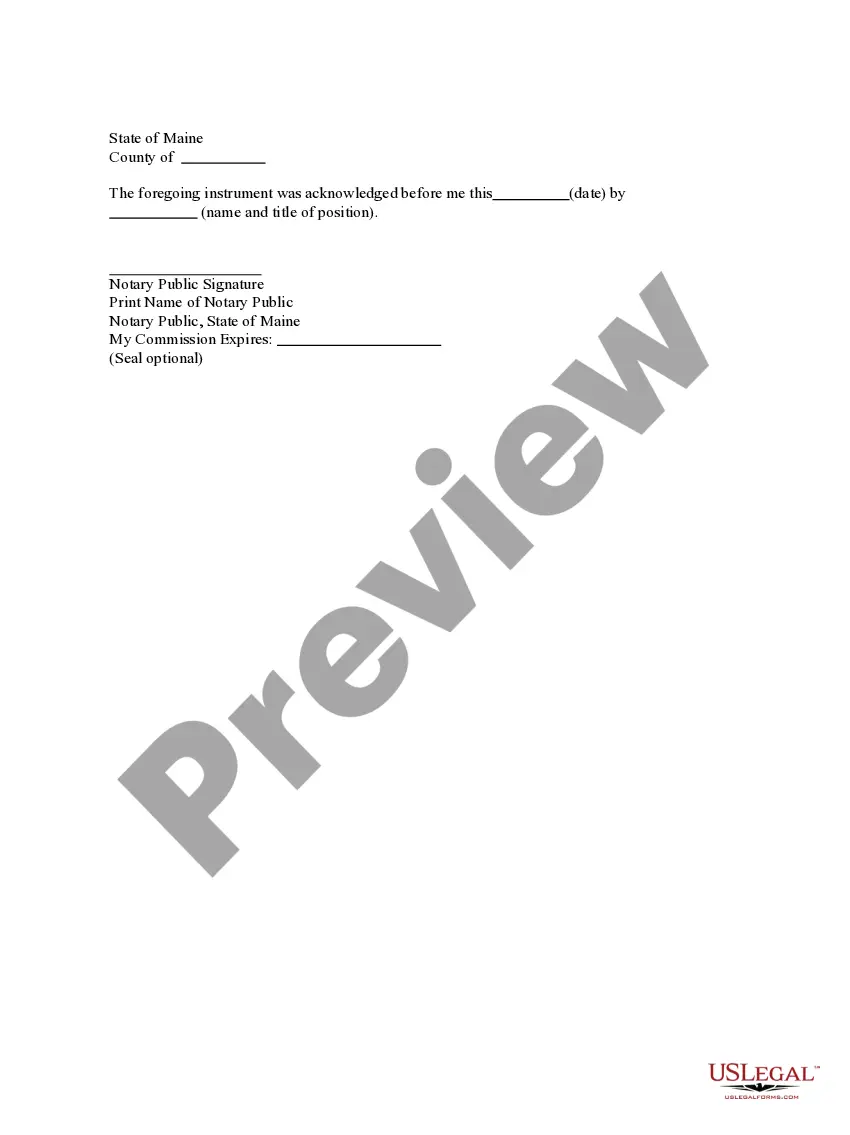
- Affiantâs signature and notary acknowledgement for legal validation.


Common use cases
This form is necessary when a person dies without a will, and you need to establish the legal heirs of the decedent. It is commonly used in cases where an estate has not been opened, yet heirs wish to sell property or settle obligations tied to the decedent's estate. For example, if the son of a deceased individual wants to sell inherited land but needs to prove his heirship, he would complete this affidavit to fulfill legal requirements.
Intended users of this form
This affidavit is suitable for:
- Heirs of a deceased person who died without a will.
- Individuals needing to confirm heirship for legal property transactions.
- Persons responsible for handling the estate of a decedent.
How to complete this form
- Identify the affiantâs information including name and address.
- Provide details about the decedent, including name, date of death, and place of residence.
- Answer questions regarding the existence of a will and the status of probate proceedings.
- List all surviving heirs, including spouse and children, along with their addresses and relevant dates.
- Complete sections related to the deceased's property and debts, if applicable.
- Sign the affidavit in front of a notary public and ensure it is notarized for legal validity.
Notarization guidance
Yes, this form must be notarized to be legally valid. It requires the affiant to sign in the presence of a notary public, confirming the identity and competency of the individual completing the affidavit. US Legal Forms offers integrated online notarization, providing a secure video call process available 24/7, ensuring your document is properly executed without the need for in-person appointments.
Get your form ready online
Our built-in tools help you complete, sign, share, and store your documents in one place.
Make edits, fill in missing information, and update formatting in US Legal Forms—just like you would in MS Word.
Download a copy, print it, send it by email, or mail it via USPS—whatever works best for your next step.
Sign and collect signatures with our SignNow integration. Send to multiple recipients, set reminders, and more. Go Premium to unlock E-Sign.
If this form requires notarization, complete it online through a secure video call—no need to meet a notary in person or wait for an appointment.
We protect your documents and personal data by following strict security and privacy standards.

Make edits, fill in missing information, and update formatting in US Legal Forms—just like you would in MS Word.

Download a copy, print it, send it by email, or mail it via USPS—whatever works best for your next step.

Sign and collect signatures with our SignNow integration. Send to multiple recipients, set reminders, and more. Go Premium to unlock E-Sign.

If this form requires notarization, complete it online through a secure video call—no need to meet a notary in person or wait for an appointment.

We protect your documents and personal data by following strict security and privacy standards.
Common mistakes
- Failing to provide complete information about the decedent and surviving heirs.
- Not answering all relevant questions, particularly regarding the existence of a will and probate status.
- Submitting the form without notarization when required.
- Incorrectly identifying the affiant's relationship to the decedent.
Advantages of online completion
- Easy access to a customizable affidavit template, lessening the risk of errors.
- Convenient completion at your own pace, allowing for the collection of detailed information.
- Secure storage and retrieval of your completed documents.
Looking for another form?
Form popularity
FAQ
An Affidavit of Heirship is a sworn statement that heirs can use in some states to establish property ownership when the original owner dies intestate. Affidavits of Heirship are generally used when the decedent only left real property, personal property, or had a small estate.
The California Affidavit of Heirship is used by administrators to determine ownership of real and personal property in the estate of a deceased relative, especially if the property was not specified in the decedent's will or there is no will at all.
(A judgment in this case is a court order, in writing, reciting that the deceased person is dead, the date of death and a list of who are the heirs.) Proof. Once the judgment is issued, copies of the judgment can be used to show proof as to who is entitled to estate assets.
The price of the Affidavit of Heirship is $500. This price includes the attorneys' fees to prepare the Affidavit of Heirship and the cost to record in the real property records. You can save $75 if you record the Affidavit of Heirship yourself.
A fee of $15 for the first page and $4 for each additional page is common. Ask if you can file the two affidavits of heirship as one document. Some counties let you file the two affidavits of heirship as one document if the decedent and property descriptions are the same.
Get a copy of the probated will. Obtain a certified copy of the death certificate. Draft a new deed that names you as the property owner. Sign the new deed and have it notarized.
Some of the most common ways states provide for transferring property into the name of an heir when there was no will include filing a small estates affidavit or affidavit of heirship, requesting letters of administration, and initiating court proceedings.
Death Certificate. The first thing in the list is Death Certificate. Claim Application Form. Claim form is the form which needs to be filled by you at the time of making the claim. Probate of WILL. Succession Certificate.