Connecticut Motion for Bond Review
Overview of this form
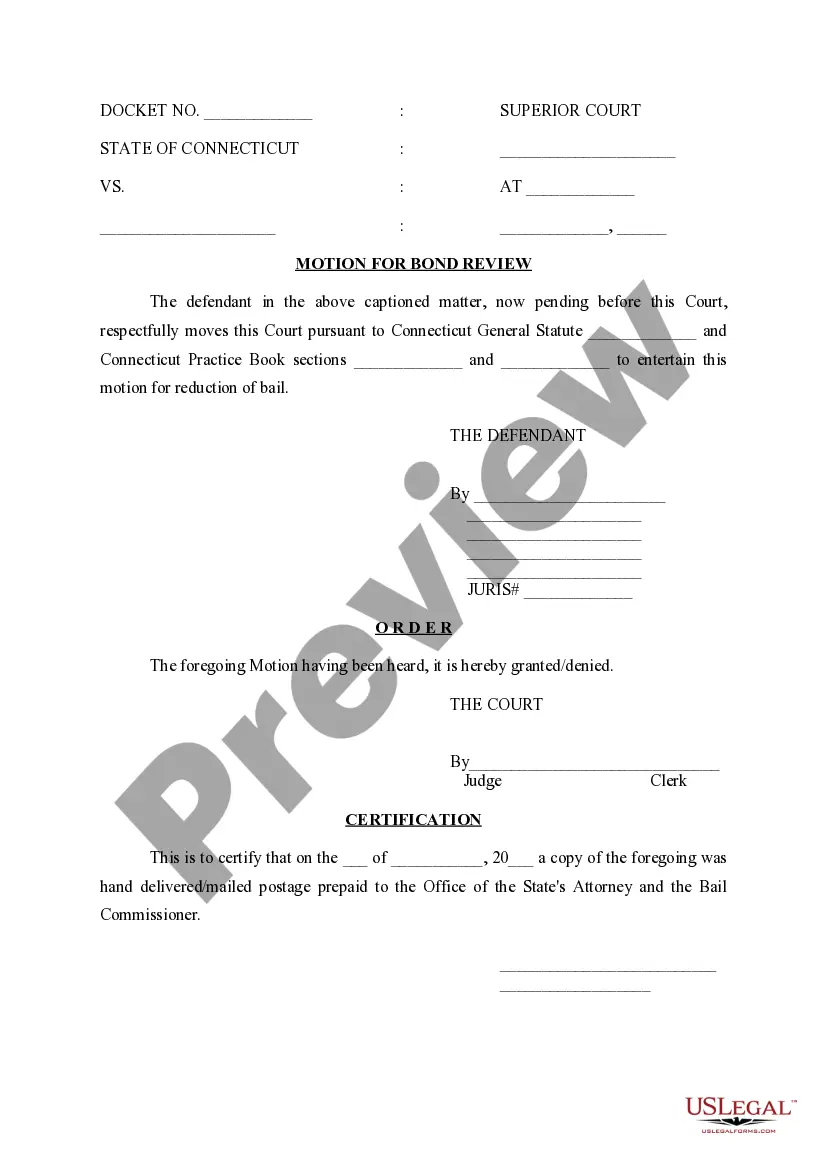
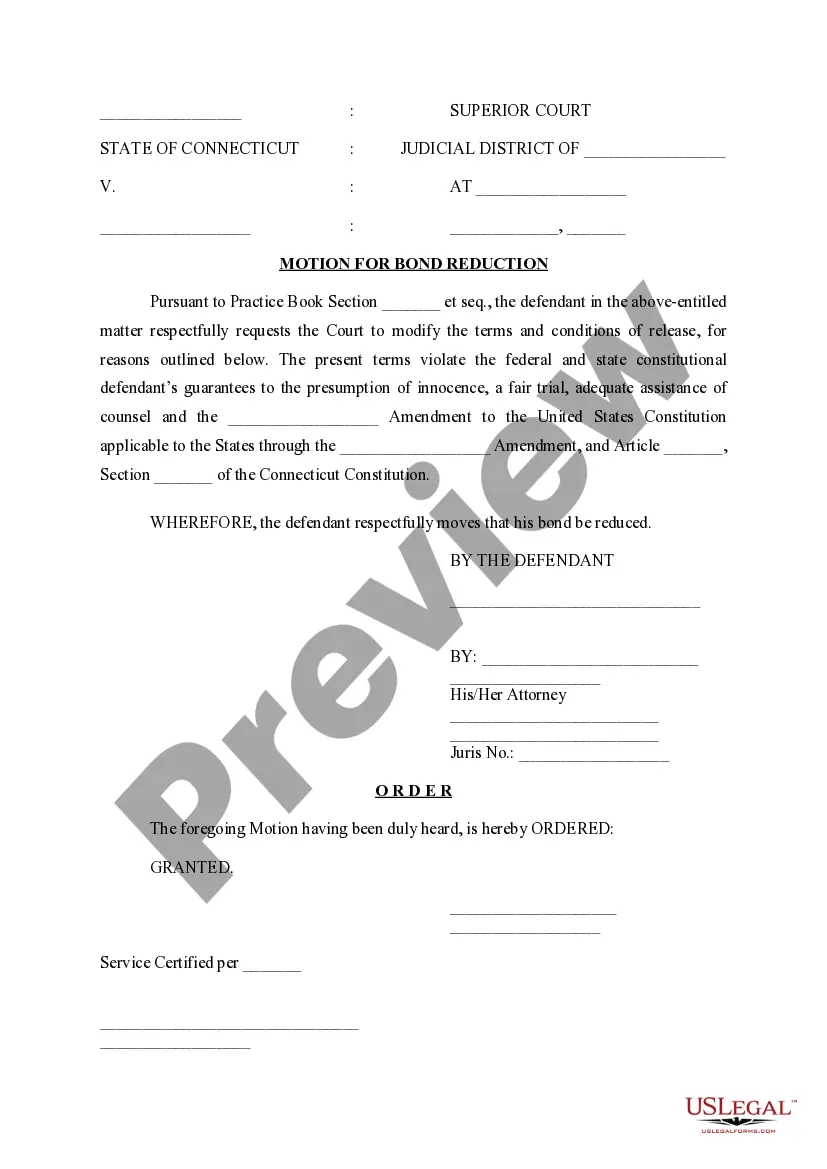
The Motion for Bond Review is a legal document that requests a judge to reconsider and potentially reduce the defendant's bail amount. This motion is crucial for individuals who are awaiting trial and wish to avoid remaining in jail until their case is resolved. Unlike other legal motions, this specific form focuses on the financial aspect of the defendant's release and aims to provide a pathway for securing their freedom during the legal process.
Key parts of this document
- Docket number: Identifies the specific case in court.
- Defendant's details: Information about the defendant involved in the case.
- Legal citations: References to relevant Connecticut statutes and practice book sections.
- Order section: Where the judge indicates whether the motion is granted or denied.
- Certification: Proof of delivery to the state's attorney and bail commissioner.
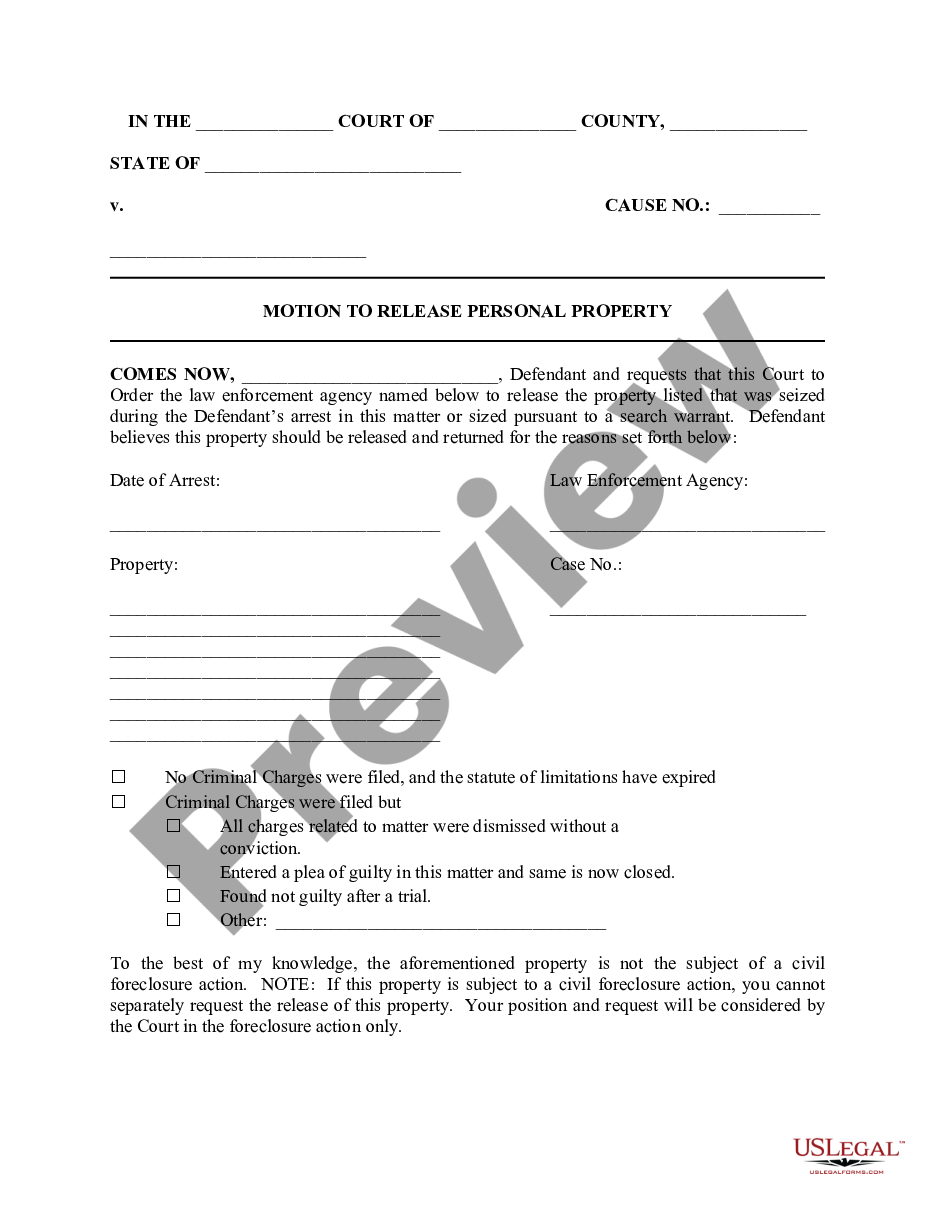
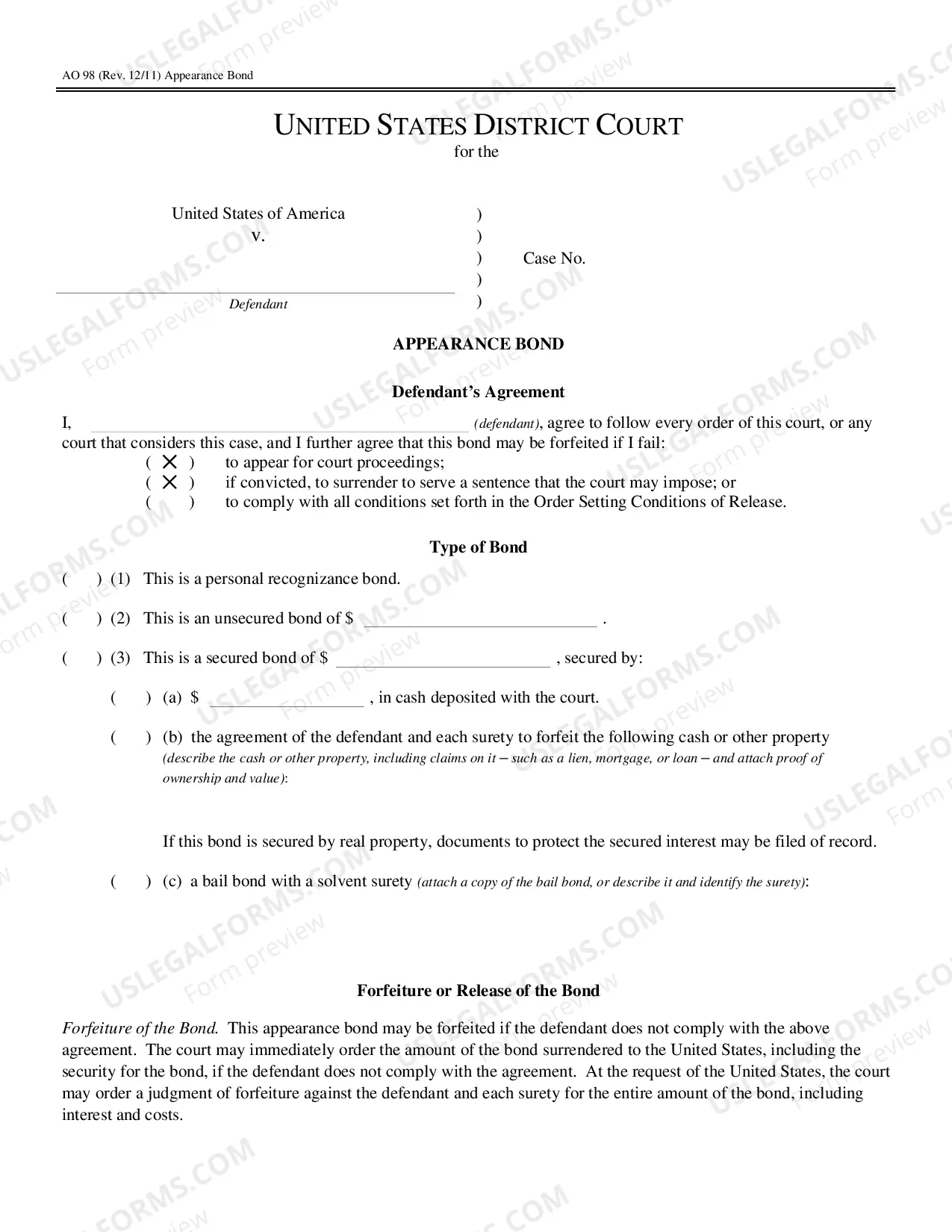
When to use this form
This form is used in situations where a defendant seeks to lower their bail amount. Common scenarios include circumstances where the defendant's financial situation has changed, or new evidence suggests the risk of flight or danger to the community may be lower than previously assessed. It is also applicable when the defendant has shown compliance with court orders during pre-trial release.
Who needs this form
- Defendants who are currently in custody and wish to request a bond review.
- Attorneys representing defendants who want to file a motion on behalf of their clients.
- Individuals seeking a reduction in bail based on changed circumstances or new evidence.
Completing this form step by step
- Enter the docket number at the top of the form.
- Provide the full name of the defendant in the designated section.
- Fill out the legal citation fields with the appropriate Connecticut General Statutes and Practice Book sections.
- Sign the motion, including the attorney's name and Juris number, if applicable.
- Complete the certification section, noting the date and method of delivery to the appropriate offices.
Is notarization required?
This form does not typically require notarization unless specified by local law. Ensure that you check Connecticut's specific requirements for any additional notarization needs.
Get your form ready online
Our built-in tools help you complete, sign, share, and store your documents in one place.
Make edits, fill in missing information, and update formatting in US Legal Forms—just like you would in MS Word.
Download a copy, print it, send it by email, or mail it via USPS—whatever works best for your next step.
Sign and collect signatures with our SignNow integration. Send to multiple recipients, set reminders, and more. Go Premium to unlock E-Sign.
If this form requires notarization, complete it online through a secure video call—no need to meet a notary in person or wait for an appointment.
We protect your documents and personal data by following strict security and privacy standards.

Make edits, fill in missing information, and update formatting in US Legal Forms—just like you would in MS Word.

Download a copy, print it, send it by email, or mail it via USPS—whatever works best for your next step.

Sign and collect signatures with our SignNow integration. Send to multiple recipients, set reminders, and more. Go Premium to unlock E-Sign.

If this form requires notarization, complete it online through a secure video call—no need to meet a notary in person or wait for an appointment.

We protect your documents and personal data by following strict security and privacy standards.
Typical mistakes to avoid
- Failing to include the correct docket number, which can lead to processing delays.
- Omitting necessary legal citations, which could undermine the motion's validity.
- Not signing the form, which is essential for it to be considered by the court.
Why complete this form online
- Convenience of downloading and completing the form at your own pace.
- Editability allows you to tailor the document to your specific needs.
- Access to templates drafted by licensed attorneys for legal reliability.
Key takeaways
- The Motion for Bond Review is essential for defendants seeking to reduce bail.
- Personalized details and legal citations are crucial for the motion's validity.
- Using this form online provides ease of access and reliability.
Looking for another form?
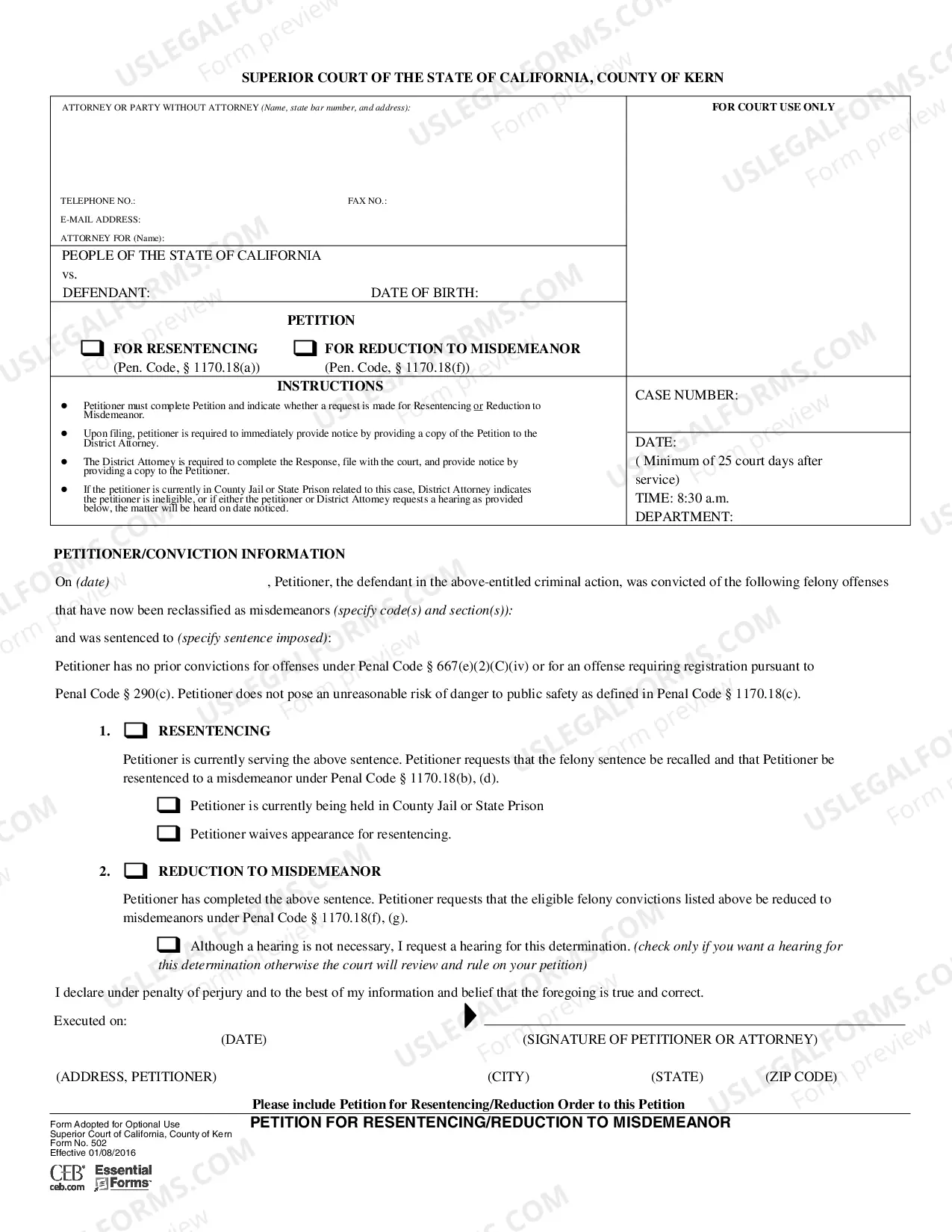


Form popularity
FAQ
A judge in Connecticut typically has a reasonable period to rule on a motion, but this can vary based on the complexity of the case. For a Connecticut Motion for Bond Review, swift judicial action is often necessary to ensure timely resolutions. Understanding the timeline can help parties manage their expectations and plan their legal strategies effectively.
If a judge does not rule on a motion, it can lead to delays in the legal process and may require further action from the parties involved. In the context of a Connecticut Motion for Bond Review, an unaddressed motion can hinder your ability to secure favorable conditions. Staying informed about your case's status can help you take the appropriate next steps.
In Connecticut, judgments generally remain valid for 20 years, allowing ample time for enforcement actions. However, if there is a need for a Connecticut Motion for Bond Review, it’s essential to act promptly to preserve rights and interests. Knowing the timeframe for judgments can guide you in making timely decisions about your legal options.
Local Rule 56 in Connecticut provides guidelines for motions, including those related to bond reviews. This rule ensures that courts receive clear and concise information when considering a Connecticut Motion for Bond Review. Understanding this rule is crucial for anyone seeking to challenge or defend a bond decision.
A motion hearing serves as an opportunity for the court to listen to arguments pertaining to a motion, such as a Connecticut Motion for Bond Review. During this hearing, both the defense and the prosecution present their cases regarding the bond's terms. The judge then considers the arguments, evidence, and circumstances involved before making a ruling. This process is essential as it directly impacts the defendant's freedom and related conditions.
A Connecticut Motion for Bond Review refers to a legal request aimed at revisiting the terms of a bond that a defendant is required to meet. This motion typically seeks to lower the bond amount or alter the conditions of release. It provides an opportunity for defendants to present new information or circumstances that warrant a change. The court evaluates these requests carefully, considering both the defendant’s situation and public safety.
A motion for bond is a formal request made to a court, asking to change the terms of bail or bond set for a defendant. This could include a reduction in the amount, changes in conditions, or even a complete release from custody. In Connecticut, submitting a Motion for Bond Review allows you to argue for more favorable conditions. Understanding the legal framework can help you effectively navigate this process.
The duration for a Connecticut Motion for Bond Review can vary based on the court's schedule and the complexity of your case. Generally, it may take a few weeks to a couple of months to receive a decision after filing. Factors such as court backlogs or the need for additional evidence can influence the timeline. It is important to stay in touch with your legal representative for updates.
The three grounds for a motion for reconsideration generally include the discovery of new evidence, an intervening change in the law, or the need to correct a clear error of law or fact. Utilizing a Connecticut Motion for Bond Review may serve as a component of a broader strategy for seeking reconsideration of bond-related issues. Understanding these grounds can strengthen your legal position.
The grounds for a motion to dismiss in Connecticut typically include lack of jurisdiction, failure to state a claim upon which relief can be granted, or other procedural issues. A Connecticut Motion for Bond Review can also raise concerns about the legal justification for imposing a bond. Ultimately, a well-crafted motion can address significant flaws in the case against you.