Connecticut Motion for Bond Reduction
About this form
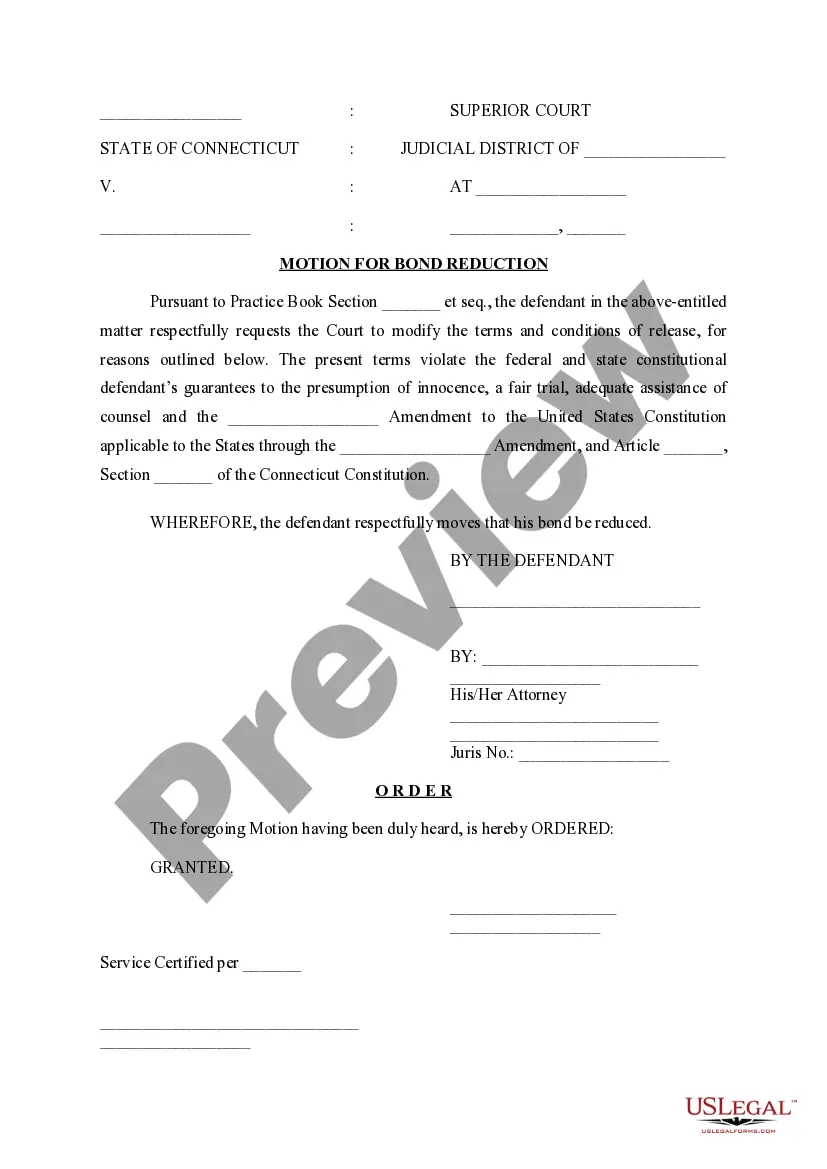
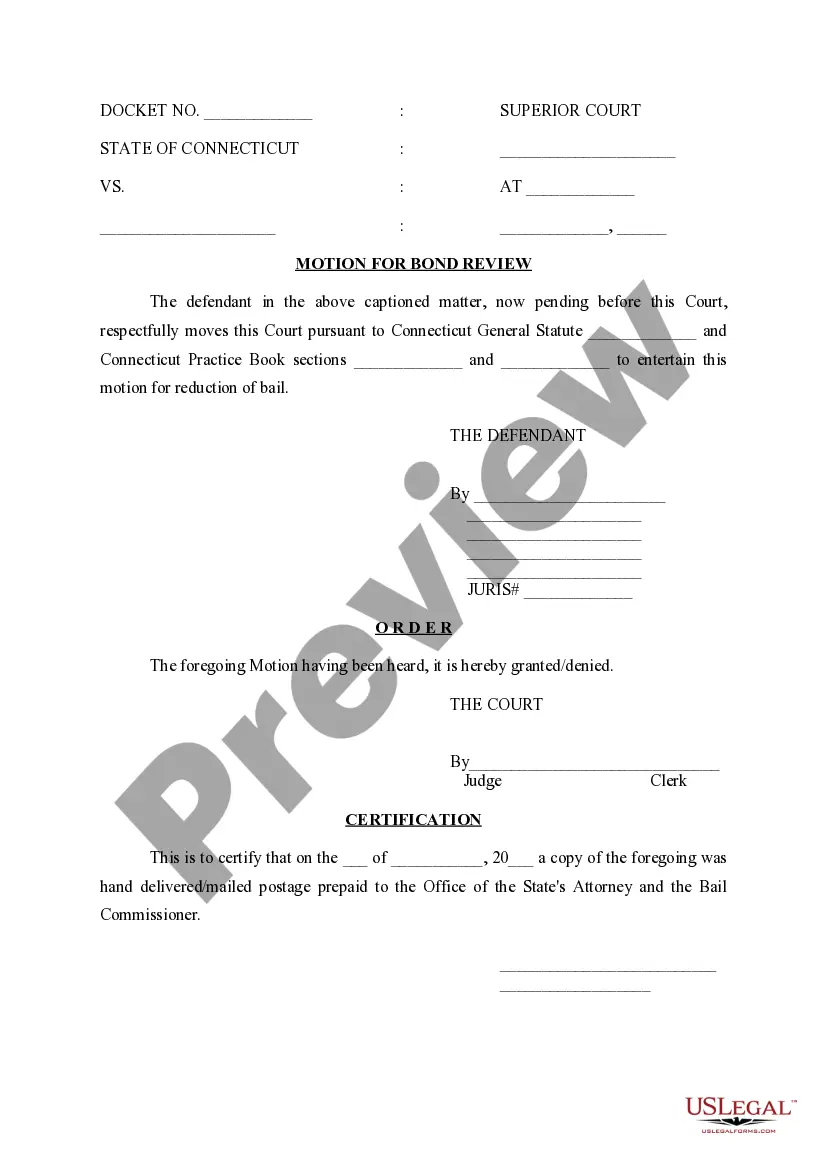
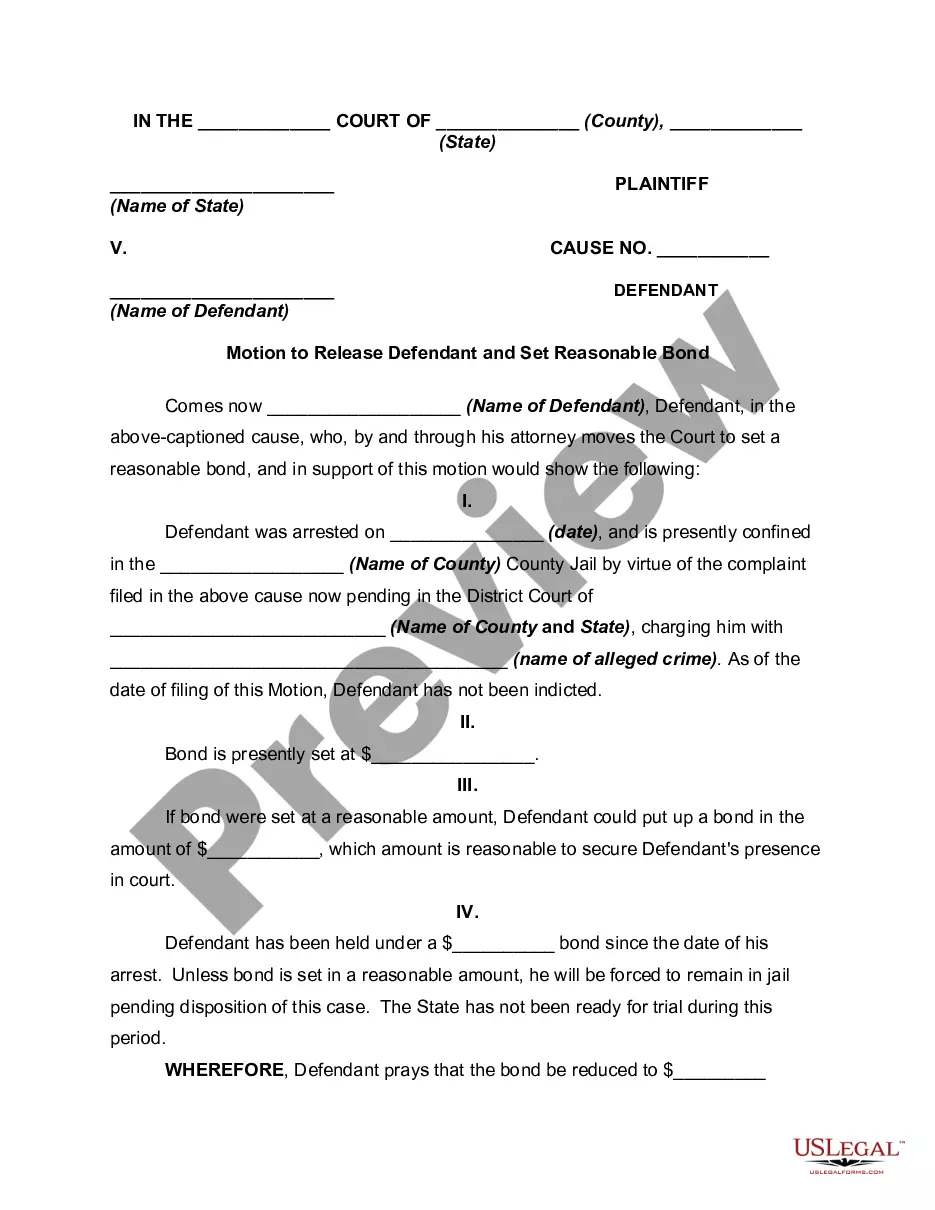
The Motion for Bond Reduction is a formal request made by the defendant to a court, asking for a reduction in the bond amount set during their pretrial release. This motion challenges the existing bond terms, which may be deemed as violating constitutional rights such as the presumption of innocence and the right to a fair trial. This form distinguishes itself from other motions by specifically addressing the need to adjust financial conditions of release, providing an essential tool for defendants seeking more favorable terms during legal proceedings.
Form components explained
- Identification of the court and case information.
- A clear request for modification of bond terms.
- Reference to legal rights and constitutional guarantees.
- A signature line for the defendant and their attorney.
- An order section for the judgeâs ruling.
Common use cases
This form is used when a defendant believes their current bond amount is unreasonably high or burdensome. It is appropriate to file this motion when there are changes in circumstances, such as new evidence, a change in financial status, or when there are concerns about the fairness of the bond terms. Using this form can help defendants secure their rights while waiting for trial.
Who should use this form
- Defendants facing criminal charges who are required to post bail.
- Individuals who believe their bond amount is excessively high.
- Legal representatives assisting clients with bond-related issues.
Completing this form step by step
- Fill in the court and case information at the top of the form.
- Clearly state your request for bond reduction and outline your reasons.
- Include references to any applicable constitutional rights that support your motion.
- Sign the form and provide your attorneyâs information if you are represented.
- File the completed form with the court and ensure proper service to all parties involved.
Does this form need to be notarized?
This form does not typically require notarization unless specified by local law. However, itâs essential to check with the relevant court or legal advisor to confirm if any specific requirements apply to your case.
Get your form ready online
Our built-in tools help you complete, sign, share, and store your documents in one place.
Make edits, fill in missing information, and update formatting in US Legal Forms—just like you would in MS Word.
Download a copy, print it, send it by email, or mail it via USPS—whatever works best for your next step.
Sign and collect signatures with our SignNow integration. Send to multiple recipients, set reminders, and more. Go Premium to unlock E-Sign.
If this form requires notarization, complete it online through a secure video call—no need to meet a notary in person or wait for an appointment.
We protect your documents and personal data by following strict security and privacy standards.

Make edits, fill in missing information, and update formatting in US Legal Forms—just like you would in MS Word.

Download a copy, print it, send it by email, or mail it via USPS—whatever works best for your next step.

Sign and collect signatures with our SignNow integration. Send to multiple recipients, set reminders, and more. Go Premium to unlock E-Sign.

If this form requires notarization, complete it online through a secure video call—no need to meet a notary in person or wait for an appointment.

We protect your documents and personal data by following strict security and privacy standards.
Mistakes to watch out for
- Failing to provide sufficient reasons for the bond reduction request.
- Neglecting to properly fill out court and case information.
- Not signing the form or having an attorney's signature where required.
- Missing deadlines for filing the motion with the court.
Advantages of online completion
- Convenient access to legal templates from anywhere at any time.
- Easy to edit and customize to meet individual circumstances.
- Reliable forms drafted by licensed attorneys to ensure compliance with legal standards.
Looking for another form?
Form popularity
FAQ
Filing a motion for bond reduction in Connecticut requires completing a few specific steps. First, you need to gather all relevant information about the case and your financial situation. Then, you can draft the motion and present it to the court. Utilizing the tools offered by uslegalforms can simplify this process, ensuring that your Connecticut Motion for Bond Reduction is properly filed and increases your chances of a successful outcome.
A motion to suppress in Connecticut is a legal request to prevent certain evidence from being used in court. This motion argues that the evidence was obtained in violation of a person's rights. When filed correctly, it can significantly impact the outcome of a case, especially in criminal matters. Understanding how this relates to a Connecticut Motion for Bond Reduction is essential for effective legal strategy.
To lower child support in Connecticut, you may file a motion to modify the order based on changed circumstances, such as loss of income or changes in the child’s needs. Documenting these changes is essential for the court's consideration. Utilizing resources like US Legal Forms can help simplify the process of filing a Connecticut Motion for Bond Reduction and ensure you meet all necessary requirements.
In Connecticut, child support does not automatically end when a child turns 18. Support typically continues until the child graduates from high school, but this can vary depending on specific circumstances. It’s important to understand your obligations and how they may change, especially if you are navigating a Connecticut Motion for Bond Reduction.
Yes, child support can potentially be reduced if you have additional children, as this affects your overall financial responsibilities. Courts take into account the change in financial circumstances when reviewing support orders. If you want to explore options for lowering your child support, consider filing a Connecticut Motion for Bond Reduction to initiate this process.
In Connecticut, a judge generally has 120 days to rule on a motion, which includes motions like a Connecticut Motion for Bond Reduction. However, this timeframe can vary depending on the court's schedule and the complexity of the case. It's important to stay informed during this process, as timely decisions can significantly impact your situation.
The average child support payment in Connecticut can vary based on multiple factors, including income and the number of children involved. Typically, the state guidelines help to determine these payments, aiming to ensure that the child’s needs are met. If you are considering filing a Connecticut Motion for Bond Reduction, knowing the child support landscape can provide clarity on financial obligations.
A motion to dismiss should include a clear statement of the legal grounds for dismissal, an explanation of the facts, and supporting legal arguments. Ensure your motion is well-organized and concise to enhance its effectiveness. Engage with resources like US Legal Forms to find formats and examples that can streamline your writing process.
The Rule 12 motion to dismiss is a procedural tool in Connecticut that allows defendants to challenge the legal sufficiency of a complaint. It typically addresses deficiencies in pleadings like lack of jurisdiction or failure to state a claim. Properly utilizing Rule 12 can be crucial in limiting the scope of litigation. If drafting a motion, US Legal Forms can provide helpful templates.
To get child support reduced in Connecticut, you must file a motion demonstrating changes in your circumstances. Factors may include job loss, reduced income, or changes in the child's needs. Document your situation clearly and present relevant evidence in court. You can utilize resources from US Legal Forms to guide you through this process.