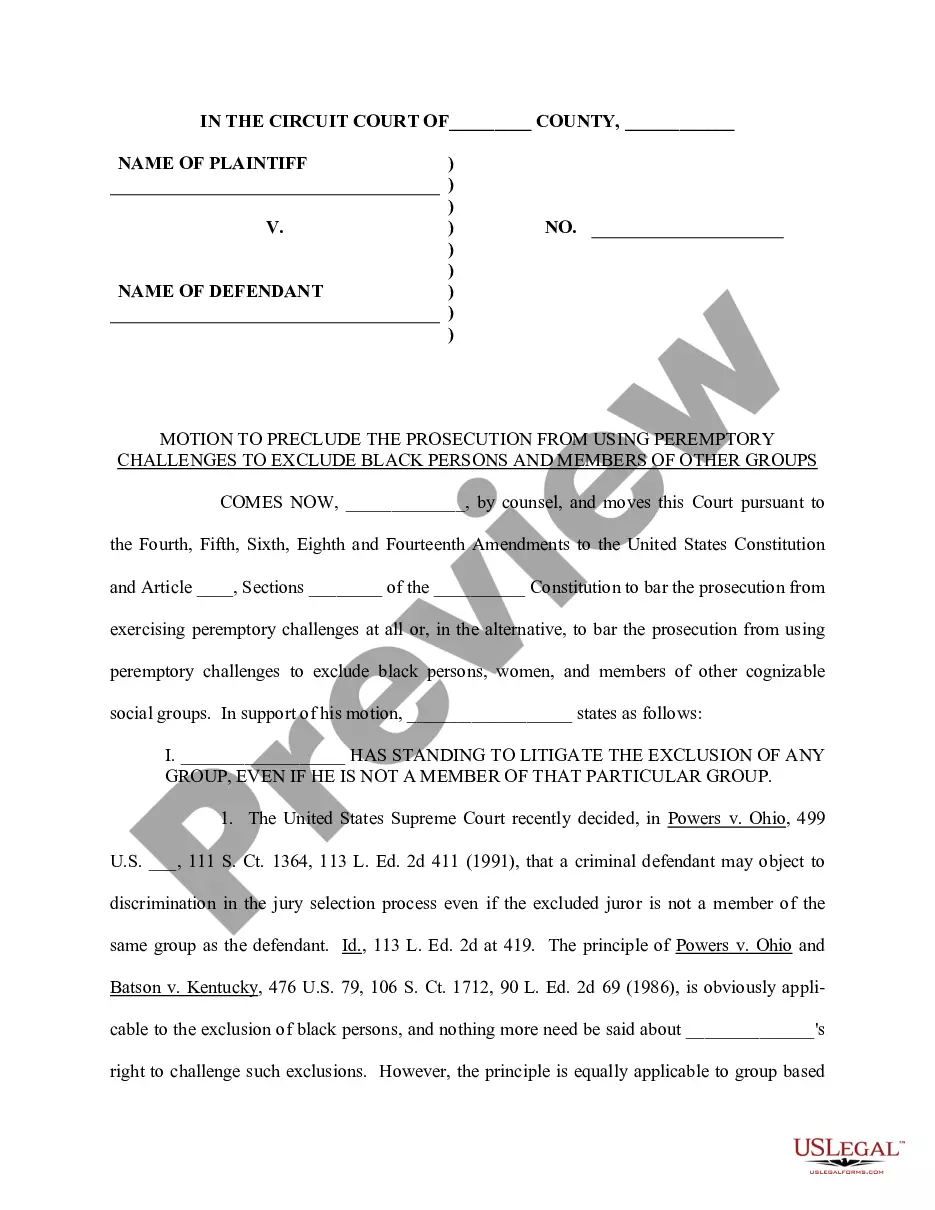
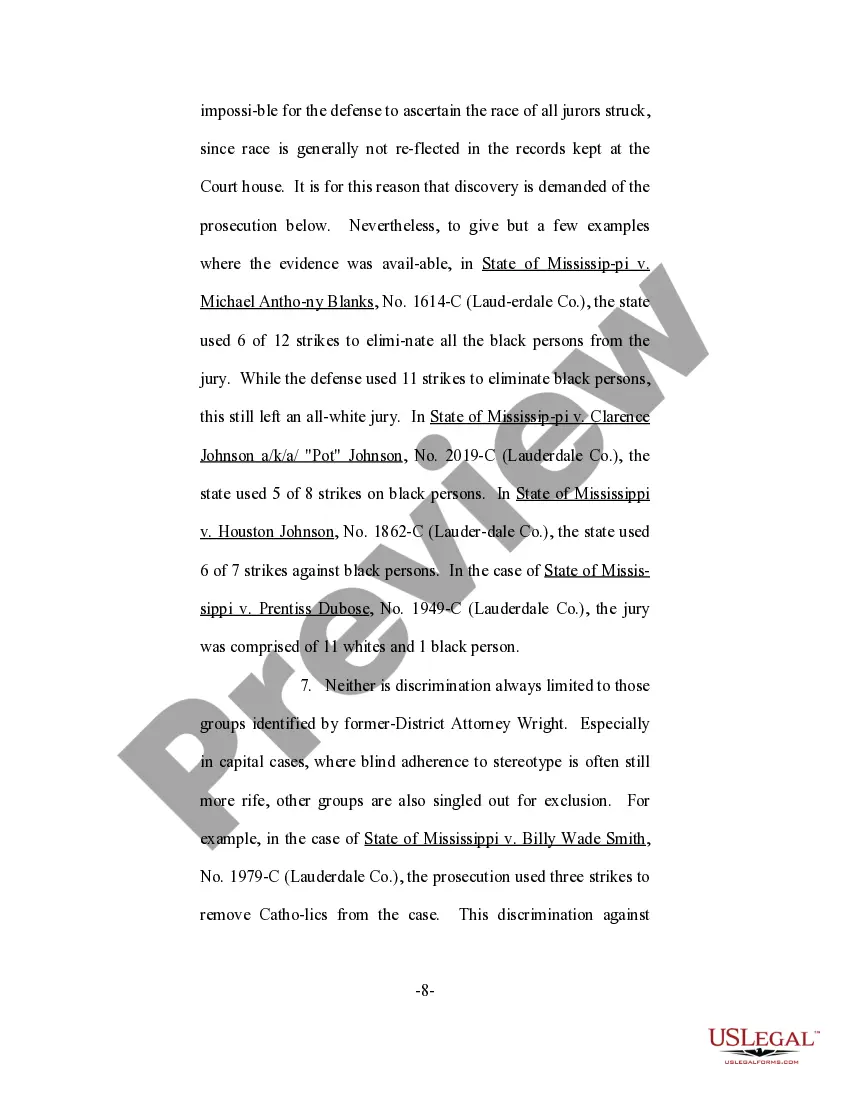
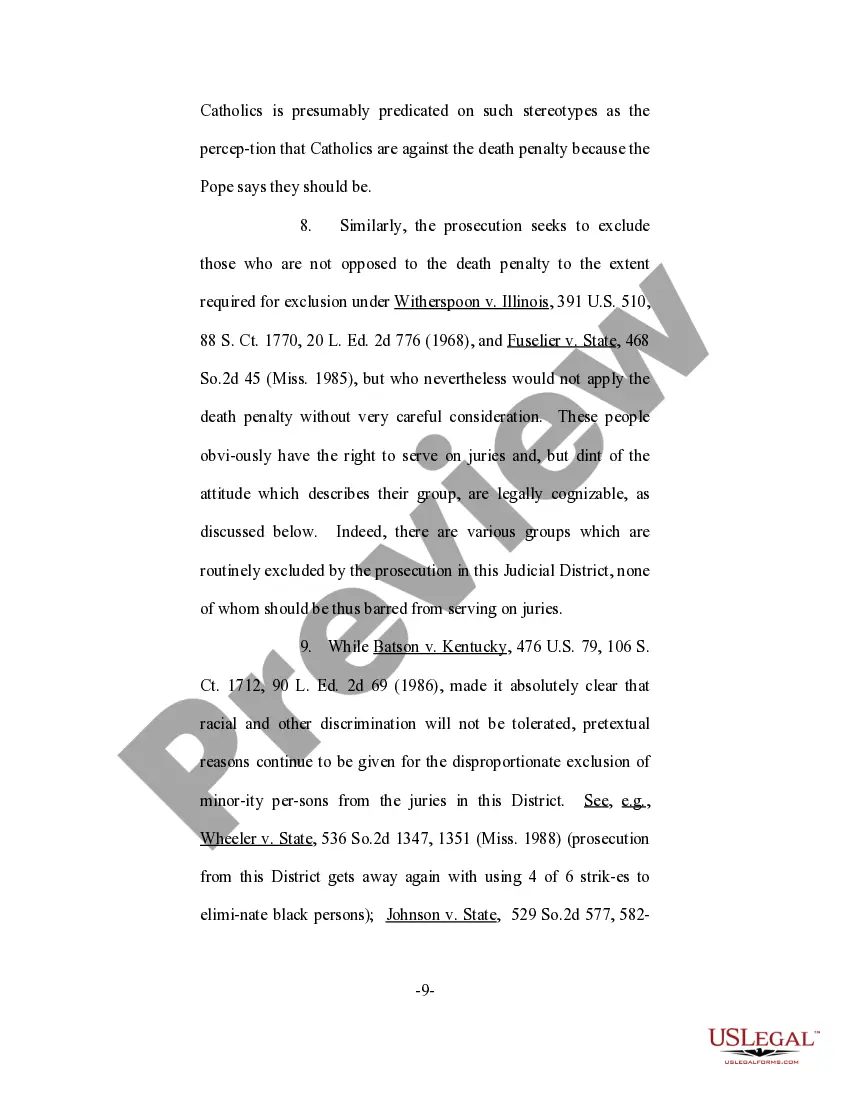
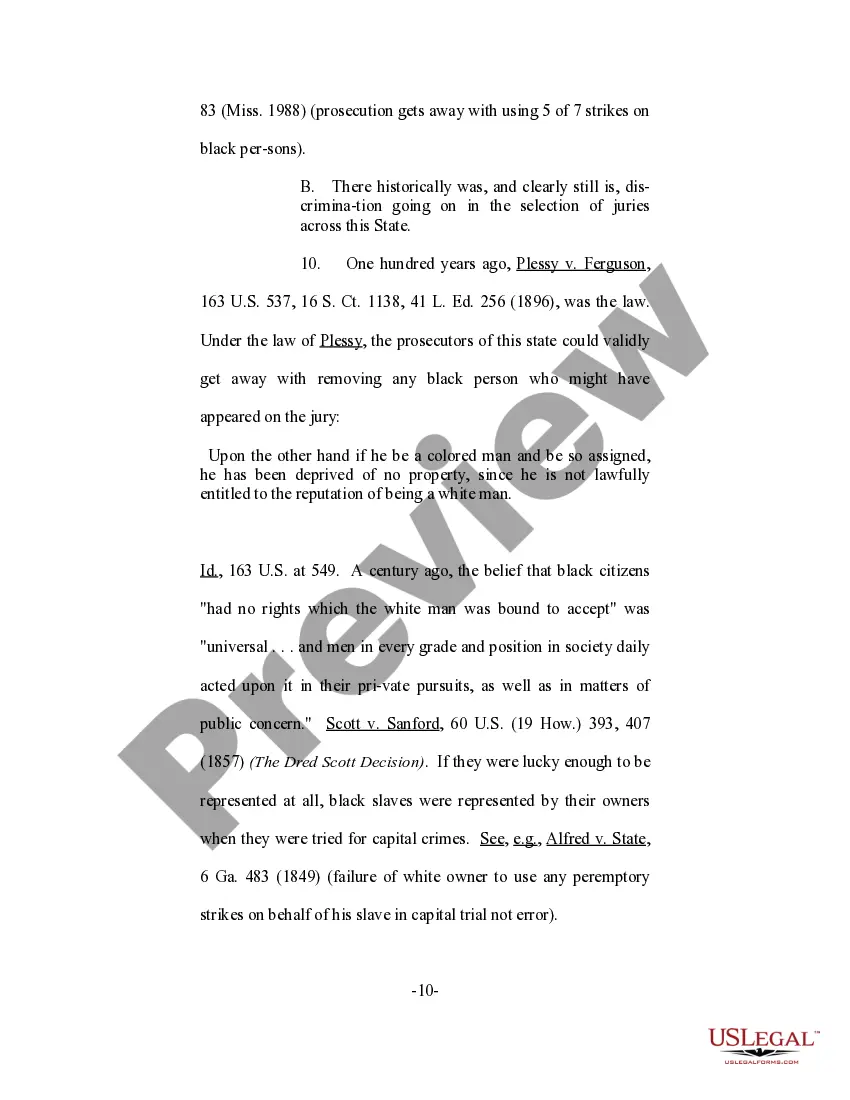
Kansas Motion to Preclude the Prosecution from Using Peremptory Challenges to Exclude Black Persons and Members of Other Groups
Description

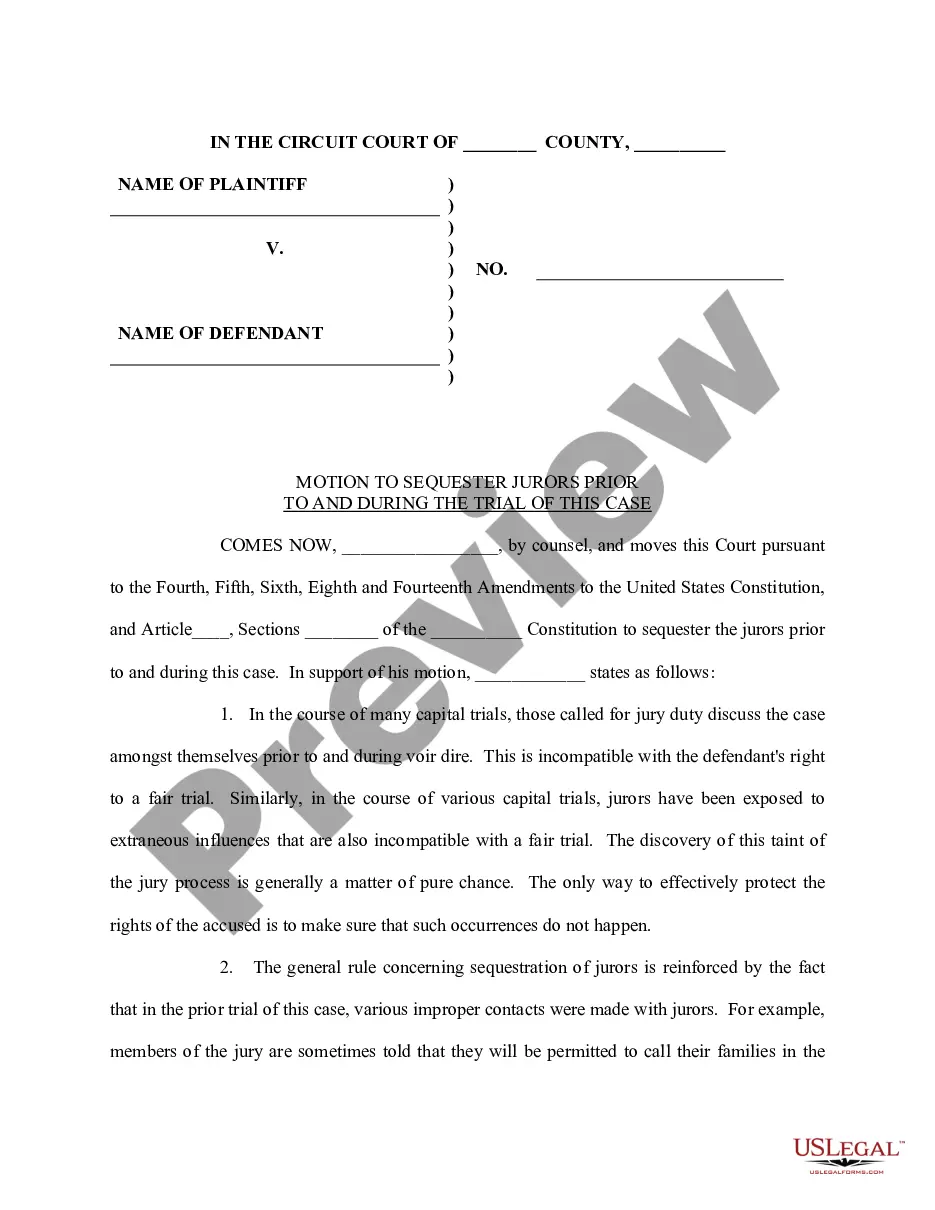
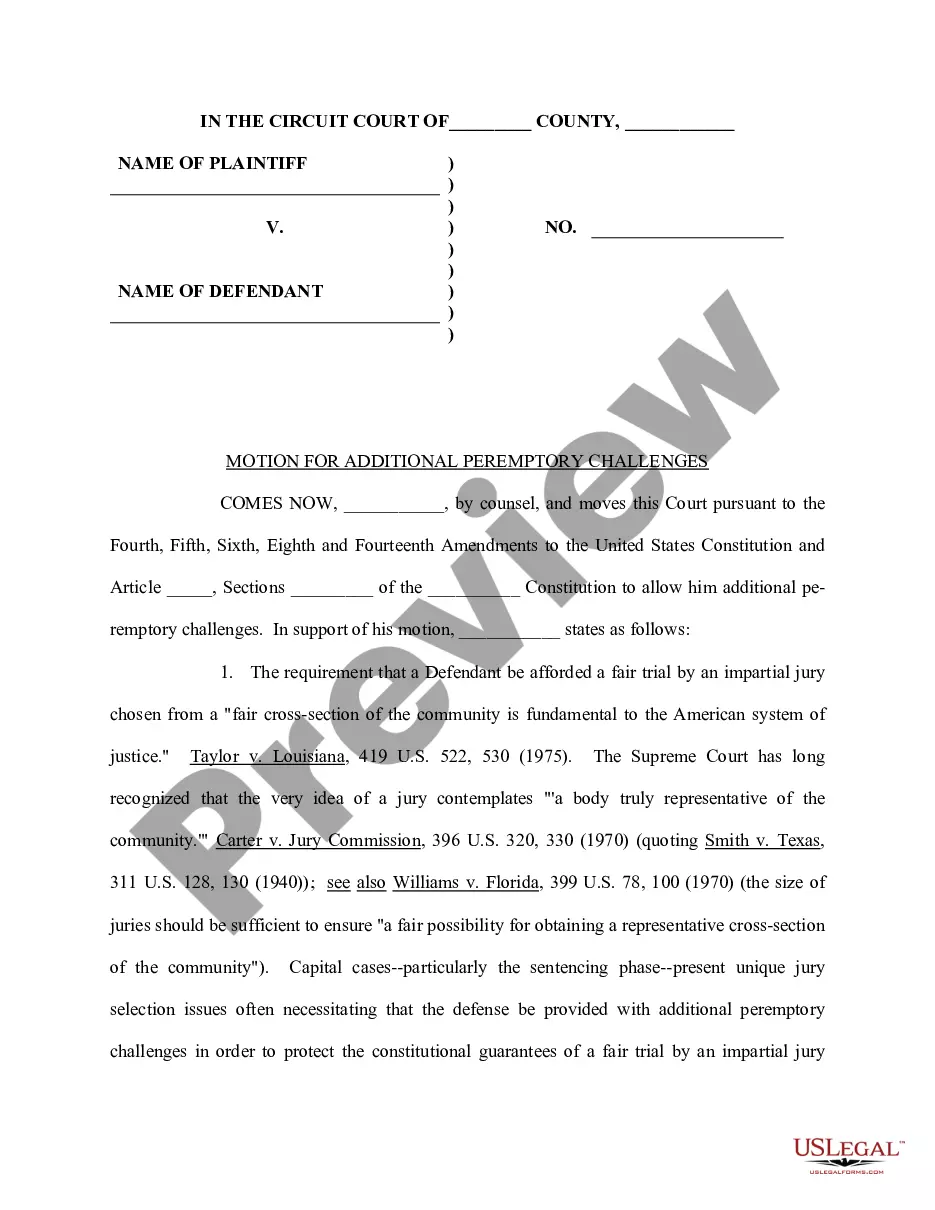
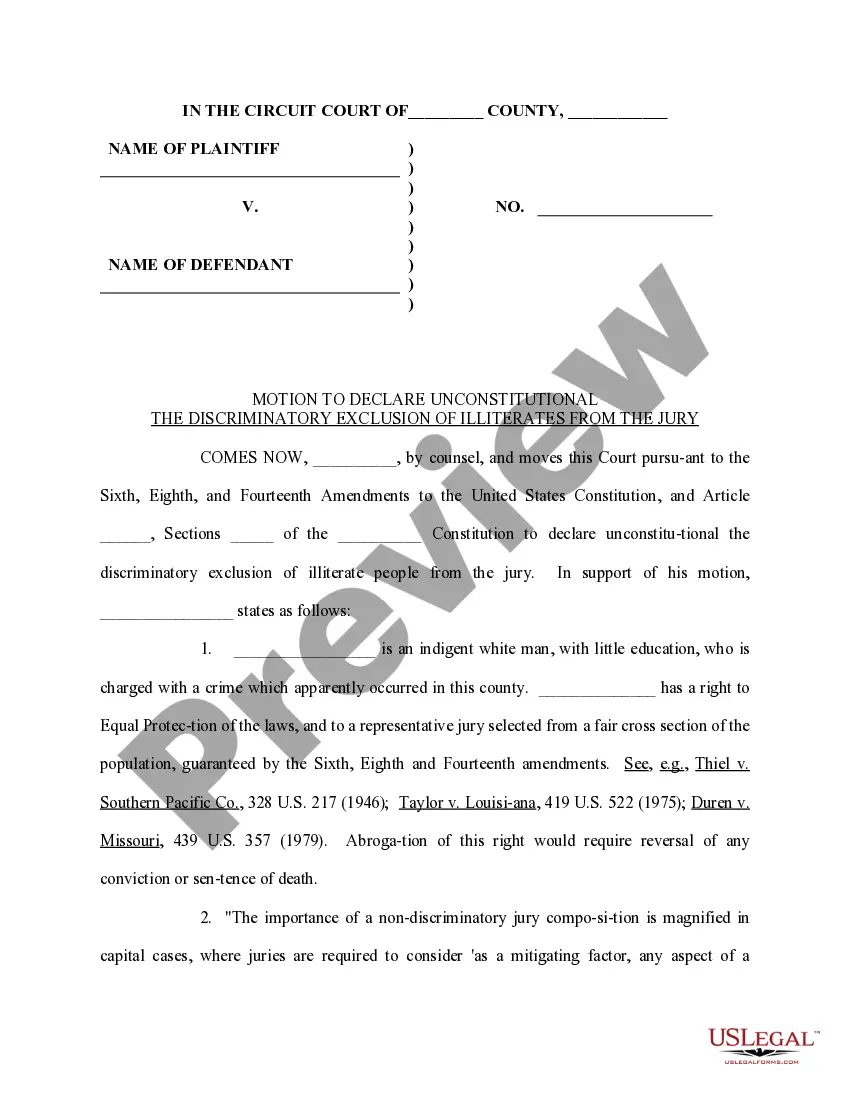
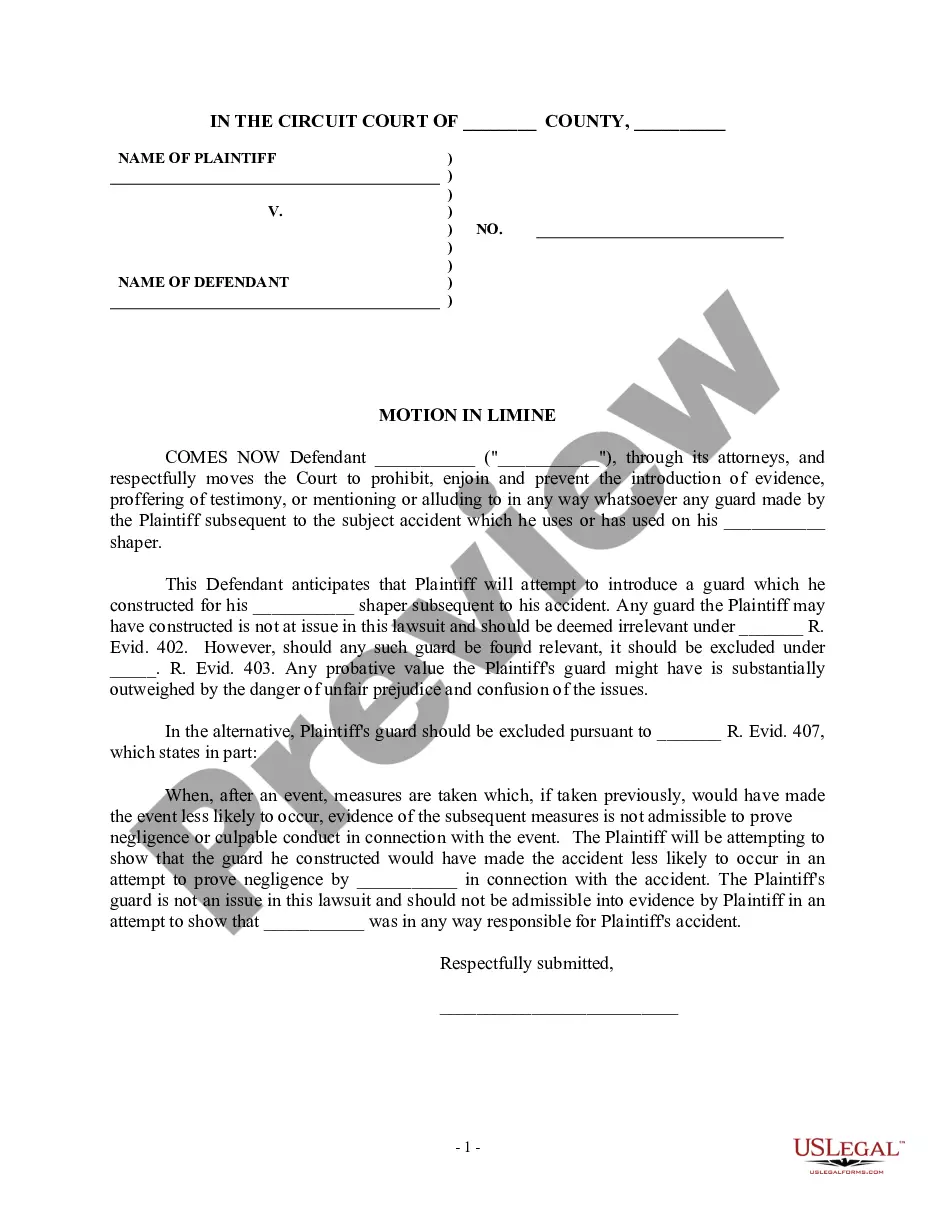
Get your form ready online
Our built-in tools help you complete, sign, share, and store your documents in one place.
Make edits, fill in missing information, and update formatting in US Legal Forms—just like you would in MS Word.
Download a copy, print it, send it by email, or mail it via USPS—whatever works best for your next step.
Sign and collect signatures with our SignNow integration. Send to multiple recipients, set reminders, and more. Go Premium to unlock E-Sign.
If this form requires notarization, complete it online through a secure video call—no need to meet a notary in person or wait for an appointment.
We protect your documents and personal data by following strict security and privacy standards.

Make edits, fill in missing information, and update formatting in US Legal Forms—just like you would in MS Word.

Download a copy, print it, send it by email, or mail it via USPS—whatever works best for your next step.

Sign and collect signatures with our SignNow integration. Send to multiple recipients, set reminders, and more. Go Premium to unlock E-Sign.

If this form requires notarization, complete it online through a secure video call—no need to meet a notary in person or wait for an appointment.

We protect your documents and personal data by following strict security and privacy standards.
Looking for another form?


How to fill out Motion To Preclude The Prosecution From Using Peremptory Challenges To Exclude Black Persons And Members Of Other Groups?
If you need to gather, obtain, or create sanctioned document templates, utilize US Legal Forms, the premier collection of legal forms, available online.
Employ the site’s straightforward and user-friendly search to find the documents you require. Numerous templates for business and personal purposes are organized by categories and states, or keywords.
Use US Legal Forms to retrieve the Kansas Motion to Prevent the Prosecution from Utilizing Peremptory Challenges to Exclude Black Individuals and Members of Other Groups in just a few clicks.
Step 5. Complete the transaction. You can use your credit card or PayPal account to finalize the purchase.
Step 6. Select the format of your legal form and download it to your device. Step 7. Fill out, modify, and print or sign the Kansas Motion to Prevent the Prosecution from Utilizing Peremptory Challenges to Exclude Black Individuals and Members of Other Groups. Every legal document template you obtain is yours permanently. You have access to every form you downloaded in your account. Click the My documents section and select a form to print or download again.
- If you are currently a US Legal Forms customer, sign in to your account and click the Download button to get the Kansas Motion to Prevent the Prosecution from Utilizing Peremptory Challenges to Exclude Black Individuals and Members of Other Groups.
- You can also access forms you have previously downloaded from the My documents section of your account.
- If you are using US Legal Forms for the first time, follow the steps outlined below.
- Step 1. Ensure you have selected the form for your correct jurisdiction/region.
- Step 2. Use the Preview option to review the form’s details. Don’t forget to read the description.
- Step 3. If you are dissatisfied with the form, utilize the Search bar at the top of the screen to find alternative versions of your legal form template.
- Step 4. Once you have located the form you need, click the Get now button. Choose the payment plan you prefer and enter your details to register for an account.
Form popularity
FAQ
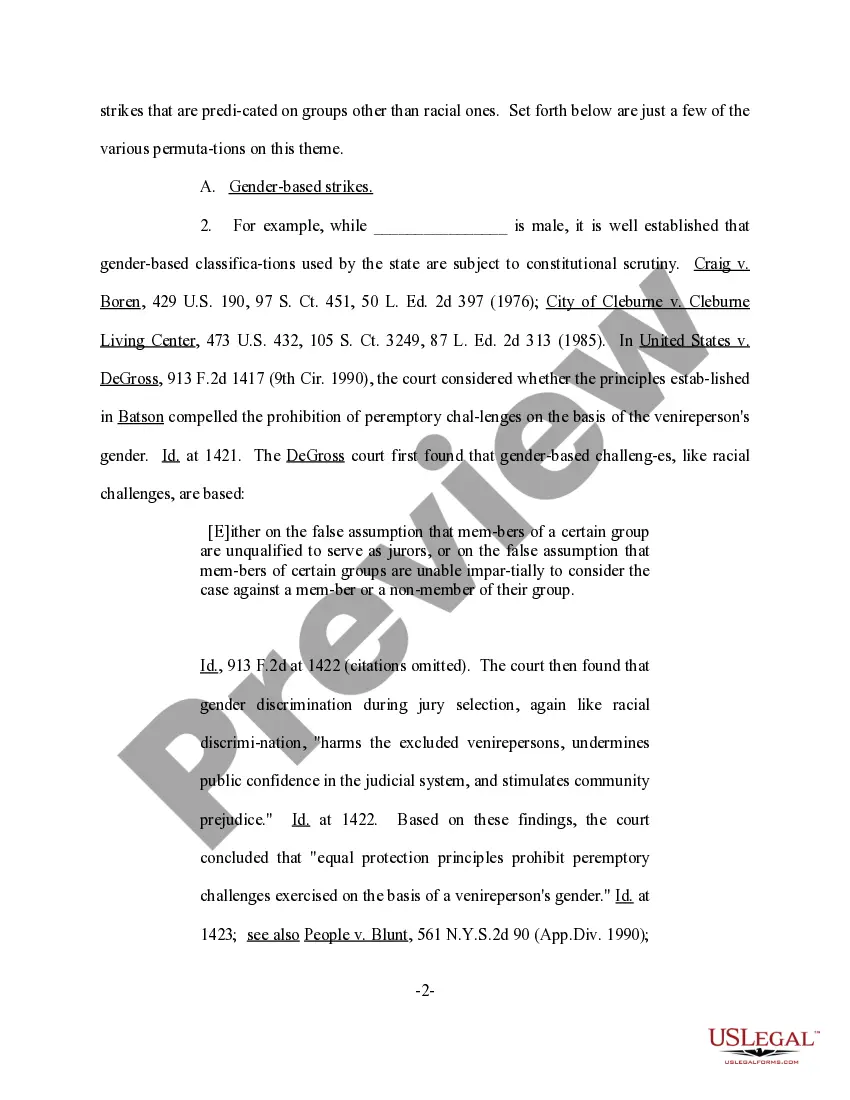
In a 6?3 decision, the Court ruled that the Equal Protection Clause prohibits striking potential jurors not only because of their race or ethnicity, but also because of their gender.
In Batson v. Kentucky, the U.S. Supreme Court held that the prosecution may not use peremptory strikes to exclude a potential juror based on race.
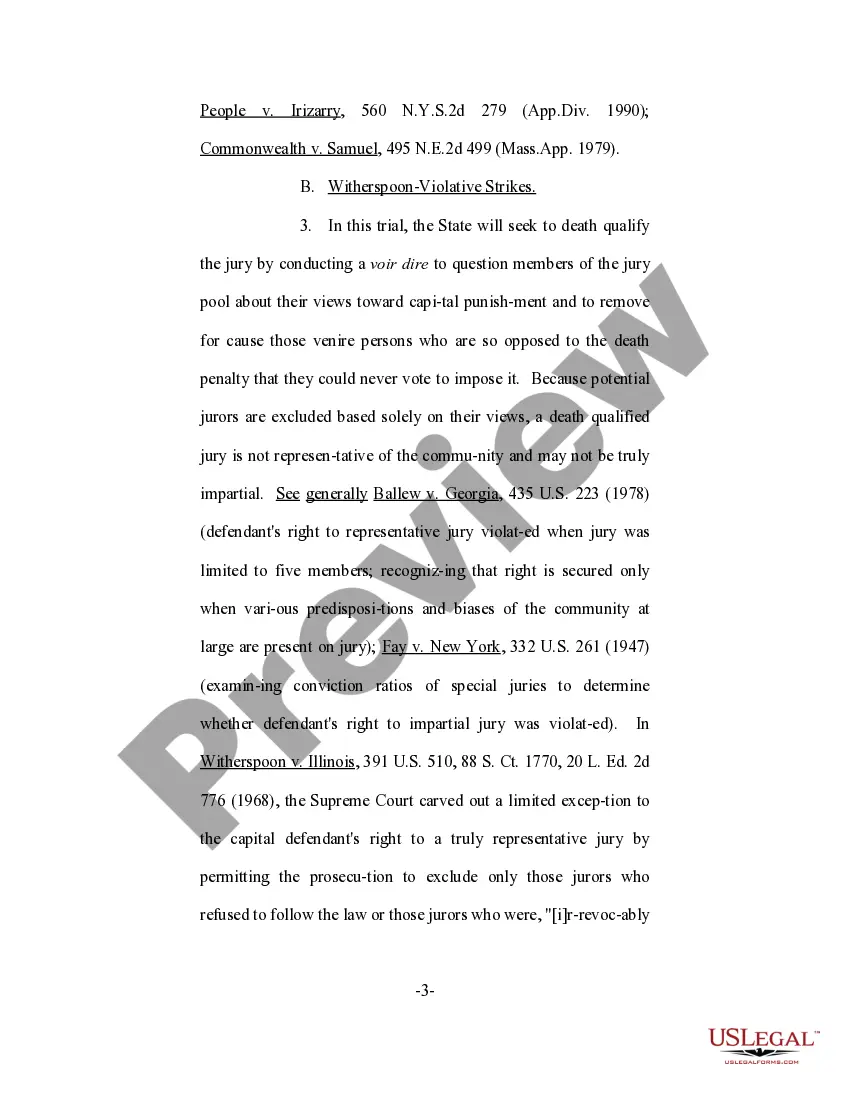
The critical case regarding peremptory challenges is Batson v. Kentucky, 476 U.S. 79 (1986). Batson established that the Equal Protection Clause of the Fourteenth Amendment forbids prosecutors from exercising their peremptory challenges to strike potential jurors solely on account of their race.
Reasoning: (Powell, J.): In a 7?2 decision, the Court held that, while a defendant is not entitled to have a jury completely or partially composed of people of his own race, the state is not permitted to use its peremptory challenges to automatically exclude potential members of the jury because of their race.
4th 1164, 1171) Per CCP §170.6 (a)(2), a peremptory challenge may not be made after the following things occur: The drawing of the name of the first juror; or. If a nonjury trial, after plaintiff's counsel makes his or her opening statement; or.
A peremptory challenge results in the exclusion of a potential juror without the need for any reason or explanation - unless the opposing party presents a prima facie argument that this challenge was used to discriminate on the basis of race, ethnicity, or sex.
Lesson summary. Peremptory challenges allow attorneys from both sides to excuse potential jurors without offering a reason why.
A peremptory challenge can be a major part of voir dire. A peremptory challenge also allows attorneys to veto a potential juror on a "hunch". The idea behind peremptory challenges is that if both parties have contributed in the configuration of the jury, they will find its verdict more acceptable.
Independently, each side may exercise some limited number of peremptory strikes to excuse additional jurors without offering a reason. However, the U.S. Supreme Court has held that peremptory challenges cannot be used to systematically strike prospective jurors from the panel on the basis of race (Batson v.
Kentucky, 476 U.S. 79 (1986), was a landmark decision of the United States Supreme Court ruling that a prosecutor's use of a peremptory challenge in a criminal case?the dismissal of jurors without stating a valid cause for doing so?may not be used to exclude jurors based solely on their race.