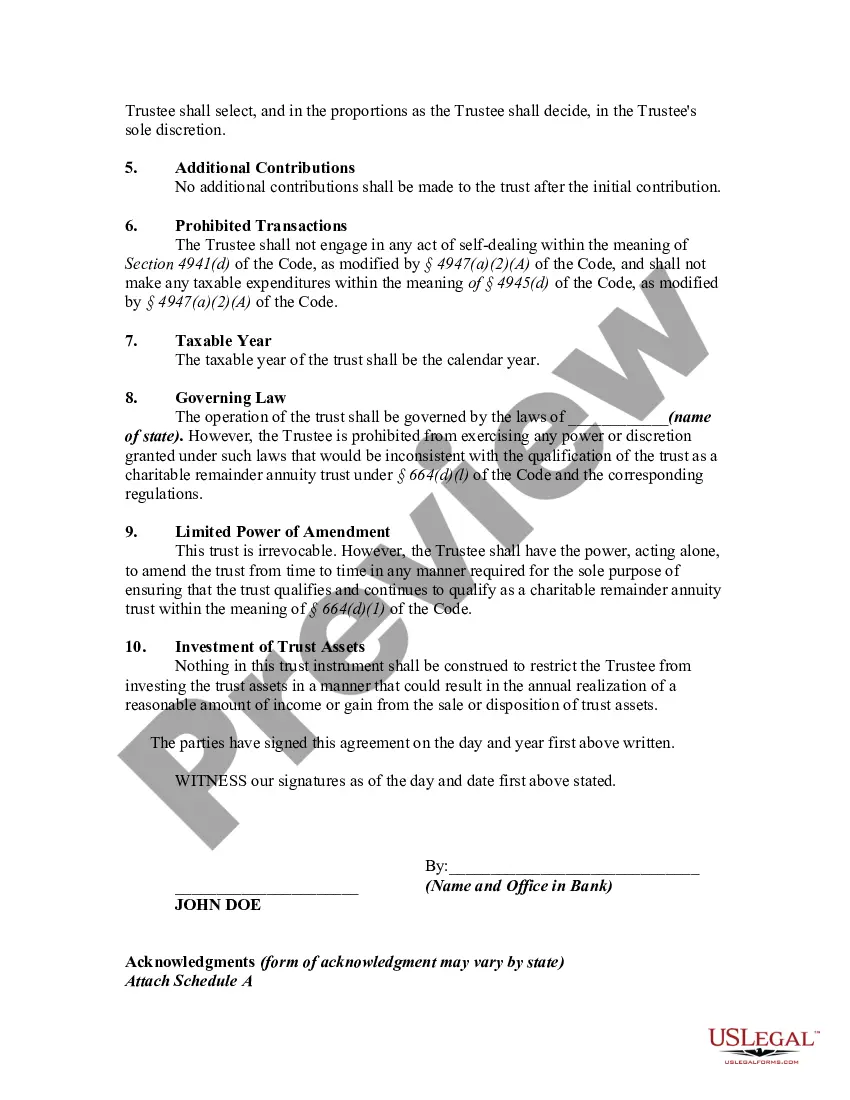
Kansas Charitable Remainder Inter Vivos Annuity Trust
Description
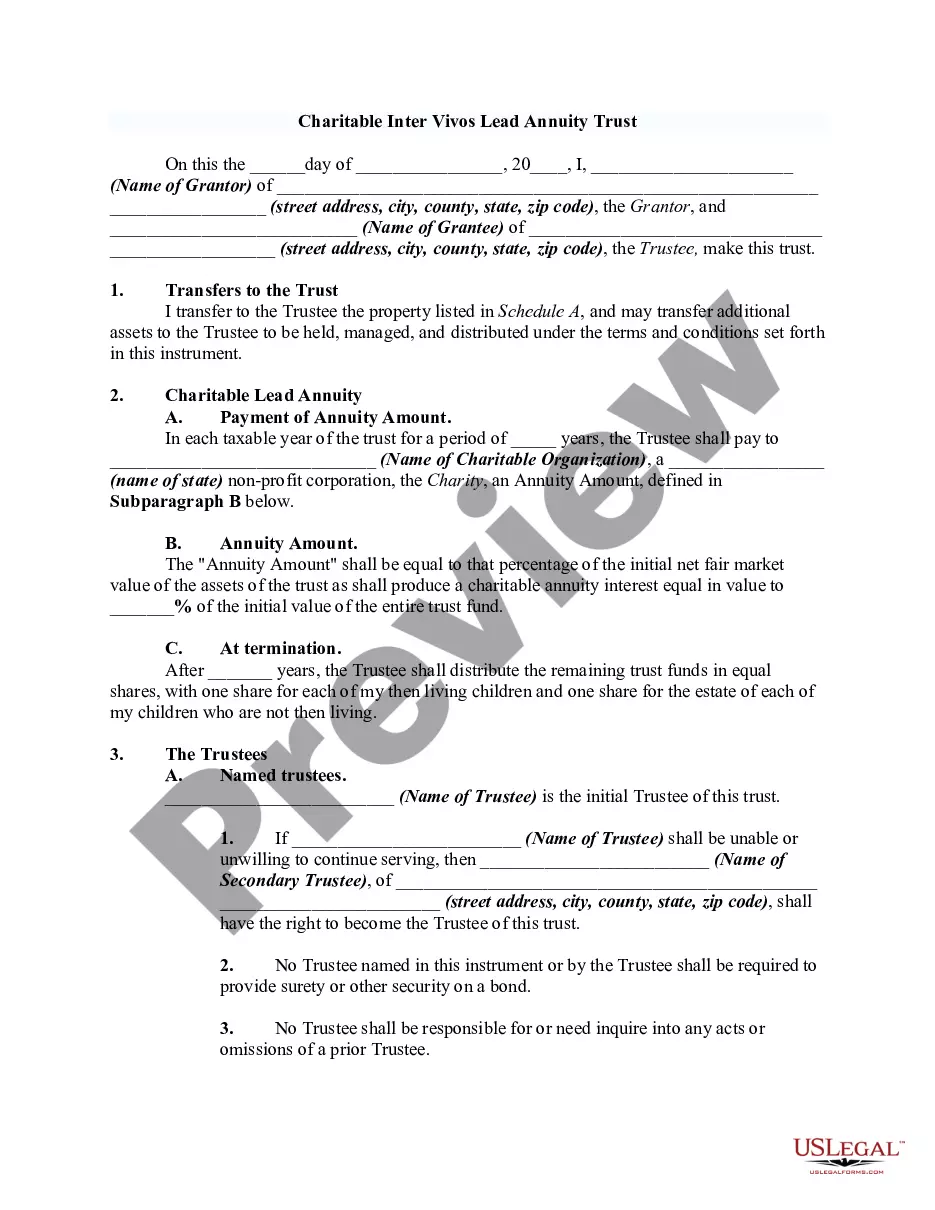
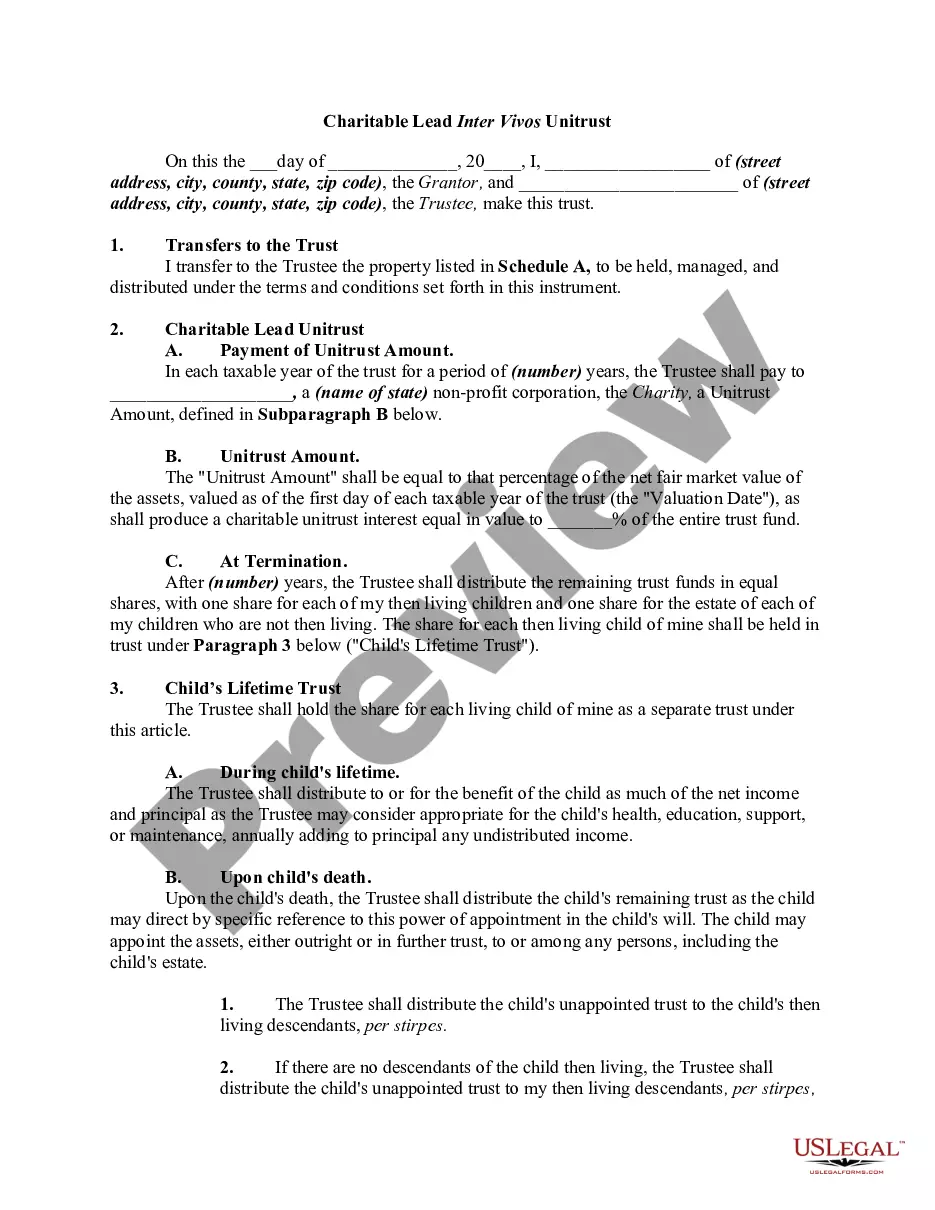
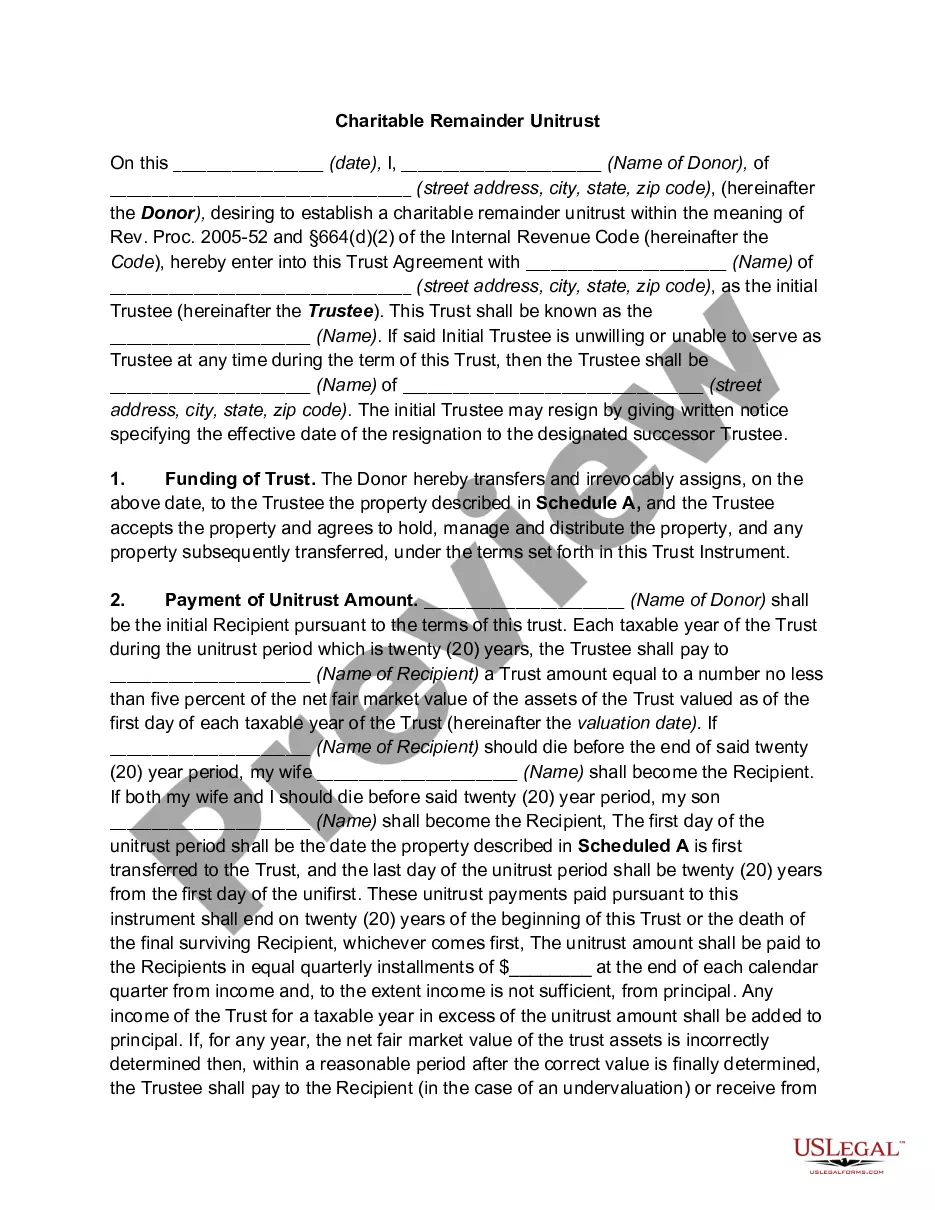
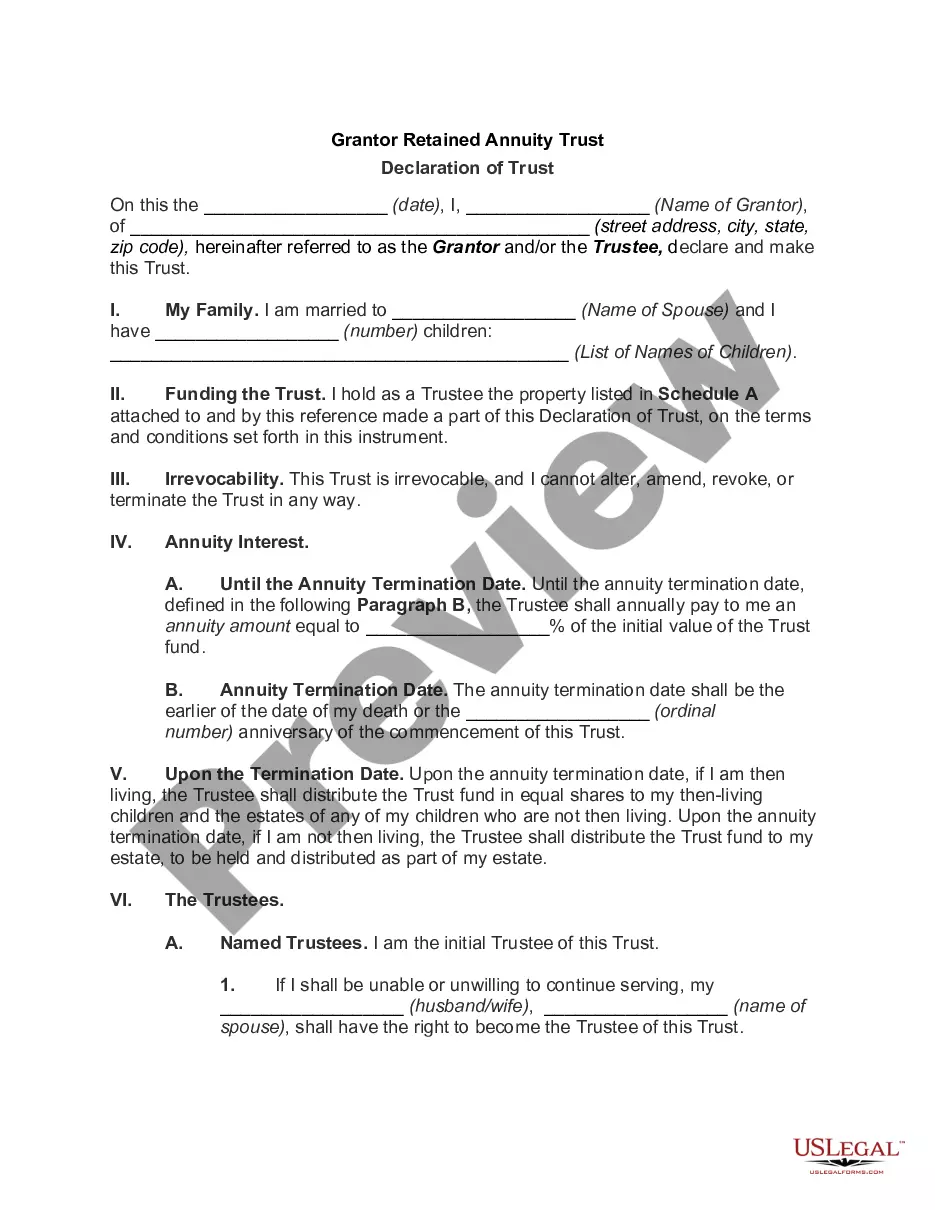
Get your form ready online
Our built-in tools help you complete, sign, share, and store your documents in one place.
Make edits, fill in missing information, and update formatting in US Legal Forms—just like you would in MS Word.
Download a copy, print it, send it by email, or mail it via USPS—whatever works best for your next step.
Sign and collect signatures with our SignNow integration. Send to multiple recipients, set reminders, and more. Go Premium to unlock E-Sign.
If this form requires notarization, complete it online through a secure video call—no need to meet a notary in person or wait for an appointment.
We protect your documents and personal data by following strict security and privacy standards.

Make edits, fill in missing information, and update formatting in US Legal Forms—just like you would in MS Word.

Download a copy, print it, send it by email, or mail it via USPS—whatever works best for your next step.

Sign and collect signatures with our SignNow integration. Send to multiple recipients, set reminders, and more. Go Premium to unlock E-Sign.

If this form requires notarization, complete it online through a secure video call—no need to meet a notary in person or wait for an appointment.

We protect your documents and personal data by following strict security and privacy standards.
Looking for another form?


How to fill out Charitable Remainder Inter Vivos Annuity Trust?
Are you presently in a scenario where you often require documents for various organizational or personal activities daily.
There are numerous legal document templates available online, but finding reliable ones isn't straightforward.
US Legal Forms provides thousands of form templates, including the Kansas Charitable Remainder Inter Vivos Annuity Trust, designed to comply with state and federal regulations.
Once you acquire the suitable form, click Purchase now.
Choose the payment plan you prefer, fill out the necessary information to set up your account, and process your order with PayPal or a credit card.
- If you are already familiar with the US Legal Forms website and have an account, simply Log In.
- Then, you can download the Kansas Charitable Remainder Inter Vivos Annuity Trust template.
- If you do not have an account and would like to start using US Legal Forms, follow these instructions.
- Obtain the form you need and ensure it corresponds to the right area/county.
- Use the Preview option to check the form.
- Read the description to confirm you've selected the correct form.
- If the form isn't what you're looking for, utilize the Search field to find the form that meets your needs and requirements.
Form popularity
FAQ
An example of a remainder trust is the Kansas Charitable Remainder Inter Vivos Annuity Trust, which specifies that the donor receives a set annual payment for a defined period. Once this period concludes, the remaining assets go to the selected charity. This arrangement not only supports charitable missions but also provides the donor with ongoing financial support.
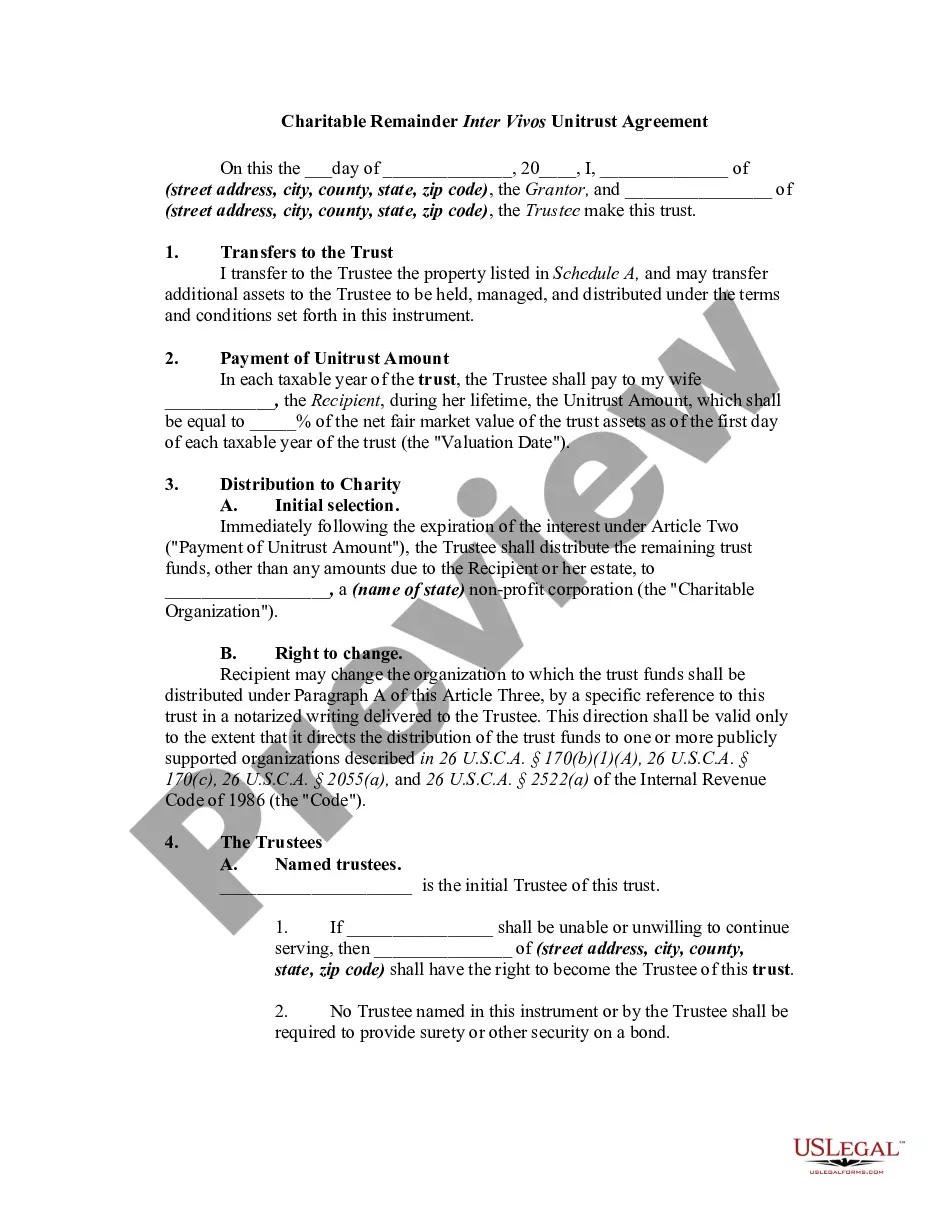
An inter vivos charitable remainder trust is established during the donor’s lifetime, allowing them to contribute assets while also enjoying income from those assets. This type of trust, like the Kansas Charitable Remainder Inter Vivos Annuity Trust, provides both flexibility and immediate benefits for the donor. After the trust period ends, the remaining assets are transferred to the beneficiary charity.
Some disadvantages of a charitable remainder trust include the complexity of setting it up and the potential costs involved in administration. Additionally, once the trust is established, the donor cannot change the beneficiaries or reclaim the assets. Understanding these factors is crucial, but the Kansas Charitable Remainder Inter Vivos Annuity Trust can still offer valuable benefits that often outweigh these drawbacks.
An example of a charitable remainder trust is the Kansas Charitable Remainder Inter Vivos Annuity Trust. This trust structure allows individuals to donate assets while receiving fixed income for a term of years or for their lifetime. After the trust's term, the remaining assets are distributed to the selected charity, thus fulfilling both personal and philanthropic objectives.
The two types of Charitable Remainder Unitrust (CRUT) are the standard CRUT and the net income CRUT. The standard CRUT pays a fixed percentage of the trust's value annually, while the net income CRUT pays based on the income generated by the trust assets, with the potential for additional distributions. Understanding these options can help you choose the right structure, such as the Kansas Charitable Remainder Inter Vivos Annuity Trust, based on your financial goals.
Yes, you can include an annuity in a charitable remainder trust. The Kansas Charitable Remainder Inter Vivos Annuity Trust specifically allows the donor to receive a fixed annuity payment each year for the duration of the trust. This feature provides financial stability while ensuring that the remaining assets ultimately support your chosen charity.
To set up a charitable remainder trust, start by identifying your intended beneficiaries and the charity you want to benefit. Next, you will need to work with an estate planner or attorney to draft the trust document and fund it with your desired assets. The Kansas Charitable Remainder Inter Vivos Annuity Trust is particularly beneficial for donors seeking immediate income while planning for their philanthropic contributions.
A charitable trust often includes a trust designed to benefit a charity. For example, the Kansas Charitable Remainder Inter Vivos Annuity Trust allows a donor to contribute assets while providing income to themselves or others for a specified time. After this term, the remaining assets go to the designated charity. This setup supports philanthropic goals while giving the donor financial benefits.
A Kansas Charitable Remainder Inter Vivos Annuity Trust (CRT) primarily benefits charitable organizations after your passing, while a Charitable Lead Trust (CLT) provides immediate support to charities during your lifetime. In a CRT, you receive income for a set term before the remaining assets go to charity. Conversely, a CLT allows you to provide annual payments to charities, with the remaining principal passing to your beneficiaries afterward. Understanding these differences can help you make informed decisions about your financial planning.
While a Kansas Charitable Remainder Inter Vivos Annuity Trust can be beneficial, there are downsides to consider. You must adhere to strict regulations regarding distributions and manage the trust's assets effectively. Additionally, once you establish the trust, the assets cannot be easily removed or altered without significant consequences. It's essential to consult a legal expert to navigate these complexities.