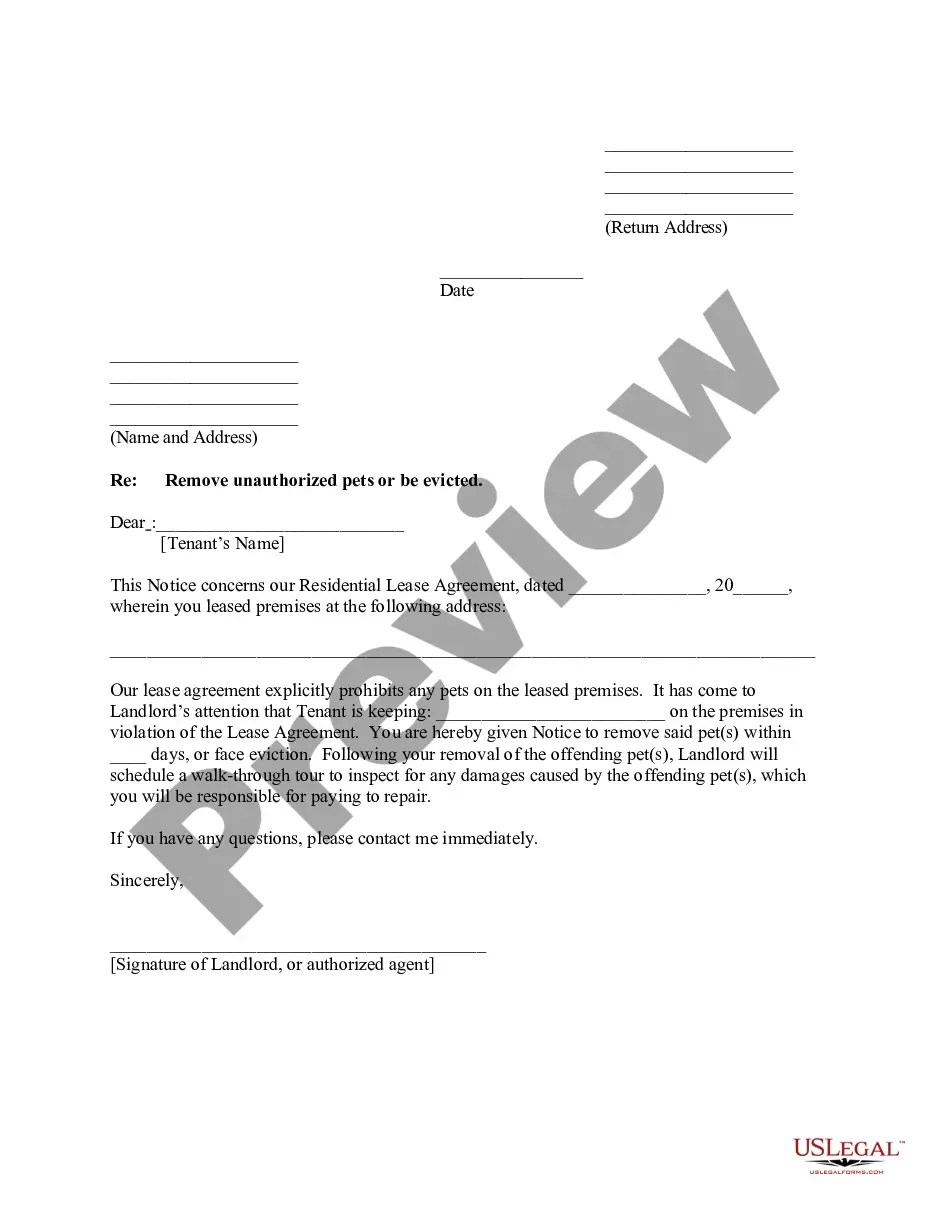
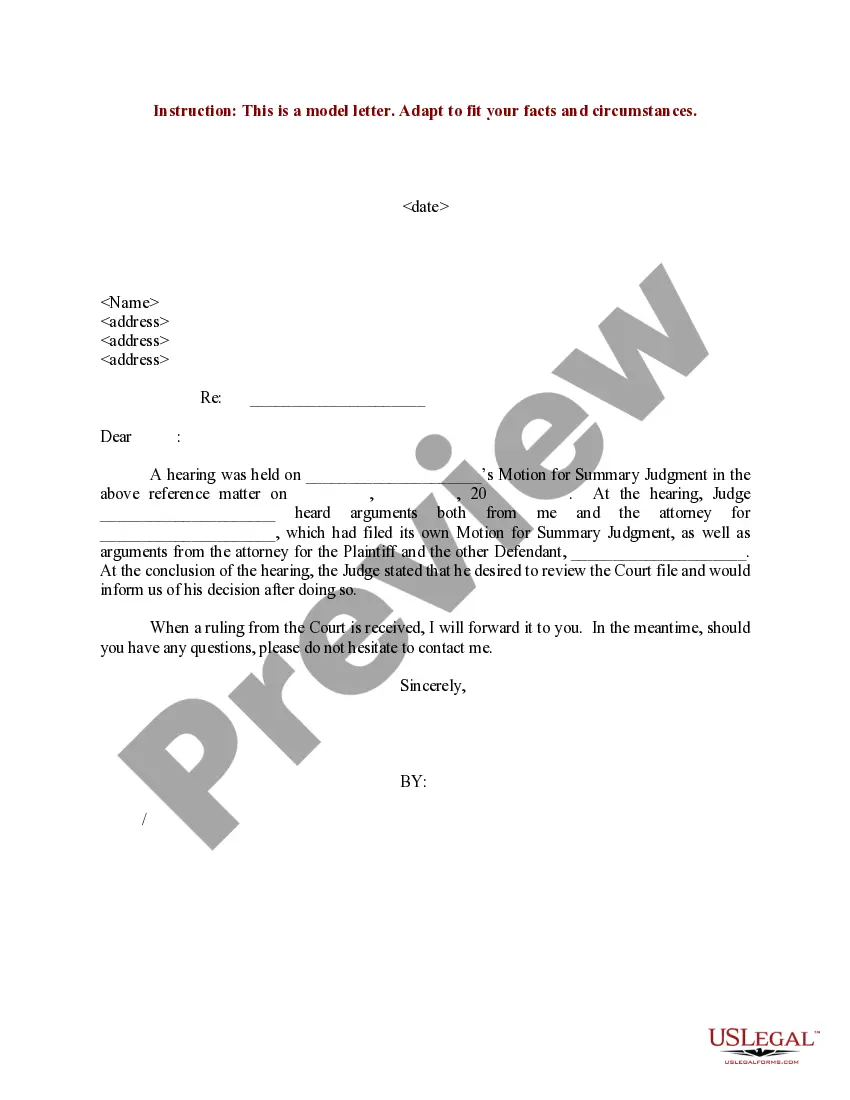
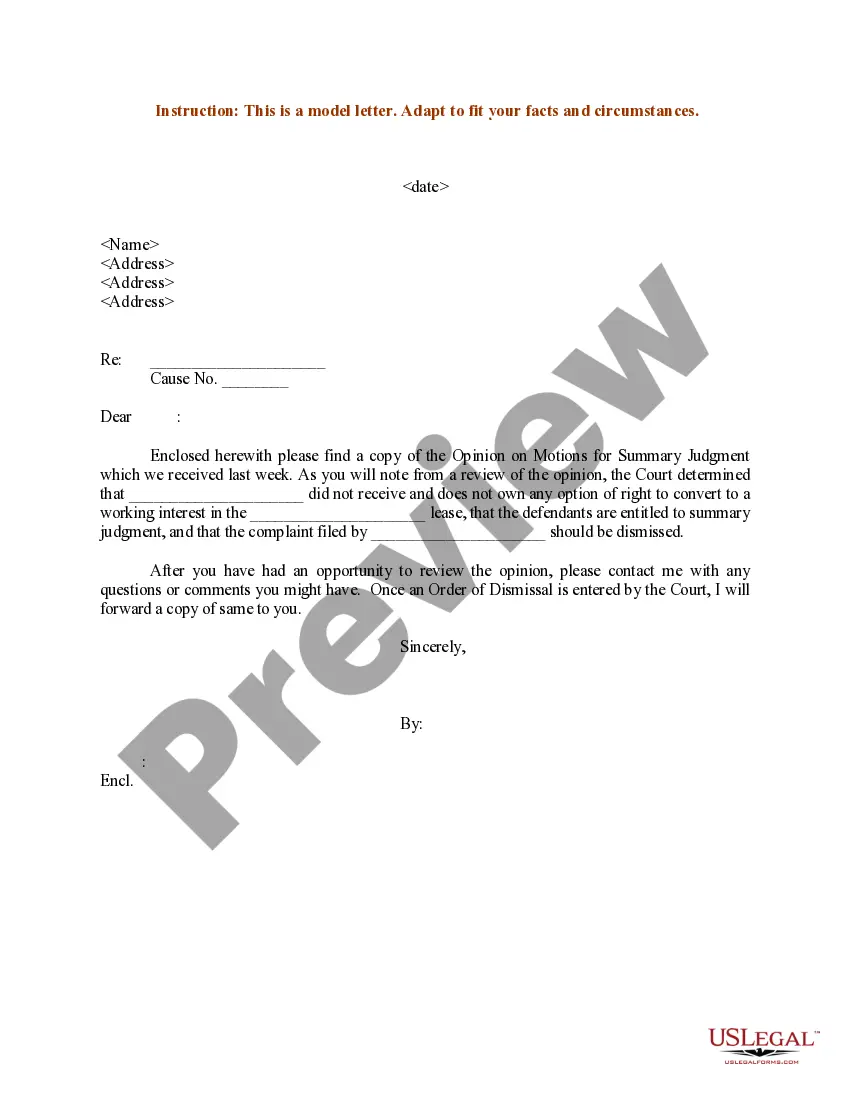
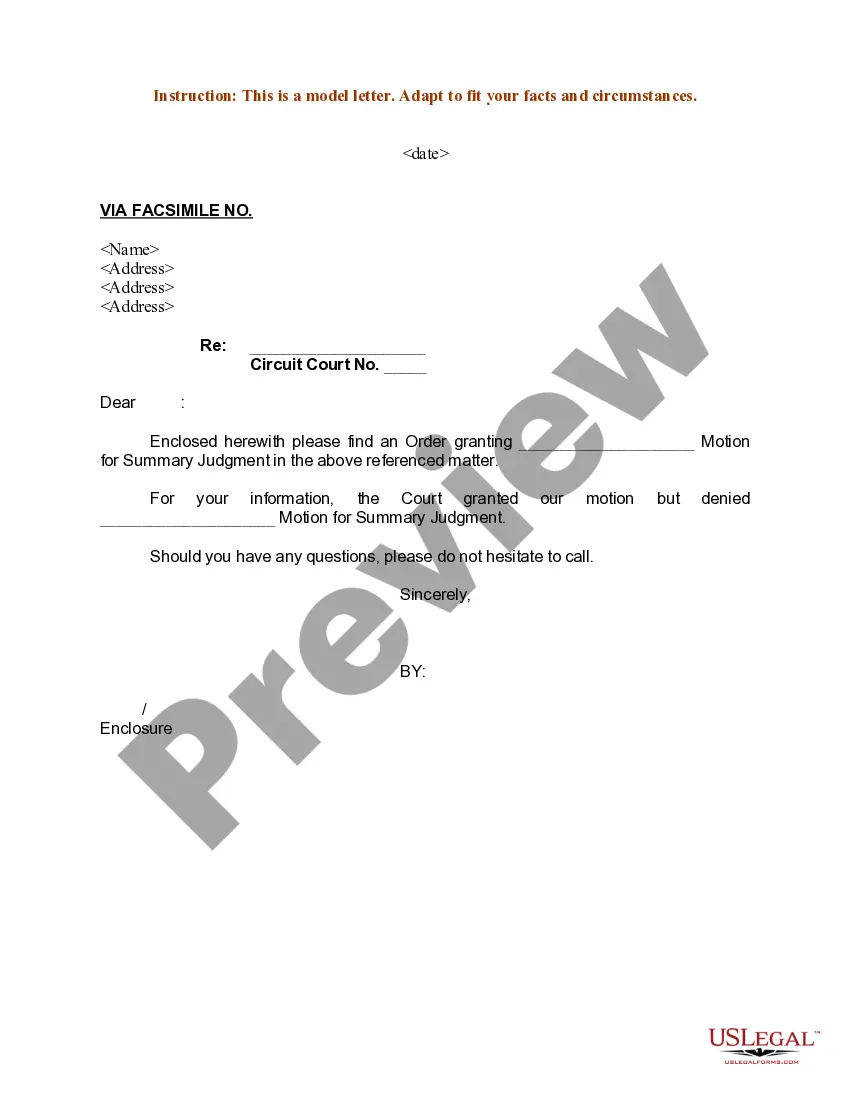
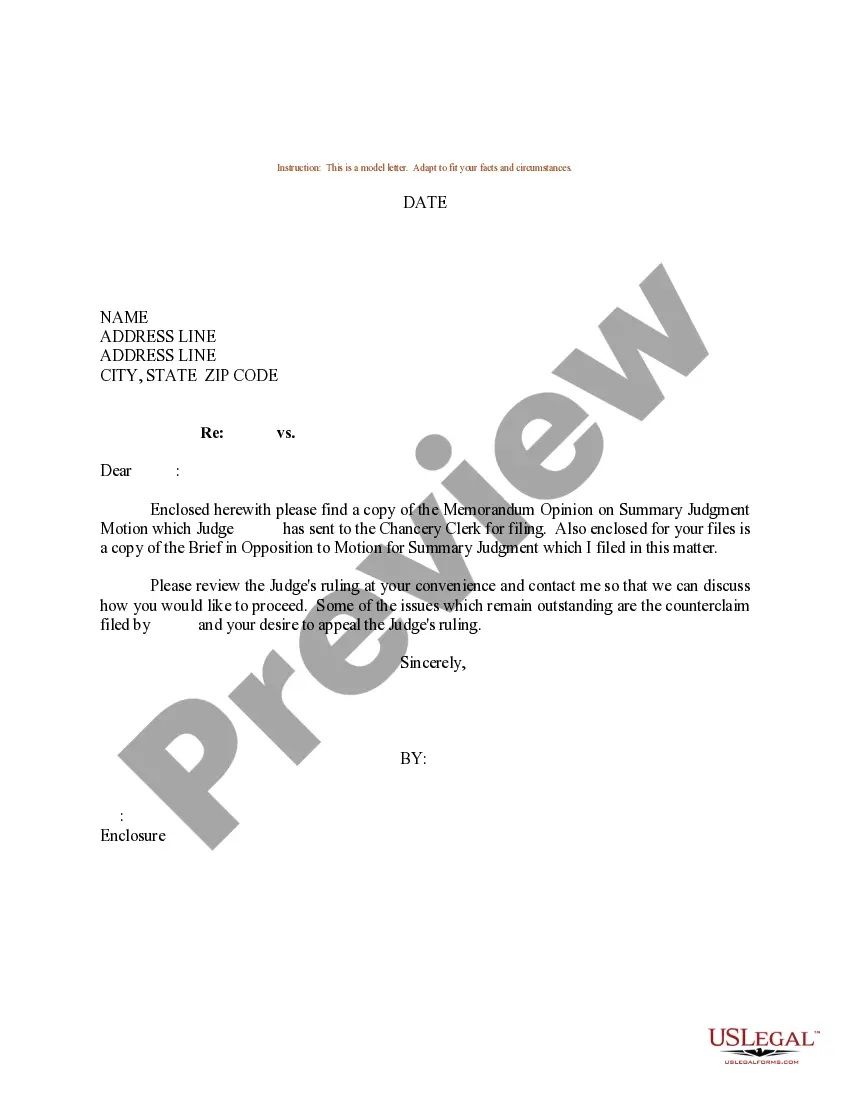
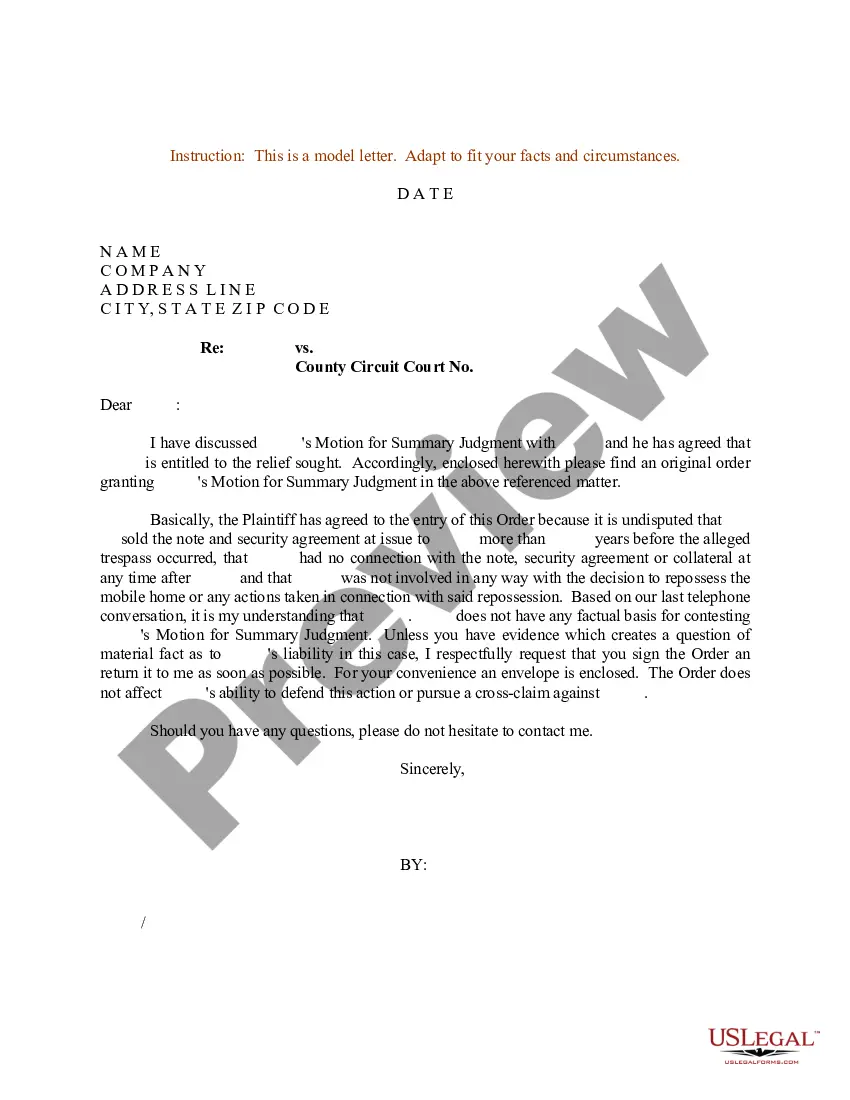
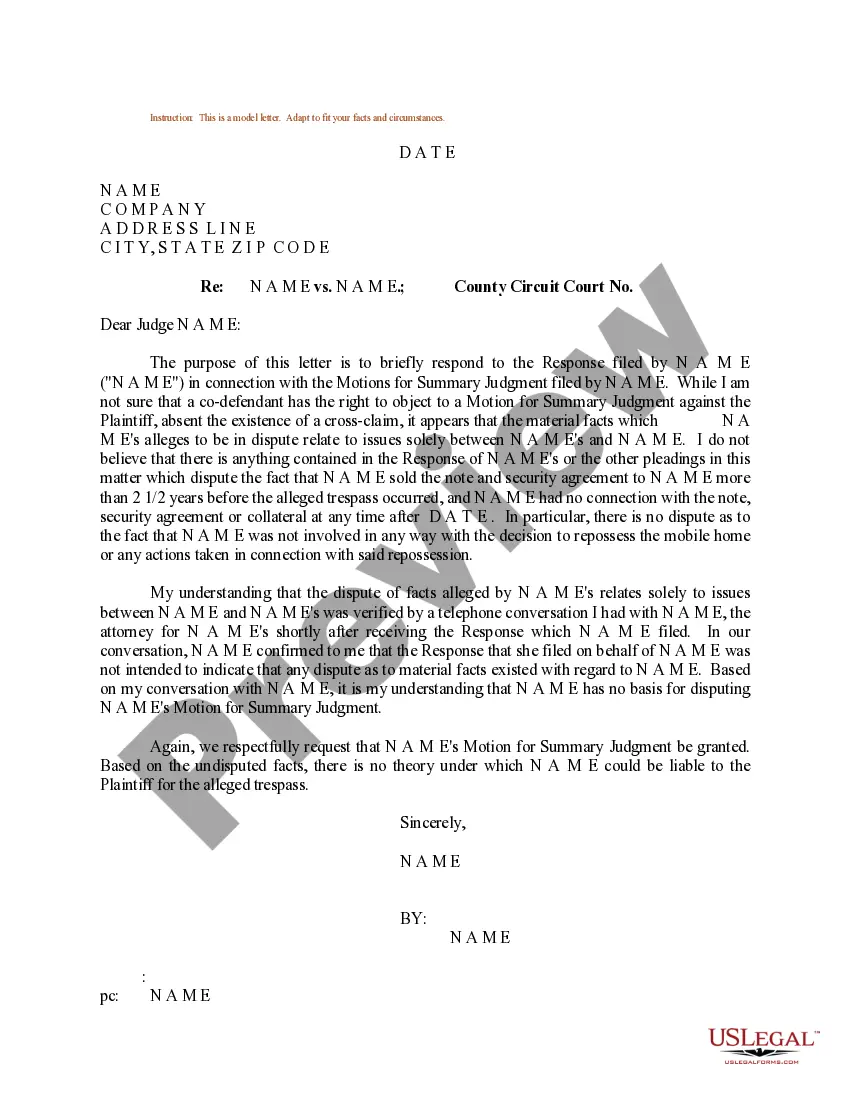
This form is a sample letter in Word format covering the subject matter of the title of the form.
Kansas Sample Letter to Client concerning Hearing on Motion of Summary Judgment
Category:
State:
Multi-State
Control #:
US-0007LTR
Format:
Word;
Rich Text
Instant download
Description
Get your form ready online
Our built-in tools help you complete, sign, share, and store your documents in one place.
Built-in online Word editor
Make edits, fill in missing information, and update formatting in US Legal Forms—just like you would in MS Word.
Export easily
Download a copy, print it, send it by email, or mail it via USPS—whatever works best for your next step.
E-sign your document
Sign and collect signatures with our SignNow integration. Send to multiple recipients, set reminders, and more. Go Premium to unlock E-Sign.
Notarize online 24/7
If this form requires notarization, complete it online through a secure video call—no need to meet a notary in person or wait for an appointment.
Store your document securely
We protect your documents and personal data by following strict security and privacy standards.

Make edits, fill in missing information, and update formatting in US Legal Forms—just like you would in MS Word.

Download a copy, print it, send it by email, or mail it via USPS—whatever works best for your next step.

Sign and collect signatures with our SignNow integration. Send to multiple recipients, set reminders, and more. Go Premium to unlock E-Sign.

If this form requires notarization, complete it online through a secure video call—no need to meet a notary in person or wait for an appointment.

We protect your documents and personal data by following strict security and privacy standards.
Looking for another form?



How to fill out Sample Letter To Client Concerning Hearing On Motion Of Summary Judgment?
Selecting the optimal authorized document template can be quite a challenge. Naturally, there are numerous designs accessible online, but how do you locate the legal form you need? Utilize the US Legal Forms website. The service provides thousands of templates, such as the Kansas Sample Letter to Client regarding Hearing on Motion of Summary Judgment, that can be utilized for business and personal purposes. All of the forms are reviewed by experts and comply with state and federal requirements.
If you are already a registered user, Log In to your account and click on the Obtain button to find the Kansas Sample Letter to Client regarding Hearing on Motion of Summary Judgment. Use your account to search through the legal forms you have previously purchased. Visit the My documents tab in your account and download another copy of the document you need.
If you are a new user of US Legal Forms, here are simple instructions that you should follow: First, ensure you have selected the correct form for your area/county. You can preview the form using the Preview button and read the form description to verify it is suitable for you. If the form does not meet your needs, utilize the Search field to find the correct form. Once you are certain that the form is appropriate, select the Get now button to obtain the form. Choose the pricing plan you prefer and enter the necessary information. Create your account and complete the payment using your PayPal account or credit card. Select the file format and download the legal document template to your device. Finally, complete, modify, print, and sign the acquired Kansas Sample Letter to Client regarding Hearing on Motion of Summary Judgment.
Overall, US Legal Forms is an excellent resource for accessing a wide array of legal document templates that adhere to state regulations.
- US Legal Forms is the largest repository of legal forms where you can find numerous document templates.
- Utilize the service to obtain properly crafted documents that meet state requirements.
- Ensure you select the correct form for your specific needs.
- Preview forms before making a decision to ensure they fit your criteria.
- Search for forms if initial selections do not meet your needs.
- Download, complete, and print the necessary documents after purchase.
Form popularity
FAQ
Kansas Local Rule 5.4 2 addresses the submission of proposed orders in civil cases. This rule mandates that parties submit proposed orders along with their motions, which can streamline the court's decision-making process. Utilizing a Kansas Sample Letter to Client concerning Hearing on Motion of Summary Judgment can help clarify the importance of this rule, ensuring your client understands the procedural steps needed for their case.
Statute 21 6203 in Kansas relates to the definitions and requirements concerning specific legal terms and their applications in court. Familiarizing yourself with this statute can enhance your legal arguments during proceedings. When communicating with clients, consider using a Kansas Sample Letter to Client concerning Hearing on Motion of Summary Judgment to explain how this statute may impact their case.
Rule 170 in Kansas pertains to the procedures governing motions for summary judgment. It outlines the requirements for filing these motions, including deadlines and necessary documentation. Understanding this rule can help you effectively utilize a Kansas Sample Letter to Client concerning Hearing on Motion of Summary Judgment, ensuring your client is well-informed about the process.
Preparing for a summary judgment hearing involves gathering all relevant evidence and documentation. You should review your case thoroughly to identify key arguments that support your position. Additionally, consider drafting a Kansas Sample Letter to Client concerning Hearing on Motion of Summary Judgment to clarify important points for your client. This letter can serve as a useful reference during the hearing.
A party opposing a summary judgment motion must, within 28 days after the movant serves the motion, file and serve a response brief and any evidence (that is not already in the record) that the party relies on to oppose the motion.
Answer each numbered fact proposed by the moving party in separate paragraphs, using the same number. The court strongly prefers that the responding party repeat verbatim the moving party's proposed fact and then respond to it. 2. All responses should be succinctly stated.
Therefore, to win on summary judgment you have to convince a judge that it is a good use of his or her very limited time and resources to write the decision. This means that your written material has to demonstrate that the law and facts support summary judgment, and contain no misstatements of law or fact.
1. A responding party should file additional proposed findings of fact if it needs them to defeat the motion for summary judgment. 2. The purpose of additional proposed findings of fact is to SUPPLEMENT the moving party's proposed findings of fact, not to dispute any facts proposed by the moving party.
Apply each legal argument to the facts stated in the undisputed facts section, and explain why under the law and the facts summary judgment should be granted. In one paragraph, reiterate why summary judgment should be granted on each count of the complaint.
The chance of success in these cases is less than 10% [1]. Another study found that summary judgment is mostly granted in Title VII cases, for example, cases involving equal pay or employment discrimination [2]. When it comes to federal cases, summary judgments are filed in 17% of total cases.