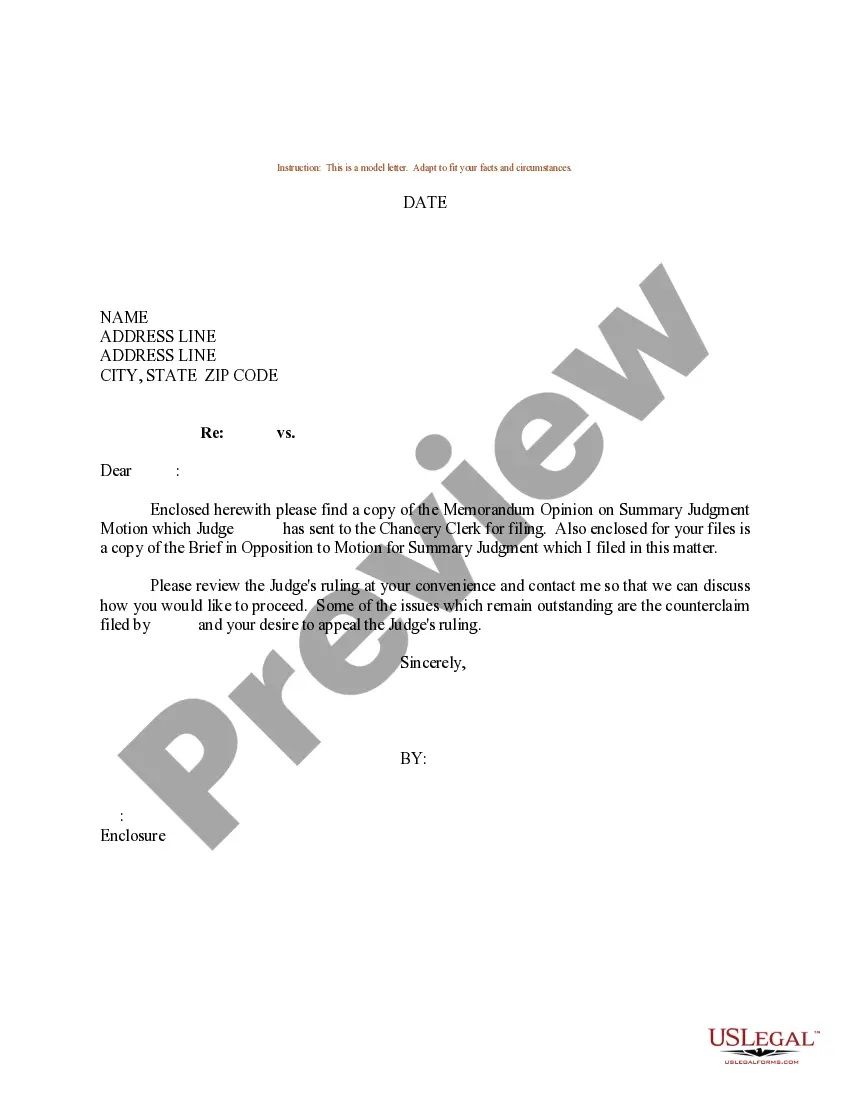
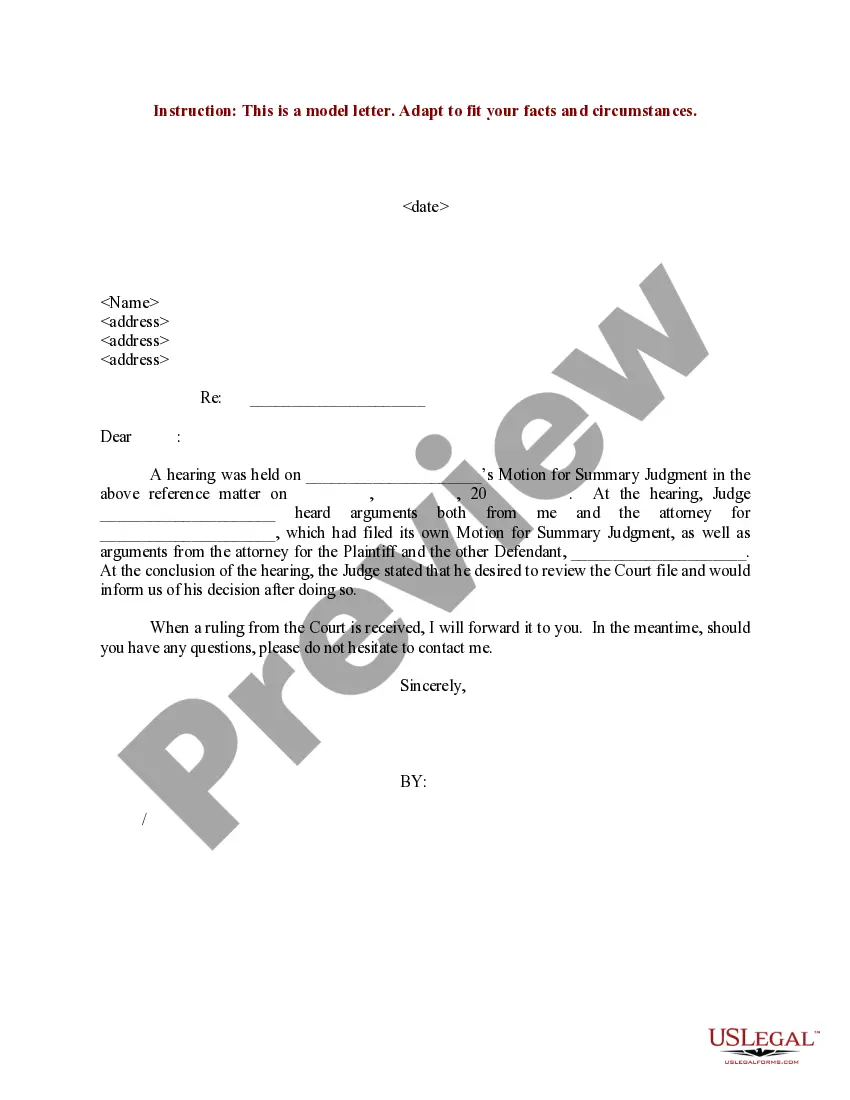
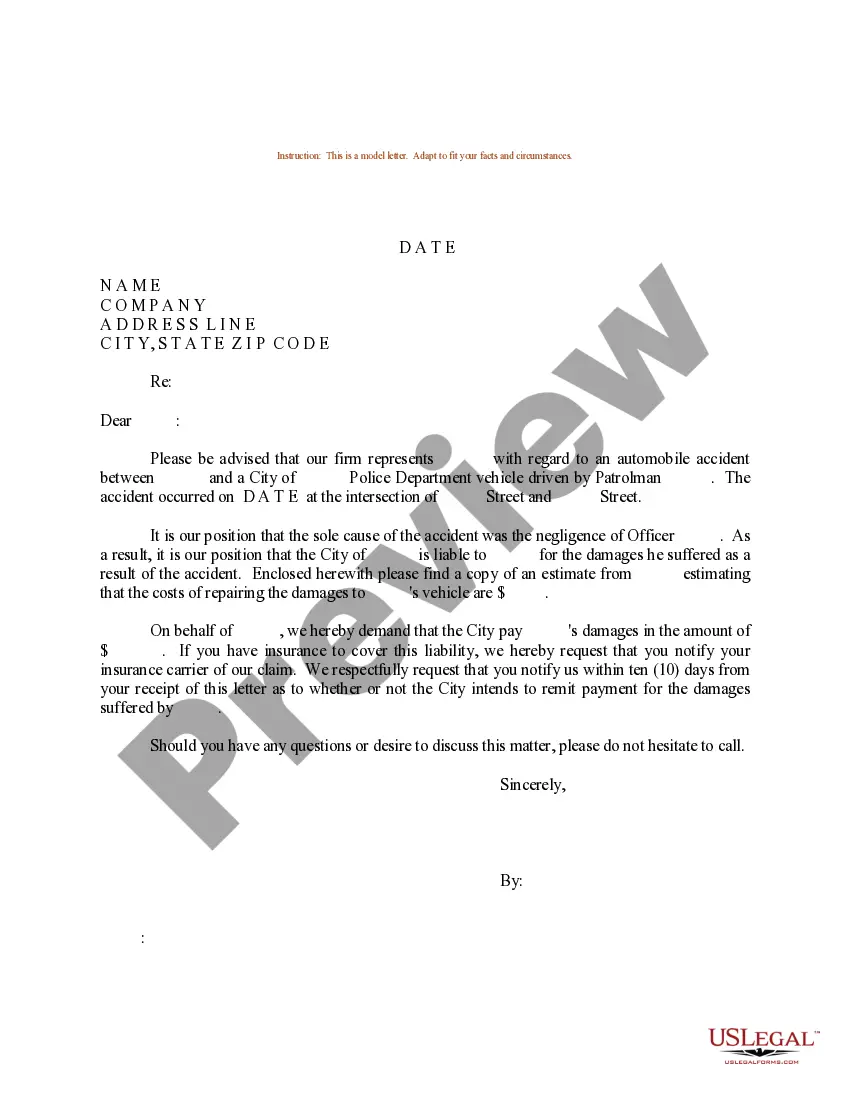
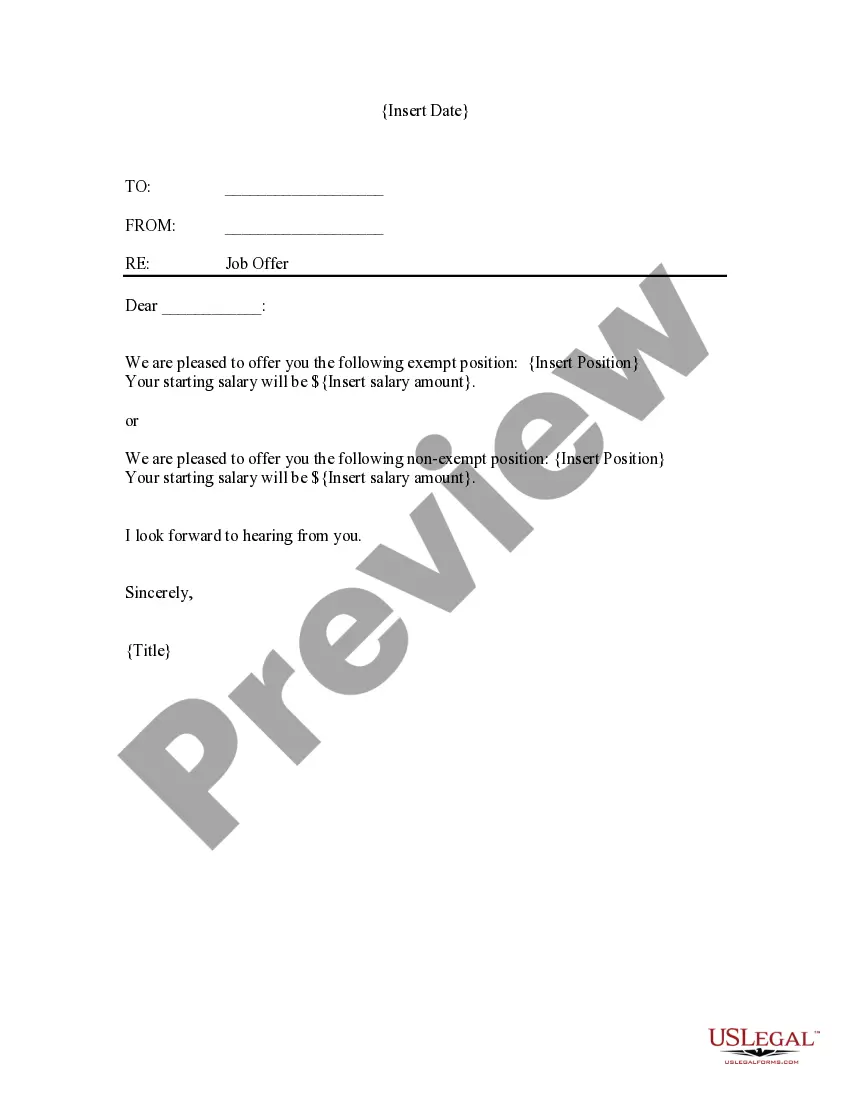
Kansas Sample Letter regarding Memorandum Opinion on Summary Judgment Motion
Description
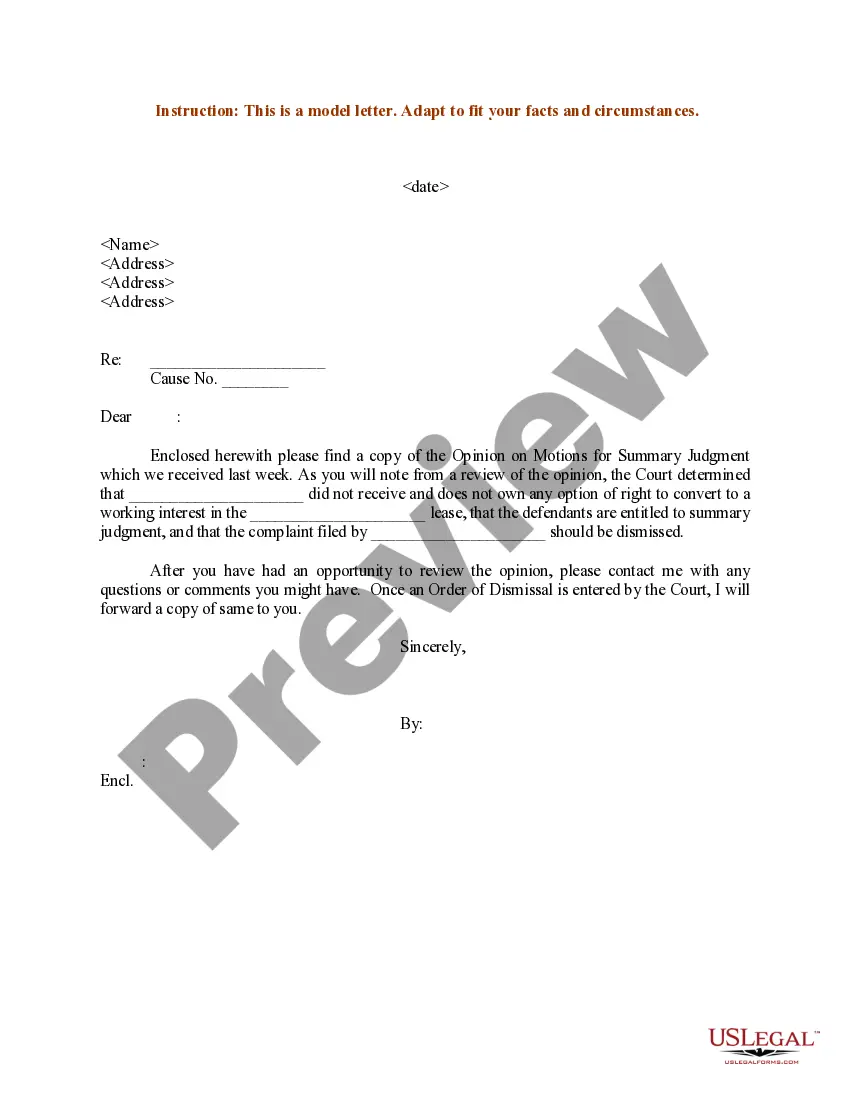
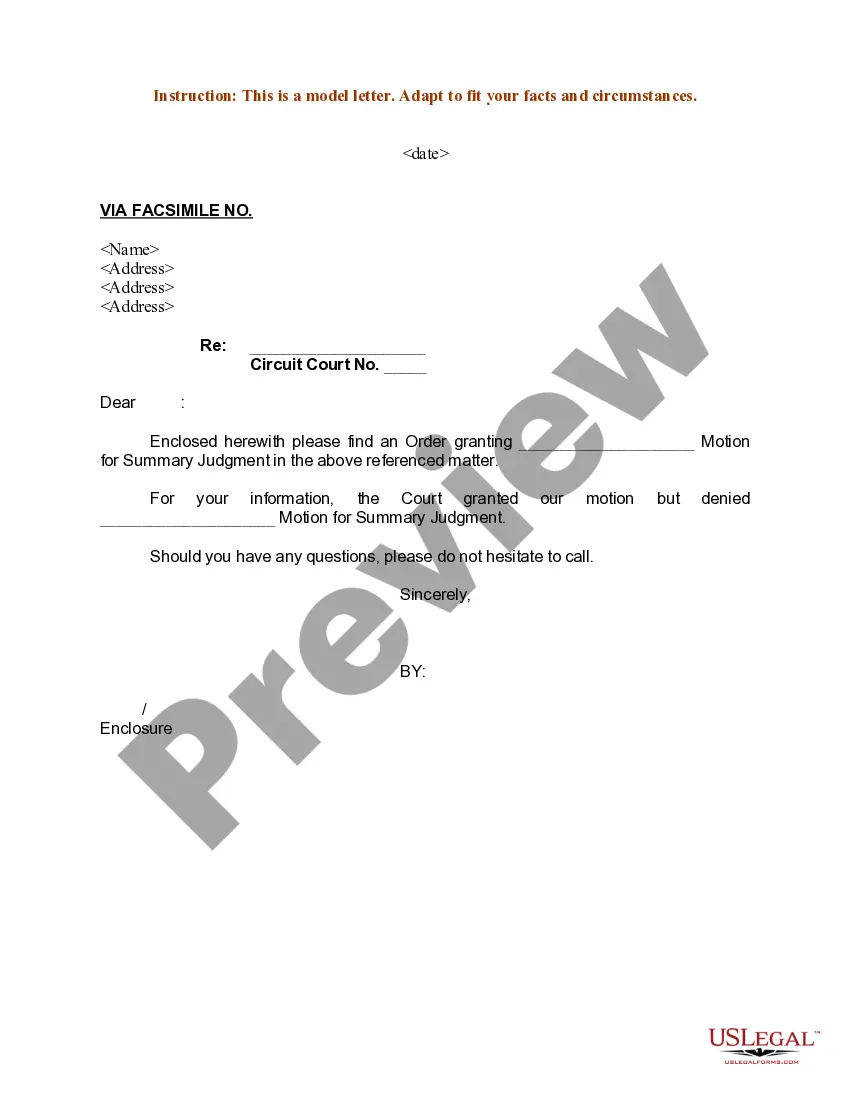
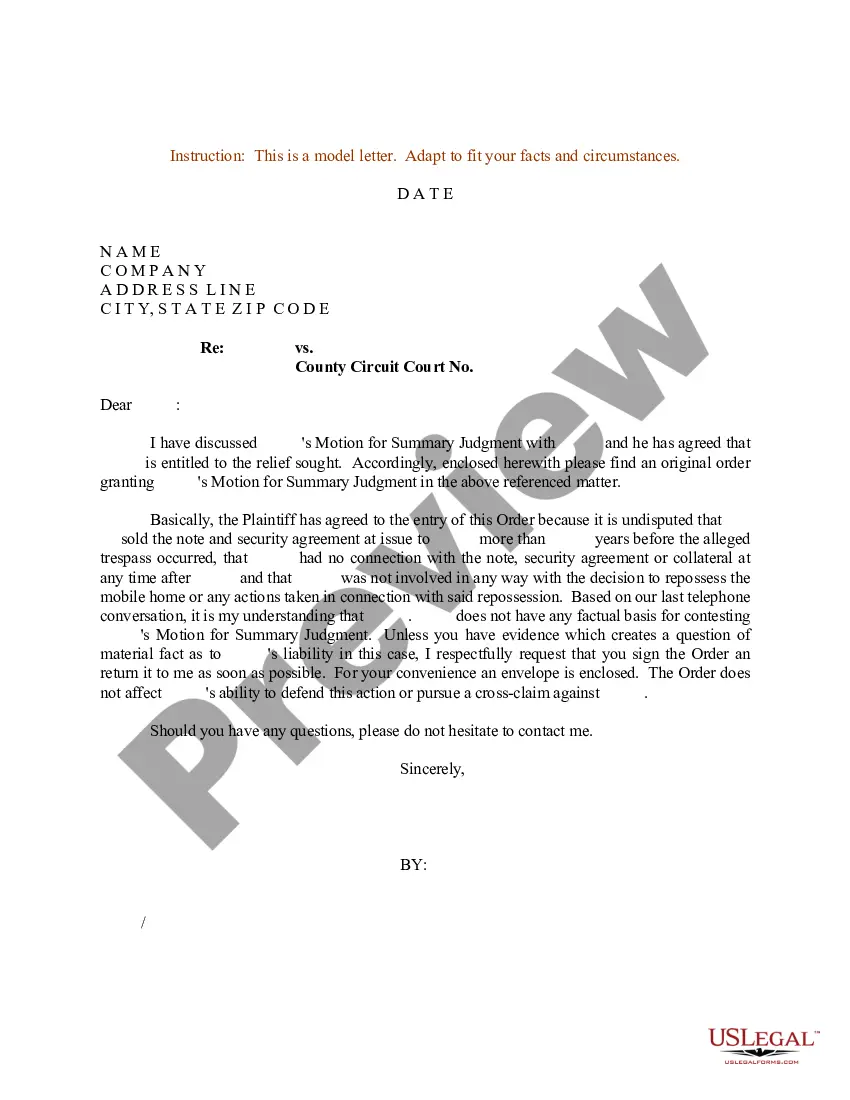
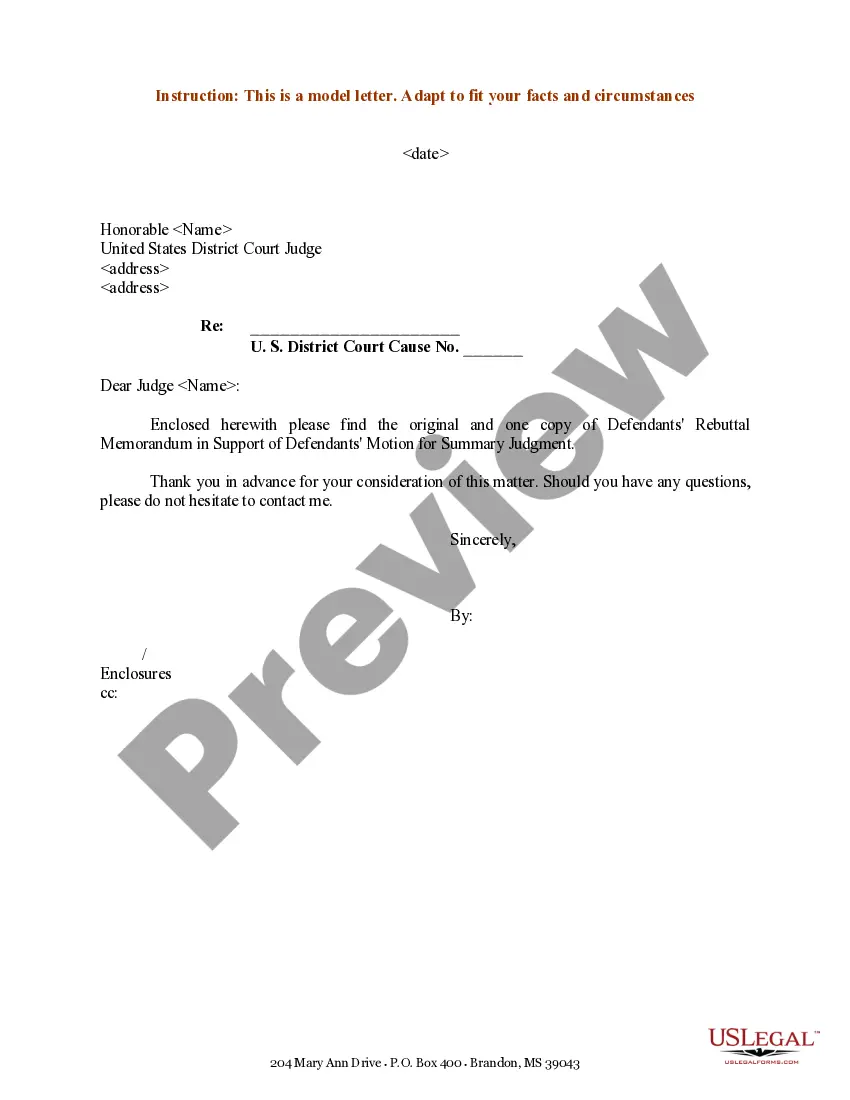
Get your form ready online
Our built-in tools help you complete, sign, share, and store your documents in one place.
Make edits, fill in missing information, and update formatting in US Legal Forms—just like you would in MS Word.
Download a copy, print it, send it by email, or mail it via USPS—whatever works best for your next step.
Sign and collect signatures with our SignNow integration. Send to multiple recipients, set reminders, and more. Go Premium to unlock E-Sign.
If this form requires notarization, complete it online through a secure video call—no need to meet a notary in person or wait for an appointment.
We protect your documents and personal data by following strict security and privacy standards.

Make edits, fill in missing information, and update formatting in US Legal Forms—just like you would in MS Word.

Download a copy, print it, send it by email, or mail it via USPS—whatever works best for your next step.

Sign and collect signatures with our SignNow integration. Send to multiple recipients, set reminders, and more. Go Premium to unlock E-Sign.

If this form requires notarization, complete it online through a secure video call—no need to meet a notary in person or wait for an appointment.

We protect your documents and personal data by following strict security and privacy standards.
Looking for another form?

How to fill out Sample Letter Regarding Memorandum Opinion On Summary Judgment Motion?
You can spend numerous hours online searching for the legal document format that meets the federal and state criteria you require. US Legal Forms provides thousands of legal templates that can be reviewed by experts.
You can obtain or print the Kansas Sample Letter regarding Memorandum Opinion on Summary Judgment Motion through our service. If you possess a US Legal Forms account, you may Log In and click the Download button. After that, you can fill out, modify, print, or sign the Kansas Sample Letter regarding Memorandum Opinion on Summary Judgment Motion. Every legal document you obtain is yours indefinitely.
To have an additional copy of any downloaded form, go to the My documents tab and click the relevant button. If you are using the US Legal Forms site for the first time, follow the simple instructions below: First, ensure that you have selected the appropriate format for your area/town of choice. Review the form details to confirm you have chosen the correct document. If available, use the Review button to look through the format as well.
- If you want to obtain another version of your document, use the Search field to find the format that suits your needs and preferences.
- Once you have located the format you want, click Buy now to proceed.
- Select the pricing plan you wish, enter your credentials, and sign up for an account on US Legal Forms.
- Complete the transaction. You can use your credit card or PayPal account to pay for the legal document.
- Choose the format of your document and download it to your device.
- Make changes to your document if necessary. You can fill, modify, sign, and print the Kansas Sample Letter regarding Memorandum Opinion on Summary Judgment Motion.
- Download and print thousands of document templates using the US Legal Forms website, which offers the largest collection of legal forms. Utilize professional and jurisdiction-specific templates to address your business or personal needs.
Form popularity
FAQ
When bringing a summary judgment motion, a party is arguing that there can be no real dispute about material facts, and the moving party is entitled to win the case as a matter of law.
What Must an Opposition to a Motion for Summary Judgment Include? The Memorandum of Points and Authorities includes any legal authorities and arguments that support your Opposition. An effective Memorandum of Points and Authorities will directly address the arguments made in the Motion for Summary Judgment.
A party against whom relief is sought may move, with or without supporting affidavits or supporting declarations pursuant to K.S.A. 53-601, and amendments thereto, for summary judgment on all or part of the claim. (C) the movant may file a reply within 14 days after the response is served.
If you are opposing a motion for summary judgment, your affidavit or affirmation should attach and refer to any relevant exhibits. You may also attach affidavits or affirmations from other people who have personal knowledge of relevant information regarding the motion.
A judge of the district court must issue a ruling on a civil motion not later than 30 days after the motion's final submission except for a ruling on a motion for summary judgment, which must be issued not later than 60 days after final submission. (b) Ruling on Other Civil Matter Taken Under Advisement.
A party may request oral argument?either in the motion or in a response filed by the adverse party under subsection (b). The court must grant a timely request for oral argument unless it states in the ruling or by separate communication that oral argument would not aid the court materially.
A motion for summary judgment must be accompanied by a filing fee and a memorandum or brief that: (1) states concisely, in separately numbered paragraphs, the uncontroverted contentions of fact on which the movant relies; (2) for each fact, contains precise references to pages, lines and/or paragraphs - or to a time ...
Therefore, to win on summary judgment you have to convince a judge that it is a good use of his or her very limited time and resources to write the decision. This means that your written material has to demonstrate that the law and facts support summary judgment, and contain no misstatements of law or fact.