Kansas General Partnership Package
What is this form package?
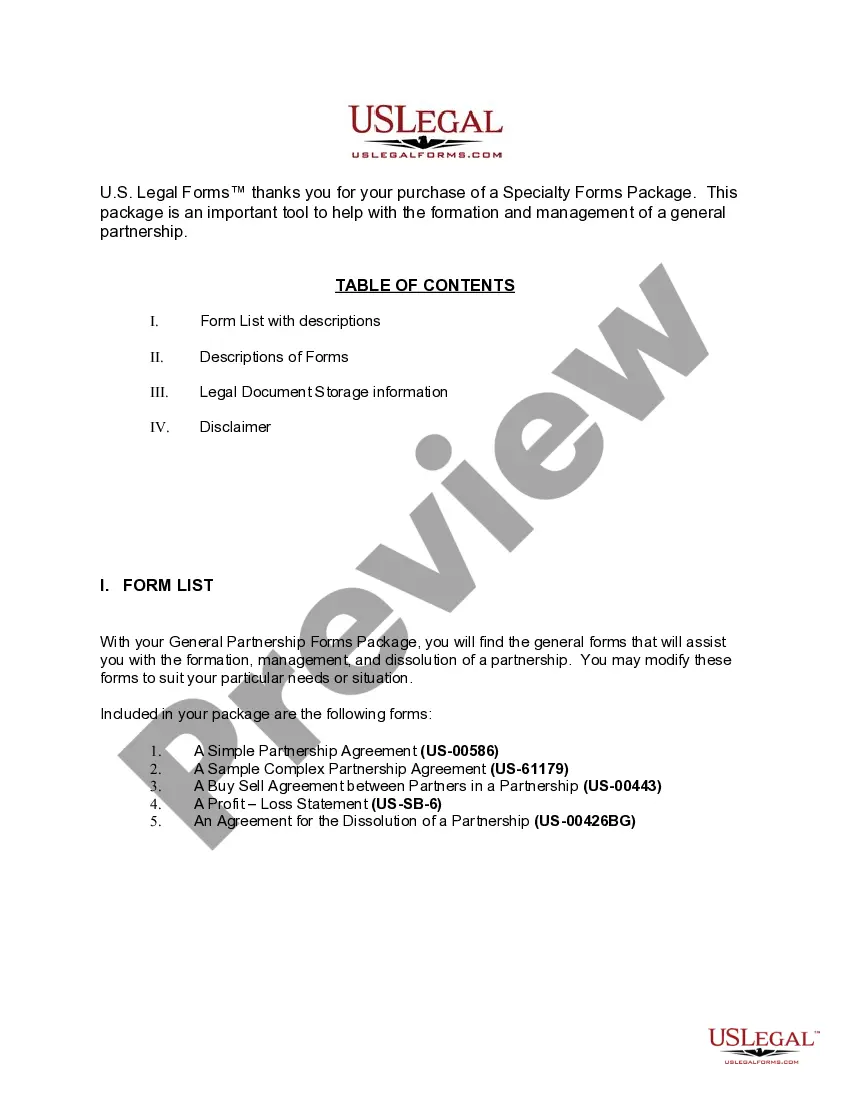
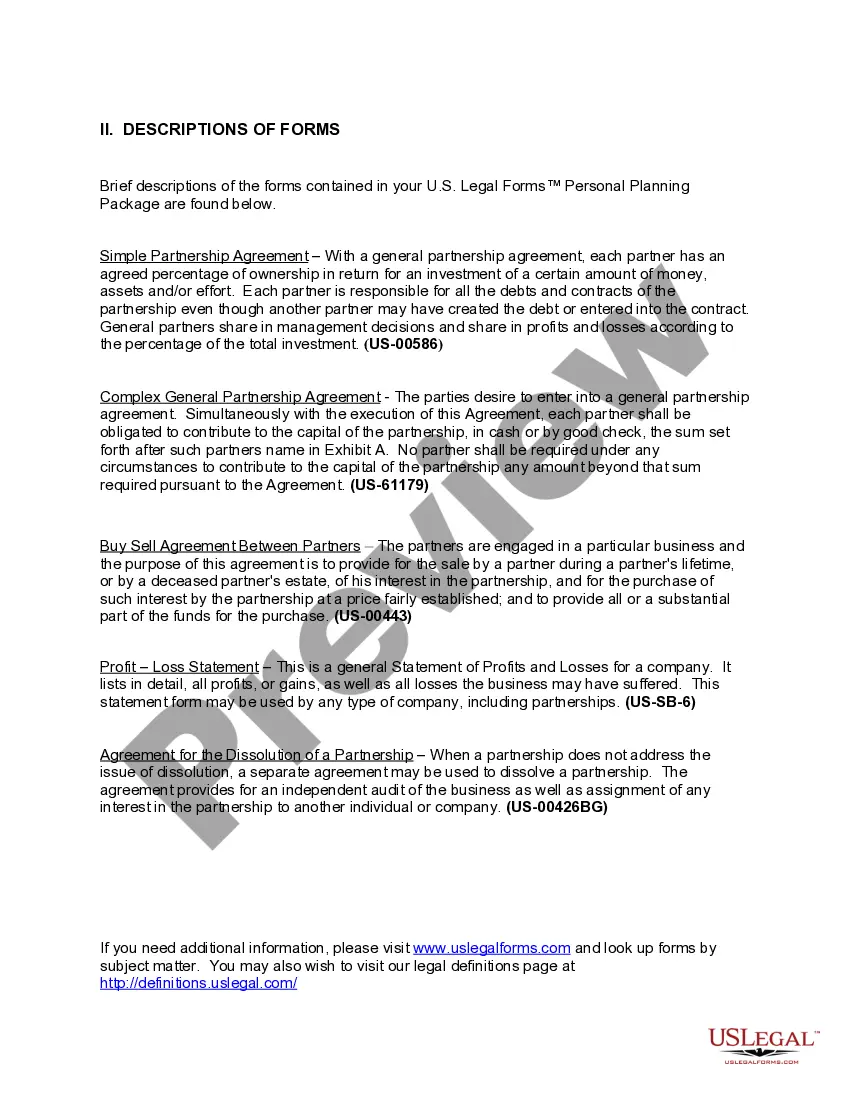
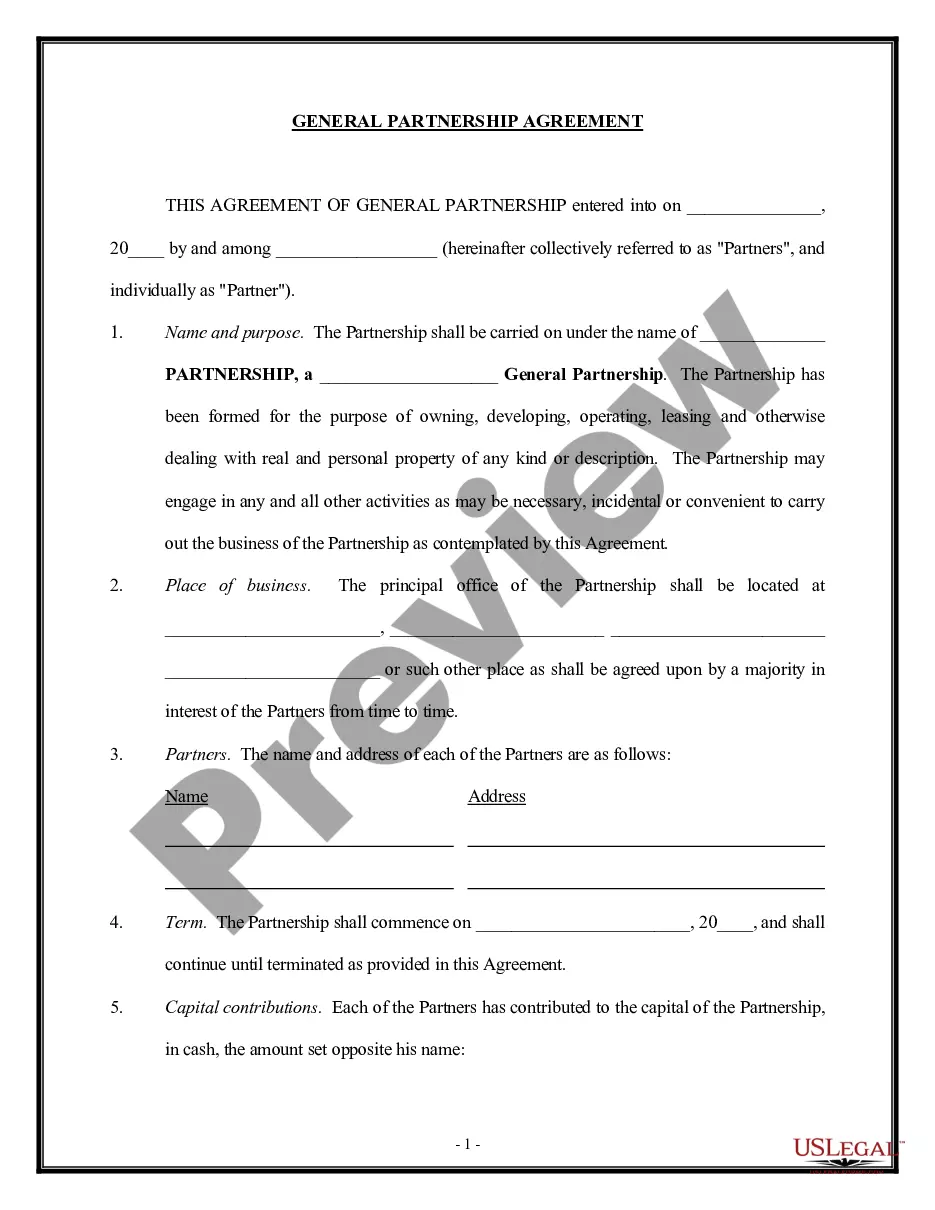
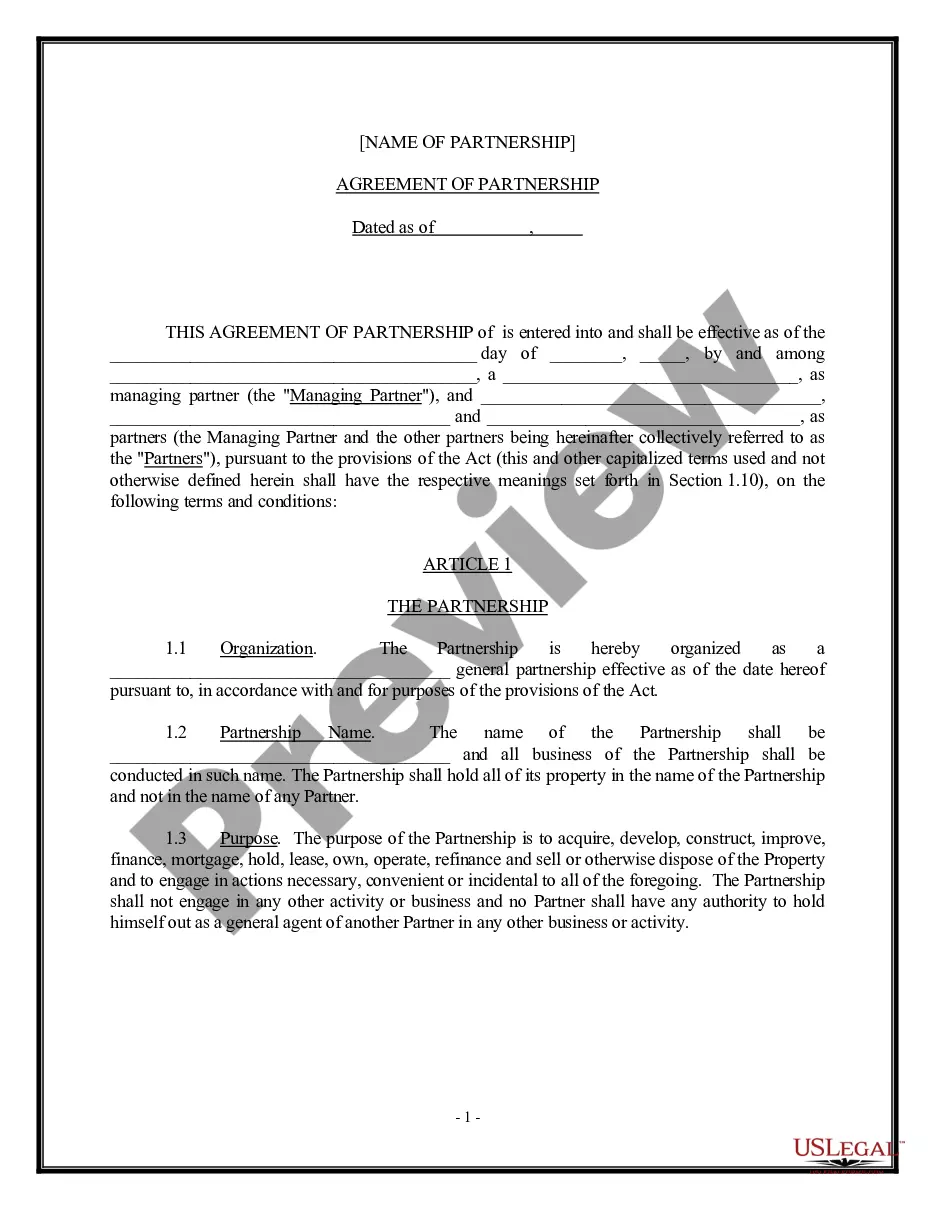
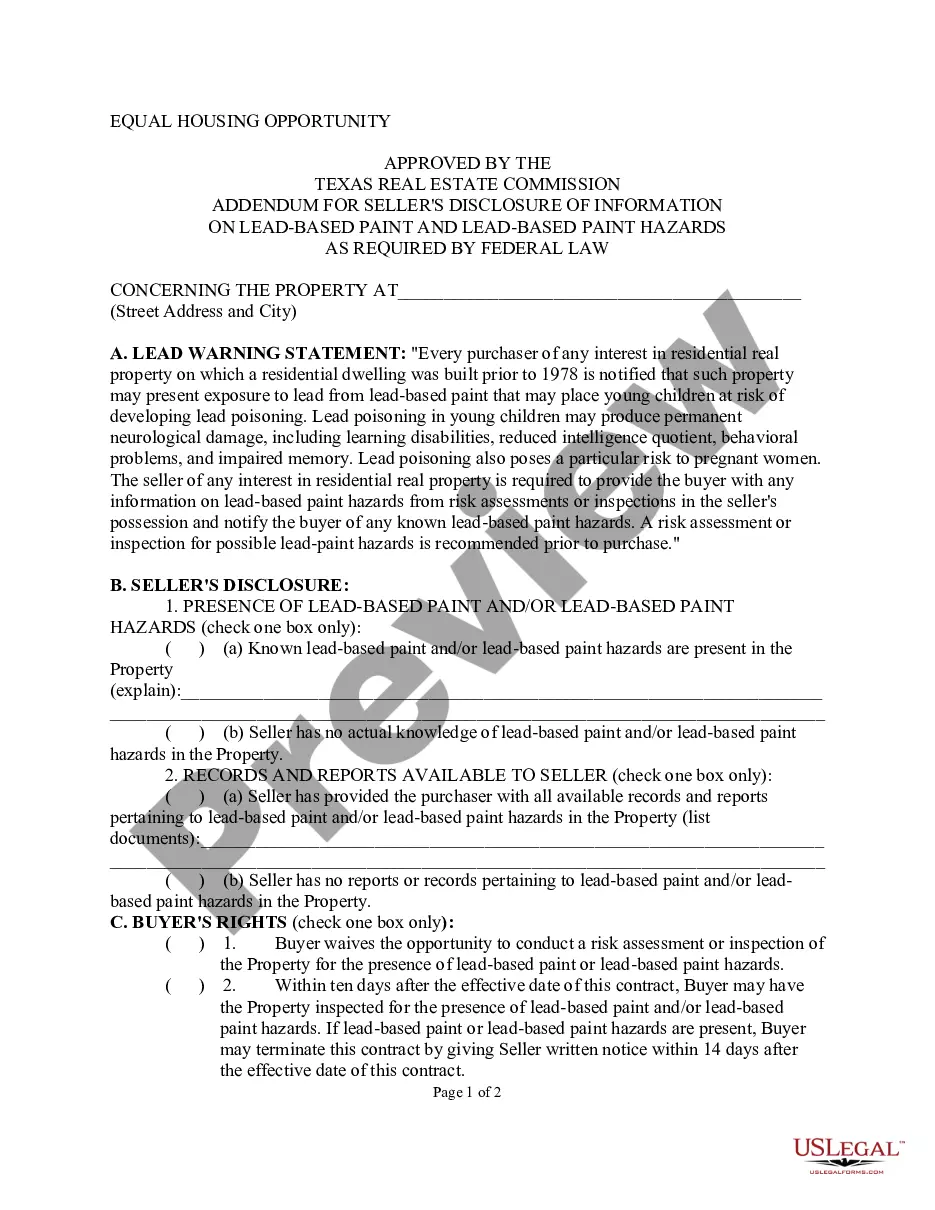
The Kansas General Partnership Package includes a set of essential legal forms designed for the formation, management, and dissolution of a partnership. This package allows you to tailor the documents to fit your specific needs, making it distinct from other generic agreements available.
What’s included in this form package
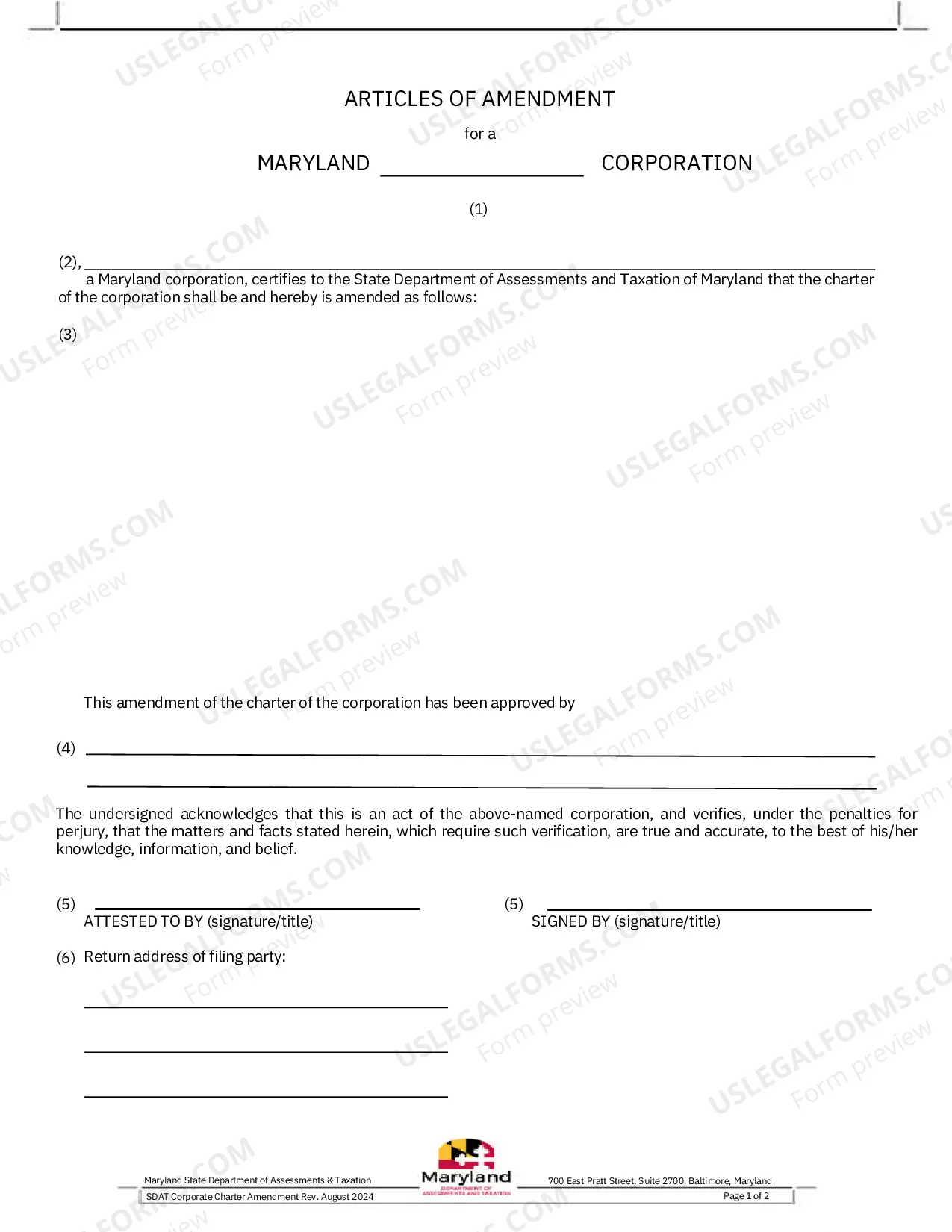
- Agreement for the Dissolution of a Partnership
- I.R.S. Form SS-4 (to obtain your federal identification number)
- Buy Sell Agreement Between Partners of a Partnership
- Sample Business Plan Template
- Simple Partnership Agreement
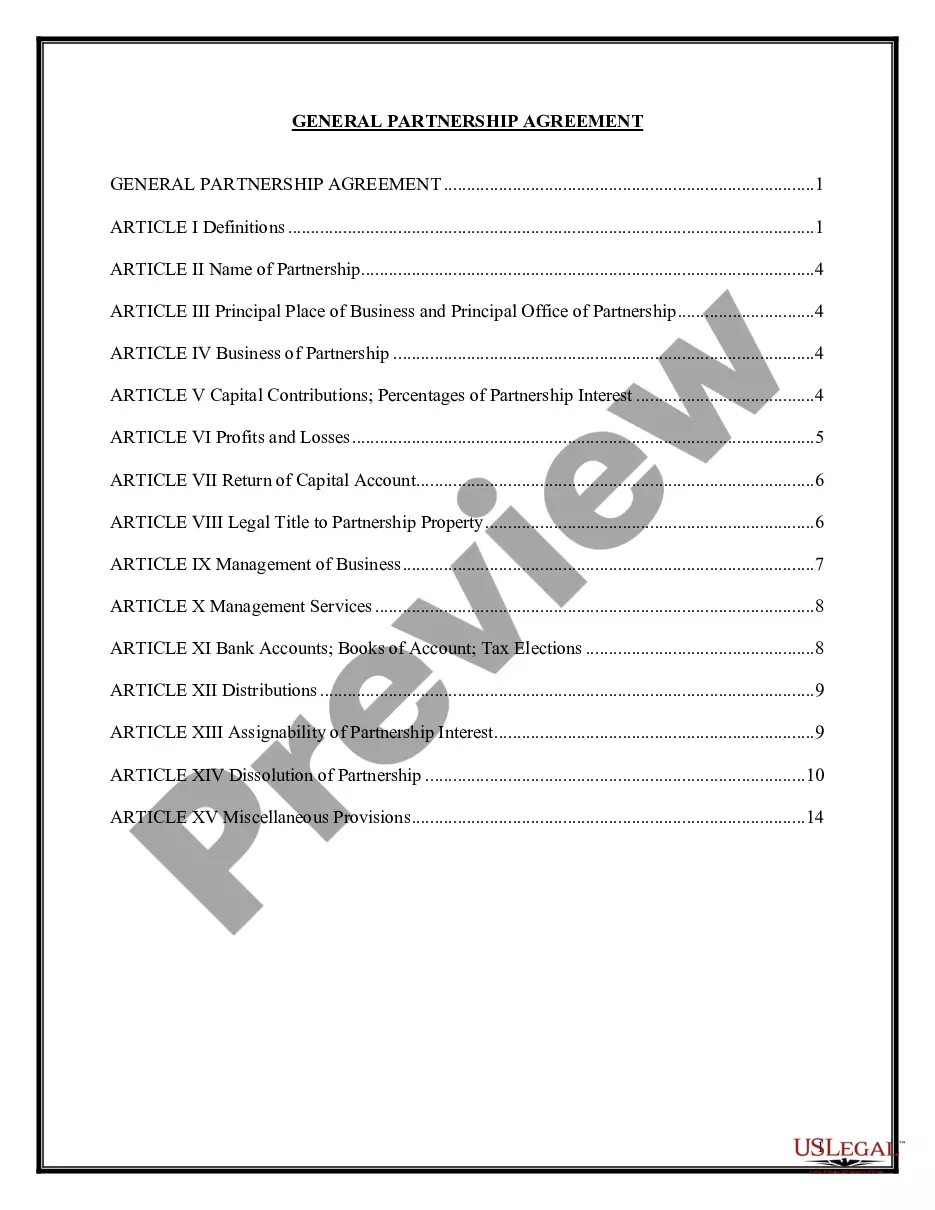
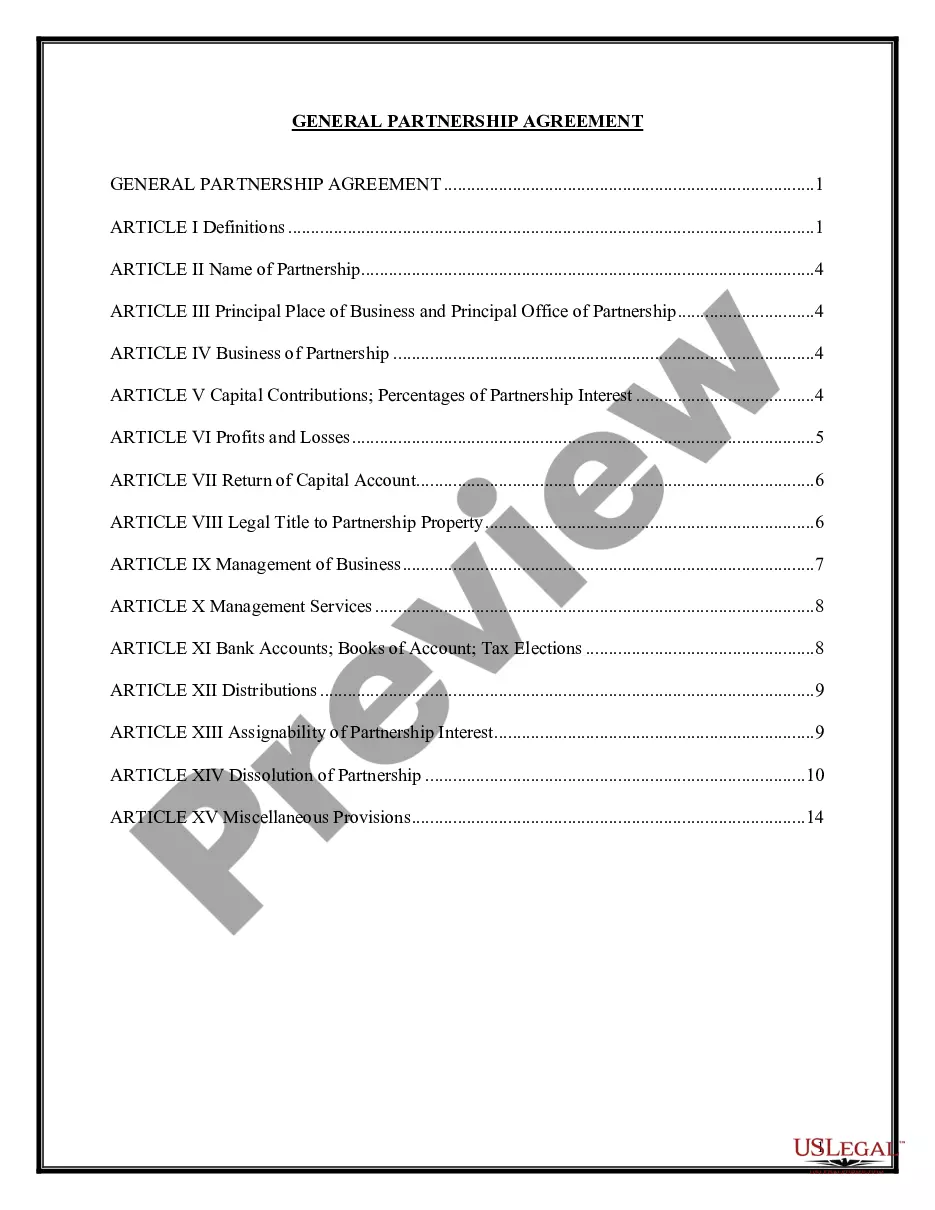
- General Partnership Agreement - Complex
- Checklist for Starting Up a New Business
- Profit and Loss Statement
- Business Startup Costs
- Employment or Work Application - General
- Stand Alone Confidentiality and Noncompetition Agreement with Employee
- Self-Employed Independent Contractor Employment Agreement - General
When this form package is needed
This form package is useful in various situations, including:
- When starting a new partnership and needing formal agreements.
- When partners wish to outline profit-sharing and liability terms.
- When a partner is leaving or a partnership is being dissolved.
Who should use this form package
- Business partners looking to establish clear agreements.
- Small business owners entering into a partnership.
- Individuals involved in partnership negotiations.
How to complete these forms
- Review all included forms carefully to determine your needs.
- Identify the parties involved in the partnership and their contributions.
- Enter the relevant details such as partnership name, duration, and profit-sharing terms.
- Have all partners review and sign the agreements as required.
- Store completed forms securely for future reference.
Notarization guidance for this package
Notarization is not commonly needed for forms in this package. However, if your state’s laws require it, our notarization service, powered by Notarize, allows you to finalize documents online 24/7 without in-person visits.
Get your form ready online
Our built-in tools help you complete, sign, share, and store your documents in one place.
Make edits, fill in missing information, and update formatting in US Legal Forms—just like you would in MS Word.
Download a copy, print it, send it by email, or mail it via USPS—whatever works best for your next step.
Sign and collect signatures with our SignNow integration. Send to multiple recipients, set reminders, and more. Go Premium to unlock E-Sign.
If this form requires notarization, complete it online through a secure video call—no need to meet a notary in person or wait for an appointment.
We protect your documents and personal data by following strict security and privacy standards.

Make edits, fill in missing information, and update formatting in US Legal Forms—just like you would in MS Word.

Download a copy, print it, send it by email, or mail it via USPS—whatever works best for your next step.

Sign and collect signatures with our SignNow integration. Send to multiple recipients, set reminders, and more. Go Premium to unlock E-Sign.

If this form requires notarization, complete it online through a secure video call—no need to meet a notary in person or wait for an appointment.

We protect your documents and personal data by following strict security and privacy standards.
Typical mistakes to avoid
- Failing to include all partners in the initial agreement.
- Not specifying terms for profit distribution and loss sharing.
- Overlooking the formalization of dissolution provisions.
Advantages of online completion
- Convenience of downloading and editing forms at your own pace.
- Reliable legal documents created by licensed attorneys.
- Time-saving compared to drafting documents from scratch.
Legal use & context
- These forms serve as binding agreements if properly executed and witnessed.
- Partnership agreements can prevent disputes by clearly outlining roles and responsibilities.
- In case of dissolution, having a formal agreement can streamline the process significantly.
Quick recap
- The Kansas General Partnership Package includes essential legally binding documents.
- It is designed for various partnership scenarios, from creation to dissolution.
- Customizing these forms can help ensure they meet your specific business needs.
Looking for another form?
Form popularity
FAQ
Types of Partnership General Partnership, Limited Partnership, Limited Liability Partnership and Public Private Partnership.
Although each partnership agreement differs based on business objectives, certain terms should be detailed in the document, including percentage of ownership, division of profit and loss, length of the partnership, decision making and resolving disputes, partner authority, and withdrawal or death of a partner.
No Separate Business Entity from Partners. Partners' Personal Assets Unprotected. Partners Liable for Each Others' Actions. Partnership Terminated Upon Death or Withdrawal of One of the Partners.
There are disadvantages to general partnerships, principally liability.Each partner is also liable for the debts incurred by the actions of other partners. Because of this potential personal liability, general partnerships are limited in their ability to raise money and attract investors.
Aside from formation requirements, the main difference between a partnership and an LLC is that partners are personally liable for any business debts of the partnership -- meaning that creditors of the partnership can go after the partners' personal assets -- while members (owners) of an LLC are not personally liable
General Partnership: Limited Partnership: Limited Liability Partnership (L.L.P): Partnership at Will: Particular Partnership:
A partnership is a form of business where two or more people share ownership, as well as the responsibility for managing the company and the income or losses the business generates.There are three types of partnerships: General partnership. Limited partnership. Joint venture.
LLC partnership (also known as a multi-member LLC) Limited liability partnership (LLP) Limited partnership (LP) General partnership (GP)
There are three relatively common partnership types: general partnership (GP), limited partnership (LP) and limited liability partnership (LLP).