Kansas Conveyance Contract
About this form
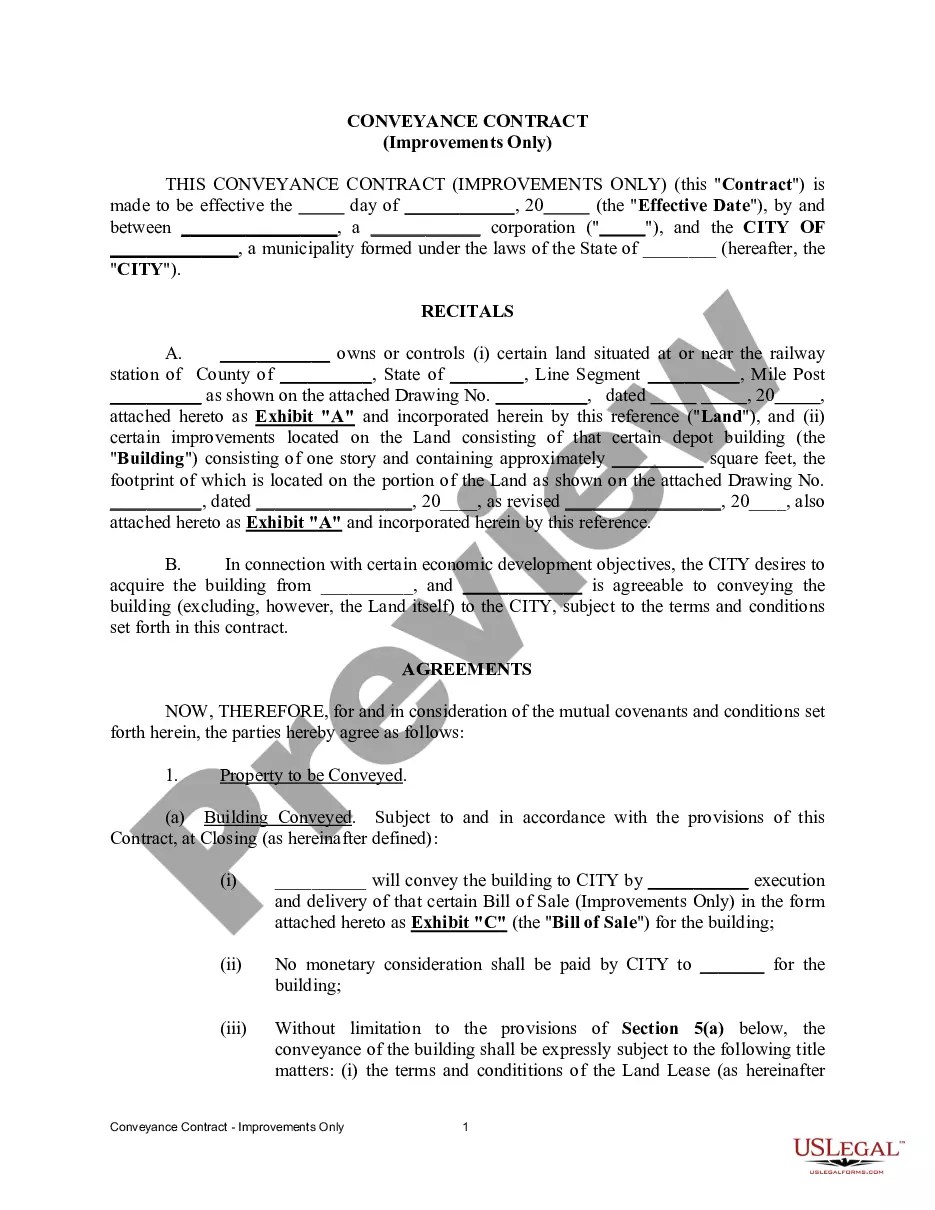
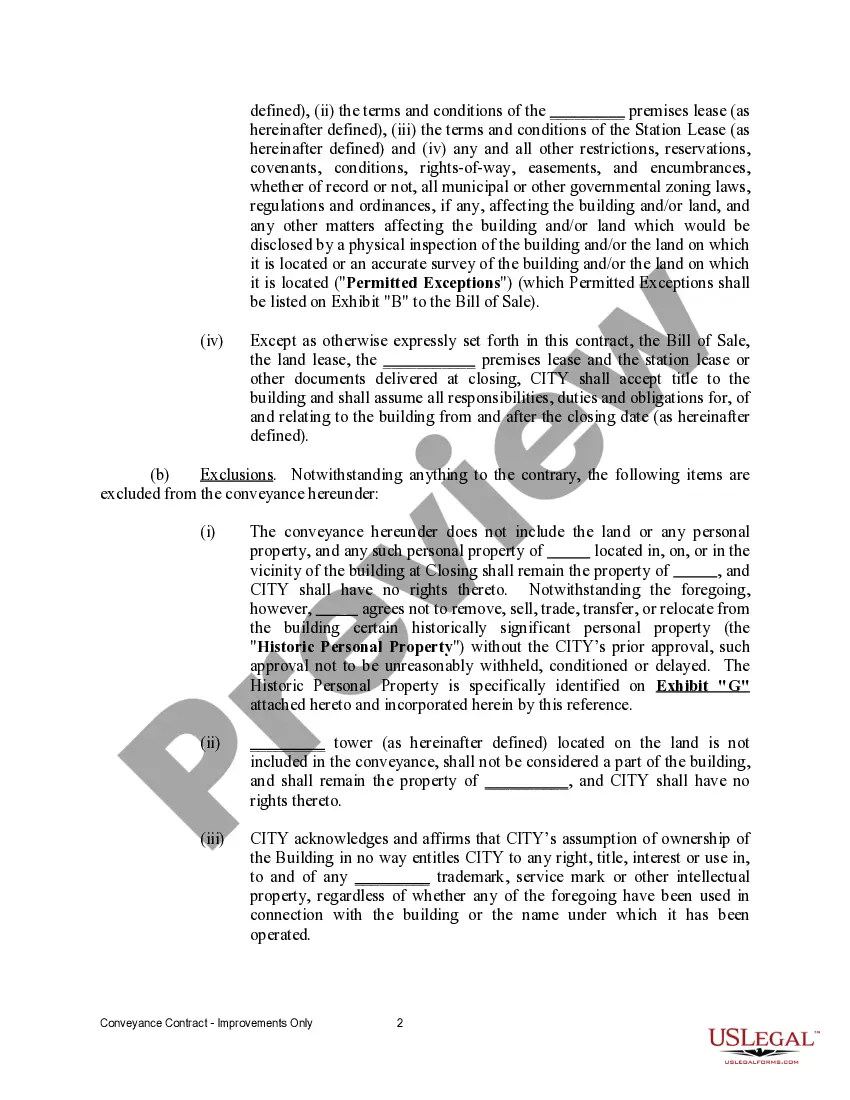
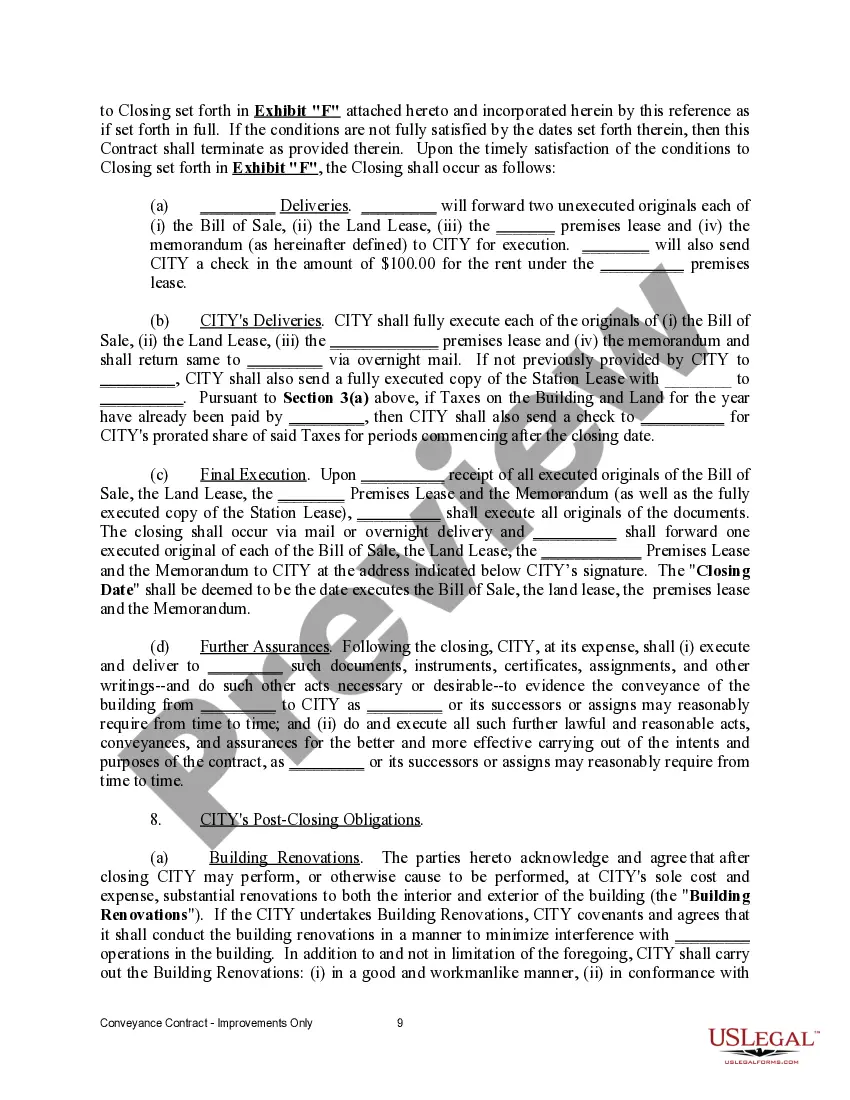
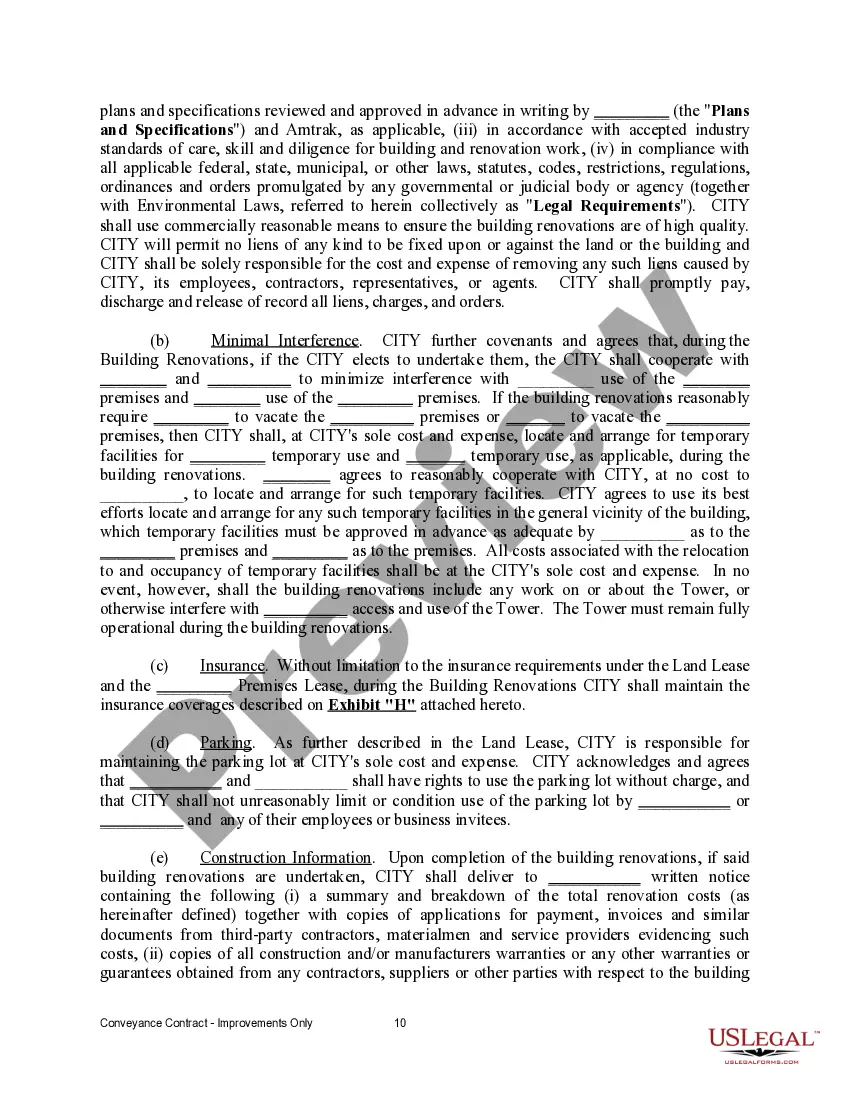
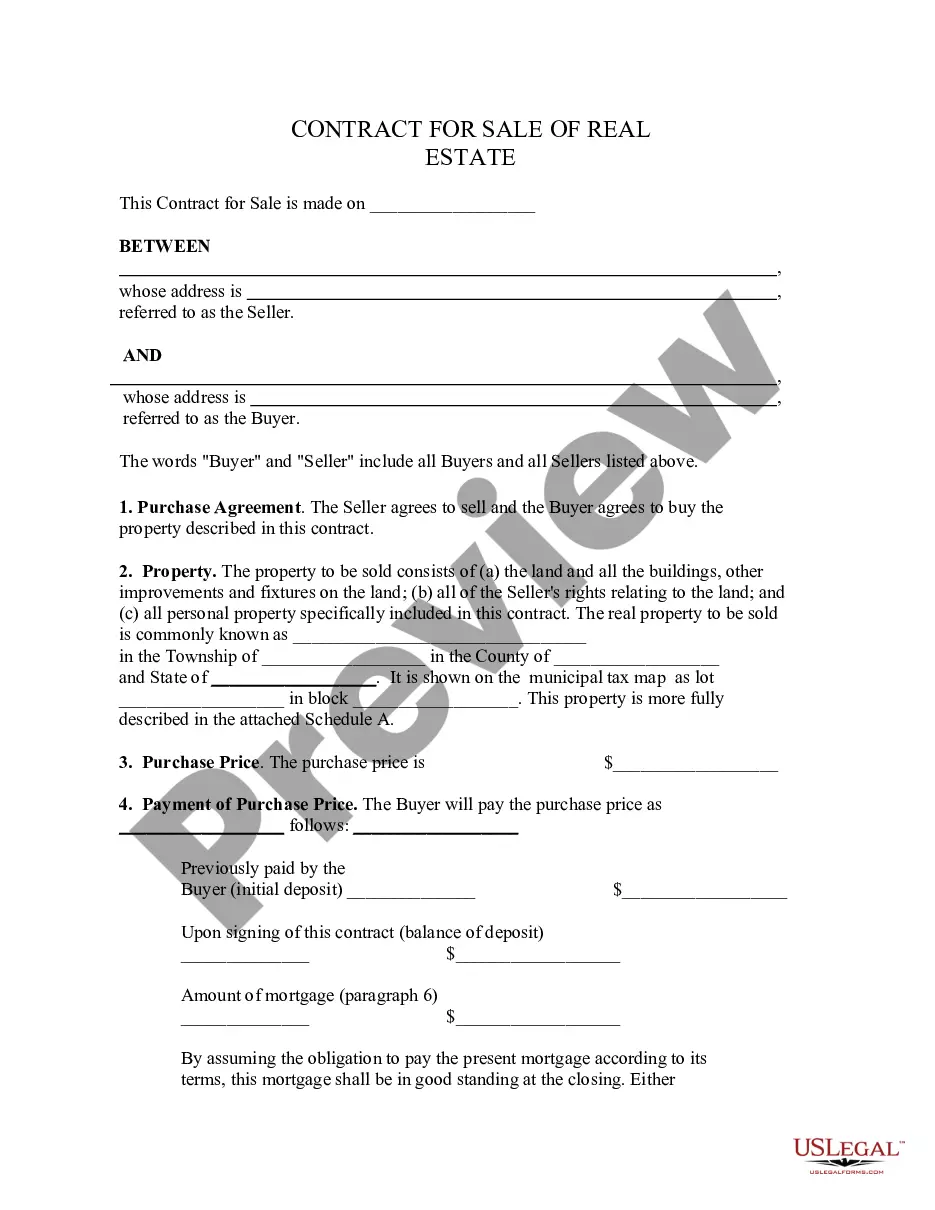
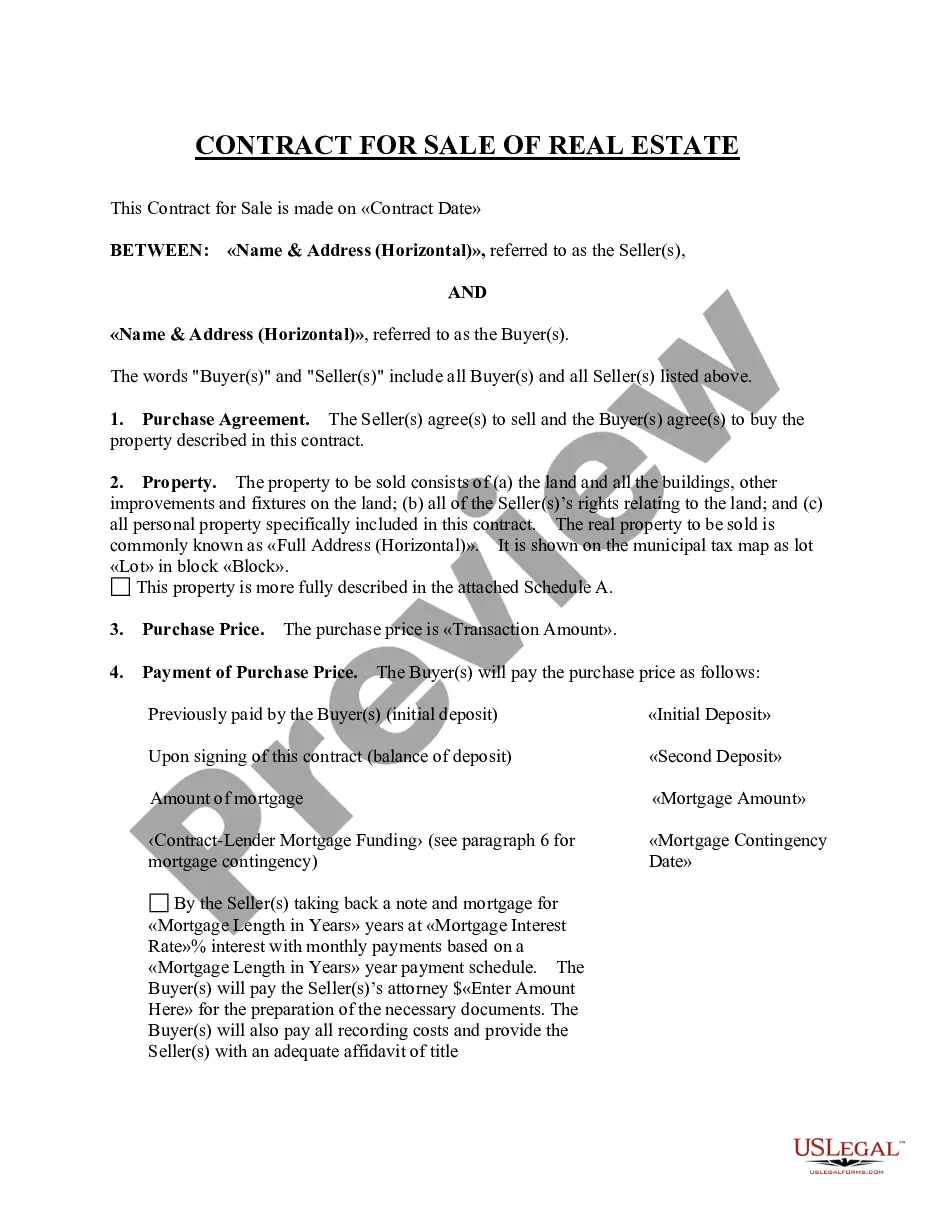
The Conveyance Contract is a legal document used for the transfer of ownership of a building from a corporation to a municipality, specifically for economic development purposes. This form is distinct from typical real estate contracts because it focuses solely on the building improvements, while leasing the underlying land. It outlines the terms of the sale and lease agreements, protecting the interests of both parties involved.
Main sections of this form
- Effective Date: The date on which the contract becomes legally binding.
- Parties Involved: Identification of the corporation and the city as the parties entering the agreement.
- Property Description: Details about the building being sold, including its location and specific characteristics.
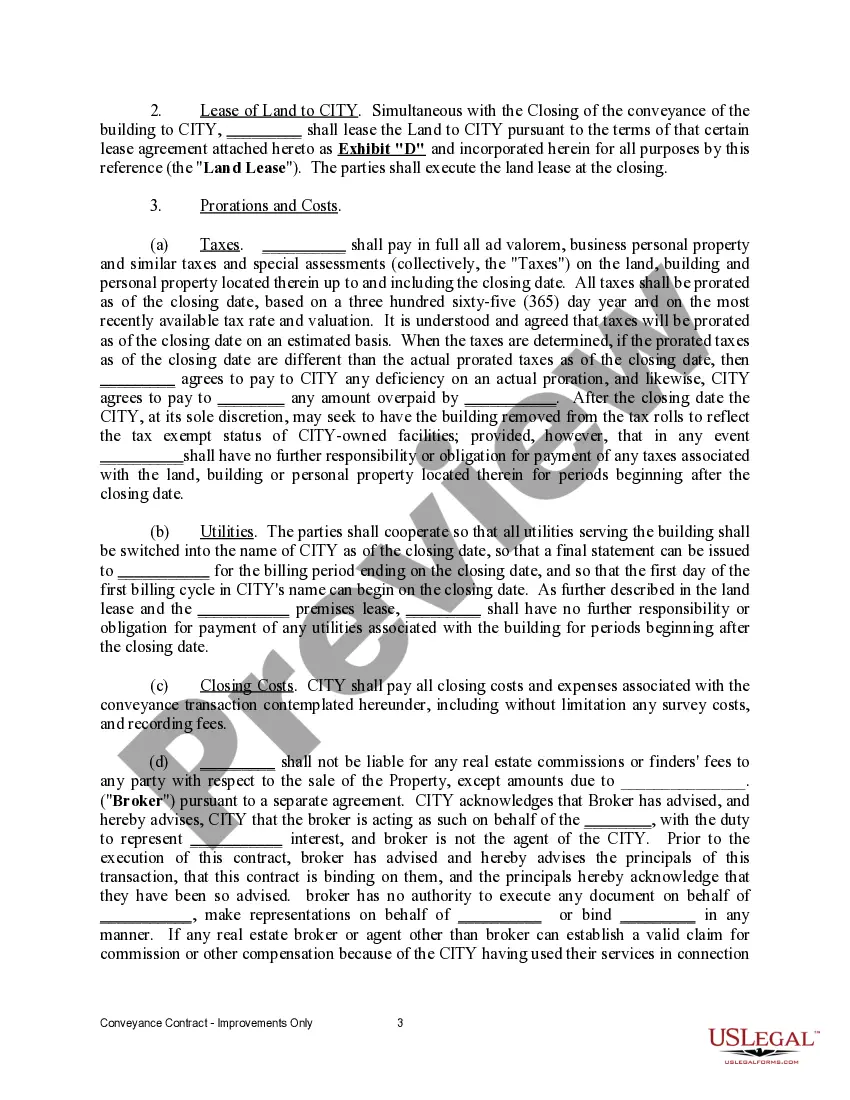
- Leasing Terms: Conditions under which the city will lease the land from the corporation.
- Financial Arrangements: Agreement that no monetary compensation will be exchanged for the building itself.
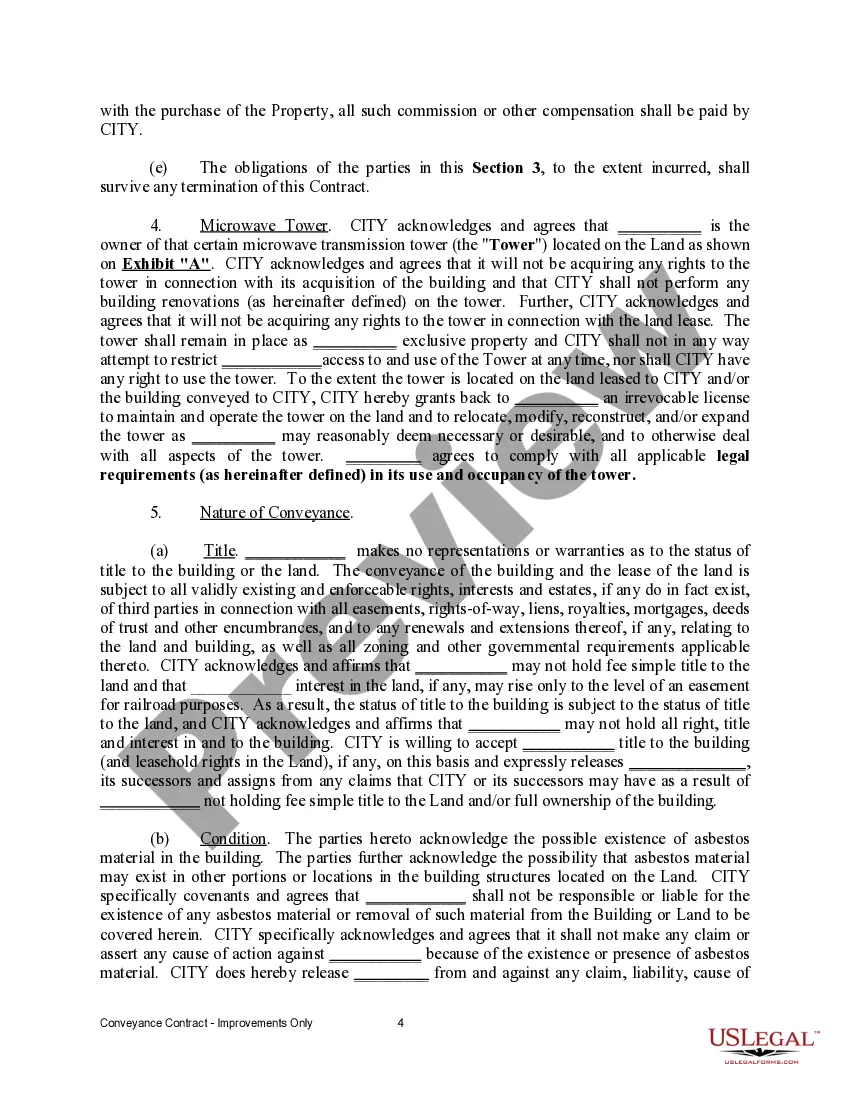
- Conditions and Obligations: Responsibilities of both parties, including maintenance and insurance duties.

When to use this document
This form is needed when a city or municipality intends to acquire a building for economic development purposes, particularly in connection with projects near transportation hubs like railway stations. It is suitable when the city wants to improve local infrastructure while ensuring the land can remain in the control of the corporation.
Who should use this form
- Municipalities seeking to acquire buildings for economic development.
- Corporations that own land and buildings, particularly near railway stations.
- Legal representatives of both the city and the corporation involved in the transaction.
Completing this form step by step
- Identify the parties: Clearly state the names and legal designations of the corporation and the city.
- Specify the property: Describe the building being sold, including its dimensions and location.
- Draft the lease agreement: Include terms under which the city will lease the land.
- Enter dates and signatures: Specify the effective date and ensure all parties sign the document.
- Review obligations: Ensure both parties understand their responsibilities outlined in the contract.
Notarization guidance
This form does not typically require notarization unless specified by local law. However, it is advisable to consult a legal professional to ensure compliance with jurisdiction-specific requirements.
Get your form ready online
Our built-in tools help you complete, sign, share, and store your documents in one place.
Make edits, fill in missing information, and update formatting in US Legal Forms—just like you would in MS Word.
Download a copy, print it, send it by email, or mail it via USPS—whatever works best for your next step.
Sign and collect signatures with our SignNow integration. Send to multiple recipients, set reminders, and more. Go Premium to unlock E-Sign.
If this form requires notarization, complete it online through a secure video call—no need to meet a notary in person or wait for an appointment.
We protect your documents and personal data by following strict security and privacy standards.

Make edits, fill in missing information, and update formatting in US Legal Forms—just like you would in MS Word.

Download a copy, print it, send it by email, or mail it via USPS—whatever works best for your next step.

Sign and collect signatures with our SignNow integration. Send to multiple recipients, set reminders, and more. Go Premium to unlock E-Sign.

If this form requires notarization, complete it online through a secure video call—no need to meet a notary in person or wait for an appointment.

We protect your documents and personal data by following strict security and privacy standards.
Common mistakes
- Failing to accurately describe the property can lead to disputes over what is being conveyed.
- Overlooking the lease terms can cause confusion regarding responsibilities for land maintenance.
- Not including necessary legal descriptions may render the agreement unenforceable.
Why use this form online
- Convenient access to a legally vetted document that saves time and effort.
- Editable fields allow for customization to meet specific requirements.
- Instant access eliminates delays associated with traditional paperwork.
Legal use & context
- The Conveyance Contract is legally binding once signed by all parties.
- Use of standard legal language helps ensure clarity and enforceability in court.
- Proper execution protects both the city and the corporation by providing clear terms and conditions.
Main things to remember
- This form is essential for municipalities acquiring buildings for development.
- Clarity in the contract details prevents future disputes.
- Understanding leasing terms is critical for maintaining property use rights.
Looking for another form?

Form popularity
FAQ
The statute of limitations for filing a personal injury claim in Kansas is 2 years (see Kansas Statutes section 60-513), meaning residents have 2 years from the date of an accident to file a lawsuit. Those who miss the deadline are likely to have their claim denied or case dismissed by the court.
A Kansas judgment is enforceable for five (5) years. If not renewed, or executed within this period, it will become dormant and cease to operate as a lien on the defendant's real estate.
How Does a Contract for Deed Work in Kansas. A contract for deed, or land contract, is a type of agreement in which the buyer makes payments to the seller for the property and receives possession of the property, but the legal title remains with the seller until the contract is fulfilled.
The Kansas statute of repose indicates that ?in no event shall an action be commenced more than 10 years beyond the time of the act giving rise to the cause of action.? K.S.A. 60-513(b).
Generally, products liability actions brought under negligence theories must be filed within two years after the plaintiff suffers a substantial injury, and those actions brought under strict liability theories must be filed within two years after the injury occurs.
Statute of limitations in contracts for sale. (1) An action for breach of any contract for sale must be commenced within four years after the cause of action has accrued. By the original agreement the parties may reduce the period of limitation to not less than one year but may not extend it.
(1) An action for default under a lease contract, including breach of warranty or indemnity, must be commenced within four years after the cause of action accrued. By the original lease contract the parties may reduce the period of limitation to not less than one year.