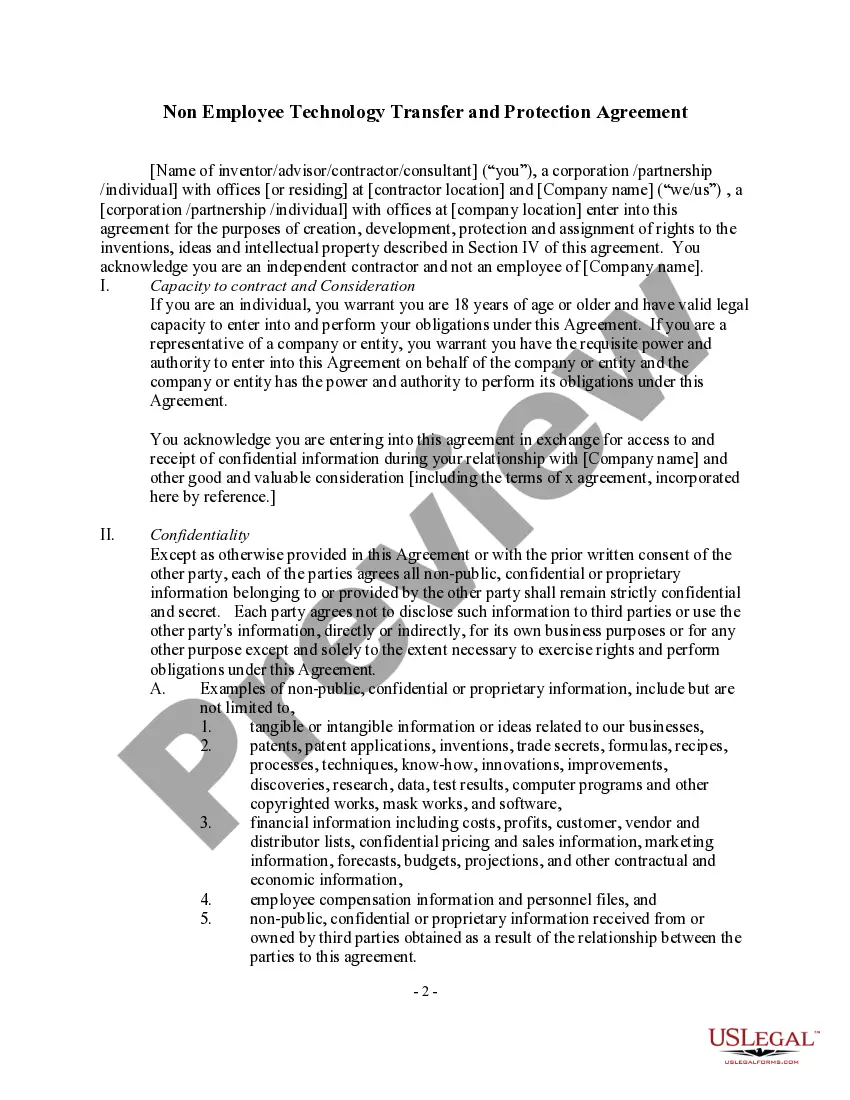
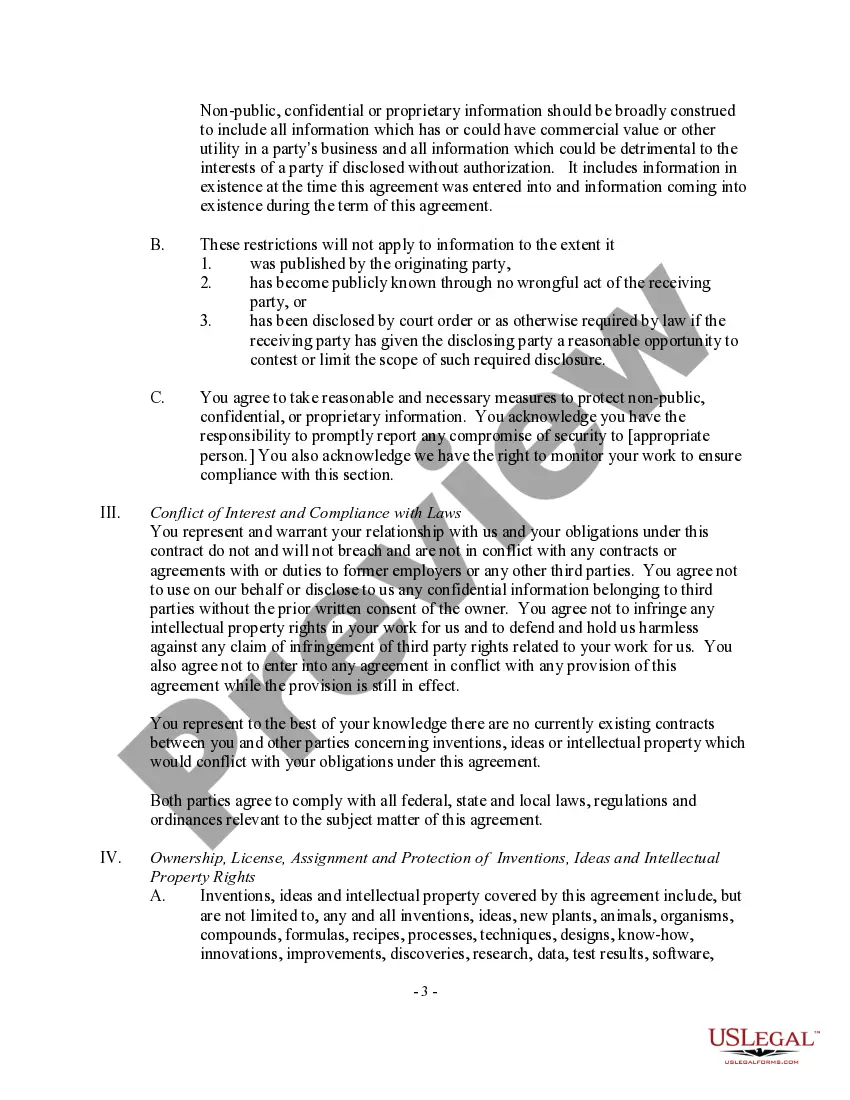
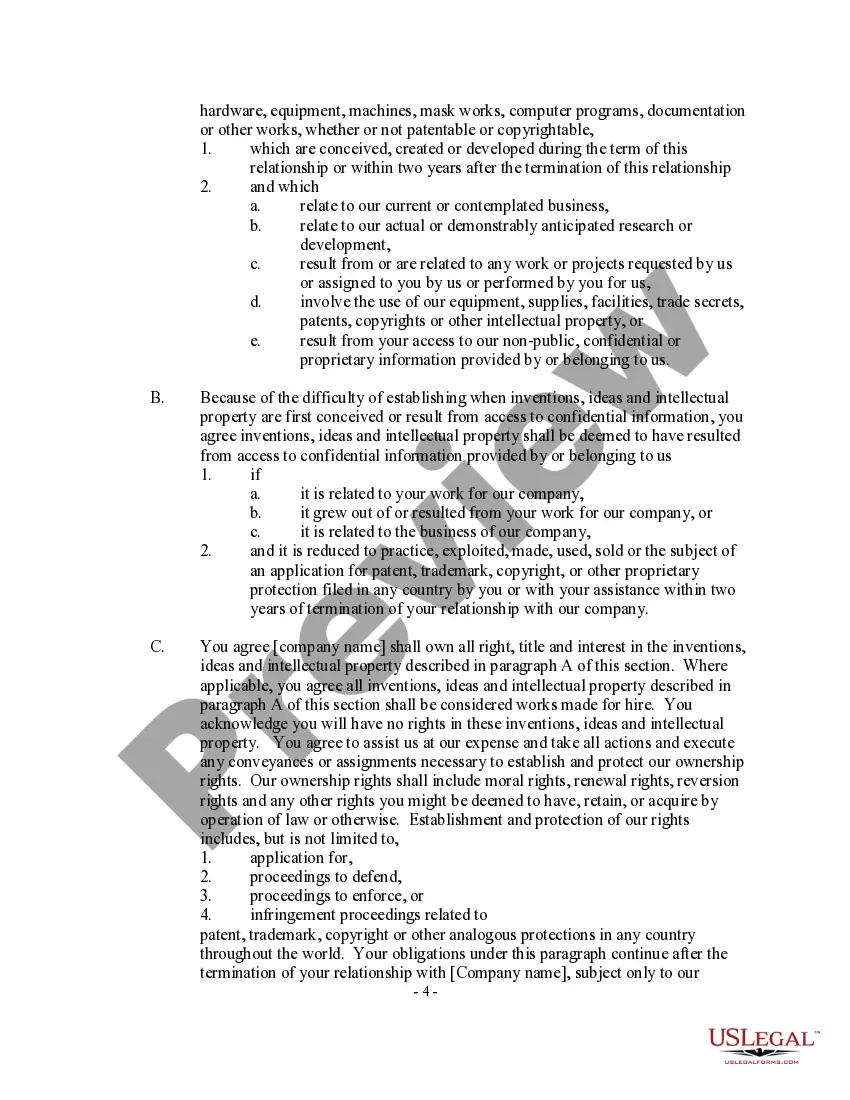
Indiana Non Employee Technology Transfer And Protection Agreement
Description


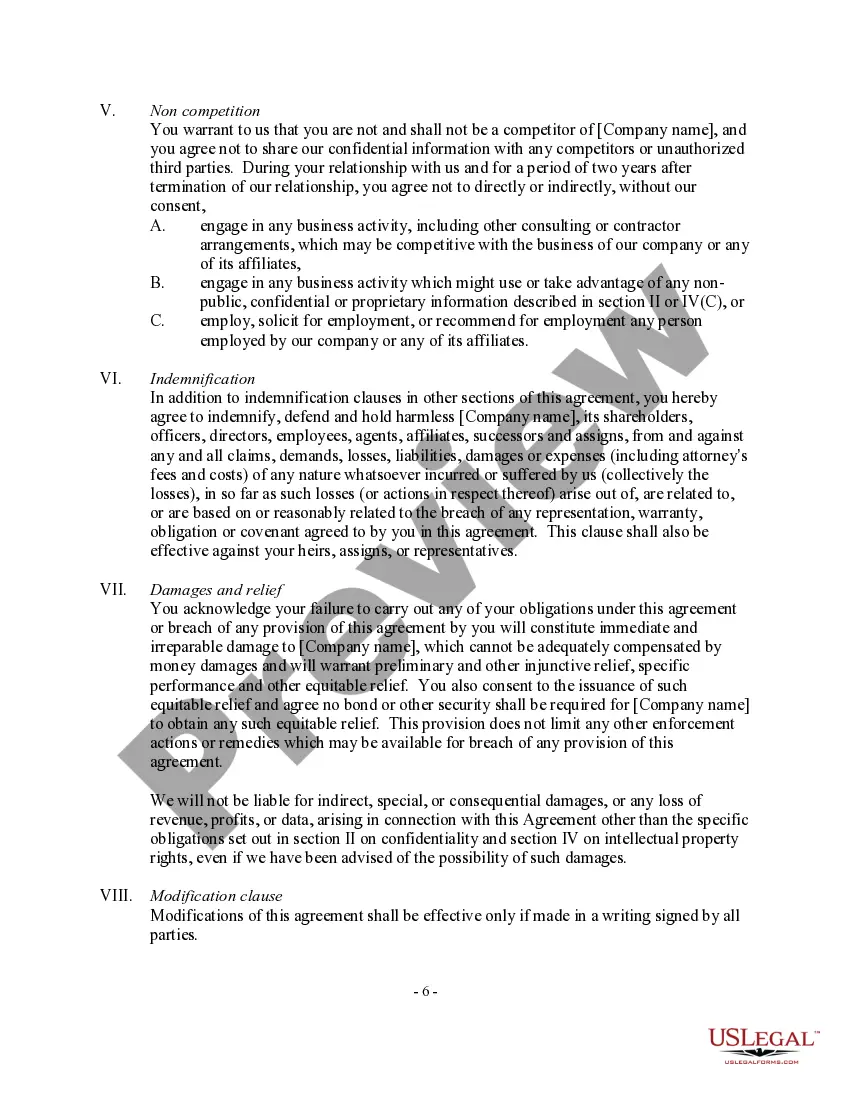
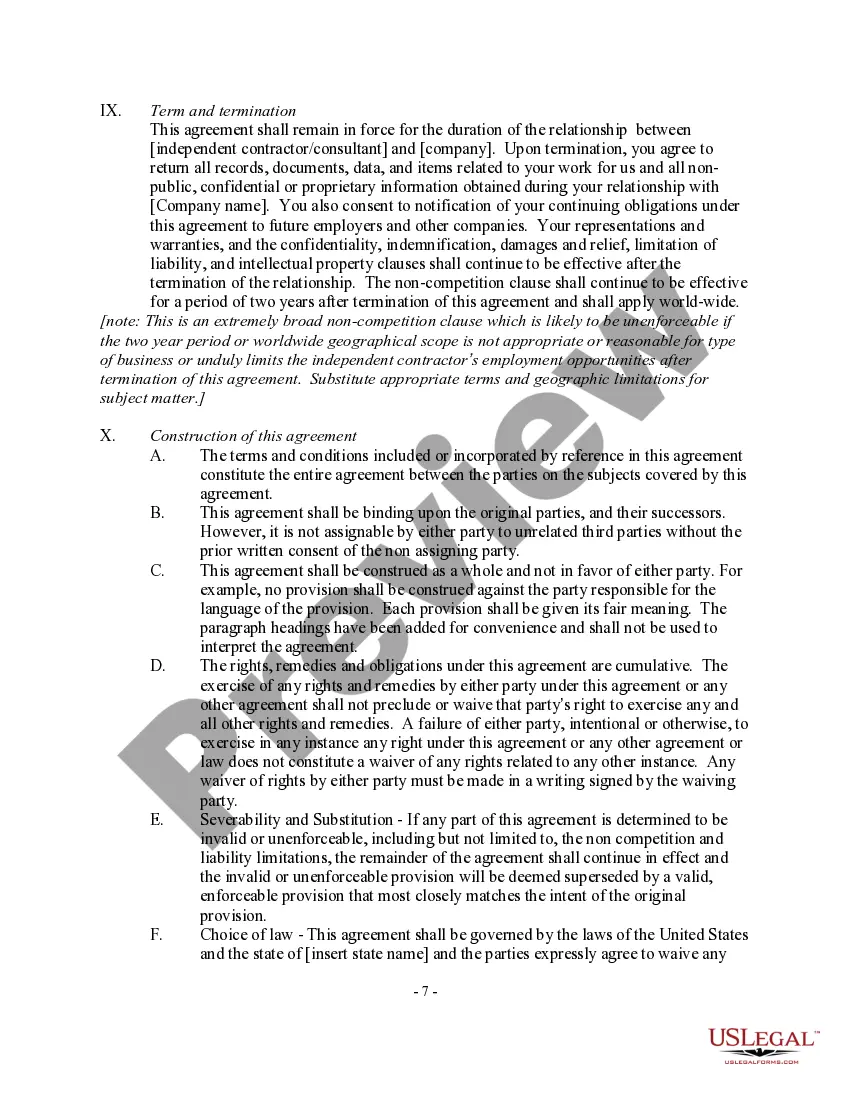
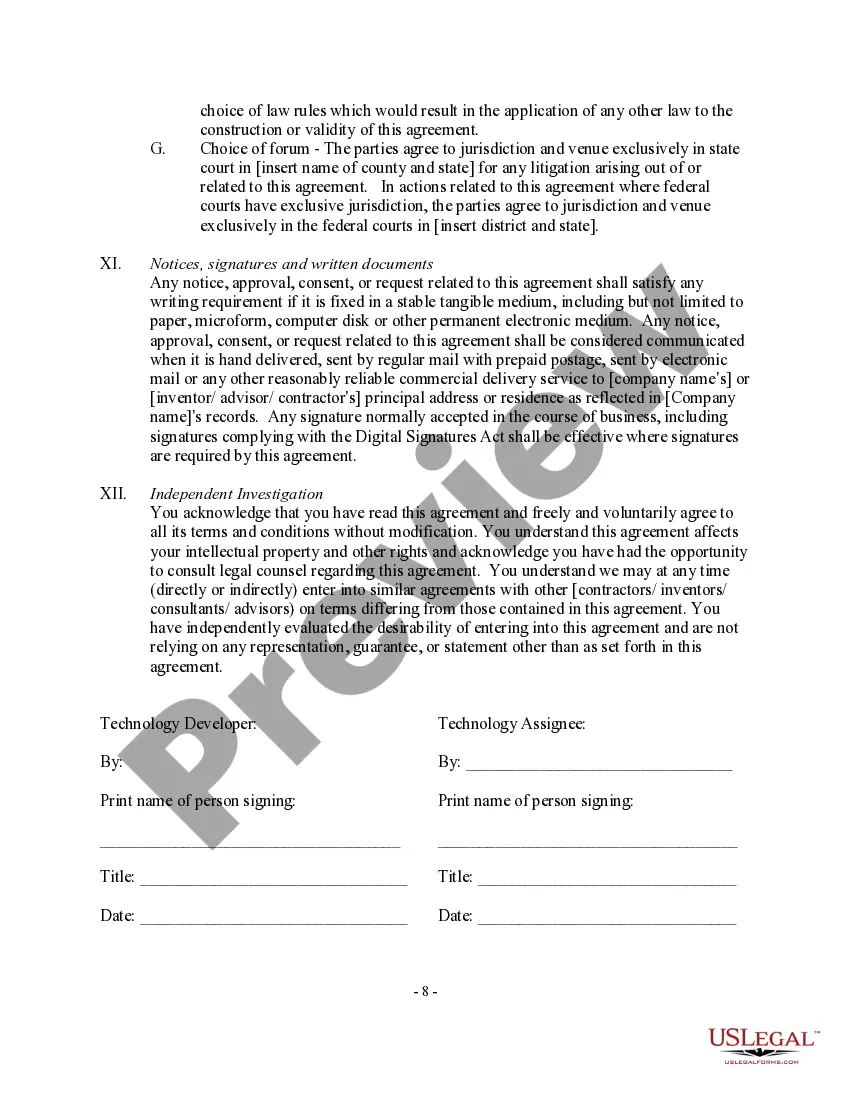
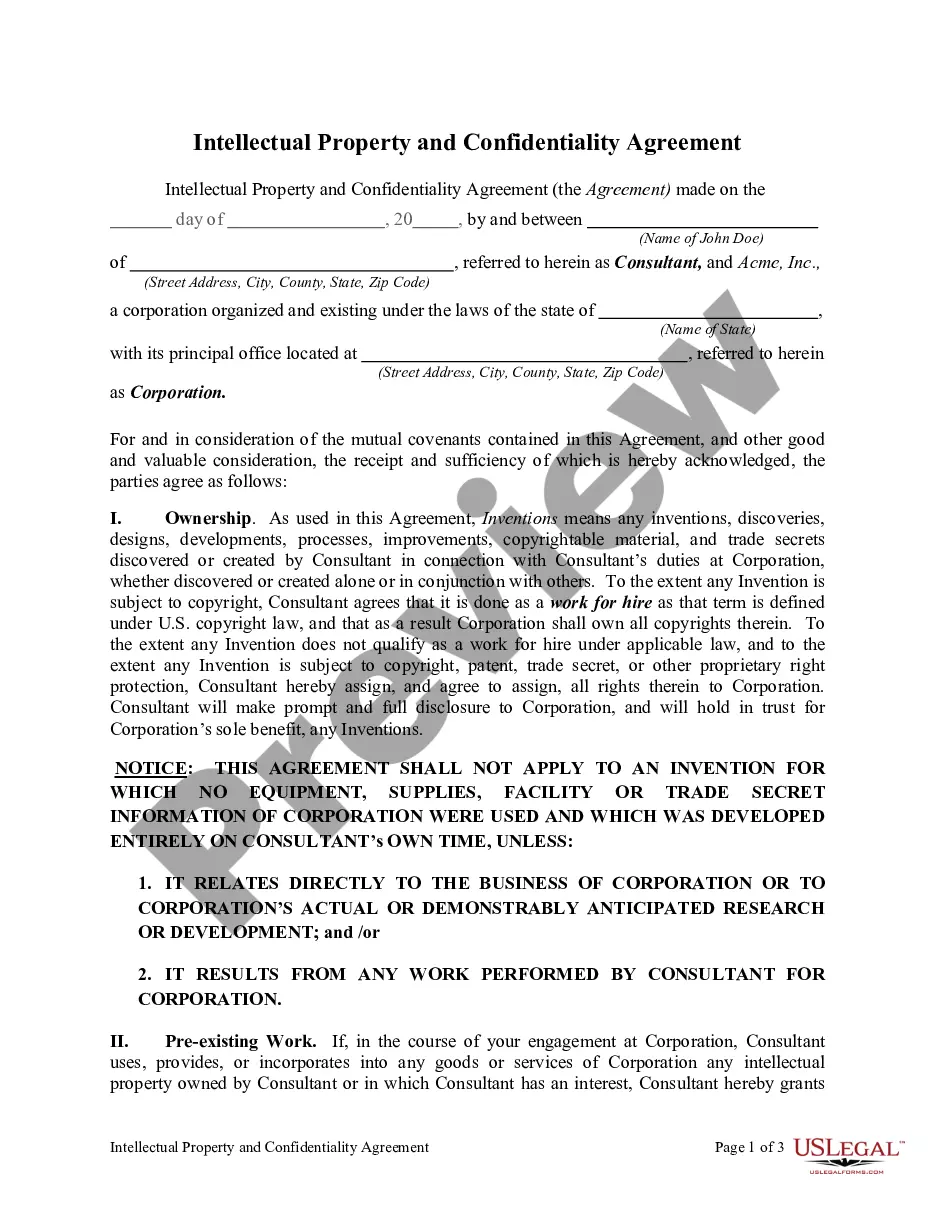
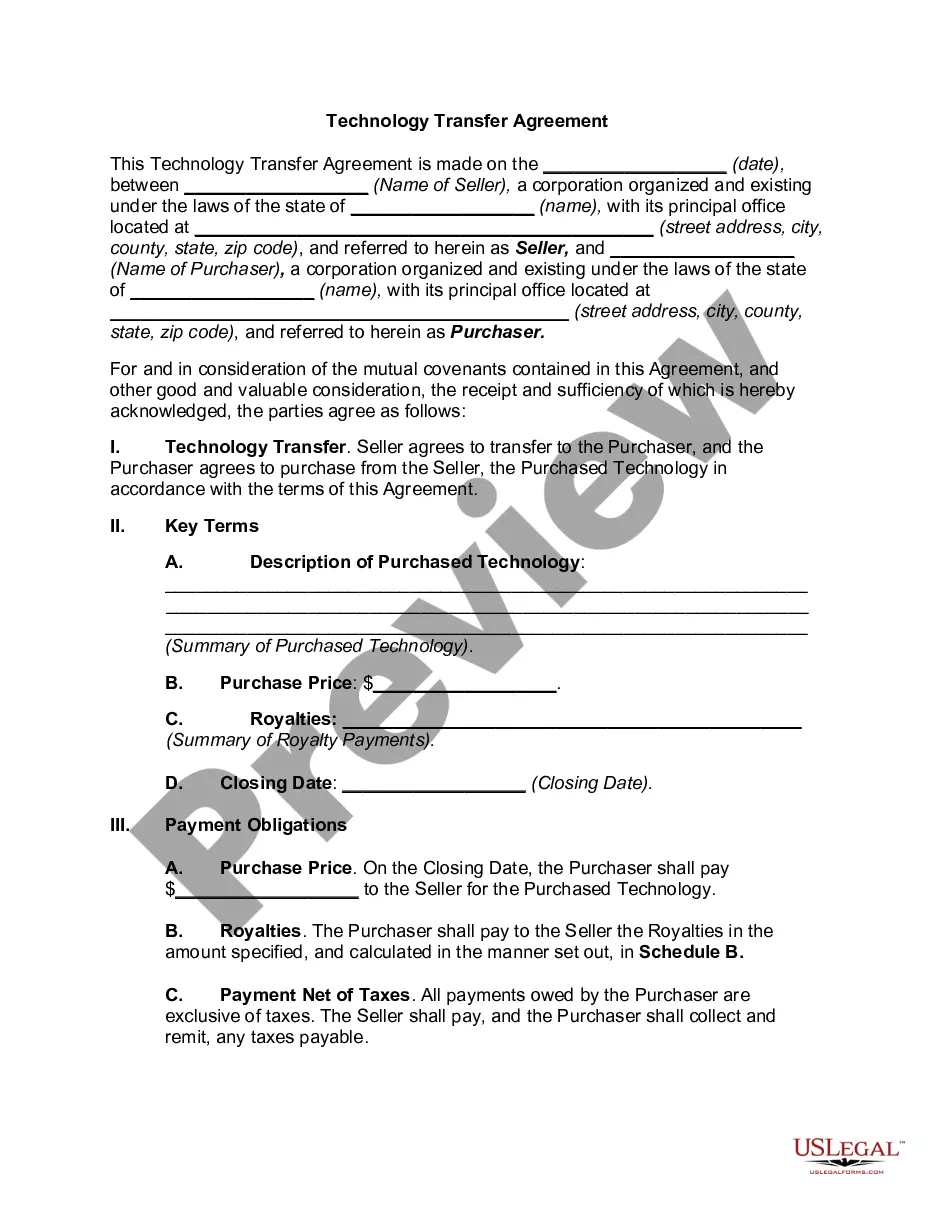
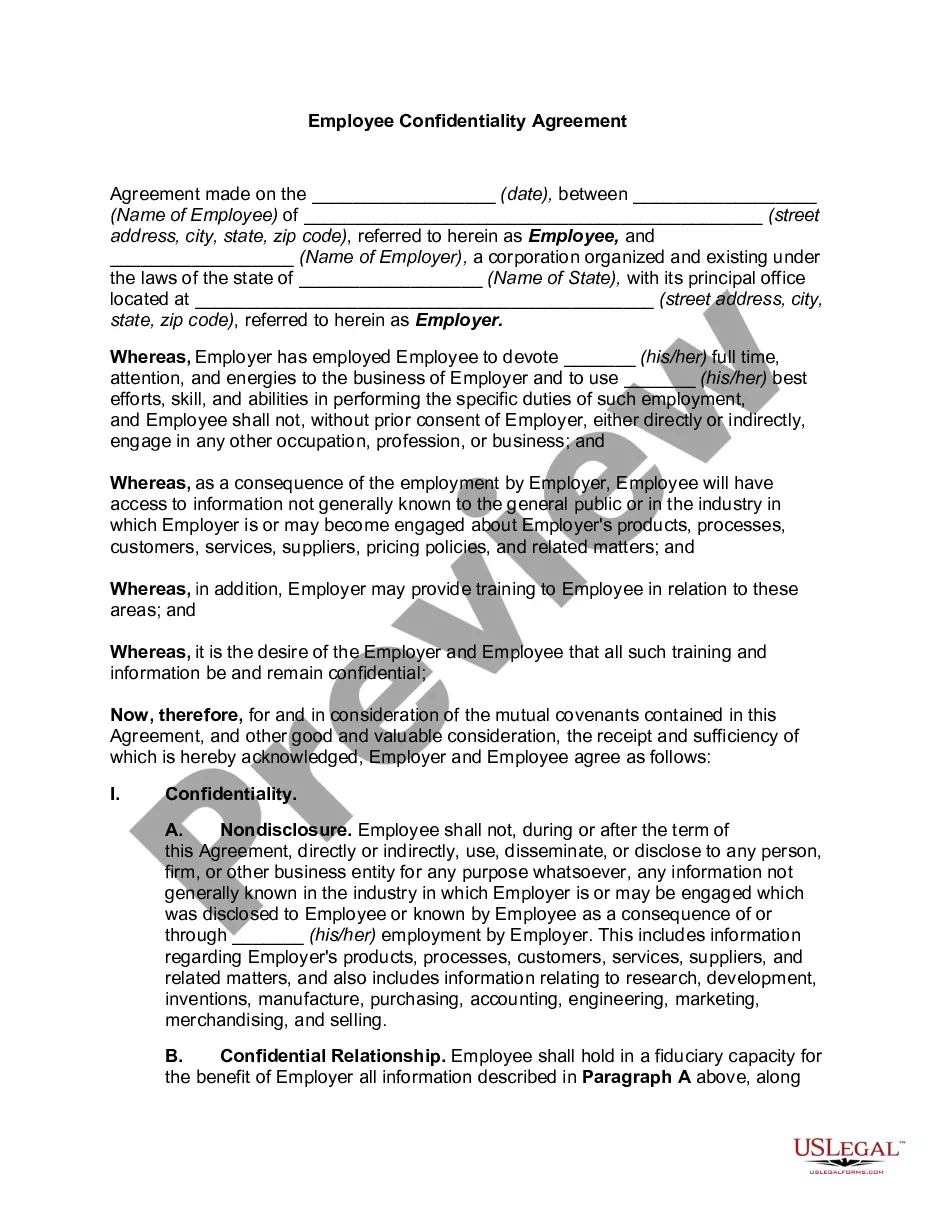
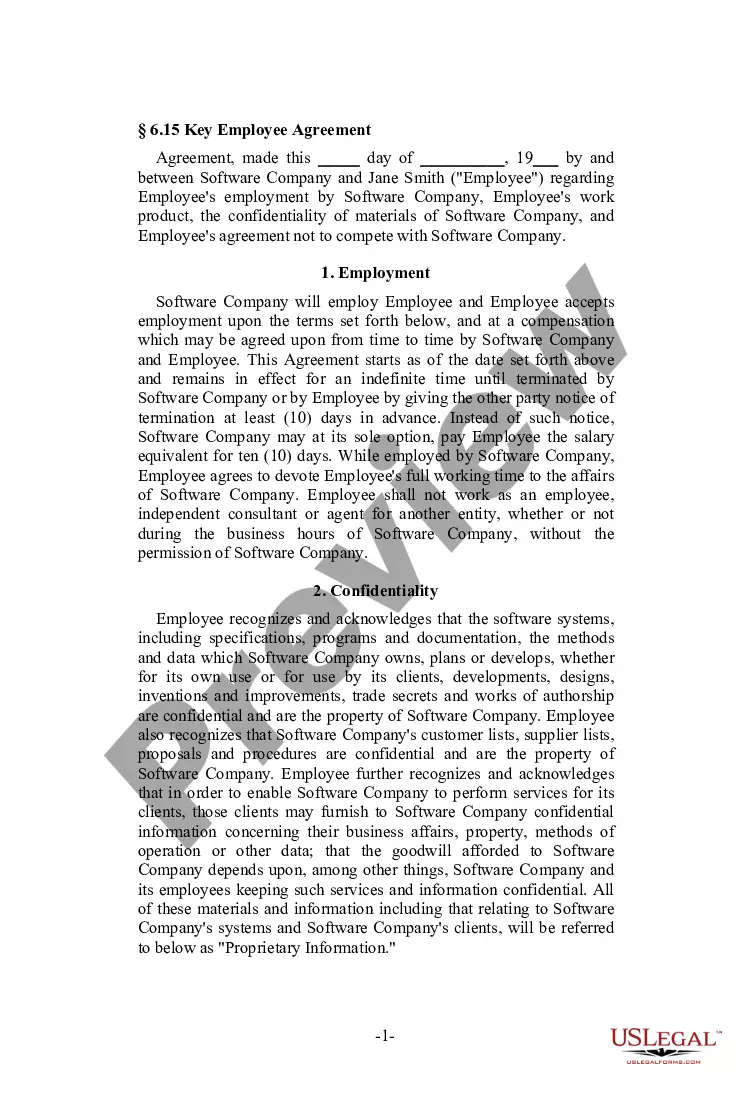
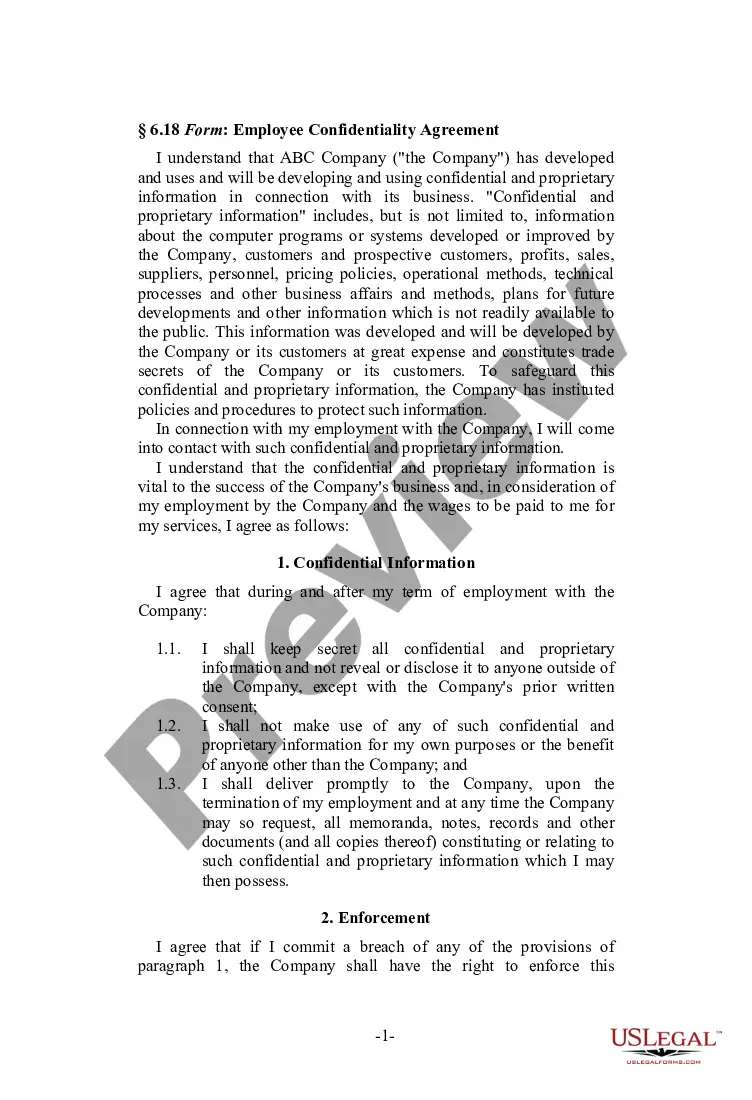


How to fill out Non Employee Technology Transfer And Protection Agreement?
You can invest time online trying to locate the authentic document template that meets the state and federal requirements you need.
US Legal Forms provides thousands of legal documents that can be reviewed by experts.
You can download or print the Indiana Non Employee Technology Transfer And Protection Agreement from my service.
If available, use the Review button to look over the document template as well. If you wish to find another version of the form, use the Search field to find the template that meets your needs and requirements. Once you have identified the template you want, click Get now to proceed. Choose the pricing plan you prefer, enter your details, and register for an account on US Legal Forms. Complete the transaction. You can use your credit card or PayPal account to pay for the legal document. Select the format of the document and download it to your device. Make modifications to the document if necessary. You can complete, edit, sign, and print the Indiana Non Employee Technology Transfer And Protection Agreement. Access and print thousands of document templates using the US Legal Forms website, which offers the largest collection of legal forms. Utilize professional and state-specific templates to address your business or personal needs.
- If you already have a US Legal Forms account, you can Log In and then click the Acquire button.
- Next, you can complete, modify, print, or sign the Indiana Non Employee Technology Transfer And Protection Agreement.
- Each legal document template you obtain is yours indefinitely.
- To retrieve another copy of any acquired form, visit the My documents tab and click the corresponding button.
- If you are using the US Legal Forms website for the first time, follow the simple instructions below.
- First, make sure you have selected the correct document template for your county/city of choice.
- Review the document details to confirm you have chosen the right form.
Form popularity
FAQ
Indiana does not mandate LLCs to have an operating agreement, but it is advisable to have one for clarity and protection. Creating an operating agreement can help define the management structure and set forth the rights and duties of members. Additionally, an Indiana Non Employee Technology Transfer And Protection Agreement can complement your operating agreement by safeguarding your technology and intellectual property, enhancing your business’s security.
While many states do not require an operating agreement, some states like California, Delaware, and New York encourage or suggest their use for LLCs. Operating agreements help clarify the roles and responsibilities of members, which can prevent misunderstandings. If you're considering forming an LLC, especially in Indiana, an Indiana Non Employee Technology Transfer And Protection Agreement can work alongside your operating agreement to secure your business interests.
Indiana Code 26 1 2 725 1 pertains to the regulation of technology transfer agreements within the state. This code provides a framework for non-employee agreements, allowing companies to protect their intellectual property while facilitating technology exchange. Understanding this code is crucial, especially when drafting an Indiana Non Employee Technology Transfer And Protection Agreement, as it ensures compliance with state regulations and protects your innovations.
An operating agreement is not legally required for LLCs in Indiana. However, having one is highly beneficial as it outlines the management structure and operating procedures of your business. By establishing clear guidelines, the Indiana Non Employee Technology Transfer And Protection Agreement can help protect your interests and prevent disputes among members. Therefore, consider creating an operating agreement to ensure smooth operations.
In Indiana, a non-compete agreement can be enforceable under certain conditions. The agreement must be reasonable in scope, duration, and geographic area, and it should protect legitimate business interests. If your agreement relates to the Indiana Non Employee Technology Transfer And Protection Agreement, it is essential to ensure it complies with state laws. For assistance in creating a legally sound non-compete agreement, consider using USLegalForms to streamline the process and safeguard your interests.
Indiana Code 25 22.5 5.5 1 pertains to the legal framework governing technology transfer agreements in the state. This code emphasizes the importance of protecting intellectual property and outlines the procedures for non-employee agreements. If you are drafting an Indiana Non Employee Technology Transfer And Protection Agreement, this code serves as a vital reference to ensure compliance and legal enforceability. Utilizing resources like USLegalForms can help you navigate these legal requirements effectively.
The Indiana Access to Public Records Act outlines several exceptions that restrict access to certain records. These exceptions include personal information, law enforcement records, and trade secrets, among others. For example, documents related to the Indiana Non Employee Technology Transfer And Protection Agreement may not be disclosed if they contain proprietary information. Understanding these exceptions is crucial for anyone involved in technology transfer or protection agreements in Indiana.
To obtain an Indiana TID number, you must apply through the Indiana Department of Revenue. The process typically involves submitting a completed application form and providing relevant business information. Once you receive your TID number, you can effectively manage your tax obligations, which is essential when entering into agreements such as the Indiana Non Employee Technology Transfer And Protection Agreement. For guidance, consider utilizing platforms like uslegalforms to streamline your application process.
In Indiana, you need to file a business entity report every two years. This requirement ensures that your business remains in good standing with the state. Staying compliant with this filing schedule is crucial, especially when dealing with agreements like the Indiana Non Employee Technology Transfer And Protection Agreement. By keeping your reports updated, you can protect your business's legal status and avoid any potential penalties.
The major five types of technology transfer agreements include licensing agreements, research collaboration agreements, material transfer agreements, joint development agreements, and non-disclosure agreements. Each type serves a distinct purpose in facilitating the sharing of technology while protecting intellectual property rights. When drafting an Indiana Non Employee Technology Transfer And Protection Agreement, understanding these variations can help you select the most appropriate framework for your needs.