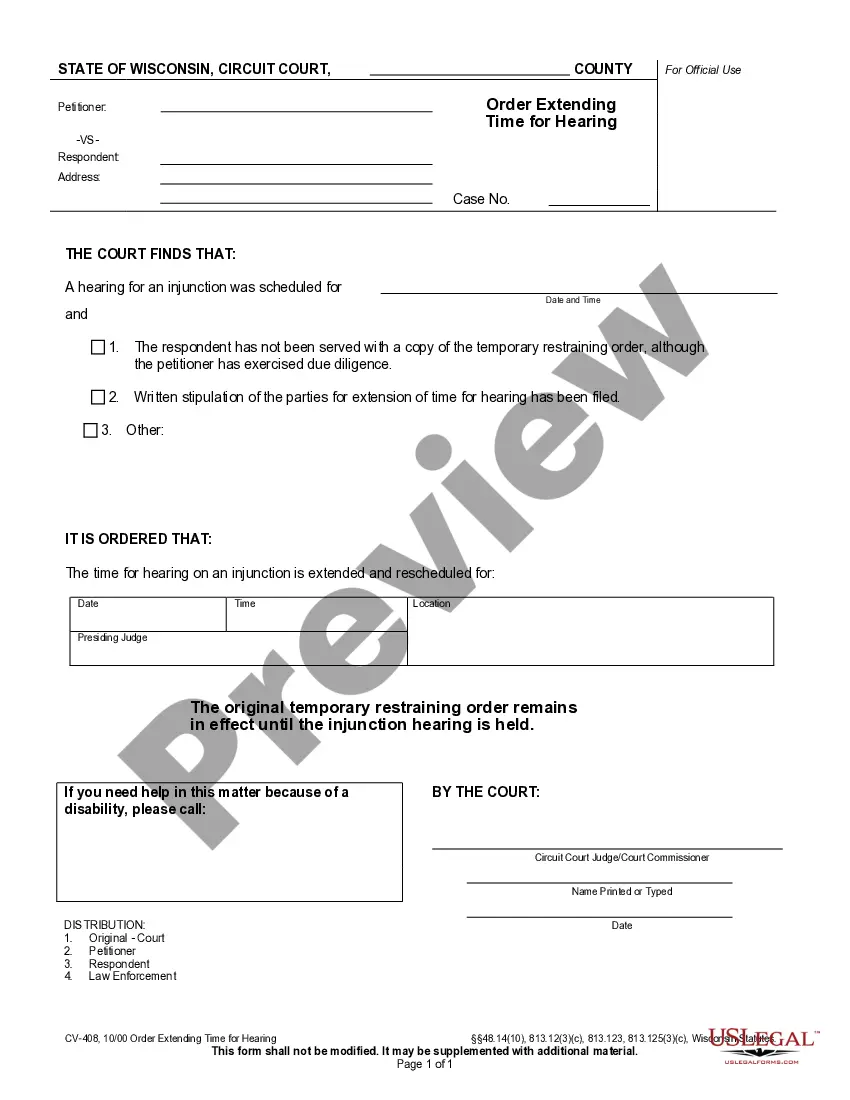
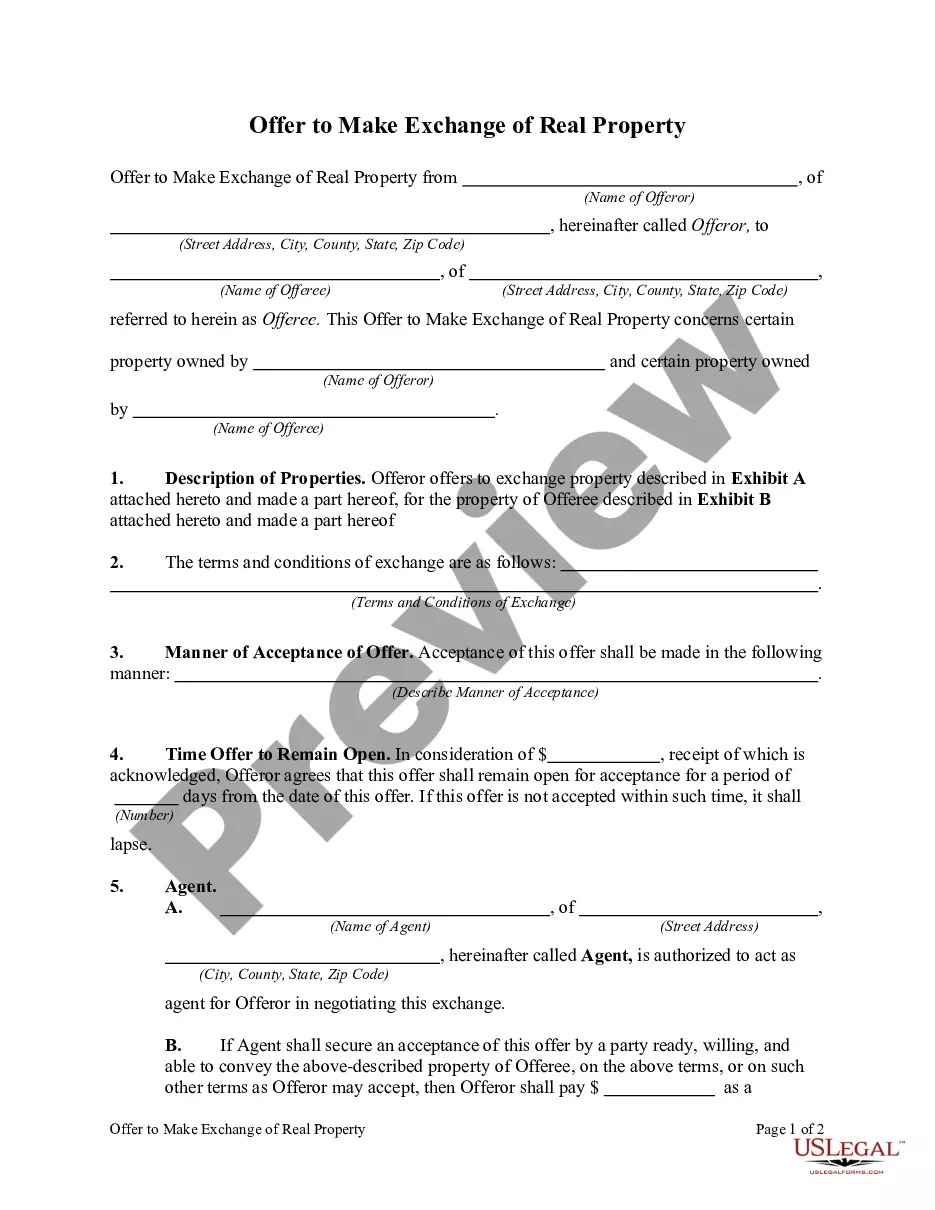
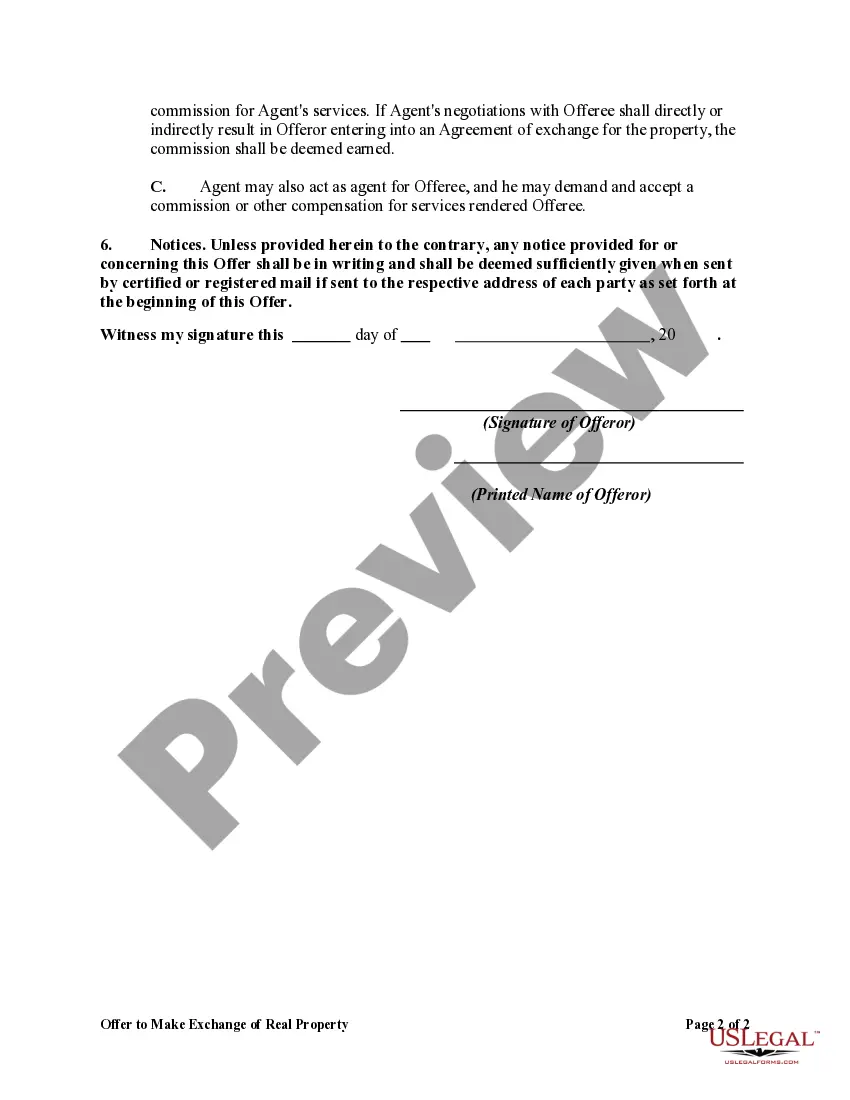
Offer to Make Exchange of Real Property
Overview of this form
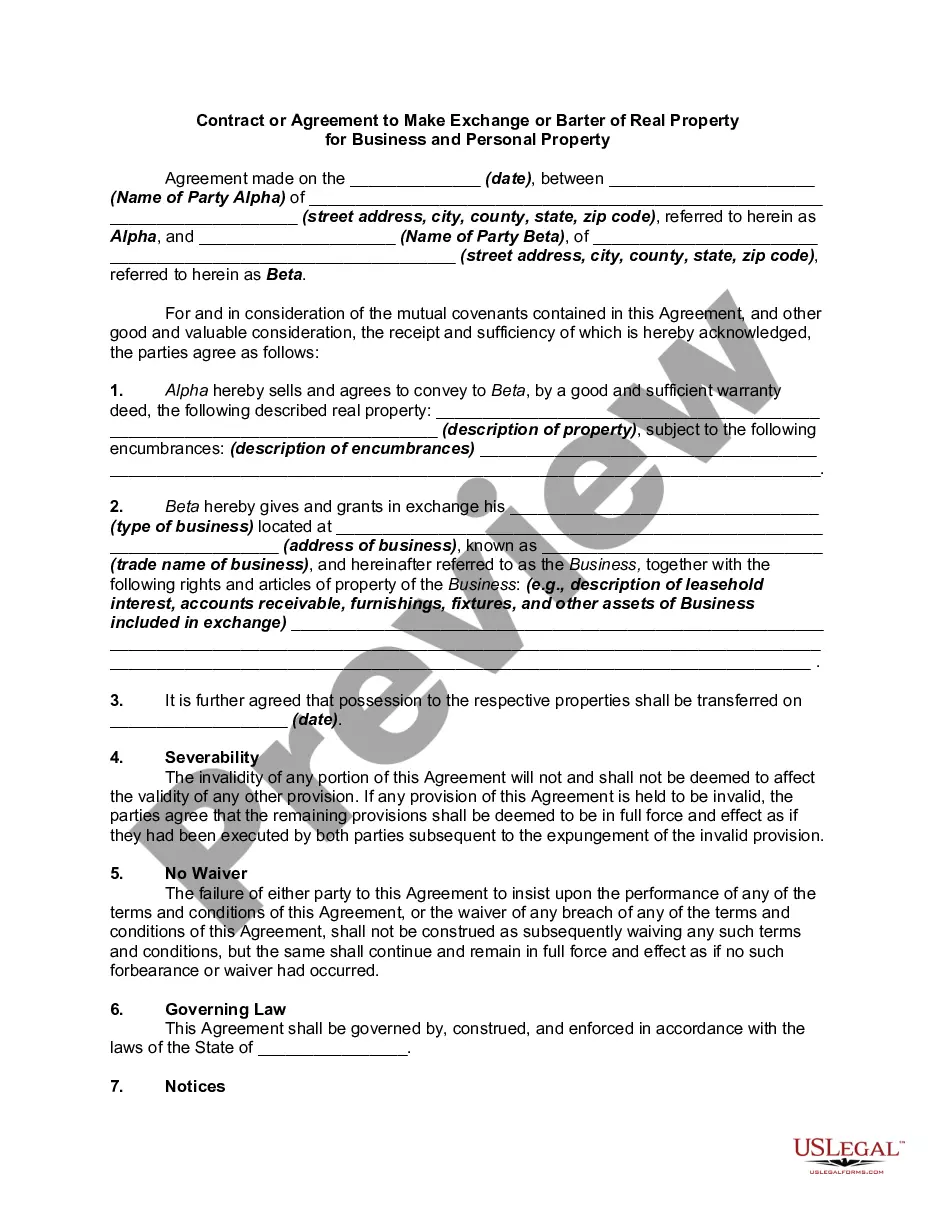
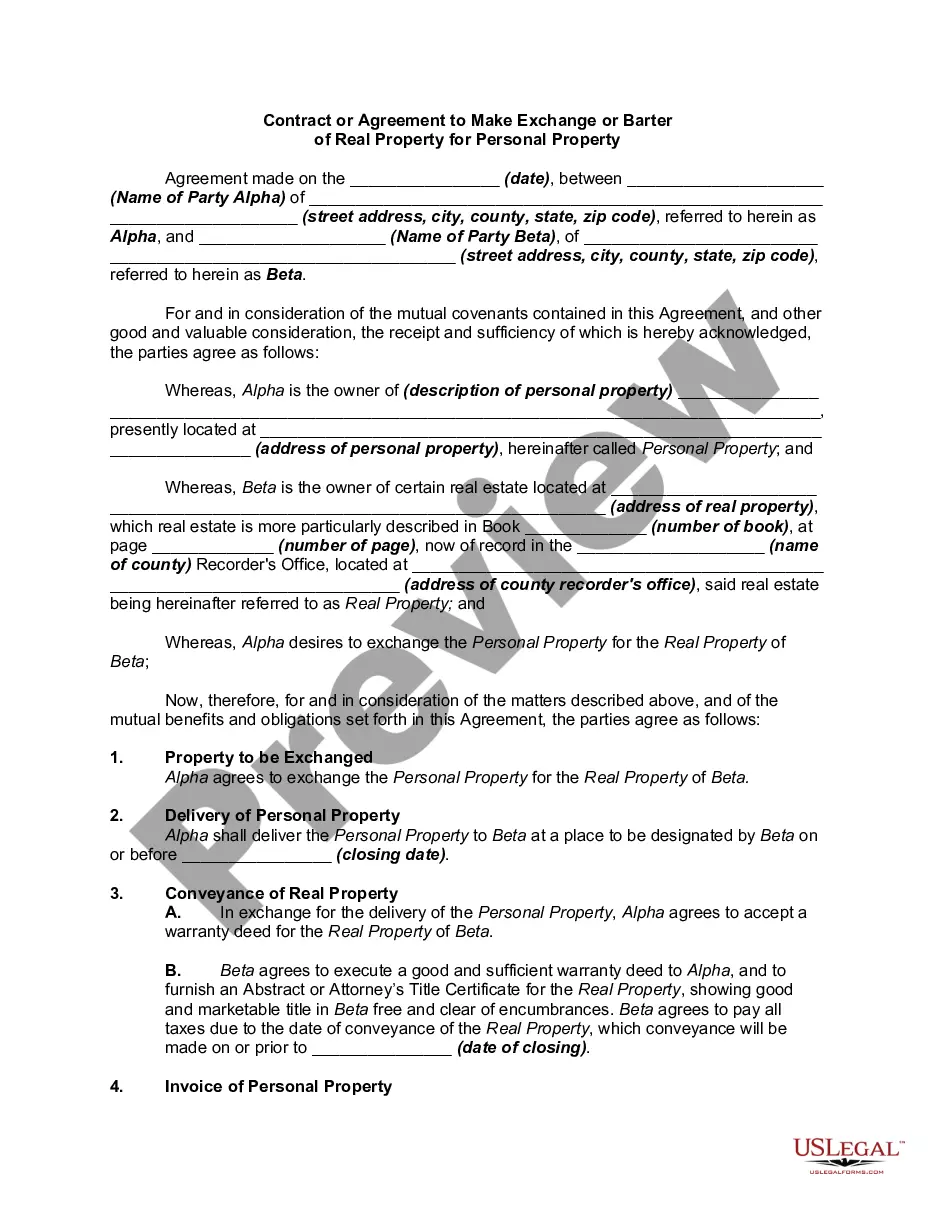
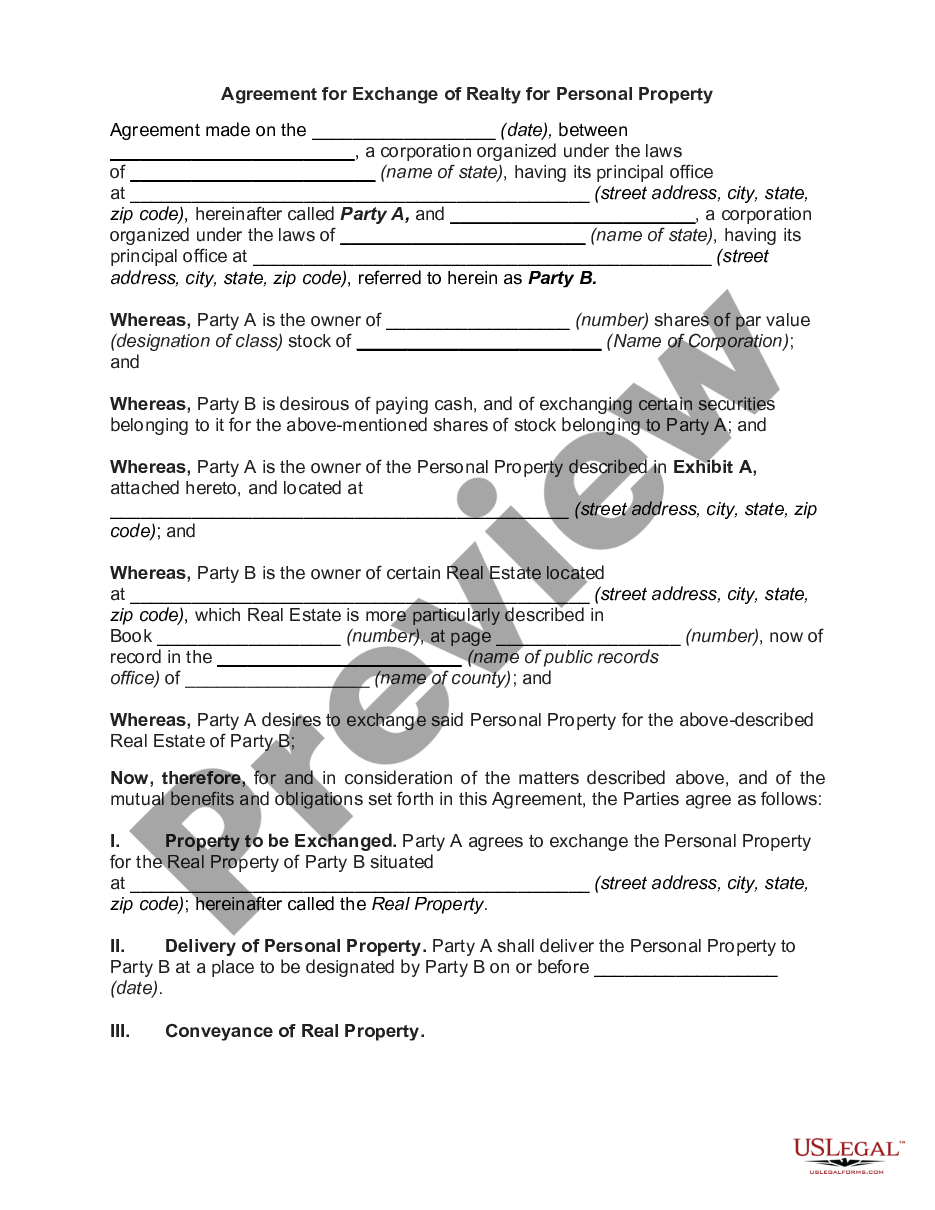
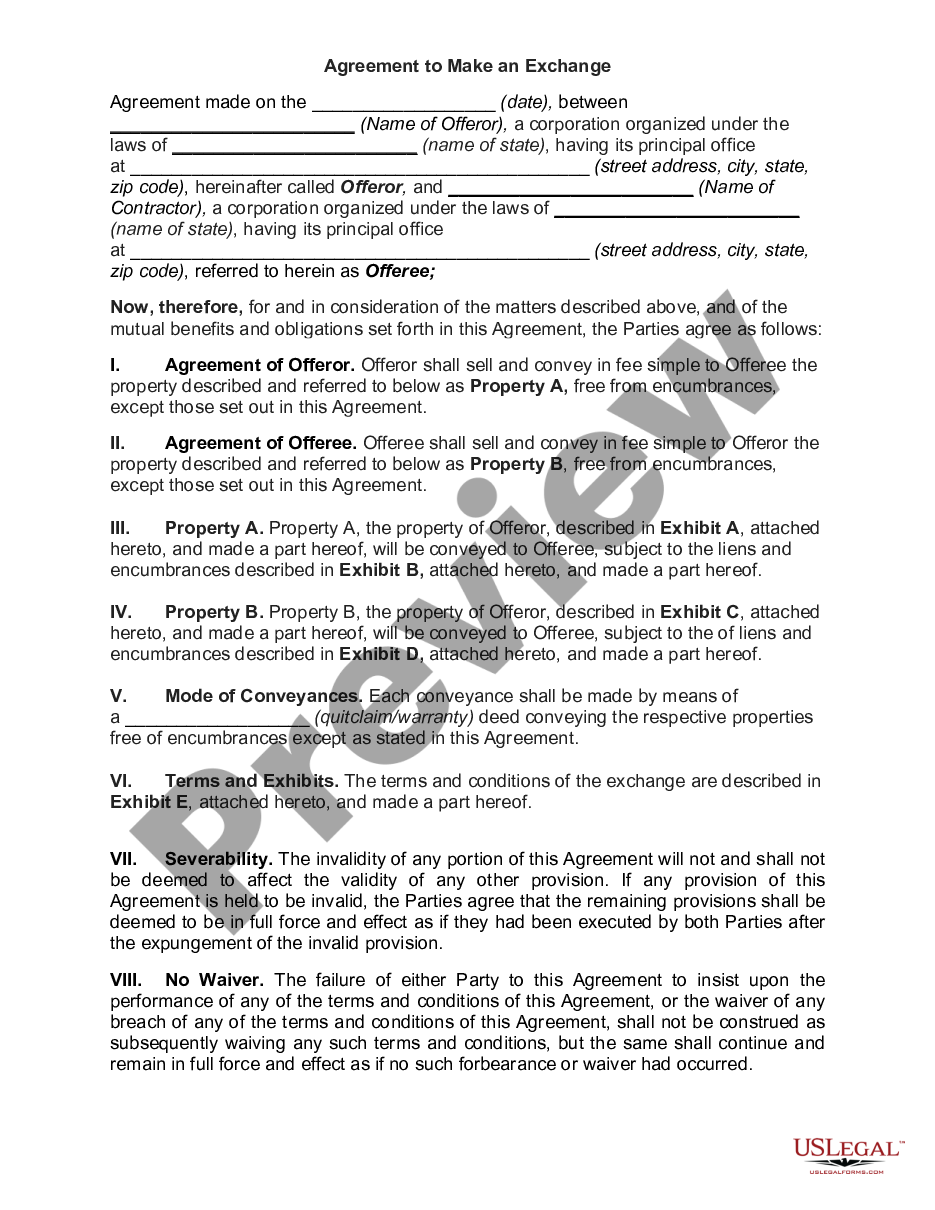
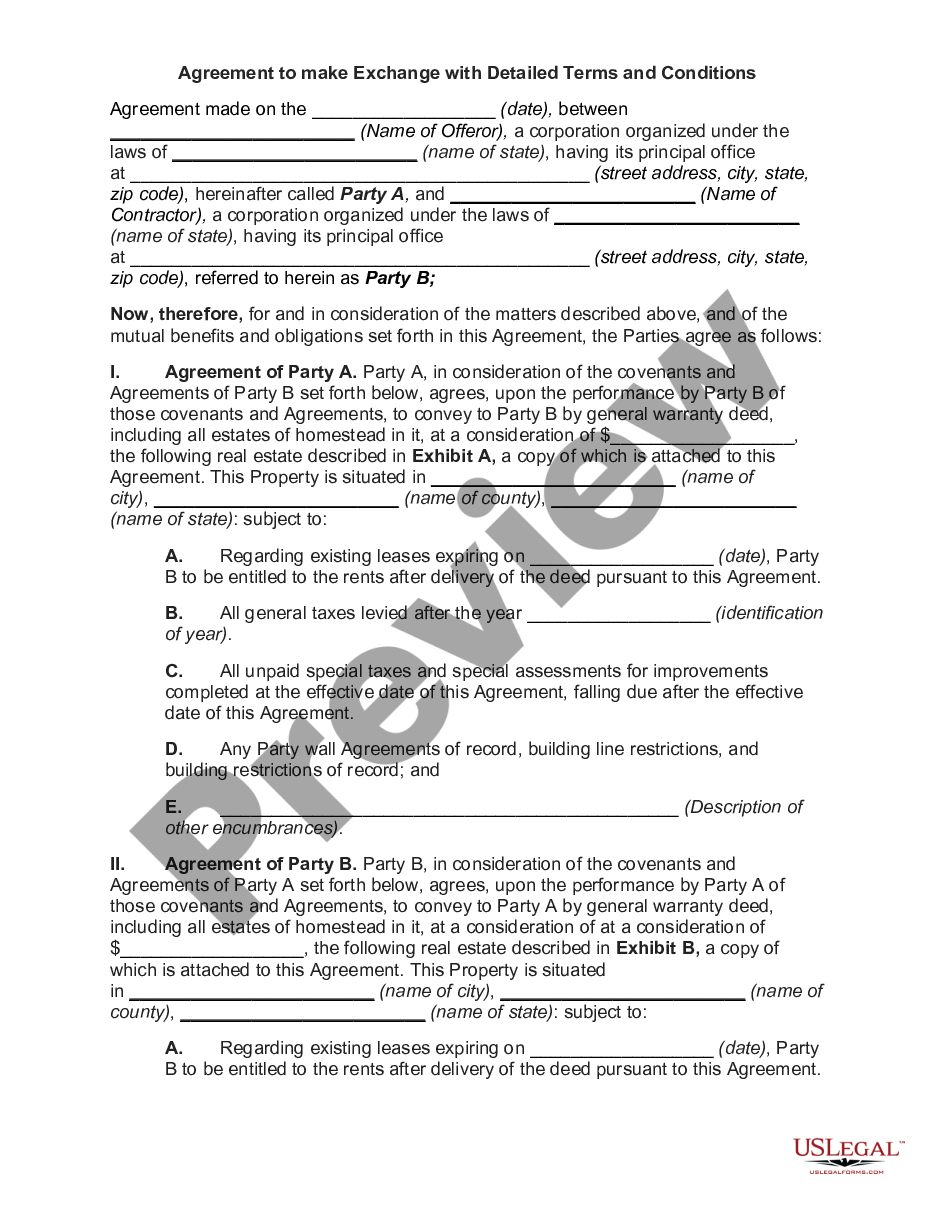
The Offer to Make Exchange of Real Property is a legal document used in a 1031 exchange. This form facilitates the exchange of one business or investment property for another without triggering immediate taxation. By using this form, investors can defer taxes and continue to grow their investments without recognizing a capital gain at the time of the exchange. This form is crucial for anyone looking to swap real estate assets while minimizing tax liabilities, differing from standard sale agreements by providing specific provisions for tax deferral under IRS guidelines.
Key parts of this document
- Identification of the parties involved in the exchange
- Detailed description of the properties being exchanged
- Terms and conditions specific to the exchange process
- Timeline for completing the exchange
- Signatures of all parties to validate the agreement
Common use cases
This form should be used when an investor wishes to engage in a 1031 exchange, allowing them to swap real properties without facing immediate tax consequences. It is particularly useful in scenarios where an investor is looking to upgrade, downsize, or diversify their real estate investment portfolio while maintaining the advantages of tax deferral. Common situations include selling a rental property to acquire a vacation home or trading one piece of commercial property for another.
Who can use this document
This form is ideal for:
- Real estate investors looking to defer taxes through property exchanges
- Property owners wanting to upgrade or change their investment property
- Individuals involved in commercial real estate transactions
- Real estate professionals facilitating property exchanges for clients
Instructions for completing this form
- Identify the parties involved in the exchange by providing their names and contact information.
- Specify the properties being exchanged, including addresses and descriptions.
- Clearly state the terms of the exchange, covering any contingencies or conditions.
- Enter the dates relevant to the transaction, including deadlines for completing the exchange.
- Ensure all parties sign the document to finalize the agreement.
Does this form need to be notarized?
Notarization is required for this form to take effect. Our online notarization service, powered by Notarize, lets you verify and sign documents remotely through an encrypted video session, available 24/7.
Get your form ready online
Our built-in tools help you complete, sign, share, and store your documents in one place.
Make edits, fill in missing information, and update formatting in US Legal Forms—just like you would in MS Word.
Download a copy, print it, send it by email, or mail it via USPS—whatever works best for your next step.
Sign and collect signatures with our SignNow integration. Send to multiple recipients, set reminders, and more. Go Premium to unlock E-Sign.
If this form requires notarization, complete it online through a secure video call—no need to meet a notary in person or wait for an appointment.
We protect your documents and personal data by following strict security and privacy standards.

Make edits, fill in missing information, and update formatting in US Legal Forms—just like you would in MS Word.

Download a copy, print it, send it by email, or mail it via USPS—whatever works best for your next step.

Sign and collect signatures with our SignNow integration. Send to multiple recipients, set reminders, and more. Go Premium to unlock E-Sign.

If this form requires notarization, complete it online through a secure video call—no need to meet a notary in person or wait for an appointment.

We protect your documents and personal data by following strict security and privacy standards.
Typical mistakes to avoid
- Failing to provide complete and accurate property descriptions.
- Not including all necessary parties' signatures.
- Missing deadlines for completing the exchange.
- Overlooking state-specific legal requirements.
Advantages of online completion
- Convenient access to legal forms from anywhere, anytime.
- Editable documents that allow customization to fit individual needs.
- Reliability with forms drafted by licensed attorneys to ensure legal compliance.
Looking for another form?
Form popularity
FAQ
Identify the property you want to sell. Identify the property you want to buy. Choose a qualified intermediary. Step 4: Decide how much of the sale proceeds will go toward the new property. Step 5: Keep an eye on the calendar. Step 6: Be careful about where the money is.
Normally the IRS does not allow you to conduct a 1031 exchange with your primary residence. That's because the home that you live in isn't being used as an investment property or being held for business purposes. Instead, your primary residence is used to provide shelter for your family.
Restrictions on 1031 ExchangesYou can only perform a 1031 exchange between investment properties, but you can't do this with personal property. If you exchange for a cheaper property, you'll have to consider the taxes on the price difference.
It can take 5 days, 45 days, or all 180 days. You must complete your 1031 exchange within 180 days of selling your old property by purchasing one or more of the properties on your list. You cannot buy property as part of the exchange that is not on the 45-day identification list.
Your 1031 exchange must be reported by completing Form 8824 and filing it along with your federal income tax return. If you completed more than one exchange, a different form must be completed for each exchange. For line-by-line instructions on how to complete form, download the instructions here.
The property must be held for investment though, not resale or personal use.To receive the full benefit of a 1031 exchange, your replacement property should be of equal or greater value. You must identify a replacement property for the assets sold within 45 days and then conclude the exchange within 180 days.
In real estate, a 1031 exchange is a swap of one investment property for another that allows capital gains taxes to be deferred. The term, which gets its name from IRS code Section 1031, is bandied about by realtors, title companies, investors, and soccer moms.
A Deed, Bill of Sale, Invoice and or license are required to solidify the transfer of the exchanged properties. A Settlement Statement is required to illustrate the correct amount of funds coming into the exchange as well as proof the funds are appropriately being utilized to acquire the Replacement Property.
Normally the IRS does not allow you to conduct a 1031 exchange with your primary residence. That's because the home that you live in isn't being used as an investment property or being held for business purposes. Instead, your primary residence is used to provide shelter for your family.