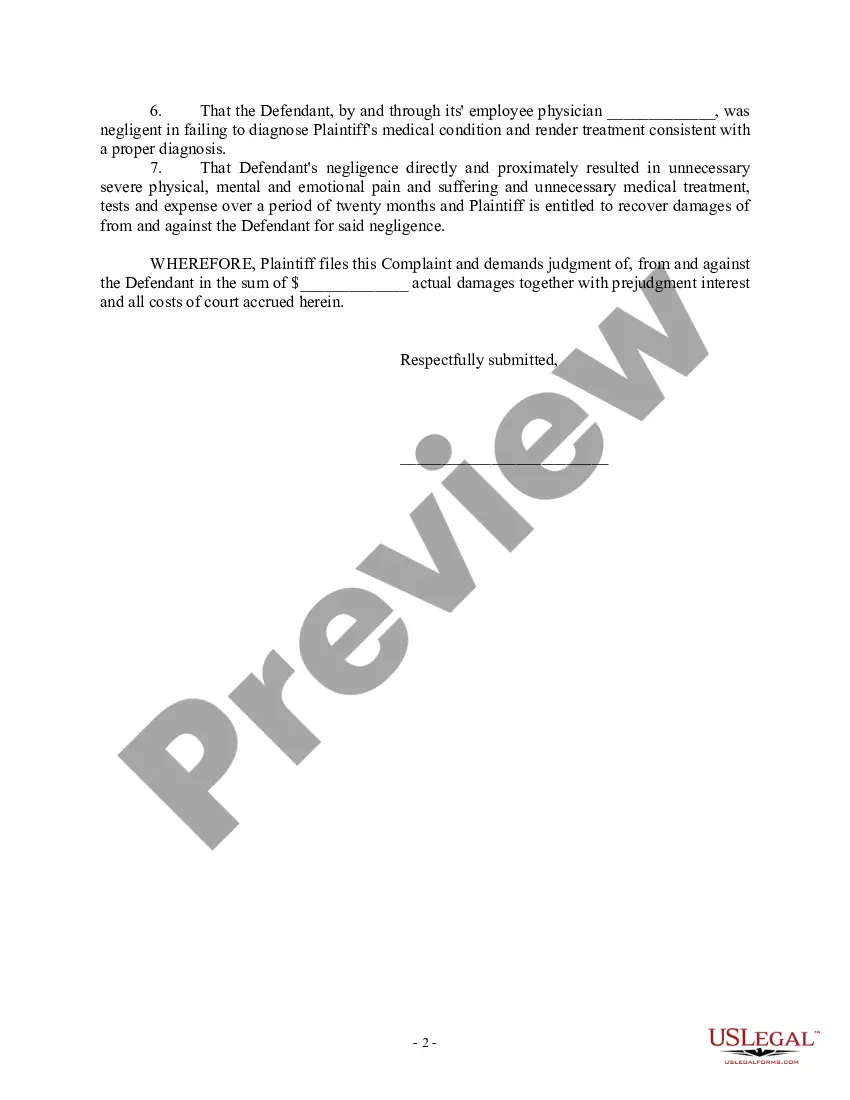
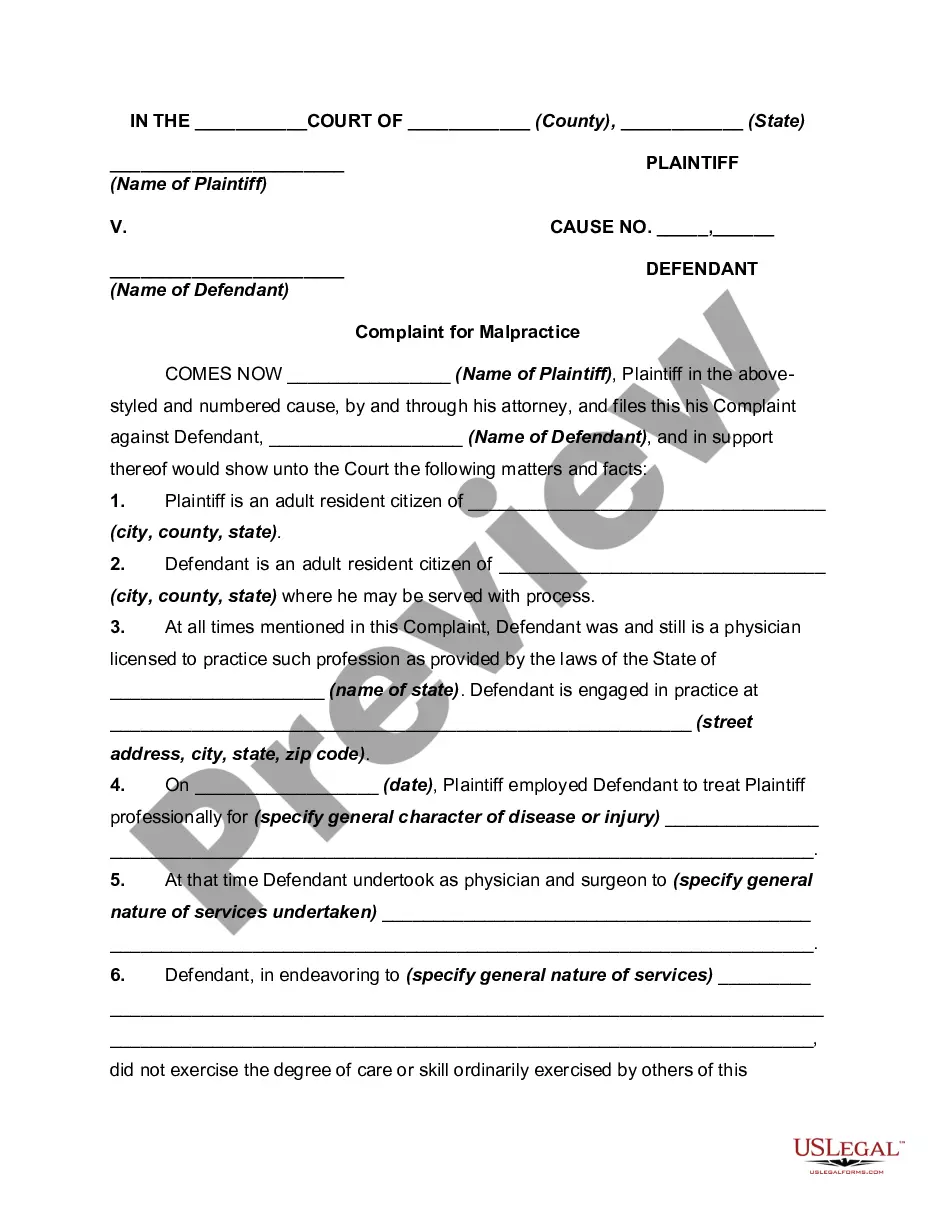
Indiana Complaint for Medical Malpractice regarding Diagnosis and Treatment
Description
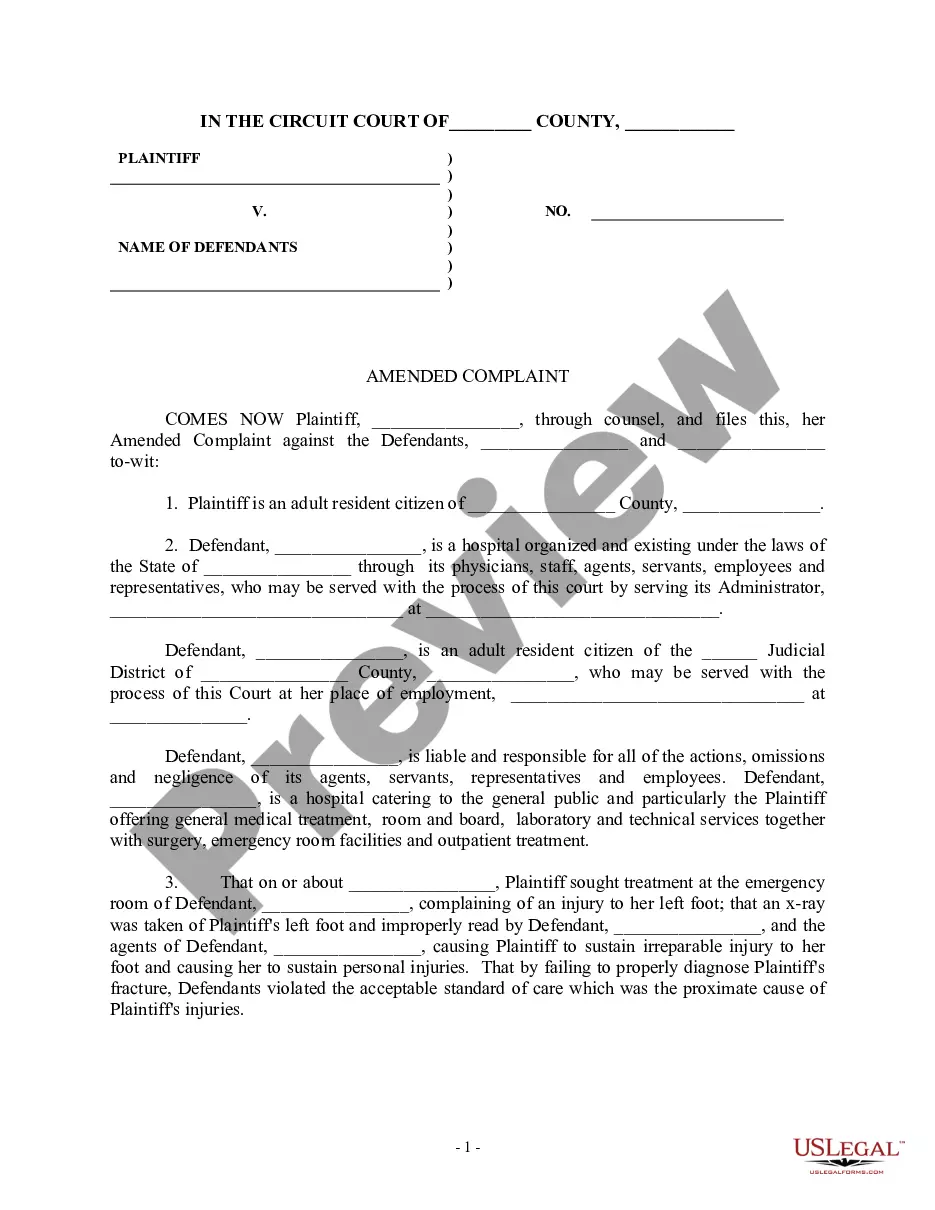
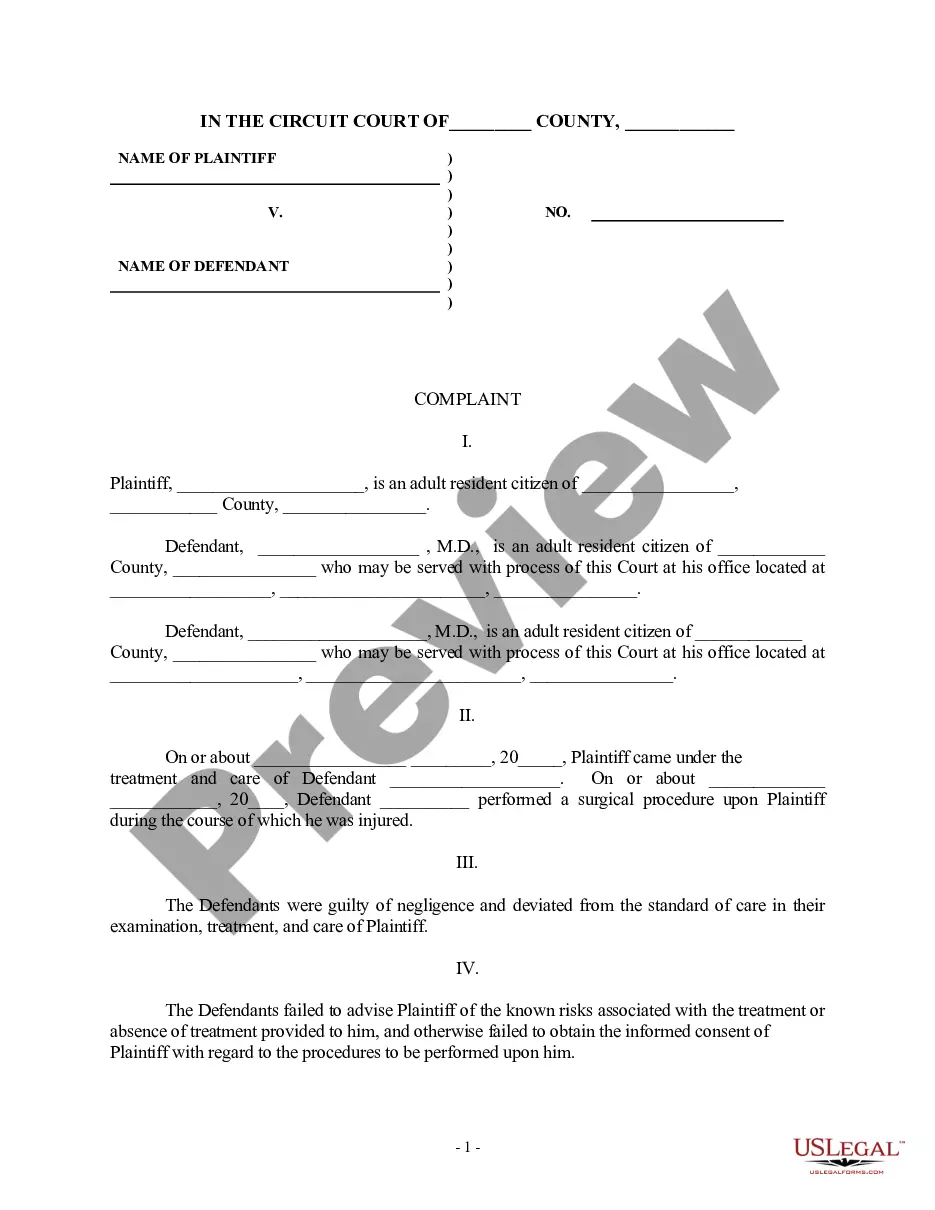
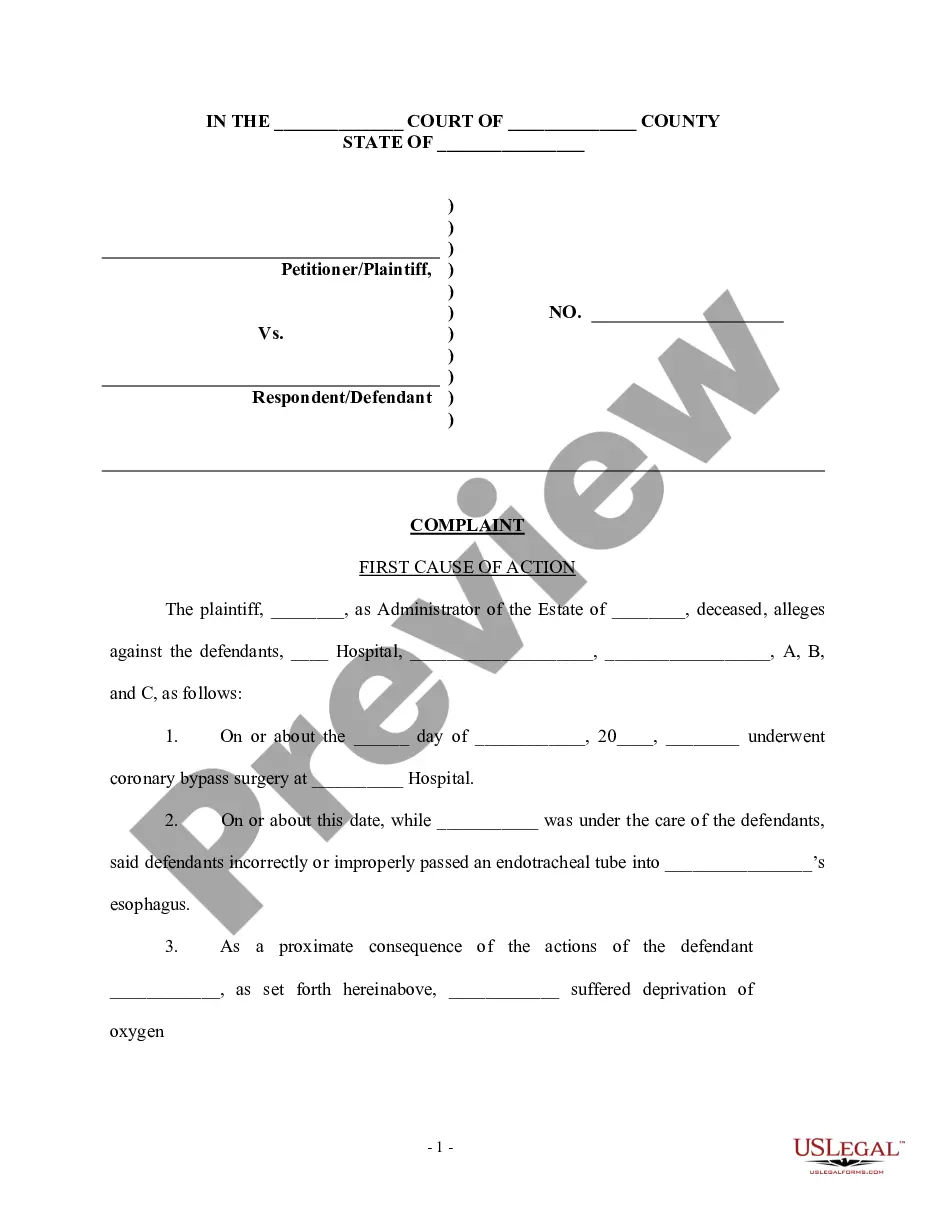
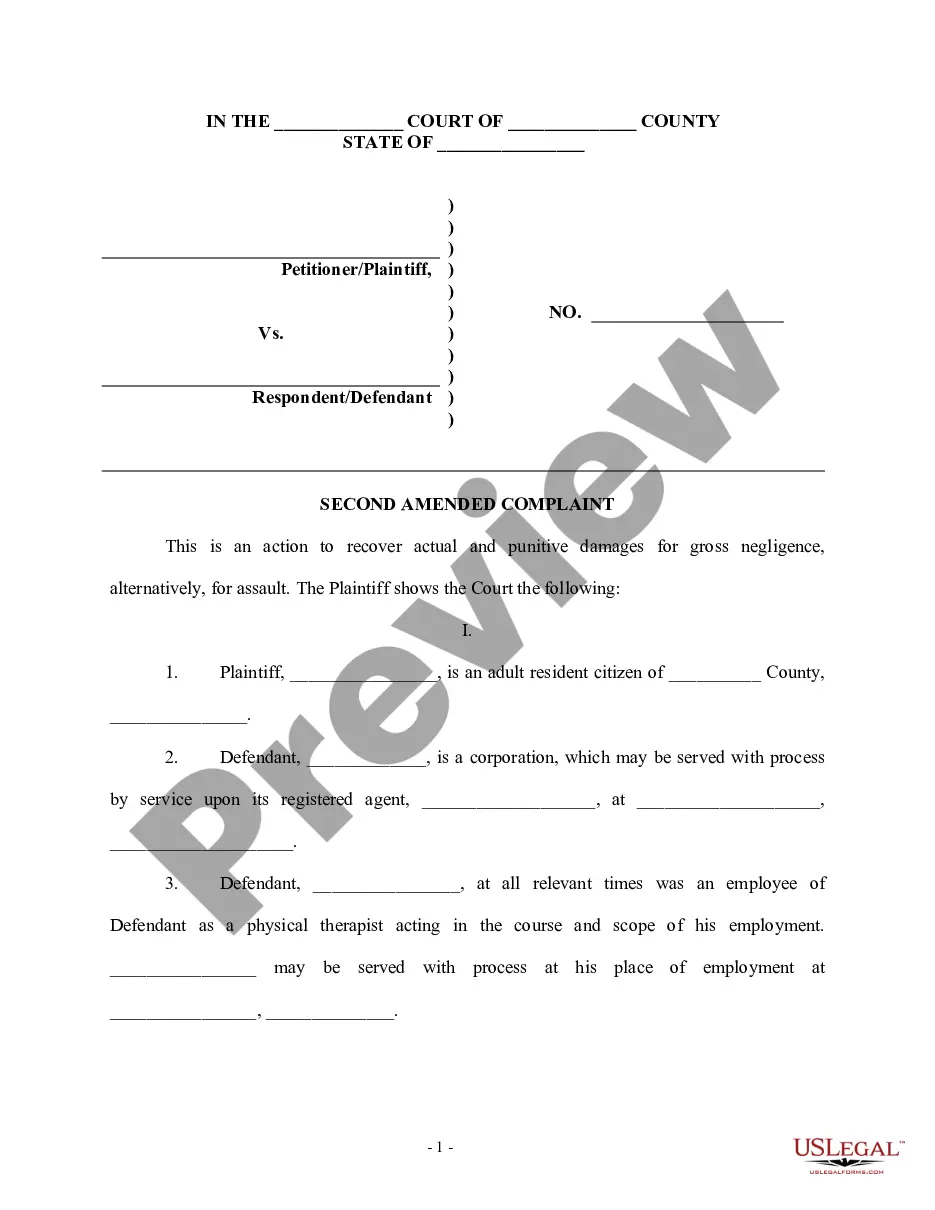
Get your form ready online
Our built-in tools help you complete, sign, share, and store your documents in one place.
Make edits, fill in missing information, and update formatting in US Legal Forms—just like you would in MS Word.
Download a copy, print it, send it by email, or mail it via USPS—whatever works best for your next step.
Sign and collect signatures with our SignNow integration. Send to multiple recipients, set reminders, and more. Go Premium to unlock E-Sign.
If this form requires notarization, complete it online through a secure video call—no need to meet a notary in person or wait for an appointment.
We protect your documents and personal data by following strict security and privacy standards.

Make edits, fill in missing information, and update formatting in US Legal Forms—just like you would in MS Word.

Download a copy, print it, send it by email, or mail it via USPS—whatever works best for your next step.

Sign and collect signatures with our SignNow integration. Send to multiple recipients, set reminders, and more. Go Premium to unlock E-Sign.

If this form requires notarization, complete it online through a secure video call—no need to meet a notary in person or wait for an appointment.

We protect your documents and personal data by following strict security and privacy standards.
Looking for another form?

How to fill out Complaint For Medical Malpractice Regarding Diagnosis And Treatment?
Discovering the right authorized document web template can be a struggle. Naturally, there are plenty of web templates available on the net, but how will you obtain the authorized form you want? Use the US Legal Forms site. The services delivers a huge number of web templates, like the Indiana Complaint for Medical Malpractice regarding Diagnosis and Treatment, which can be used for enterprise and personal needs. All of the kinds are checked out by specialists and meet up with federal and state specifications.
When you are currently signed up, log in to the bank account and click the Down load button to obtain the Indiana Complaint for Medical Malpractice regarding Diagnosis and Treatment. Use your bank account to look through the authorized kinds you may have purchased previously. Proceed to the My Forms tab of the bank account and obtain one more copy from the document you want.
When you are a brand new user of US Legal Forms, here are straightforward instructions so that you can follow:
- Initially, be sure you have chosen the correct form for the area/state. You can check out the form using the Review button and look at the form description to ensure it will be the best for you.
- If the form will not meet up with your requirements, take advantage of the Seach field to get the correct form.
- When you are certain the form is acceptable, select the Purchase now button to obtain the form.
- Select the pricing plan you want and enter in the required details. Create your bank account and pay for your order making use of your PayPal bank account or bank card.
- Opt for the data file formatting and down load the authorized document web template to the product.
- Full, edit and printing and sign the acquired Indiana Complaint for Medical Malpractice regarding Diagnosis and Treatment.
US Legal Forms is the greatest catalogue of authorized kinds that you can see numerous document web templates. Use the service to down load appropriately-created papers that follow status specifications.
Form popularity
FAQ
Compassion, Communication, Competence and Charting are the four C's of medical malpractice.
The injured patient must show that the physician acted negligently in rendering care, and that such negligence resulted in injury. To do so, four legal elements must be proven: (1) a professional duty owed to the patient; (2) breach of such duty; (3) injury caused by the breach; and (4) resulting damages.
The ?4 D's? of medical negligence is a shorthand term that refers to the four legal elements you have to prove in order to win a medical malpractice lawsuit: (i) duty (ii) deviation from the standard of care (iii) damages, and (iv) direct causation.
An incorrect diagnosis is not necessarily grounds for a medical malpractice suit. The plaintiff (that is-the patient) must be able to prove that the misdiagnosis was the result of incompetence of the doctor.
These elements, the ?4 Ds? of medical negligence, are (1) duty, (2) deviation from the standard of care, (3) damages, and (4) direct cause. If you suffered serious injuries due to a doctor or other healthcare professional's negligence, you could be entitled to compensation for your losses.
These elements, the ?4 Ds? of medical negligence, are (1) duty, (2) deviation from the standard of care, (3) damages, and (4) direct cause. If you suffered serious injuries due to a doctor or other healthcare professional's negligence, you could be entitled to compensation for your losses.
The injured patient must show that the physician acted negligently in rendering care, and that such negligence resulted in injury. To do so, four legal elements must be proven: (1) a professional duty owed to the patient; (2) breach of such duty; (3) injury caused by the breach; and (4) resulting damages.
Plaintiffs in medical malpractice tort actions must prove (1) the defendant owed the plaintiff a duty of care, (2) the defendant breached that duty by failing to conform his or her conduct to the applicable standard of care, and (3) injuries proximately caused by the breach of duty. Scholl v. Majd, 162 N.E.