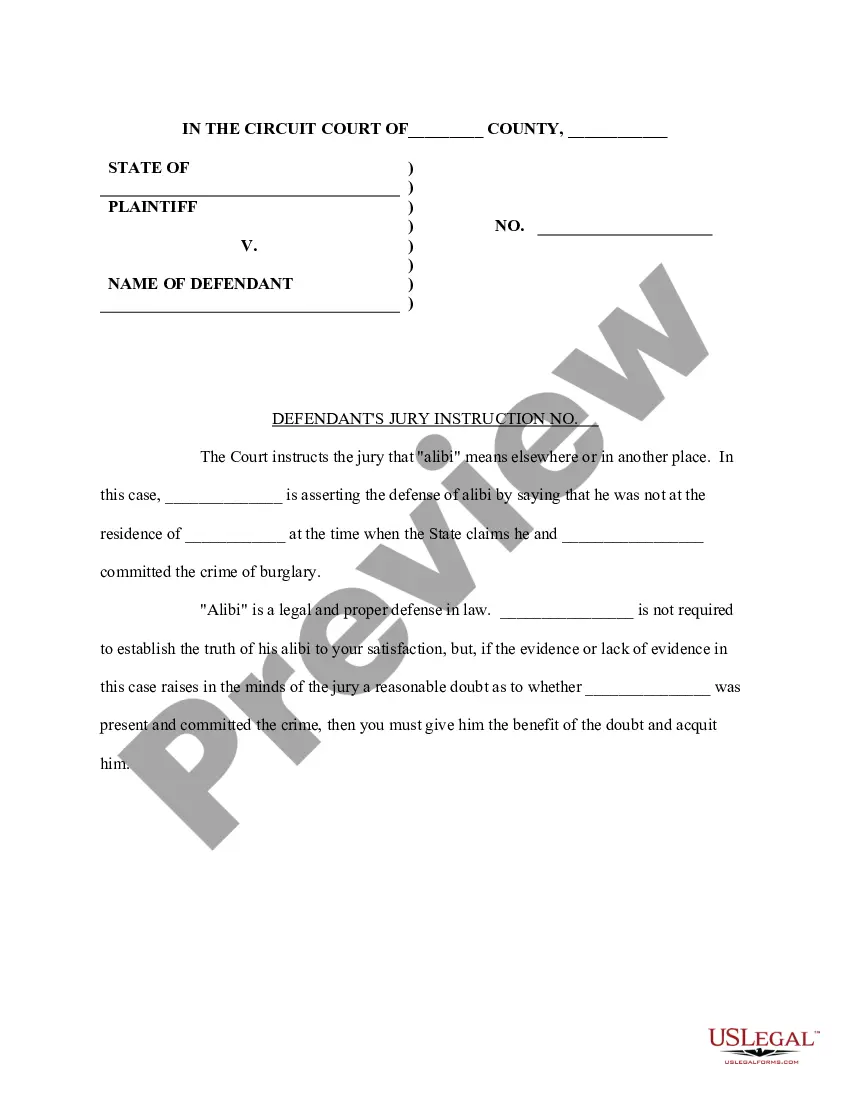
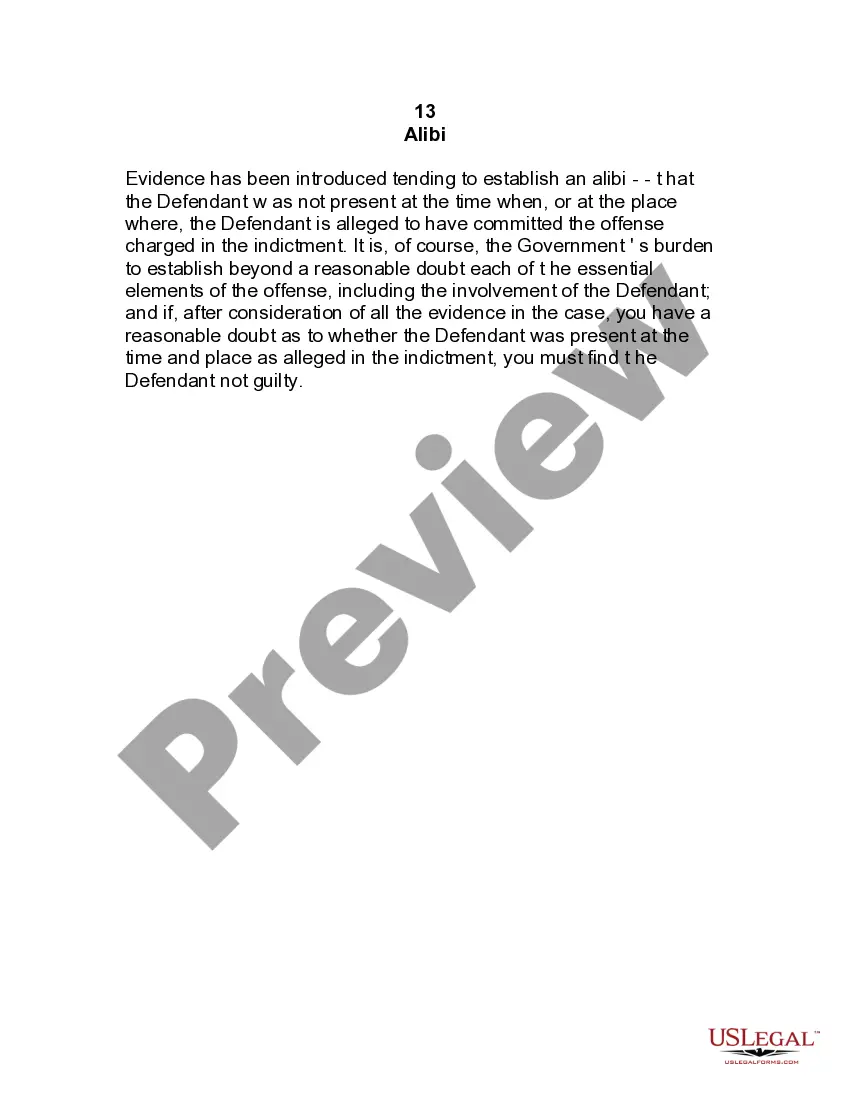
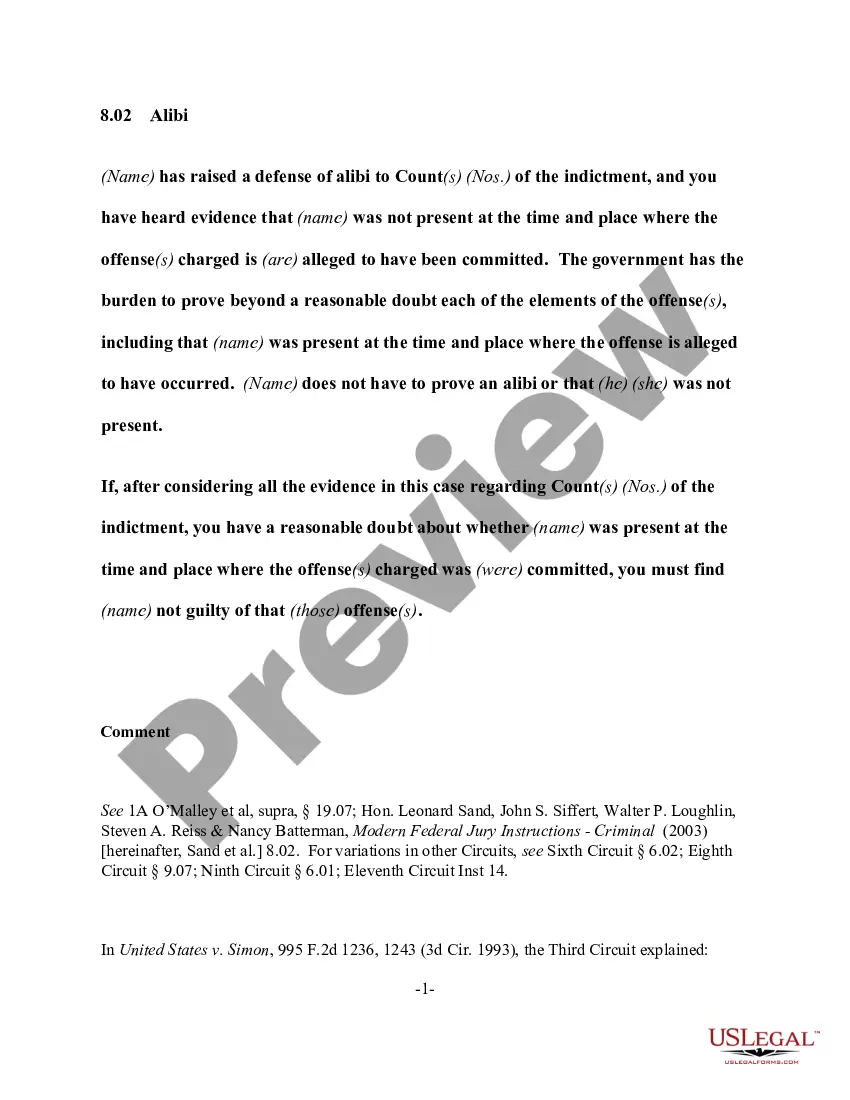
Indiana Alibi Instruction
Description
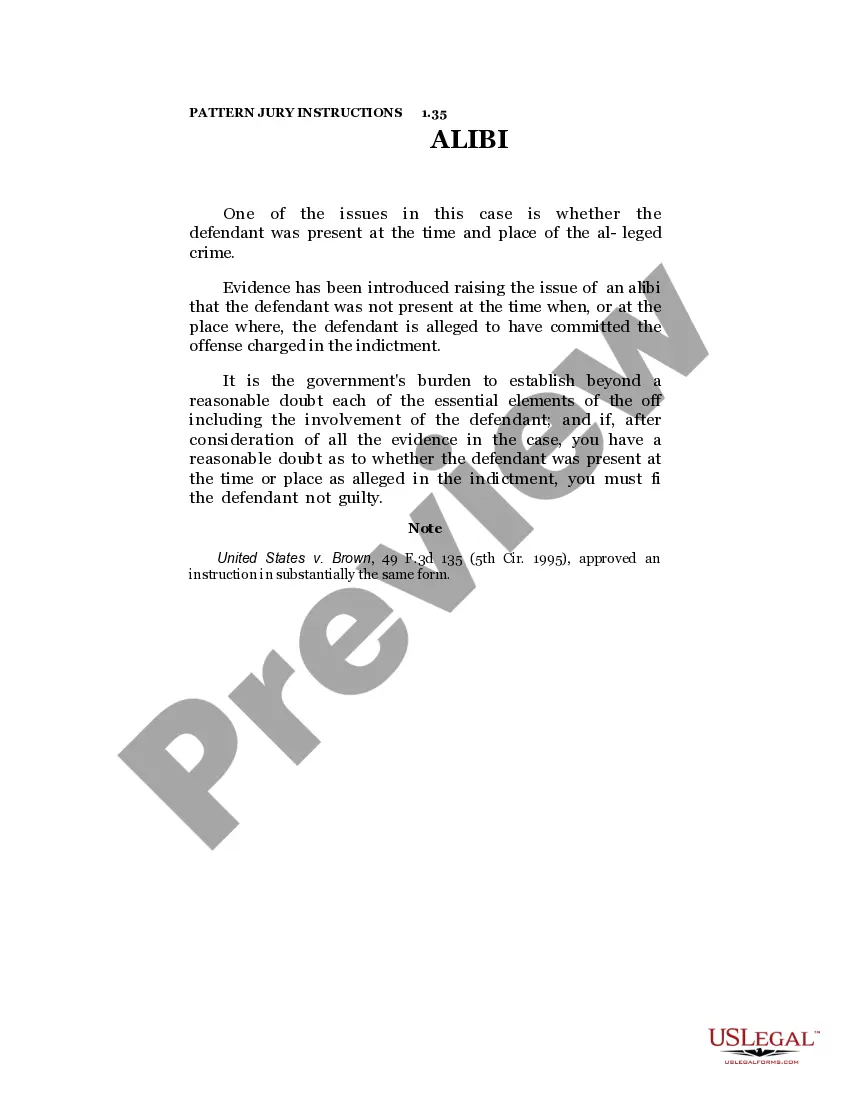
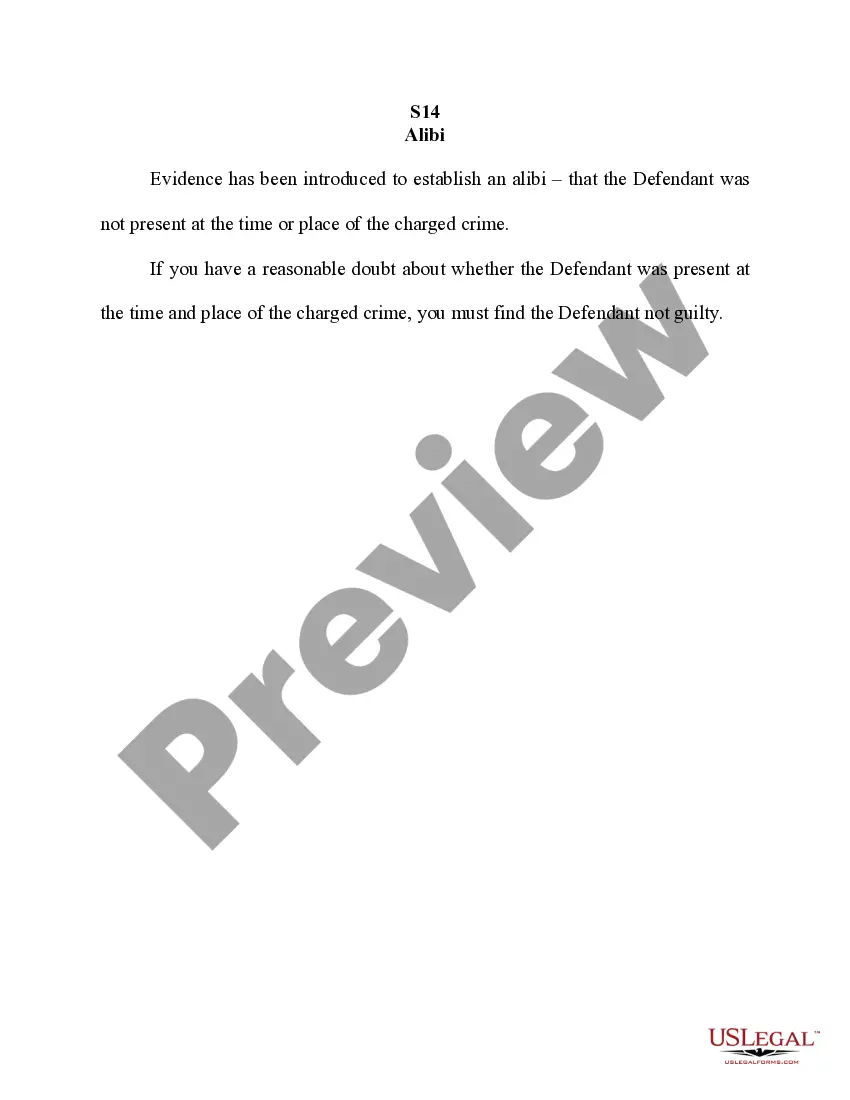
Get your form ready online
Our built-in tools help you complete, sign, share, and store your documents in one place.
Make edits, fill in missing information, and update formatting in US Legal Forms—just like you would in MS Word.
Download a copy, print it, send it by email, or mail it via USPS—whatever works best for your next step.
Sign and collect signatures with our SignNow integration. Send to multiple recipients, set reminders, and more. Go Premium to unlock E-Sign.
If this form requires notarization, complete it online through a secure video call—no need to meet a notary in person or wait for an appointment.
We protect your documents and personal data by following strict security and privacy standards.

Make edits, fill in missing information, and update formatting in US Legal Forms—just like you would in MS Word.

Download a copy, print it, send it by email, or mail it via USPS—whatever works best for your next step.

Sign and collect signatures with our SignNow integration. Send to multiple recipients, set reminders, and more. Go Premium to unlock E-Sign.

If this form requires notarization, complete it online through a secure video call—no need to meet a notary in person or wait for an appointment.

We protect your documents and personal data by following strict security and privacy standards.
Looking for another form?





How to fill out Alibi Instruction?
Locating the appropriate legal document template can be quite challenging. Clearly, there are numerous templates accessible online, but how do you find the legal form you need? Utilize the US Legal Forms website. The service provides thousands of templates, including the Indiana Alibi Instruction, that you can utilize for professional and personal purposes. All of the forms are reviewed by experts and satisfy federal and state requirements.
If you are already registered, sign in to your account and click on the Download button to acquire the Indiana Alibi Instruction. Use your account to search for the legal forms you have obtained previously. Navigate to the My documents section of your account and download another copy of the documents you need.
If you are a new user of US Legal Forms, here are simple instructions that you should follow: First, ensure you have chosen the correct form for your specific town/county. You can review the form using the Preview option and read the form description to confirm it is suitable for you. If the form does not meet your needs, use the Search box to find the appropriate form. Once you are confident the form is suitable, click on the Purchase now button to obtain the form. Select the pricing plan you prefer and fill in the required information. Create your account and pay for the order using your PayPal account or Visa or Mastercard. Choose the document format and download the legal document template to your device. Complete, edit, print, and sign the received Indiana Alibi Instruction.
- US Legal Forms is undoubtedly the largest repository of legal forms that you can discover numerous document templates.
- Take advantage of the service to acquire professionally crafted documents that adhere to state requirements.
Form popularity
FAQ
File with the court and serve upon the prosecuting attorney a written statement of his intention to offer such a defense. The notice must include specific information concerning the exact place where the defendant claims to have been on the date stated in the indictment or information.
Rule 12.1 is a new rule that deals with the defense of alibi. It provides that a defendant must notify the government of his intention to rely upon the defense of alibi.
Relating to Notice of Alibi in Criminal Actions. A defendant in a criminal action may attempt to establish an alibi- that he was at some place other than the scene of the crime and there- fore could not have committed it.
Evidence that may support an alibi includes: Eyewitnesses. Credit card, debit card, and other receipts. Bank statements. Plane, train, or other transportation tickets/receipts. Time-stamped video surveillance footage. Time-stamped photographs. Data from a mobile phone or other electronic devices. Supervisor statements.
False alibi Specifically: The alibi must not be believed; There is evidence of an intention to fabricate the alibi that is independent from the evidence used to show the alibi is false; and. The court must reject all innocent explanations offered that would explain why a false alibi was fabricated.
Ing to the California Criminal Jury Instructions 3400, an alibi is simply a contention by the defendant that they were not present when the crime occurred, therefore casting reasonable doubt as to whether they committed the crime.
Alibi as a noun is defined as a defense to a criminal charge alleging that the accused was somewhere other than at the scene of the crime at the time it occurred. For example, A could not confirm B's alibi that B was at the dentist office at the time of the robbery.
Elements of alibi defense In order to present a successful alibi, the defendant's attorney: The defendant was somewhere else when the crime took place; There was no reasonable opportunity for the defendant to have committed the crime; and. The defendant was unable to have committed the crime by any other means.