Indiana Warranty Deed from Business Entity, through attorney-in-fact, to Two Individuals or Husband and Wife
Overview of this form
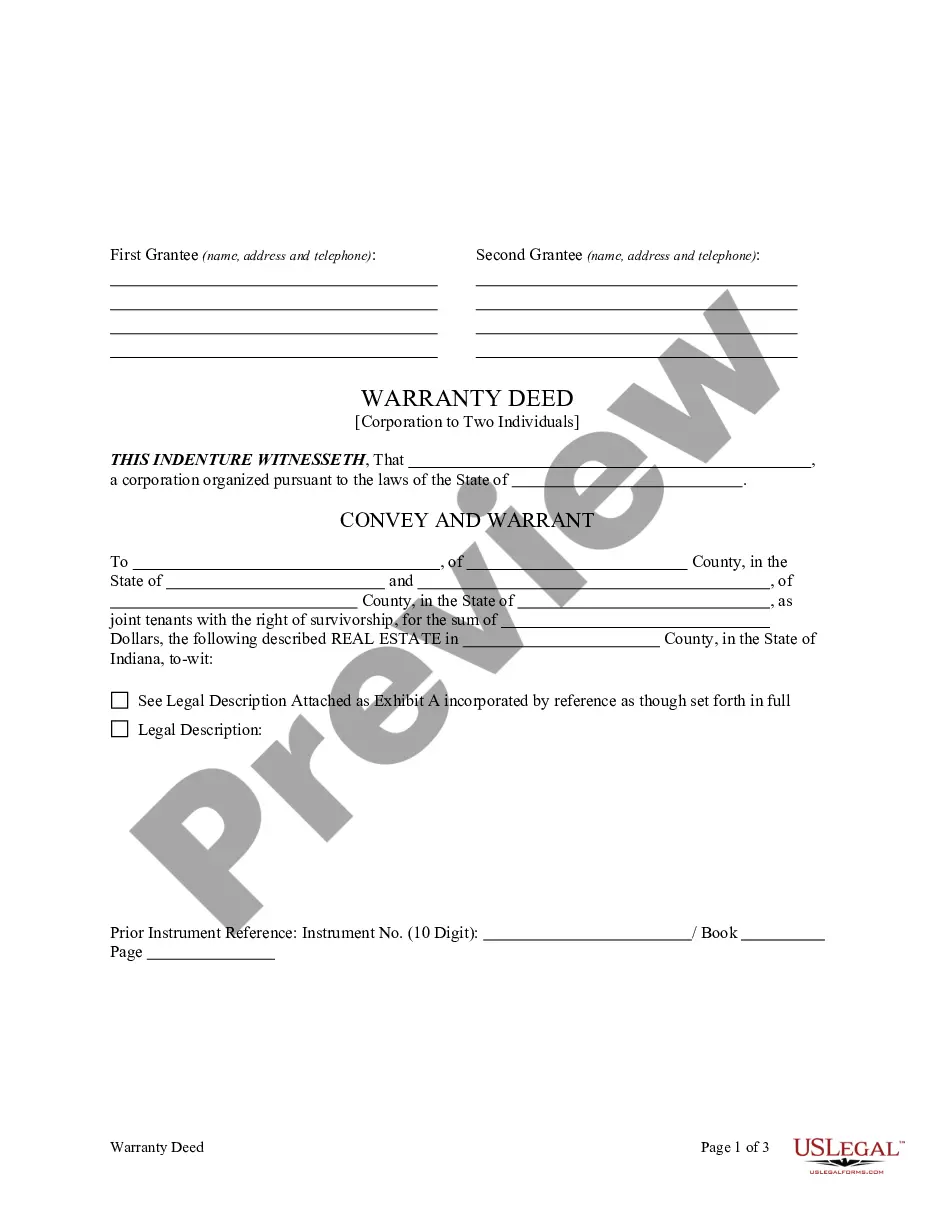
The Warranty Deed from Business Entity, through attorney-in-fact, to Two Individuals or Husband and Wife is a legal document used to transfer property ownership. This form allows a business entity, such as a corporation or LLC, to convey real estate to two individuals or a married couple. The Warranty Deed provides guarantees regarding the property's title and ensures that the grantor has the right to sell the property, distinguishing it from other forms of deed such as quitclaim deeds which offer no warranties.
Key parts of this document
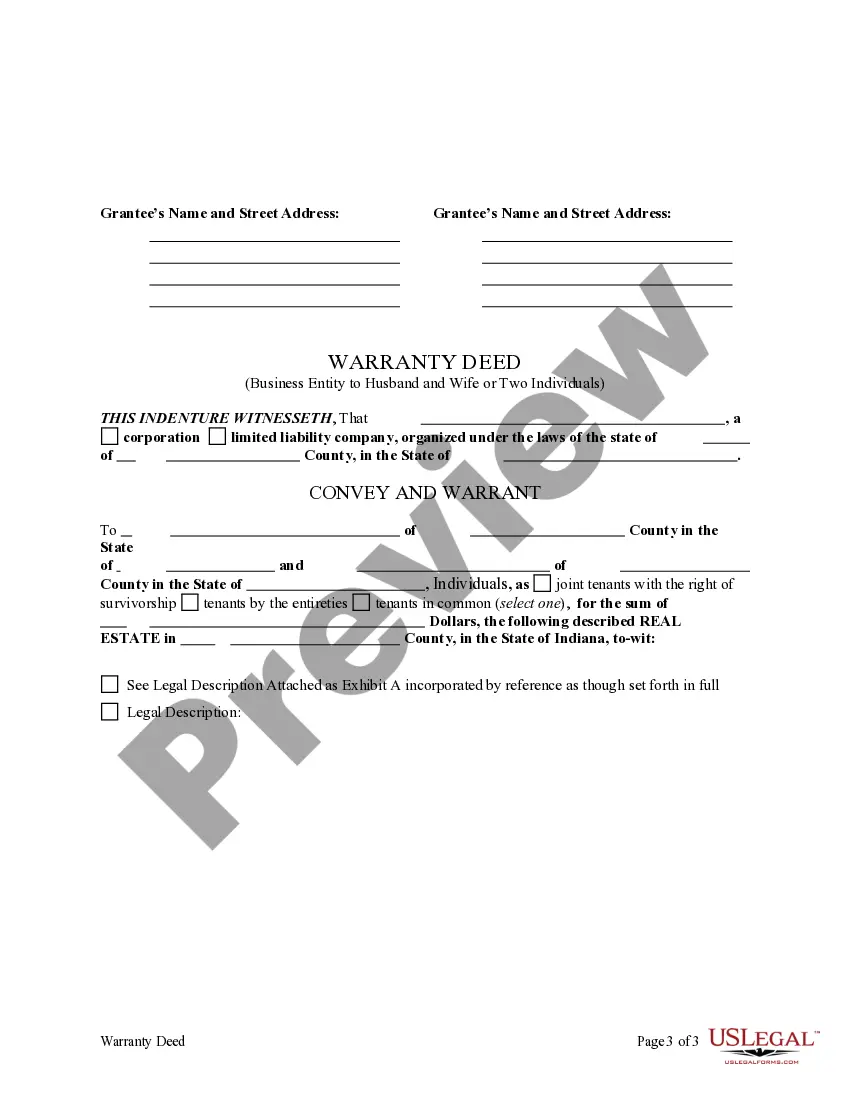
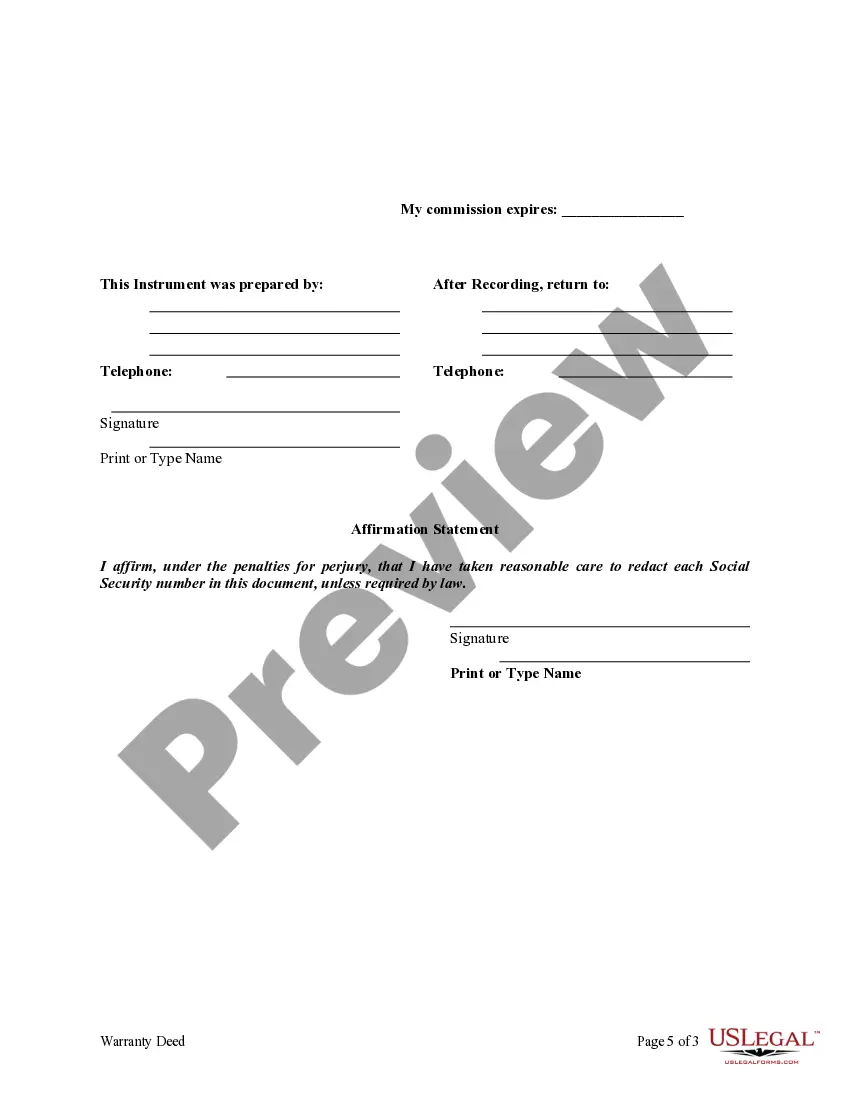
- Names and addresses of the grantor (business entity) and grantees (individuals or husband and wife).
- Description of the property being transferred, including legal descriptions.
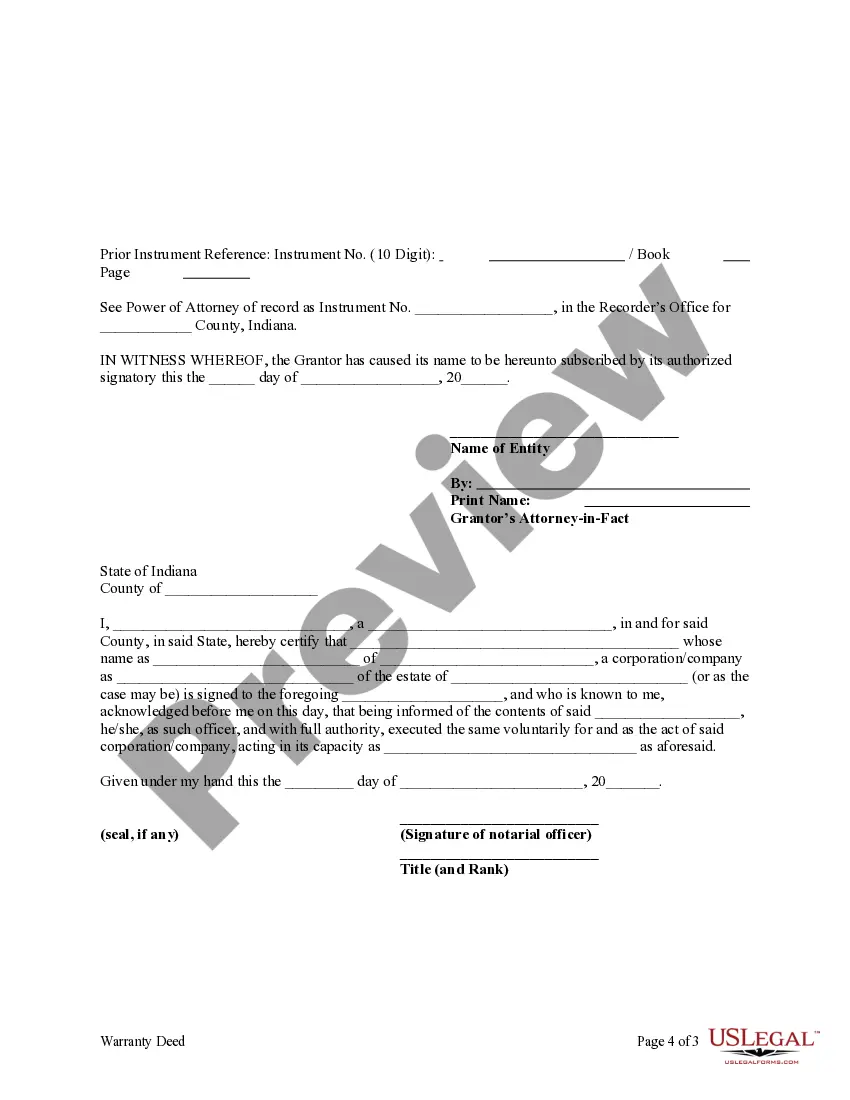
- Space for the attorney-in-fact to sign on behalf of the grantor.
- Declaration of the date of the transfer and execution by the authorized signatory of the business entity.
- Additional sections for recording information and requirements.




When to use this document
This form is commonly used when a business entity wishes to transfer property ownership to individuals, such as when a leader or stakeholder sells a property held under the business's name to other parties. It is particularly relevant in real estate transactions, ownership transfers during marriage, or when simplifying business asset management.
Who needs this form
- Business owners or agents acting on behalf of a business entity.
- Individuals or couples receiving property from a business entity.
- Attorneys representing business entities in property transactions.
How to complete this form
- Identify the parties involved: the grantor (business entity) and the grantees (individuals or couple).
- Provide a detailed description of the property, including its legal description and location.
- Enter the date of execution in the appropriate fields.
- Have the attorney-in-fact sign the deed on behalf of the business entity.
- Ensure all signatures are witnessed if required and complete any additional filing information.
Is notarization required?
This form needs to be notarized to ensure legal validity. US Legal Forms provides secure online notarization powered by Notarize, allowing you to complete the process through a verified video call, available anytime.
Get your form ready online
Our built-in tools help you complete, sign, share, and store your documents in one place.
Make edits, fill in missing information, and update formatting in US Legal Forms—just like you would in MS Word.
Download a copy, print it, send it by email, or mail it via USPS—whatever works best for your next step.
Sign and collect signatures with our SignNow integration. Send to multiple recipients, set reminders, and more. Go Premium to unlock E-Sign.
If this form requires notarization, complete it online through a secure video call—no need to meet a notary in person or wait for an appointment.
We protect your documents and personal data by following strict security and privacy standards.

Make edits, fill in missing information, and update formatting in US Legal Forms—just like you would in MS Word.

Download a copy, print it, send it by email, or mail it via USPS—whatever works best for your next step.

Sign and collect signatures with our SignNow integration. Send to multiple recipients, set reminders, and more. Go Premium to unlock E-Sign.

If this form requires notarization, complete it online through a secure video call—no need to meet a notary in person or wait for an appointment.

We protect your documents and personal data by following strict security and privacy standards.
Avoid these common issues
- Failing to provide an accurate legal description of the property.
- Not ensuring the attorney-in-fact has the authority to sign.
- Neglecting to include the correct recording information.
- Omitting grantees' full names and addresses.
Benefits of completing this form online
- Convenient download and easy access to the form at any time.
- Editability allows users to input information and make changes quickly.
- Forms are prepared by licensed attorneys, ensuring legal compliance.
Looking for another form?
Form popularity
FAQ
It's important to note that a warranty deed does not actually prove the grantor has ownership (a title search is the best way to prove that), but it is a promise by the grantor that they are transferring ownership and if it turns out they don't actually own the property, the grantor will be responsible for compensating
A deed, of course, is a legal document representing property ownership. But you might be wondering if an owner can transfer a deed to another person without a real estate lawyer. The answer is yes. Parties to a transaction are always free to prepare their own deeds.
The Power of Attorney is able to do anything which is authorized in the document. If there is language in the POA which allows the transfer of real property, the power of attorney is able to transfer the property to himself.
An agent cannot:Make decisions on behalf of the principal after their death.However, unless the principal named a co-agent or alternate agent in the same POA document or is still competent to appoint someone else to act on their behalf, an agent cannot choose who takes over their duties.
A special warranty deed to real estate offers protection to the buyer through the seller's guarantee that the title has been free and clear of encumbrances during their ownership of the property. It does not guarantee clear title beyond their ownership.
Perhaps the most important duty you have as an attorney is the duty to act in the best interests of the donor. Therefore, any gifts or payments you make on the donor's behalf must be in line with their best interests.Attorneys can even make payments to themselves.
A power of attorney agent is not barred by law to sell the property unto himself by following proper procedures. He is selling the property on behalf of his principal in the capacity of his agent/representative and buying it as a buyer.In his absence or at his option, the POA can act.
Special warranties allow the transfer of property title between seller and buyer. The purchase of title insurance can mitigate the risk of prior claims to the special warranty deed.
A power of attorney enables an agent (also called the attorney-in-fact) to conduct transactions on another person's behalf.If so, a spouse, relative or friend with POA can sign a deed or other real estate documents.