Indiana Amended Small Claims Complaint
Overview of this form
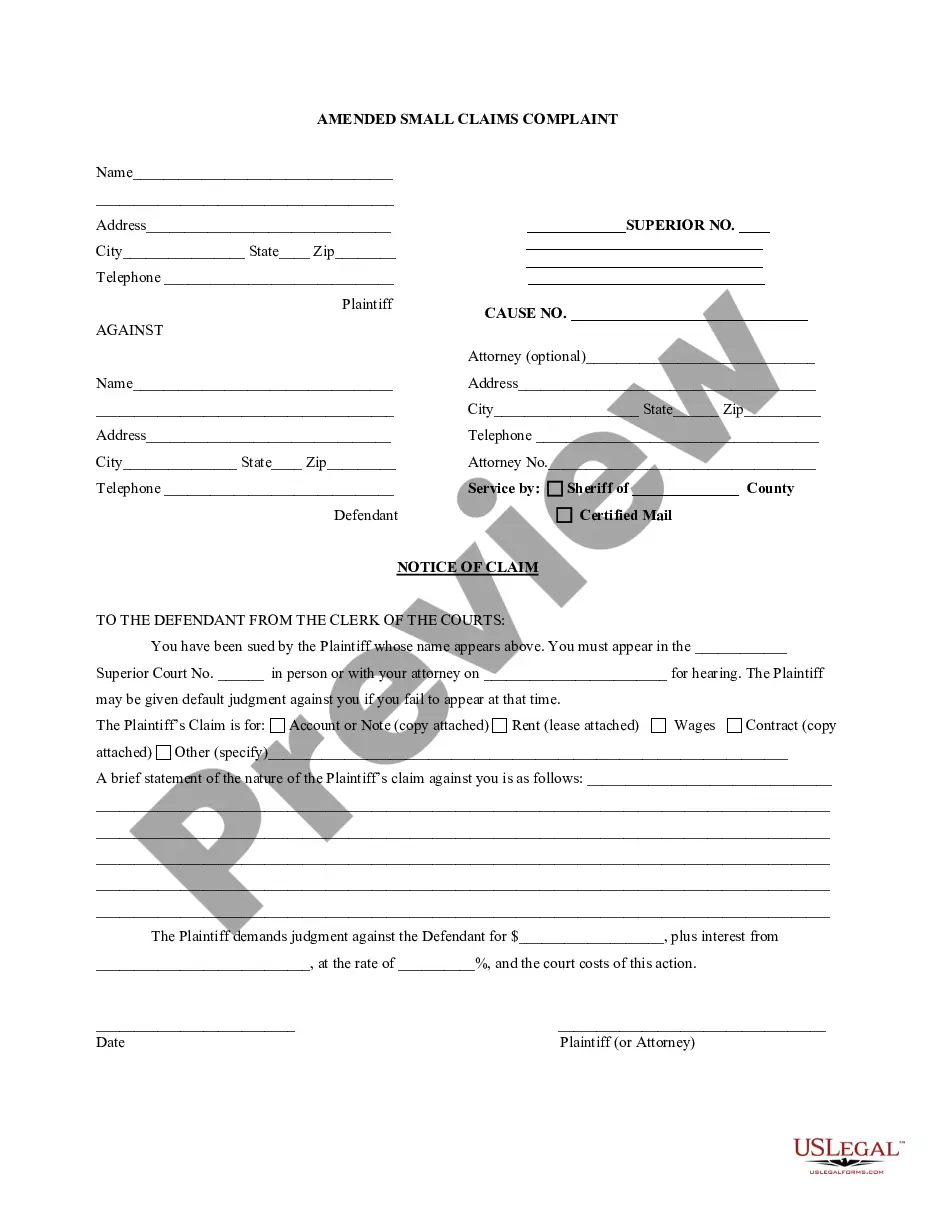
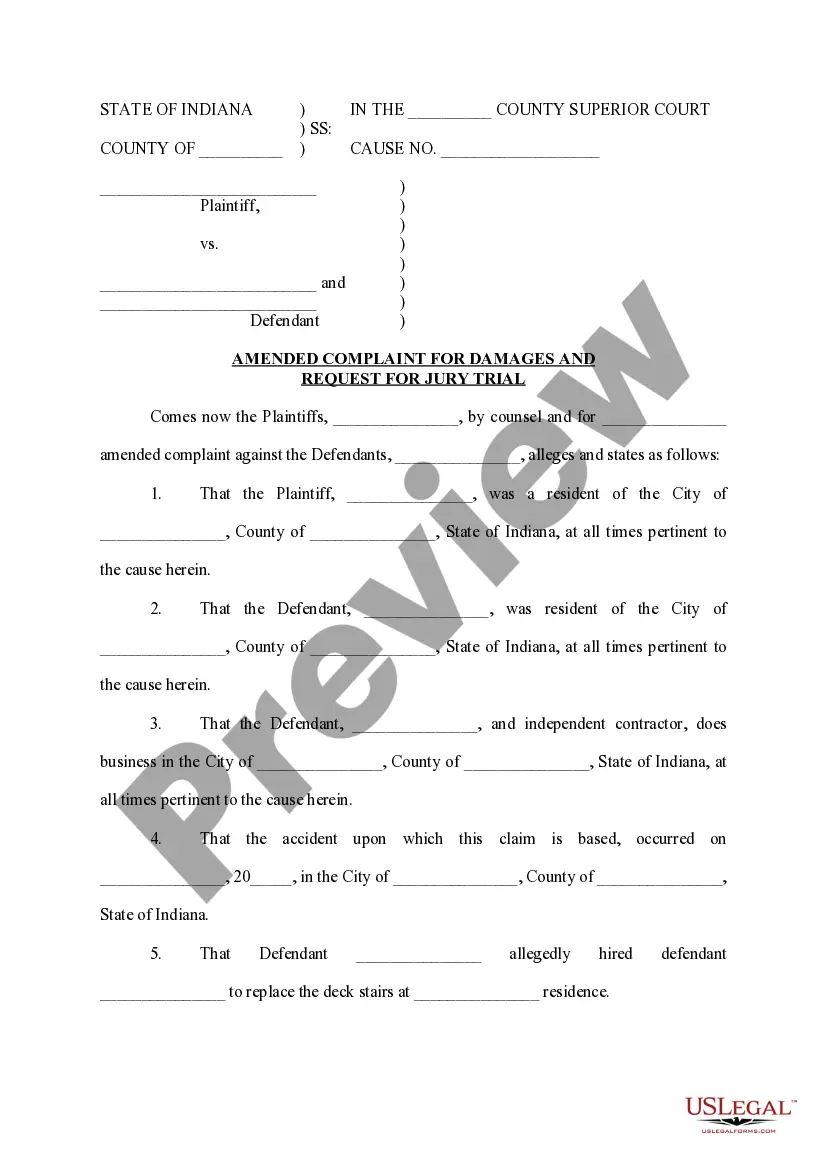
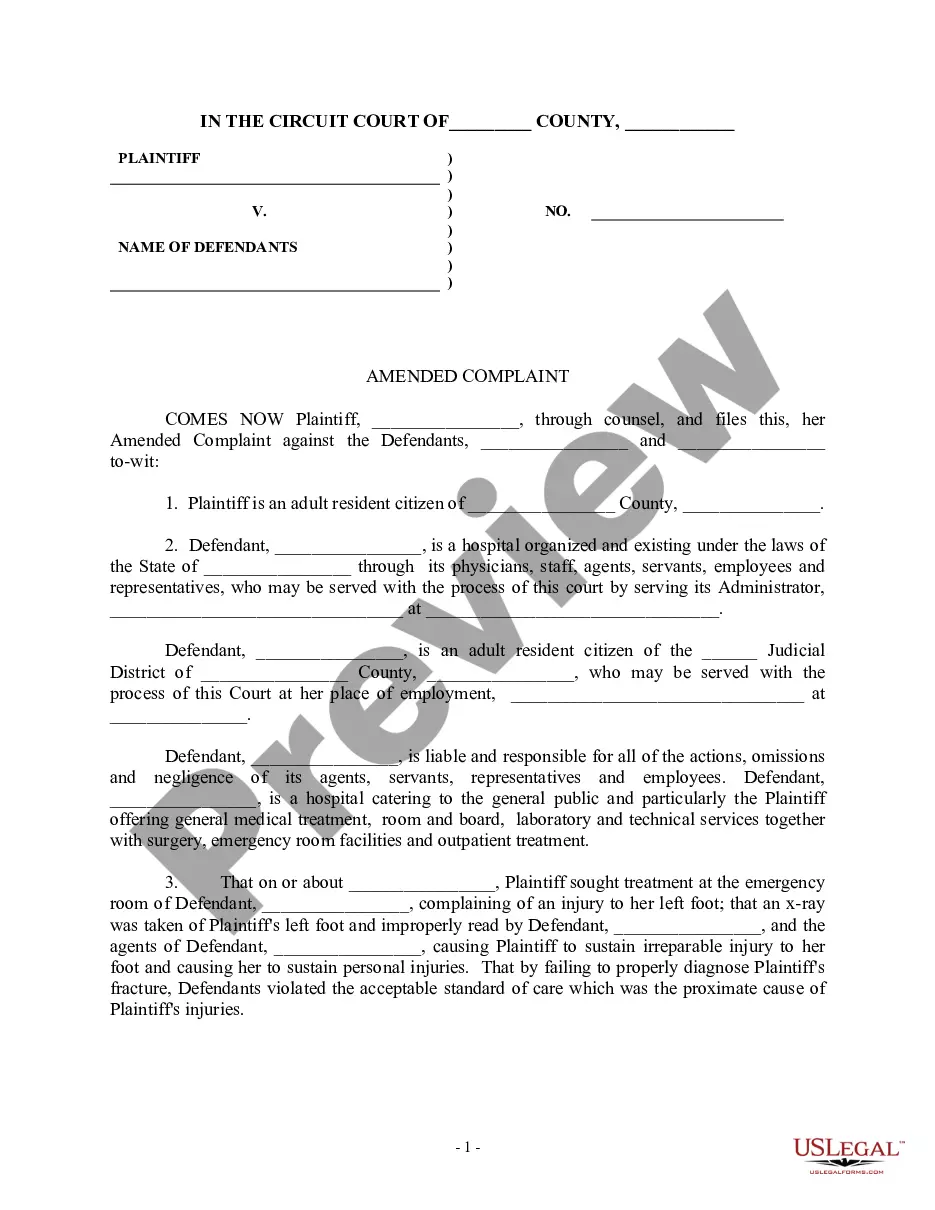
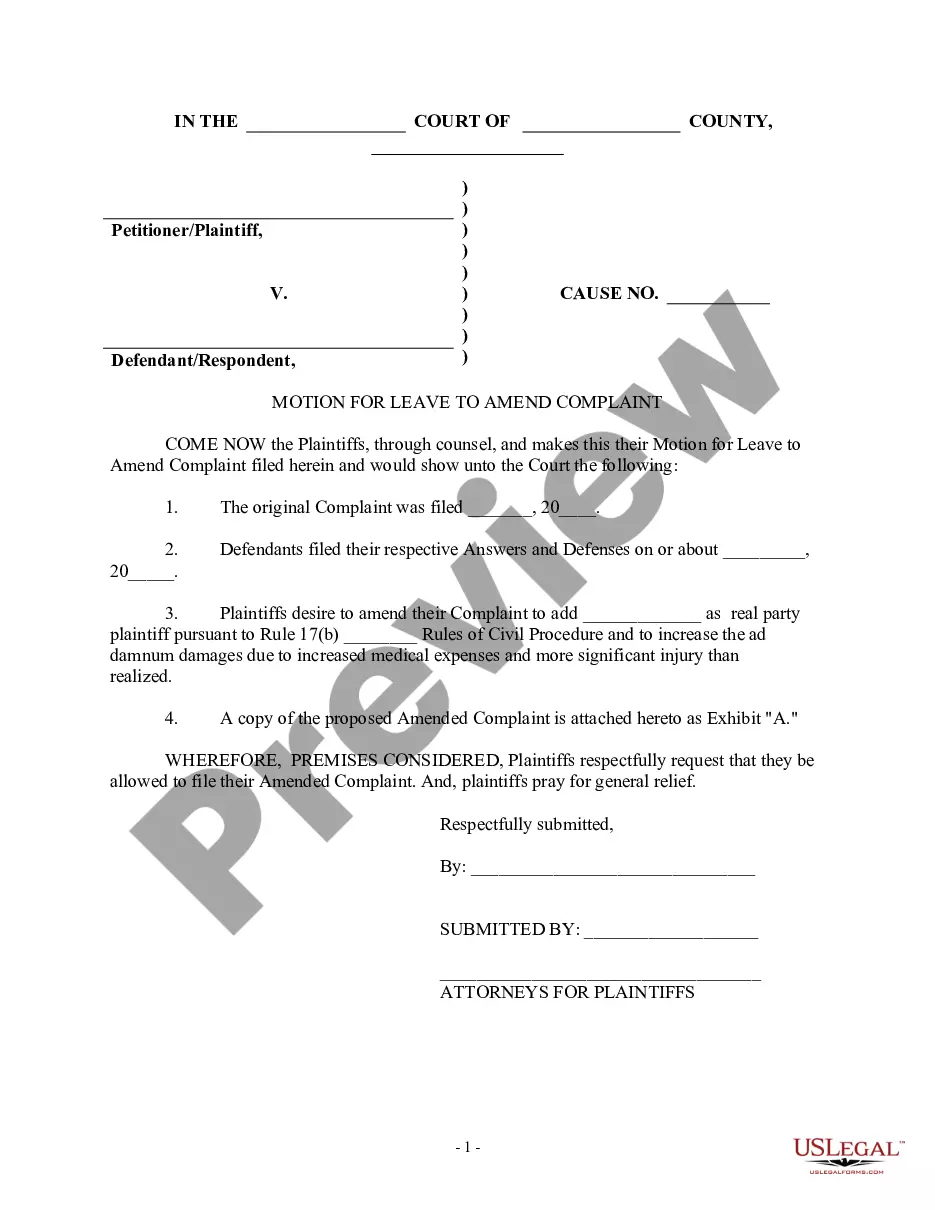
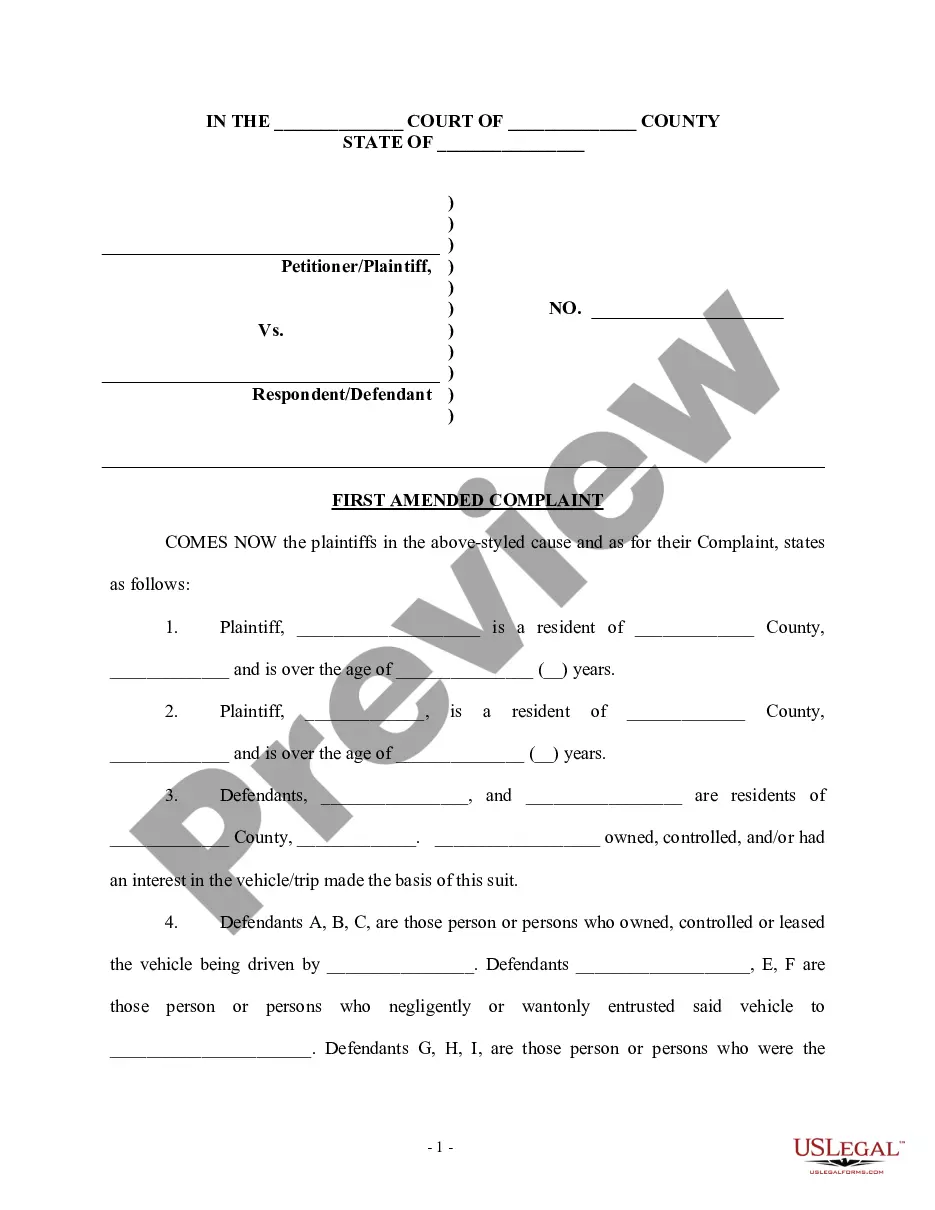
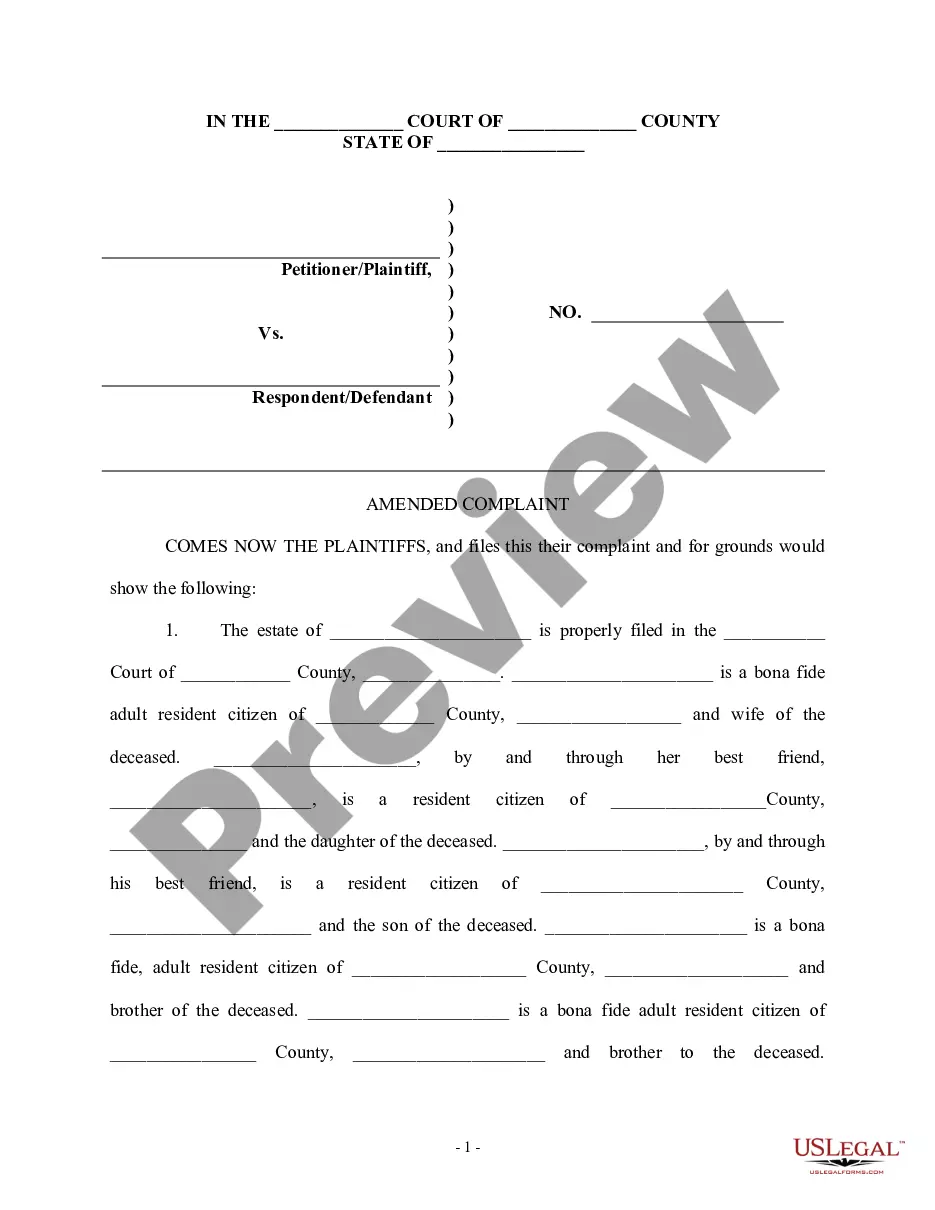
The Amended Small Claims Complaint is a legal document used in the State of Indiana that allows the Plaintiff to submit changes to a previously filed small claims complaint. This form is specifically designed for cases where the Plaintiff needs to correct or update information in their original claim, ensuring that the court and the Defendant are informed of the current details of the dispute.
What’s included in this form
- Name and contact information for both the Plaintiff and Defendant.
- Details regarding the court where the case is being heard.
- A description of the Plaintiff's claim and the nature of the dispute.
- Amount of money being claimed, plus any interest and court costs.
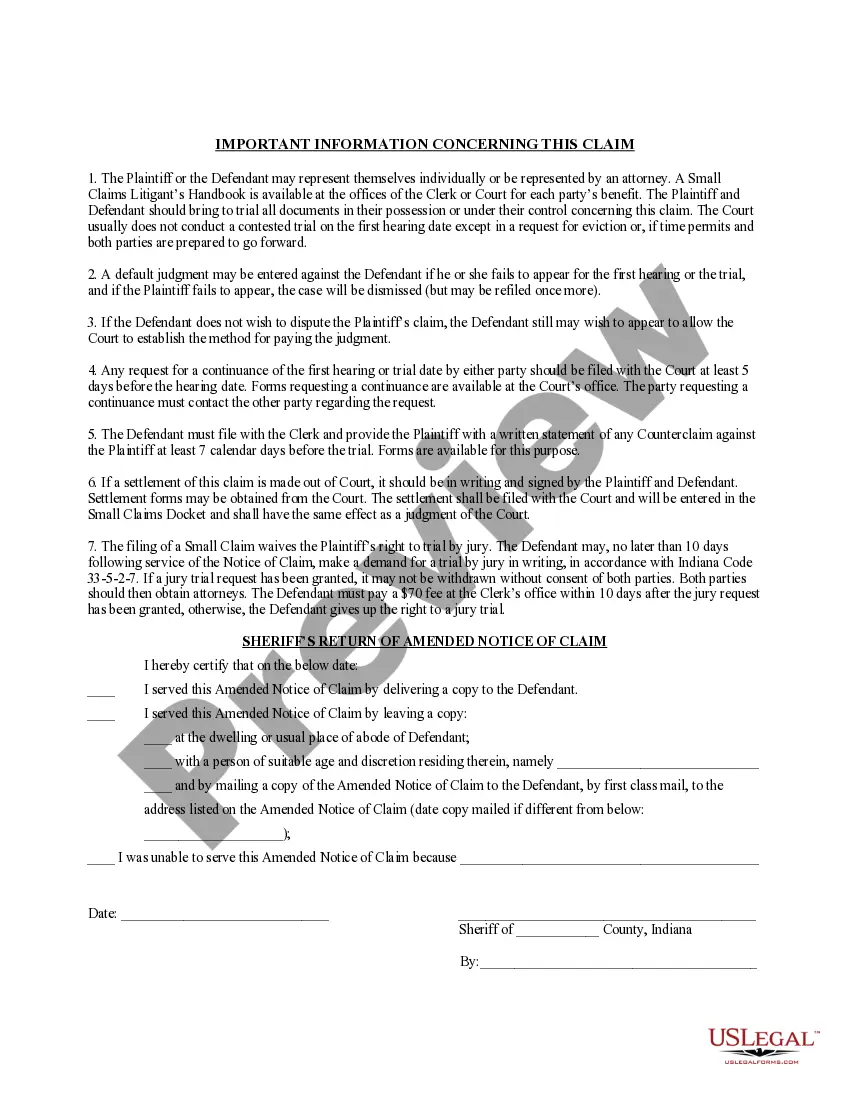
- Instructions regarding the court appearance and potential outcomes.
Situations where this form applies
This form should be used when a Plaintiff needs to correct or amend a previously filed small claims complaint in Indiana. It is ideal for scenarios where new evidence has emerged, information needs clarification, or corrections are necessary for accuracy in the original filing. It helps ensure the court record reflects the most up-to-date information related to the claim.
Who can use this document
- Plaintiffs who have filed a small claims complaint and need to amend it.
- Individuals representing themselves (pro se litigants) in small claims cases.
- Attorneys representing clients in small claims courts.
Completing this form step by step
- Identify and enter the names and addresses of both the Plaintiff and Defendant.
- Fill in the court information, including the court number and cause number.
- Write a clear statement about the nature of your claim against the Defendant.
- Specify the amount being claimed and any associated interest or court costs.
- Sign and date the form to certify its accuracy before submission.
Is notarization required?
In most cases, this form does not require notarization. However, some jurisdictions or signing circumstances might. US Legal Forms offers online notarization powered by Notarize, accessible 24/7 for a quick, remote process.
Get your form ready online
Our built-in tools help you complete, sign, share, and store your documents in one place.
Make edits, fill in missing information, and update formatting in US Legal Forms—just like you would in MS Word.
Download a copy, print it, send it by email, or mail it via USPS—whatever works best for your next step.
Sign and collect signatures with our SignNow integration. Send to multiple recipients, set reminders, and more. Go Premium to unlock E-Sign.
If this form requires notarization, complete it online through a secure video call—no need to meet a notary in person or wait for an appointment.
We protect your documents and personal data by following strict security and privacy standards.

Make edits, fill in missing information, and update formatting in US Legal Forms—just like you would in MS Word.

Download a copy, print it, send it by email, or mail it via USPS—whatever works best for your next step.

Sign and collect signatures with our SignNow integration. Send to multiple recipients, set reminders, and more. Go Premium to unlock E-Sign.

If this form requires notarization, complete it online through a secure video call—no need to meet a notary in person or wait for an appointment.

We protect your documents and personal data by following strict security and privacy standards.
Mistakes to watch out for
- Failing to include complete contact information for all parties involved.
- Not clearly stating the nature of the claim or the amount being sought.
- Submitting the form without proper signatures and dates.
- Omitting the required court information, including cause numbers.
Benefits of completing this form online
- Convenient access to the form allows for easy completion at any time.
- Editable fields ensure that you can tailor the form to your specific situation.
- Reliable templates drafted by licensed attorneys help ensure legal accuracy.
Looking for another form?
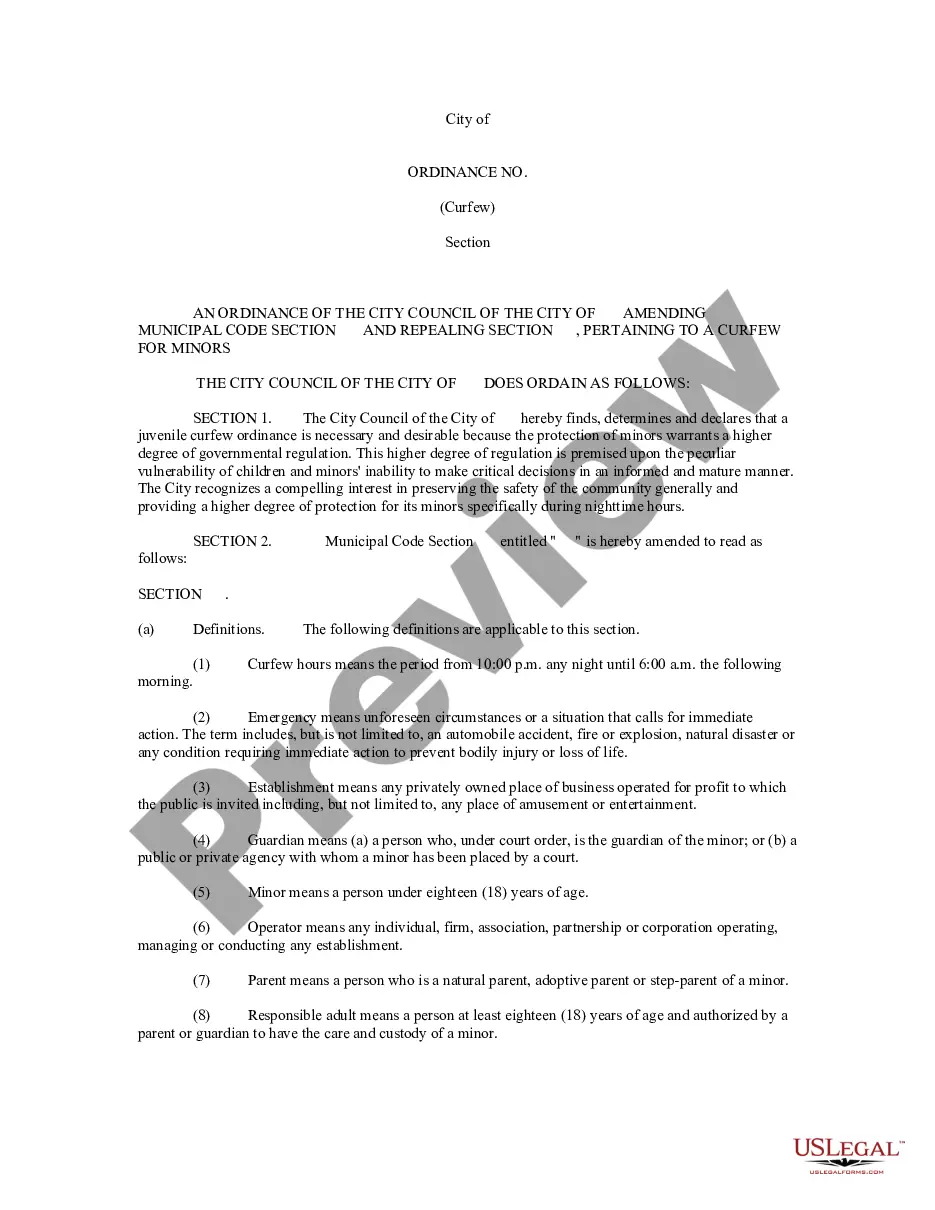
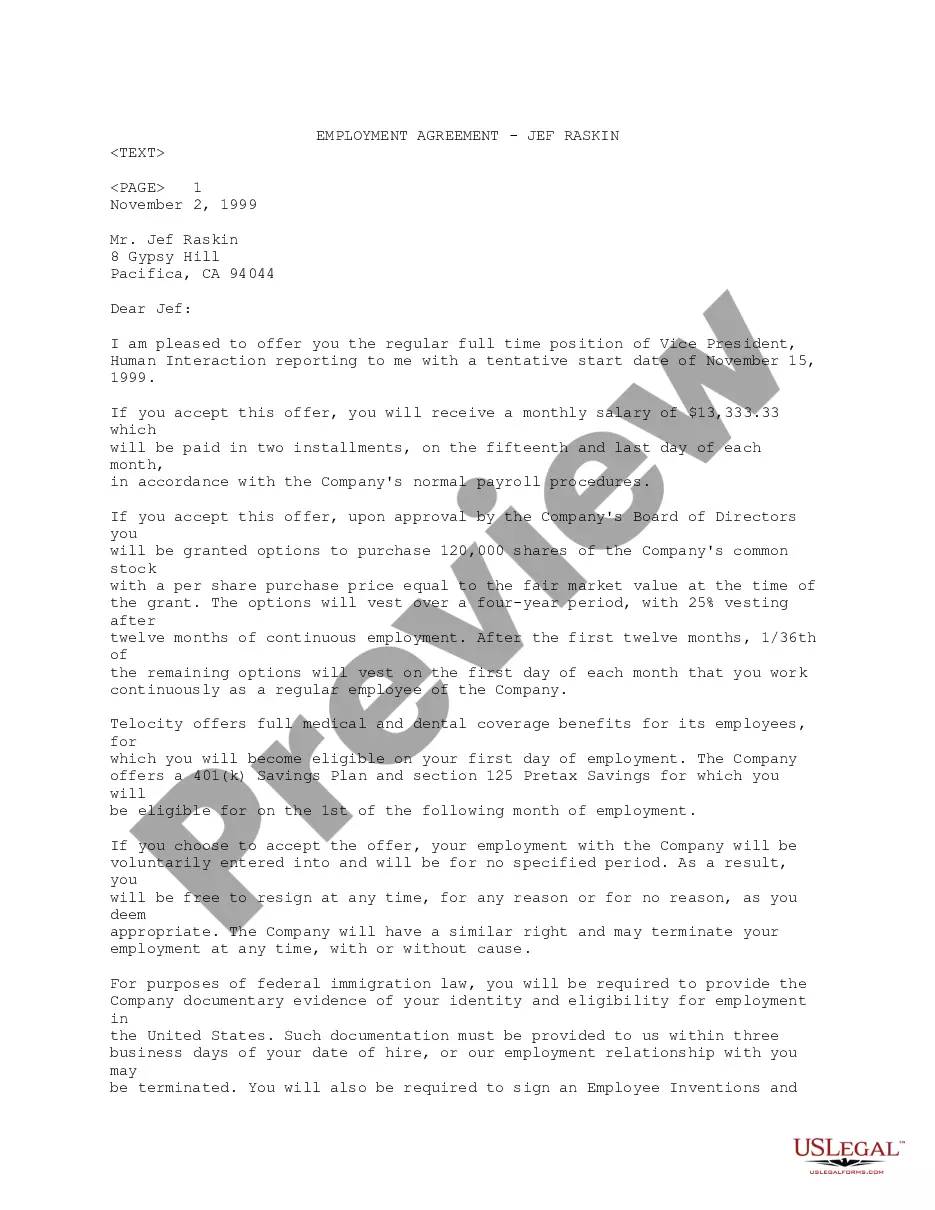
Form popularity
FAQ
In Indiana, you are not required to hire an attorney for small claims court. Many individuals successfully navigate the process without legal representation. However, if your case involves complex issues or you feel uncertain about the procedures, seeking guidance can be beneficial. The Indiana Amended Small Claims Complaint can be filled out effectively with the right support.
Use Form N279 to discontinue all or part of a claim or counterclaim. Send the completed form to the court and all other parties in the case.
The loser of a small claims case may appeal the decision by filing an appeal with the Indiana Court of Appeals within 30 days of the decision. (In Marion County, you first appeal to the Superior Court). You should consult an attorney for an appeal, because appeals are time-consuming and complicated.
Try to Reach a Settlement Without Going to Court. Raise Technical (Procedural) Issues. Prepare Your Case and Defend Yourself. File a Counterclaim, Cross-Claim, or Joinder of Additional Parties. Propose Making Installment Payments. Do Nothing.
California State Court A party in either a civil or criminal case who wishes to appeal the outcome of the case has only 60 days from the date of judgment to file a notice of appeal.
Individuals may file an appeal if they disagree with a trial court's decision. You must file a Notice of Appeal with both the Indiana Court of Appeals Clerk to begin the appeals process. The filing fee is $250. If you need copies of any portion of the trial court file, make your request within the Notice of Appeal.
Small Claims Court appeals are heard by a Supreme Court Judge. Appeals always take the form of a review of what happened at the Small Claims trial.Make any order the Small Claims Court Judge could have made. In other words, the Judge can allow or dismiss the claim.
If your dispute is for slightly more than the limit, it may still be worth it to file a small claims suit. You won't be able to sue for the full amount, but you'll avoid the expense of a regular lawsuit. The small claims filing fee varies from state to state. It can be as cheap as twenty bucks, or as much as $200.
If the court does not receive any documents from you or the defendant, nine months after the statement of claim was filed, the court will dismiss your claim and your case will be closed. If you still want to recover money from the defendant you will need to start a new case and pay the court fees again.