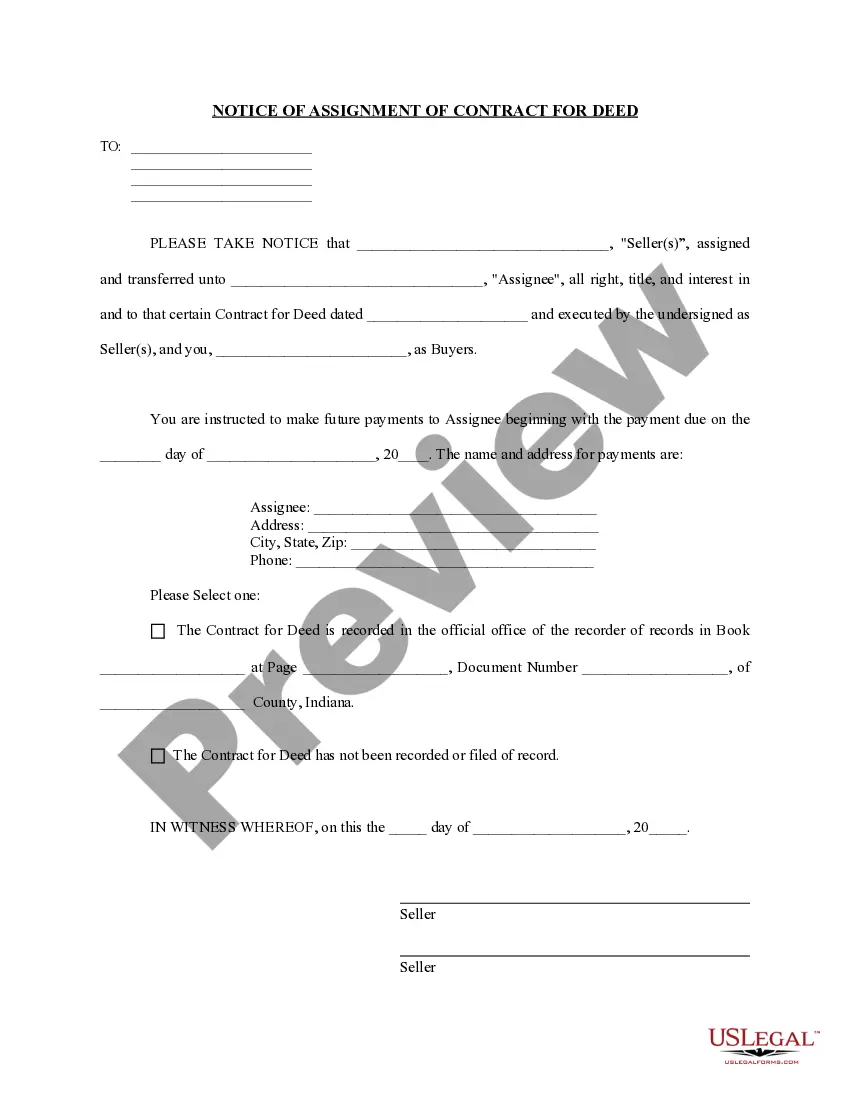
Indiana Motion for Default
About this form
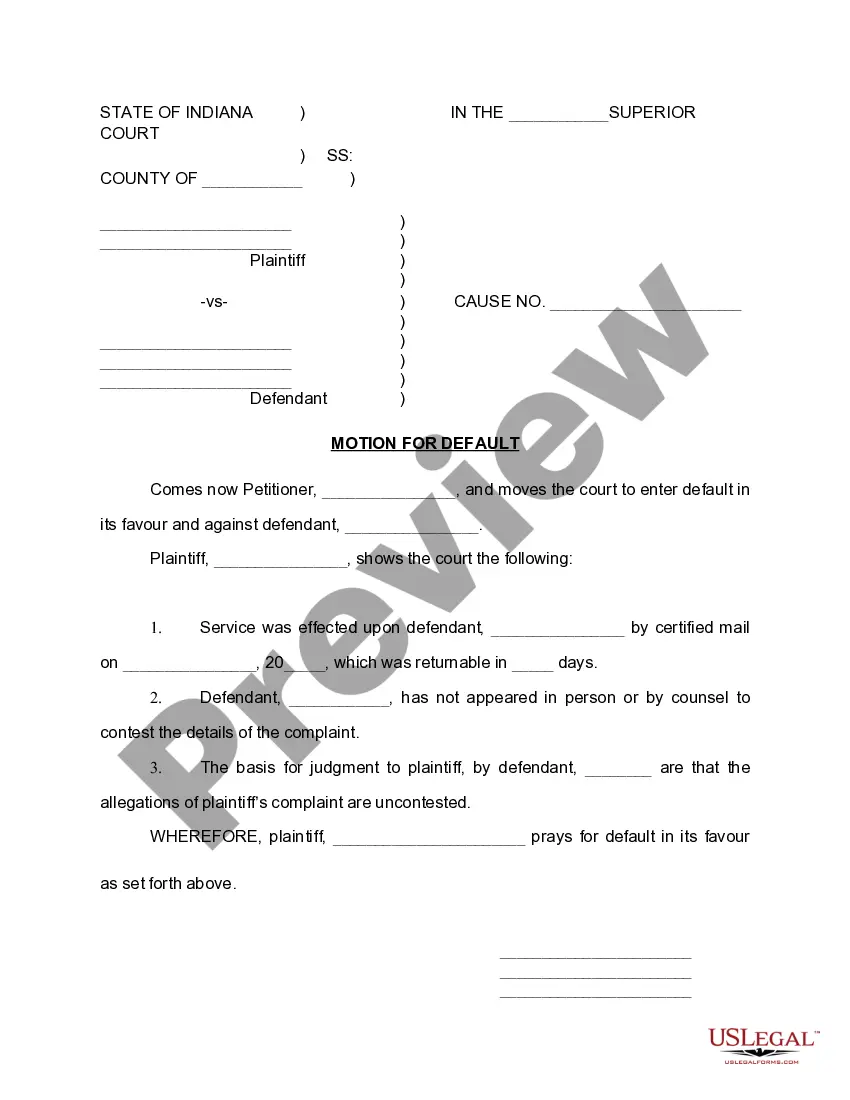
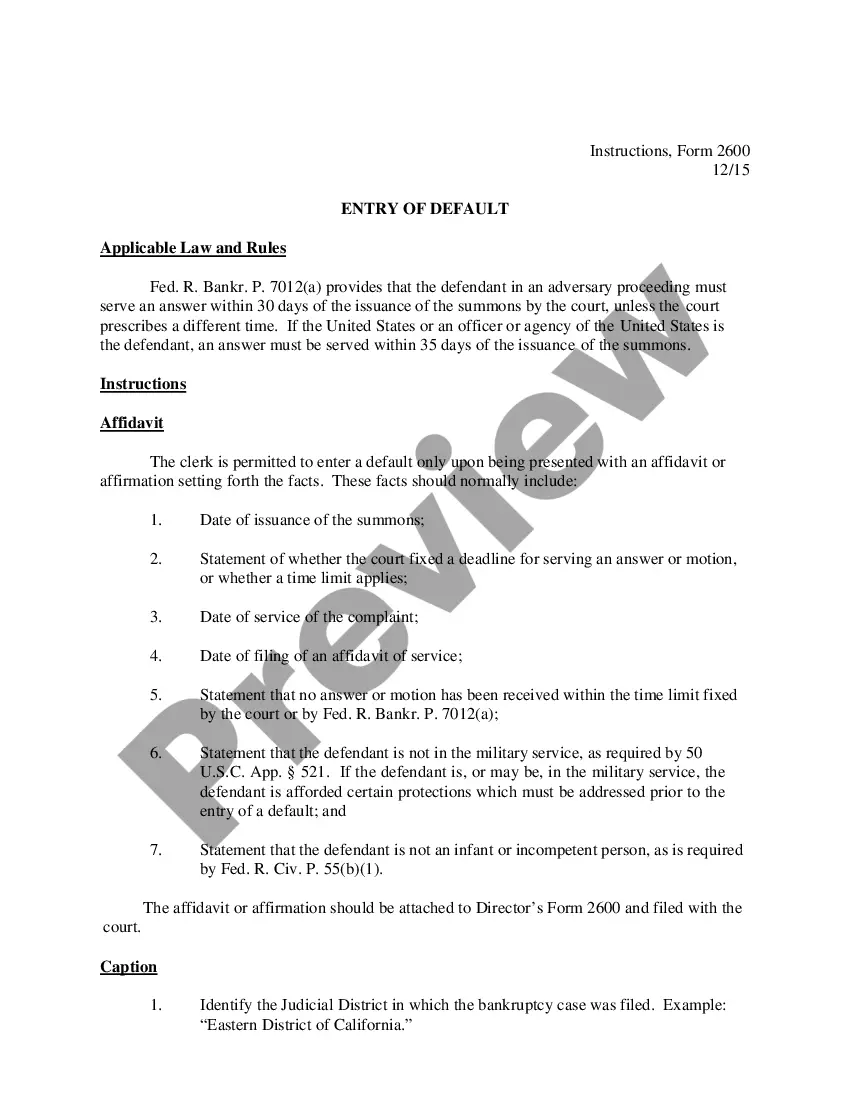
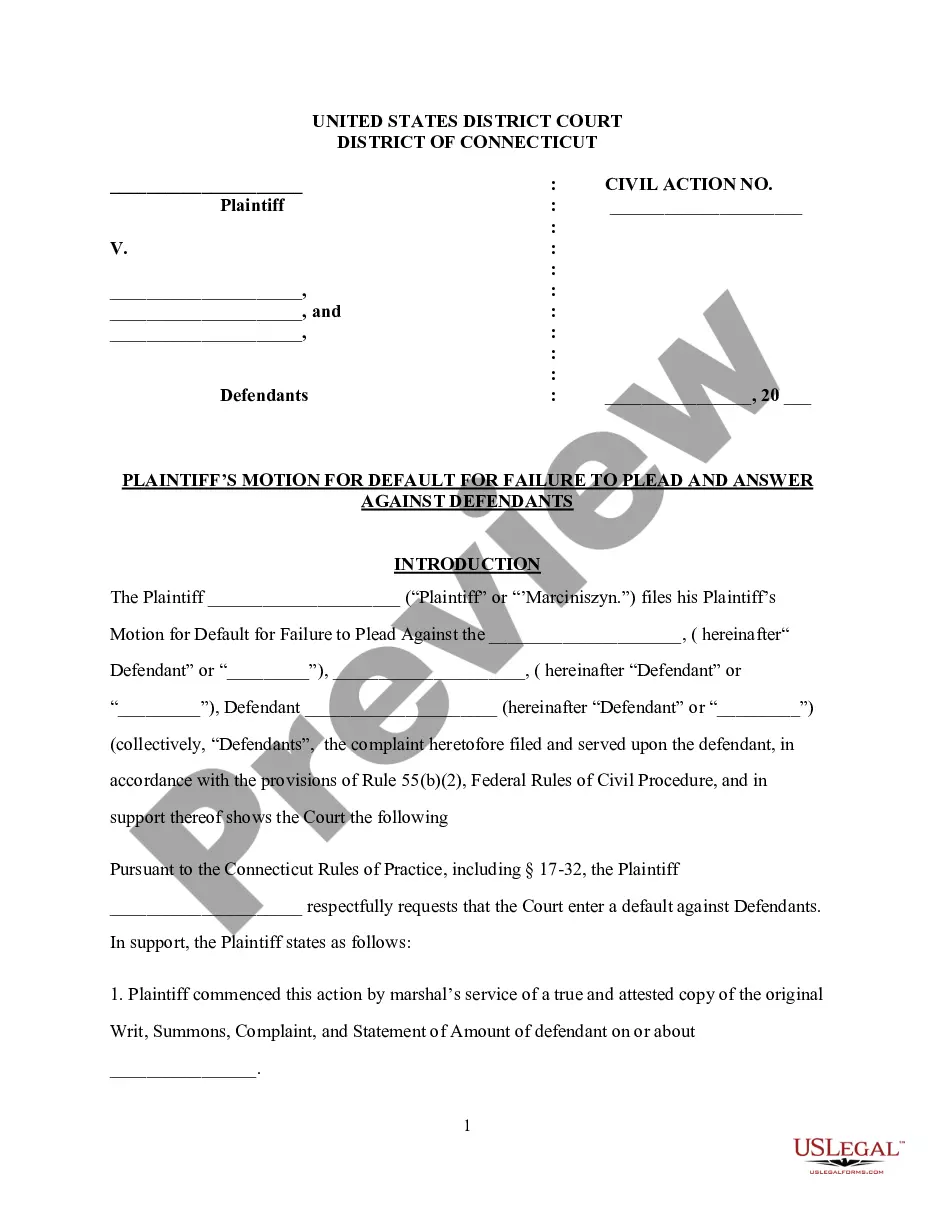
The Motion for Default is a legal document used in court to request a default judgment in favor of the plaintiff when the defendant has not responded to a complaint. This motion is filed to indicate that the allegations made in the plaintiffâs complaint remain uncontested, allowing the court to grant judgment without further trial. It differs from other motions in that it specifically addresses cases where no response has been received from the opposing party.
Main sections of this form
- Title and identification of the court and parties involved
- Statement of service to the defendant
- Details of the defendant's failure to appear
- Assertion that the allegations are uncontested
- Request for default judgment in favor of the plaintiff

When this form is needed
You should use the Motion for Default when you, as the plaintiff, have filed a complaint against a defendant, and the defendant has failed to respond or appear in court within the designated time frame. This process can occur in civil cases where time-sensitive resolutions are crucial, such as debt collection, breach of contract, or eviction proceedings.
Who needs this form
- Individuals or businesses serving as plaintiffs in a civil lawsuit
- Parties who have not received any response from the defendant
- Those seeking a default judgment due to defendant's inaction
How to prepare this document
- Identify the court and fill in the caption with the names of the plaintiff and defendant.
- Enter the case number associated with your lawsuit.
- Provide details regarding service of process, including the date and method used to serve the defendant.
- State that the defendant has failed to contest the complaint.
- Sign and date the motion, ensuring all required fields are complete.
Notarization guidance
This form does not typically require notarization unless specified by local law. It's essential to check local court rules to confirm any additional requirements.
Get your form ready online
Our built-in tools help you complete, sign, share, and store your documents in one place.
Make edits, fill in missing information, and update formatting in US Legal Forms—just like you would in MS Word.
Download a copy, print it, send it by email, or mail it via USPS—whatever works best for your next step.
Sign and collect signatures with our SignNow integration. Send to multiple recipients, set reminders, and more. Go Premium to unlock E-Sign.
If this form requires notarization, complete it online through a secure video call—no need to meet a notary in person or wait for an appointment.
We protect your documents and personal data by following strict security and privacy standards.

Make edits, fill in missing information, and update formatting in US Legal Forms—just like you would in MS Word.

Download a copy, print it, send it by email, or mail it via USPS—whatever works best for your next step.

Sign and collect signatures with our SignNow integration. Send to multiple recipients, set reminders, and more. Go Premium to unlock E-Sign.

If this form requires notarization, complete it online through a secure video call—no need to meet a notary in person or wait for an appointment.

We protect your documents and personal data by following strict security and privacy standards.
Avoid these common issues
- Failing to serve the defendant properly, which can lead to delays or dismissal.
- Not including all necessary details in the motion, such as dates and method of service.
- Submitting the form without verifying compliance with local rules.
Benefits of completing this form online
- Convenience of completing the form from home at any time.
- Editability allows you to customize the form according to your case.
- Access to legally vetted templates ensures reliability and compliance.
Looking for another form?



Form popularity
FAQ
A default judgment in Indiana occurs when one party fails to respond or appear in a case, leading the court to rule in favor of the compliant party. This judgment can grant the requesting party various forms of relief, such as monetary damages or specific performance. The process involves filing an Indiana Motion for Default, which is an essential step in obtaining this type of judgment. Understanding the implications of a default judgment can help individuals make informed legal decisions.
To successfully request an Indiana Motion for Default, you need to file five key documents. First, submit a complaint that clearly outlines your case. Next, include a notice of default, proof of service, an affidavit of damages, and a proposed order for the court. Each document plays a crucial role in establishing your entitlement to a default judgment.
The motion for default judgment signifies a legal procedure that allows a party to request the court for a ruling when the opposing party has failed to respond. Essentially, it grants the requesting party a judgment without the necessity of a trial. This process can streamline the resolution of cases and eliminate delays, making it an important aspect of the Indiana Motion for Default. Seeking guidance through US Legal Forms can simplify your journey through this critical legal step.
A motion for default judgment in Indiana is a request made to the court when one party does not respond to a lawsuit, resulting in a potential judgment for the other party. This motion marks a significant step in legal proceedings, as it seeks to obtain a favorable decision due to the lack of participation. It's crucial to understand the steps involved in filing this motion to protect your interests effectively. For assistance, the US Legal Forms platform provides valuable templates and guidance.