Most Favored Customer Clause
Understanding this form
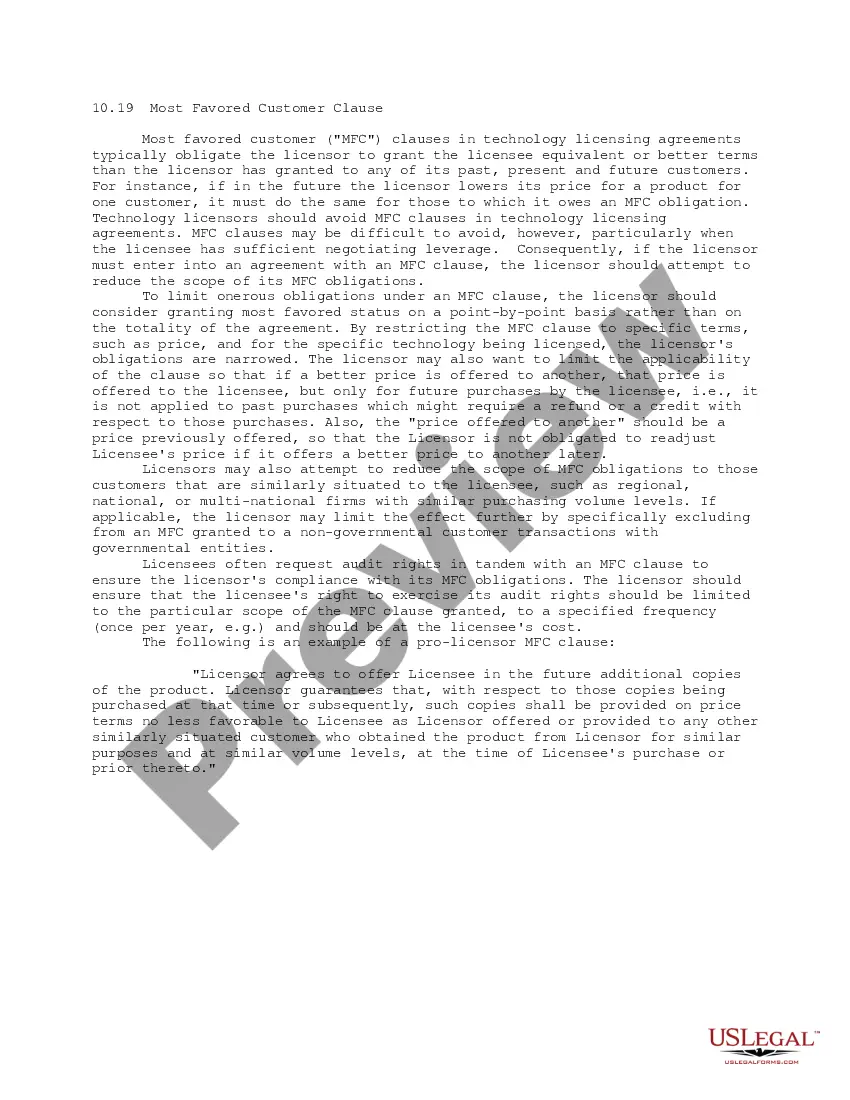
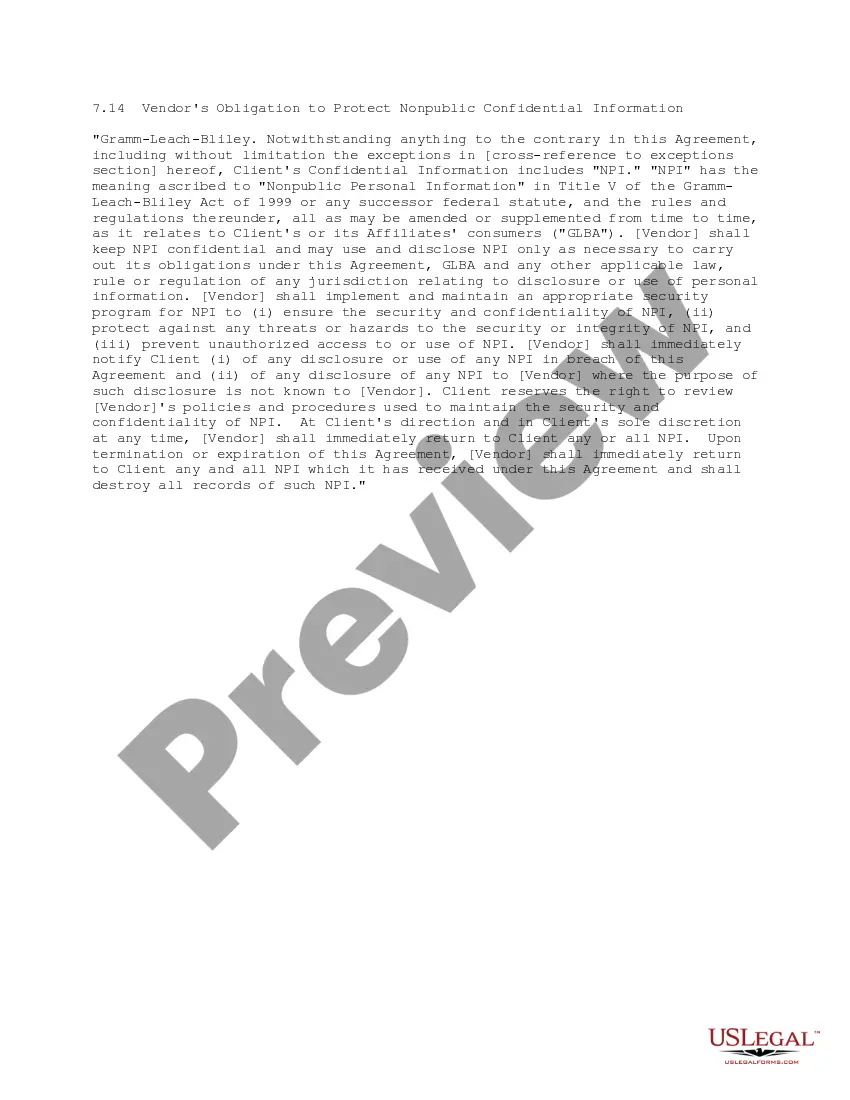
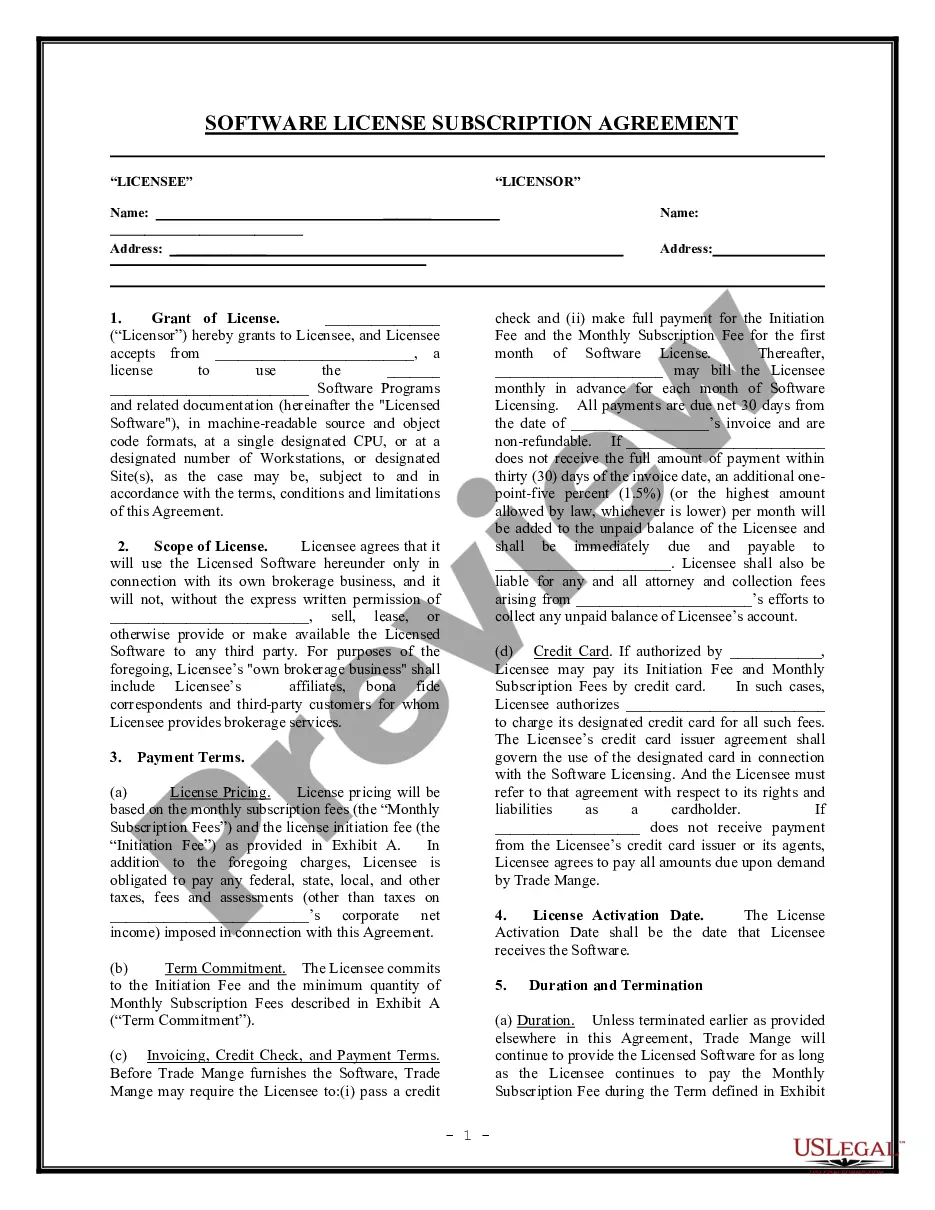
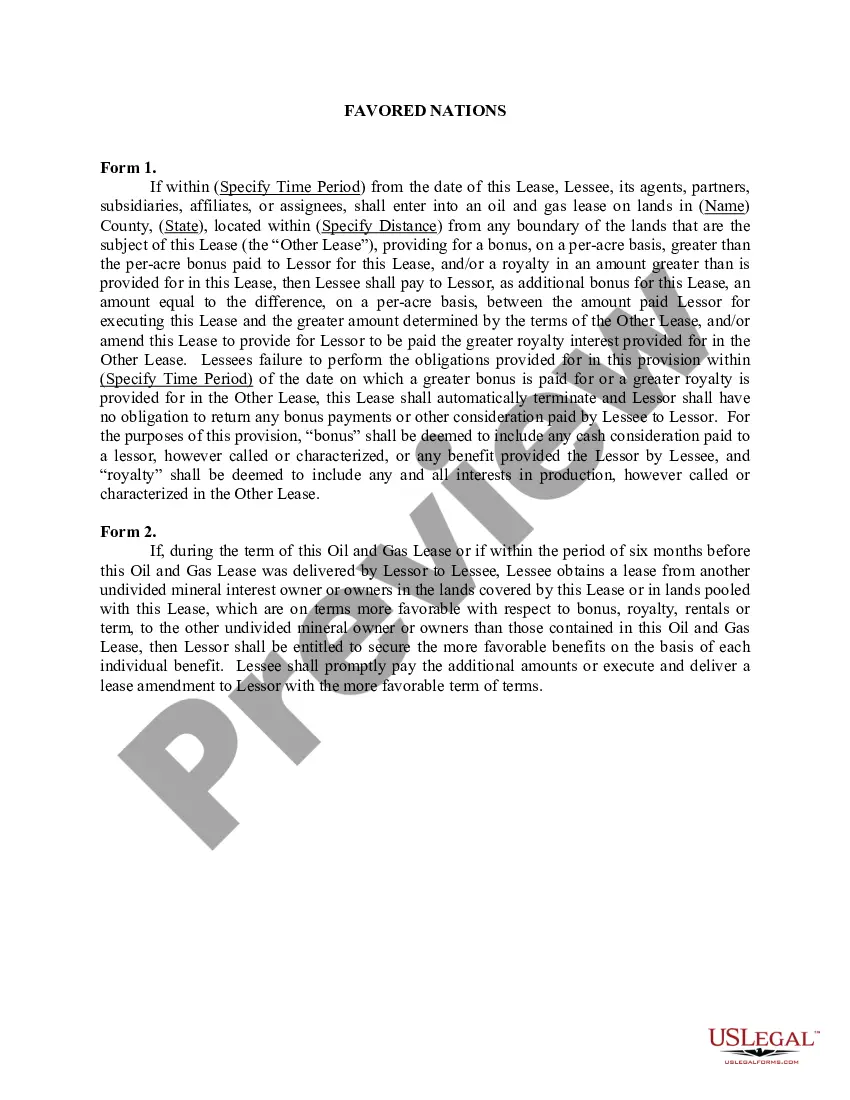
The Most Favored Customer Clause is a legal agreement included in licensing contracts that requires the licensor to provide the licensee with terms as favorable as those given to any other customer. This clause ensures that the licensee receives competitive pricing and equal treatment compared to other customers of the licensor. Unlike standard agreements, this clause specifically secures better terms for the licensee based on the licensor's offerings to other clients.
What’s included in this form
- The definition of the Most Favored Customer Clause.
- Obligations of the licensor regarding pricing and terms.
- Scope limitations on MFC obligations, such as regional and purchasing volume considerations.
- Conditions under which audit rights may be granted to the licensee.
- Specific language guaranteeing better terms for future purchases.
Common use cases
This form is useful in situations where a licensee seeks to ensure they are receiving competitive pricing in comparison to other customers of the licensor. It is particularly relevant in technology licensing agreements, where pricing may frequently change. If you are negotiating a licensing deal and want assurance of favorable terms, incorporating a Most Favored Customer Clause can help protect your interests.
Intended users of this form
- Businesses and individuals entering into technology licensing agreements.
- Licensors wanting to define clear obligations regarding pricing for licensees.
- Licensees seeking to ensure they receive the best possible terms available.
- Attorneys drafting agreements for clients involved in licensing negotiations.
How to prepare this document
- Identify the parties involved in the licensing agreement.
- Clearly define the scope of the Most Favored Customer Clause.
- Specify the terms that will be subject to MFC obligations.
- Include conditions regarding the applicability of better terms, such as limiting them to future purchases.
- Provide space for signatures of both parties to formalize the agreement.
Notarization requirements for this form
This form does not typically require notarization to be legally valid. However, some jurisdictions or document types may still require it. US Legal Forms provides secure online notarization powered by Notarize, available 24/7 for added convenience.
Get your form ready online
Our built-in tools help you complete, sign, share, and store your documents in one place.
Make edits, fill in missing information, and update formatting in US Legal Forms—just like you would in MS Word.
Download a copy, print it, send it by email, or mail it via USPS—whatever works best for your next step.
Sign and collect signatures with our SignNow integration. Send to multiple recipients, set reminders, and more. Go Premium to unlock E-Sign.
If this form requires notarization, complete it online through a secure video call—no need to meet a notary in person or wait for an appointment.
We protect your documents and personal data by following strict security and privacy standards.

Make edits, fill in missing information, and update formatting in US Legal Forms—just like you would in MS Word.

Download a copy, print it, send it by email, or mail it via USPS—whatever works best for your next step.

Sign and collect signatures with our SignNow integration. Send to multiple recipients, set reminders, and more. Go Premium to unlock E-Sign.

If this form requires notarization, complete it online through a secure video call—no need to meet a notary in person or wait for an appointment.

We protect your documents and personal data by following strict security and privacy standards.
Mistakes to watch out for
- Failing to clearly define the scope of the MFC clause.
- Not limiting the clause to specific terms, leading to broader obligations than intended.
- Overlooking the implications of past orders when applying the MFC clause.
- Neglecting to include a cap on audit rights for the licensee.
Why complete this form online
- Easy access to professionally drafted legal templates at any time.
- Ability to customize the form according to specific licensing needs.
- Immediate download for quick use, eliminating the need for longer wait times.
- Reliability and legal assurance from licensed attorneys who draft the templates.
Legal use & context
- MFC clauses are enforceable as long as they are clearly defined and agreed upon by both parties.
- Many licensors may try to limit the scope of these clauses to prevent unexpected obligations.
- Audit rights associated with MFC clauses must be reasonable and clearly outlined in the agreement.
Quick recap
- The clause ensures equitable treatment for the licensee regarding pricing.
- Clear definitions and limitations help protect licensors from excessive obligations.
- Proper completion and understanding of the clause are crucial for enforceability.
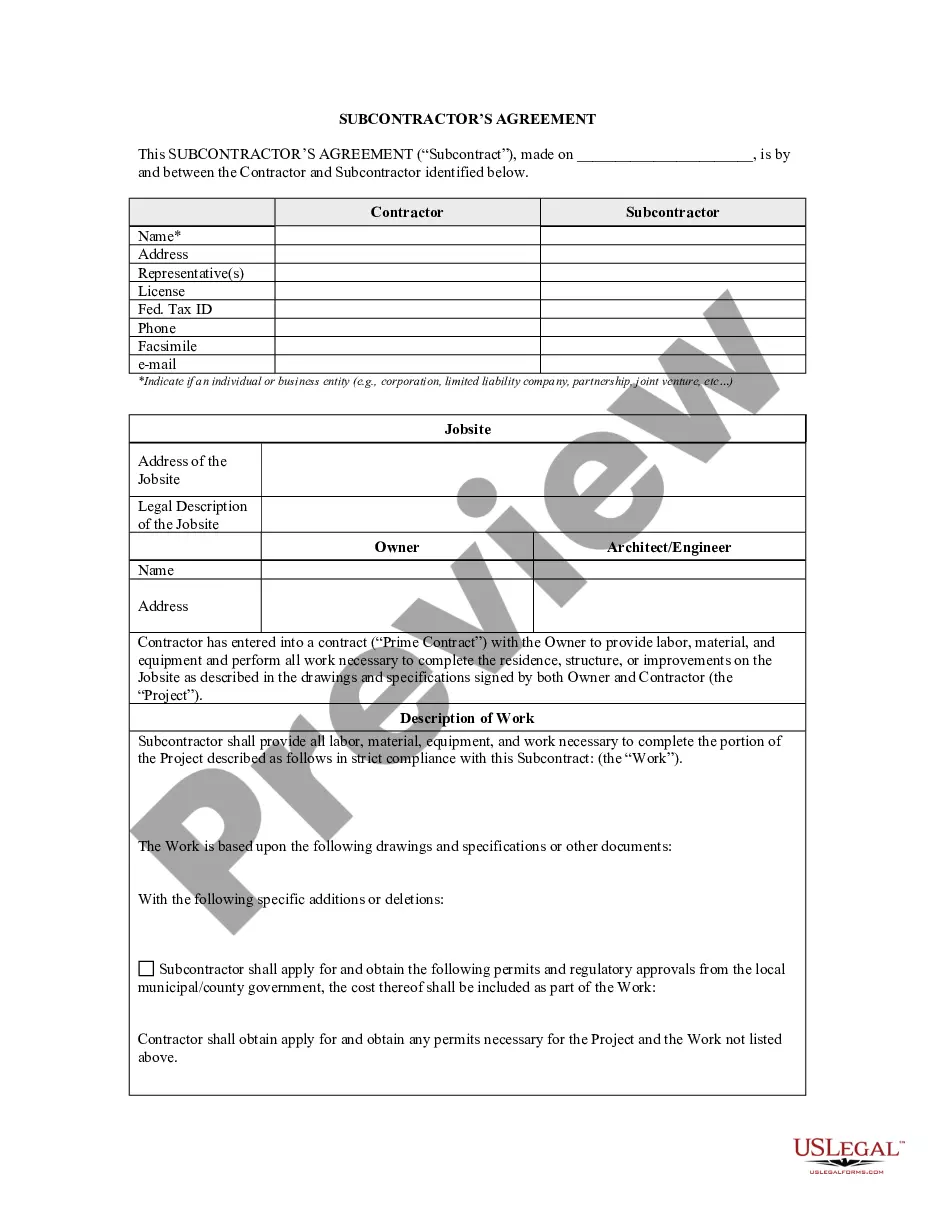
Looking for another form?


Form popularity
FAQ
The effect of an improperly drafted/negotiated MFC may have severe financial consequences to the business. Even if not formally invoked, the MFC's mere existence in the contract can also be used as leverage by the client to the demand a price negotiation and may call for violation of Anti-Trust Laws.
GATT Article XXIV provides that regional integration may be allowed as an exception to the MFN principle only if the following conditions are met: (1) tariffs and other barriers to trade must be eliminated with respect to substantially all trade within the region; and (2) the tariffs and other barriers to trade applied
However, the CMA found that narrow retail MFN clauses (ie retail MFN clauses that require parity with the insurer's direct channel) are not anti-competitive because they prevent insurers from 'free-riding' on the platform's investments.
This is an industry term which means that you are getting equal contractual treatment to others on the project billing, accommodations, and any other contractual provision. This is not required by SAG-AFTRA and must be separately negotiated between Performer and Producer.
Most-favored-nation (MFN) status is an economic position in which a country enjoys the best trade terms given by its trading partner. That means it receives the lowest tariffs, the fewest trade barriers, and the highest import quotas (or none at all).
Most favored nation clauses (MFNs), sometimes also referred to as most favored customer clauses, are agreements in which a supplier agrees to treat a particular customer no worse than all other customers (see Standard Clause, General Contract Clauses, Most Favored Customer (www.practicallaw.com/8-510-7389)).
A most-favored-nation (MFN) clause requires a country to provide any concessions, privileges, or immunities granted to one nation in a trade agreement to all other World Trade Organization member countries. Although its name implies favoritism toward another nation, it denotes the equal treatment of all countries.
This Note surveys those developments and discusses some of the risk factors that a company should consider when analyzing the legality of specific MFNs. No court analyzing the competitive merits of MFNs has found them to be illegal under any antitrust law.
The Most Favored Nation (MFN) Model tests an innovative way to lower prescription drug costs by paying no more for high-cost Medicare Part B drugs and biologicals (hereinafter called drugs) than the lowest price that drug manufacturers receive in other similar countries.