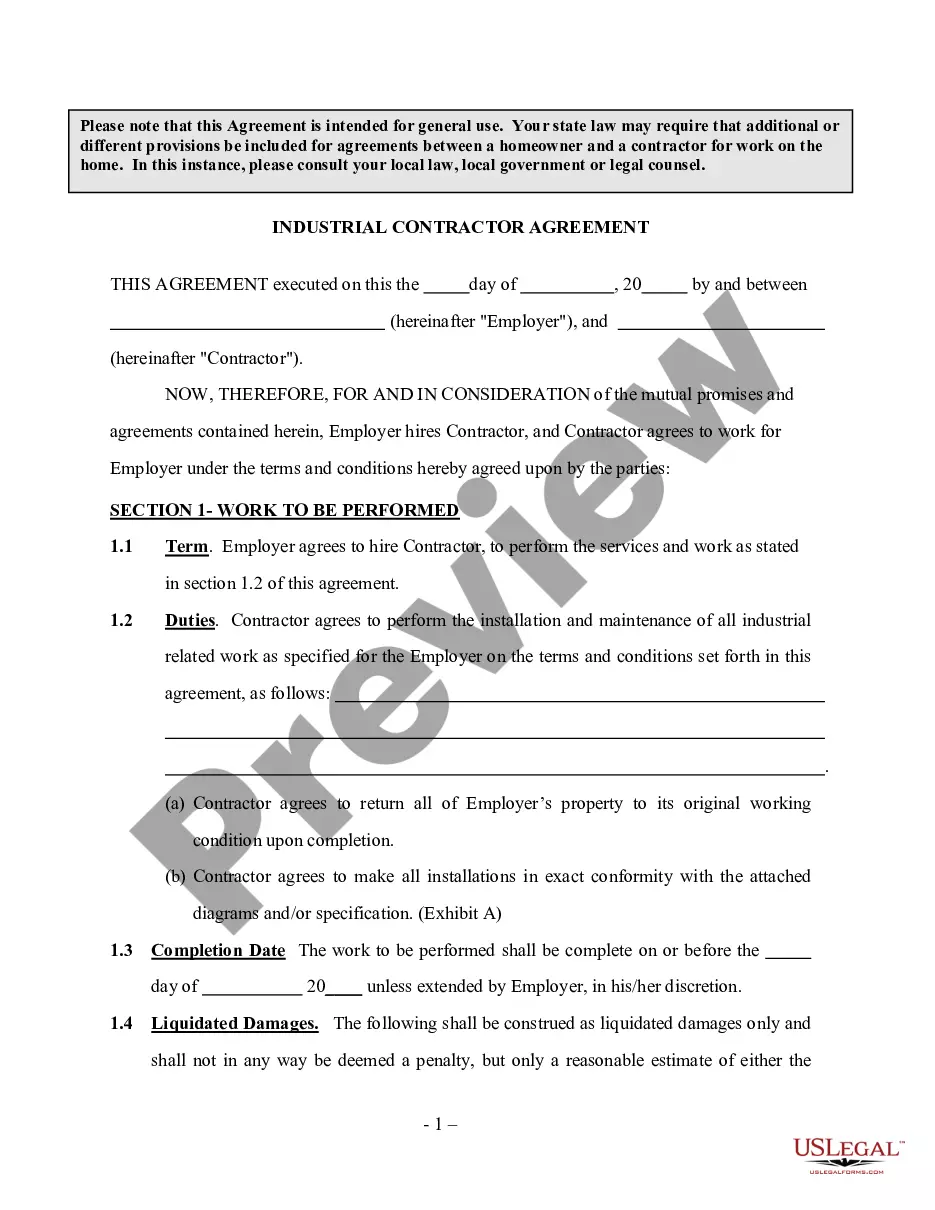
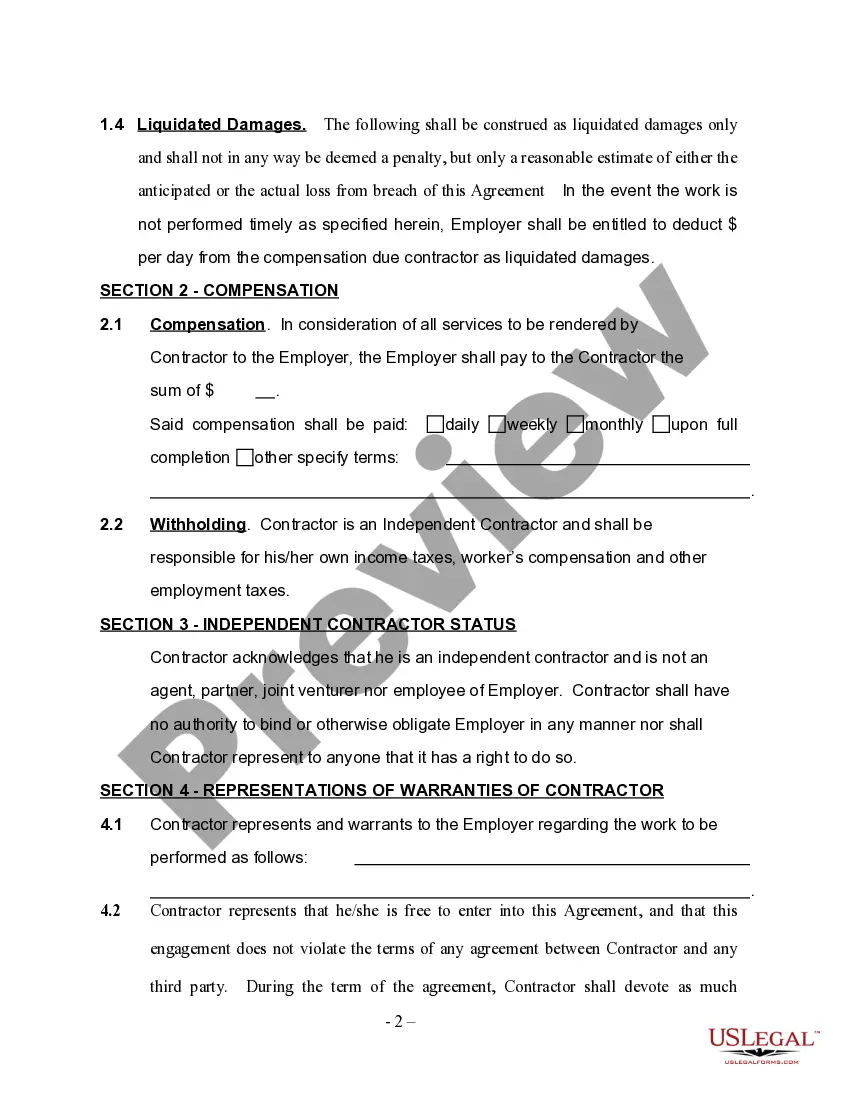
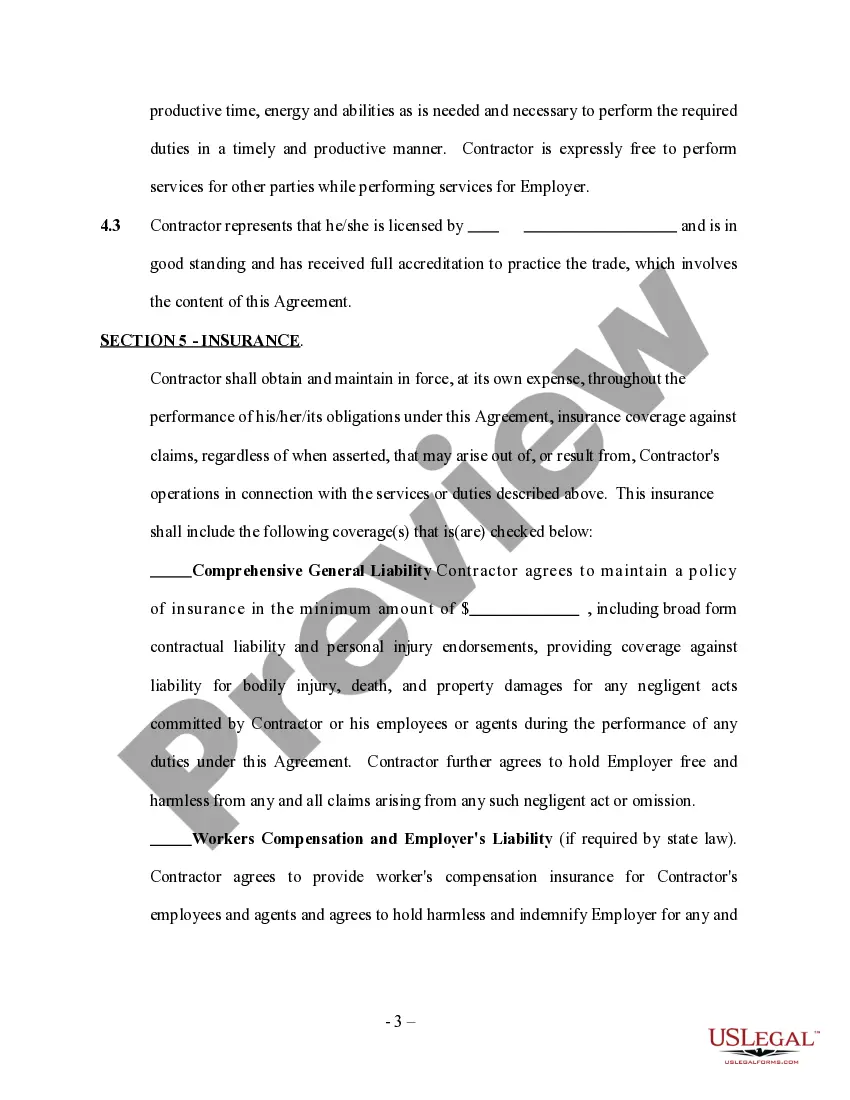
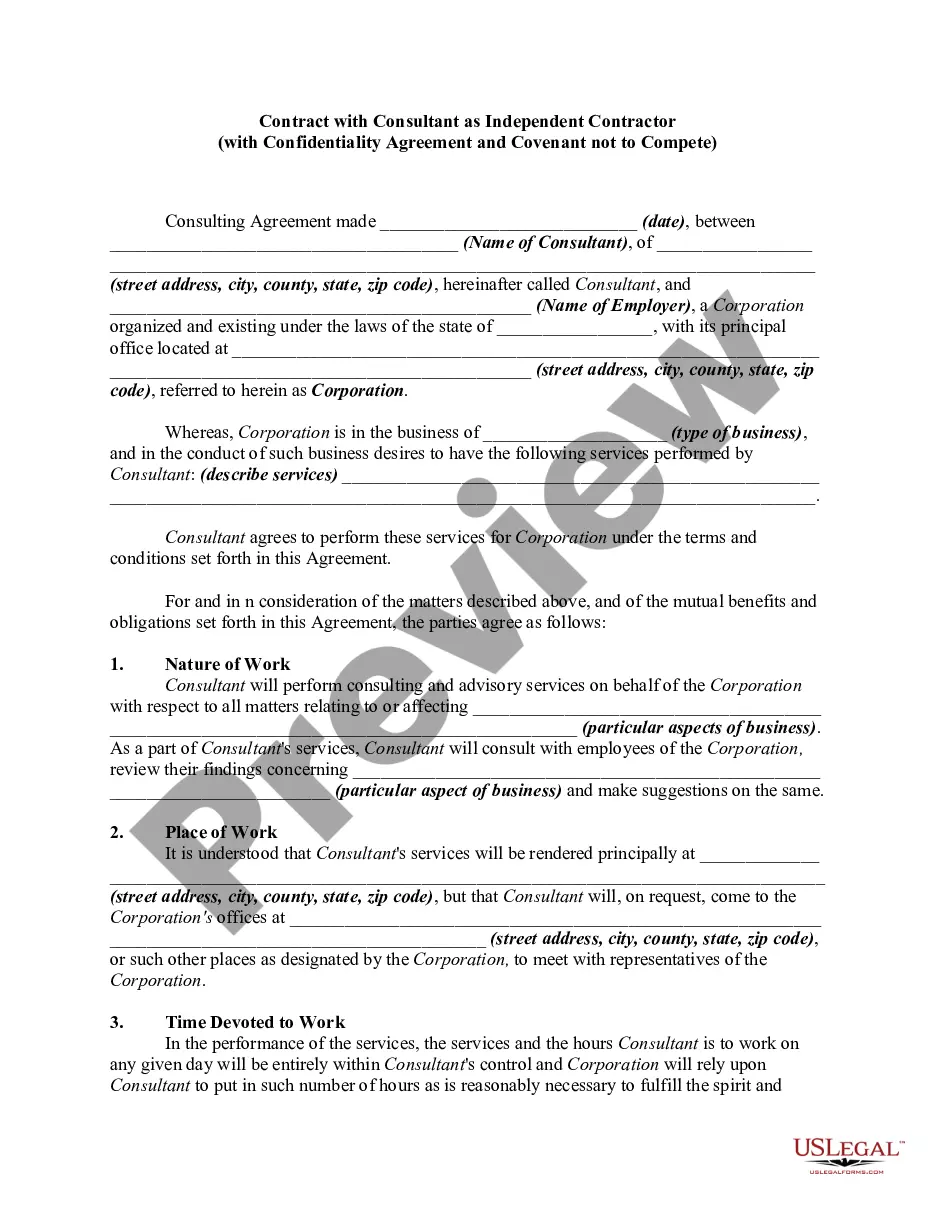
Employer contracts with an independent contractor to provide industrial contractor services as specified and agreed upon in the contract.
Illinois Industrial Contractor Agreement - Self-Employed
State:
Multi-State
Control #:
US-INDC-110
Format:
Word;
Rich Text
Instant download
Description
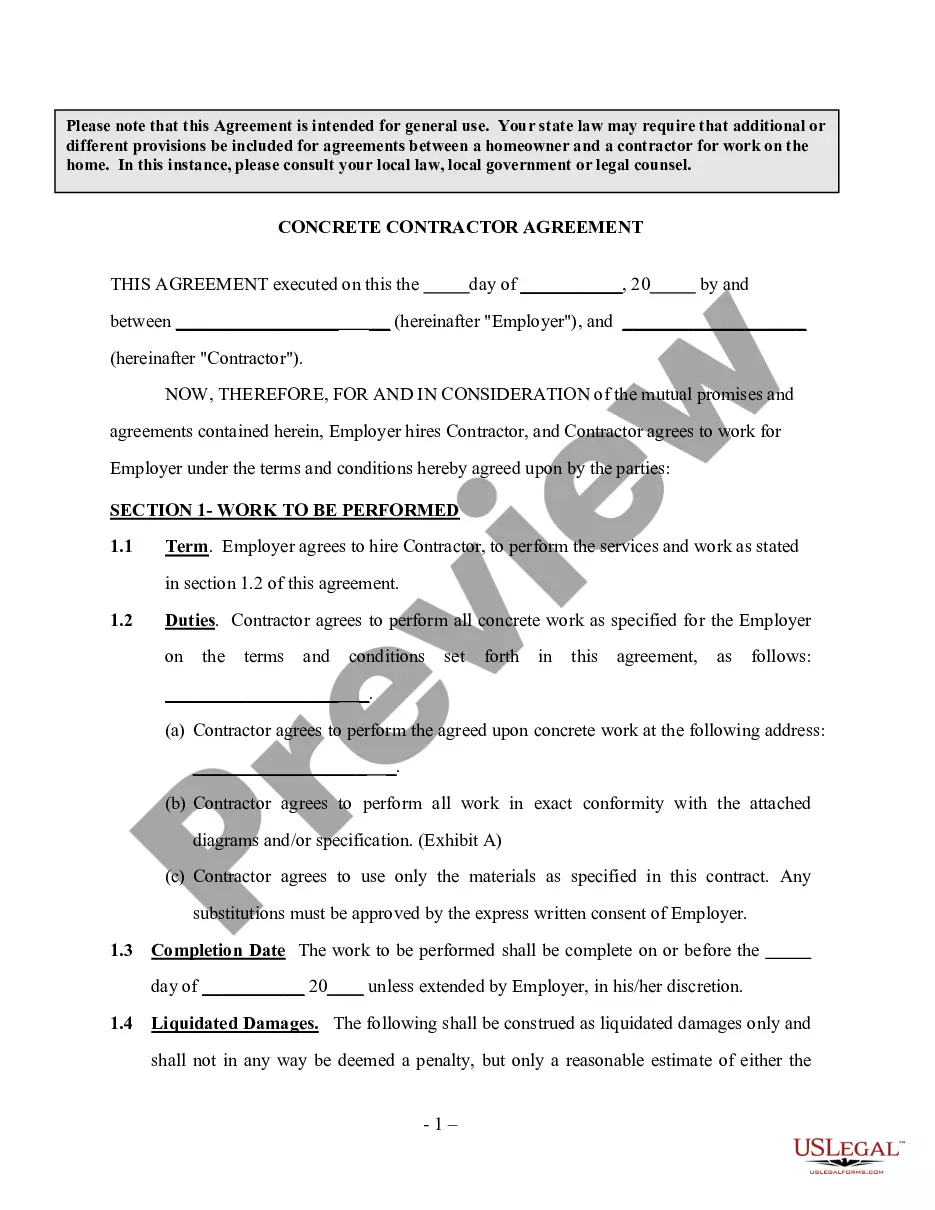
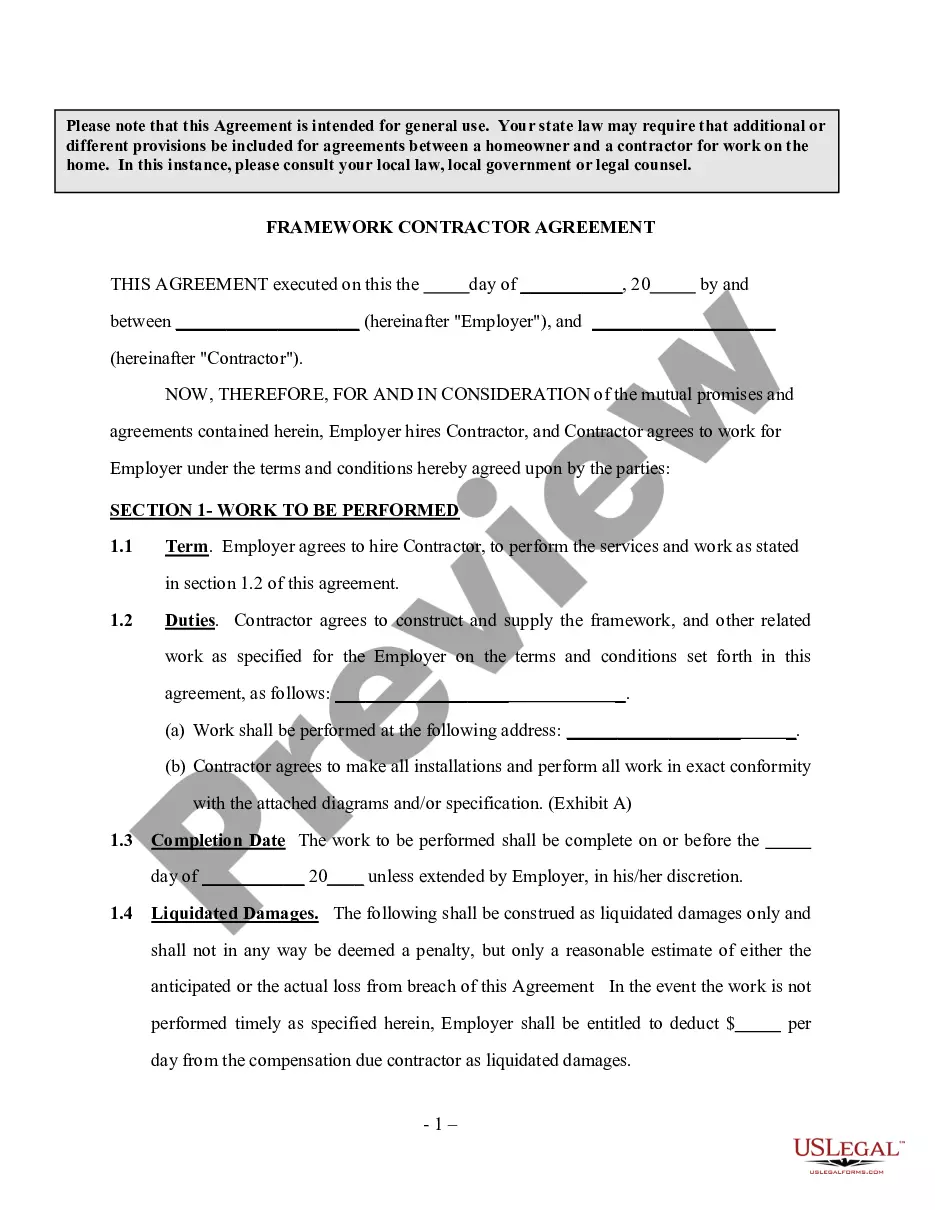
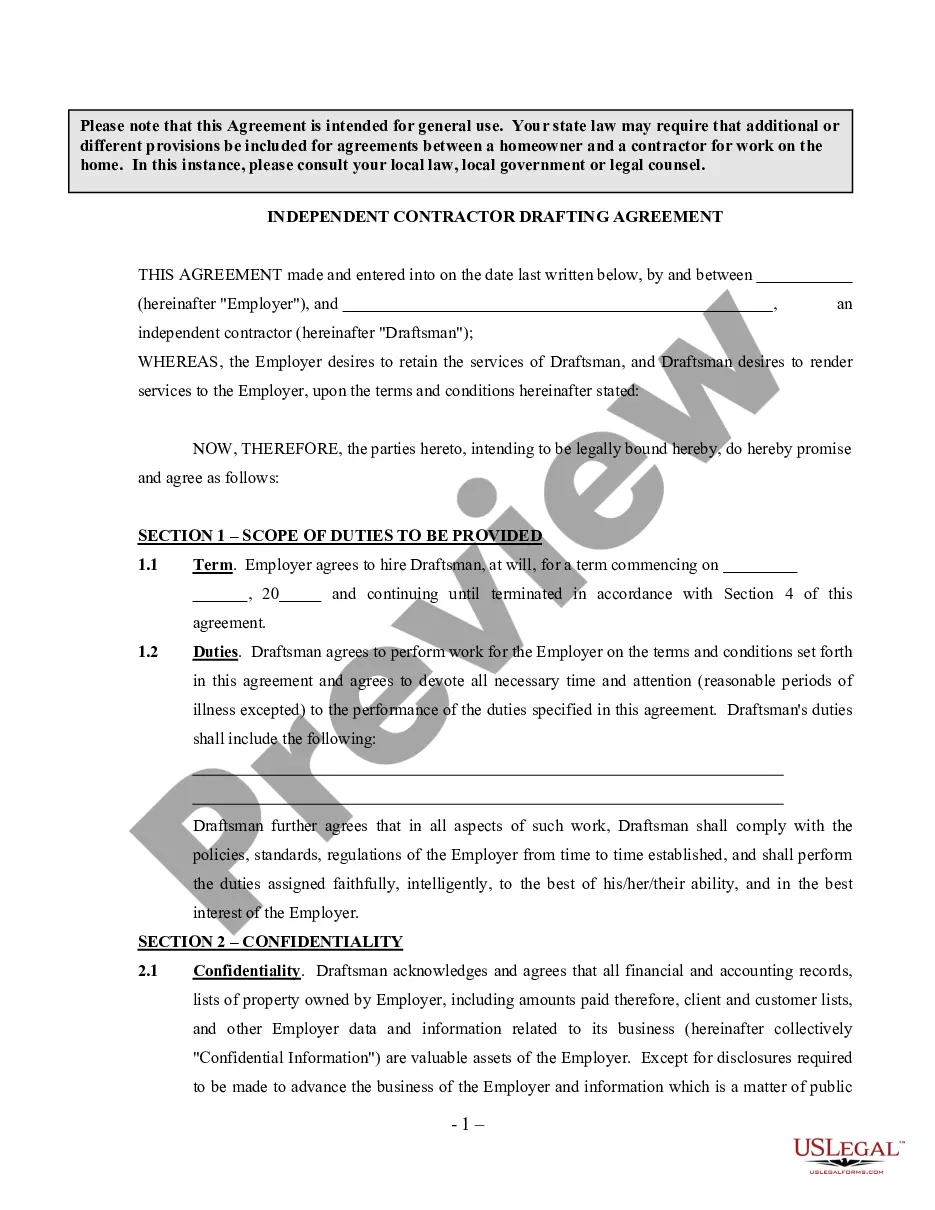
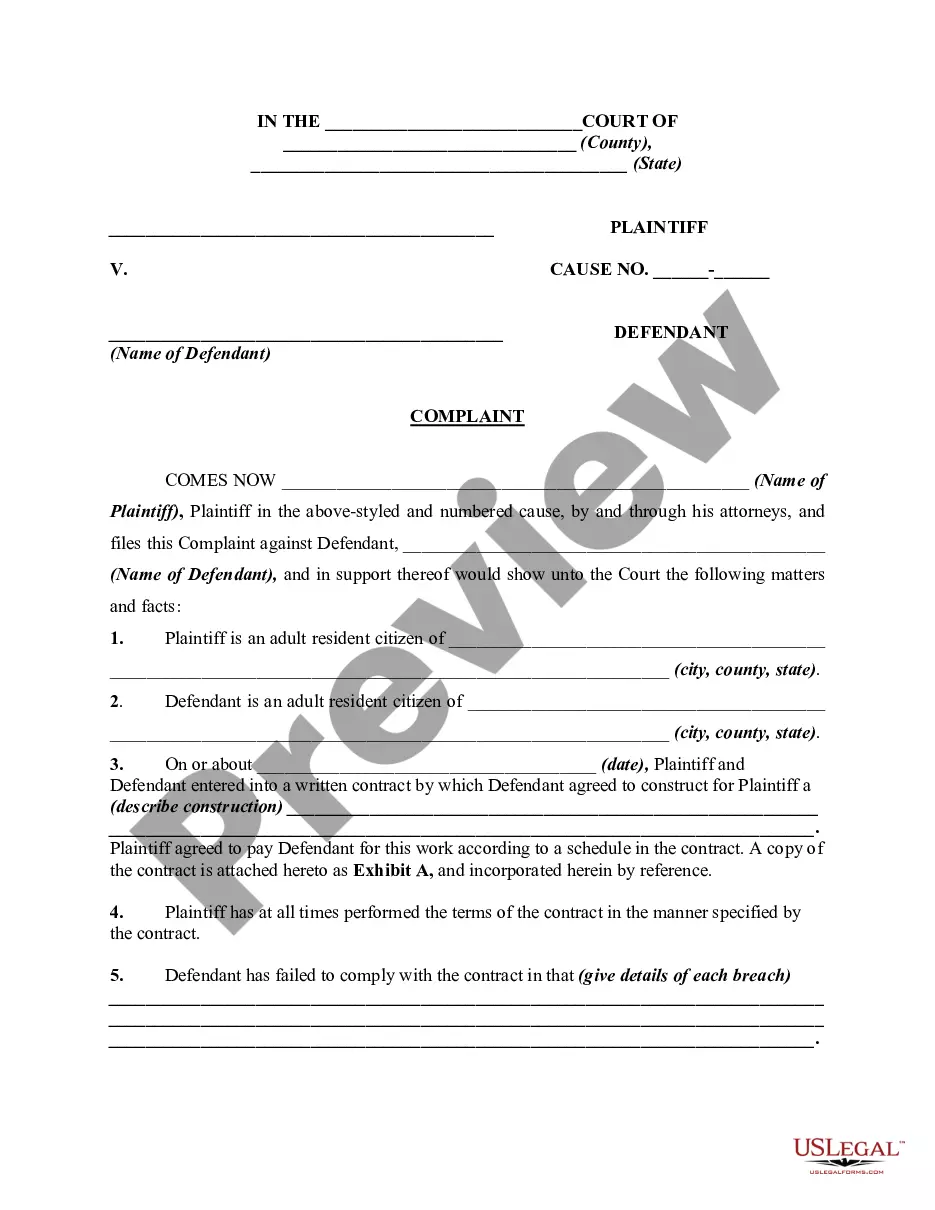
Free preview
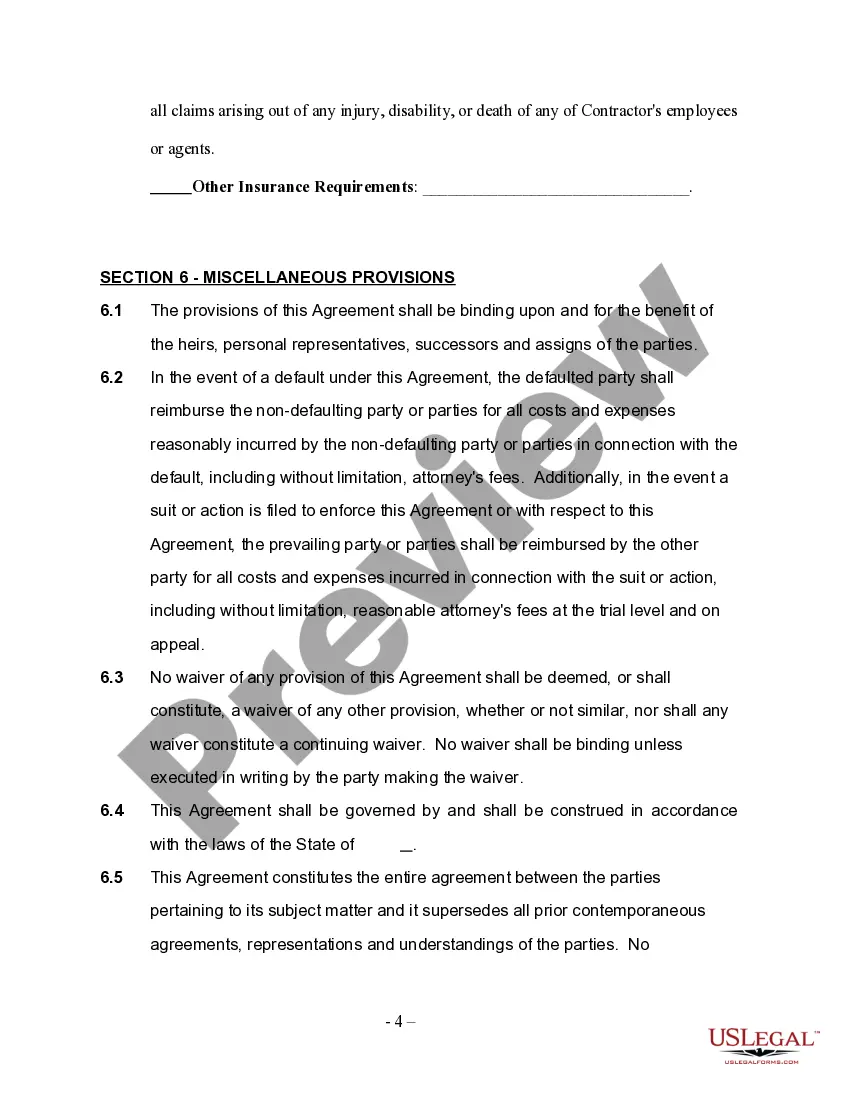
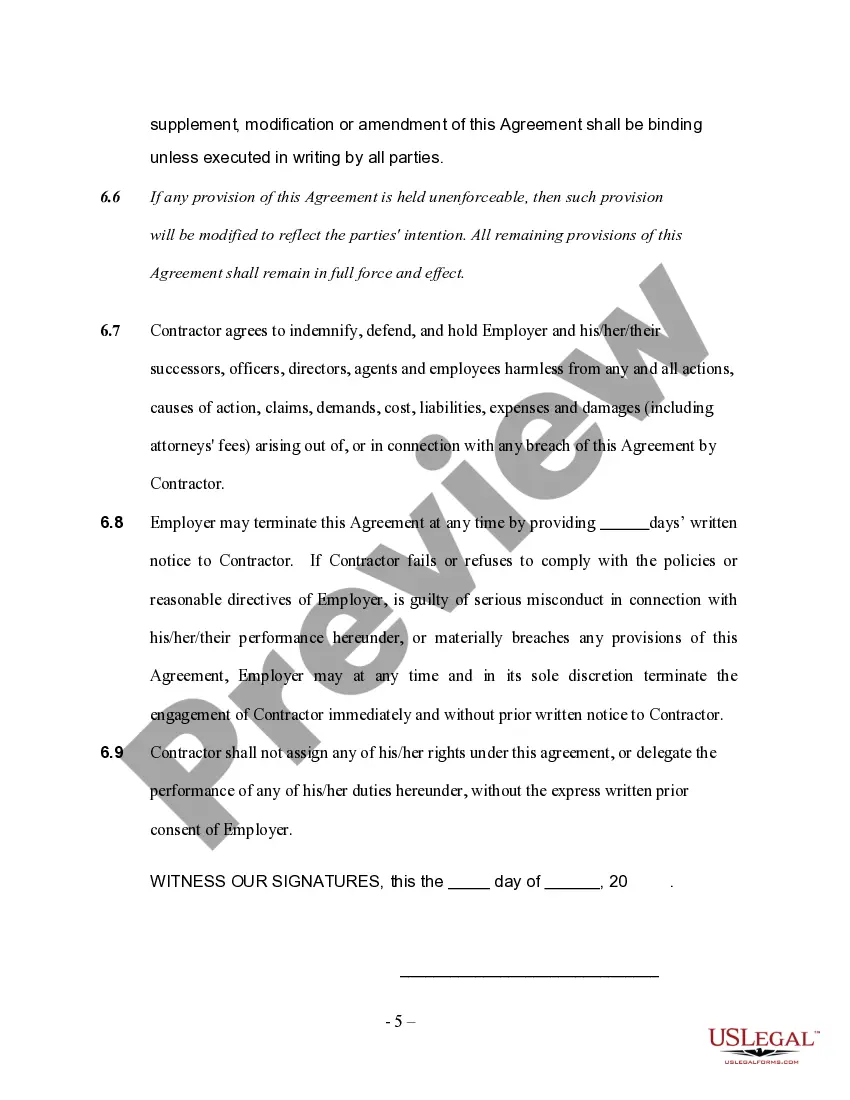

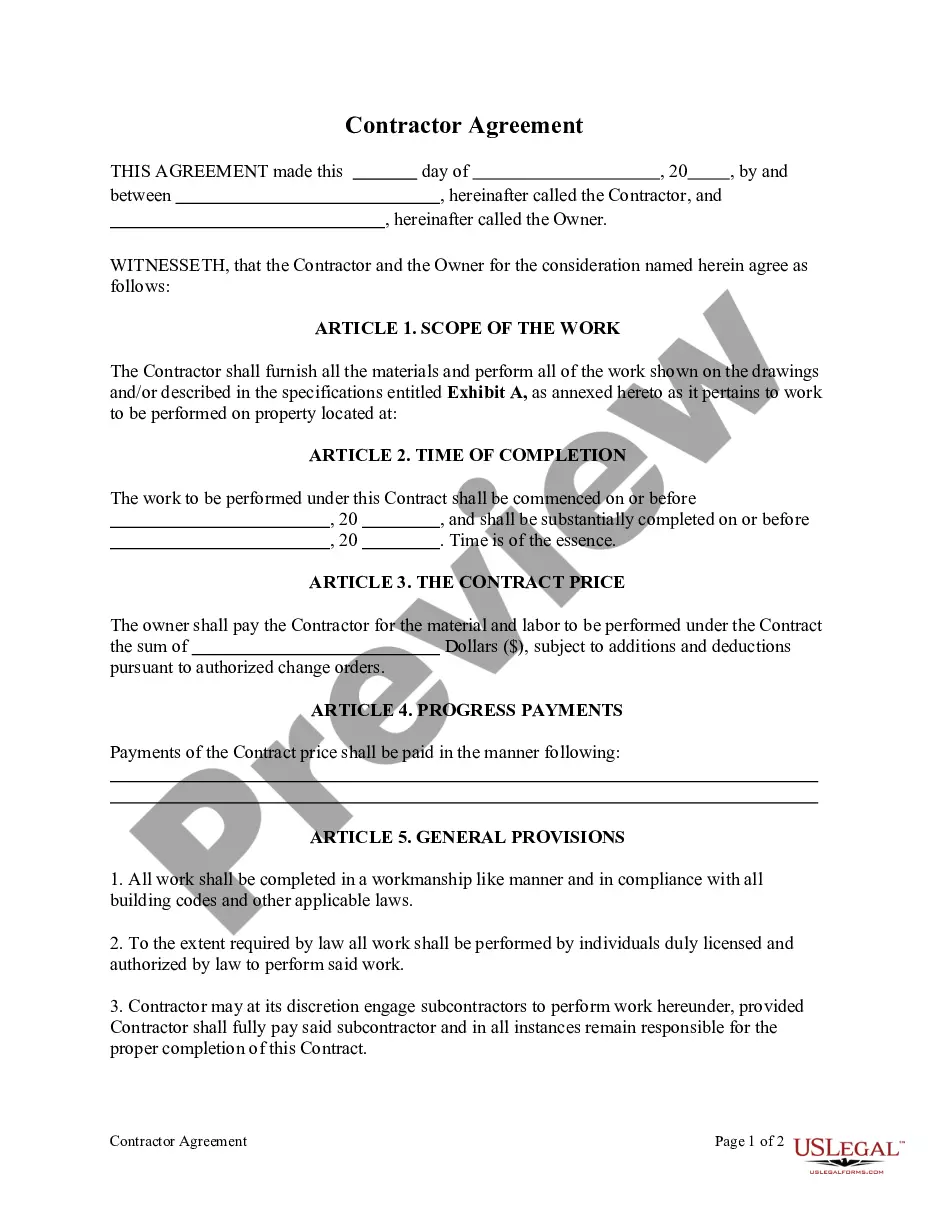
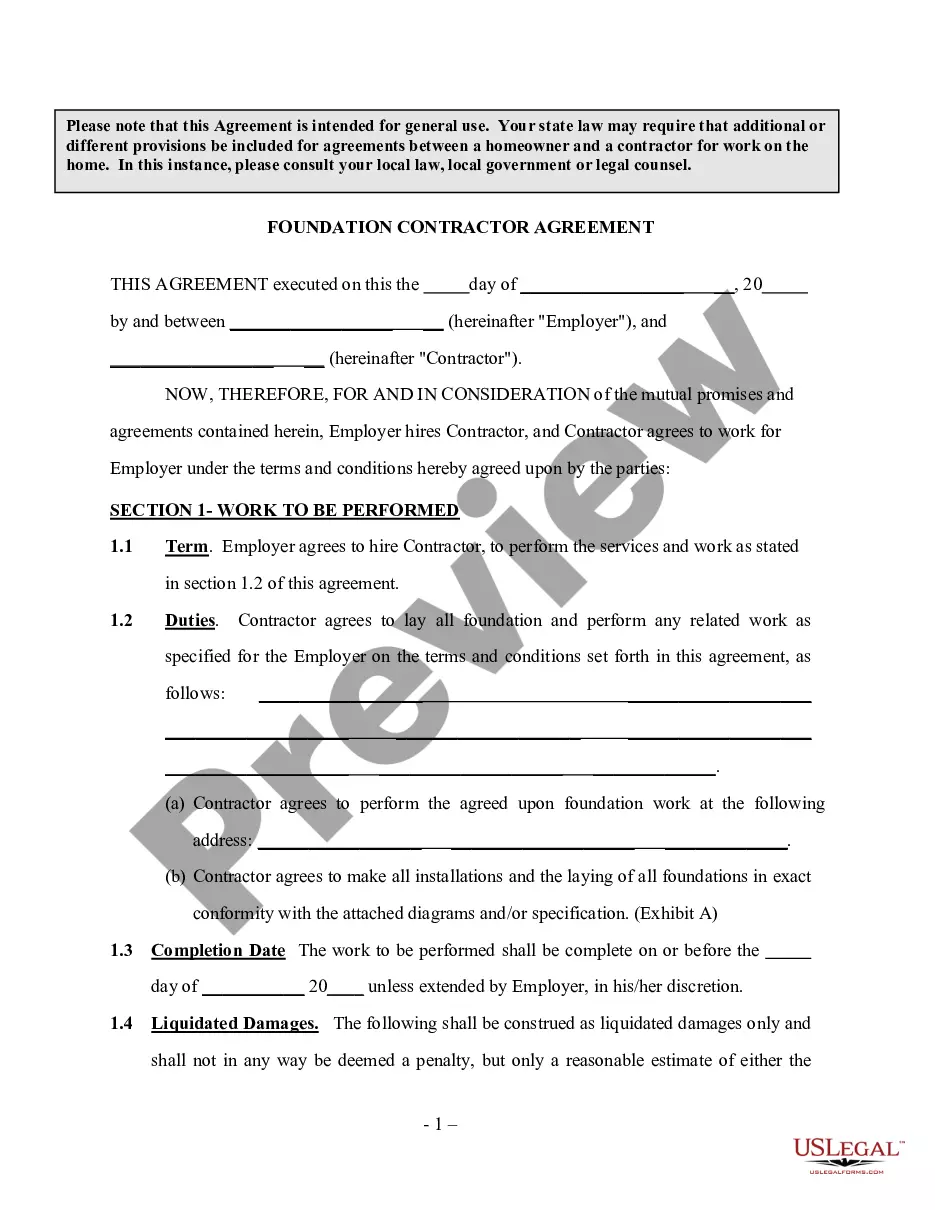
Get your form ready online
Our built-in tools help you complete, sign, share, and store your documents in one place.
Built-in online Word editor
Make edits, fill in missing information, and update formatting in US Legal Forms—just like you would in MS Word.
Export easily
Download a copy, print it, send it by email, or mail it via USPS—whatever works best for your next step.
E-sign your document
Sign and collect signatures with our SignNow integration. Send to multiple recipients, set reminders, and more. Go Premium to unlock E-Sign.
Notarize online 24/7
If this form requires notarization, complete it online through a secure video call—no need to meet a notary in person or wait for an appointment.
Store your document securely
We protect your documents and personal data by following strict security and privacy standards.

Make edits, fill in missing information, and update formatting in US Legal Forms—just like you would in MS Word.

Download a copy, print it, send it by email, or mail it via USPS—whatever works best for your next step.

Sign and collect signatures with our SignNow integration. Send to multiple recipients, set reminders, and more. Go Premium to unlock E-Sign.

If this form requires notarization, complete it online through a secure video call—no need to meet a notary in person or wait for an appointment.

We protect your documents and personal data by following strict security and privacy standards.
Looking for another form?

How to fill out Industrial Contractor Agreement - Self-Employed?
You can spend time online trying to locate the legal document format that complies with the state and federal standards you require. US Legal Forms provides a vast selection of legal forms that have been vetted by professionals.
If you already possess a US Legal Forms account, you can Log In and click the Download button. After that, you can fill out, modify, print, or sign the Illinois Industrial Contractor Agreement - Self-Employed. Each legal document format you acquire is yours indefinitely. To obtain another copy of any purchased form, navigate to the My documents section and click the appropriate button.
If you are accessing the US Legal Forms site for the first time, follow the straightforward instructions below: First, ensure you have chosen the correct document format for the area/city of your choice. Review the form description to confirm you have selected the right form. If available, use the Preview button to examine the document format as well.
Avoid altering or removing any HTML tags. Only synonymize plain text outside of the HTML tags.
- To find another version of the form, utilize the Search field to locate the format that meets your needs and requirements.
- Once you have located the format you want, click on Purchase now to continue.
- Select the payment plan you prefer, enter your details, and register for your account on US Legal Forms.
- Complete the transaction. You can use your Visa or Mastercard or PayPal account to pay for the legal form.
- Select the format of the document and download it to your device.
- Make edits to your document if necessary. You can fill out, modify, sign, and print the Illinois Industrial Contractor Agreement - Self-Employed.
- Access and print a wide array of document templates using the US Legal Forms website, which offers the largest assortment of legal forms. Utilize professional and state-specific templates to address your business or personal needs.
Form popularity
FAQ
To write an effective independent contractor agreement, start by clearly outlining the scope of work, deadlines, and payment terms. Incorporate clauses that address confidentiality, ownership of work, and termination conditions. Customizing an Illinois Industrial Contractor Agreement - Self-Employed can make this process easier. This tool simplifies the creation of a comprehensive agreement that covers all necessary aspects.
Yes, having a contract is essential even if you are self-employed. An Illinois Industrial Contractor Agreement - Self-Employed can provide clarity about the terms of your work and protect your rights. It ensures that all parties understand their responsibilities and payment terms. By having a written agreement, you reduce the risk of possible disputes in the future.
Yes, an independent contractor is generally considered self-employed. They work for themselves and have the freedom to choose their clients and projects. Utilizing an Illinois Industrial Contractor Agreement - Self-Employed can clarify this relationship and ensure that both parties understand their roles. This helps reinforce your status as a self-employed individual in the eyes of the law.
Self-employed individuals own their businesses and have more control over their work. In contrast, contracted workers often have a specific arrangement with a company that details their responsibilities for a set period. An Illinois Industrial Contractor Agreement - Self-Employed provides clarity in these relationships. Understanding these differences can help you choose the right work structure for your career.
While you can freelance without a contract, it is not advisable. A clear agreement, like an Illinois Industrial Contractor Agreement - Self-Employed, helps outline the scope of work, payment terms, and responsibilities. Without a contract, disputes may arise regarding the expectations of both parties. This can lead to complications that are easily avoidable with a written agreement.
To qualify as self-employed, an individual must earn income through their business activities, rather than as an employee of another company. This includes freelancers, sole proprietors, and independent contractors. You should also have the freedom to control your work schedule and approach. A solid understanding of the Illinois Industrial Contractor Agreement - Self-Employed can guide you in establishing your self-employed status effectively.
Yes, an independent contractor is considered self-employed. This classification means they work for themselves rather than being an employee of a company. Being self-employed allows for greater flexibility in choosing clients and setting work hours. The Illinois Industrial Contractor Agreement - Self-Employed outlines the terms that help define the relationship between an independent contractor and their clients.
Choosing between the terms 'self-employed' and 'independent contractor' often depends on the context. Generally, 'self-employed' is a broader term that encompasses various forms of independent work, including freelancers. On the other hand, an 'independent contractor’ usually involves a contract for specific services. Both terms can pertain to the Illinois Industrial Contractor Agreement - Self-Employed, but clarity in your description enhances understanding.
Yes, independent contractors file taxes as self-employed individuals. They report their income on IRS Form 1040, Schedule C, which outlines business income and expenses. This process allows them to deduct necessary business costs, thereby maximizing their potential tax savings. Understanding the implications of the Illinois Industrial Contractor Agreement - Self-Employed can provide clarity on your responsibilities.
You qualify as an independent contractor when you operate your business without significant control from clients regarding the means and methods of work. The structure of your Illinois Industrial Contractor Agreement - Self-Employed should reflect this independence, emphasizing your contractual obligations. Factors such as providing your tools and managing your schedule also contribute to this classification.