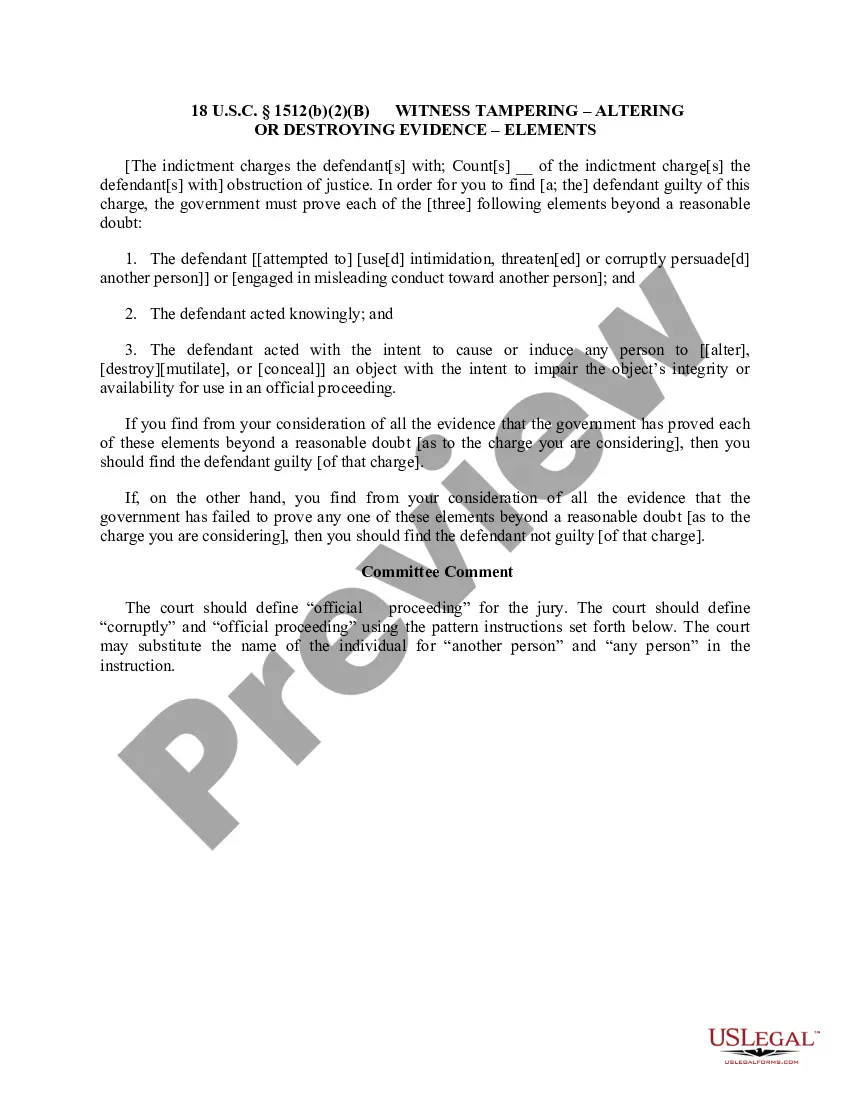
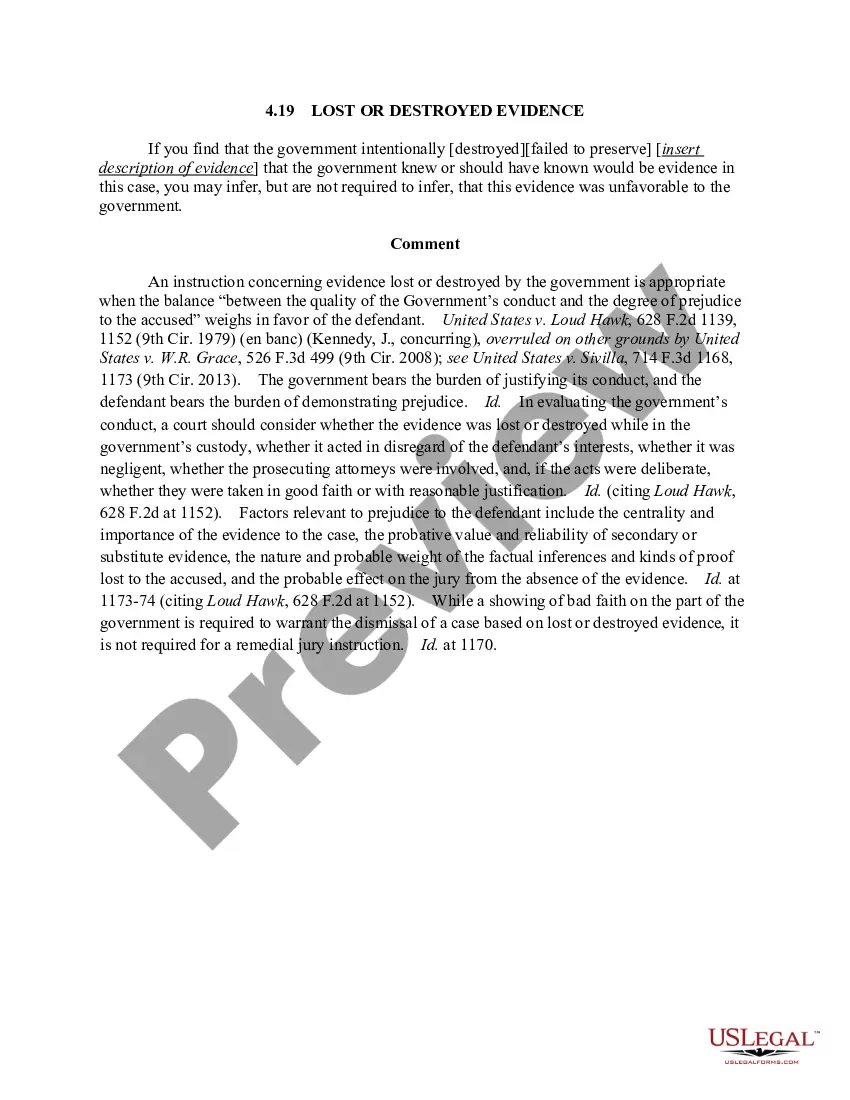
1.20 Spoliation/Destruction of Evidence is the intentional or negligent destruction, alteration, or concealment of evidence which could be useful in an administrative, civil, or criminal proceeding. It is a form of obstruction of justice and is considered a violation of the law. Types of 1.20 Spoliation/Destruction of Evidence include: • Intentional Destruction of Evidence: The deliberate destruction of documents, recordings, and/or other evidence in an effort to prevent its use in a legal proceeding. • Negligent Destruction of Evidence: The inadvertent destruction of documents, recordings, and/or other evidence due to carelessness or negligence. • Concealment of Evidence: The intentional or negligent hiding or hiding of documents, recordings, and/or other evidence in an effort to prevent its use in a legal proceeding. • Alteration of Evidence: The intentional or negligent alteration of documents, recordings, and/or other evidence in an effort to prevent its use in a legal proceeding.
1.20 Spoliation/Destruction of Evidence
Description
How to fill out 1.20 Spoliation/Destruction Of Evidence?
If you’re looking for a way to properly complete the 1.20 Spoliation/Destruction of Evidence without hiring a legal representative, then you’re just in the right spot. US Legal Forms has proven itself as the most extensive and reliable library of official templates for every private and business scenario. Every piece of paperwork you find on our online service is drafted in accordance with nationwide and state laws, so you can be certain that your documents are in order.
Follow these straightforward instructions on how to acquire the ready-to-use 1.20 Spoliation/Destruction of Evidence:
- Ensure the document you see on the page complies with your legal situation and state laws by checking its text description or looking through the Preview mode.
- Type in the form title in the Search tab on the top of the page and choose your state from the dropdown to locate an alternative template in case of any inconsistencies.
- Repeat with the content check and click Buy now when you are confident with the paperwork compliance with all the demands.
- Log in to your account and click Download. Sign up for the service and choose the subscription plan if you still don’t have one.
- Use your credit card or the PayPal option to purchase your US Legal Forms subscription. The document will be available to download right after.
- Decide in what format you want to save your 1.20 Spoliation/Destruction of Evidence and download it by clicking the appropriate button.
- Add your template to an online editor to complete and sign it rapidly or print it out to prepare your paper copy manually.
Another great thing about US Legal Forms is that you never lose the paperwork you acquired - you can pick any of your downloaded blanks in the My Forms tab of your profile any time you need it.
Form popularity
FAQ
Spoliation inference: which means that the court will allow the jury to consider the missing evidence in an unfavorable light to the other side. For example: In DePuy v. Eckes, a 1983 Florida case, the plaintiff gave the defendant a defective hip socket, and the defendant returned it without the broken part.
California Penal Code Section 135 PC is the statute that defines the offense of destroying or concealing evidence. It's described as willfully destroying or concealing anything that is going to be produced for a criminal investigation, inquiry, or even a trial.
A. A party or potential litigant has a duty to preserve evidence that may be relevant to reasonably foreseeable litigation.
Any intentional, reckless, and/or negligent hiding of evidence by either party to the proceeding is considered to be illegal. These actions are referred to as spoliation of evidence, or tampering with evidence.
The most common penalty for spoliation of evidence is an adverse inference charge. This basically means that a finder of fact, like a jury, is entitled to take a negative inference against a party because that party destroyed evidence.
If a party intentionally destroys relevant evidence, a presumption arises that the evidence would have been adverse to that party's case.
Today, the term spoliation of evidence is often used during the process of civil litigation. It arises when one side suspects or uncovers that the other party has deliberately, negligently or accidentally destroyed evidence relevant to the case. Spoliated evidence can include: physical objects.
To establish a claim for spoliation by a non-party, the plaintiff must prove six elements: (1) existence of a potential civil action, (2) a legal or contractual duty to preserve evidence which is relevant to the potential civil action, (3) destruction of that evidence, (4) significant impairment and the ability to