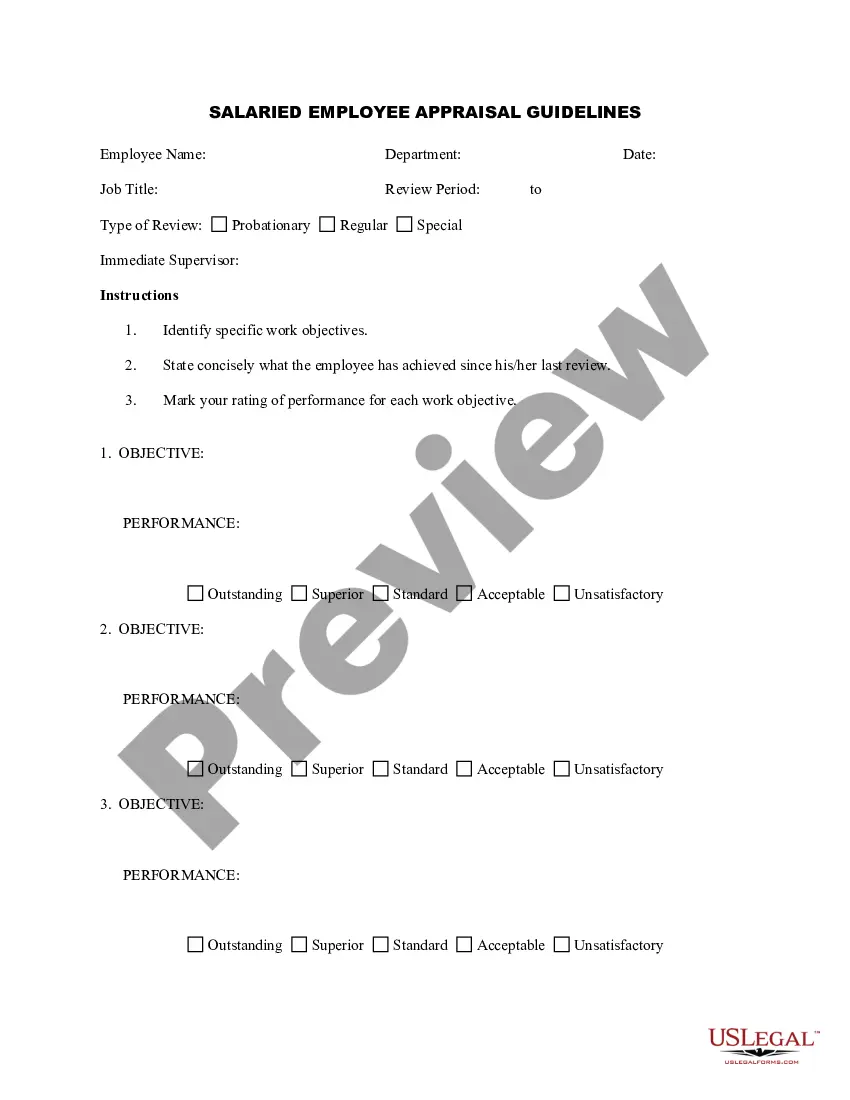
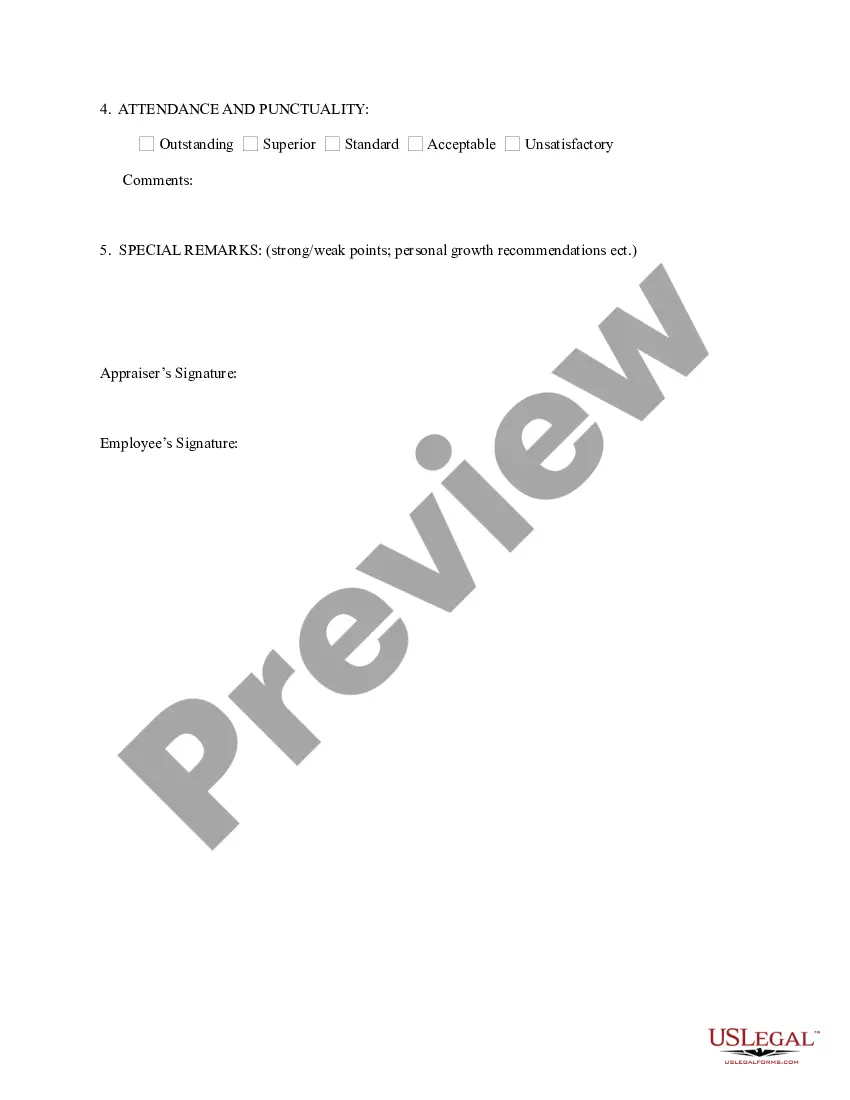
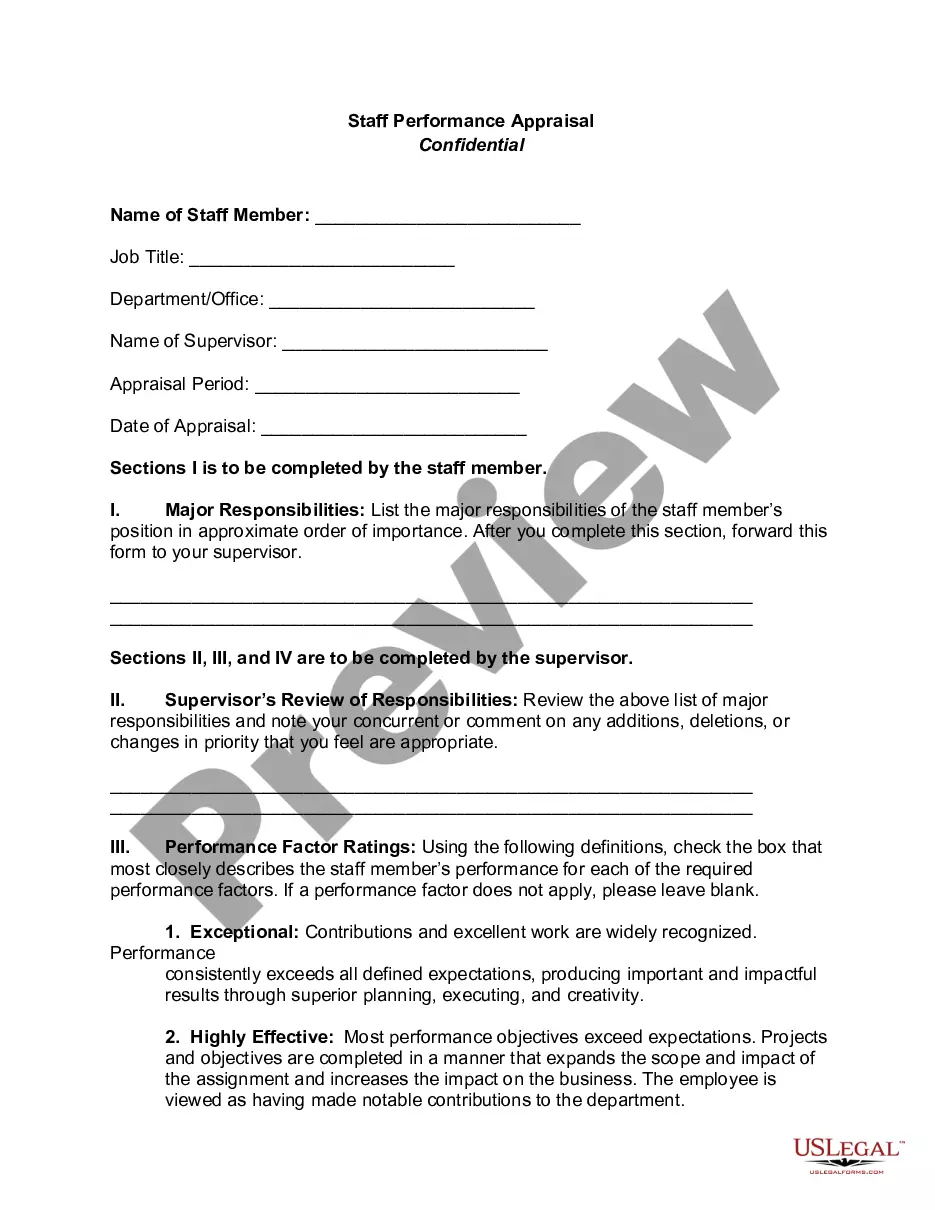
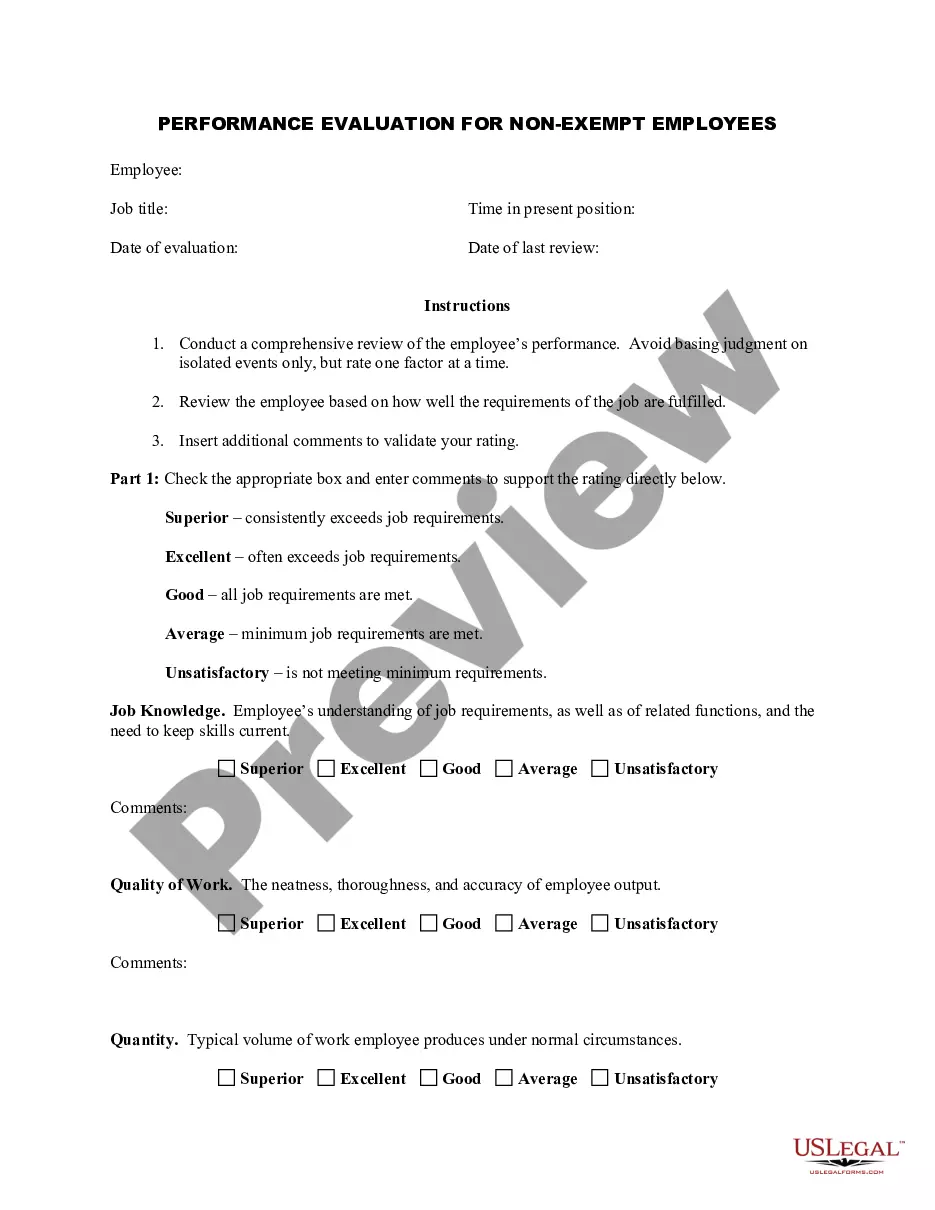
Illinois Salaried Employee Appraisal Guidelines - Employee Specific
Description
Get your form ready online
Our built-in tools help you complete, sign, share, and store your documents in one place.
Make edits, fill in missing information, and update formatting in US Legal Forms—just like you would in MS Word.
Download a copy, print it, send it by email, or mail it via USPS—whatever works best for your next step.
Sign and collect signatures with our SignNow integration. Send to multiple recipients, set reminders, and more. Go Premium to unlock E-Sign.
If this form requires notarization, complete it online through a secure video call—no need to meet a notary in person or wait for an appointment.
We protect your documents and personal data by following strict security and privacy standards.

Make edits, fill in missing information, and update formatting in US Legal Forms—just like you would in MS Word.

Download a copy, print it, send it by email, or mail it via USPS—whatever works best for your next step.

Sign and collect signatures with our SignNow integration. Send to multiple recipients, set reminders, and more. Go Premium to unlock E-Sign.

If this form requires notarization, complete it online through a secure video call—no need to meet a notary in person or wait for an appointment.

We protect your documents and personal data by following strict security and privacy standards.
Looking for another form?

How to fill out Salaried Employee Appraisal Guidelines - Employee Specific?
Are you located in a location where you occasionally require documents for business or particular reasons nearly every day.
There are numerous lawful document templates accessible online, but finding ones you can rely on is challenging.
US Legal Forms offers a vast collection of document templates, such as the Illinois Salaried Employee Appraisal Guidelines - Employee Specific, designed to comply with federal and state regulations.
Once you find the correct document, click Purchase now.
Choose the pricing plan you prefer, enter the required information to create your account, and pay for the order using your PayPal or credit card.
- If you are already familiar with the US Legal Forms website and have an account, simply Log In.
- Then, you can download the Illinois Salaried Employee Appraisal Guidelines - Employee Specific template.
- If you do not have an account and want to start using US Legal Forms, follow these steps.
- Find the document you need and ensure it is for the correct region/state.
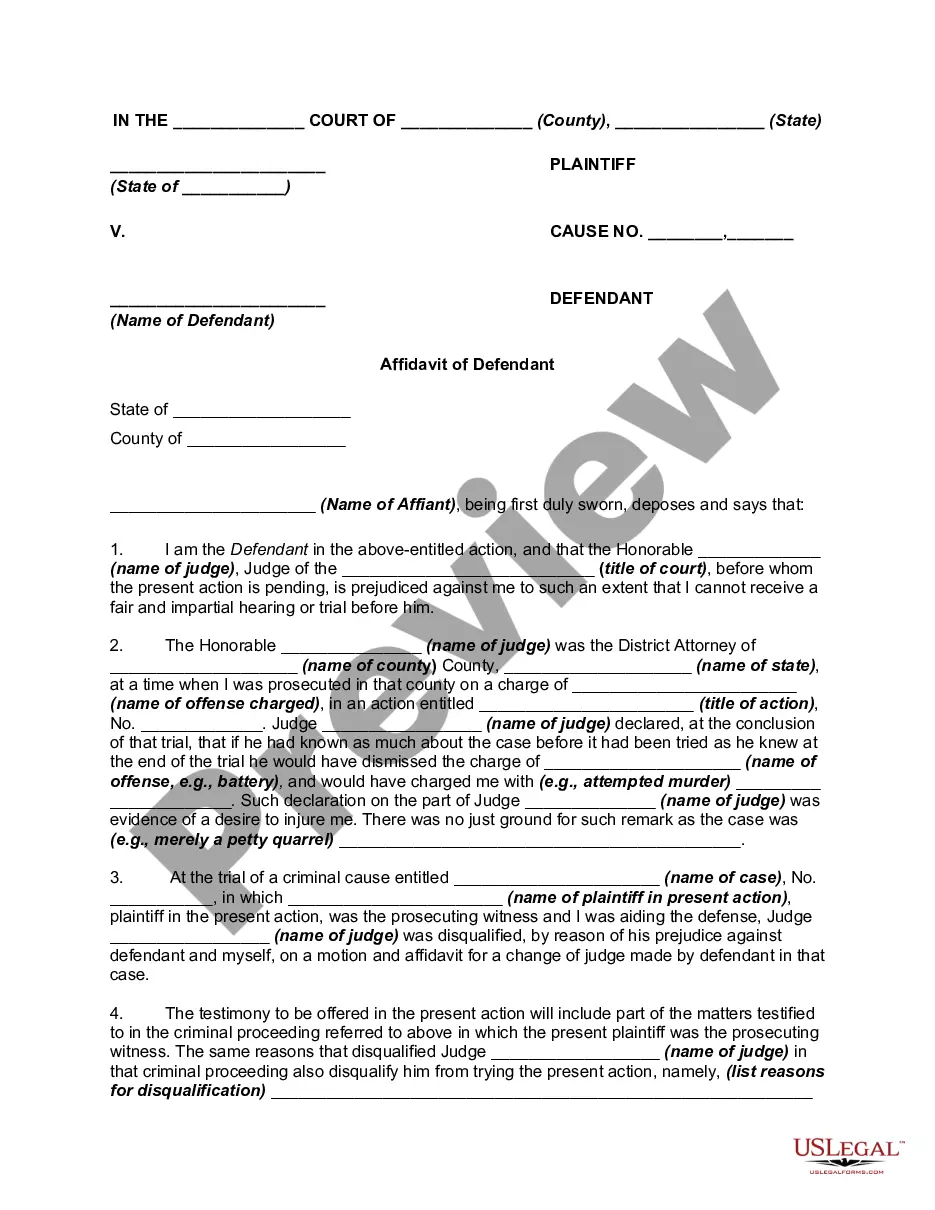
- Utilize the Preview option to review the document.
- Read the description to confirm that you have selected the right document.
- If the document does not meet your needs, use the Search field to find the template that fits your requirements.
Form popularity
FAQ
In Illinois, salaried employees must adhere to specific labor laws that dictate working hours, overtime payment, and breaks. The Illinois Salaried Employee Appraisal Guidelines - Employee Specific provide detailed standards for appraisals and evaluations. These guidelines ensure that employees receive fair assessments based on their performance and contributions. For more detailed information and resources, consider exploring the US Legal Forms platform, which offers comprehensive materials designed to help both employers and employees navigate these regulations.
Yes, local governments in Illinois that meet the size requirements must file the EEO-1. These local entities fall under the same regulations as private sector employers, ensuring compliance with the Illinois Salaried Employee Appraisal Guidelines - Employee Specific. Regular filing helps maintain transparency and accountability in public employment practices.
The Illinois Workplace Transparency Act (WTA) (Public Act 101-0221) is designed to protect employees, consultants, and contractors who truthfully report alleged unlawful discrimination and harassment or criminal conduct in the workplace by prohibiting nonnegotiable confidentiality obligations, waivers, and mandatory
An employer includes: (a) any person employing one or more employees in Illinois; (b) a labor organization (for example, a union); or (c) State government, municipal corporations, or other governmental units or agencies within the state of Illinois.
Employers are free to ask you about your current and past salaries under federal law. However, many states have their own laws about this question.
Salaried employees are likely to qualify for overtime pay. A salaried employee can be required to work overtime unless the work would violate the state's One Day Rest in Seven Act (ODRISA),which provides that employees are due a minimum of 24 hours of rest in each calendar week.
Illinois is an "employment at-will" state, meaning that an employer or employee may terminate the relationship at any time, without any reason or cause.
Effective September 29, 2019, Illinois has amended the Illinois Equal Pay Act of 2003 to prohibit employers from inquiring about an applicant's current or prior salary, wages, benefits, or other compensation and using this salary history to make employment or compensation decisions (Salary History Ban).
Illinois requires employers to pay a minimum of $12.00 per hour for workers 18 years of age and older; workers under 18 may be paid $. 50 per hour less than the adult minimum wage. Overtime must be paid after 40 hour of work per week at time and one-half the regular rate.
State laws differ as to whether the employer must pay the full minimum wage itself or may count an employee's tips toward its minimum wage obligation. Under federal law and in most states, employers may pay tipped employees less than the minimum wage, as long as employees earn enough in tips to make up the difference.