Illinois Decesead Joint Tenancy Affidavit
Overview of this form
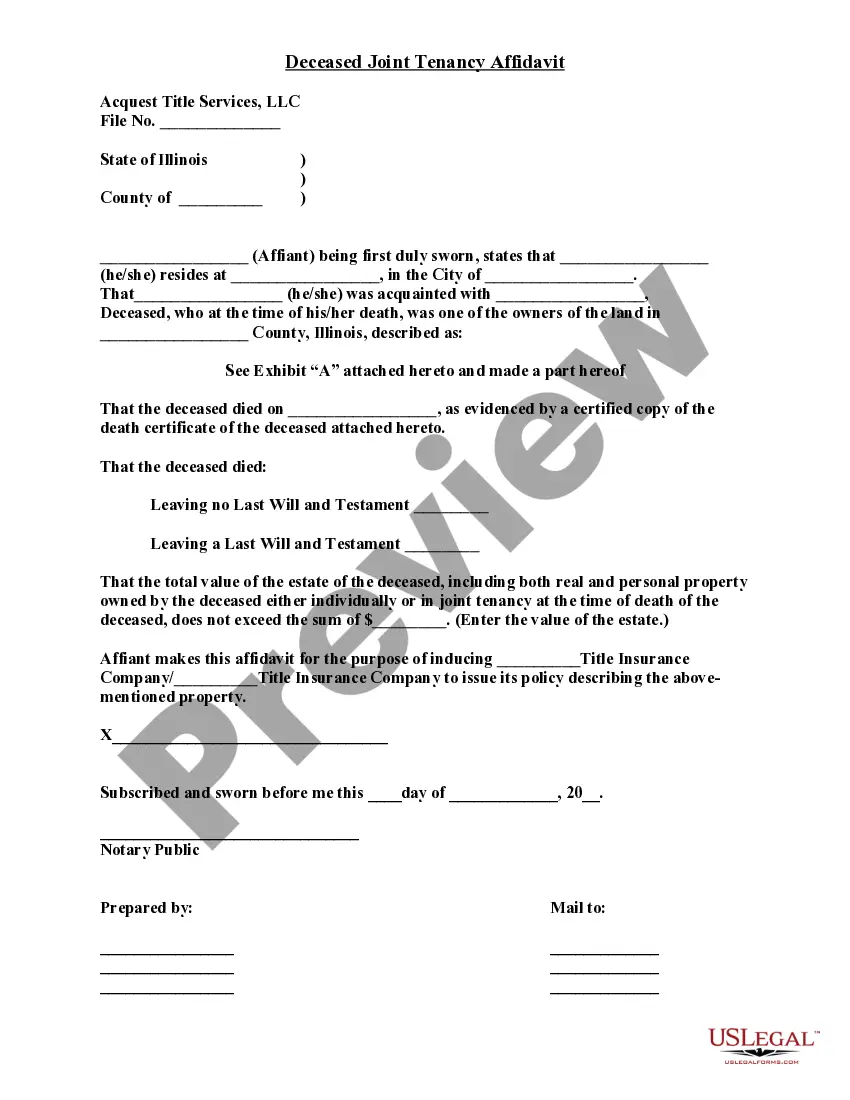
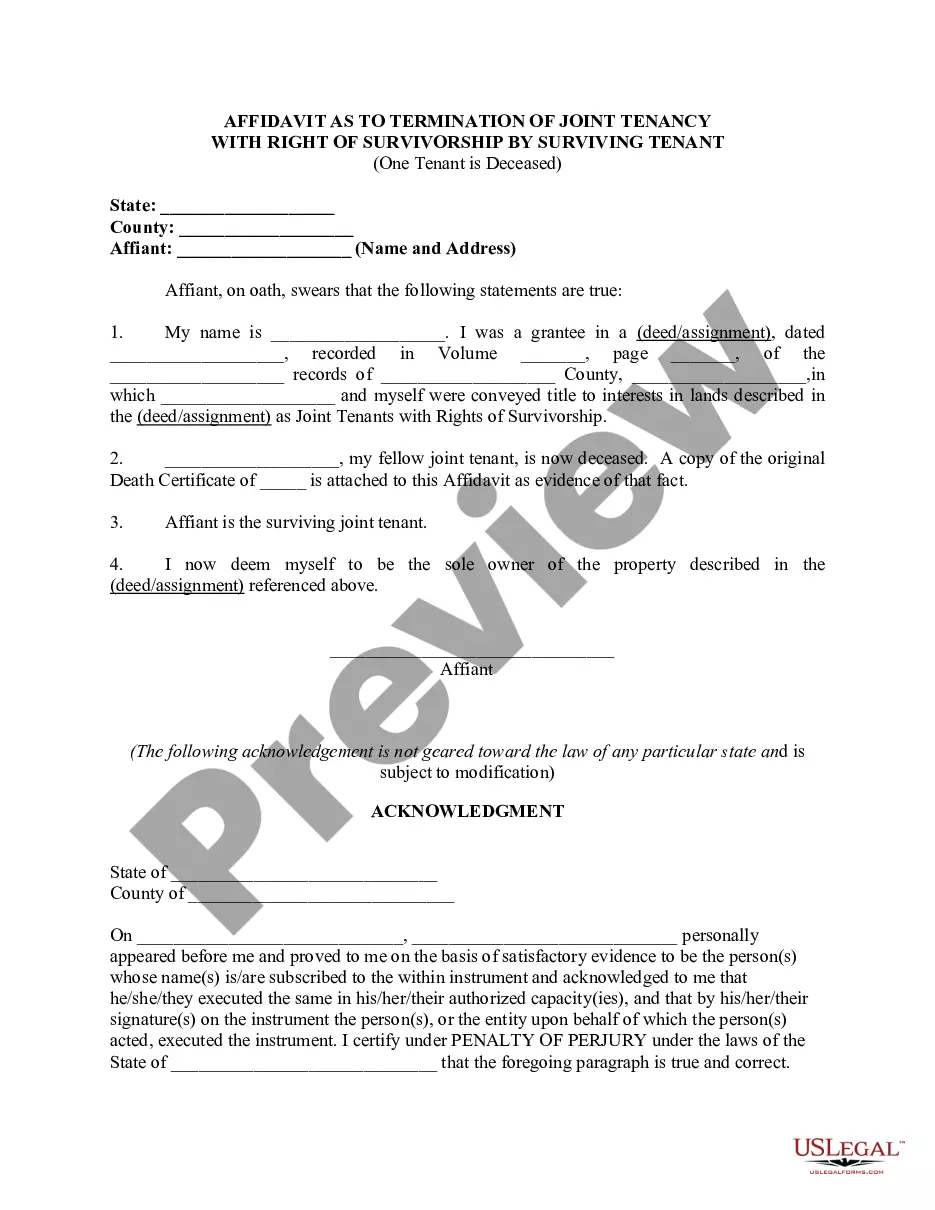
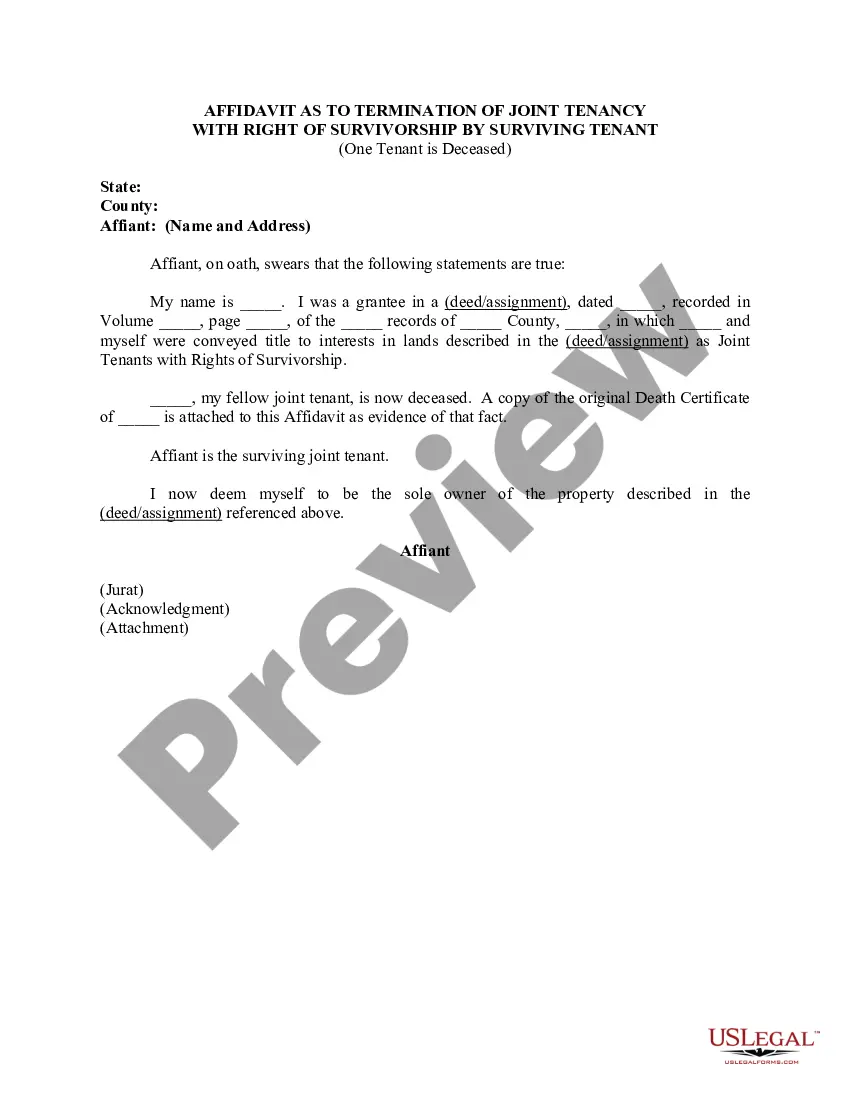
The Deceased Joint Tenancy Affidavit is a legal document used when one of the joint tenants in a property has passed away. This form allows the surviving tenant to officially declare the death of their co-owner and assists in facilitating property title transfers without going through the probate process. This affidavit evidences the deceased's ownership and the survivor's entitlement to the property, distinguishing it from other forms dealing with estate matters.
Key parts of this document
- Affiantâs details: Name, address, and relationship to the deceased.
- Property description: Specific address and details of the property owned jointly.
- Deceased information: Name, date of death, and confirmation of a death certificate.
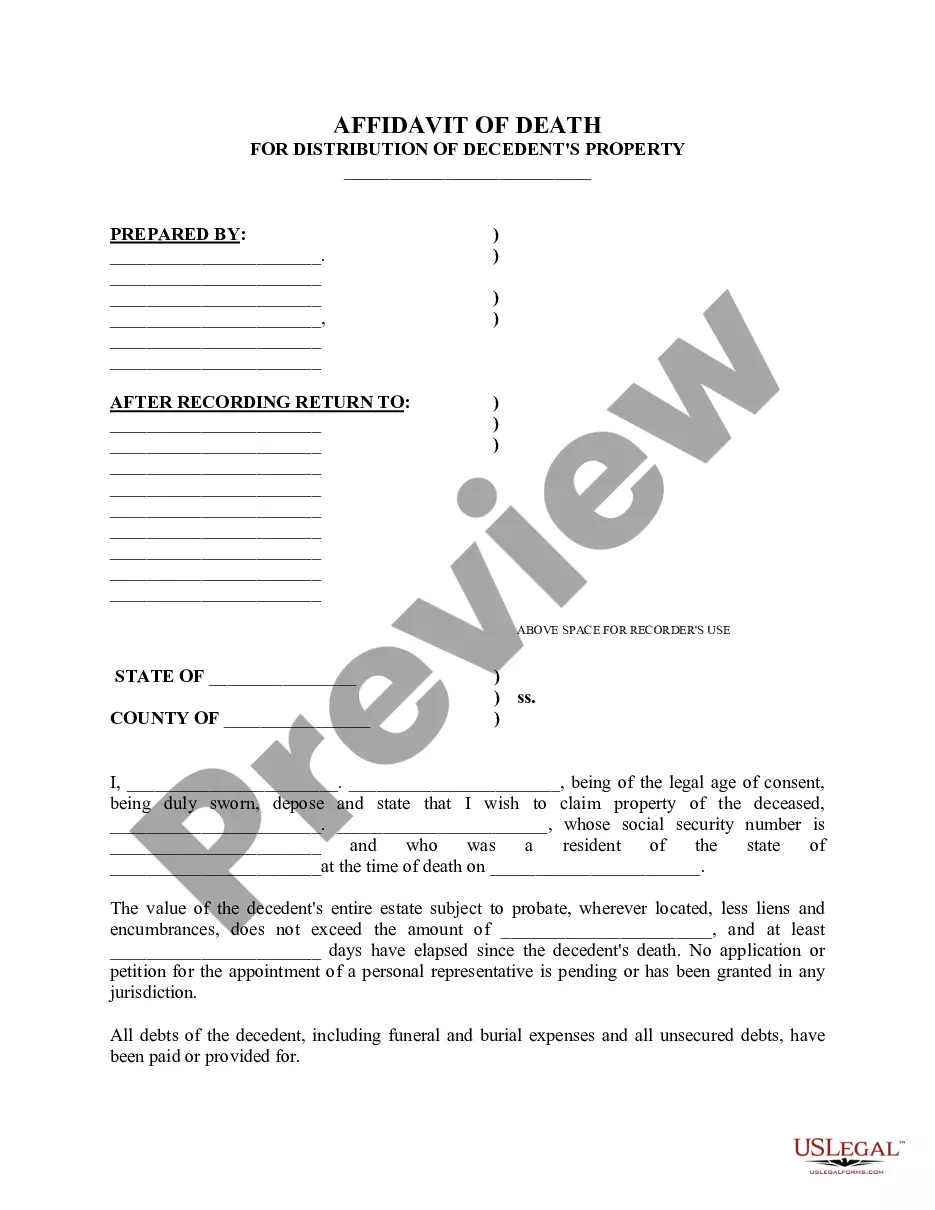
- Will status: Indication of whether the deceased had a Last Will and Testament.
- Estate value: Total value of the deceased's estate at the time of death.
- Title Insurance Company: Details for the title insurance policy issuance.
When to use this form
You should use the Deceased Joint Tenancy Affidavit when you are the surviving joint tenant of a property and need to formalize the transfer of ownership following the death of the other tenant. It is useful in situations where the deceased's estate does not exceed the threshold amount for probate, thereby allowing a smoother and quicker property title transfer.
Intended users of this form
This affidavit is typically used by:
- The surviving joint tenant of a property.
- Individuals managing the estate of the deceased who share joint ownership of property.
- Anyone needing to clear the title for transferring or selling jointly owned property.
Steps to complete this form
- Identify the parties involved, including the affiant and the deceased.
- Specify the complete property address and its legal description.
- Enter the date of death and attach a certified copy of the death certificate.
- Indicate whether the deceased left a will and provide the total estate value.
- Sign the form in the presence of a notary public to ensure it is legally binding.
Notarization guidance
Yes, this form must be notarized to be legally valid. Notarization ensures the authenticity of the signatures and the legality of the affidavit. US Legal Forms offers integrated online notarization through secure video calls, making it easy to complete this step without needing to travel.
Get your form ready online
Our built-in tools help you complete, sign, share, and store your documents in one place.
Make edits, fill in missing information, and update formatting in US Legal Forms—just like you would in MS Word.
Download a copy, print it, send it by email, or mail it via USPS—whatever works best for your next step.
Sign and collect signatures with our SignNow integration. Send to multiple recipients, set reminders, and more. Go Premium to unlock E-Sign.
If this form requires notarization, complete it online through a secure video call—no need to meet a notary in person or wait for an appointment.
We protect your documents and personal data by following strict security and privacy standards.

Make edits, fill in missing information, and update formatting in US Legal Forms—just like you would in MS Word.

Download a copy, print it, send it by email, or mail it via USPS—whatever works best for your next step.

Sign and collect signatures with our SignNow integration. Send to multiple recipients, set reminders, and more. Go Premium to unlock E-Sign.

If this form requires notarization, complete it online through a secure video call—no need to meet a notary in person or wait for an appointment.

We protect your documents and personal data by following strict security and privacy standards.
Common mistakes
- Failing to attach the required death certificate.
- Incorrectly stating the value of the estate, which can affect title issuance.
- Neglecting to have the form notarized, making it invalid for legal purposes.
- Leaving out critical details about the property or deceased tenant.
Benefits of completing this form online
- Immediate access to form templates drafted by licensed attorneys.
- Convenience of downloading and filling out the form at your own pace.
- Editability to ensure accuracy before finalizing the affidavit.
- Reliable access to legal resources and support while completing the document.
What to keep in mind
- The Deceased Joint Tenancy Affidavit facilitates property title transfer after the death of a joint tenant.
- It is essential to include accurate information about the deceased and the property.
- Having the affidavit notarized is required for it to be enforceable.
- Using this form online provides convenience, reliability, and immediate access to necessary resources.
Looking for another form?


Form popularity
FAQ
Each party in a joint tenancy has an equal interest in the property?the financial obligations as well as any benefits. A joint tenancy creates a right of survivorship, which means that if one party dies, their interest is automatically transferred to the surviving tenant(s).
A joint tenancy creates a right of survivorship, which means that if one party dies, their interest is automatically transferred to the surviving tenant(s). Joint tenancy is different from a tenancy in common, where a deceased tenant's share is passed on to their heirs.
In Illinois, a title can be held in three ways: tenancy by the entirety, tenants in common, or joint tenants with the right of survivorship.
Where it is held as joint tenants, on the death of one of the owners, the property becomes owned by the other joint owner. For example, Joe owns a property as a joint tenant with his dad, Stan. When Stan dies, the property automatically passes to Joe as sole owner.
The form must be notarized, so make sure you don't sign it until you can do so in the presence of a notary public. You'll also need to attach a copy of the death certificate and a certified copy of the will if there is one.
Yes, a lien may be placed on property that is jointly owned.
Upon the death of one of the owners, any remaining owners will take the rights of the deceased owner. The remaining owners are assured no new persons will have title to their land. The property will pass to the surviving owners outside of the probate process.
The right of survivorship means that if two parties jointly own a property that has a right of survivorship, when one of them dies, their share of the property goes directly to the other owner ? no matter what the deceased party might have included in their will.