Release for Property Damage Only
What is this form?
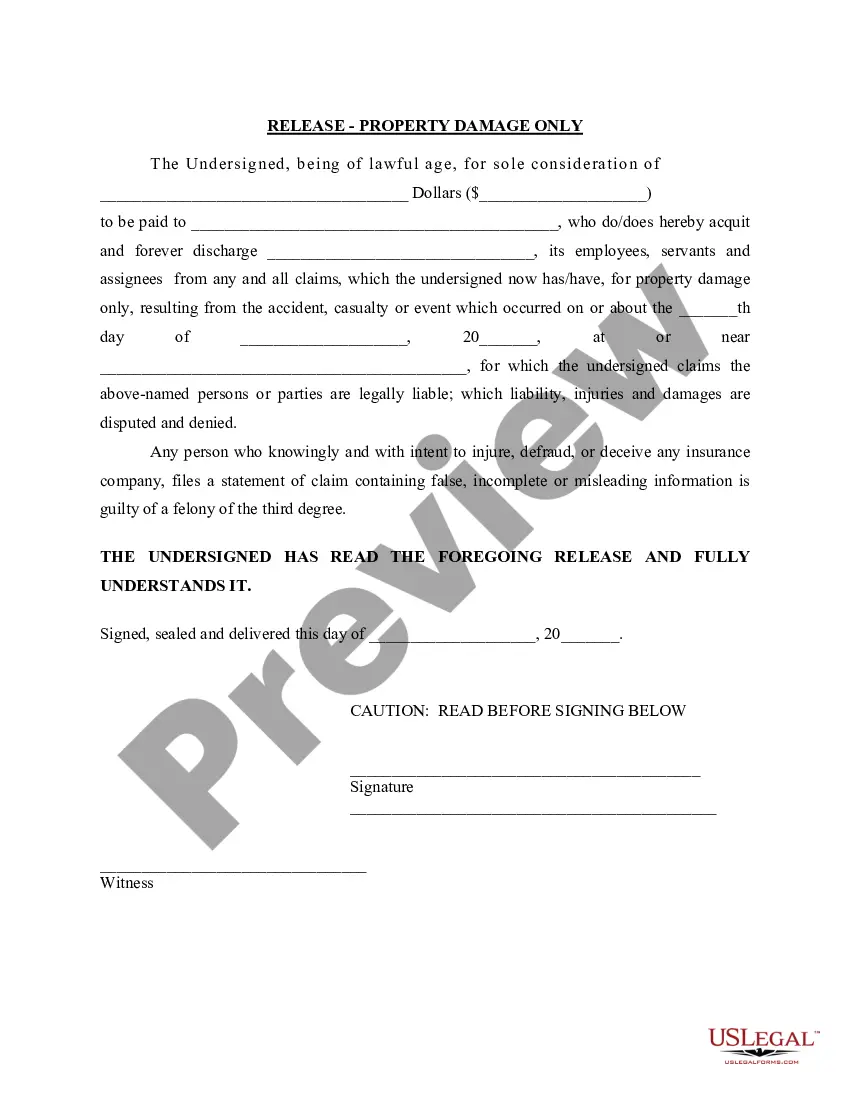
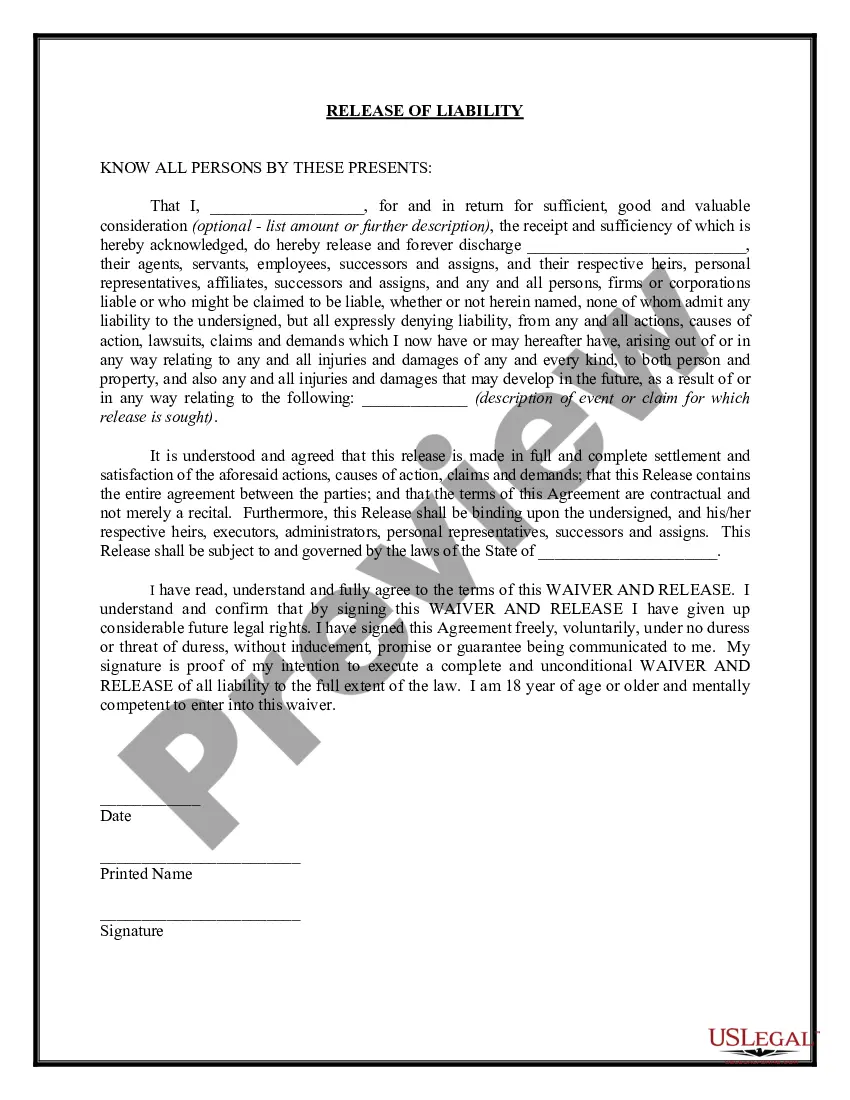
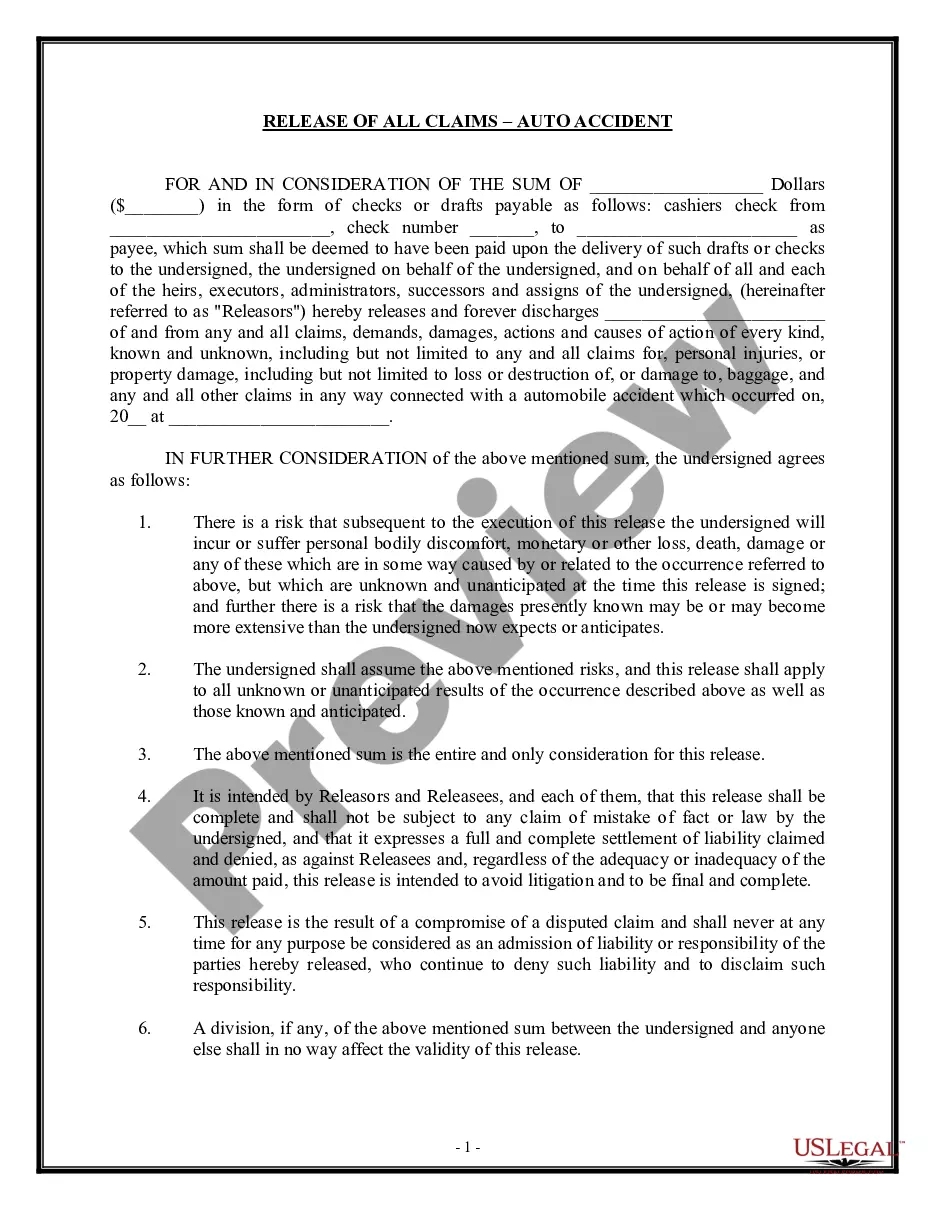
The Release for Property Damage Only is a legal document that allows the releasor (the party who has suffered damage) to release the releasee (the party allegedly responsible) from any claims related to property damage resulting from a specified accident. This form specifically applies to property damage and does not cover personal injury or other types of claims, making it distinct from more comprehensive release forms.
Main sections of this form
- Names and addresses of the releasor and releasee.
- The amount of consideration paid for the release.
- The date and location of the accident or damage.
- A statement that the release applies only to property damage claims.
- A warning against providing false information in the release.
- Signatures of the releasor, witnesses, and the date of signing.
When to use this document
This form is useful in situations where property damage has occurred due to an accident, and the parties involved agree to settle the matter without pursuing further legal action. It provides a clear record of the release of liability regarding property damage, ensuring that the affected party receives compensation while waiving the right to file additional claims related to the same incident.
Who can use this document
Consider using this form if you are:
- A property owner looking to settle an issue of property damage.
- A tenant or individual involved in an accident resulting in property damage.
- A business that has incurred property damage and wishes to settle claims amicably.
Steps to complete this form
- Identify the releasor and releasee by entering their full names and addresses.
- Specify the amount of money offered for the release of claims.
- Include the date and location of the incident that caused the property damage.
- Clearly state that the release applies solely to property damage claims.
- Ensure that the releasor and a witness sign the form, noting the date of signing.
Notarization guidance
This form does not typically require notarization unless specified by local law. However, having the release witnessed is essential to ensure its effectiveness and legal standing in a dispute, providing an additional layer of protection for both parties involved.
Get your form ready online
Our built-in tools help you complete, sign, share, and store your documents in one place.
Make edits, fill in missing information, and update formatting in US Legal Forms—just like you would in MS Word.
Download a copy, print it, send it by email, or mail it via USPS—whatever works best for your next step.
Sign and collect signatures with our SignNow integration. Send to multiple recipients, set reminders, and more. Go Premium to unlock E-Sign.
If this form requires notarization, complete it online through a secure video call—no need to meet a notary in person or wait for an appointment.
We protect your documents and personal data by following strict security and privacy standards.

Make edits, fill in missing information, and update formatting in US Legal Forms—just like you would in MS Word.

Download a copy, print it, send it by email, or mail it via USPS—whatever works best for your next step.

Sign and collect signatures with our SignNow integration. Send to multiple recipients, set reminders, and more. Go Premium to unlock E-Sign.

If this form requires notarization, complete it online through a secure video call—no need to meet a notary in person or wait for an appointment.

We protect your documents and personal data by following strict security and privacy standards.
Common mistakes to avoid
- Failing to include all required names and addresses.
- Not specifying the location and date of the accident correctly.
- Leaving out signatures or not having a witness present.
- Rushing through the details, leading to inaccuracies.
Why complete this form online
- Convenience of downloading and completing the form at your own pace.
- Editability allows for accurate entry of specific details.
- Access to forms drafted by licensed attorneys for added assurance of validity.
What to keep in mind
- The Release for Property Damage Only is designed specifically for settling property damage claims.
- Ensure all required information is provided to avoid disputes later on.
- Consider having the form reviewed by a legal professional if uncertain about its implications.
Looking for another form?
Form popularity
FAQ
If you are cited for a first offense for driving without insurance in California, you will be ordered to pay a minimum fine of $100. With additional fees and penalty assessments, a base fine of $100 will result in total fines of about $450.
If the insurer refuses a reasonable settlement offer within policy limits, it is playing a risky game. If, ultimately, ?the judgment exceeds the policy limits,? the insurance company is liable ?for the entire judgment,? including the amount in excess of policy limits.
In California, the at-fault driver is legally required to pay for the damages that they cause in a car accident. After an accident, an injured victim can file a claim against you, seeking compensation for medical bills, lost wages, property damage, and pain and suffering.
5 Tips to Get the Most Money for Your House Fire Claim Find Your Insurance Policies and Report Your Loss. Make sure you have a current copy of your homeowners insurance policy.Ask for an Advance.Take Inventory of Your Lost/Damaged Items.Get Help From Friends and Family.
If your claim exceeds policy limits, you may seek to ultimately sue the driver at fault for additional damages not covered by the policy limits. Whether you should take this approach rather than settling for the policy limits will depend on whether the at-fault driver has assets from which you could collect a judgment.
If you're uninsured and at fault, you are responsible for covering the costs of your damages and injuries. You are also responsible for the other driver's property damage and medical bills. Even if the other driver is uninsured, under the law, they can still file a lawsuit against you.
You can be sued for the damages you caused that went beyond the coverage limits and can be forced to pay by the court, which could mean having future earnings garnished and personal property auctioned off to pay for the damage.
What Is an Insurance Release? A release is a legally binding document. This agreement is used as part of settlement negotiations related to personal injury cases, among other things. Often, it is executed at the end of the settlement agreement after each party fulfills their end of the bargain.