Illinois Warranty Deed from an Individual Grantor to Five Individual Grantees
Understanding this form
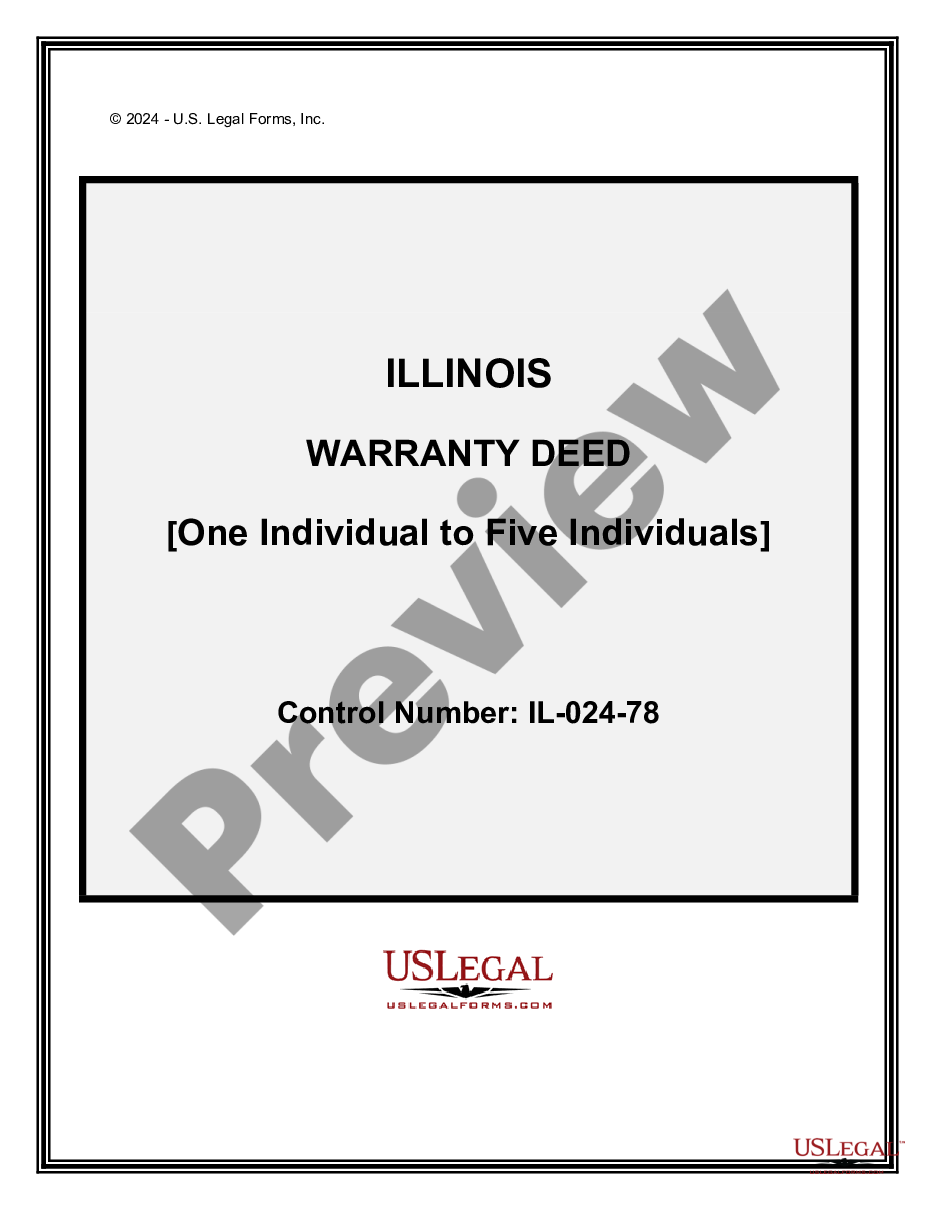
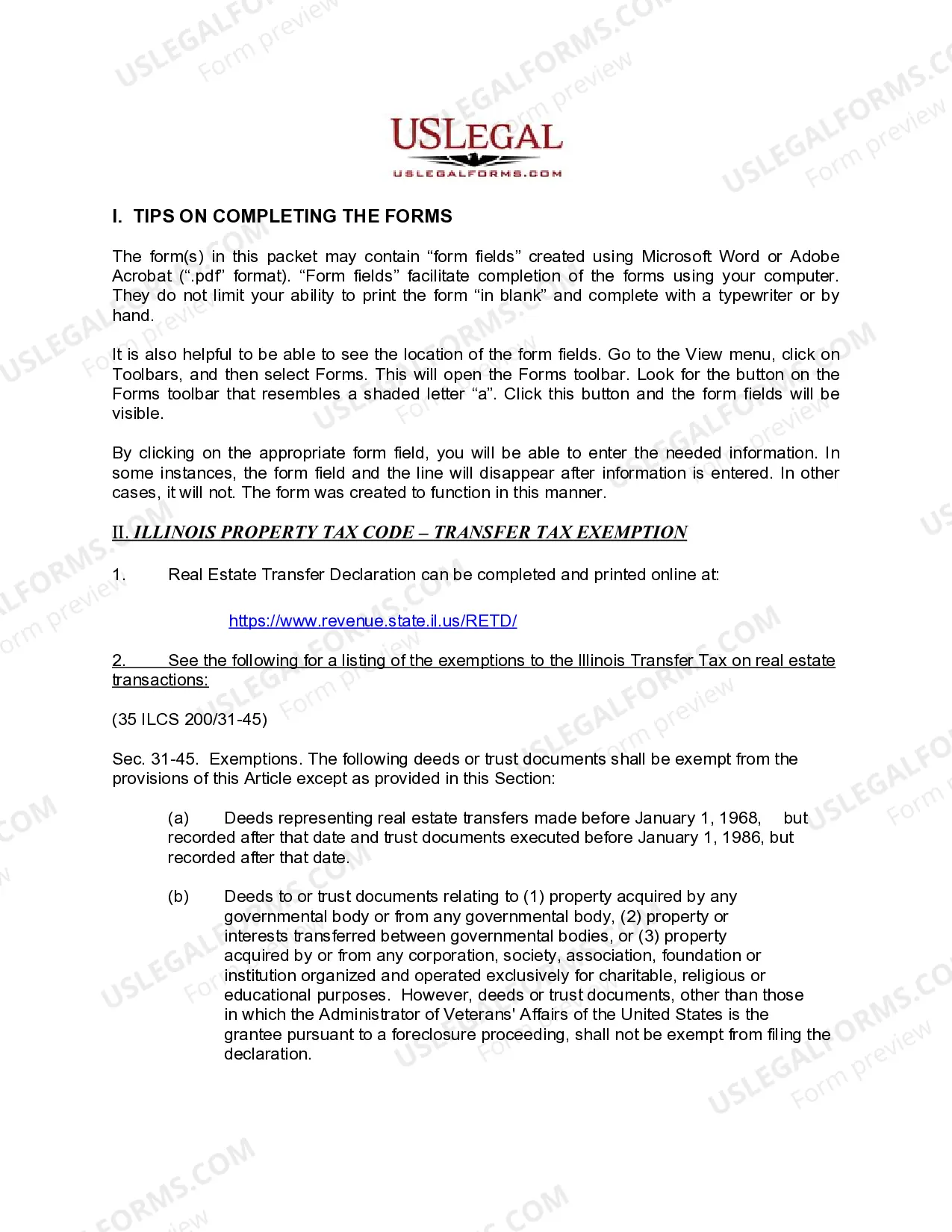
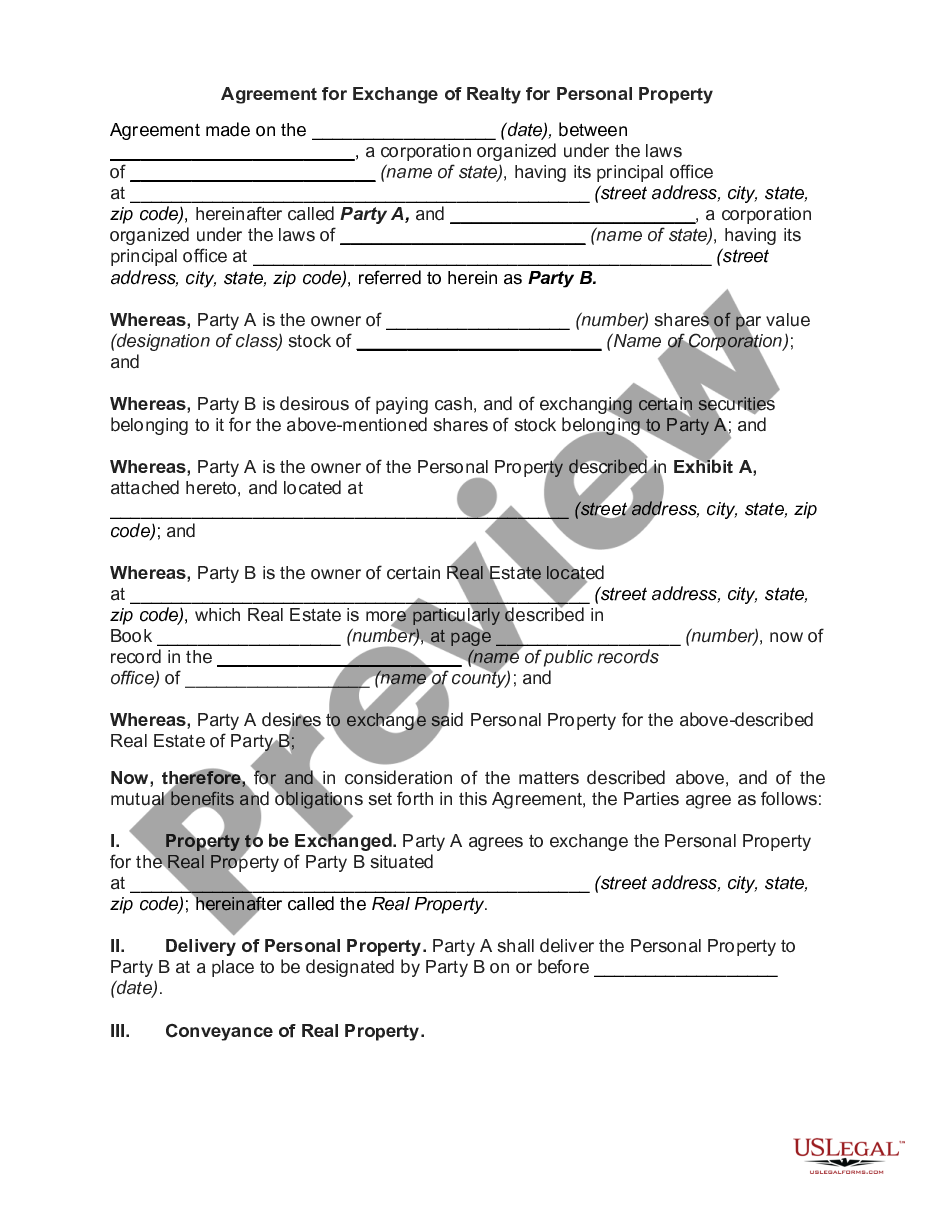
This Warranty Deed is a legal document where an individual grantor conveys property to five individual grantees. The grantees acquire the property either as tenants in common or as joint tenants with the right of survivorship. This form provides specific protections by ensuring that the grantor guarantees clear title to the property, distinguishing it from other types of deeds.
Key components of this form
- Grantor identification: Details about the individual transferring the property.
- Grantee identification: Information on all five individuals receiving the property.
- Property description: A complete description of the property being transferred.
- Conditions of ownership: Specifies whether grantees hold title as tenants in common or joint tenants.
- Signature lines: Spaces for the grantor and possibly their spouse to sign, validating the transfer.
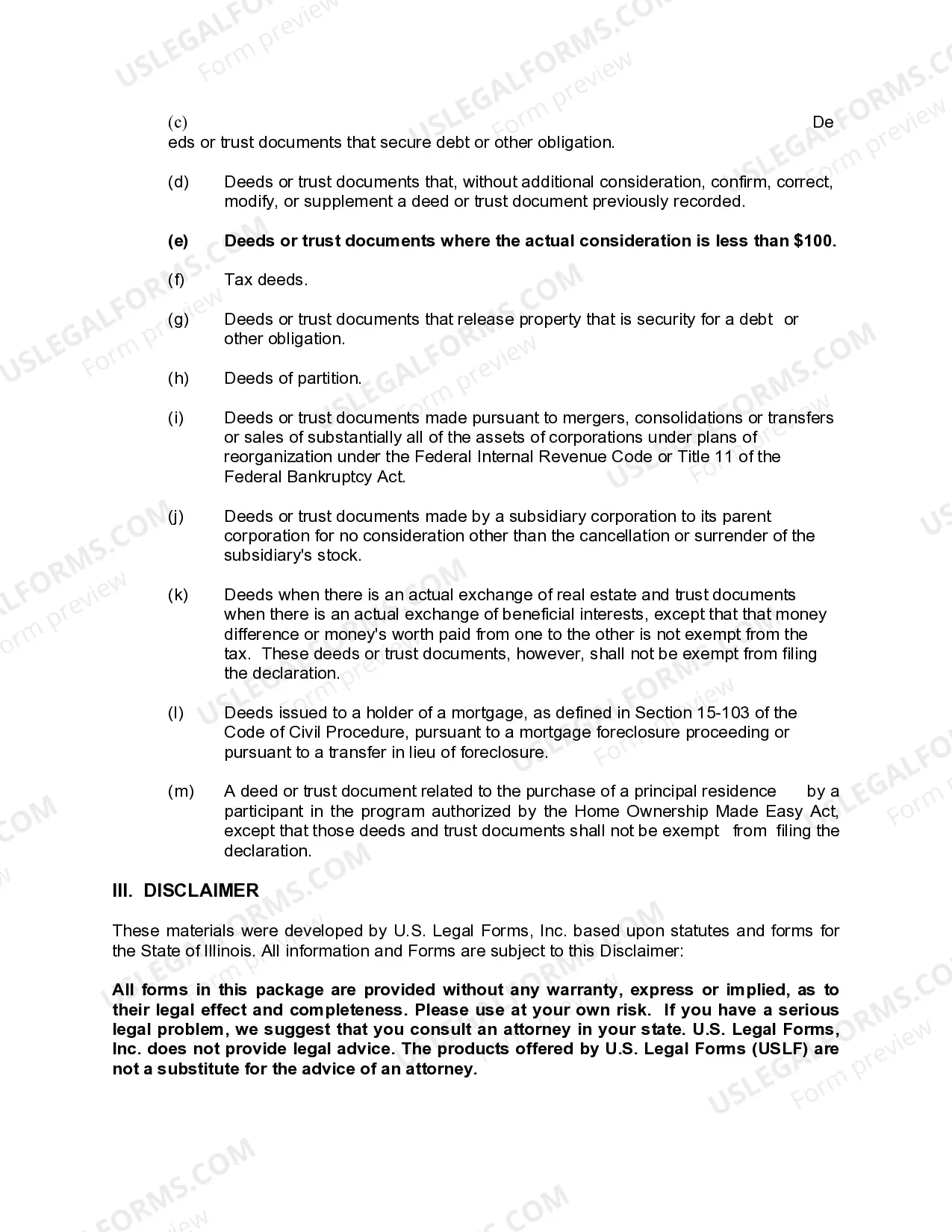

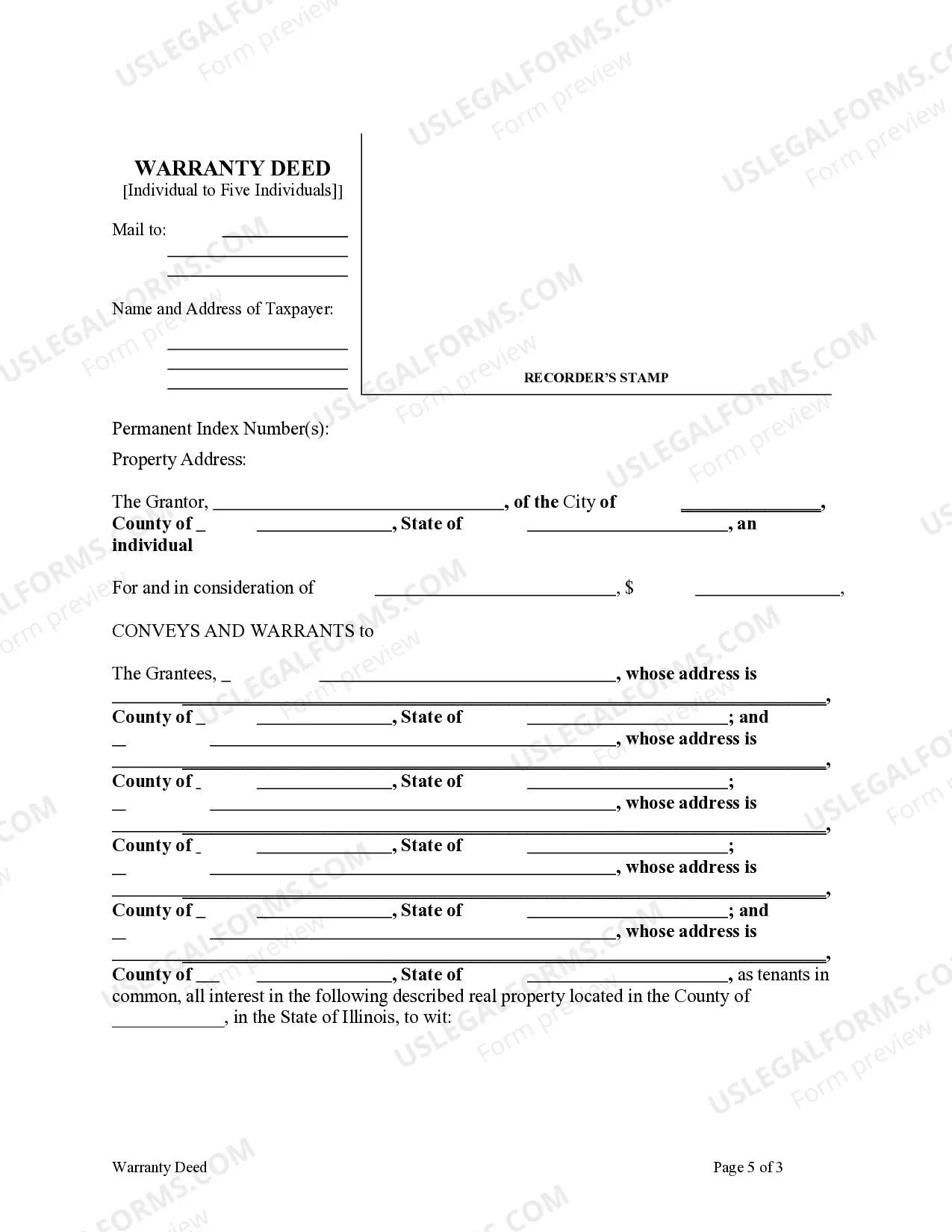
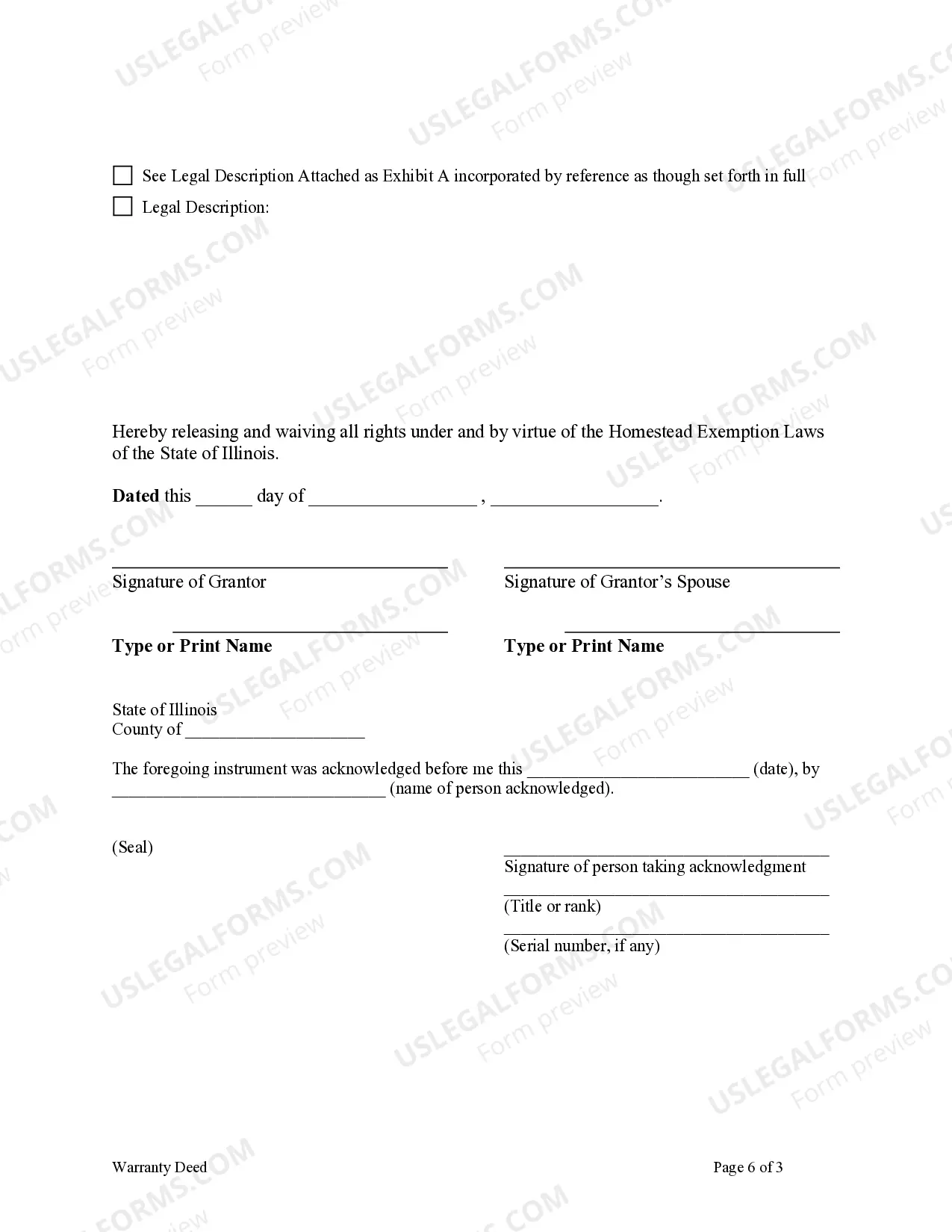
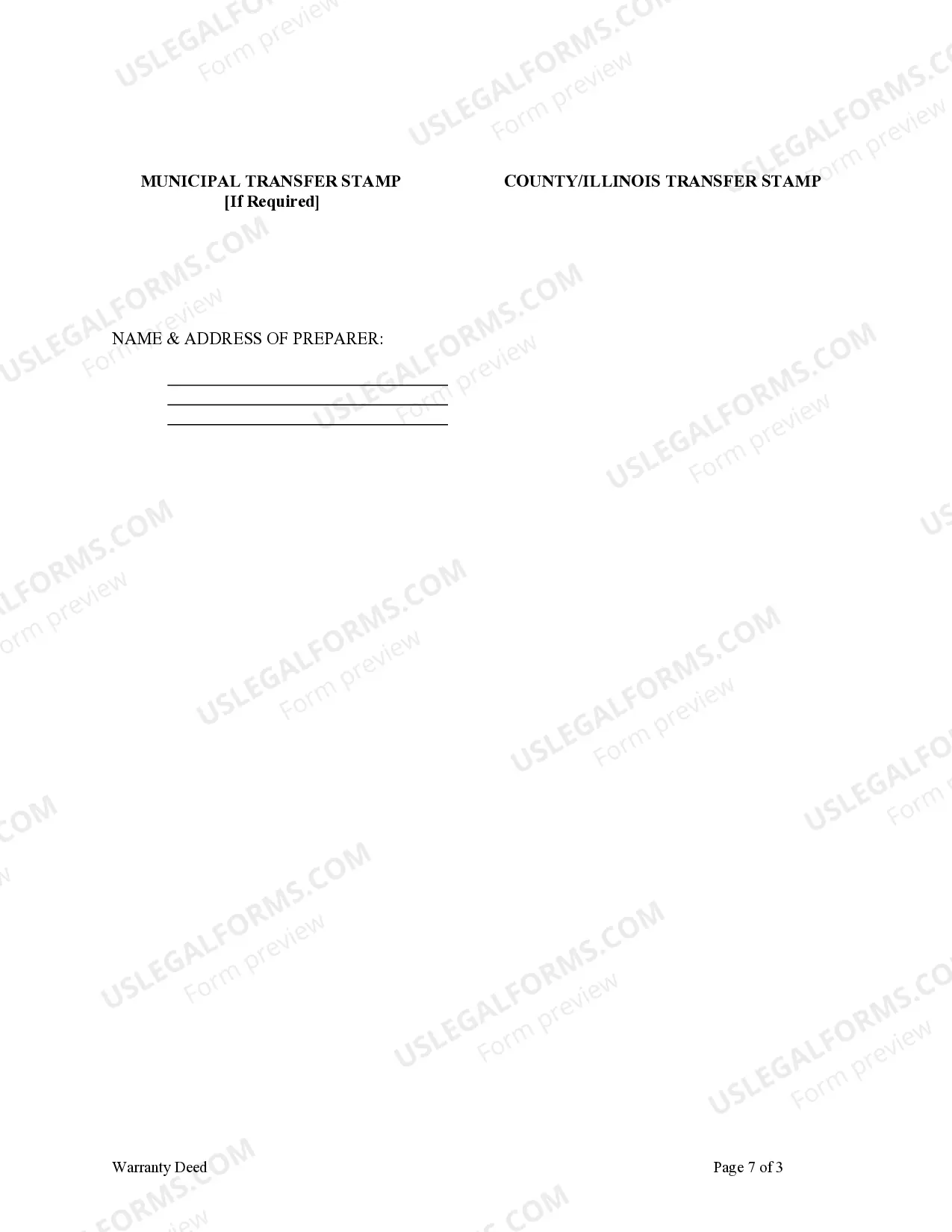




When this form is needed
You should use this Warranty Deed when an individual wants to transfer ownership of property to multiple individuals. This scenario is common in family situations, business partnerships, or joint ventures where multiple people will share ownership rights to the same property.
Who can use this document
- Property owners looking to transfer their property to five individuals.
- Individuals engaged in property transactions involving co-ownership.
- Anyone requiring a legally binding document that ensures clear title of the property.
How to complete this form
- Identify the parties involved: Fill in the grantorâs and granteesâ names and contact details.
- Provide property details: Specify the full legal description of the property being transferred.
- Choose ownership type: Indicate whether the grantees will take ownership as tenants in common or joint tenants.
- Sign the document: The grantor (and spouse, if applicable) must sign to validate the deed.
- Ensure notarization if required: Check local laws to determine if notarization is necessary for the deedâs validity.
Is notarization required?
This form does not typically require notarization unless specified by local law. Always check your local regulations to ensure compliance.
Get your form ready online
Our built-in tools help you complete, sign, share, and store your documents in one place.
Make edits, fill in missing information, and update formatting in US Legal Forms—just like you would in MS Word.
Download a copy, print it, send it by email, or mail it via USPS—whatever works best for your next step.
Sign and collect signatures with our SignNow integration. Send to multiple recipients, set reminders, and more. Go Premium to unlock E-Sign.
If this form requires notarization, complete it online through a secure video call—no need to meet a notary in person or wait for an appointment.
We protect your documents and personal data by following strict security and privacy standards.

Make edits, fill in missing information, and update formatting in US Legal Forms—just like you would in MS Word.

Download a copy, print it, send it by email, or mail it via USPS—whatever works best for your next step.

Sign and collect signatures with our SignNow integration. Send to multiple recipients, set reminders, and more. Go Premium to unlock E-Sign.

If this form requires notarization, complete it online through a secure video call—no need to meet a notary in person or wait for an appointment.

We protect your documents and personal data by following strict security and privacy standards.
Typical mistakes to avoid
- Failing to include all grantees' names accurately.
- Neglecting to specify how ownership is held by the grantees.
- Inaccurate property description, leading to legal disputes.
- Skipping signatures or failing to notarize when required.
Why complete this form online
- Convenient access: Downloadable forms can be completed at your own pace and convenience.
- Editability: Forms designed to be easily filled out on a computer save time and reduce errors.
- Legal compliance: The forms are created by licensed attorneys, ensuring they meet legal standards.
Main things to remember
- A Warranty Deed transfers property with a guarantee of clear title.
- This form is essential for transferring property to multiple individuals.
- Follow state-specific requirements for a valid property transfer.
- Ensure all necessary information is included and accurately represented.
Looking for another form?
Form popularity
FAQ
It's important to note that a warranty deed does not actually prove the grantor has ownership (a title search is the best way to prove that), but it is a promise by the grantor that they are transferring ownership and if it turns out they don't actually own the property, the grantor will be responsible for compensating
Let's start with the definition of a deed: DEED: A written instrument by which one party, the Grantor, conveys the title of ownership in property to another party, the Grantee. A Warranty Deed contains promises, called covenants, that the Grantor makes to the Grantee.
Fill out the "grantor" section of the warranty deed. The grantors are the givers, or current owners, of the property. Use the legal name of each grantor and insert current addresses after each grantor's name.
Typically, the lender will provide you with a copy of the deed of trust after the closing. The original warranty deeds are often mailed to the grantee after they are recorded. These are your original copies and should be kept in a safe place, such as a fireproof lockbox or a safe deposit box at a financial institution.
A warranty deed guarantees that: The grantor is the rightful owner of the property and has the legal right to transfer the title.The title would withstand third-party claims to ownership of the property. The grantor will do anything to ensure the grantee's title to the property.
One of the most common ways property owners add spouses to real estate titles is by using quitclaim deeds. Once completed and filed, quitclaim deed forms effectually transfer a share of ownership from the owners, or grantors, to their spouses, or the grantees.
Locate the most recent deed to the property. Create the new deed. Sign and notarize the new deed. Record the deed in the Illinois land records.
No, California does not require that the Grantee sign a warranty deed. However, some states and counties require that the deed be signed by the Grantee in addition to the Grantor.