Nonexclusive License Agreement for Process Patent, Know How and Trademark
About this form
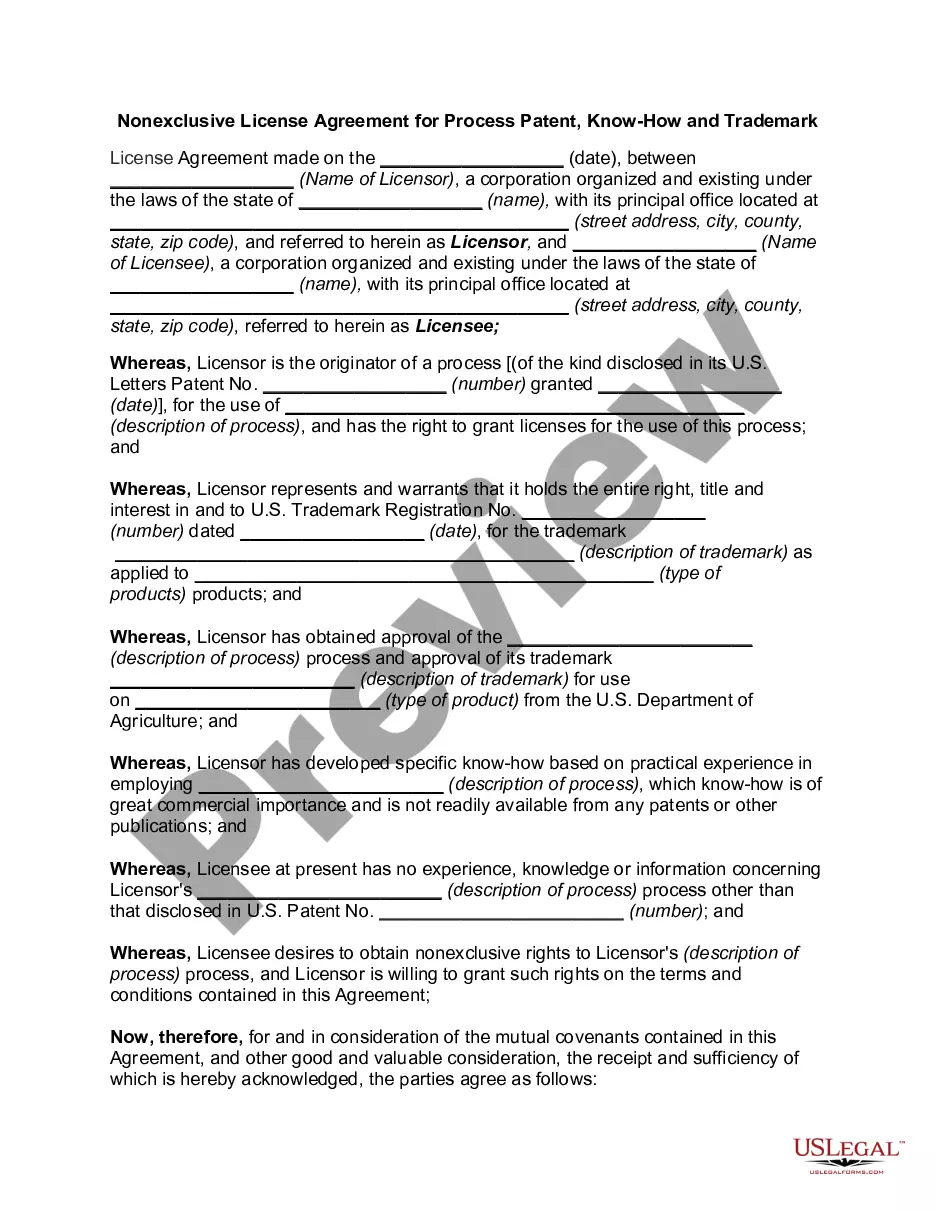
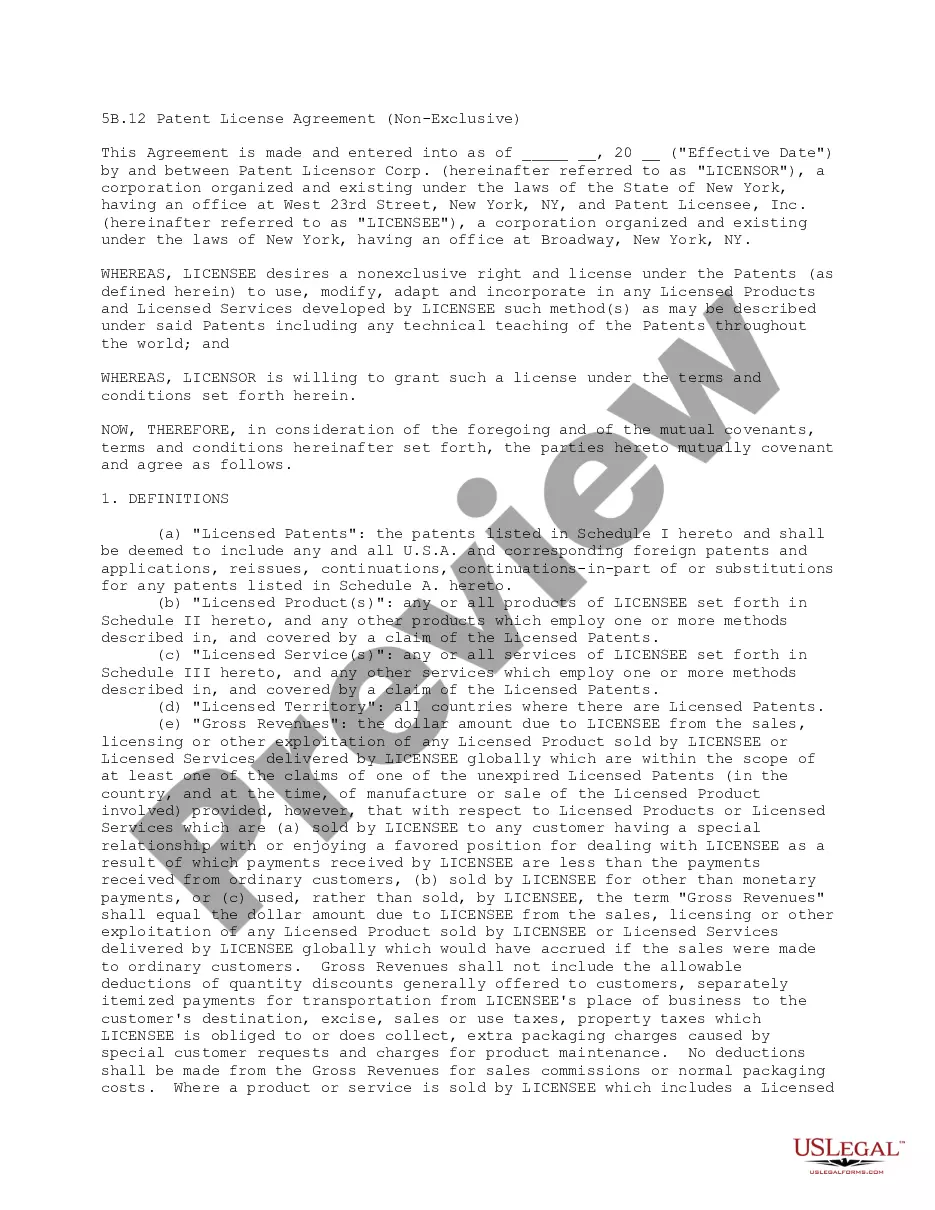
The Nonexclusive License Agreement for Process Patent, Know How and Trademark is a legal document that allows one party (the Licensee) to use certain intellectual property owned by another party (the Licensor). This agreement covers rights to a process patent, specific know-how, and a trademark. Unlike exclusive licenses, this form allows the Licensor to grant similar rights to other Licensees. It is essential for businesses seeking to leverage patented processes and trademarks to expand their operations while safeguarding the Licensor's interests.
Form components explained
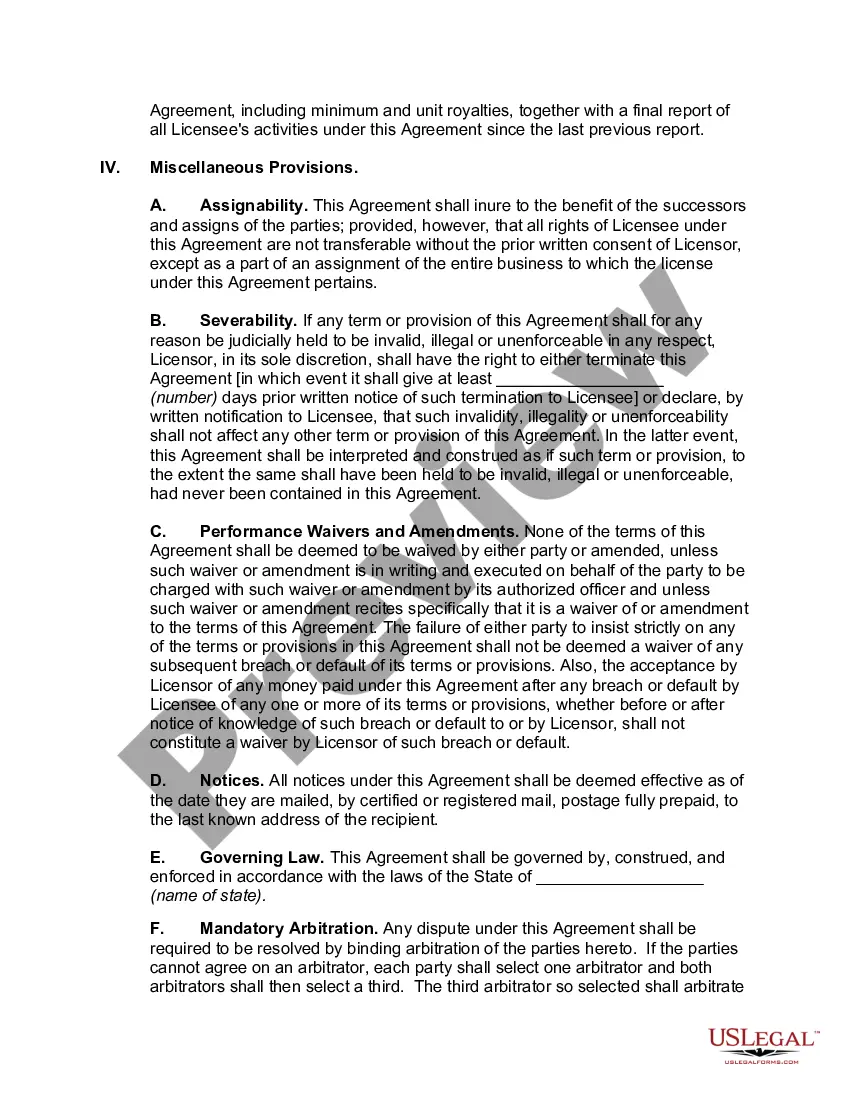
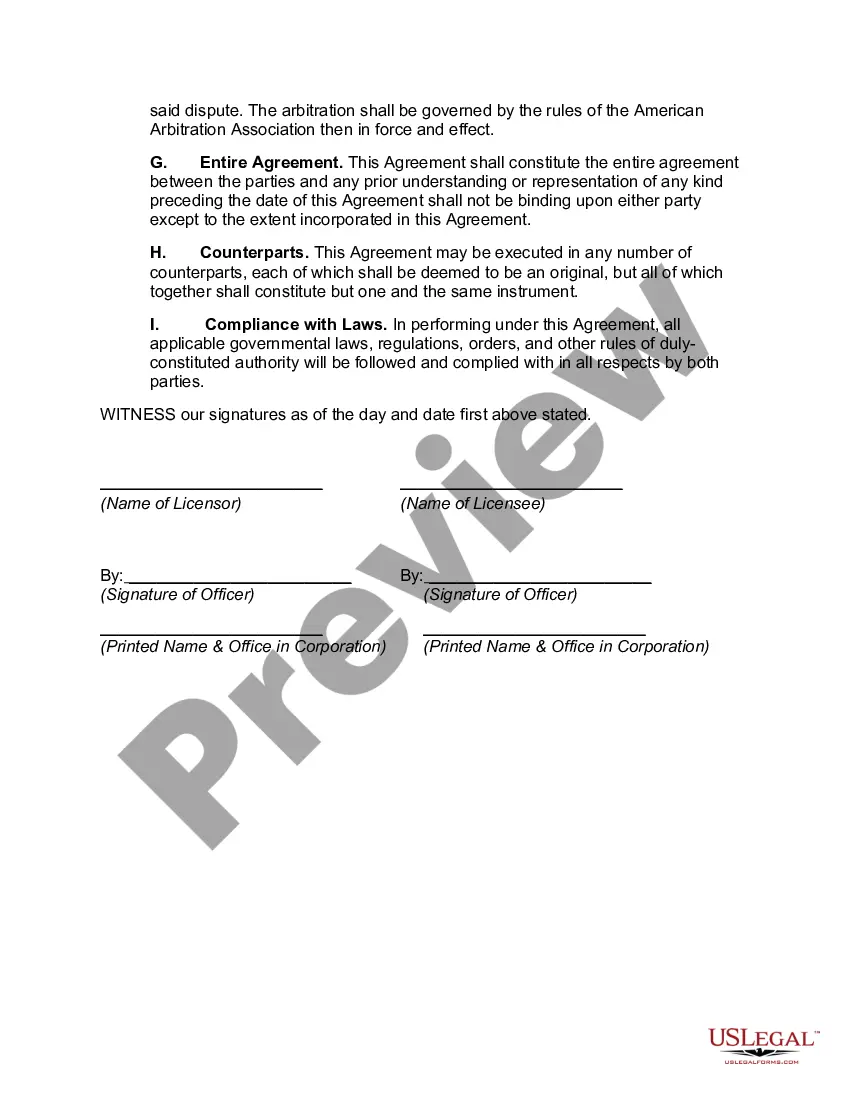
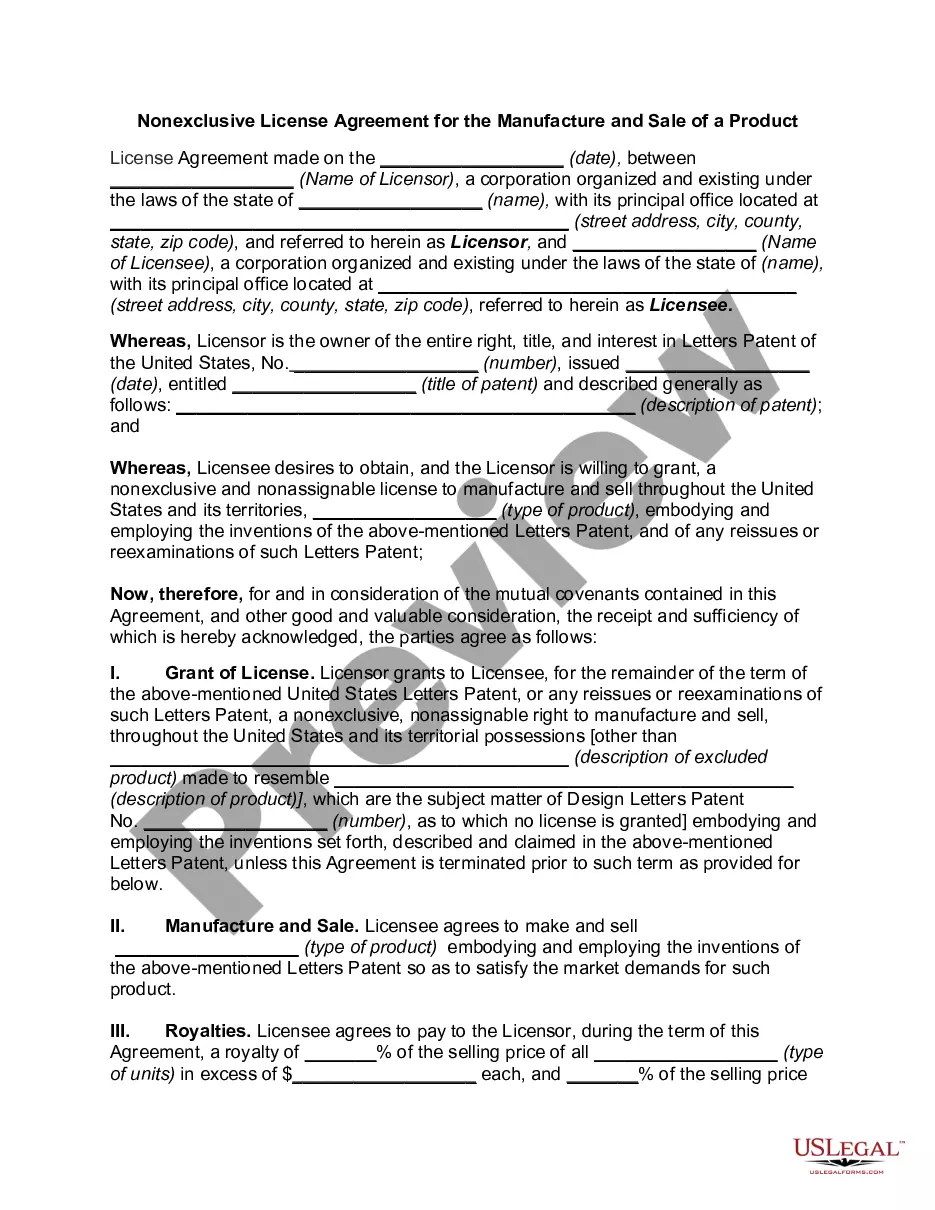
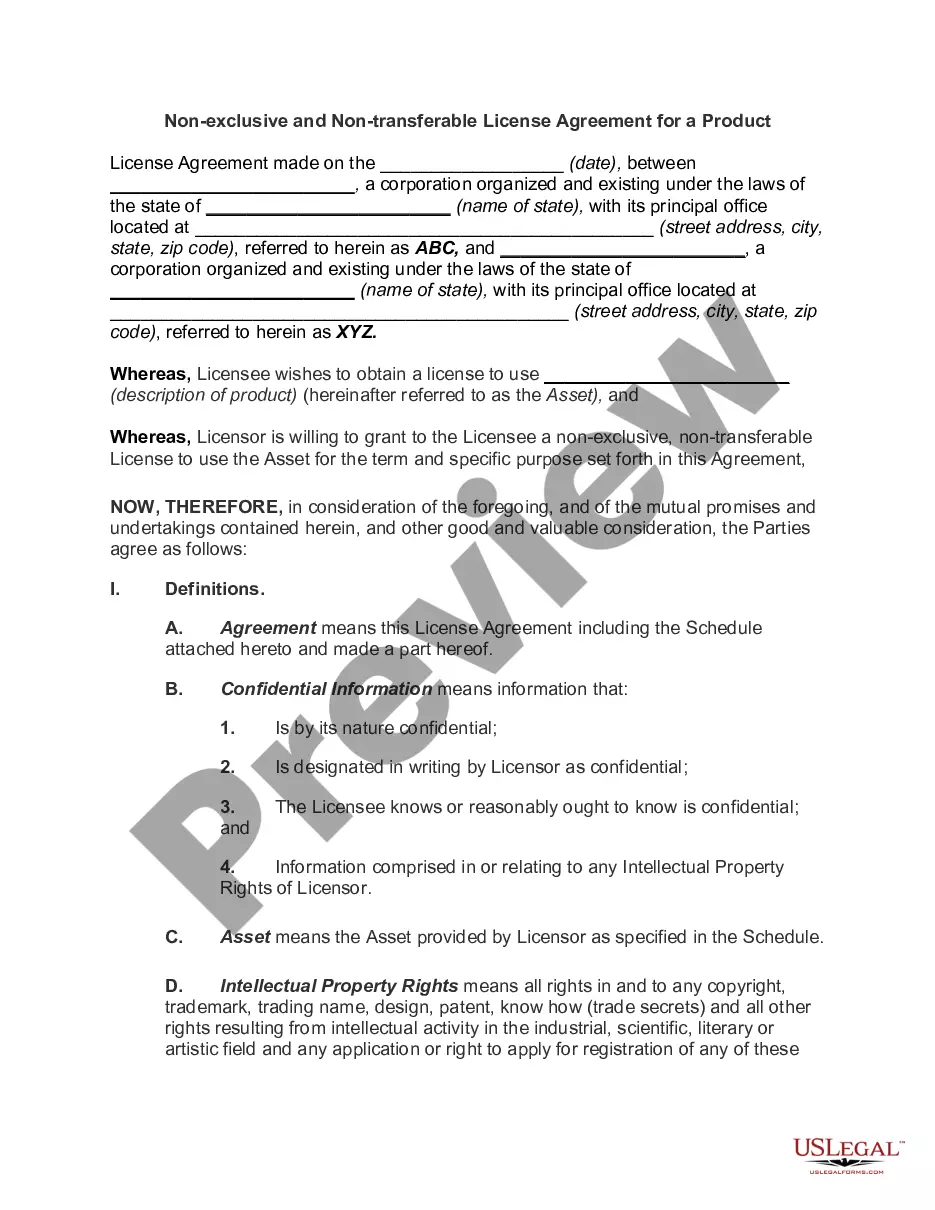
- Licensor and Licensee Identification: Names and addresses of both parties involved.
- Description of Intellectual Property: Details regarding the process patent, know-how, and trademark being licensed.
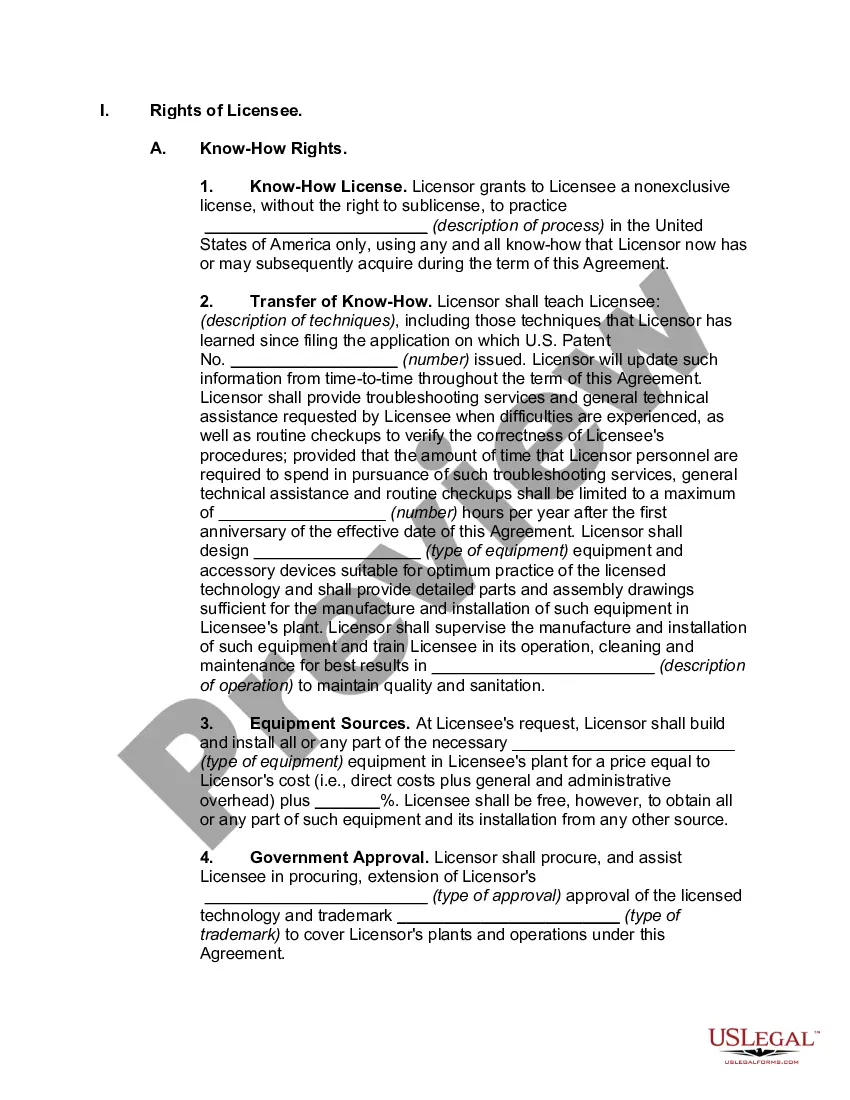
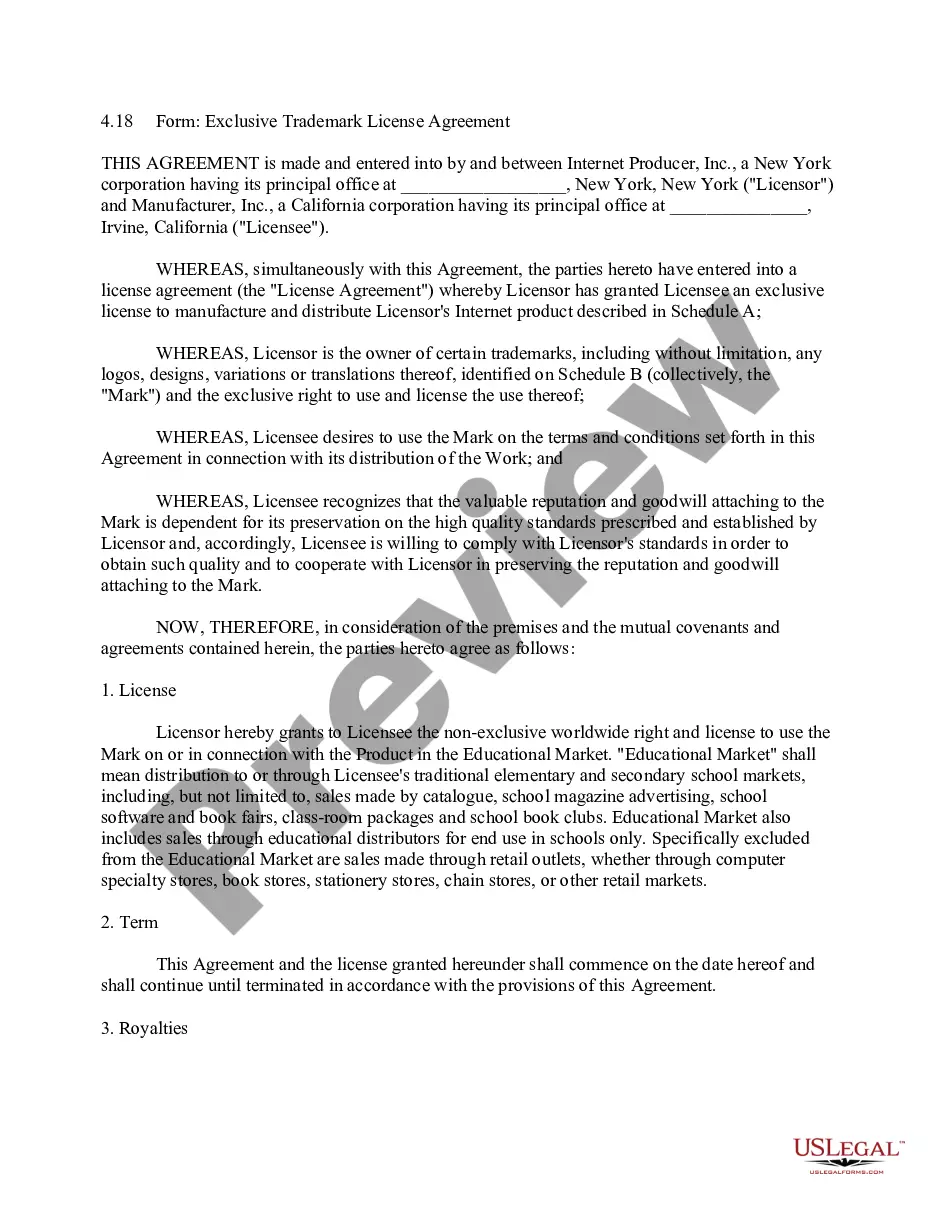
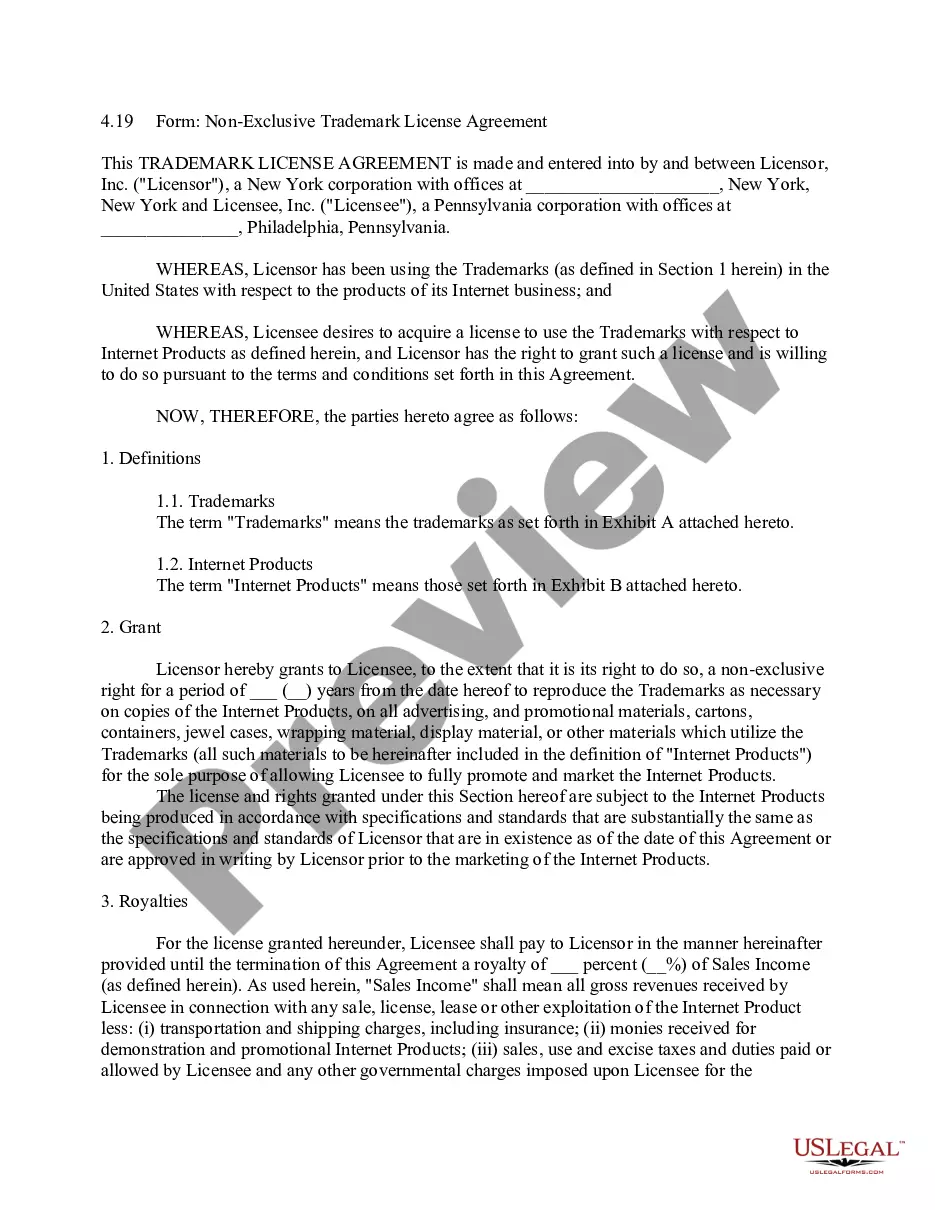
- Rights Granted: Specific rights of the Licensee regarding the know-how and trademark usage.
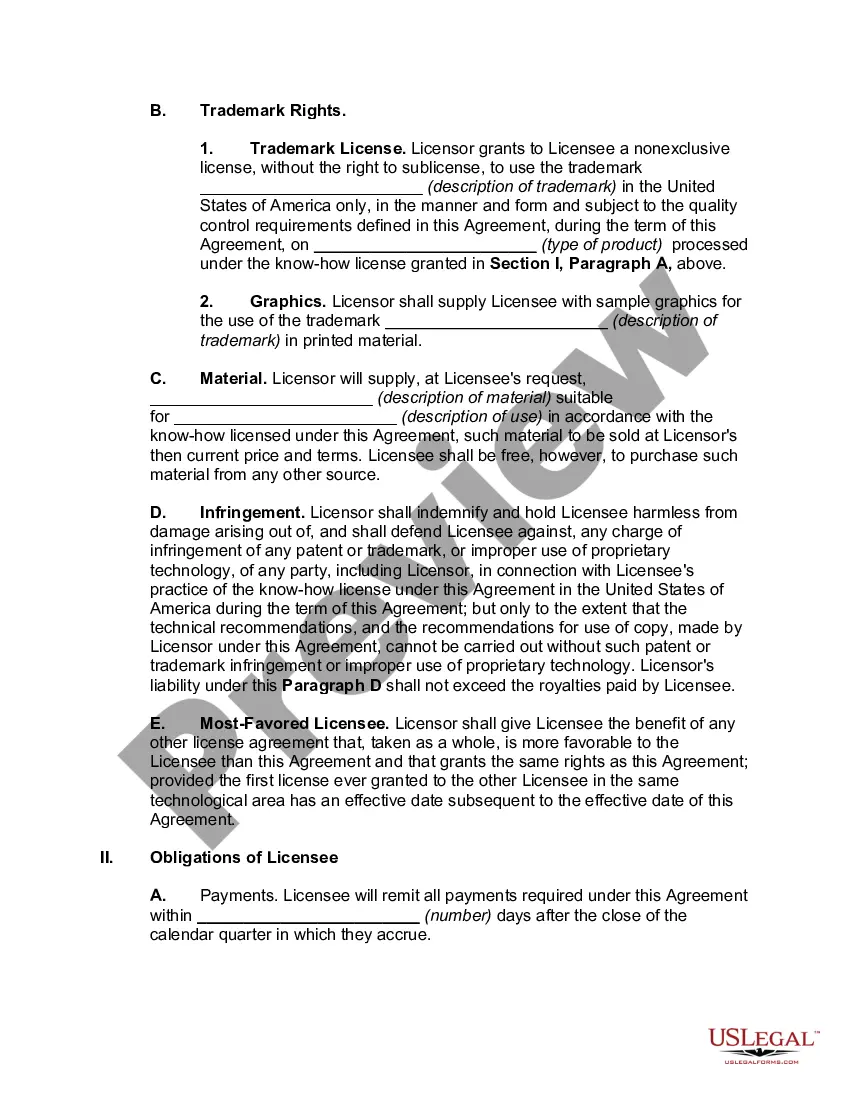
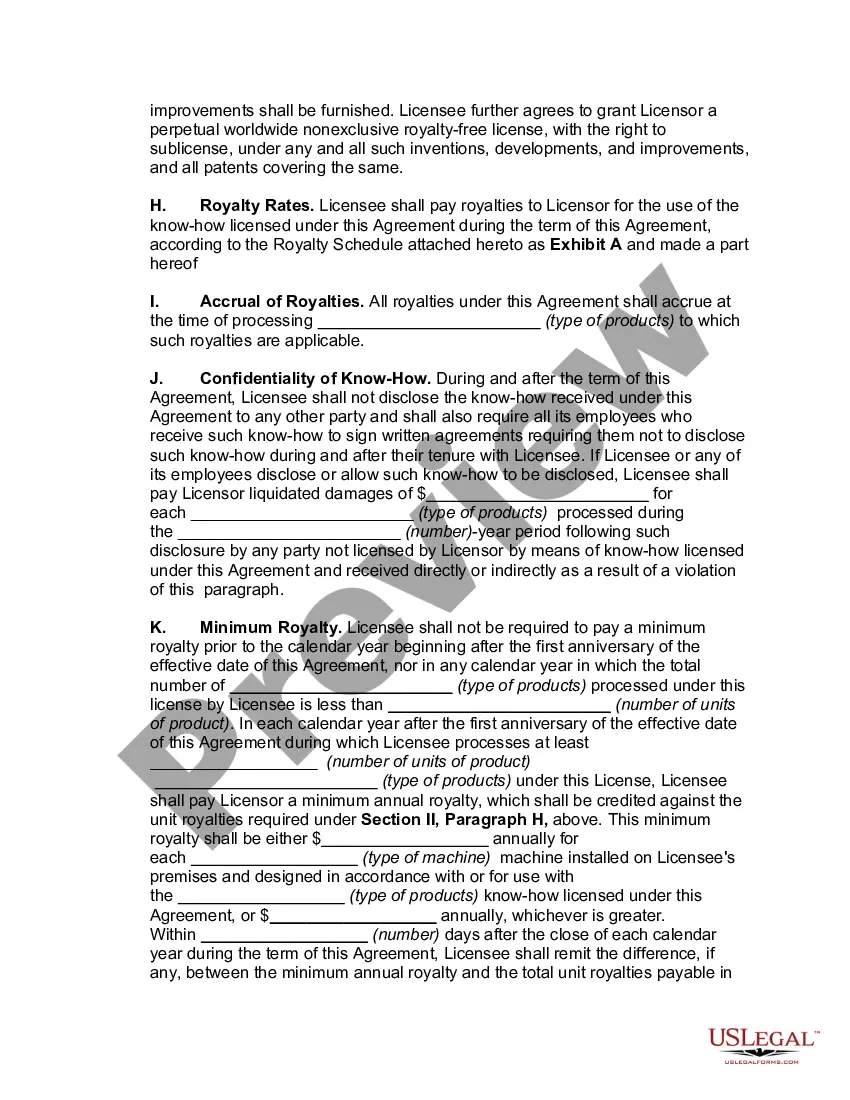
- Payment Terms: Obligations for royalty payments and reporting requirements for the Licensee.
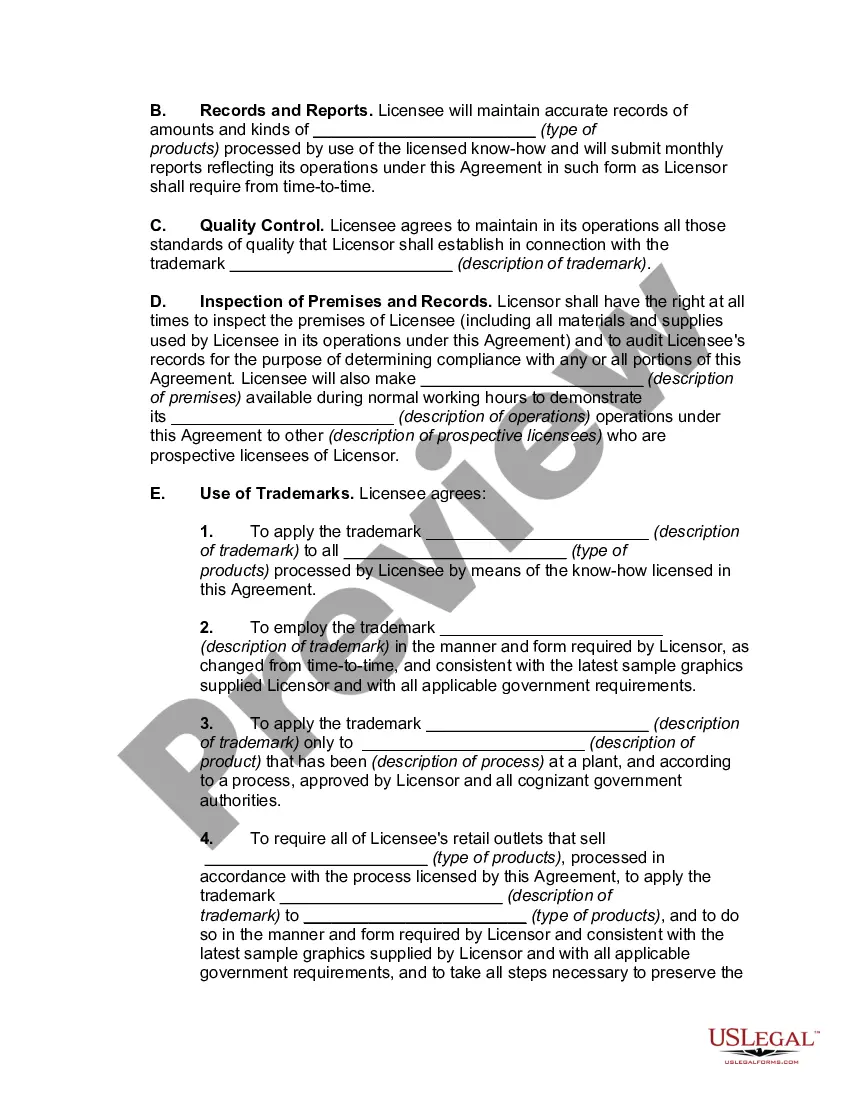
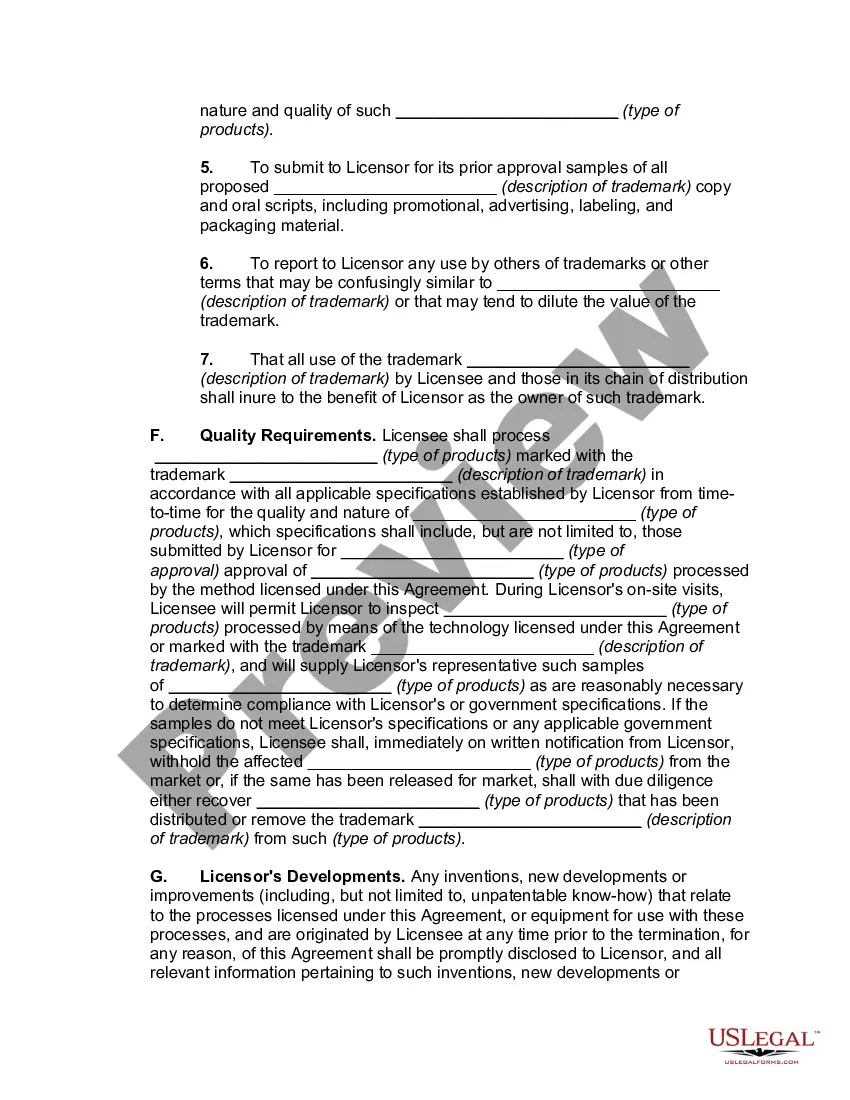
- Quality Control: Standards required by the Licensor for maintaining quality in production.
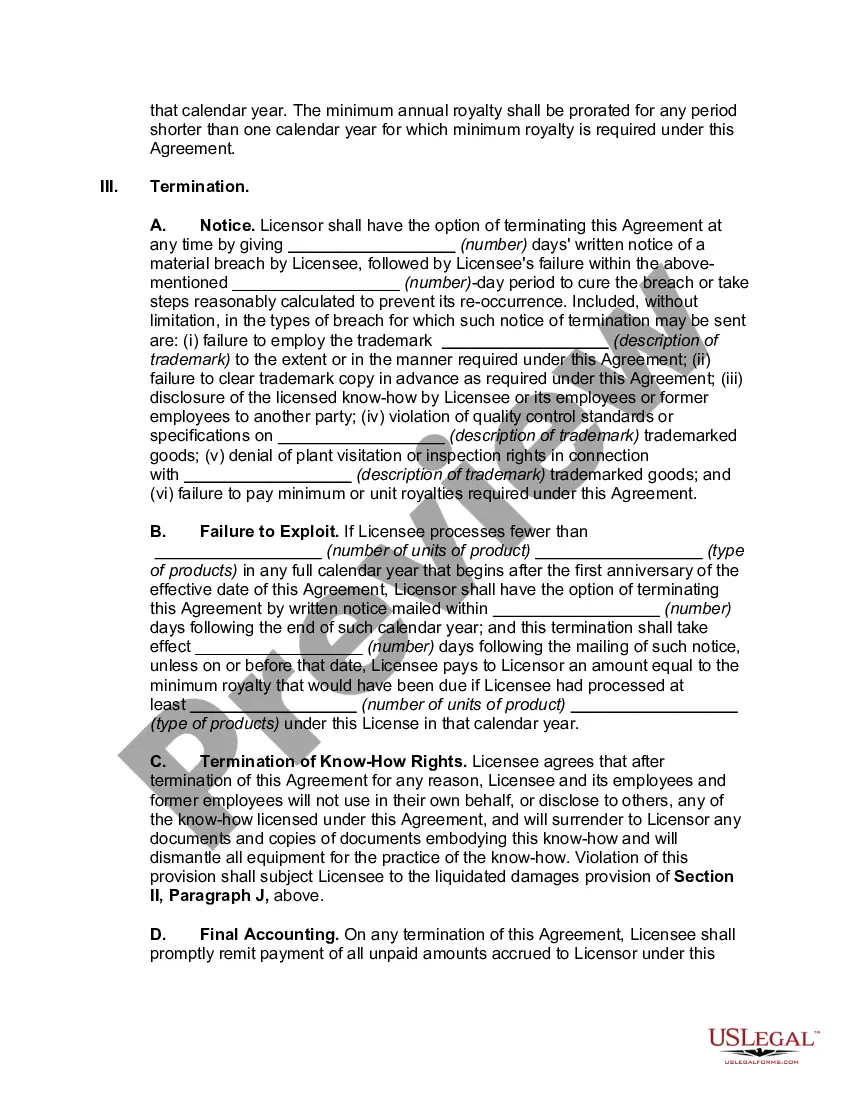
- Termination Conditions: Grounds for terminating the agreement and obligations following termination.
When this form is needed
This form is useful when a business wants to legally obtain the rights to utilize a patented process and associated know-how and trademark owned by another entity. It is applicable for companies looking to expand their product line, enter new markets, or utilize technologies without developing them in-house. It can also be used in scenarios where technical assistance and expertise from the Licensor are critical to the Licensee's operational success.
Who this form is for
- Business owners seeking to license processes or technologies to enhance manufacturing capabilities.
- Entrepreneurs looking to leverage established trademarks to brand their products.
- Companies in industries that require patented technologies for competitive advantage.
- Legal professionals assisting clients in drafting or negotiating licensing agreements.
- Organizations that want to formalize the use of proprietary methods in their business operations.
How to prepare this document
- Identify the parties: Fill in the names and addresses of the Licensor and Licensee.
- Describe the intellectual property: Include details of the patent number, trademark, and description of the process.
- Specify licensing rights: Detail the rights granted to the Licensee regarding the use of the know-how and trademark.
- Outline payment terms: Enter specifics about royalty payments and reporting obligations.
- Indicate quality control measures: Insert requirements necessary for maintaining product standards.
- Include termination clauses: Define scenarios in which the agreement can be terminated by either party.
Notarization guidance
This form does not typically require notarization unless specified by local law. It is advisable to check the local legal requirements for further confirmation.
Get your form ready online
Our built-in tools help you complete, sign, share, and store your documents in one place.
Make edits, fill in missing information, and update formatting in US Legal Forms—just like you would in MS Word.
Download a copy, print it, send it by email, or mail it via USPS—whatever works best for your next step.
Sign and collect signatures with our SignNow integration. Send to multiple recipients, set reminders, and more. Go Premium to unlock E-Sign.
If this form requires notarization, complete it online through a secure video call—no need to meet a notary in person or wait for an appointment.
We protect your documents and personal data by following strict security and privacy standards.

Make edits, fill in missing information, and update formatting in US Legal Forms—just like you would in MS Word.

Download a copy, print it, send it by email, or mail it via USPS—whatever works best for your next step.

Sign and collect signatures with our SignNow integration. Send to multiple recipients, set reminders, and more. Go Premium to unlock E-Sign.

If this form requires notarization, complete it online through a secure video call—no need to meet a notary in person or wait for an appointment.

We protect your documents and personal data by following strict security and privacy standards.
Typical mistakes to avoid
- Failing to clearly define the scope of the licensed rights can lead to disputes.
- Neglecting to include specific payment terms or royalty rates may cause confusion.
- Omitting quality control standards can result in product inconsistency.
- Not detailing termination conditions can affect the enforceability of the agreement.
Benefits of completing this form online
- Convenience: Access and download the form from anywhere, anytime.
- Editability: Customize the document to fit specific needs easily.
- Reliability: Receive legal forms drafted by licensed attorneys to ensure compliance.
- Speed: Instant downloads save time compared to traditional legal consultations.
Legal use & context
- The agreement is legally binding once signed by both parties and is enforceable under contract law.
- It is recommended to retain copies of the signed agreement for record-keeping.
- The Licensor retains ownership of the intellectual property regardless of the Licensee's usage.
- Disputes arising from this agreement may be resolved through arbitration as specified in the terms.
Looking for another form?

Form popularity
FAQ
An example of a licensing agreement is a contract between the copyright holders of software and another company, allowing the latter to use the computer software for their daily business operations.
Do your homework. Before you begin negotiating, you need to understand your licensee's business. Start with a term sheet. Manage your expectations. Be patient. Have a win-win attitude. Don't lose your sense of humor. Remember to hold something back. Put yourself in their shoes.
The 3 P's of collegiate licensing are protection, promotion, and profit.
Exclusive or non-exclusive. In an exclusive license, the intellectual property holder is licensing the work only to one person, for that particular use/territory. Territory. Use. Attribution. Derivative works. Confidentiality. Time frame. Termination.
Download a template for a licensing agreement. Choose your role as the licensor or licensee. Define the license(s) in the agreement. Decide whether the license is exclusive or not. Settle the matter of fees and payment schedule. Add a renewal date and rules.
An example of a licensing agreement is a contract between the copyright holders of software and another company, allowing the latter to use the computer software for their daily business operations.
A trademark license is typically accomplished through a contract, like the written agreement form that follows. After the parties have negotiated and signed their agreement, the document should be recorded with the U.S. Patent and Trademark Office (USPTO).
A license agreement is a business contract between two parties. The licensor (the seller of the license) owns the asset being licensed and the licensee (the buyer) pays for the right to use the license. The licensee pays royalties to the owner in exchange for the right to sell the product or use the technology.