Nonexclusive License Agreement for the Manufacture and Sale of a Product
Overview of this form
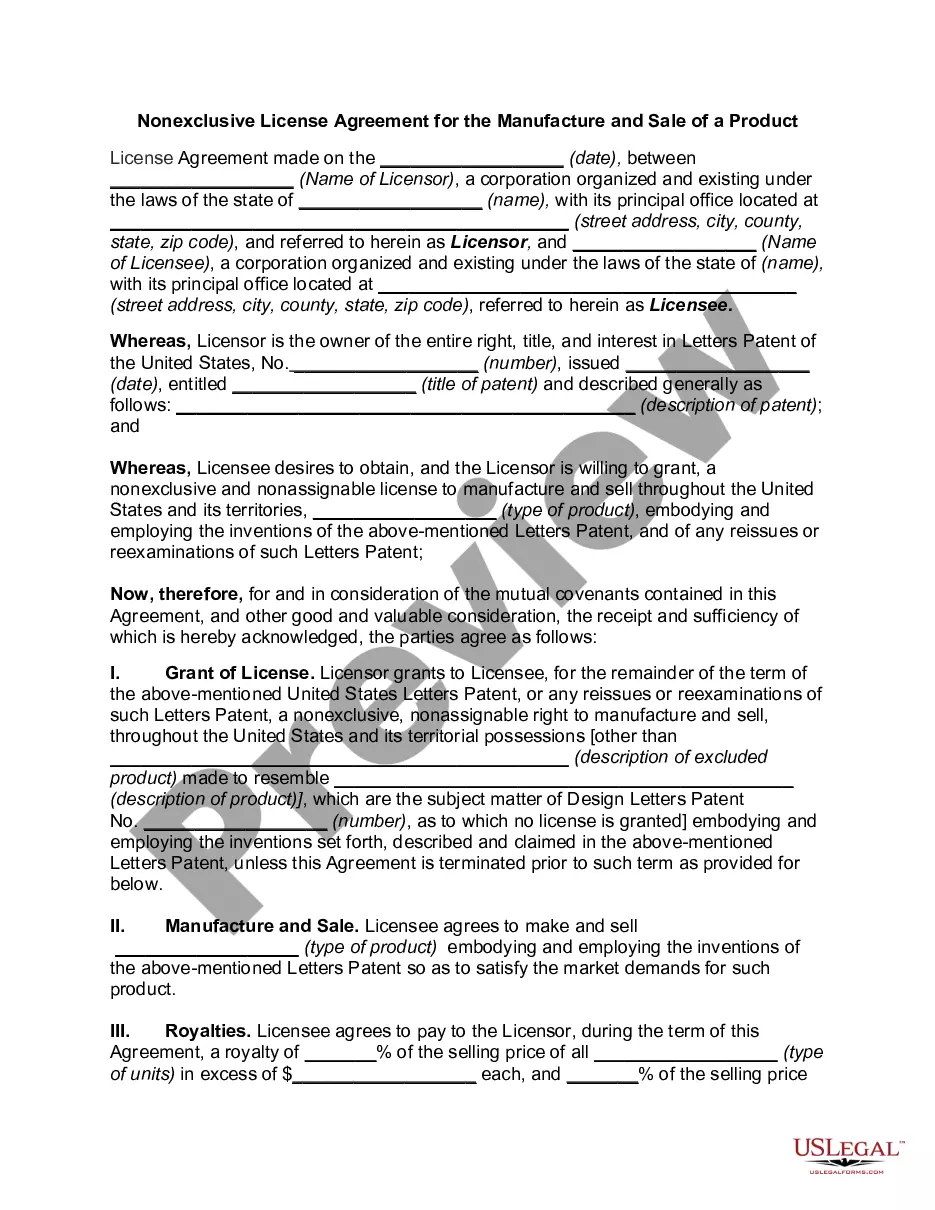
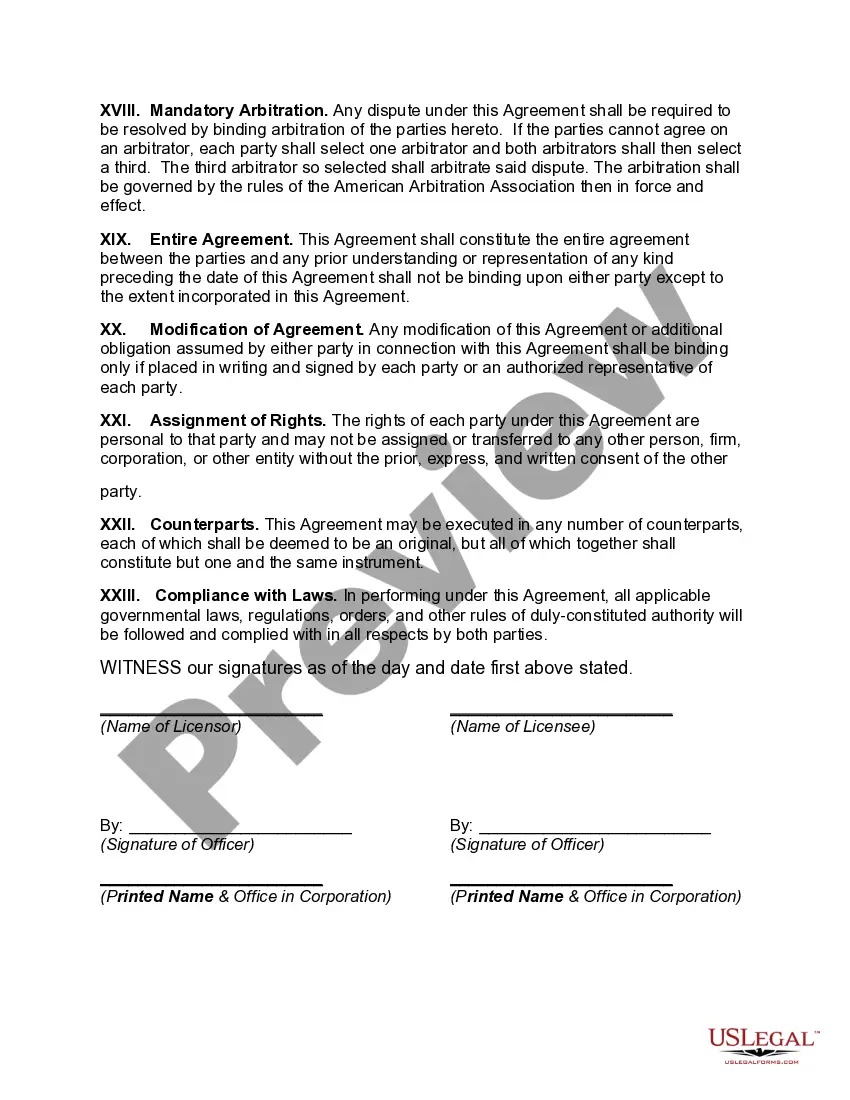
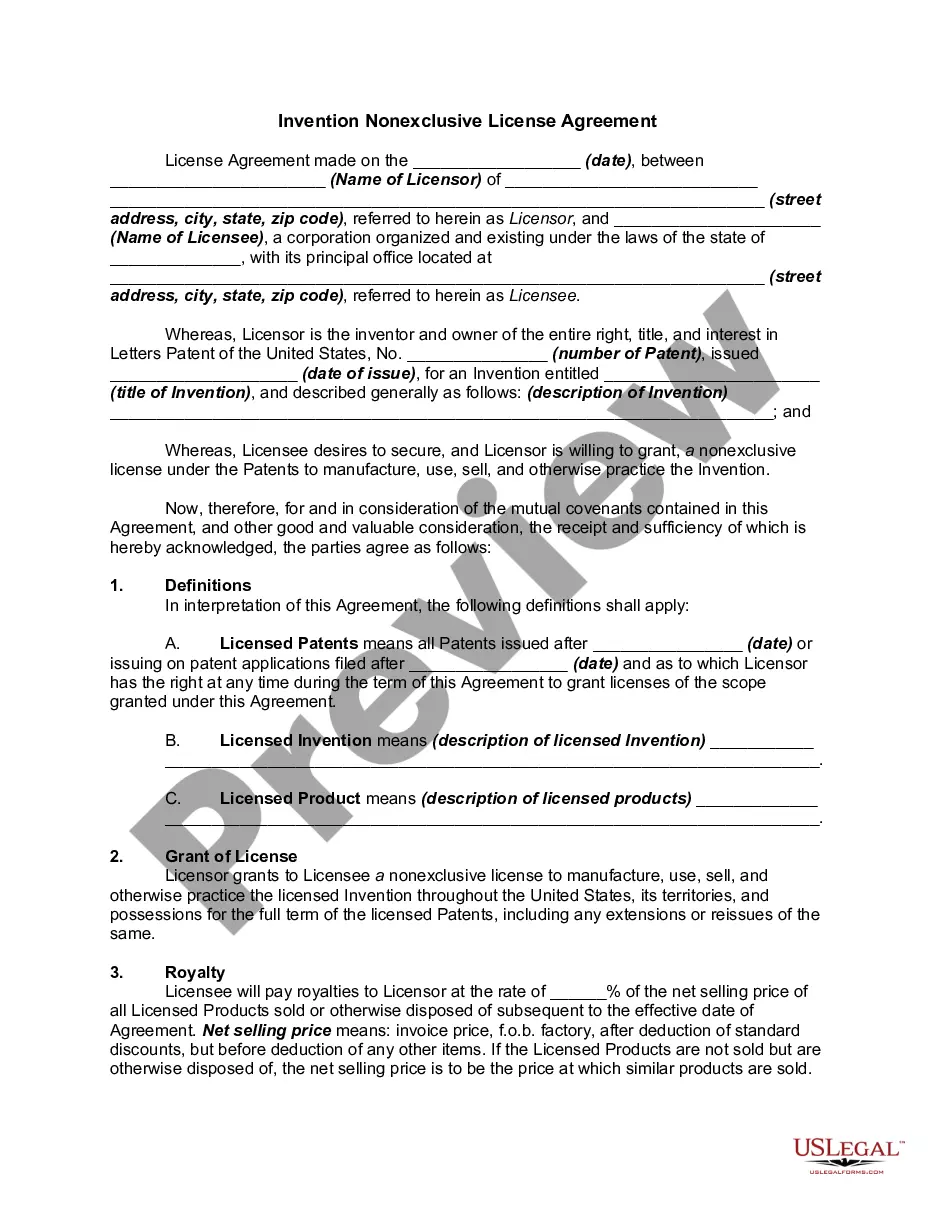
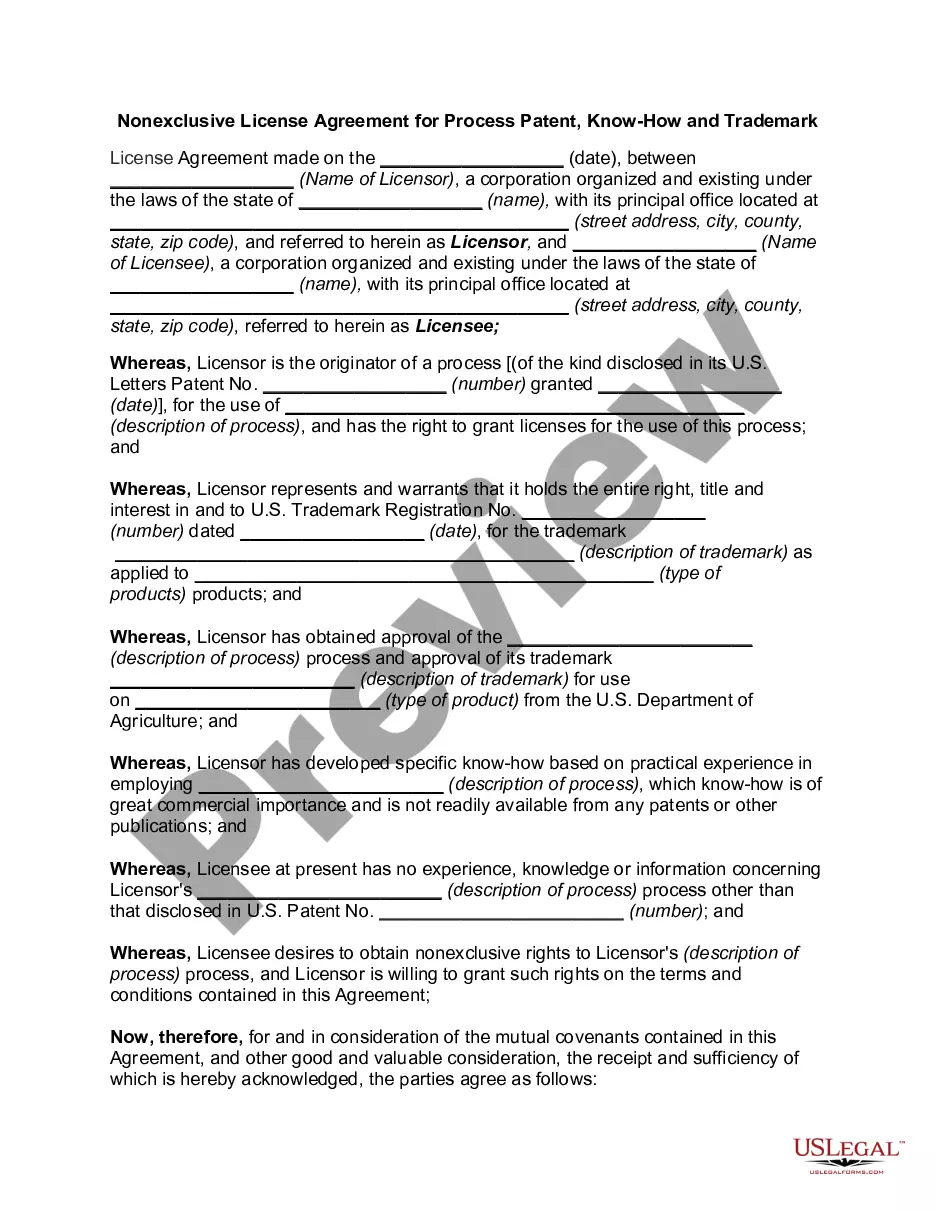
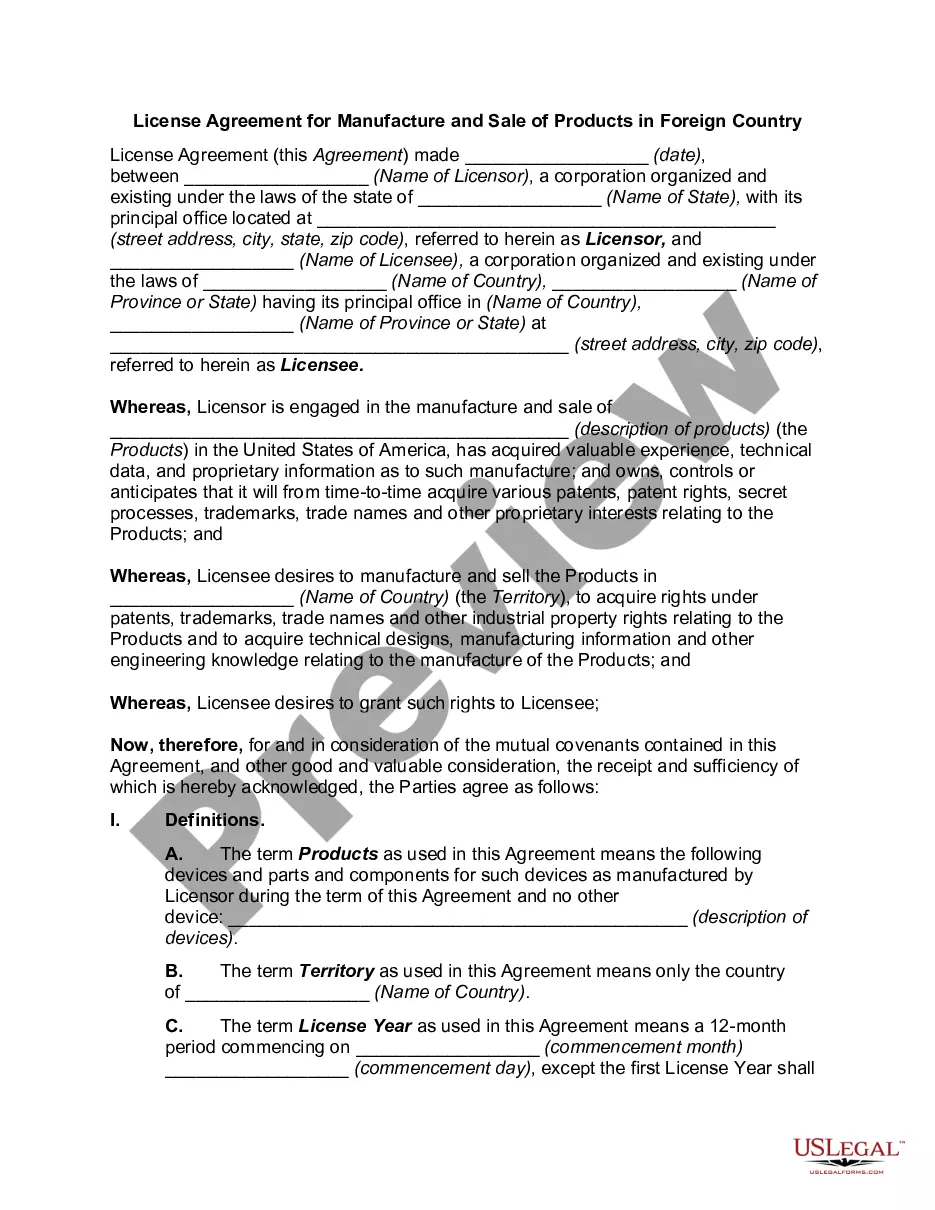
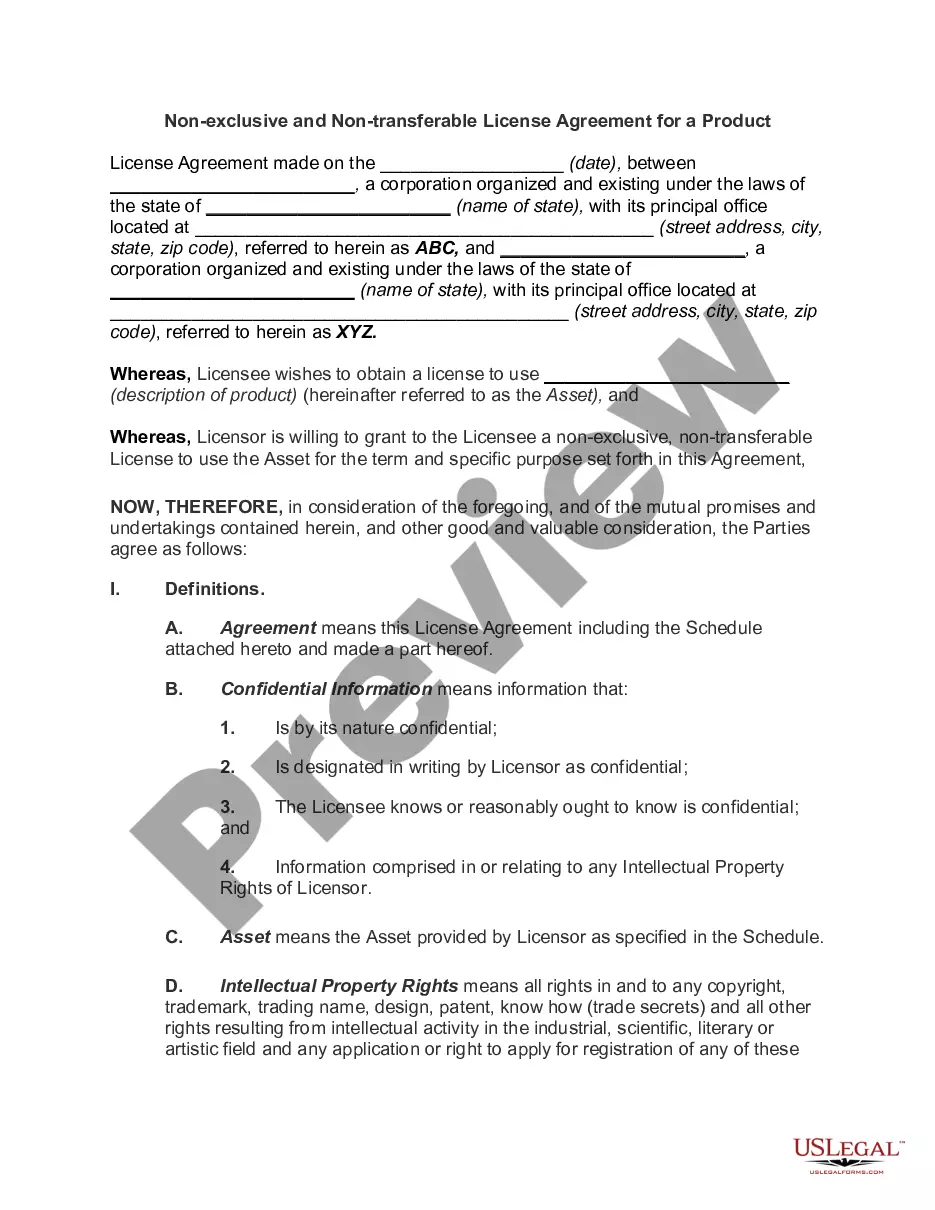
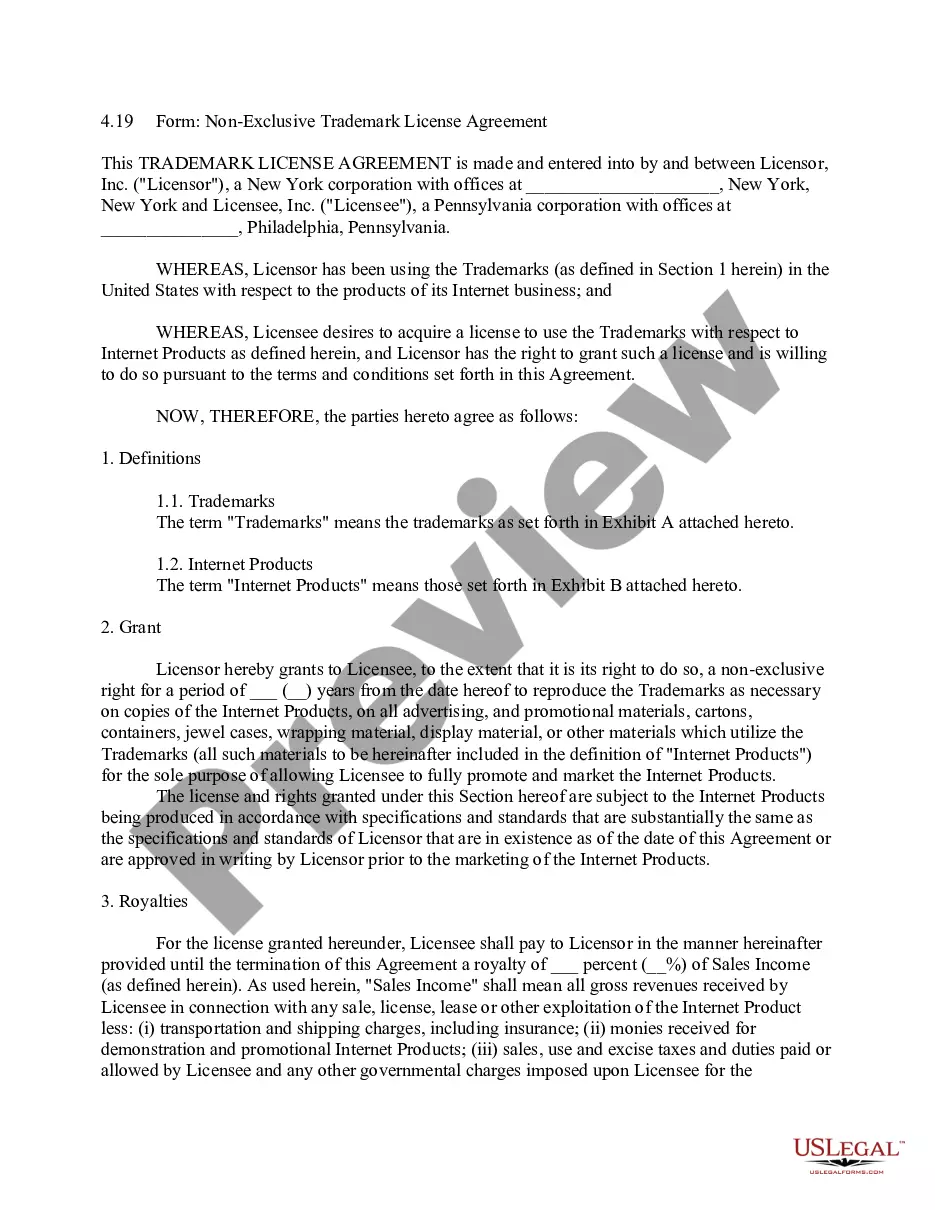
The Nonexclusive License Agreement for the Manufacture and Sale of a Product is a legal document that allows one party, the Licensee, to manufacture and sell a product that is covered by a patent owned by another party, the Licensor. This agreement specifies the rights and obligations of both parties, distinguishing it from exclusive license agreements that grant sole rights to the Licensee. Mainly, this form ensures that the Licensee can operate under the patent while the Licensor retains ownership of their intellectual property.
Key parts of this document
- Identifies the parties involved: Licensor and Licensee, including their addresses and legal statuses.
- Details the patent information, including its title and description.
- Outlines the scope of the license granted, including limitations and exclusions.
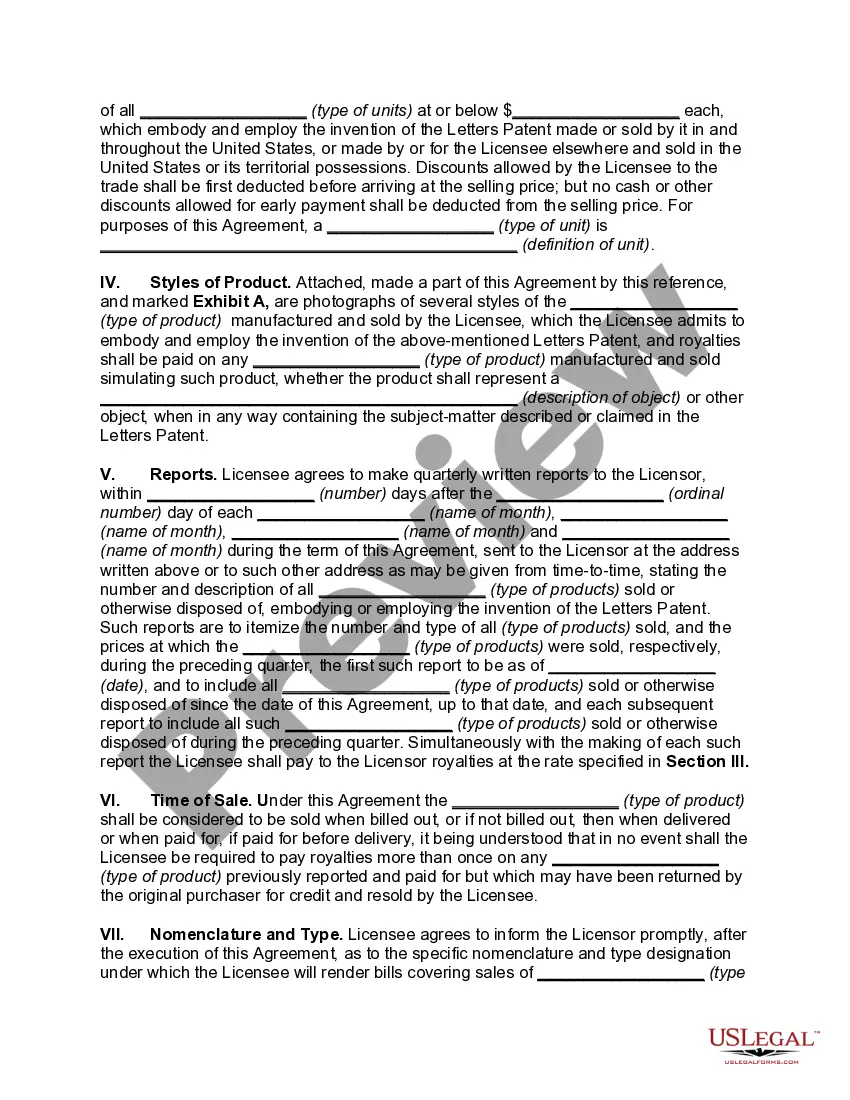
- Specifies the royalty structure, including rates and payment conditions.
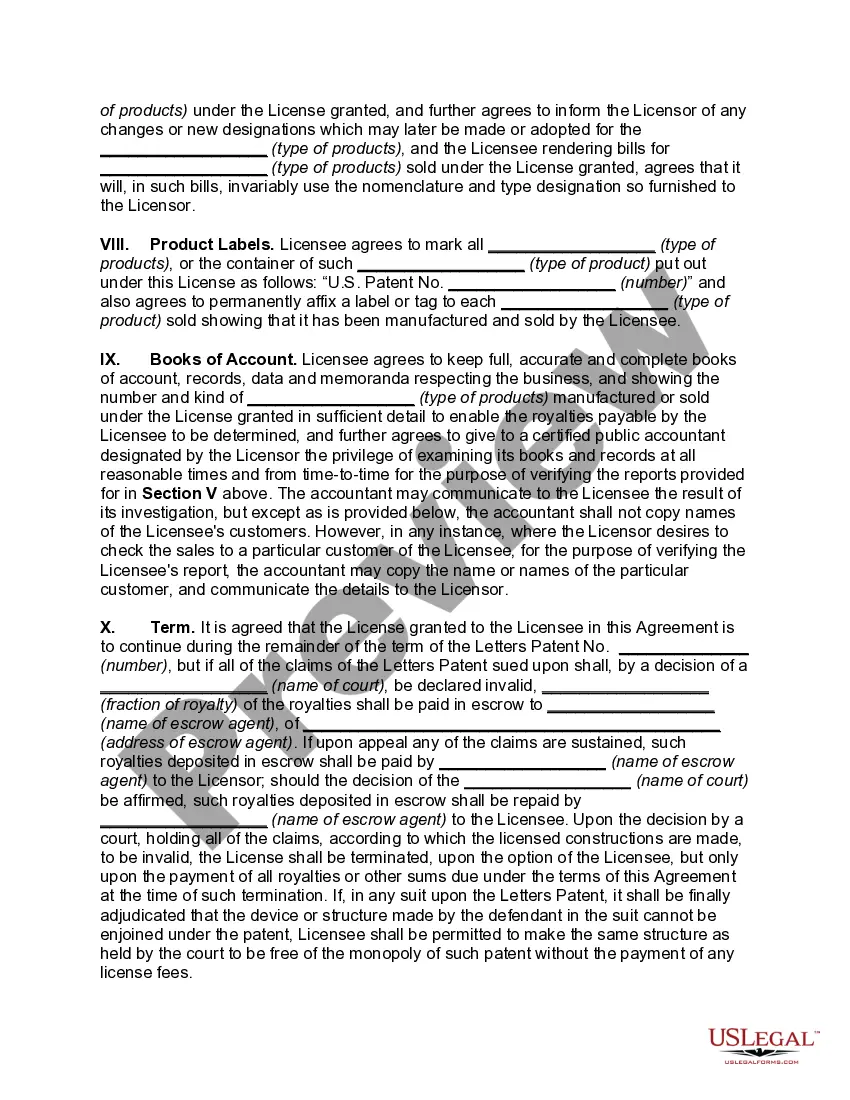
- Requires quarterly reporting of sales and product details from the Licensee.
- Includes termination conditions and rights concerning infringement.

Common use cases
This form should be used when a Licensor wants to allow another party, the Licensee, to manufacture and sell a product under a specific patent without granting exclusive rights. This is ideal in situations where the Licensor wishes to retain multiple licensing agreements or where they wish to expand the market reach of their product without losing control of their patent rights.
Who this form is for
- Licensors who own patents and want to monetize their inventions through licensing.
- Licensees seeking to manufacture and sell products based on patented inventions.
- Businesses involved in product development and distribution that require legal access to patented technologies.
- Attorneys or legal representatives assisting clients in drafting licensing agreements.
Completing this form step by step
- Identify and enter the names and addresses of the Licensor and Licensee at the beginning of the agreement.
- Provide the details of the patent, including the patent number and description.
- Specify the type of product for which the license is granted.
- Fill in the royalty rates and the conditions under which they apply.
- Include the terms for reporting sales figures and other required documentation.
- Sign and date the agreement, ensuring both parties have an opportunity to review the terms.
Does this document require notarization?
This form usually doesn’t need to be notarized. However, local laws or specific transactions may require it. Our online notarization service, powered by Notarize, lets you complete it remotely through a secure video session, available 24/7.
Get your form ready online
Our built-in tools help you complete, sign, share, and store your documents in one place.
Make edits, fill in missing information, and update formatting in US Legal Forms—just like you would in MS Word.
Download a copy, print it, send it by email, or mail it via USPS—whatever works best for your next step.
Sign and collect signatures with our SignNow integration. Send to multiple recipients, set reminders, and more. Go Premium to unlock E-Sign.
If this form requires notarization, complete it online through a secure video call—no need to meet a notary in person or wait for an appointment.
We protect your documents and personal data by following strict security and privacy standards.

Make edits, fill in missing information, and update formatting in US Legal Forms—just like you would in MS Word.

Download a copy, print it, send it by email, or mail it via USPS—whatever works best for your next step.

Sign and collect signatures with our SignNow integration. Send to multiple recipients, set reminders, and more. Go Premium to unlock E-Sign.

If this form requires notarization, complete it online through a secure video call—no need to meet a notary in person or wait for an appointment.

We protect your documents and personal data by following strict security and privacy standards.
Mistakes to watch out for
- Failing to clearly define the type of product covered by the license.
- Not specifying all applicable royalty terms and conditions.
- Omitting important patent information that could lead to legal disputes.
- Forgetting to include reporting obligations for the Licensee.
- Not obtaining proper signatures from both parties before executing the agreement.
Why complete this form online
- Convenience of downloading and completing the form at any time.
- Editability to customize the agreement according to specific needs.
- Reliability of receiving a professionally drafted legal document.
- Clear guidance throughout the completion process, minimizing chances of error.
Looking for another form?

Form popularity
FAQ
An exclusive license agreement covers a license that is limited to a specific field or subject, such as a market, territory, length of time, or context.The licensor can issue an unlimited number of licenses that have different rights within the same field, or licenses with the same rights in a different field.
The exclusivity gives the licensee the incentive to invest in developing the market potential of the technology.This is because the licensor could sell licenses to all of the company's competitors after the first licensee educates and cultivates the market for the product.
An example of a licensing agreement is a contract between the copyright holders of software and another company, allowing the latter to use the computer software for their daily business operations.
A Non-Exclusive Licence grants to the licensee the right to use the intellectual property, but means that the licensor remains free to exploit the same intellectual property and to allow any number of other licensees to also exploit the same intellectual property.
In copyright terminology, there are "non-exclusive" and "exclusive" licenses. When you give someone a non-exclusive license, you give the licensee permission to exercise the right in question, but you also reserve the right to continue exercising it yourself and to authorize others to do so.
Research companies that may be interested in your invention. Approach the companies most likely to license your invention. Request a confidentiality agreement. Get ready to negotiate the license. Make a proposal to the company. Negotiate with the prospective licensor. Sign the licensing agreement.
Download a template for a licensing agreement. Choose your role as the licensor or licensee. Define the license(s) in the agreement. Decide whether the license is exclusive or not. Settle the matter of fees and payment schedule. Add a renewal date and rules.
An example of a licensing agreement is a contract between the copyright holders of software and another company, allowing the latter to use the computer software for their daily business operations.
An exclusive license grants the licensee singular permission to exploit the intellectual property in question.Non-exclusive licenses allow more latitude in the number of licenses granted while allowing the licensor to retain the rights to further develop and exploit its own intellectual property.