Idaho Codicil to Will Form for Amending Your Will - Will Changes or Amendments
Overview of this form
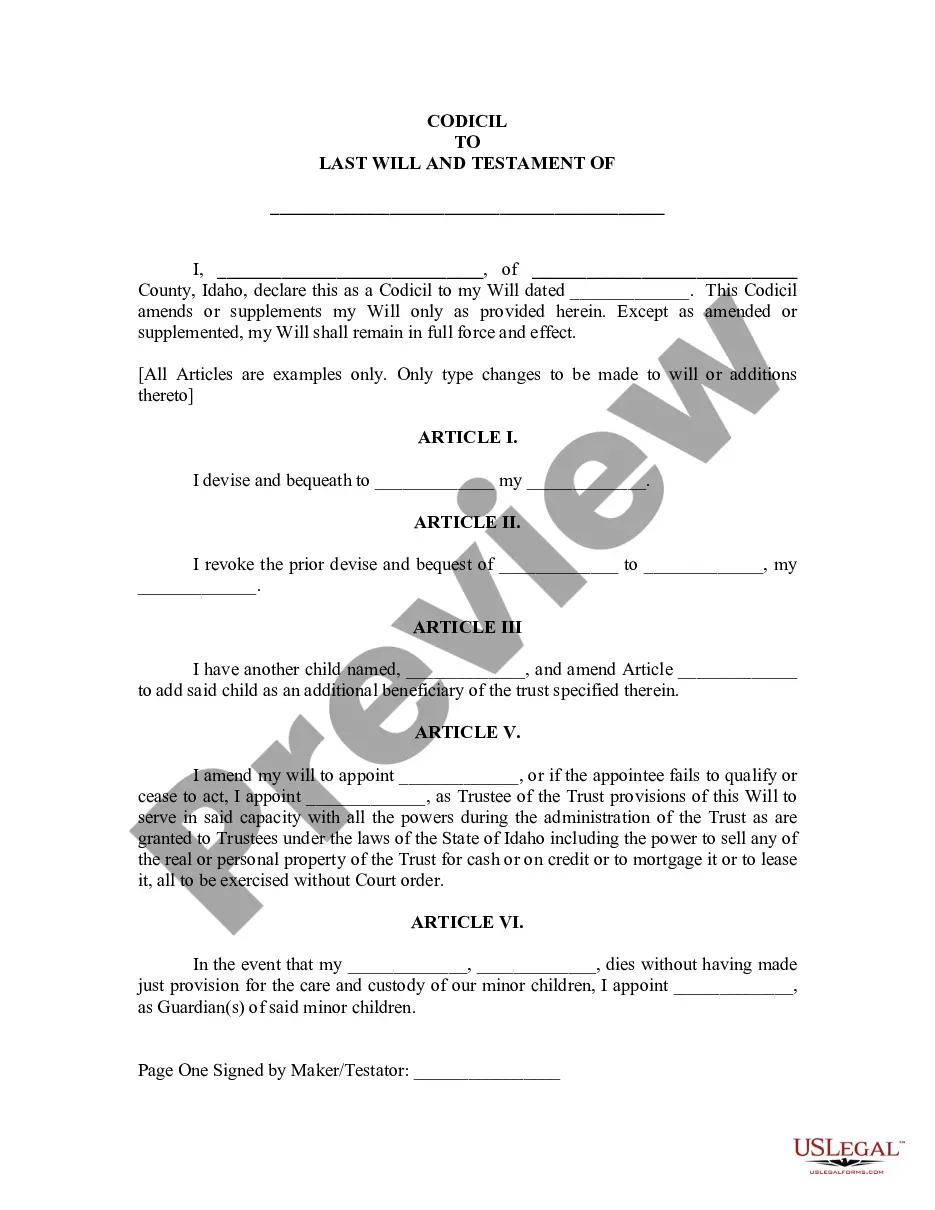
The Codicil to Will Form allows individuals to make amendments to their existing will without needing to create an entirely new document. This form maintains the validity of the original will, except for the changes specified within the codicil. It serves as a simple and effective way to update bequests, beneficiaries, and other provisions as life circumstances change.
Key components of this form
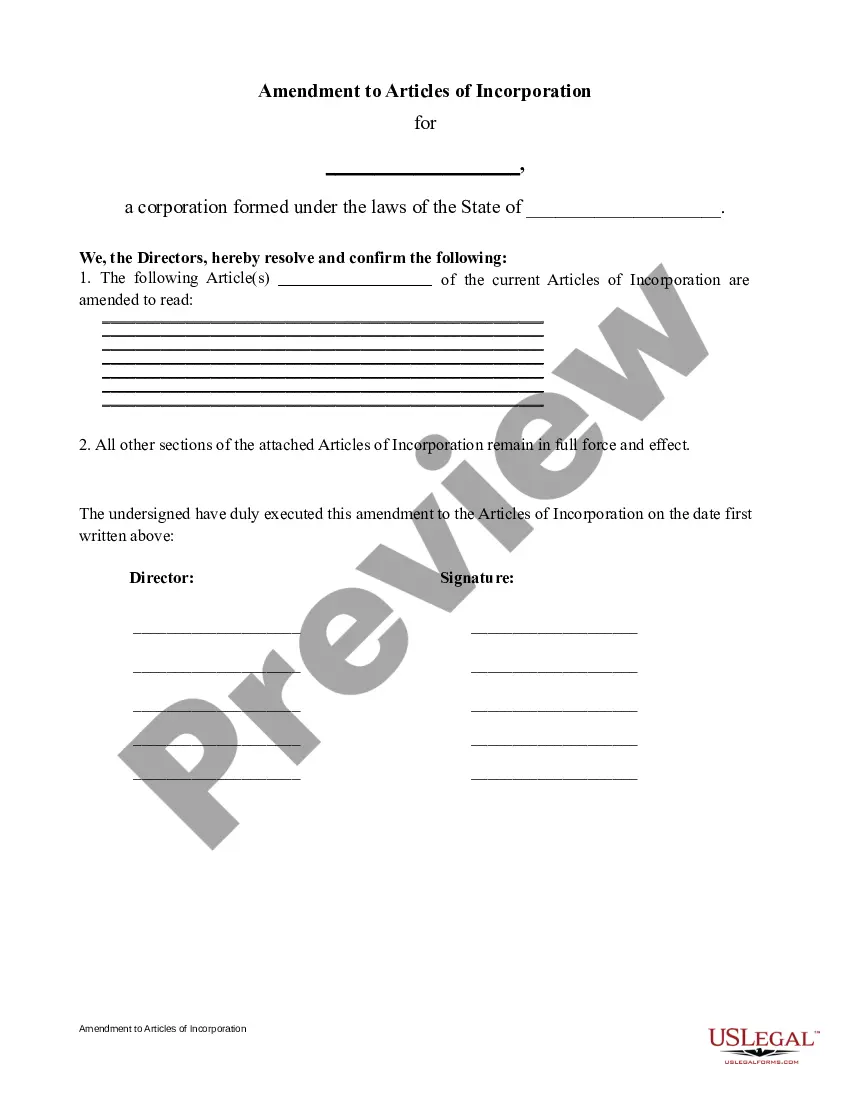
- Declaration of the codicil's intent to amend the original will.
- Specification of changes, including new bequests or revised beneficiaries.
- Appointment of trustees or guardians as necessary.
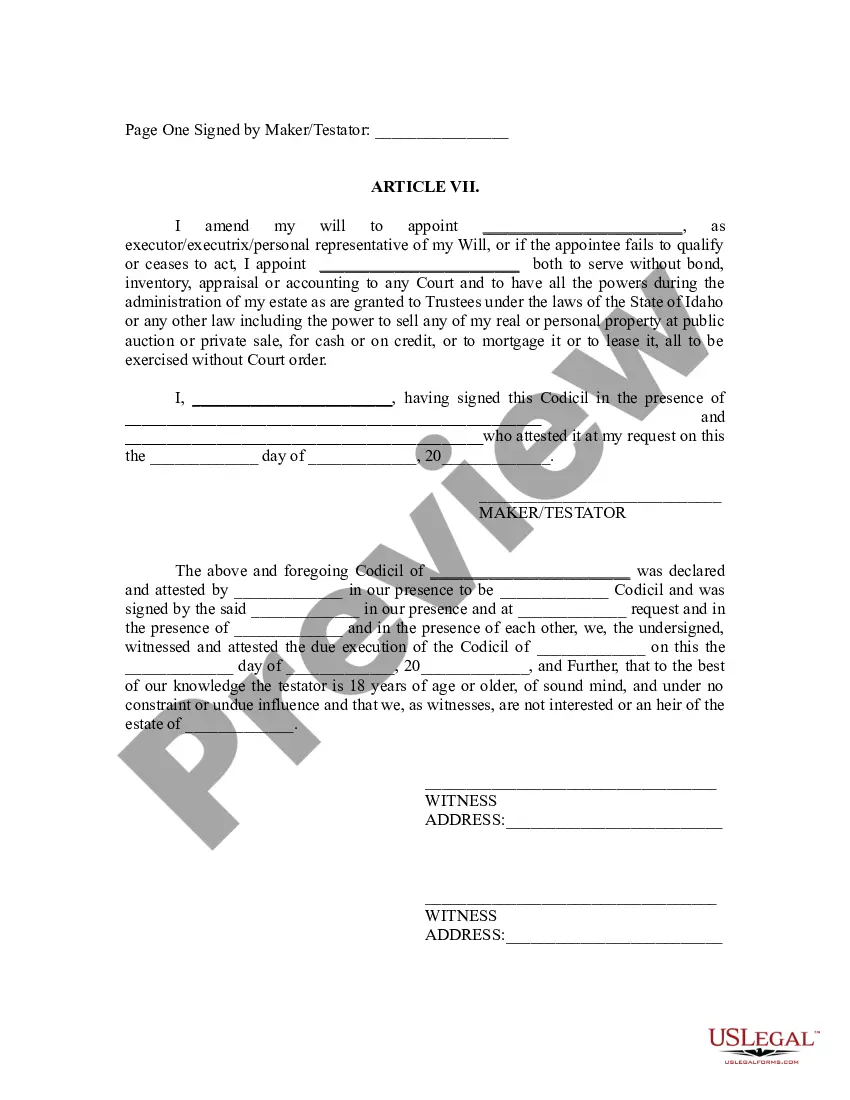
- Execution format and attestation clauses compliant with state law.
- Signatures of the testator and witnesses for validation.


When to use this form
This form should be used when a person wishes to make specific changes to their existing will without drafting a new one. Common scenarios for using a codicil include adding or removing beneficiaries, altering the designation of a guardian for minor children, or modifying the appointment of an executor. It is an appropriate choice for anyone looking to efficiently update their will due to changes in personal circumstances or preferences.
Who needs this form
- Individuals with an existing will who need to make amendments.
- People who have experienced changes in family status, such as marriage, divorce, or the birth of a child.
- Those wishing to update specific provisions of their will without starting from scratch.
- Residents of Idaho or individuals subject to Idaho law regarding wills and codicils.
Completing this form step by step
- Enter your name and county of residence at the top of the form.
- Specify the date of your original will and outline the amendments being made.
- List any changes to bequests, beneficiaries, or the appointment of trustees.
- Include the names and addresses of witnesses who will attest to your signature.
- Sign the codicil in the presence of witnesses; they should also sign to validate the document.
Notarization requirements for this form
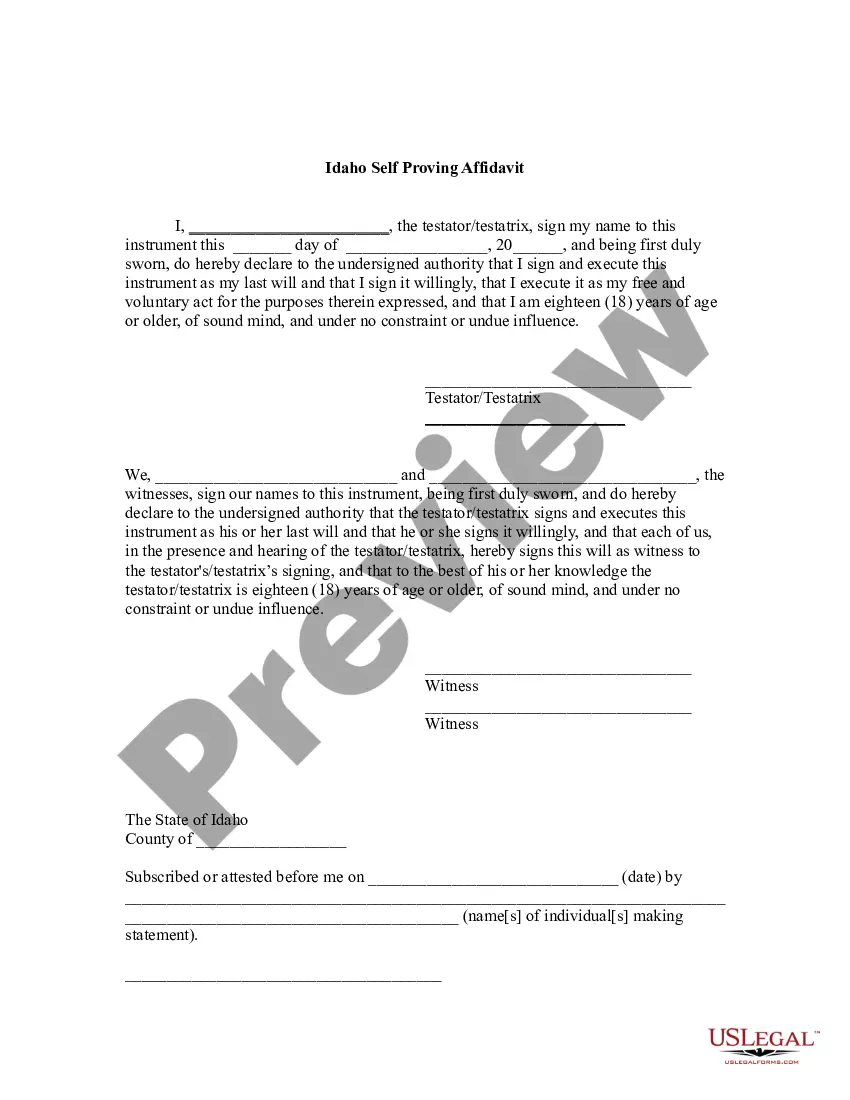
This form does not typically require notarization unless specified by local law. It is important to ensure that all signature and witness requirements are fulfilled to maintain the codicil's legal validity.
Get your form ready online
Our built-in tools help you complete, sign, share, and store your documents in one place.
Make edits, fill in missing information, and update formatting in US Legal Forms—just like you would in MS Word.
Download a copy, print it, send it by email, or mail it via USPS—whatever works best for your next step.
Sign and collect signatures with our SignNow integration. Send to multiple recipients, set reminders, and more. Go Premium to unlock E-Sign.
If this form requires notarization, complete it online through a secure video call—no need to meet a notary in person or wait for an appointment.
We protect your documents and personal data by following strict security and privacy standards.

Make edits, fill in missing information, and update formatting in US Legal Forms—just like you would in MS Word.

Download a copy, print it, send it by email, or mail it via USPS—whatever works best for your next step.

Sign and collect signatures with our SignNow integration. Send to multiple recipients, set reminders, and more. Go Premium to unlock E-Sign.

If this form requires notarization, complete it online through a secure video call—no need to meet a notary in person or wait for an appointment.

We protect your documents and personal data by following strict security and privacy standards.
Avoid these common issues
- Failing to properly sign and date the codicil, which can invalidate it.
- Not involving appropriate witnesses, leading to potential legal challenges.
- Leaving ambiguous language that might confuse the intent of the amendments.
- Overlooking state-specific signing requirements that may affect the codicil's validity.
Why use this form online
- Immediate access to a legally detailed and professionally drafted document.
- The convenience of downloading and editing the form as needed.
- Reliable templates that comply with local laws and regulations.
- Time-saving process, eliminating the need for attorney visits for straightforward amendments.
What to keep in mind
- A codicil is a useful tool for amending an existing will without starting over.
- Proper execution and witness requirements are crucial for the codicil's validity.
- Always tailor the changes thoughtfully to avoid unintended consequences.
Looking for another form?




Form popularity
FAQ
Wills Law in Idaho: Overview In the state of Idaho, testators must have their wills signed by at least two witnesses who either witnessed the actual signing, or the testator's own acknowledgment of the signing.Valid if signature and material provisions are in handwriting of testator; does not need witnesses.
No, in Idaho, you do not need to notarize your will to make it legal. However, Idaho allows you to make your will "self-proving" and you'll need to go to a notary if you want to do that. A self-proving will speeds up probate because the court can accept the will without contacting the witnesses who signed it.
Here's our pricing for a Simple Will: For an unmarried person, a Last Will and Testament will cost $595. For a married couple, the two Wills together will cost $795.
A notarized will does not need to be probated.When a person dies leaving behind a will that is not notarized, the law requires that its validity be ascertained by a notary or by a court. Similarly, any non-notarized modification made to a will must be probated, whether the will is notarized or not.
Idaho law recognizes handwritten wills, referred to as holographic wills. Material provisions of the will and the signature must be in the handwriting of the person making the will.
Must a living will be witnessed or notarized to be valid? No. As a result of changes to Idaho law made by the 2005 legislature, it is no longer necessary to have either a witness to your execution of a Living Will, nor to have your signature notarized.