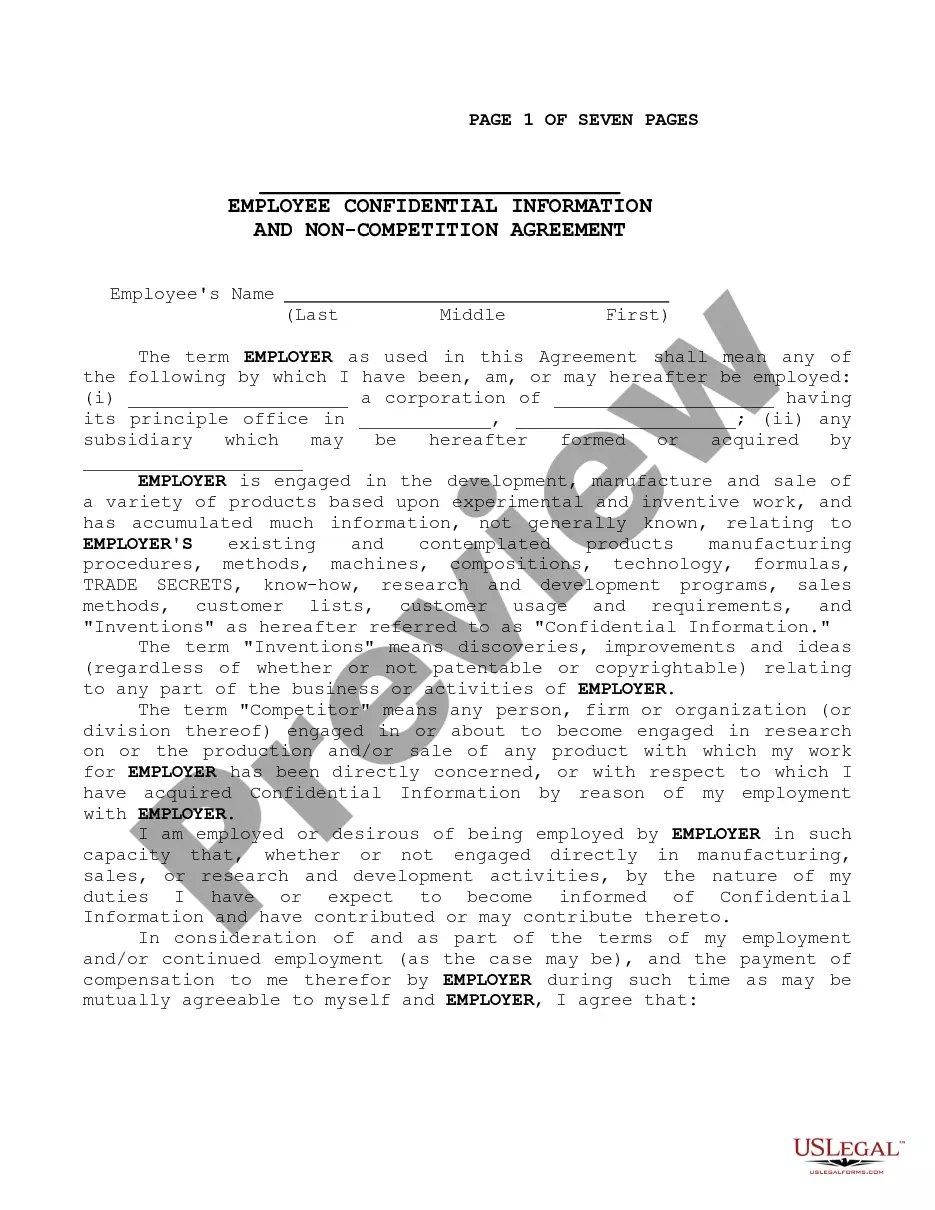
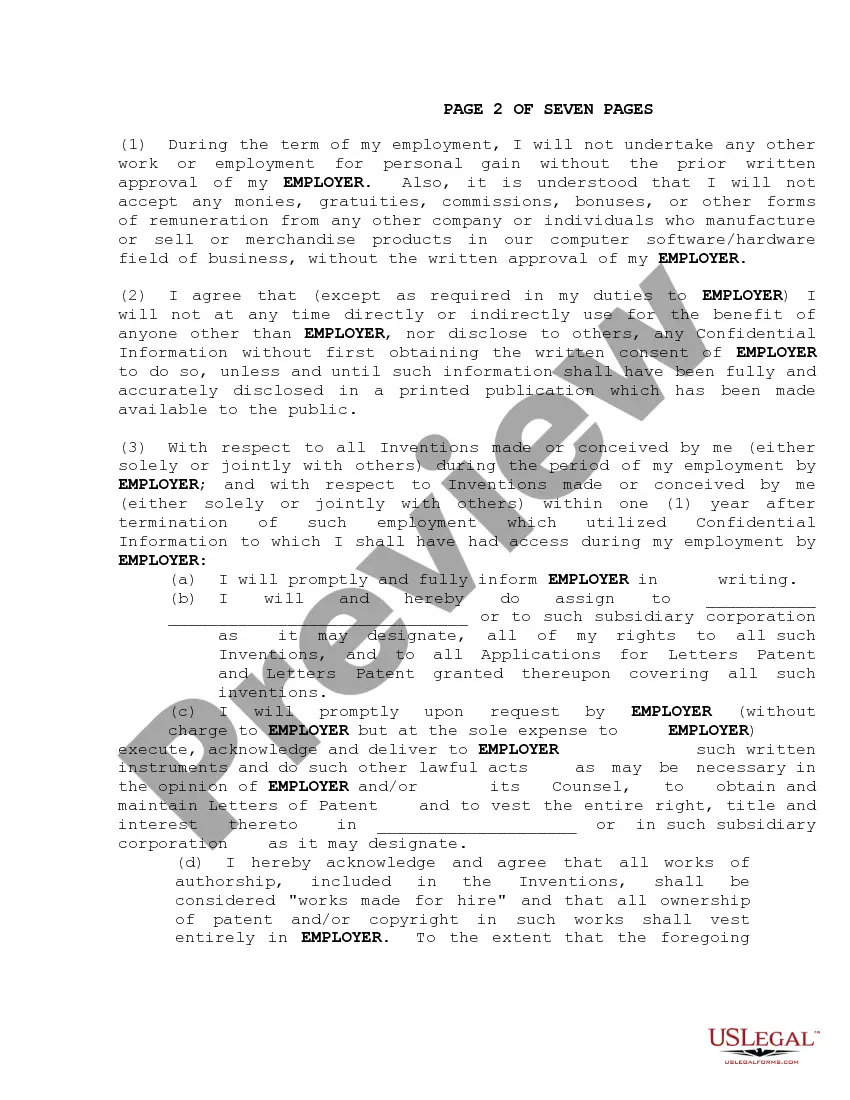
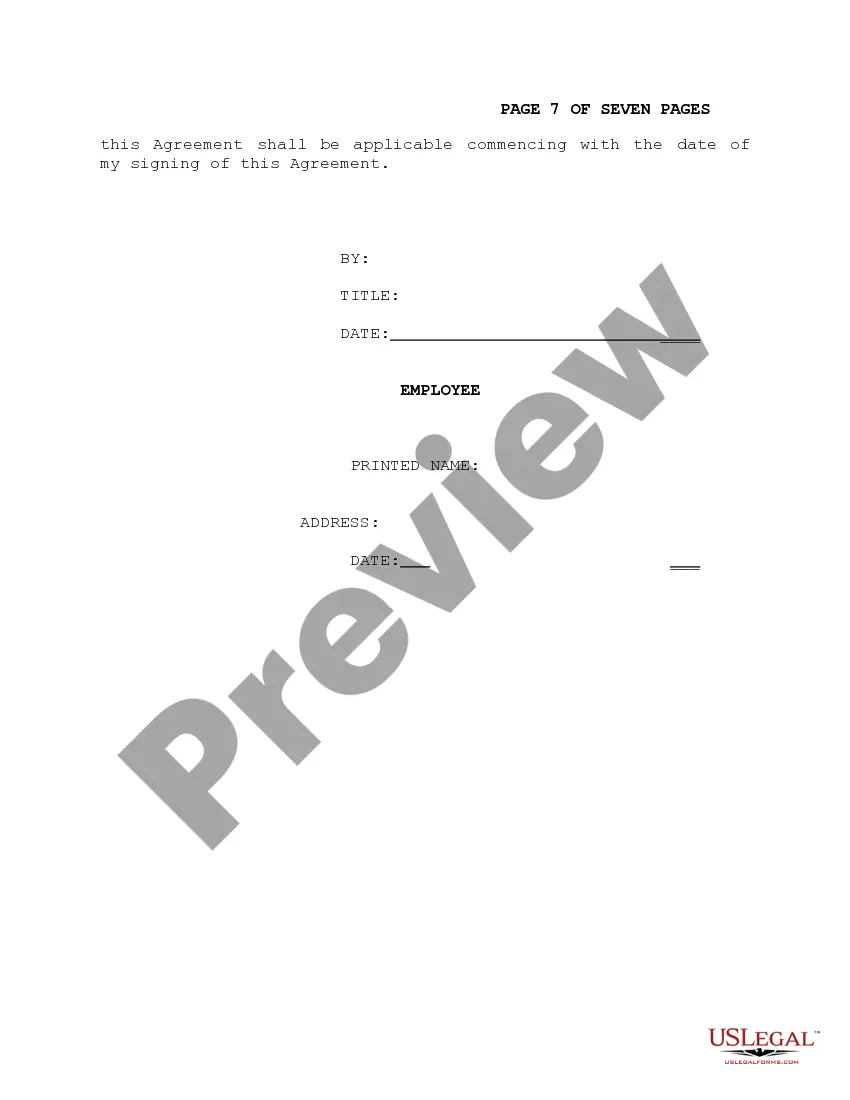
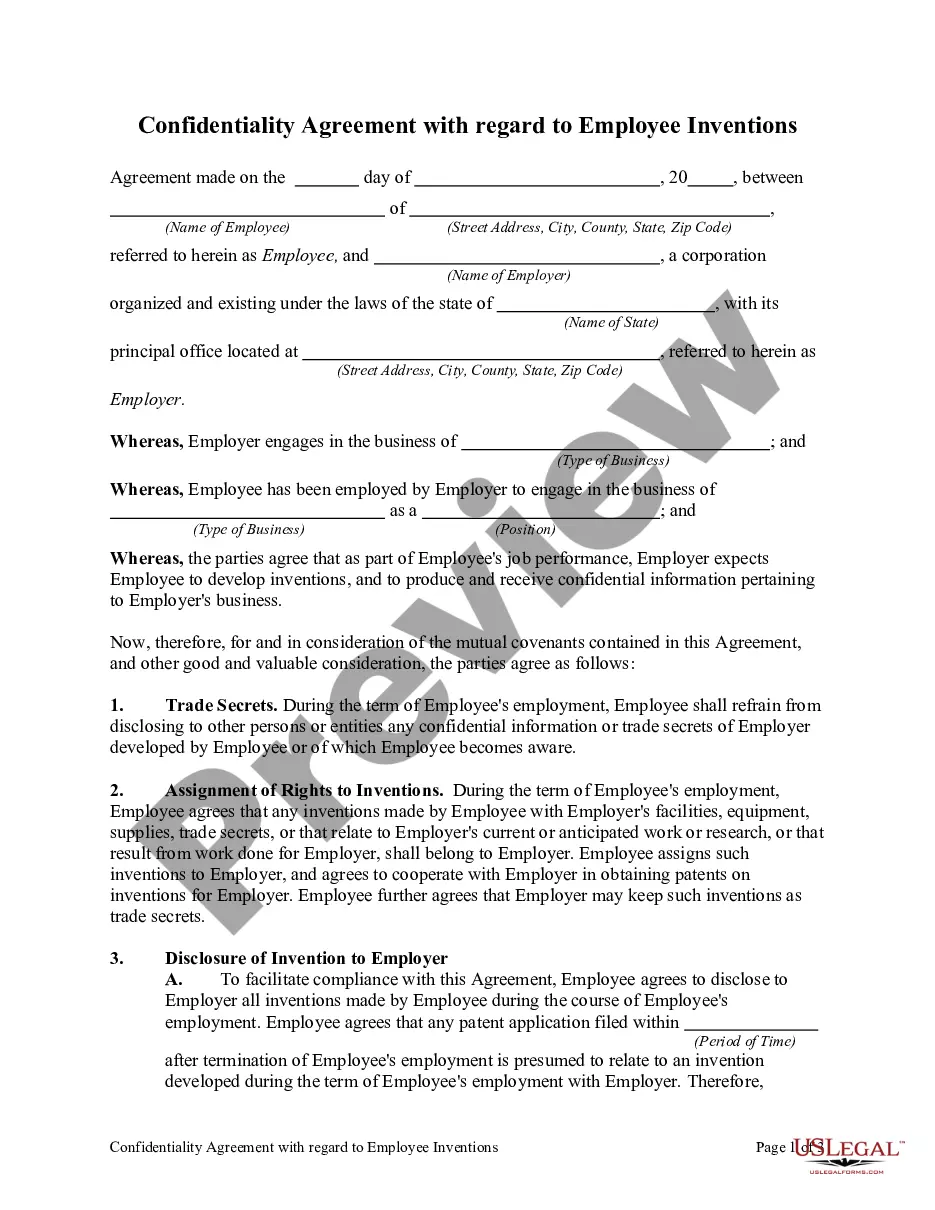
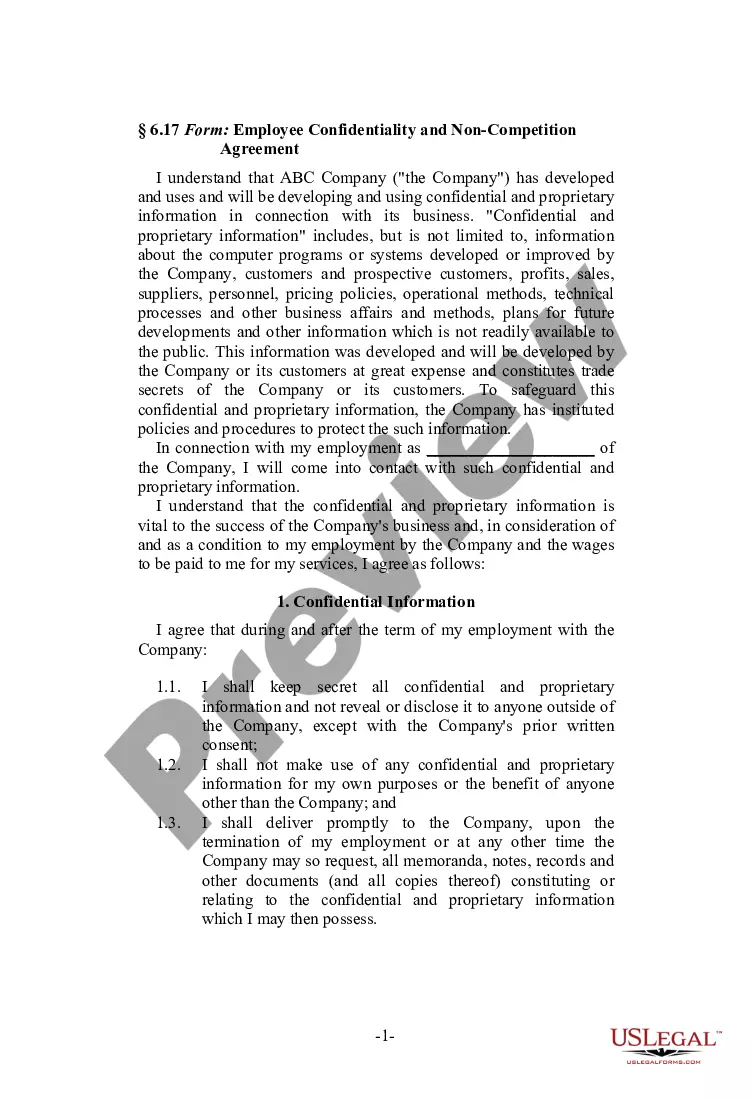
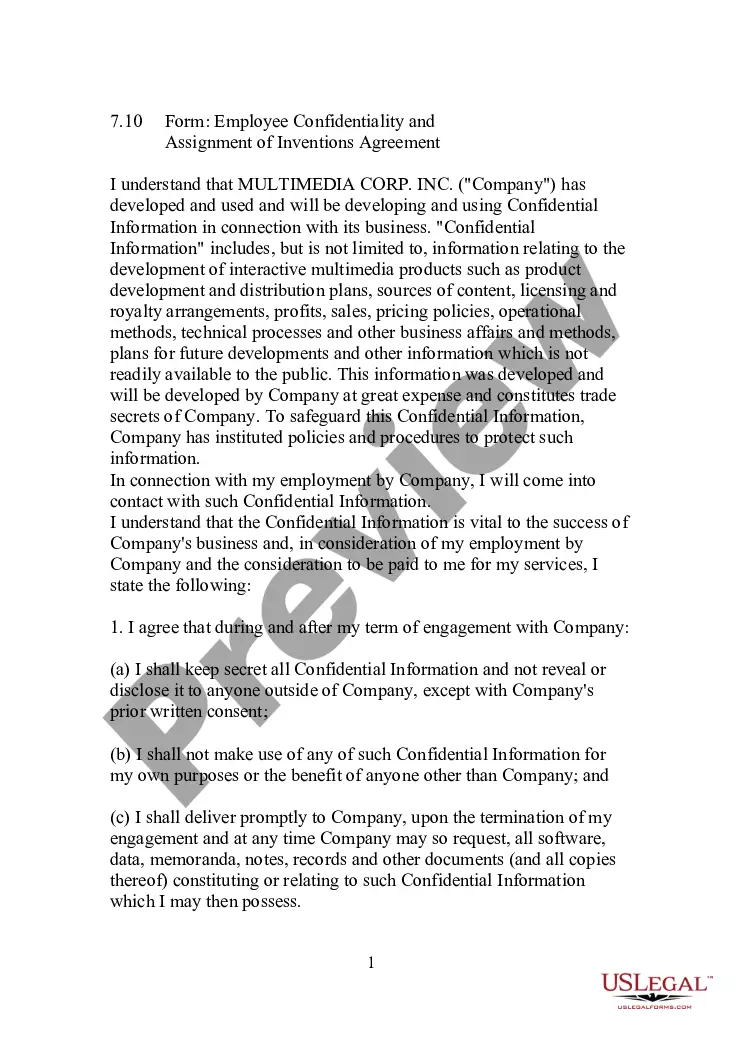
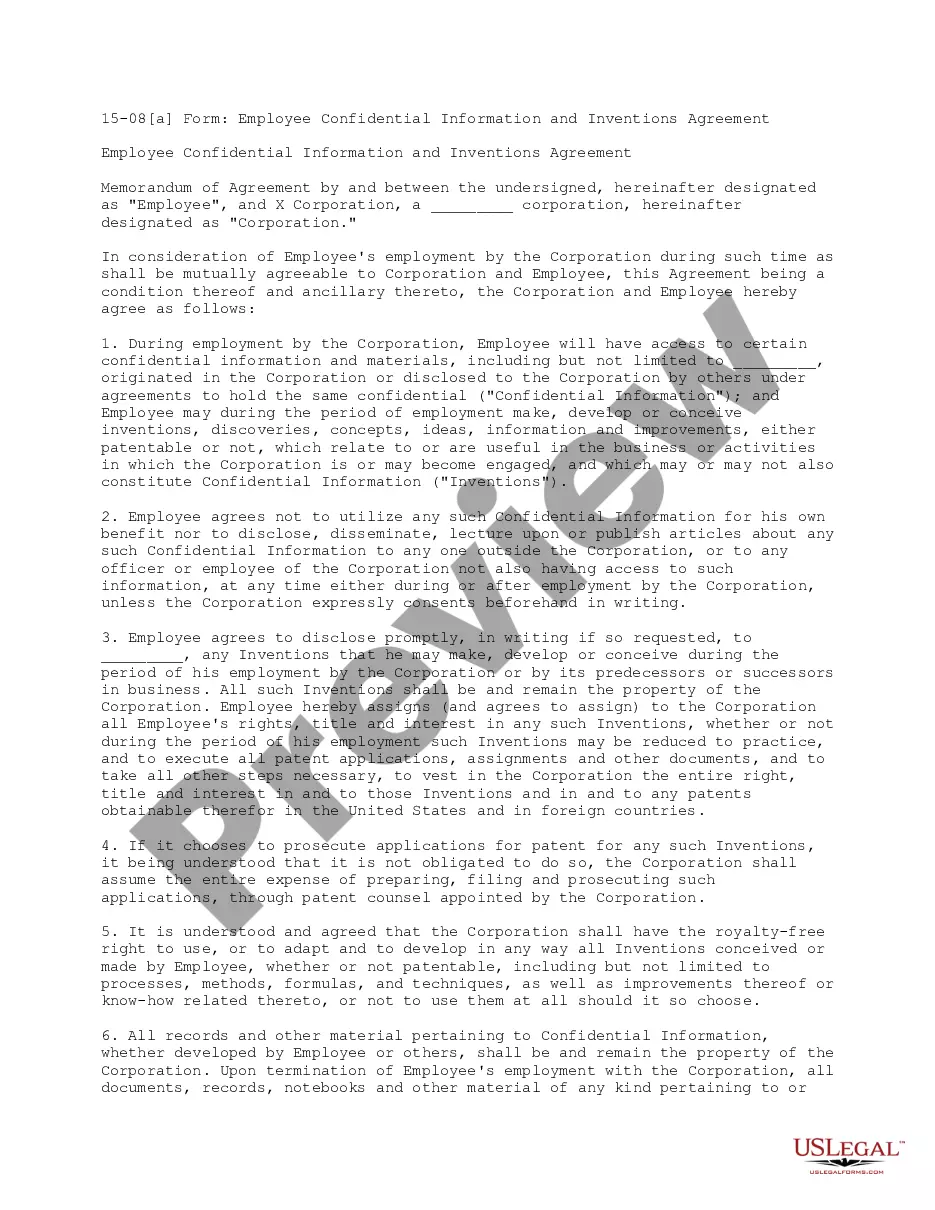
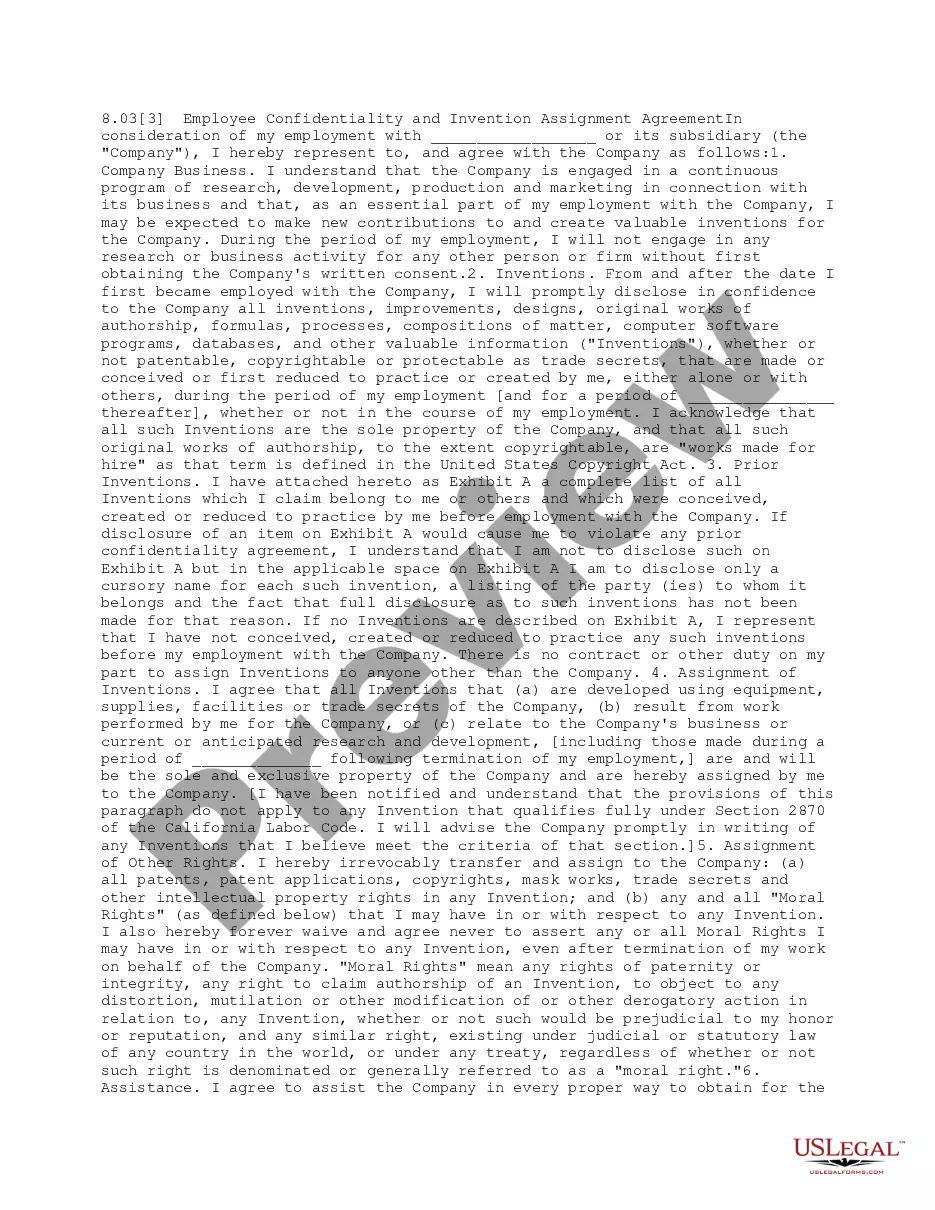
This form is an Employee Confidential Information and Non-Competition Agreement. The employer agrees that during the term of his/her employment with the manufacturer, he/she will not undertake any other work for personal gain without the prior written approval of the manufacturer. The employer also acknowledges that he/she may not assign any rights under the agreement.
Idaho Employee Confidential Information and Noncompetition Agreement - Inventions
State:
Multi-State
Control #:
US-KWP-0024
Format:
Word;
Rich Text
Instant download
Description
Free preview
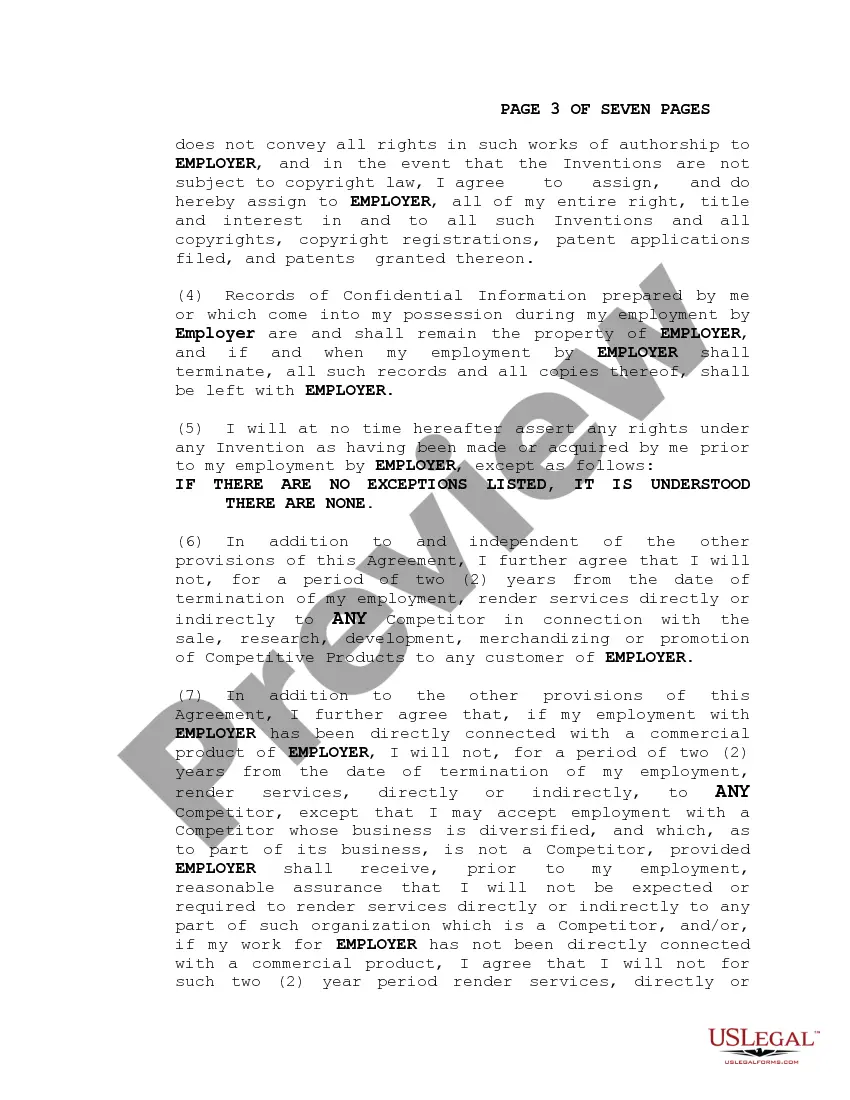
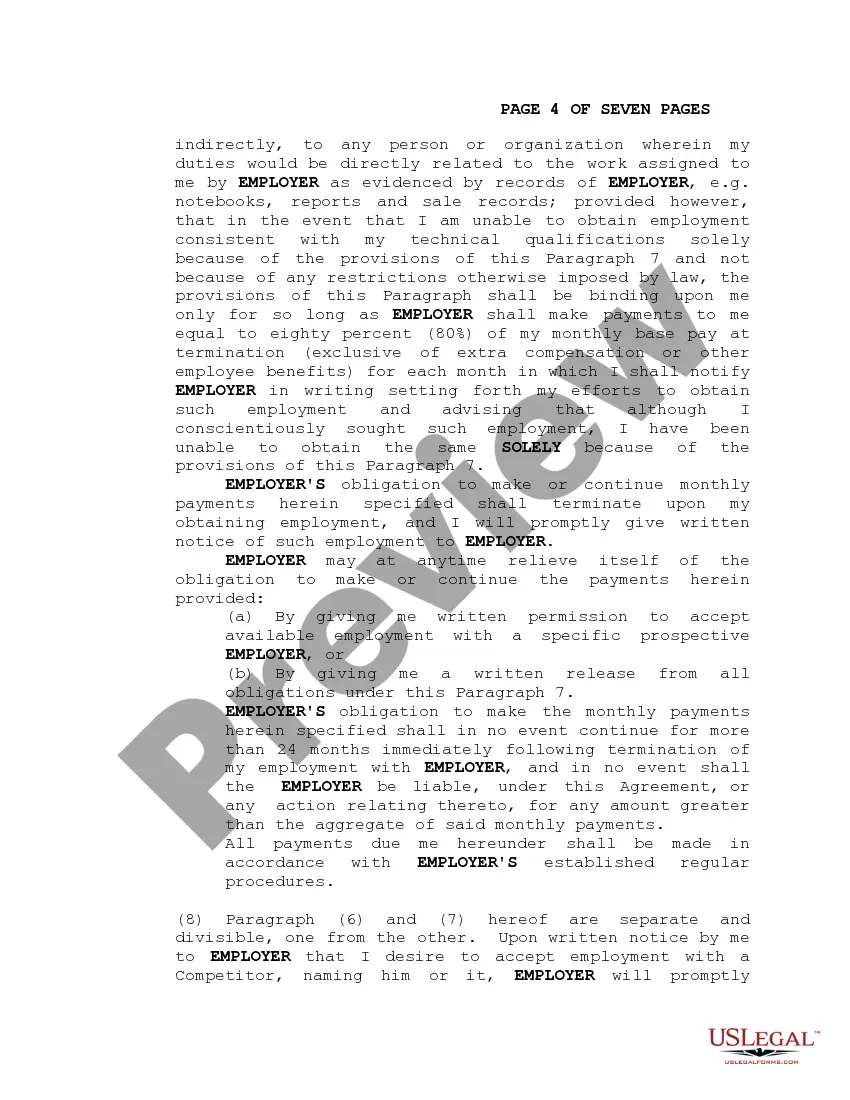
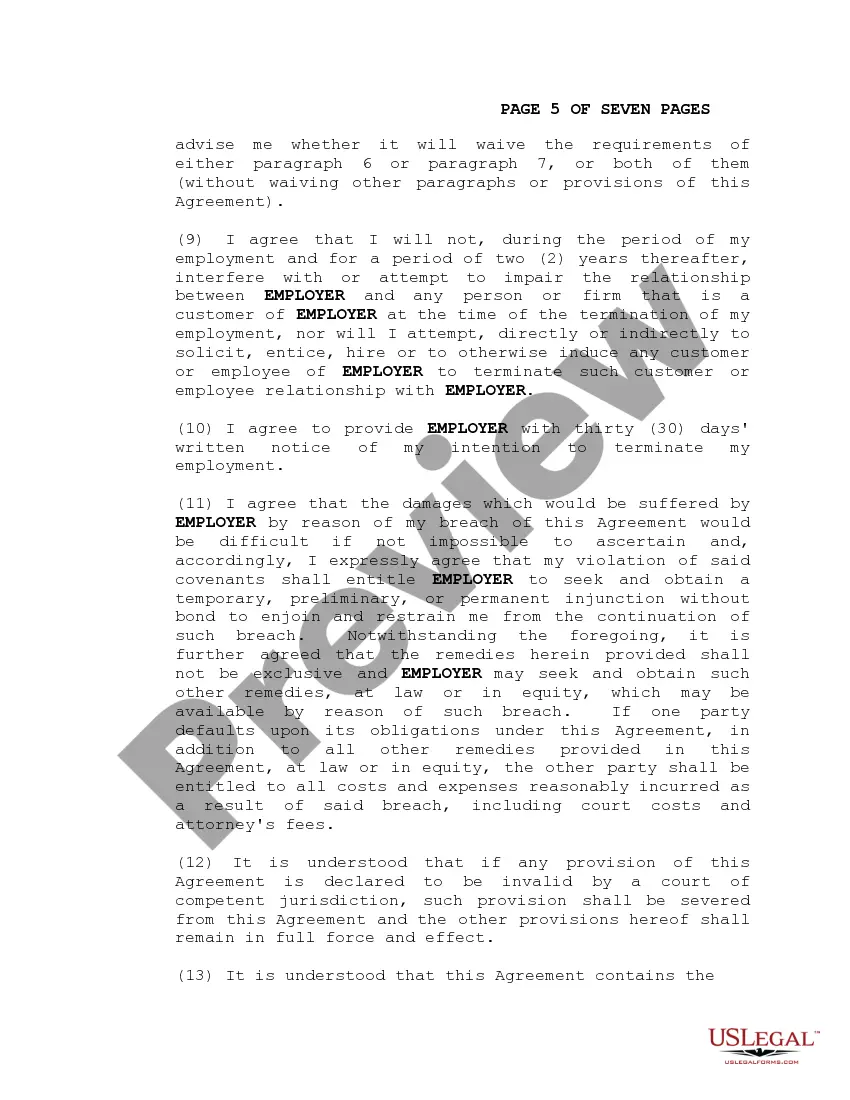
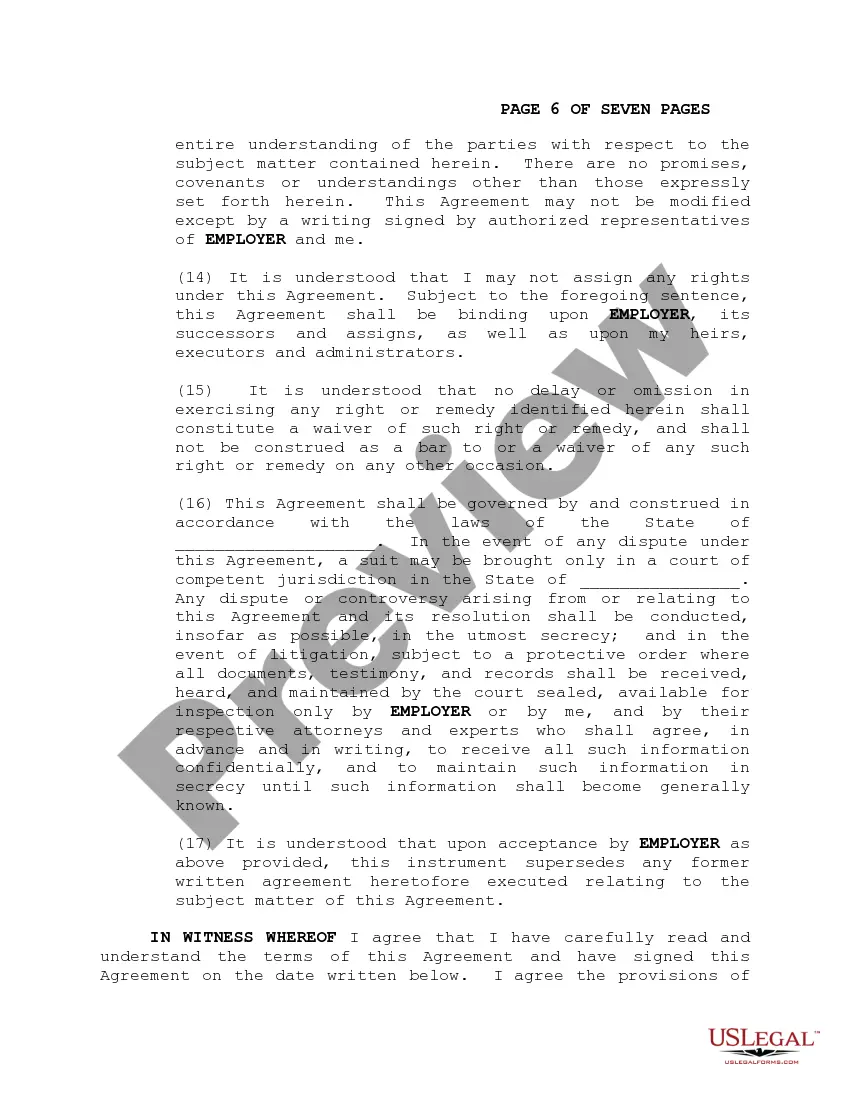
How to fill out Employee Confidential Information And Noncompetition Agreement - Inventions?
It is feasible to spend hours online searching for the appropriate legal document template that meets the federal and state requirements you need.
US Legal Forms provides thousands of legal forms that can be reviewed by professionals.
You can actually download or print the Idaho Employee Confidential Information and Noncompetition Agreement - Inventions from our service.
- If you possess a US Legal Forms account, you can Log In and click the Obtain button.
- Then, you can complete, modify, print, or sign the Idaho Employee Confidential Information and Noncompetition Agreement - Inventions.
- Every legal document template you obtain is yours forever.
- To get another copy of the downloaded form, visit the My documents tab and click the corresponding button.
- If you're using the US Legal Forms website for the first time, follow the simple instructions below.
- First, ensure you have selected the correct document template for the region/area of your choice.
- Review the form description to confirm that you have chosen the correct form.
- If available, use the Preview button to look through the document template as well.
- If you wish to find another version of the form, use the Search field to discover the template that meets your needs and requirements.
- Once you have found the template you need, click on Acquire now to proceed.
- Select the pricing plan you want, enter your details, and register for an account on US Legal Forms.
- Complete the purchase.
- You can use your credit card or PayPal account to pay for the legal form.
- Choose the format of the document and download it to your device.
- Make modifications to your document if necessary.
- You can complete, edit, sign, and print the Idaho Employee Confidential Information and Noncompetition Agreement - Inventions.
- Obtain and print thousands of document templates using the US Legal Forms website, which offers the largest collection of legal forms.
- Utilize professional and state-specific templates to manage your business or personal needs.
Form popularity
FAQ
Typically, anything created at work may belong to the employer, especially if it relates to the business or was produced using company resources. The Idaho Employee Confidential Information and Noncompetition Agreement - Inventions plays a key role in defining ownership rights. If you're uncertain about ownership of your creations, it is beneficial to review your employment agreement or seek legal advice to clarify your rights.
Ownership of an invention often lies with the creator unless specified otherwise in a legal agreement. In the context of the Idaho Employee Confidential Information and Noncompetition Agreement - Inventions, your employer might have rights to inventions made during your employment. To ensure you understand who owns your invention, carefully examine your agreement and consider consulting a legal professional.
Companies can claim ownership of ideas that are generated within the scope of employment, particularly if they are related to the company's business. The Idaho Employee Confidential Information and Noncompetition Agreement - Inventions typically addresses these issues. If you have concerns about your ideas being owned by your employer, reviewing your agreement or seeking legal guidance is advisable to protect your interests.
Whether your employer owns your invention depends on the circumstances under which it was created. If your invention was developed using company resources or during work hours, the Idaho Employee Confidential Information and Noncompetition Agreement - Inventions may grant your employer ownership rights. It's crucial to understand the terms of your agreement to determine your rights regarding inventions created while employed.
In general, an employer may have rights to the intellectual property you create while working for them, especially if it relates to your job duties. The Idaho Employee Confidential Information and Noncompetition Agreement - Inventions often outlines these rights clearly. It is essential to review this agreement, as it can specify the ownership of inventions or ideas developed during your employment. Consulting with a legal expert can provide clarity on your situation.
Yes, non-compete agreements are enforceable in Idaho, but they must meet specific criteria. The Idaho Employee Confidential Information and Noncompetition Agreement - Inventions must protect legitimate business interests, such as trade secrets or confidential information. Additionally, the agreement should be reasonable in terms of duration, geographic scope, and the type of work restricted. If you're considering such an agreement, it’s wise to consult a legal expert or utilize platforms like US Legal Forms for tailored solutions.
In the absence of a written agreement, an employee's patentable inventions may not belong to the employer, except in special circumstances. The employee employer relationship does not necessarily entitle the employer to ownership of inventions made by the employee.
Also known as Proprietary Information and Inventions Assignment Agreements (or PIIAAs), Confidential Information and Inventions Assignment Agreements ensure that intellectual property and other proprietary rights created by employees during the course of their employment are assigned to the employer.
An invention assignment agreement is a contract in which an employee or independent contractor assigns intellectual property rights for their services to the company. These agreements typically appear in other employment documents such as confidentiality agreements or an independent contractor agreement.
The general rule is that the inventor is the owner of the invention unless: the inventor has assigned ownership to a third party under an assignment agreement before the conception of the invention; in this case, ownership passes to the assignee at the date of conception of the invention.