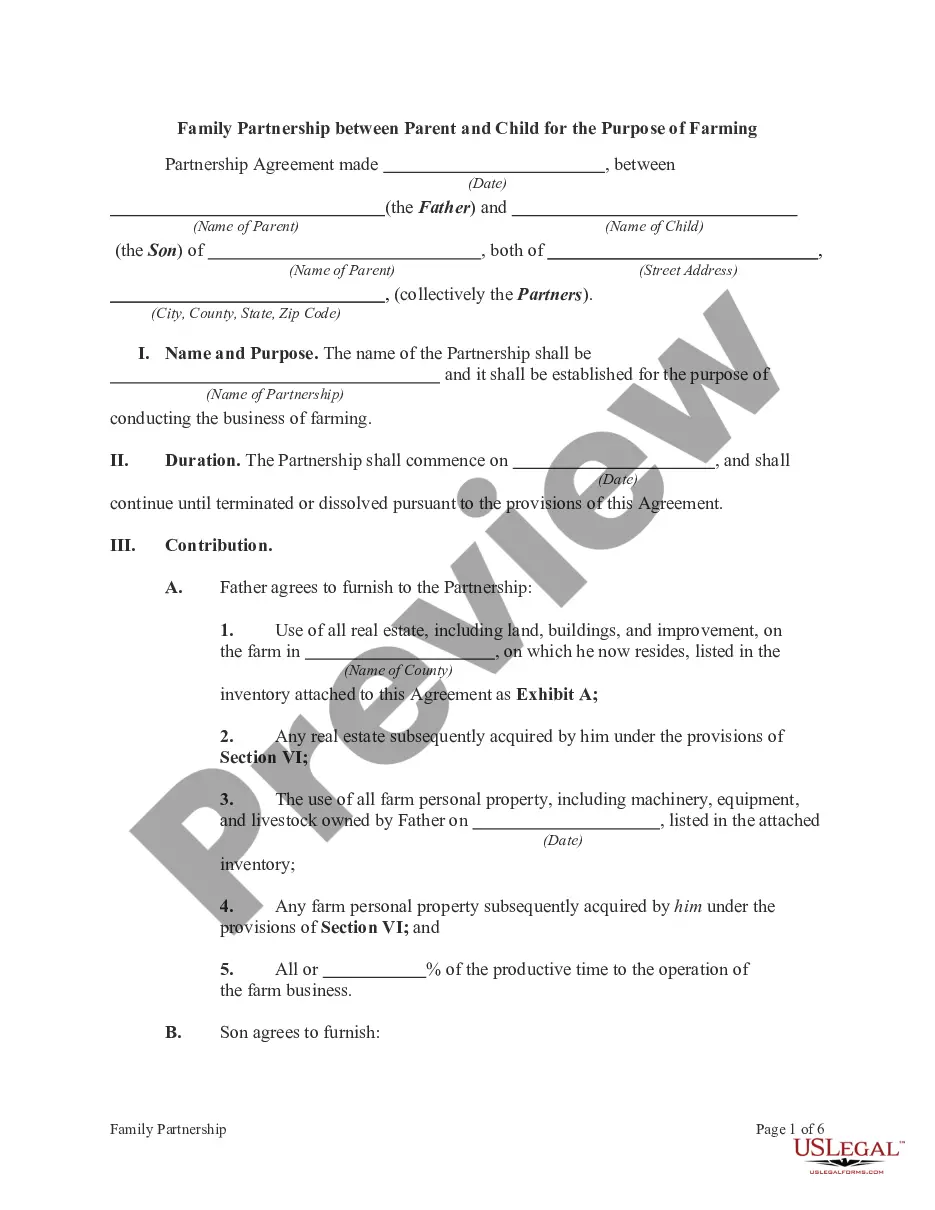
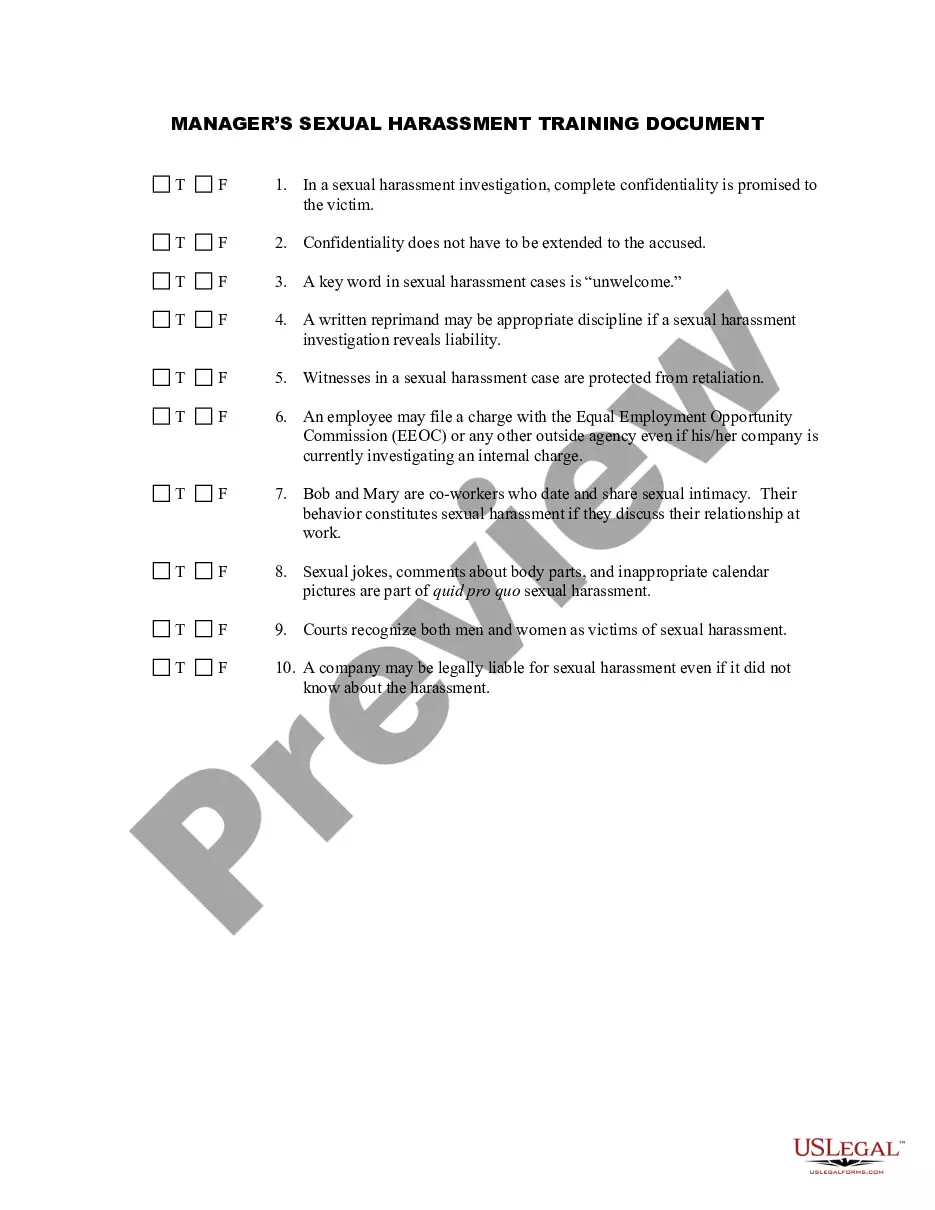
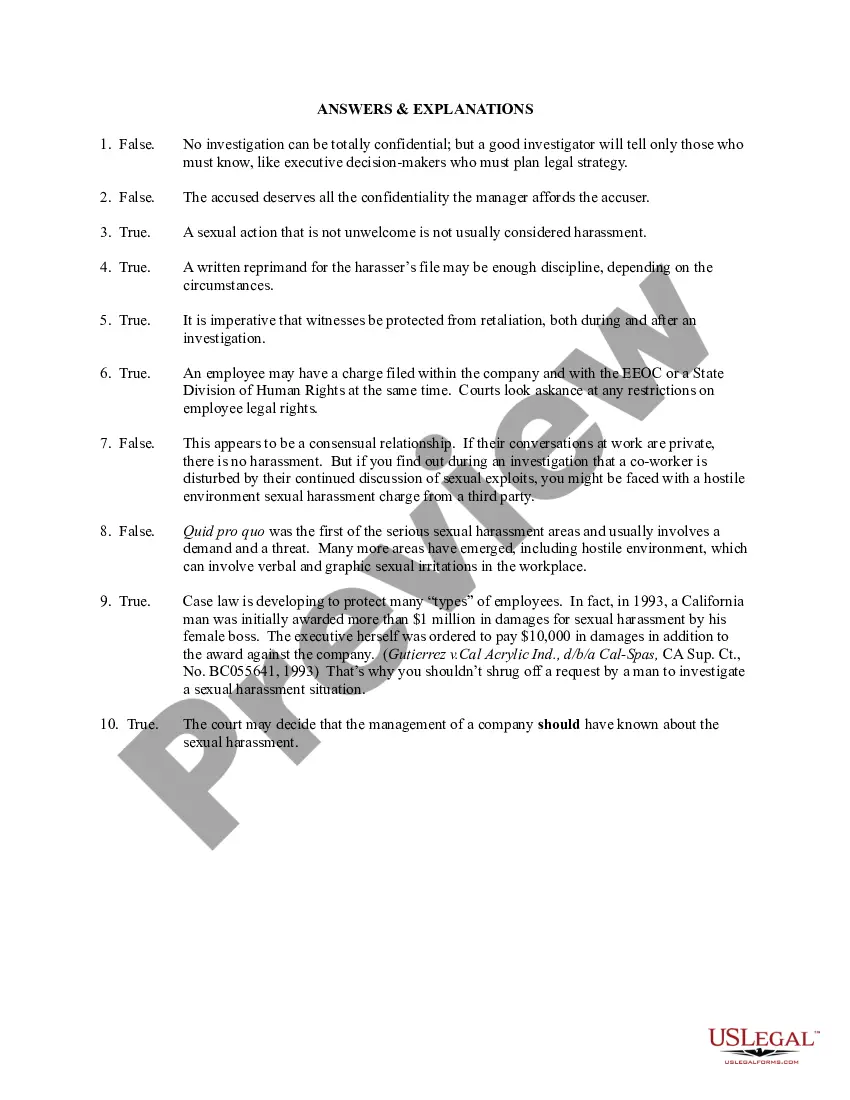
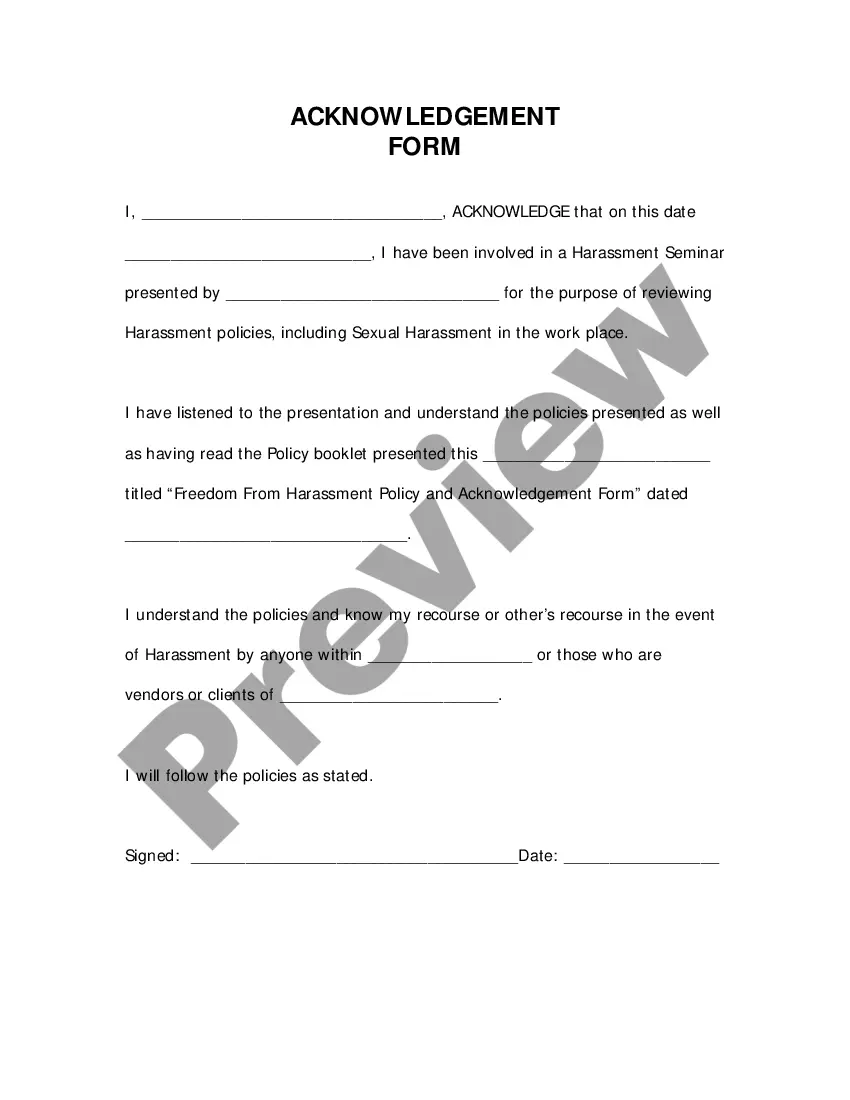
Idaho Manager's Sexual Harassment Training Document - Workplace
Description
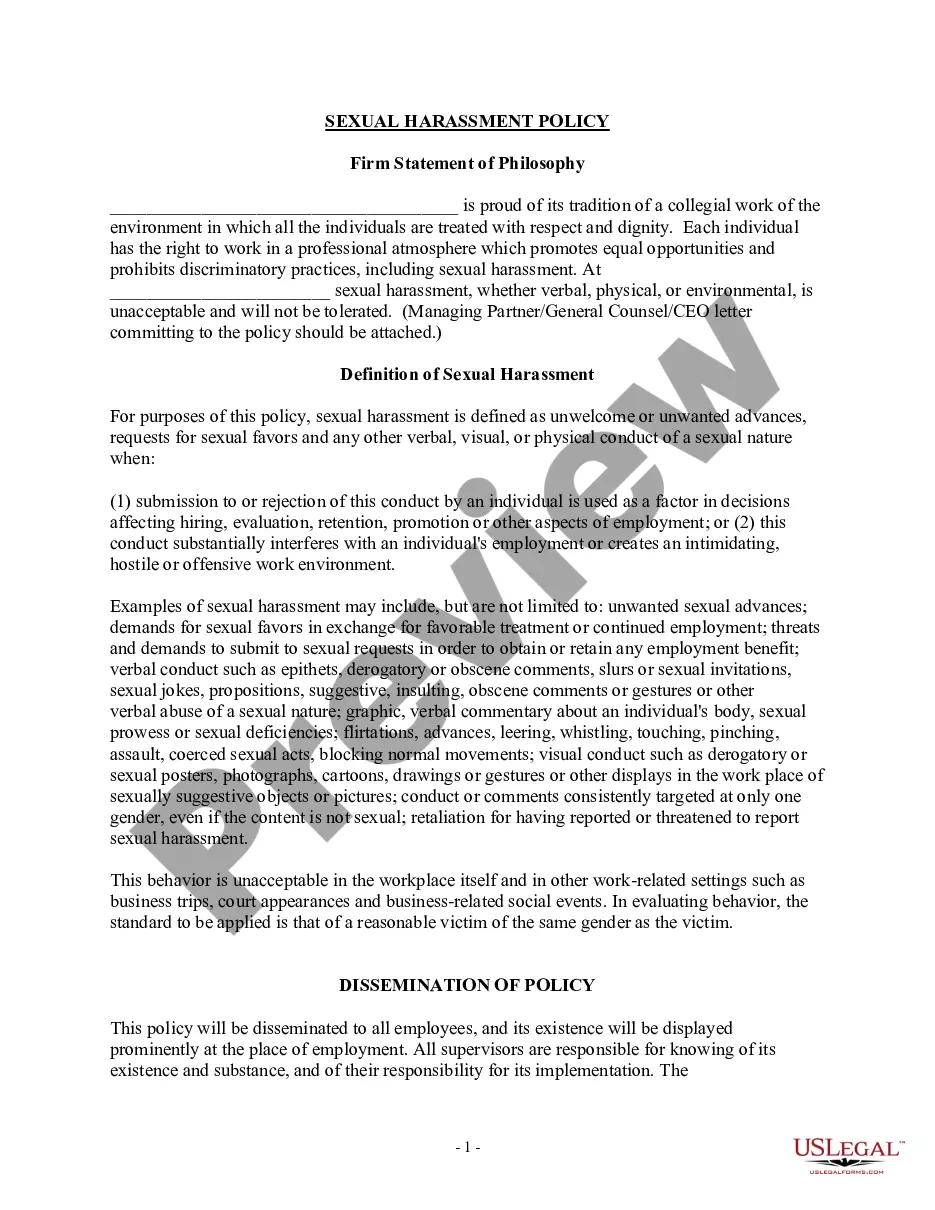
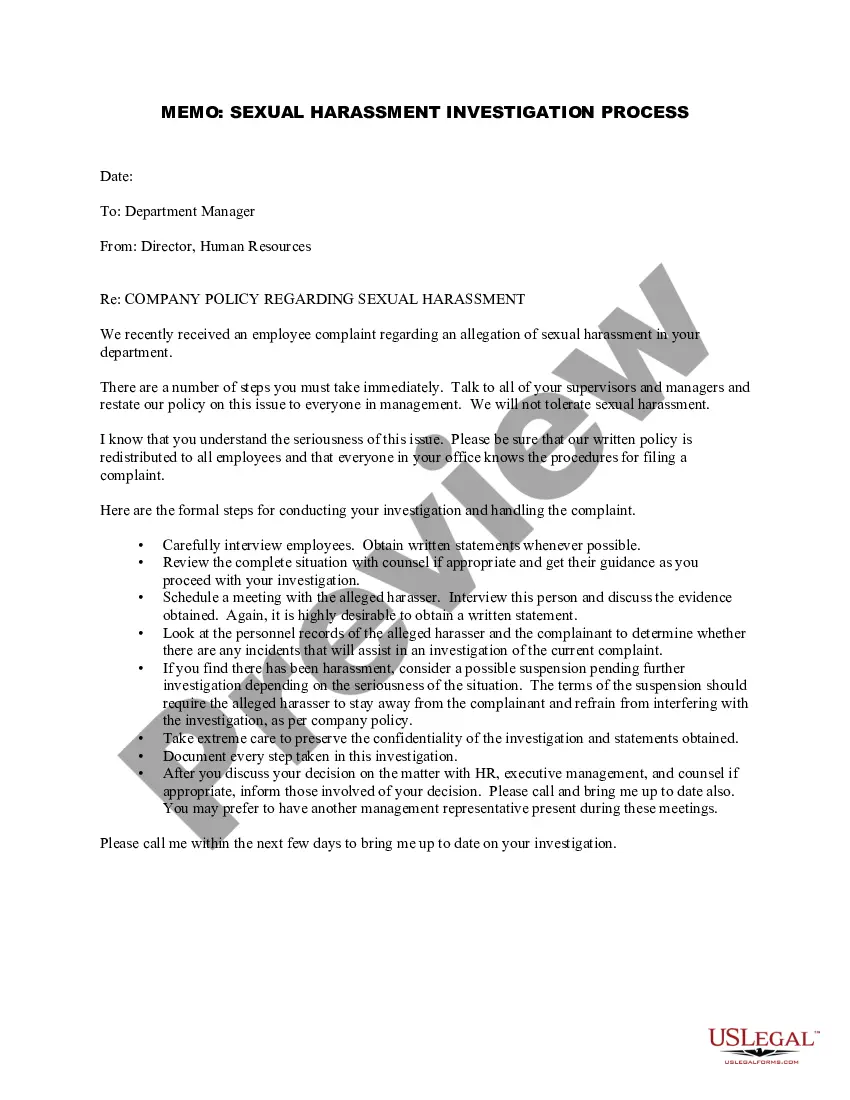
Get your form ready online
Our built-in tools help you complete, sign, share, and store your documents in one place.
Make edits, fill in missing information, and update formatting in US Legal Forms—just like you would in MS Word.
Download a copy, print it, send it by email, or mail it via USPS—whatever works best for your next step.
Sign and collect signatures with our SignNow integration. Send to multiple recipients, set reminders, and more. Go Premium to unlock E-Sign.
If this form requires notarization, complete it online through a secure video call—no need to meet a notary in person or wait for an appointment.
We protect your documents and personal data by following strict security and privacy standards.

Make edits, fill in missing information, and update formatting in US Legal Forms—just like you would in MS Word.

Download a copy, print it, send it by email, or mail it via USPS—whatever works best for your next step.

Sign and collect signatures with our SignNow integration. Send to multiple recipients, set reminders, and more. Go Premium to unlock E-Sign.

If this form requires notarization, complete it online through a secure video call—no need to meet a notary in person or wait for an appointment.

We protect your documents and personal data by following strict security and privacy standards.
Looking for another form?


How to fill out Manager's Sexual Harassment Training Document - Workplace?
US Legal Forms - one of the largest collections of legal documents in the US - offers a vast selection of legal form templates that you can download or print.
By using the website, you can access thousands of forms for both business and personal purposes, categorized by types, states, or keywords. You can quickly find the latest versions of forms such as the Idaho Manager's Sexual Harassment Training Document - Workplace.
If you have a subscription, Log In and download the Idaho Manager's Sexual Harassment Training Document - Workplace from the US Legal Forms library. The Download button will appear on each form you view. You can access all your previously saved forms from the My documents tab in your account.
If you are satisfied with the form, confirm your selection by clicking the Purchase now button. Then, choose your preferred payment plan and provide your information to register for an account.
Proceed with the transaction. Use a credit card or PayPal account to complete the payment. Select the format and download the form to your device. Make adjustments. Fill in, modify, and print and sign the downloaded Idaho Manager's Sexual Harassment Training Document - Workplace. Each format you add to your account does not expire and is yours indefinitely. Therefore, if you want to download or print another copy, simply go to the My documents section and click on the form you desire. Access the Idaho Manager's Sexual Harassment Training Document - Workplace with US Legal Forms, the most extensive collection of legal document templates. Utilize a multitude of professional and state-specific templates that meet your business or personal needs and requirements.
- If you're using US Legal Forms for the first time, here are some simple steps to help you get started.
- Ensure you have selected the correct form for your city/state.
- Click the Review button to check the form's content.
- Read the form description to confirm that you've selected the appropriate form.
- If the form does not meet your needs, use the Search field at the top of the screen to find the one that does.
Form popularity
FAQ
EEOC is committed to providing training and technical assistance, outreach and educational programs to assist employers, employees and stakeholder groups understand and prevent discrimination.
Anti-harassment training is training that employers provide for their employees to teach them about unacceptable behavior in the workplace. This training is designed to prevent gender-based harassment in the workplace and to create a comfortable environment, so employees aren't put in uncomfortable situations.
While California, Connecticut, Delaware, Illinois, Maine, New York State, and New York City have passed statutes requiring sexual harassment training, other federal and state laws, regulations, and court decisions have made clear that employers should provide anti-harassment training to all employees in all states.
While it's not mandatory for most businesses to participate in training, companies that hire employees usually require EEO training as part of their human resources policies.
These laws protect employees and job applicants against employment discrimination when it involves: Unfair treatment because of race, color, religion, sex (including pregnancy, gender identity, and sexual orientation), national origin, age (40 or older), disability or genetic information.
All Federal employees are required to take a set of Federal Mandatory training courses including IT Security Awareness, No Fear Act, and EEO training. Executives are required to take Ethics Awareness training as well. Check with your Executive Resources office for a schedule of these mandatory courses at your agency.
Employers who have at least 100 employees and federal contractors who have at least 50 employees are required to complete and submit an EEO-1 Report (a government form that requests information about employees' job categories, ethnicity, race, and gender) to EEOC and the U.S. Department of Labor every year.
Topics covered in the training include:Alberta OH&S Code Part 27 Violence.Statistical analysis to help you understand the prevalence of workplace violence and harassment.Types of workplace violence and harassment.The negative impact of workplace violence and harassment.More items...
Per DHR Policy Section 9: Respectful Workplace, all State of Idaho employees are required to attend in- person training regarding discrimination and harassment avoidance within 30-days of initial hire, online annually thereafter and in-person again every three years from their hire date.