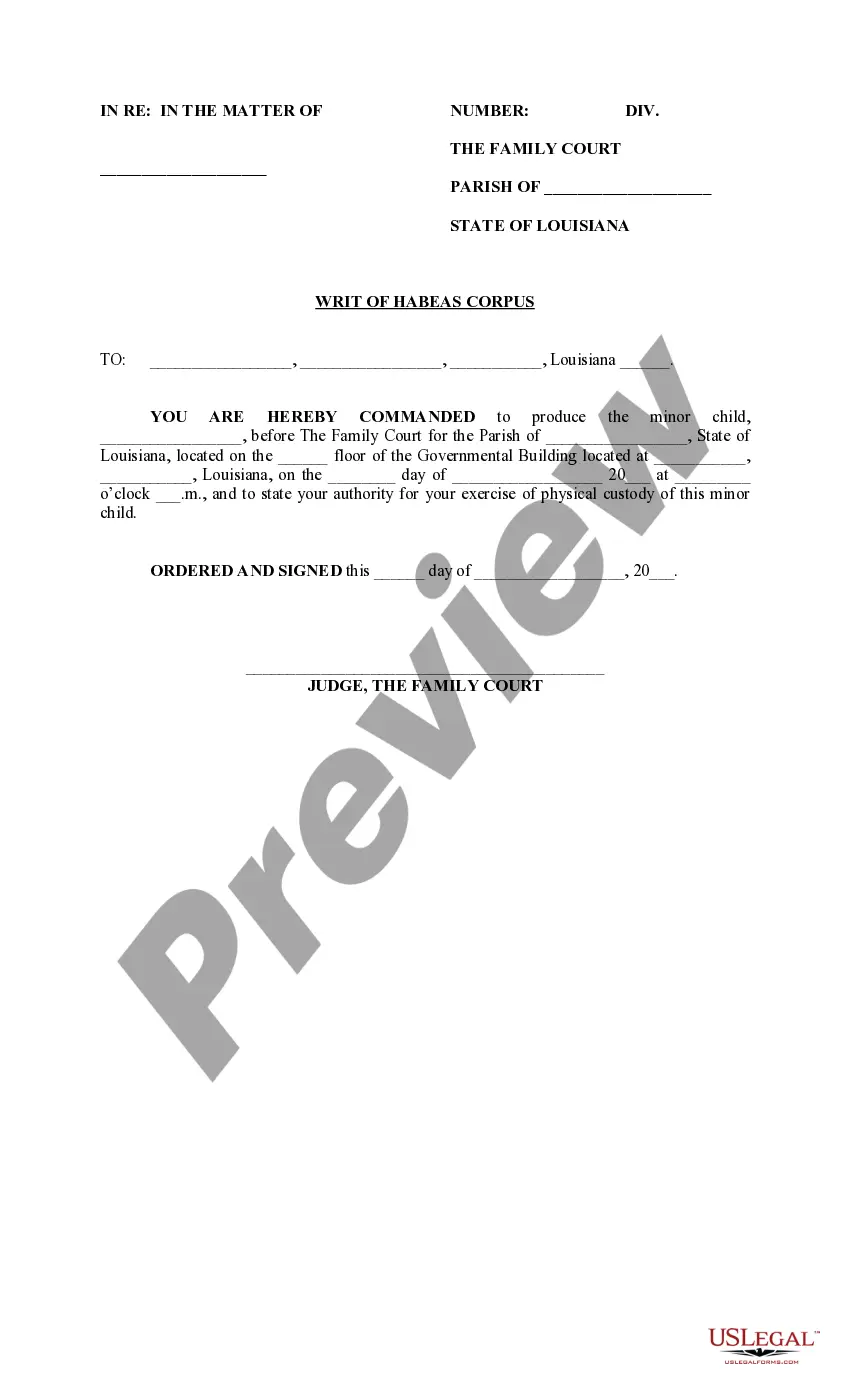
Subfranchise Agreement
What this document covers
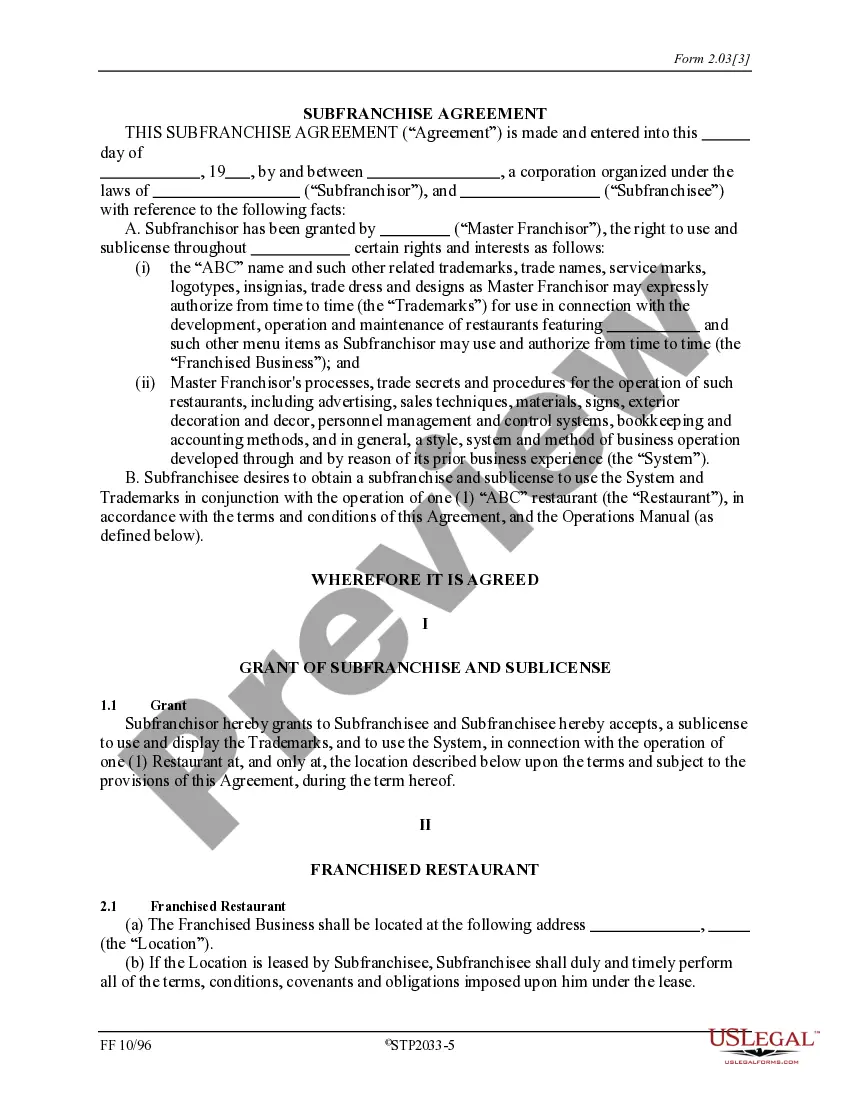
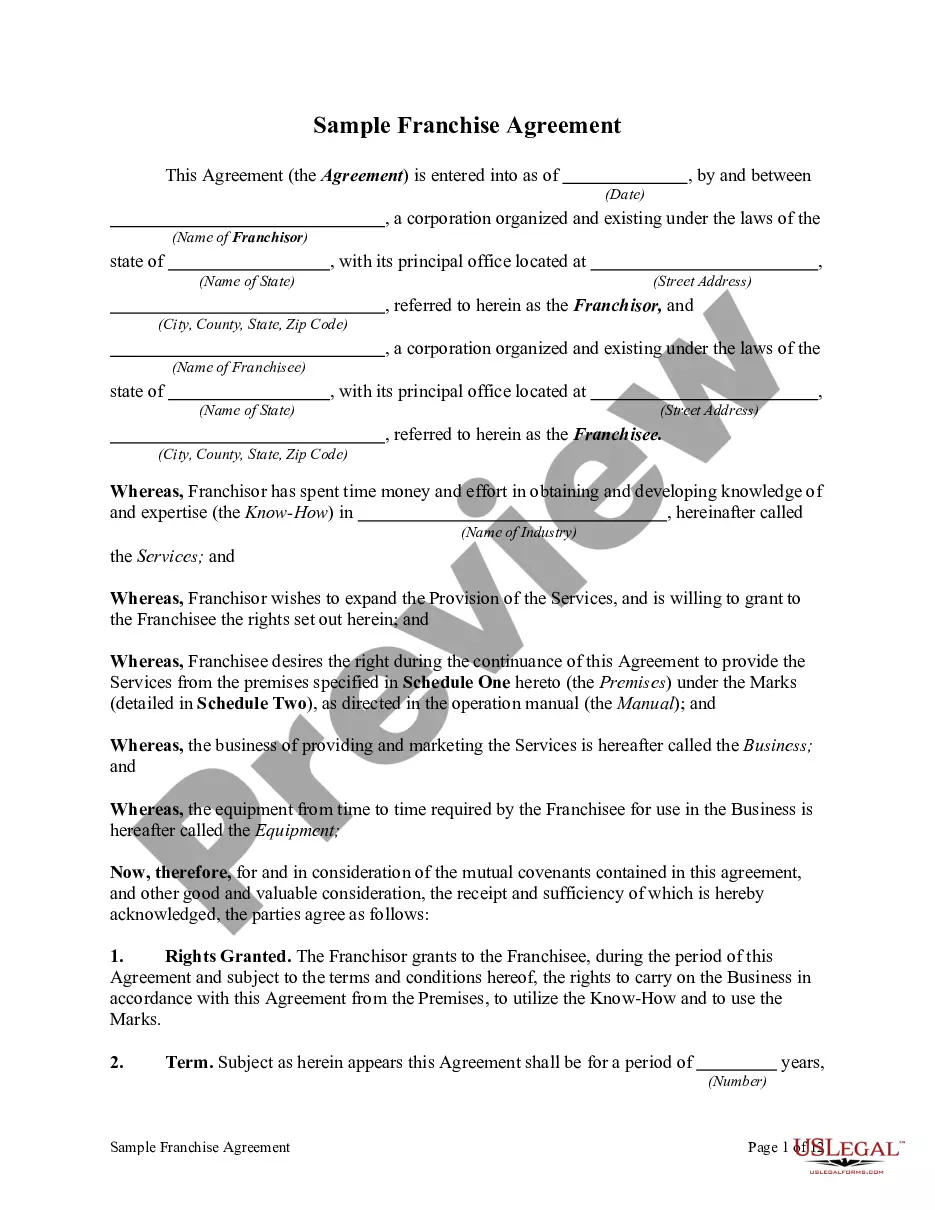
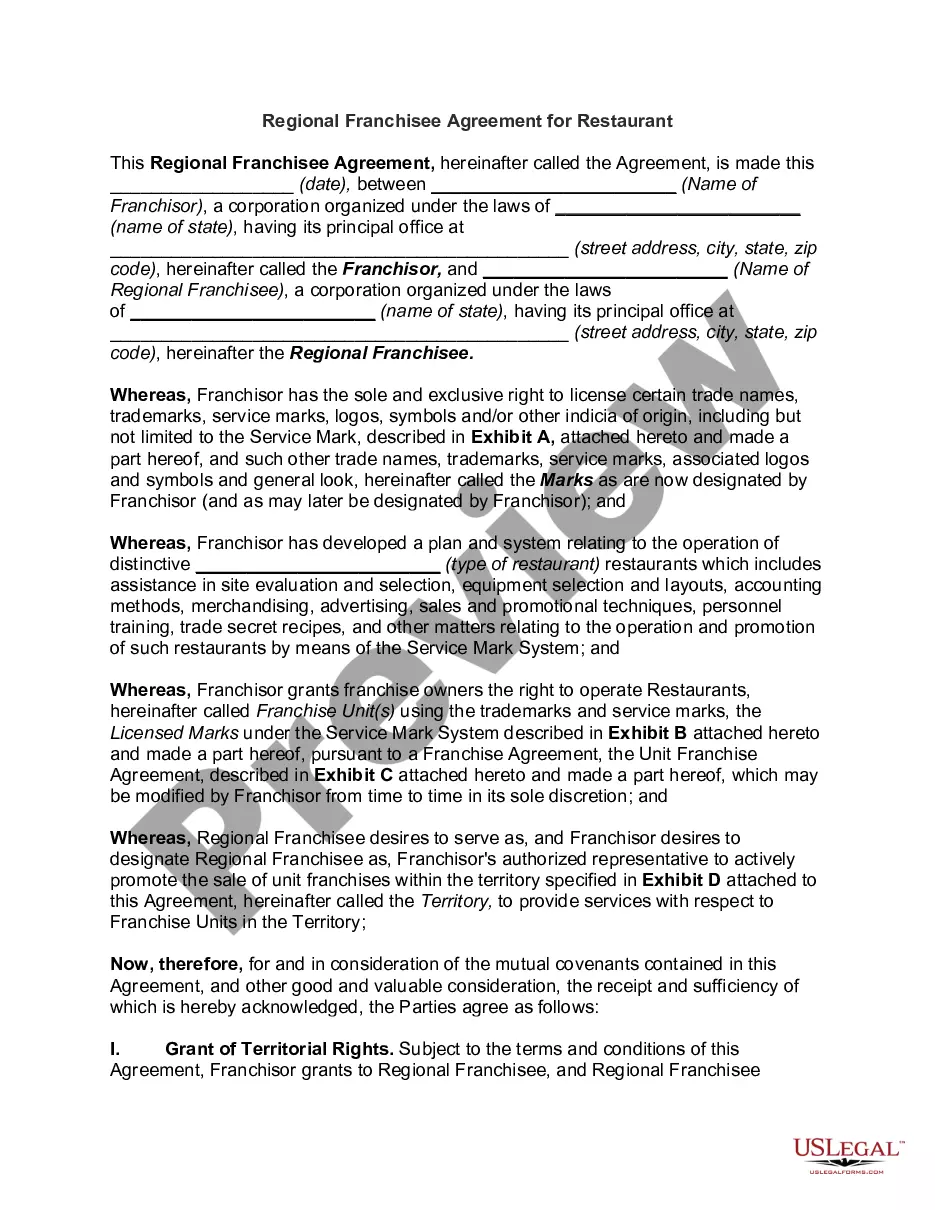
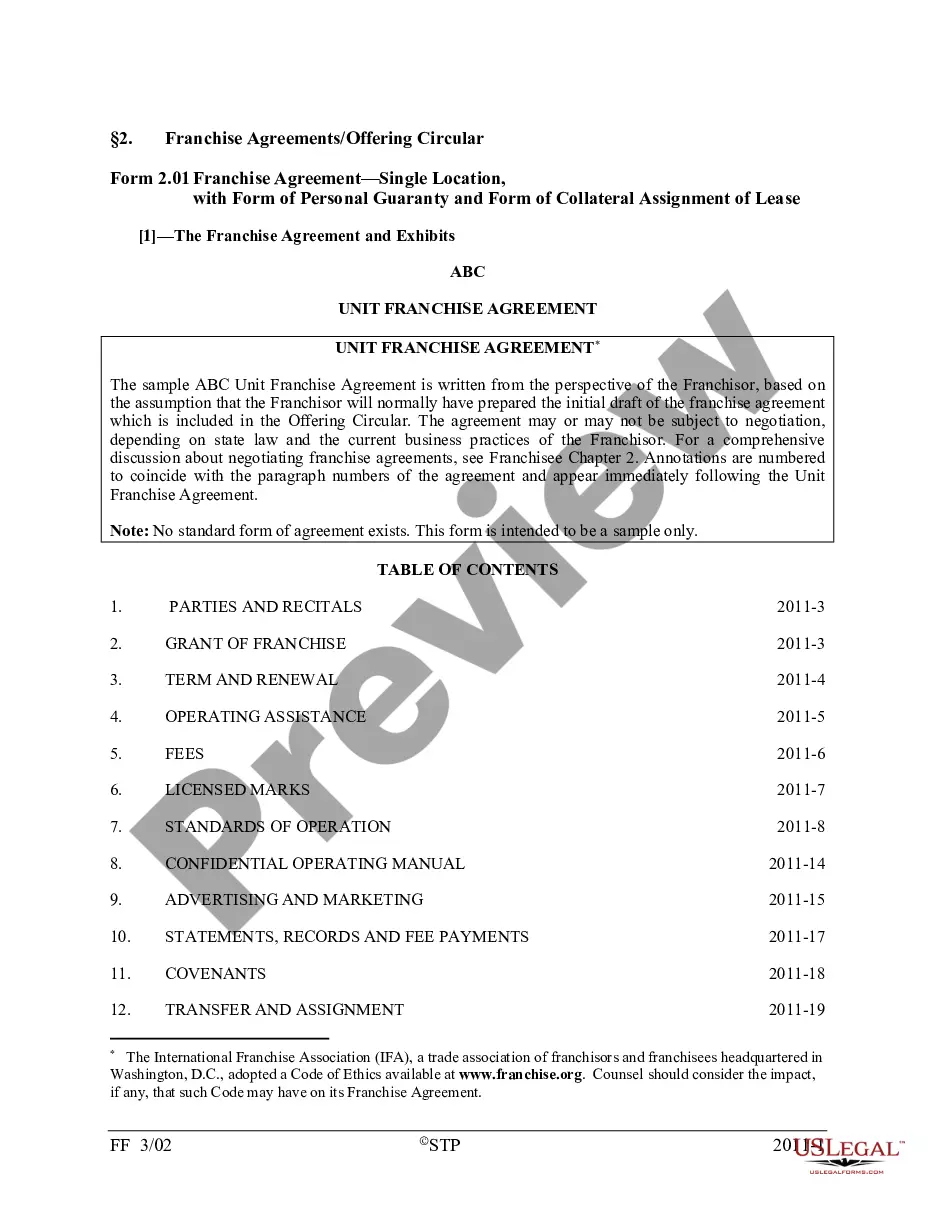
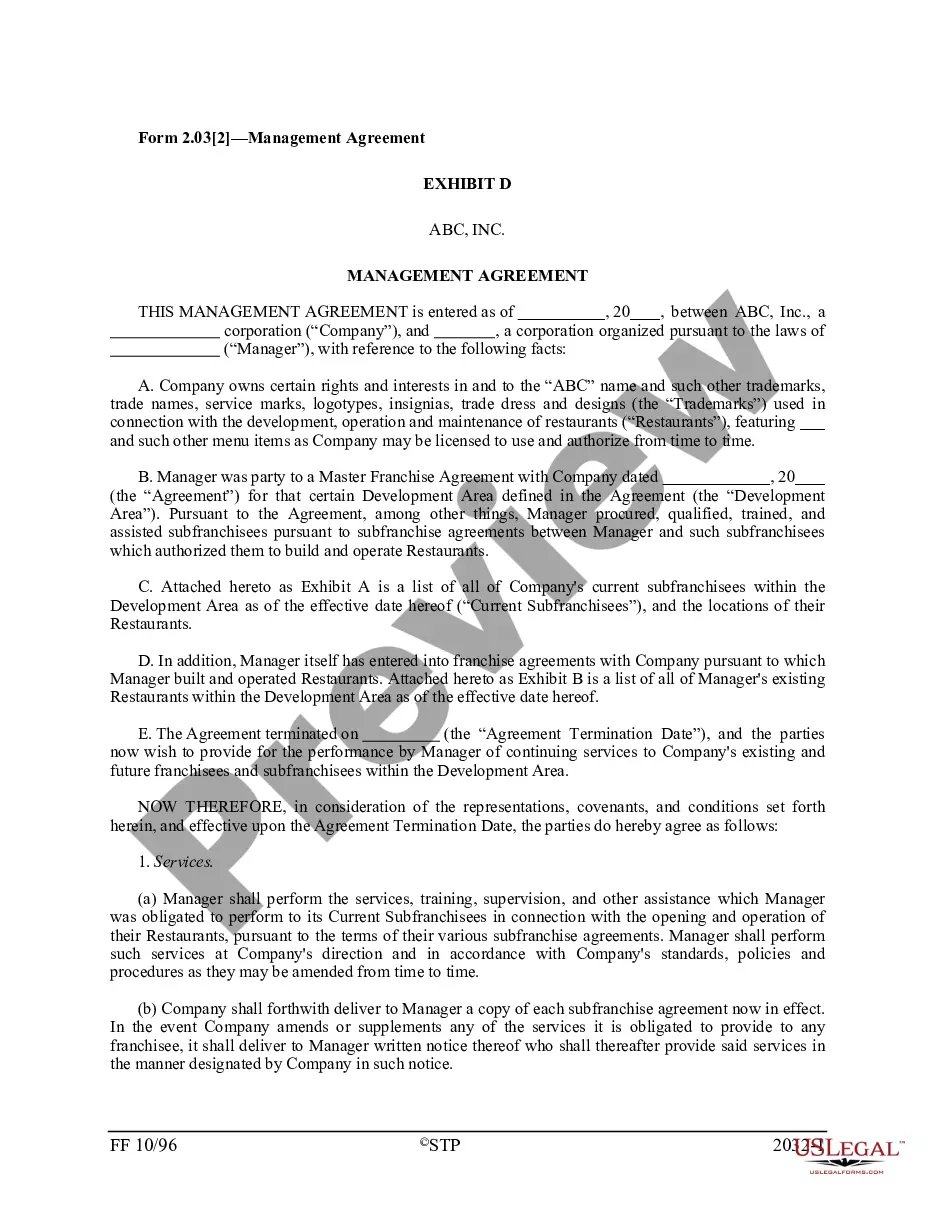
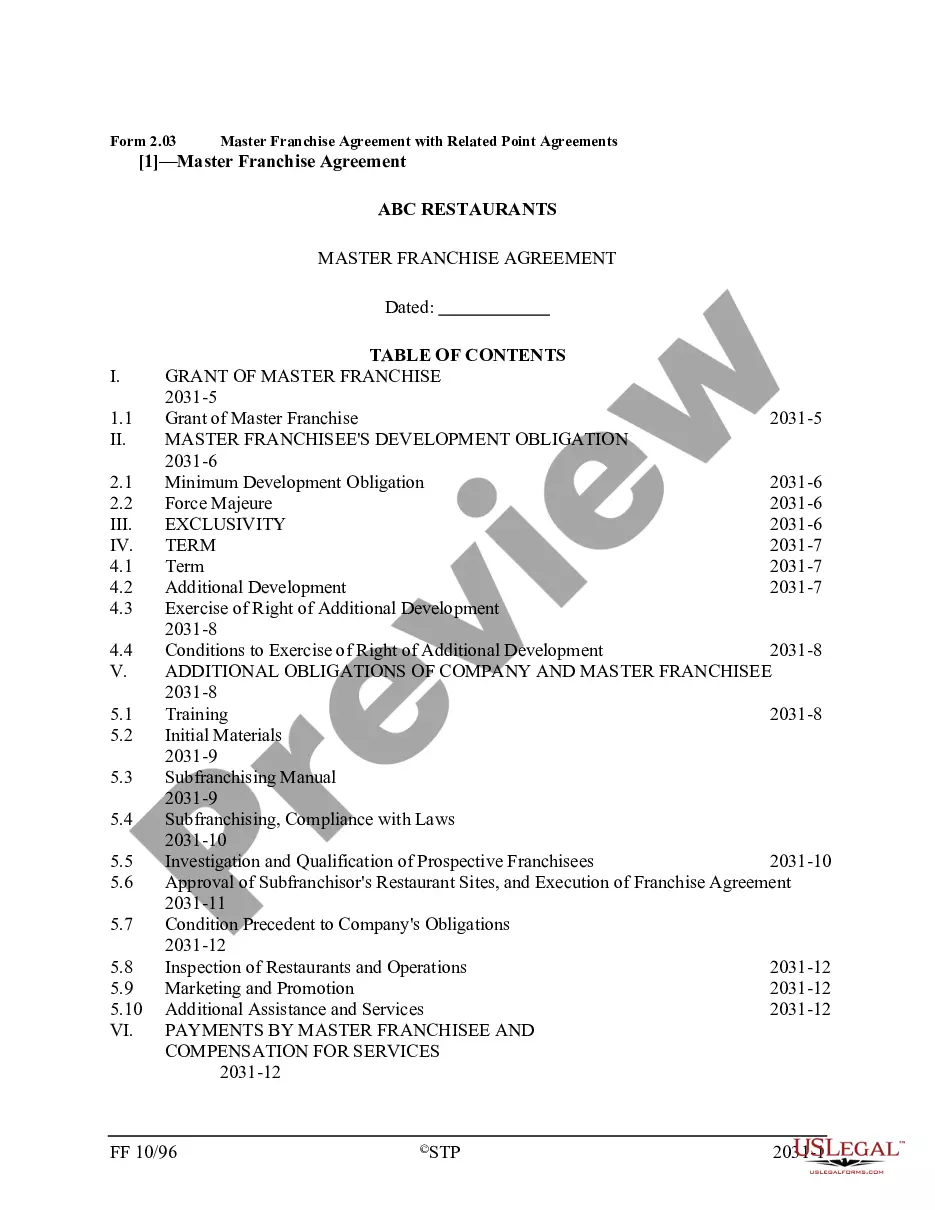
The Subfranchise Agreement is a legal document that outlines the relationship between a subfranchisor and a subfranchisee, allowing the subfranchisee to operate a franchise business under the subfranchisor's established brand and system. This agreement grants the subfranchisee rights to use certain trademarks and conduct business within a specified territory, differentiating it from other franchise agreements by focusing on the relationship between the parties at the subfranchise level.
Key components of this form
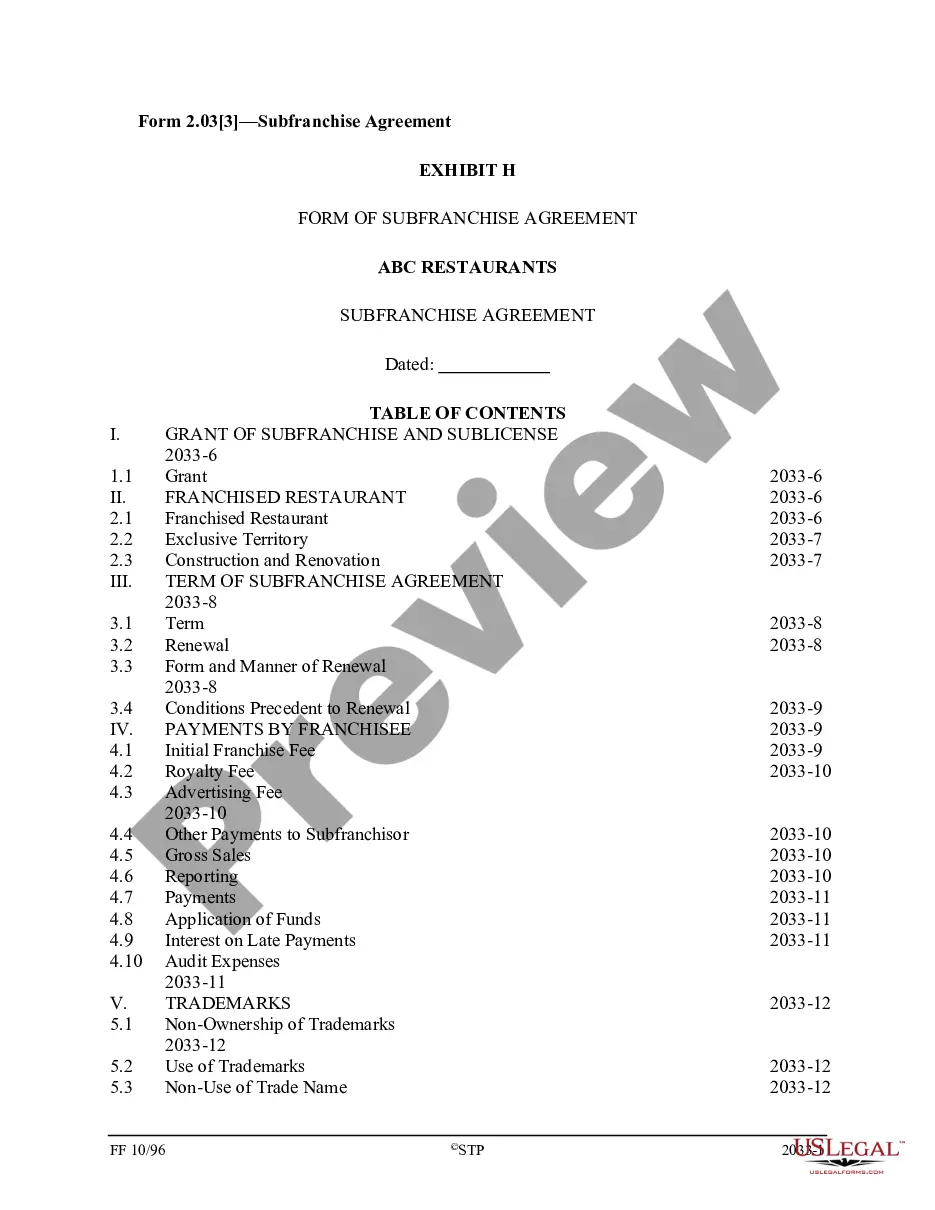
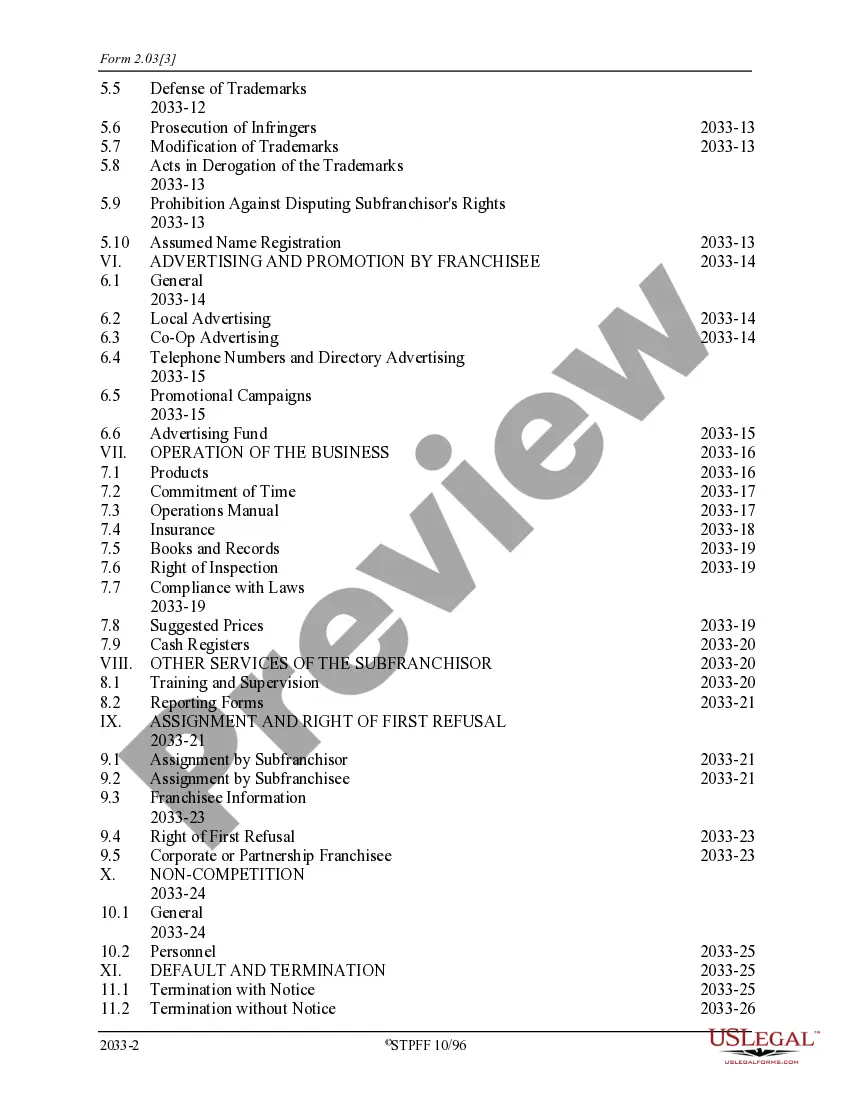
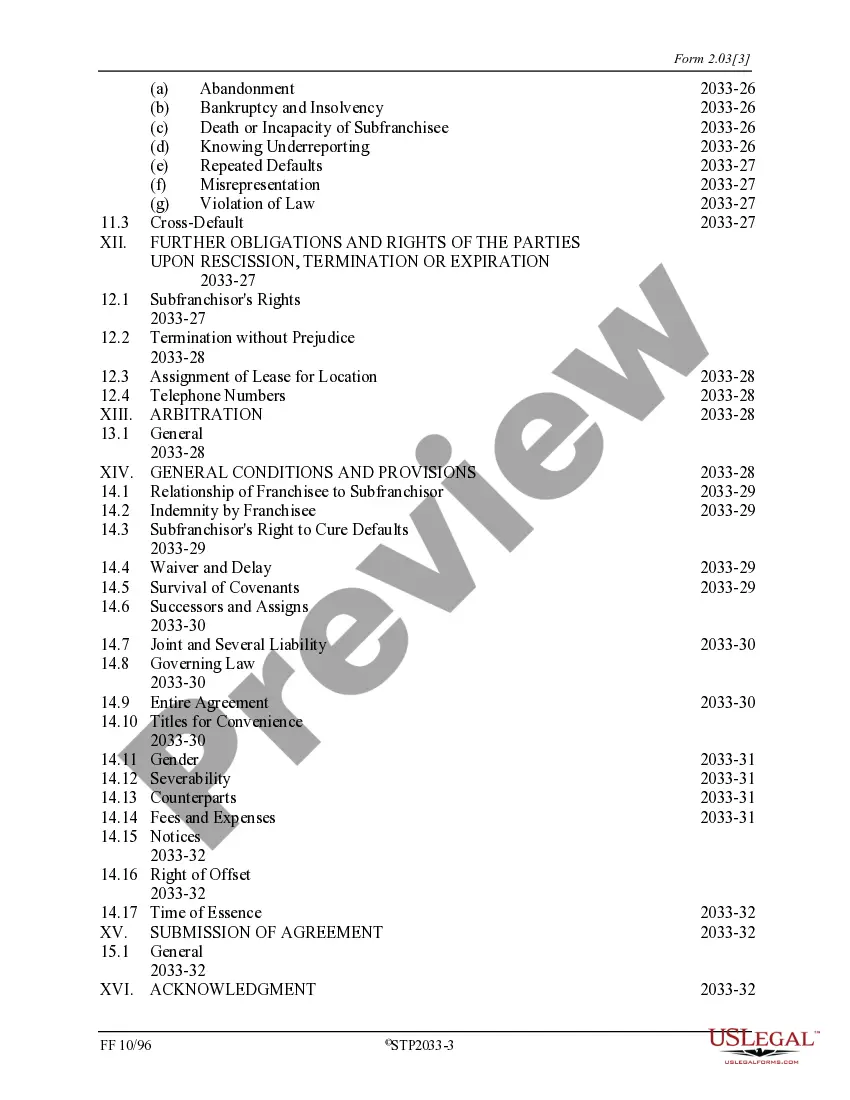
- Grant of subfranchise and sublicenses to operate the restaurant.
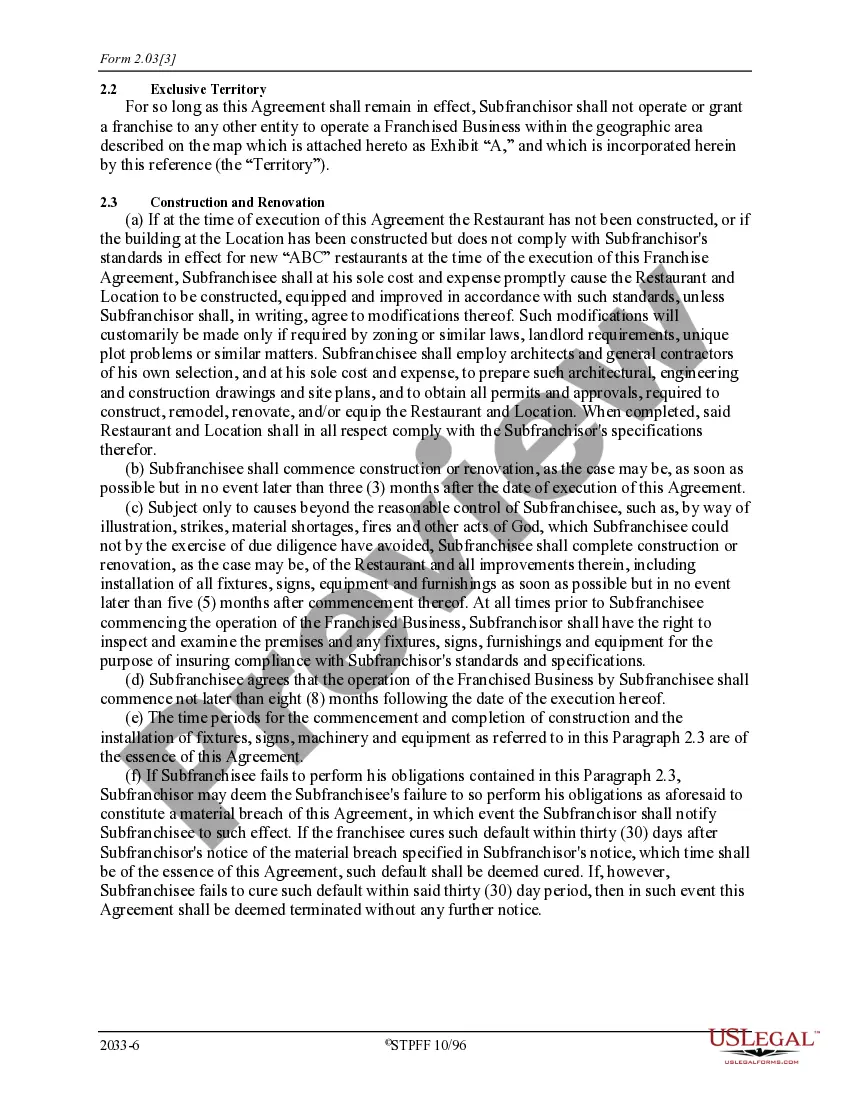
- Definition of the franchised restaurant location and exclusive territory.
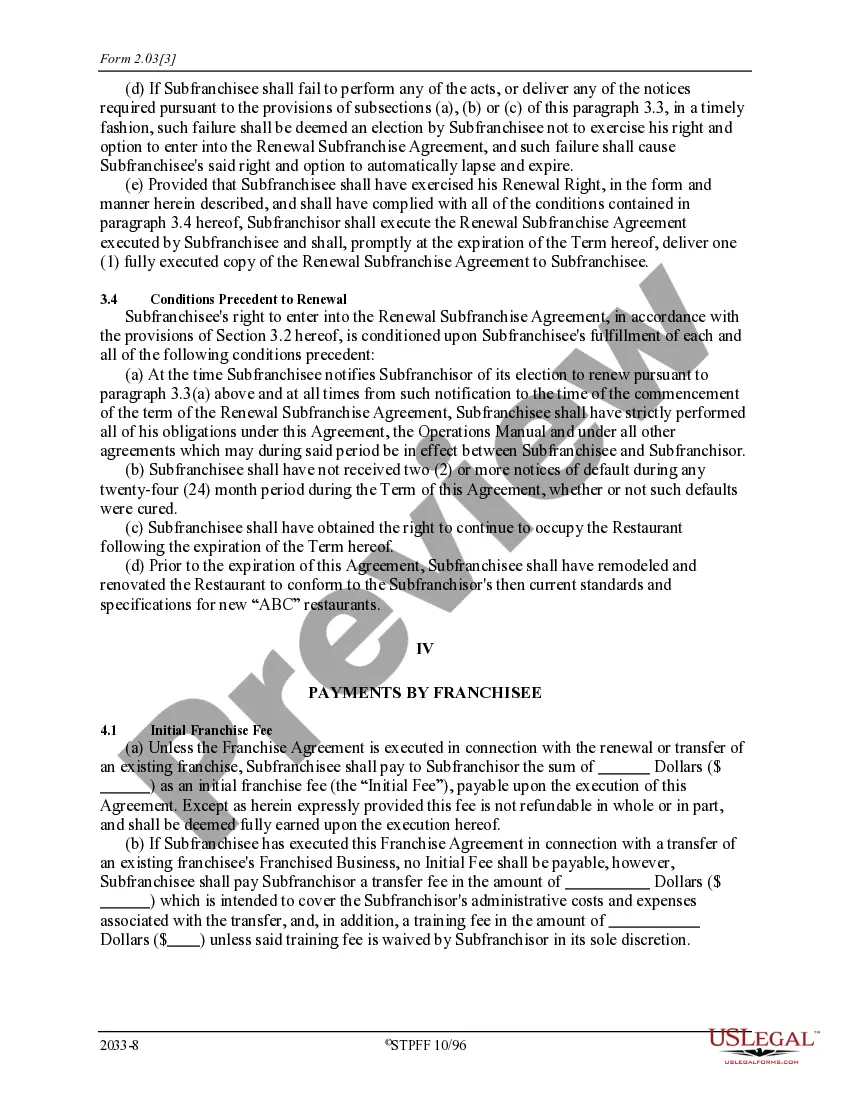
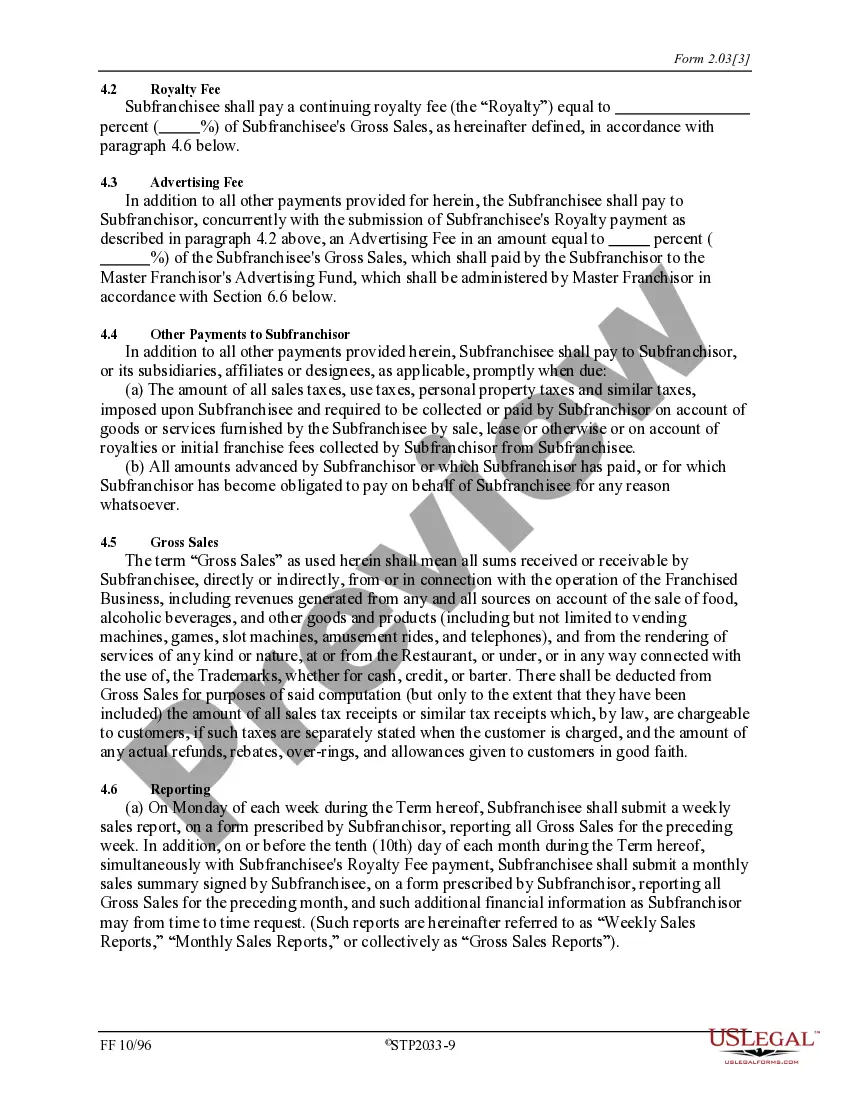
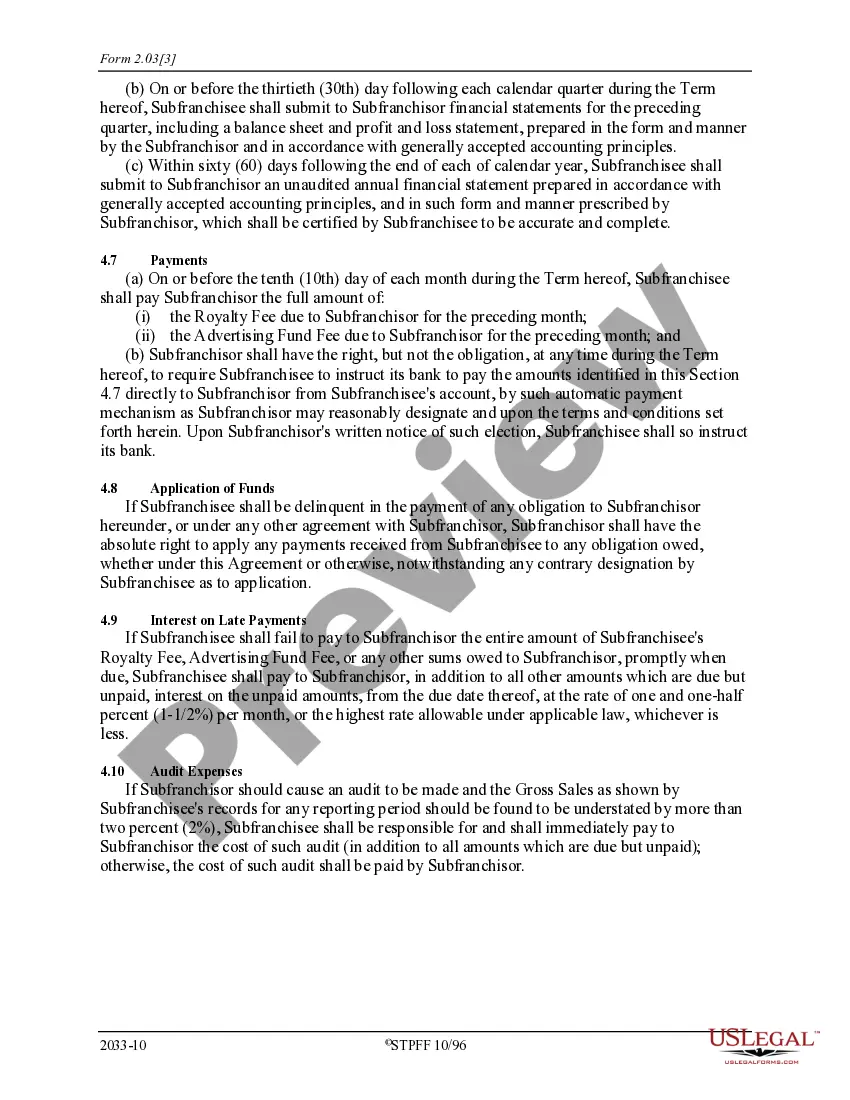
- Terms regarding payments, including initial franchise fees and royalties.
- Use and non-ownership of trademarks associated with the franchise.
- Obligations related to advertising, promotions, and operation standards.
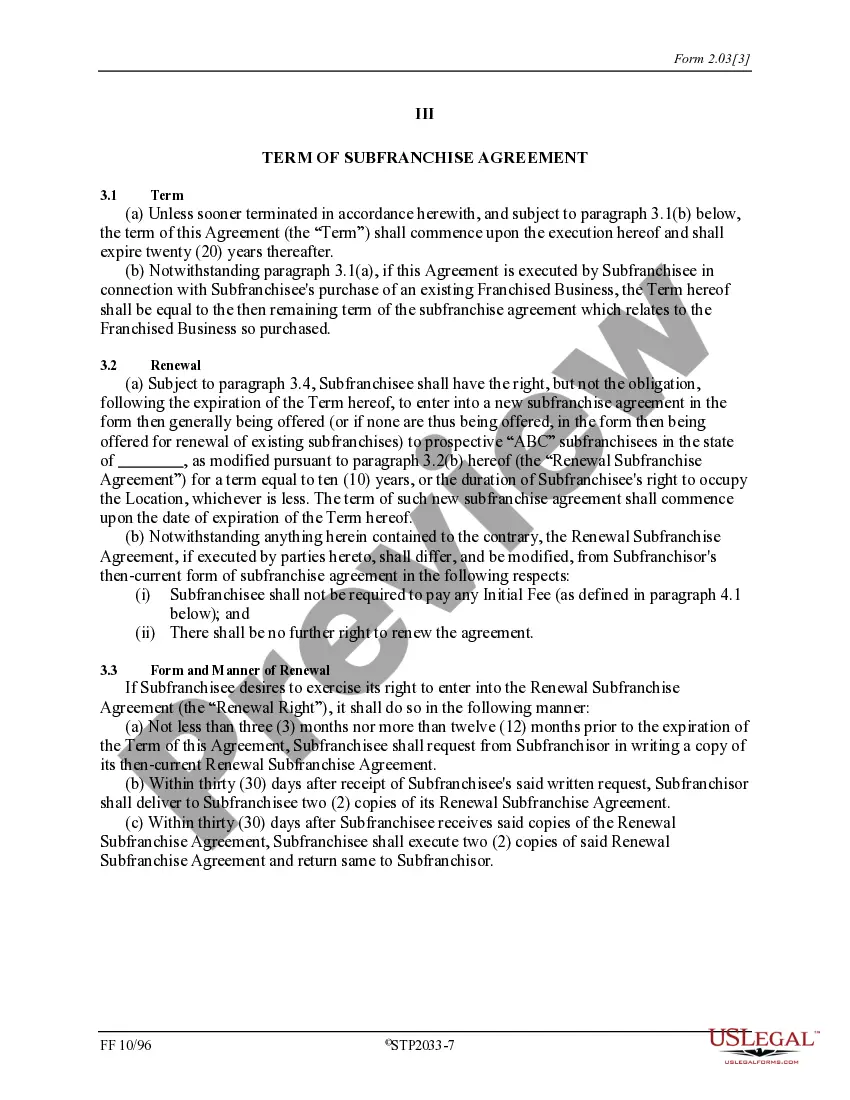
- Term and conditions of renewal and termination of the agreement.


Common use cases
This form should be used when a business entity wishes to grant a subfranchise to an individual or another business. It is applicable in scenarios where the subfranchisor has obtained rights from a master franchisor and wants to allow a subfranchisee to operate under its established brand in a specific geographic area. Common situations include entrepreneurs seeking to expand a restaurant brand or businesses looking to partner with a franchise system.
Who should use this form
- Individuals or entities seeking to become subfranchisees and operate a franchise restaurant.
- Existing franchise owners looking to expand operations through subfranchising.
- Subfranchisors wishing to formalize agreements with new subfranchisees.
Instructions for completing this form
- Identify and enter the legal names of the subfranchisor and subfranchisee.
- Specify the location for the franchised restaurant as required by the agreement.
- Detail the payment structure, including initial fees and ongoing royalties.
- Review and sign the document in the presence of witnesses, if required.
- Retain copies of the signed agreement for your records.
Does this document require notarization?
This form does not typically require notarization unless specified by local law. Always check with local regulations to confirm the need for notarization in your jurisdiction.
Get your form ready online
Our built-in tools help you complete, sign, share, and store your documents in one place.
Make edits, fill in missing information, and update formatting in US Legal Forms—just like you would in MS Word.
Download a copy, print it, send it by email, or mail it via USPS—whatever works best for your next step.
Sign and collect signatures with our SignNow integration. Send to multiple recipients, set reminders, and more. Go Premium to unlock E-Sign.
If this form requires notarization, complete it online through a secure video call—no need to meet a notary in person or wait for an appointment.
We protect your documents and personal data by following strict security and privacy standards.

Make edits, fill in missing information, and update formatting in US Legal Forms—just like you would in MS Word.

Download a copy, print it, send it by email, or mail it via USPS—whatever works best for your next step.

Sign and collect signatures with our SignNow integration. Send to multiple recipients, set reminders, and more. Go Premium to unlock E-Sign.

If this form requires notarization, complete it online through a secure video call—no need to meet a notary in person or wait for an appointment.

We protect your documents and personal data by following strict security and privacy standards.
Common mistakes to avoid
- Failing to clearly define the location or territory of the subfranchise.
- Not specifying payment terms accurately, leading to misunderstandings later.
- Ignoring state-specific regulations that could affect the enforceability of the agreement.
Benefits of completing this form online
- Convenience of accessing the form from anywhere at any time.
- Editability to customize the document to specific needs before printing.
- Reliability from being drafted by licensed attorneys, ensuring legal compliance.
Legal use & context
- This agreement establishes the legal framework for the relationship between the subfranchisor and subfranchisee.
- It is enforceable in a court of law, provided that both parties comply with the terms laid out in the agreement.
- Consulting legal counsel before signing is recommended to understand rights and obligations.
Looking for another form?




Form popularity
FAQ
Single Unit Franchise (or Direct Unit Franchise) is the most traditional and historically the most common form of franchising.The franchisees have to invest their own capital and apply their own management skills (generally hands-on).
There are two main types of franchising, known as Product Distribution Franchising (Traditional Franchising) and Business Format Franchising, which are conducted under a variety of franchise relationships.
In master franchising, the franchisor sells the development rights of a particular area to a master franchisee who, in turn, sells individual franchisees within the territory.The master franchisee is responsible for attracting, screening, and signing all new franchisees within the territory.
A master franchise agreement is an agreement executed by and between a franchisor and a master franchisee, whereby the franchisor grants the master franchisee rights to the franchise and licence to: (i) exploit and use intellectual property rights, including without limitation, the trademarks, manuals and 'know-how' (
Share. Sub-franchising is the term used to describe the relationship between a master franchisee and the unit franchisee in those systems that are the overseas operations of a franchisor that has decided to expand internationally.
The master normally gets a cut of all the money that flows from the individual franchisees to the main franchise company -- most often around half. This could include initial franchise fees, ongoing royalty fees, training fees, real estate or build-out assistance fees.
Traditional or product-distribution franchising. Business-format franchising. Social franchising.
Learn the 4 main types of franchise arrangements: single unit, multi unit, area developer and master franchise. The franchising industry is very versatile, with multiple franchises, industry options and investment ranges.
In effect, a master franchisee becomes the franchisor for his territory and is responsible for recruiting and training his own franchisees, whereas in what you call a normal franchise the franchisee simply runs the outlet delivering the product or service.