Idaho Special Warranty Deed
About this form
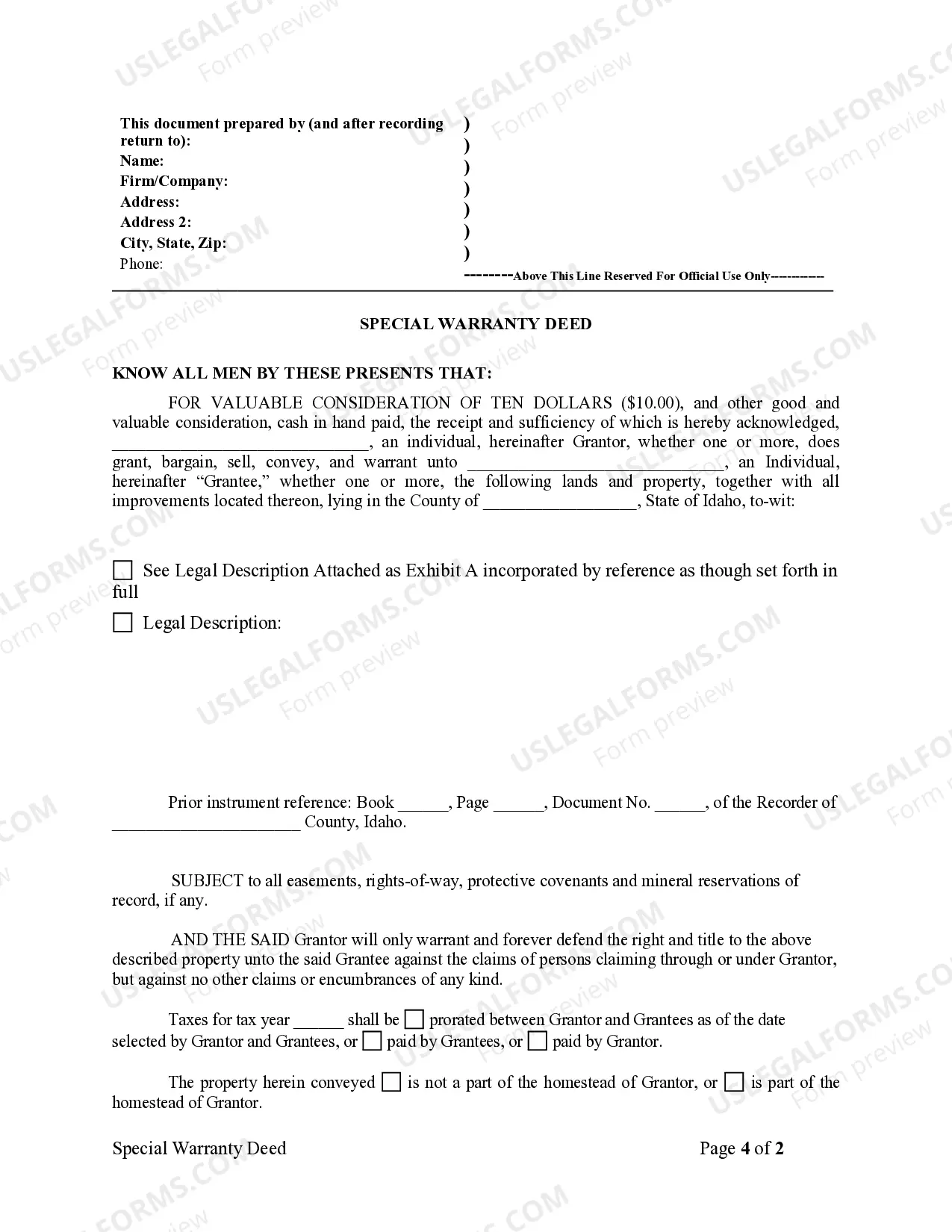
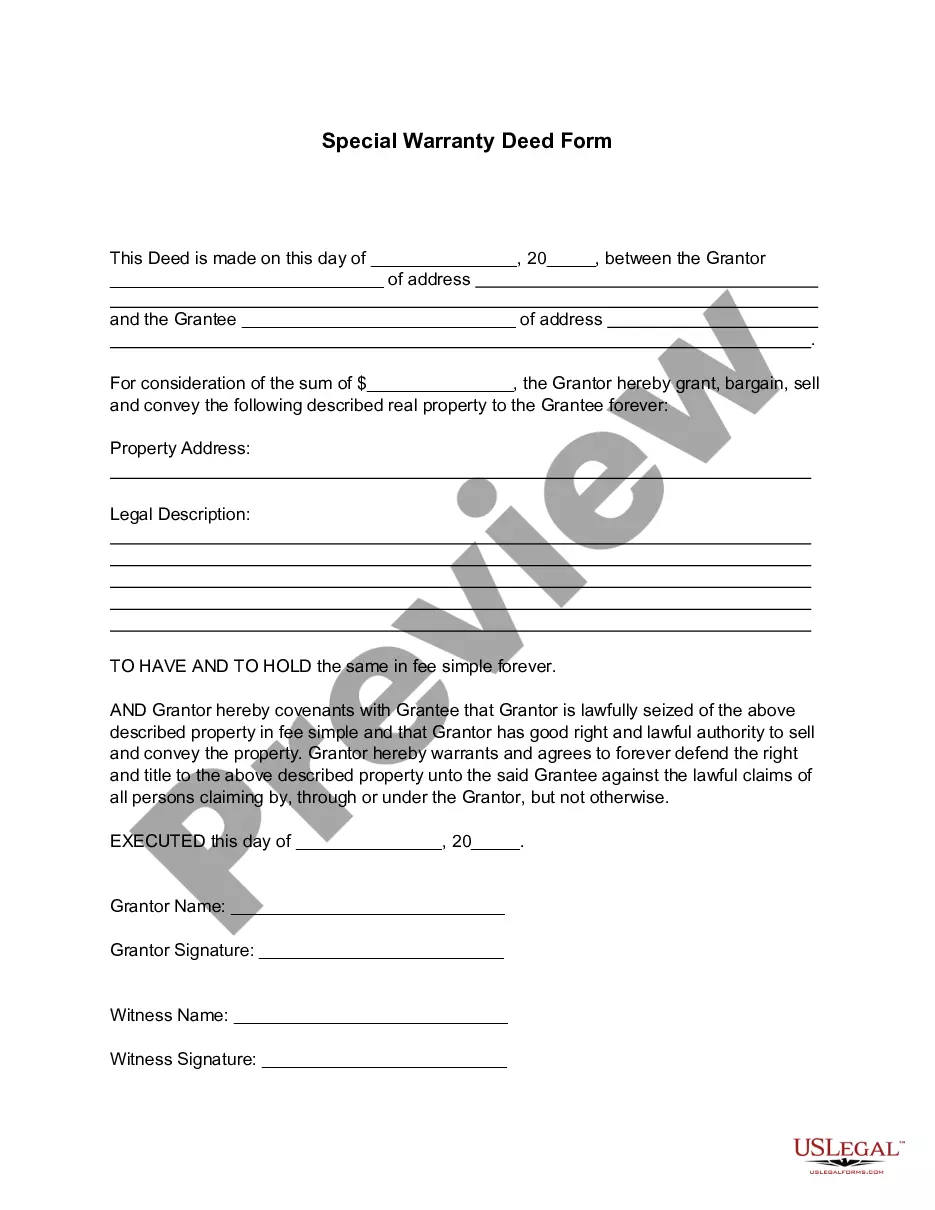
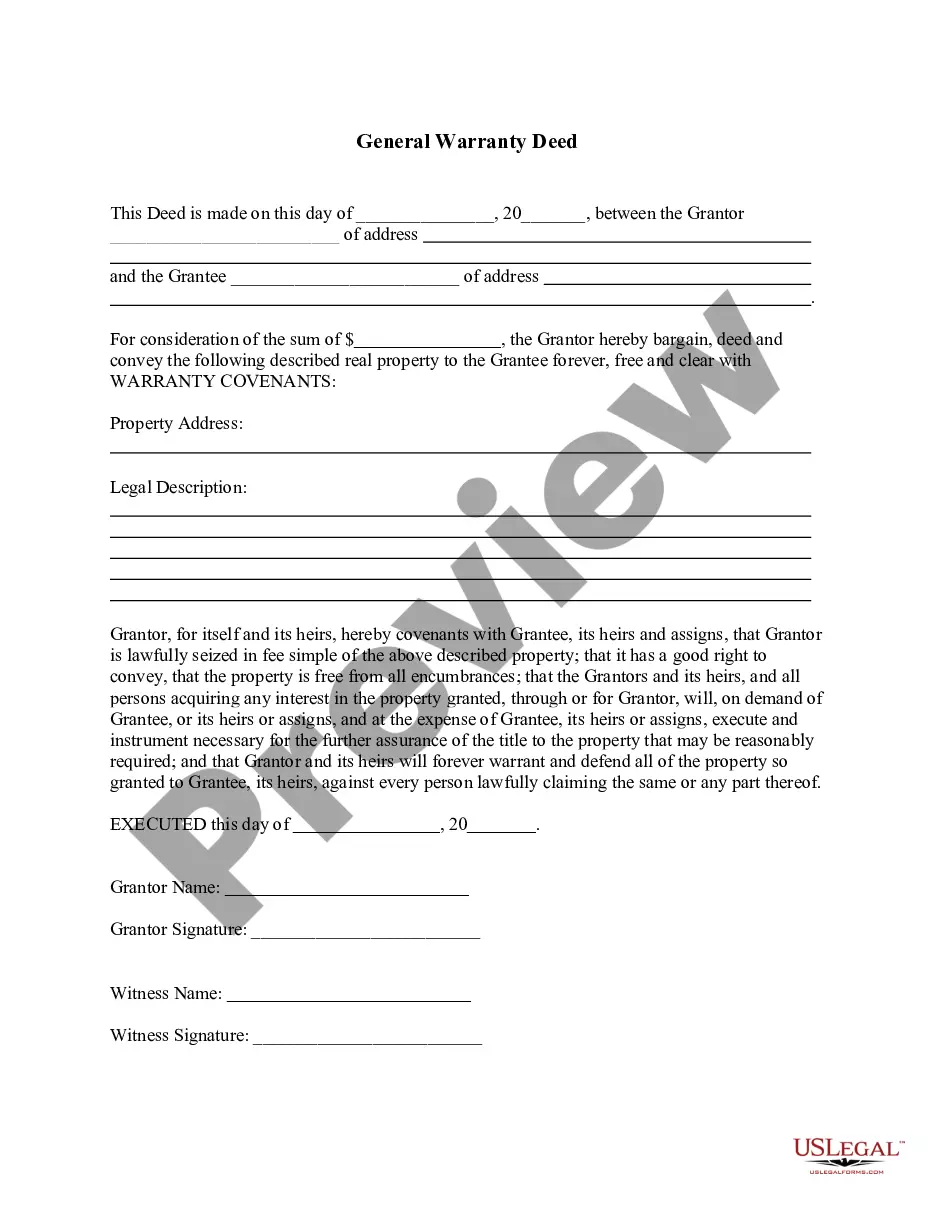
The Special Warranty Deed is a legal document used to transfer property ownership from one individual to another. The grantor guarantees that they hold title to the property and that they have not encumbered it during their ownership. Unlike a general warranty deed, this type of deed only warrants title against defects that arose during the grantor's ownership, making it essential for transactions involving property where limited guarantees are preferred.
Main sections of this form
- Names and addresses of the grantor (seller) and grantee (buyer).
- Description of the property being transferred, including legal description or address.
- Statement of the grantor's warranty of title.
- Provisions regarding proration of property taxes.
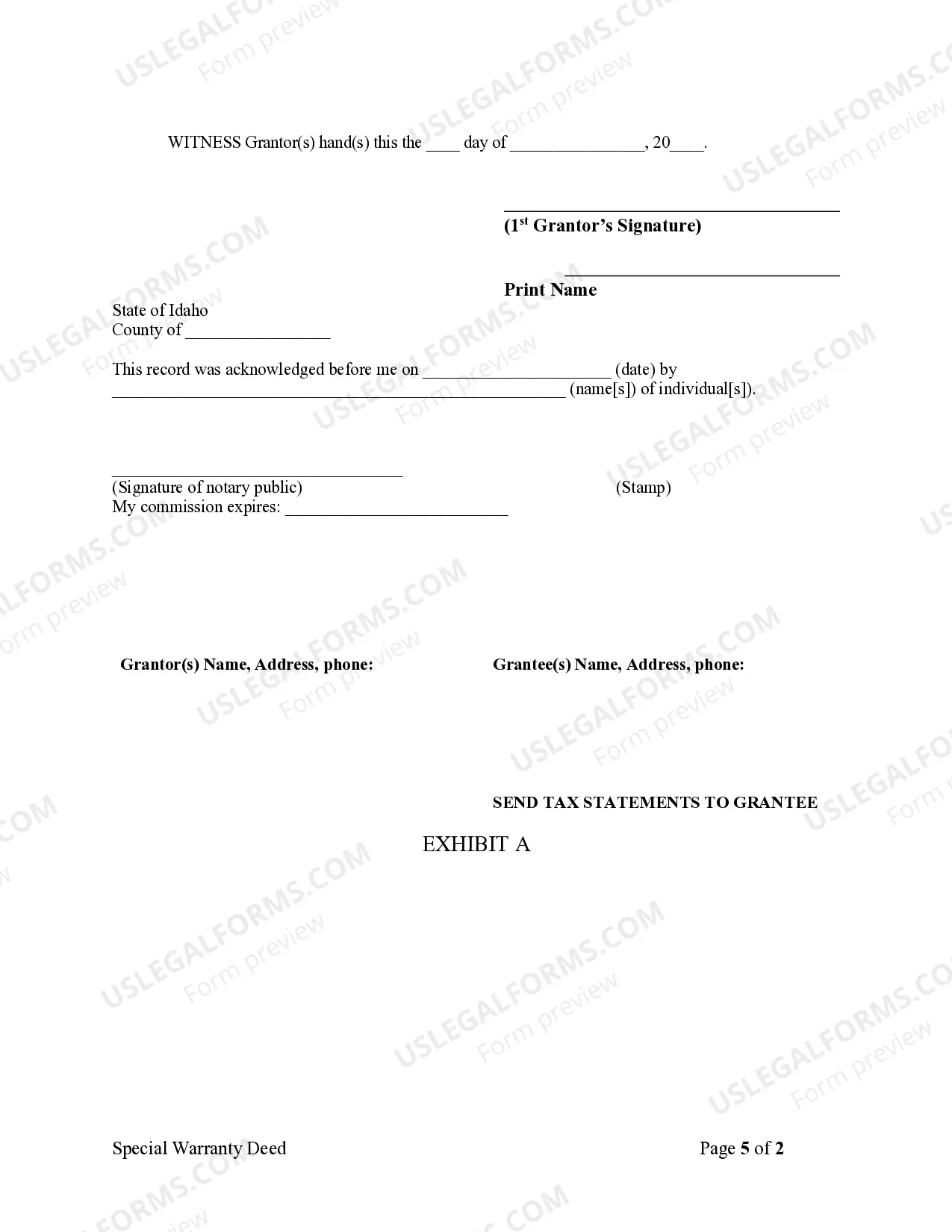
- Signatures of the grantor, with space for notarization.



When this form is needed
This form is typically used when an individual is selling property and wants to provide a limited warranty to the buyer. It is suitable in situations where the grantor may not wish to assume responsibility for claims that may arise from previous ownership. Scenarios might include selling inherited property or purchasing homes in a competitive market where quick transactions are necessary.
Who needs this form
- Individuals transferring property ownership to another individual.
- Property owners who need to limit their liability for claims on the title.
- Buyers who are comfortable with a limited warranty regarding property title.
Steps to complete this form
- Identify the full names and addresses of both the grantor and the grantee.
- Clearly describe the property being conveyed, using accurate legal descriptions when necessary.
- Include the date of the transfer and hours for tax proration specifications.
- Have the grantor sign the deed in the presence of a notary.
- Ensure all necessary information is filled in before finalizing the document.
Does this document require notarization?
This form needs to be notarized to ensure legal validity. US Legal Forms provides secure online notarization powered by Notarize, allowing you to complete the process through a verified video call, available anytime.
Get your form ready online
Our built-in tools help you complete, sign, share, and store your documents in one place.
Make edits, fill in missing information, and update formatting in US Legal Forms—just like you would in MS Word.
Download a copy, print it, send it by email, or mail it via USPS—whatever works best for your next step.
Sign and collect signatures with our SignNow integration. Send to multiple recipients, set reminders, and more. Go Premium to unlock E-Sign.
If this form requires notarization, complete it online through a secure video call—no need to meet a notary in person or wait for an appointment.
We protect your documents and personal data by following strict security and privacy standards.

Make edits, fill in missing information, and update formatting in US Legal Forms—just like you would in MS Word.

Download a copy, print it, send it by email, or mail it via USPS—whatever works best for your next step.

Sign and collect signatures with our SignNow integration. Send to multiple recipients, set reminders, and more. Go Premium to unlock E-Sign.

If this form requires notarization, complete it online through a secure video call—no need to meet a notary in person or wait for an appointment.

We protect your documents and personal data by following strict security and privacy standards.
Avoid these common issues
- Omitting important legal descriptions of the property.
- Failing to notarize the document after signing.
- Incorrectly identifying the parties involved in the transaction.
- Not specifying tax responsibilities or failing to prorate taxes correctly.
Why complete this form online
- Convenience of filling out the form from anywhere at any time.
- Editability allows for easy corrections and adjustments before finalizing.
- Access to attorney-drafted templates ensures legal validity and compliance.
Looking for another form?
Form popularity
FAQ
Unlike a warranty deed or special warranty deed, a quitclaim deed makes no assurances whatsoever about the property.For example, in a divorce situation where one spouse deeds the house to the other spouse. Quitclaim deeds are commonly used to transfer real property to an LLC or a living trust.
A special warranty deed is common when a house has been foreclosed on by a bank because the previous owner did not pay their mortgage.The special warranty deed that the bank provides to the new buyer provides no protection for the period of time before the bank took ownership of the property.
It will not protect against title issues that arose prior to the time the seller took occupancy. Consequently, it offers less protection to buyers, and more protection to sellers, than a general warranty deed, which is the most common option for selling or buying a property.
A special warranty deed to real estate offers protection to the buyer through the seller's guarantee that the title has been free and clear of encumbrances during their ownership of the property. It does not guarantee clear title beyond their ownership.
A warranty deed, also known as a general warranty deed, is a legal real estate document between the seller (grantor) and the buyer (grantee). The deed protects the buyer by pledging that the seller holds clear title to the property and there are no encumbrances, outstanding liens, or mortgages against it.
Special warranty deeds are most commonly used with commercial property transactions. Single-family and other residential property transactions will usually use a general warranty deed. Many mortgage lenders insist upon the use of the general warranty deed.
A warranty deed guarantees that: The grantor is the rightful owner of the property and has the legal right to transfer the title.The title would withstand third-party claims to ownership of the property. The grantor will do anything to ensure the grantee's title to the property.
A statutory warranty deed is different from a warranty deed because it is a shorter form made available through your state's statutes and it may not outright list the promise that the title is guaranteed to be clear. Instead, because it is a statutory form, this guarantee is implied and is still legally enforceable.
A general warranty deed covers the property's entire history.With a special warranty deed, the guarantee covers only the period when the seller held title to the property. Special warranty deeds do not protect against any mistakes in a free-and-clear title that may exist before the seller's ownership.