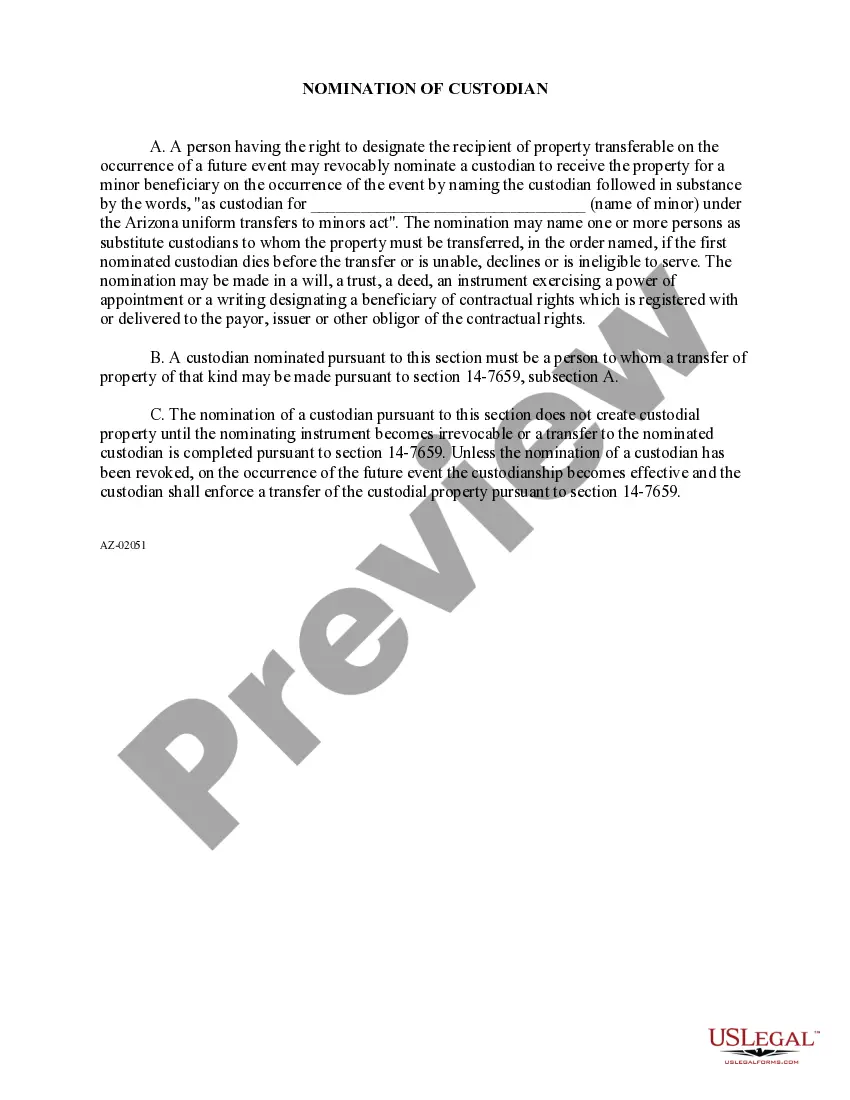
Arizona Nomination of Custodian
About this form
The Nomination of Custodian form is a legal document allowing an individual to designate a recipient of property that will transfer upon a future event. This form is especially useful for nominating a custodian to manage property intended for a minor beneficiary. Unlike other estate planning forms, it focuses specifically on custodianship for minors, providing flexibility in nominating multiple custodians if necessary.
Main sections of this form
- Identifies the person nominating the custodian.
- Specifies the minor beneficiary who will receive the property.
- Names the primary custodian, including alternate custodians if desired.
- Details the conditions under which custodial property is created.
- Includes provisions for revoking the nomination prior to its effectiveness.

Common use cases
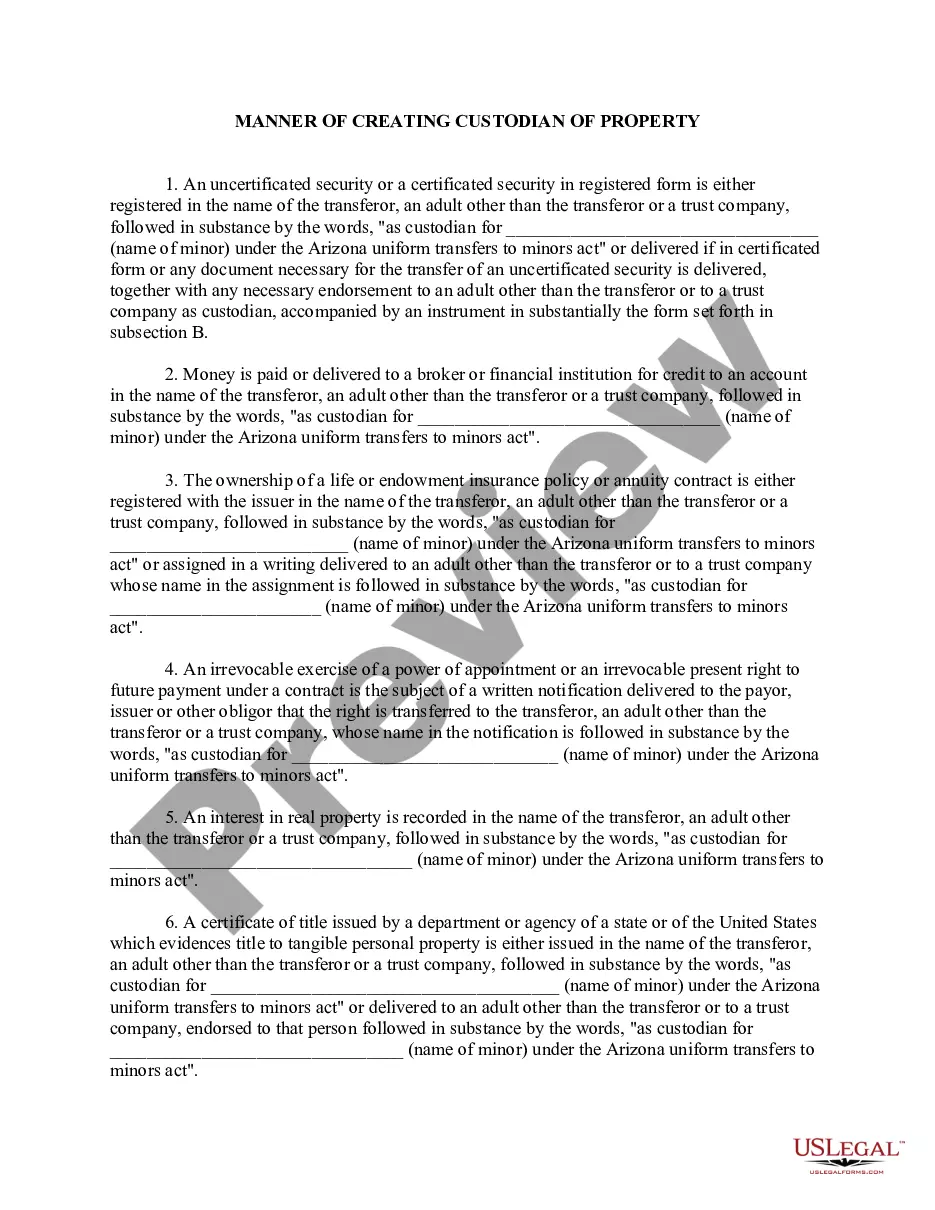
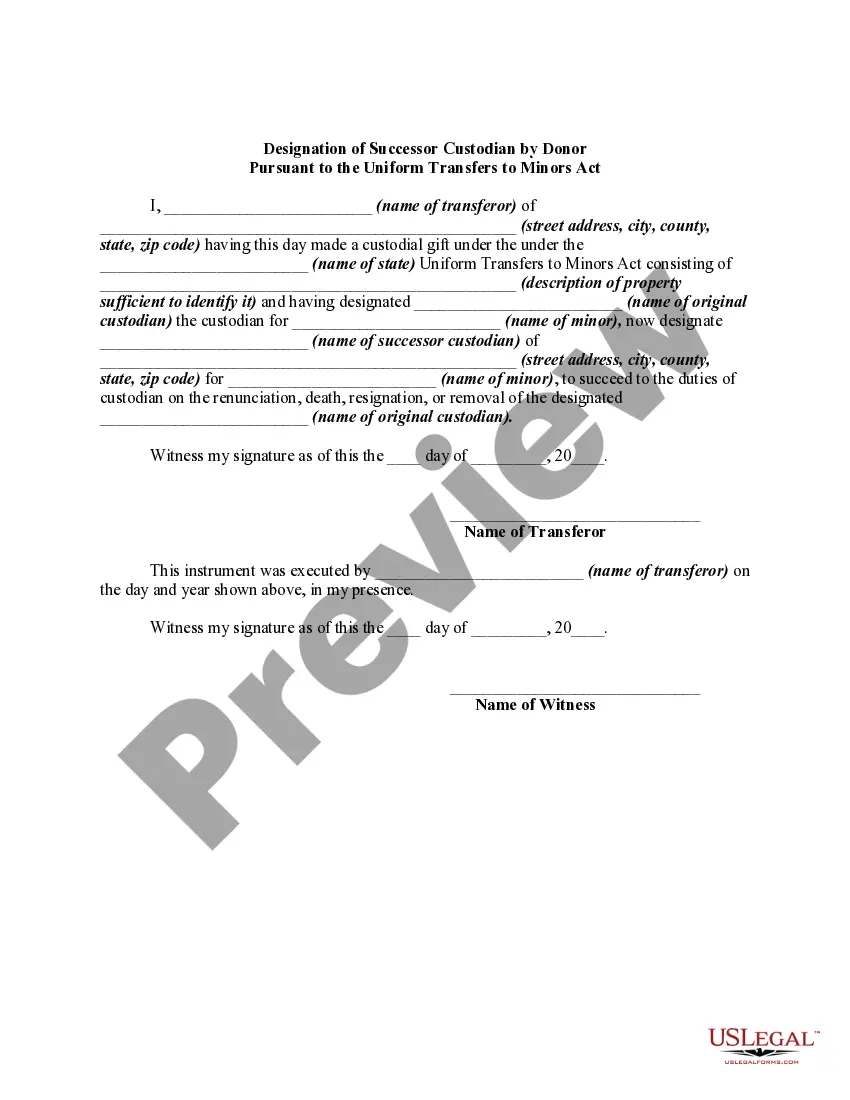
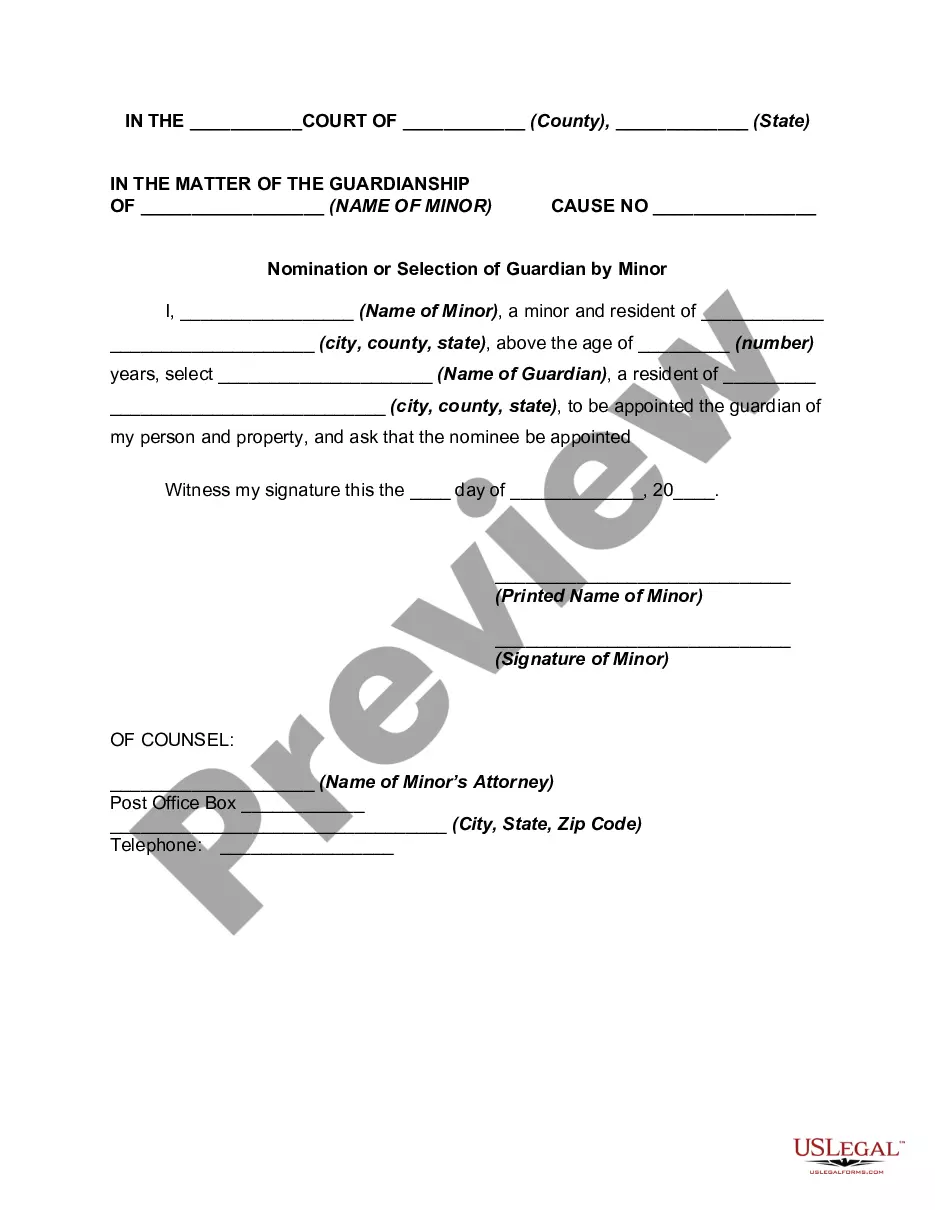
This form is necessary when an individual wants to ensure that property will be handled by a responsible adult for a minor beneficiary after a specific event occurs, such as the death of the individual. It is crucial for estate planning, especially when the property is meant to benefit minors and requires management until they reach adulthood.
Intended users of this form
- Parents or guardians planning for the future management of property for their children.
- Individuals wishing to designate a custodian for a minor beneficiary.
- Grandparents or relatives wanting to secure property for a minor family member.
- Estate planners looking to streamline the transfer of assets to minors.
Completing this form step by step
- Identify yourself as the person making the nomination.
- Specify the name of the minor beneficiary receiving the property.
- Name the primary custodian responsible for managing the property.
- List any alternate custodians in the order they should be considered.
- Sign and date the form to finalize your nomination.
Notarization guidance
This form does not typically require notarization unless specified by local law. However, reviewing the regulations in your jurisdiction is recommended to ensure compliance.
Get your form ready online
Our built-in tools help you complete, sign, share, and store your documents in one place.
Make edits, fill in missing information, and update formatting in US Legal Forms—just like you would in MS Word.
Download a copy, print it, send it by email, or mail it via USPS—whatever works best for your next step.
Sign and collect signatures with our SignNow integration. Send to multiple recipients, set reminders, and more. Go Premium to unlock E-Sign.
If this form requires notarization, complete it online through a secure video call—no need to meet a notary in person or wait for an appointment.
We protect your documents and personal data by following strict security and privacy standards.

Make edits, fill in missing information, and update formatting in US Legal Forms—just like you would in MS Word.

Download a copy, print it, send it by email, or mail it via USPS—whatever works best for your next step.

Sign and collect signatures with our SignNow integration. Send to multiple recipients, set reminders, and more. Go Premium to unlock E-Sign.

If this form requires notarization, complete it online through a secure video call—no need to meet a notary in person or wait for an appointment.

We protect your documents and personal data by following strict security and privacy standards.
Common mistakes
- Failing to specify alternate custodians, which can lead to delays.
- Not providing detailed information about the minor beneficiary.
- Forgetting to sign and date the form, making it invalid.
Why complete this form online
- Easy access to downloadable templates drafted by licensed attorneys.
- Quick and convenient completion, allowing for edits as needed.
- Reliable legal standards incorporated into the form structure.
Legal use & context
- The form is enforceable under state law once properly filled out and signed.
- Custodial property is not created until the nomination becomes irrevocable.
- Ensure that the nominated custodian is eligible as defined by state law.
What to keep in mind
- Use the Nomination of Custodian form to ensure property is managed for a minor.
- Clearly specify custodians and beneficiaries to avoid confusion.
- Always verify compliance with local laws specific to your state.
Looking for another form?



Form popularity
FAQ
Senior Planning can assist in the preparation of filing for emergency guardianship. To obtain emergency guardianship, a person must file a petition with the court. This order can last up to thirty days, giving you time to file for permanent guardianship at a scheduled hearing.
The temporary guardian serves as both a legal substitution of parents as well as a guardian angel of your children and your love of them. Temporary guardians have legal custody over the children, are legally responsible for them, and have the right to make any medical, educational, or financial decisions.
The Court may appoint an emergency guardian when it appears that an individual lacks capacity, is in need of a guardian, and failure to make such an appointment will result in irreparable harm to the person and/or estate of the alleged incapacitated person (note the term incompetent is no longer used in guardianship
Any person interested in the welfare of a minor may petition the court for appointment of a Title 14 guardian. A guardian may be appointed when someone other than the parent wants to be appointed by the court to take over parental responsibilities, such as decisions regarding housing, medical care, and education.
A Conservator is appointed following the filing of a petition with the Probate Division of the Superior Court and a hearing before a Judge or Commissioner. The petition must tell the Court why the appointment of a Conservator is necessary, what assets may be at risk, and who is being nominated to serve as Conservator.
A formal hearing must be started by petitioning the Court for either a limited or general guardianship. There must be a hearing in the county the person lives in to determine if the adult is incapacitated and unable to take care of themselves without a guardian.
How much does it cost? The Court is required to charge fees to file the documents related to minor guardianship. You are able to apply for a fee waiver or deferral if you are unable to afford the filing fee . A Petition to Appoint Guardian as of 2017: $156.00.
In an emergency, the court can appoint a temporary healthcare guardian for 90 days, or an emergency guardian for 15 days. Click here for a petition to be appointed a 15-day emergency guardian.