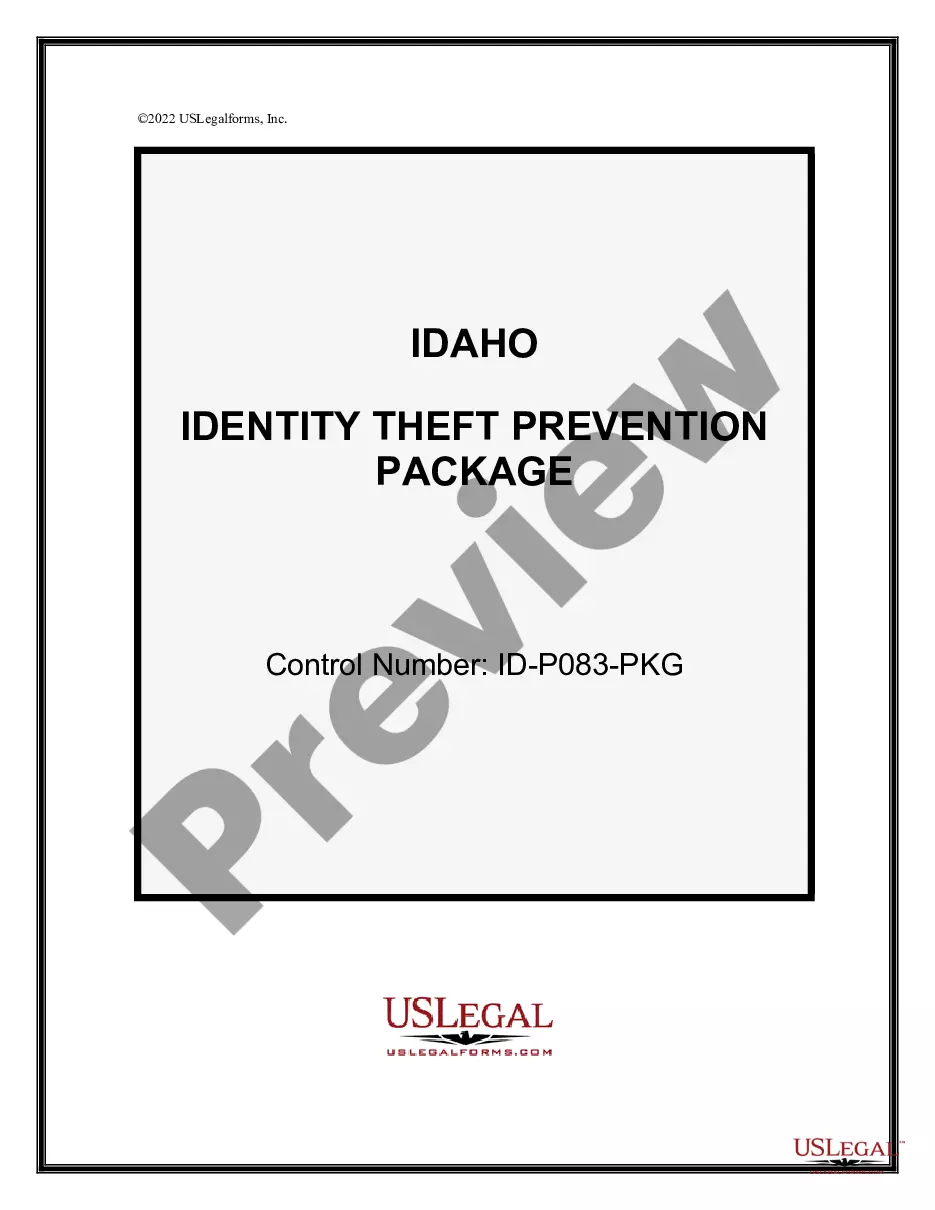
Idaho Protecting Minors from Identity Theft Package
Understanding this form package
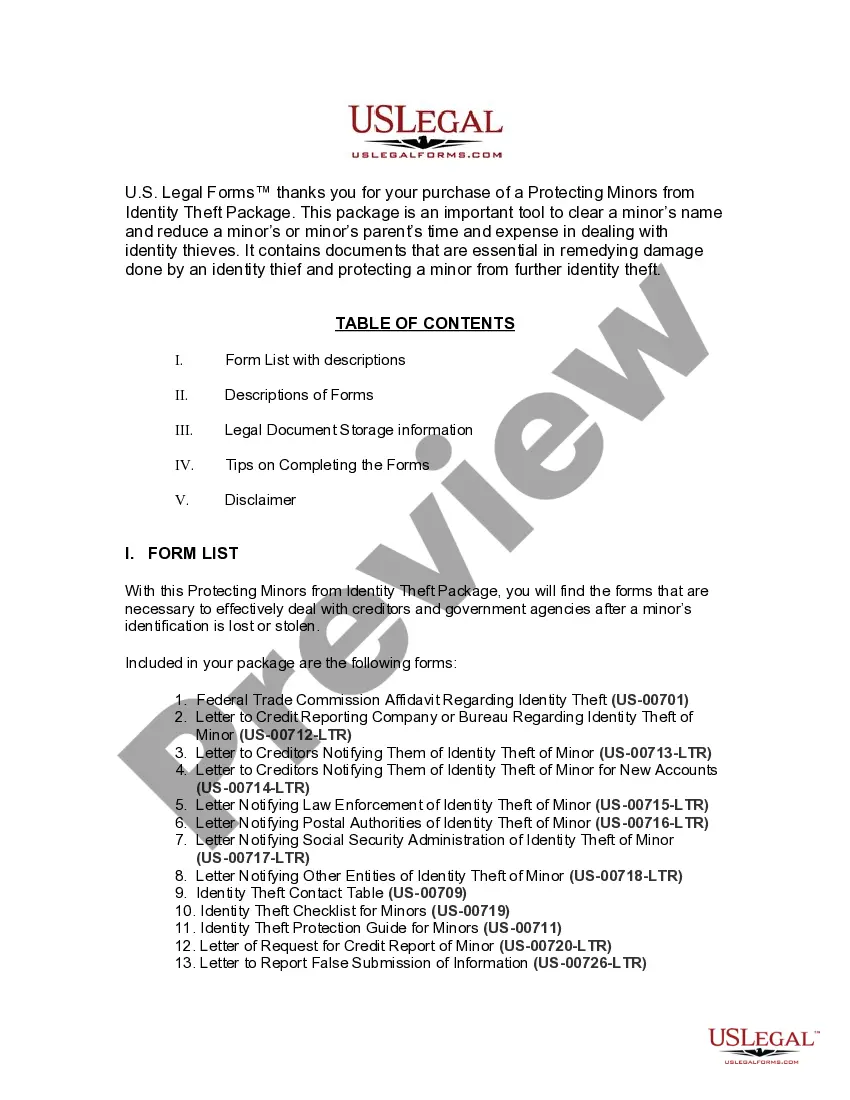
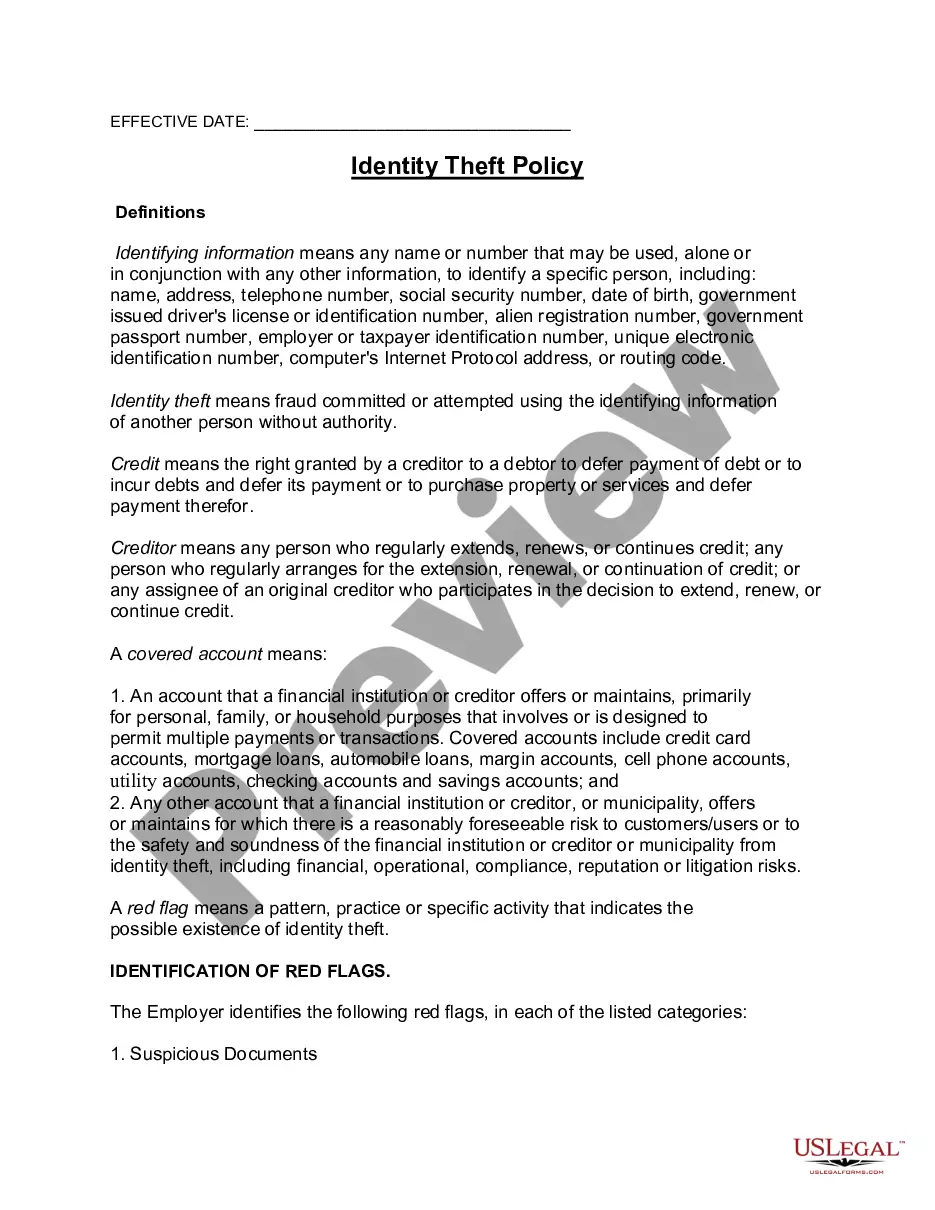
The Idaho Protecting Minors from Identity Theft Package is designed to help minors or their parents address issues related to lost or stolen identification. This package includes forms that assist in notifying creditors and government agencies, ultimately protecting a minor's personal information and credit standing. Unlike other identity theft resources, this package specifically addresses the unique challenges faced by minors, providing targeted documentation to clear a minor's name and reduce the time and costs involved in dealing with identity theft.
Forms included in this package
- Federal Trade Commission Affidavit regarding Identity Theft
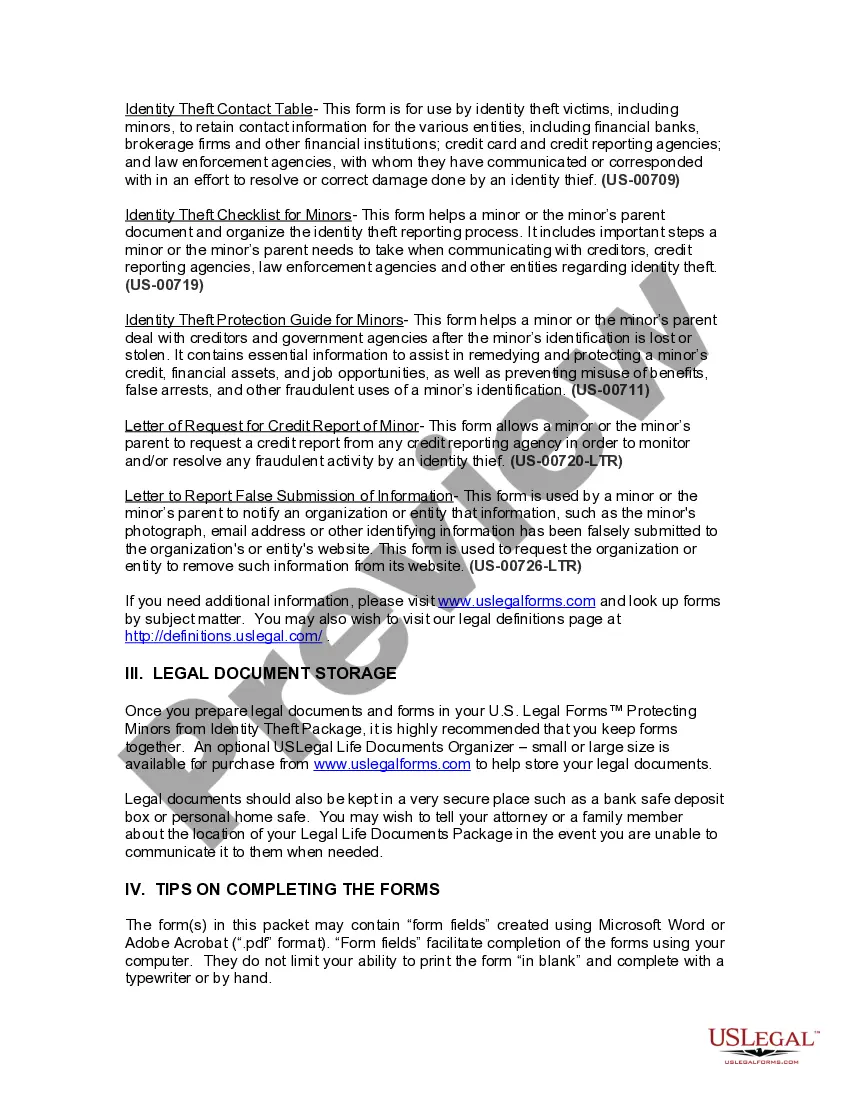
- Identity Theft Contact Table
- Guide for Protecting Minors from Identity Theft
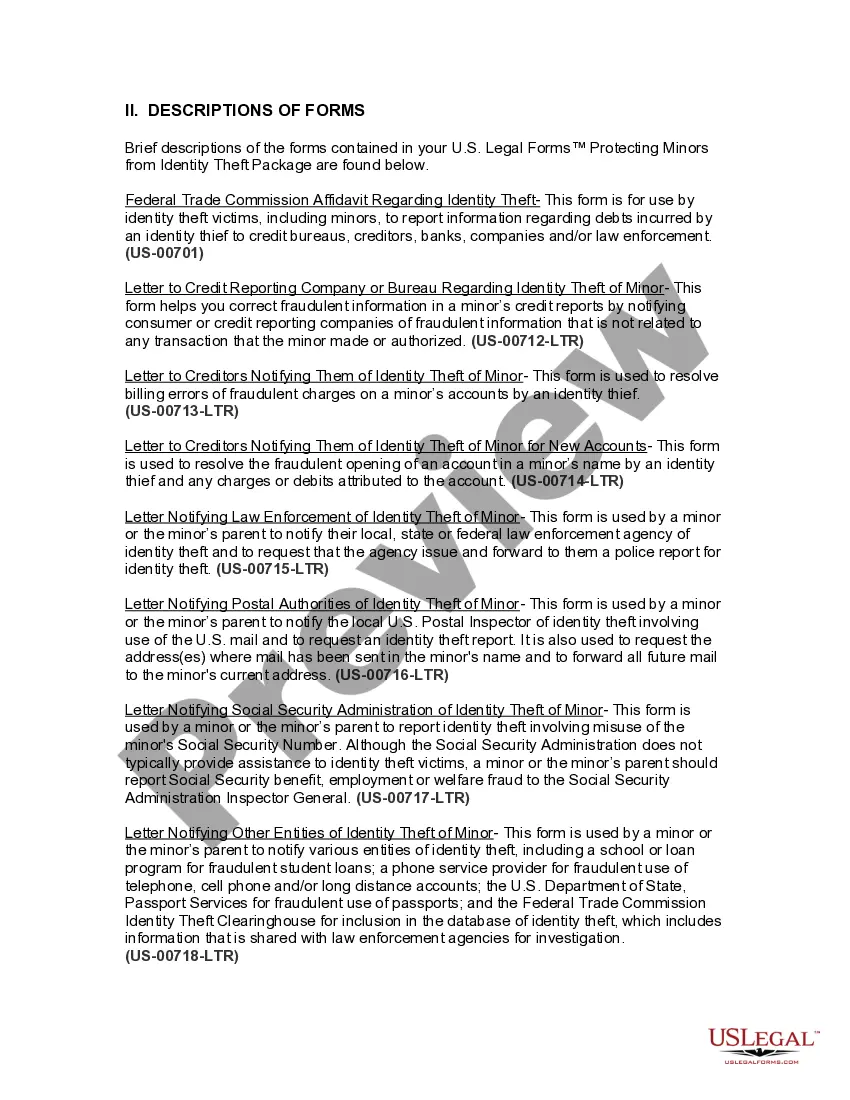
- Letter to Credit Reporting Company or Bureau Regarding Identity Theft of Minor
- Letter to Creditors Notifying Them of Identity Theft of Minor
- Letter to Creditors Notifying Them of Identity Theft of Minor for New Accounts
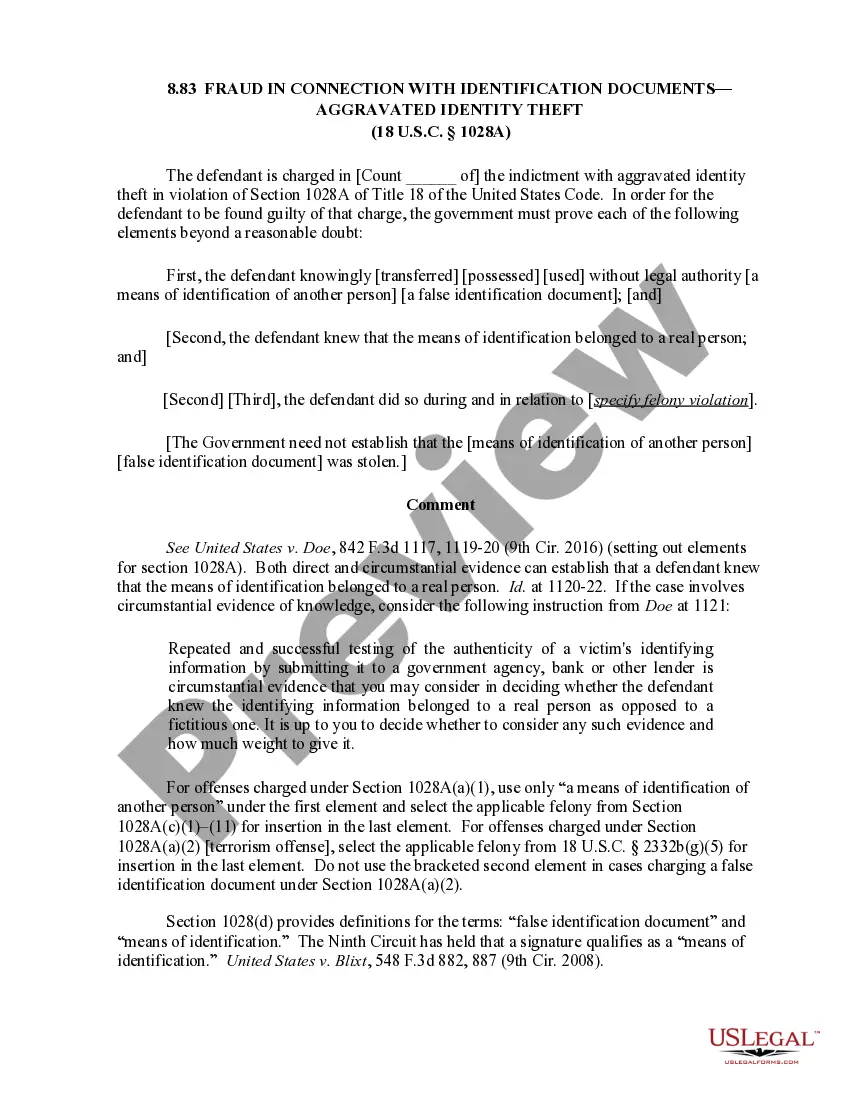
- Letter Notifying Law Enforcement of Identity Theft of Minor
- Letter Notifying Postal Authorities of Identity Theft of Minor
- Letter Notifying Social Security Administration of Identity Theft of Minor
- Letter to Other Entities Notifying Them of Identity Theft of Minor
- Identity Theft Checklist for Minors
- Sample Letter for Request for Credit Report of a Minor
- Sample Letter to Report False Submission of Minor's Information
When to use this form package
This form package should be used under the following circumstances:
- When a minor's identification has been lost or stolen.
- If there are signs of fraudulent activity on a minor's credit report.
- To notify creditors of identity theft on behalf of a minor.
- When legal action or notifications to government agencies are necessary due to identity theft.
Who should use this form package
- Parents or guardians of minors who have experienced identity theft.
- Minors who are capable of communicating their identity theft issues.
- Individuals responsible for safeguarding a minor's financial information and identification.
Instructions for completing these forms
- Review all forms included in the package for proper understanding.
- Gather necessary information regarding the identity theft incident, including dates and details of lost identification.
- Complete the forms by entering the required information accurately.
- Make copies of all completed forms for your records.
- Send the appropriate notifications to creditors and agencies as indicated within the forms.
Notarization guidance for this package
Forms in this package usually don’t need notarization, but certain jurisdictions or signing circumstances may require it. US Legal Forms provides a secure online notarization option powered by Notarize, accessible 24/7 from anywhere.
Get your form ready online
Our built-in tools help you complete, sign, share, and store your documents in one place.
Make edits, fill in missing information, and update formatting in US Legal Forms—just like you would in MS Word.
Download a copy, print it, send it by email, or mail it via USPS—whatever works best for your next step.
Sign and collect signatures with our SignNow integration. Send to multiple recipients, set reminders, and more. Go Premium to unlock E-Sign.
If this form requires notarization, complete it online through a secure video call—no need to meet a notary in person or wait for an appointment.
We protect your documents and personal data by following strict security and privacy standards.

Make edits, fill in missing information, and update formatting in US Legal Forms—just like you would in MS Word.

Download a copy, print it, send it by email, or mail it via USPS—whatever works best for your next step.

Sign and collect signatures with our SignNow integration. Send to multiple recipients, set reminders, and more. Go Premium to unlock E-Sign.

If this form requires notarization, complete it online through a secure video call—no need to meet a notary in person or wait for an appointment.

We protect your documents and personal data by following strict security and privacy standards.
Mistakes to watch out for
- Failing to provide complete and accurate information on forms.
- Not retaining copies of sent documents for future reference.
- Overlooking deadlines for notifying creditors or agencies.
- Neglecting to follow up on submissions to ensure issues have been resolved.
Why use this package online
- Immediate access to essential legal forms without the need for attorney consultations.
- Flexible editing options to easily tailor forms to specific situations.
- Documentation is prepared based on current legal standards and regulations.
- Saves time and money compared to purchasing forms individually.
Legal use & context
- Forms provided in this package are designed to comply with legal standards for addressing identity theft in Idaho.
- They aid in properly documenting the identity theft incident, which is essential for legal protection and remediation.
- The successful use of these forms can help restore the minor's good credit standing and prevent future issues.
Looking for another form?



Form popularity
FAQ
A copy of your FTC Identity Theft Report. a government-issued ID with a photo. proof of your address (mortgage statement, rental agreement, or utilities bill) any other proof you have of the theft (bills, IRS notices, etc.)
Amongst the charges that Jones is facing is the offence of dealing with identification information to commit an indictable offence, which falls under section 192J of the Crimes Act 1900 (the Act). And with a maximum penalty of 10 years imprisonment, it's a serious crime.
Step 1: Call the companies where you know fraud occurred. Call the fraud department. Step 2: Place a fraud alert and get your credit reports. Place a free, one-year fraud alert by contacting one of the three credit bureaus. Step 3: Report identity theft to the FTC.
Identity theft in California can be charged as either a felony or a misdemeanor depending on (1) the defendant's criminal history, and (2) the specific facts of the case. A person convicted of misdemeanor identity theft faces up to one year in county jail, a fine of up to $1,000, or both.
File a claim with your identity theft insurance, if applicable. Notify companies of your stolen identity. File a report with the FTC. Contact your local police department. Place a fraud alert on your credit reports. Freeze your credit. Sign up for a credit monitoring service, if offered.
Police departments can do very little to investigate and prosecute identity theft.You can use the Identity Theft Report to help get false information taken off your credit reports, stop a company from collecting debts and place an extended fraud alert on your credit reports.
Under California law, you can report identity theft to your local police department. Ask the police to issue a police report of identity theft. Give the police as much information on the theft as possible. One way to do this is to provide copies of your credit reports showing the items related to identity theft.
Freeze your credit. Safeguard your Social Security number. Be alert to phishing and spoofing. Use strong passwords and add an authentication step. Use alerts. Watch your mailbox. Shred, shred, shred. Use a digital wallet.