Guide for Protecting Minors from Identity Theft
What this document covers
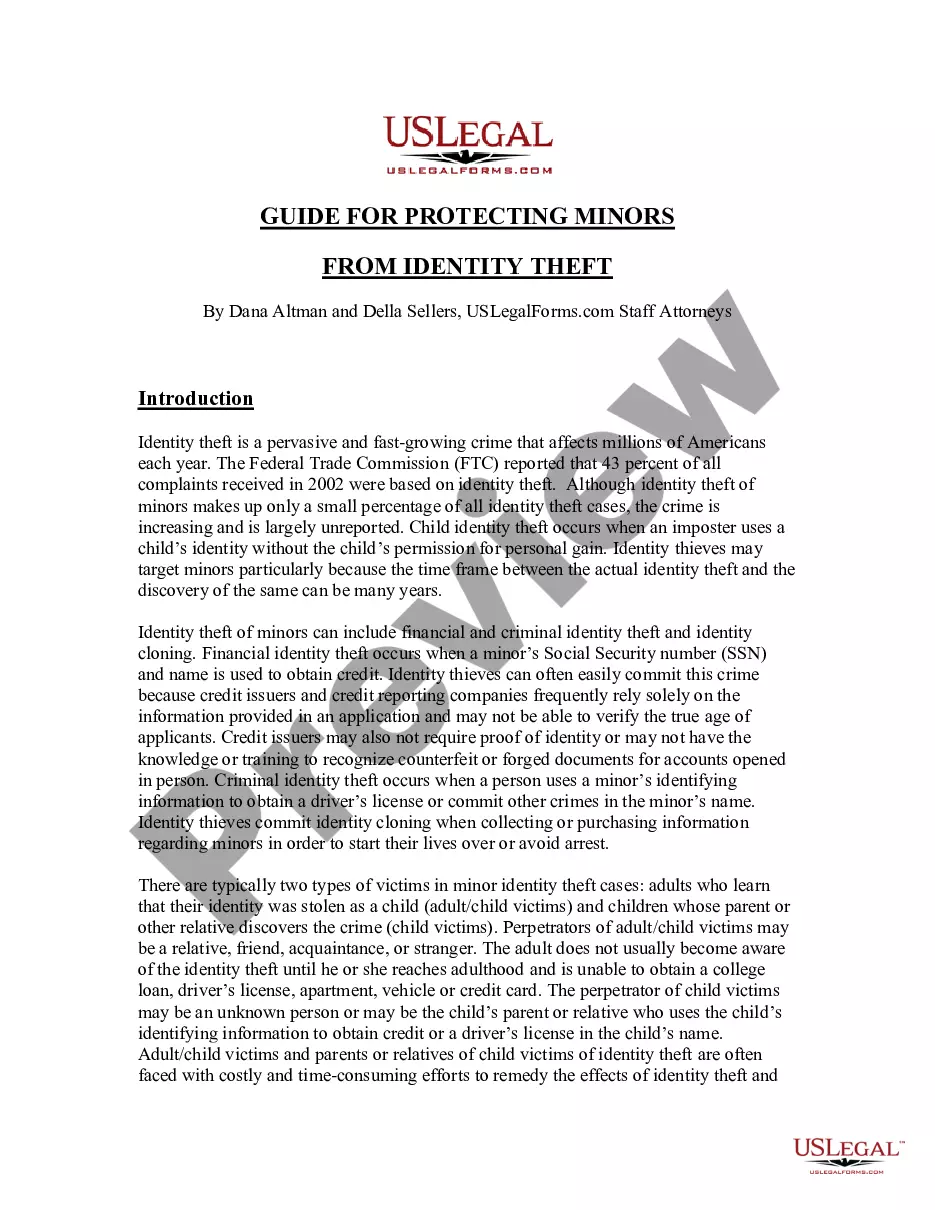
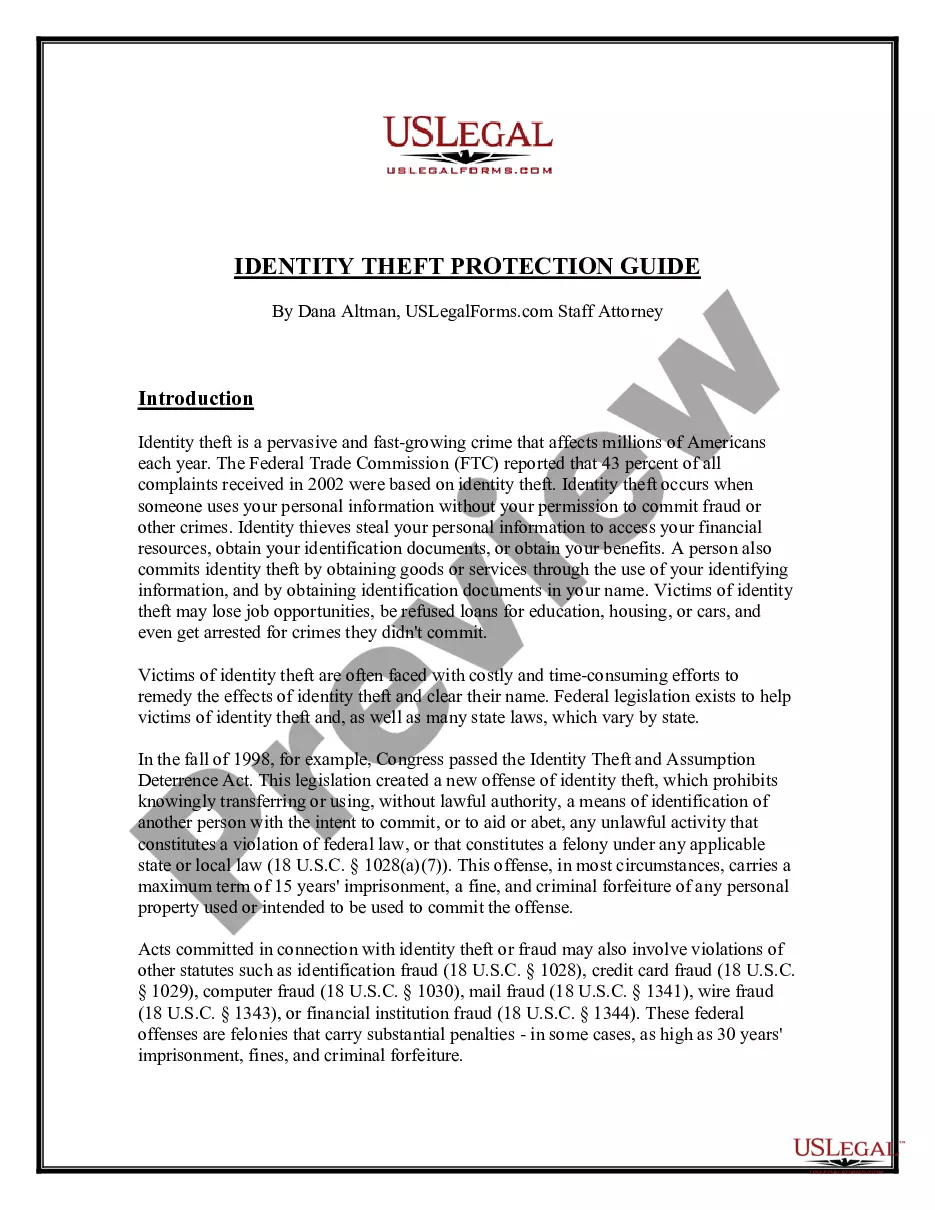
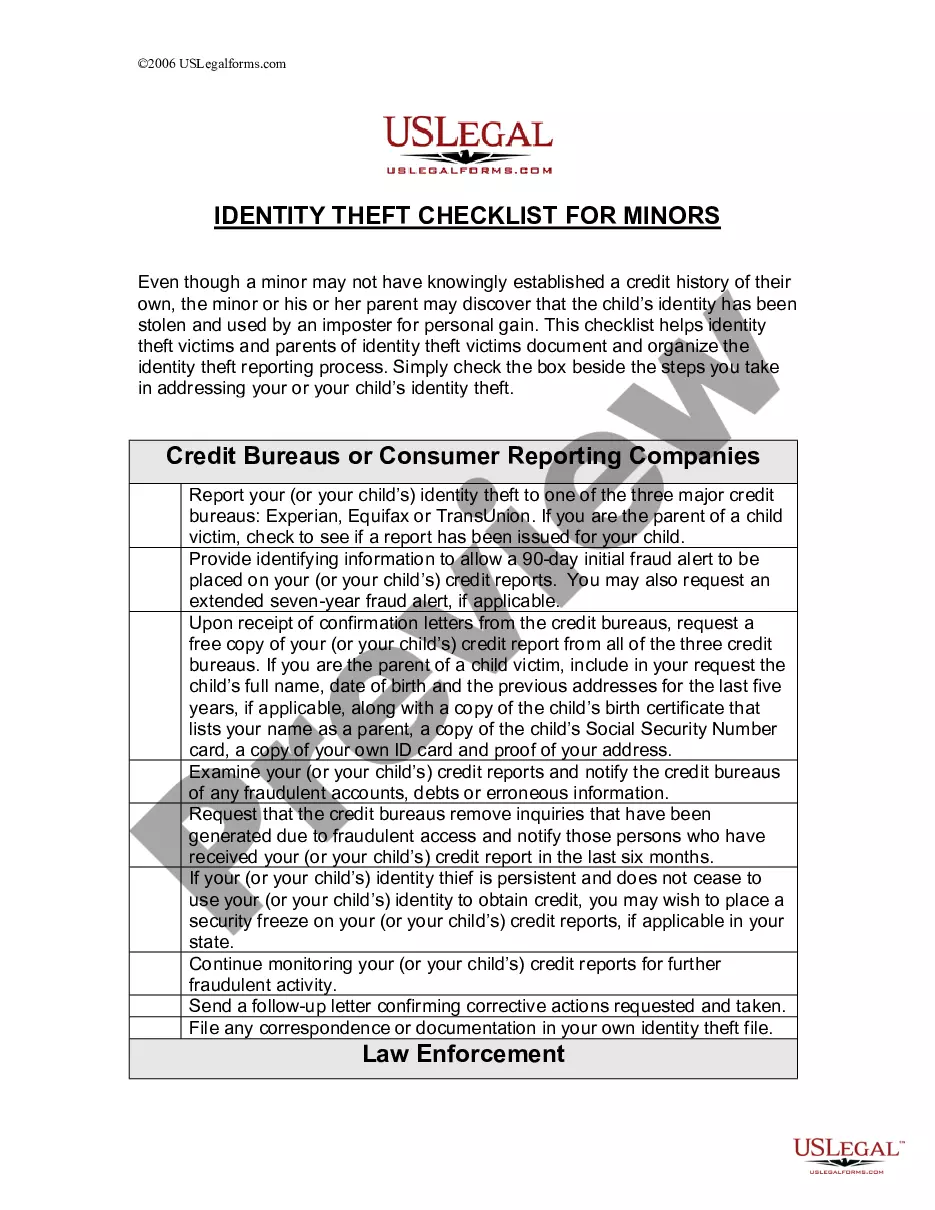
The Guide for Protecting Minors from Identity Theft is a comprehensive resource designed to educate parents and guardians on preventing and addressing identity theft involving minors. This guide covers the specific challenges of child identity theft, which can lead to severe implications for a minor's financial and personal future. It provides actionable steps for clearing a minor's name and interacting with creditors and government agencies after theft incidents. Unlike other general identity theft resources, this guide specifically addresses the unique concerns related to minors, making it essential for safeguarding their identity.
Form components explained
- Definition and prevalence of identity theft targeting minors.
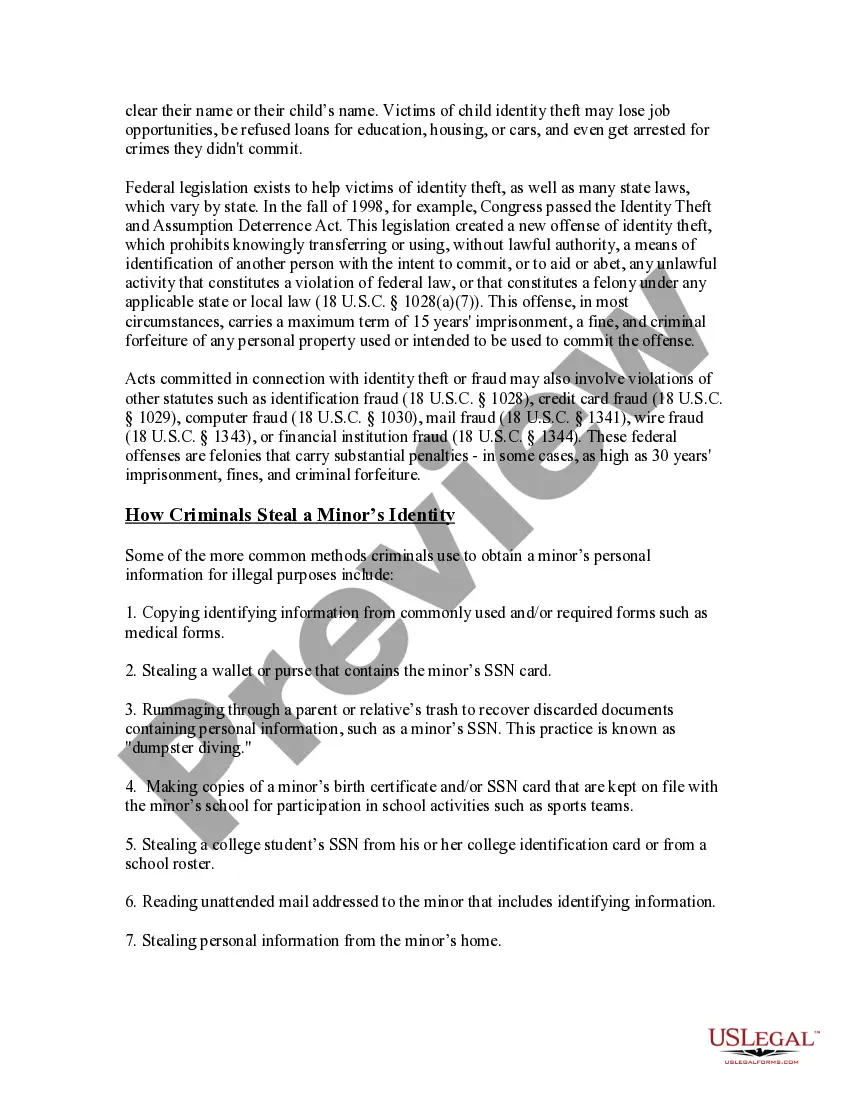
- Common methods used by criminals to steal a minor's identity.
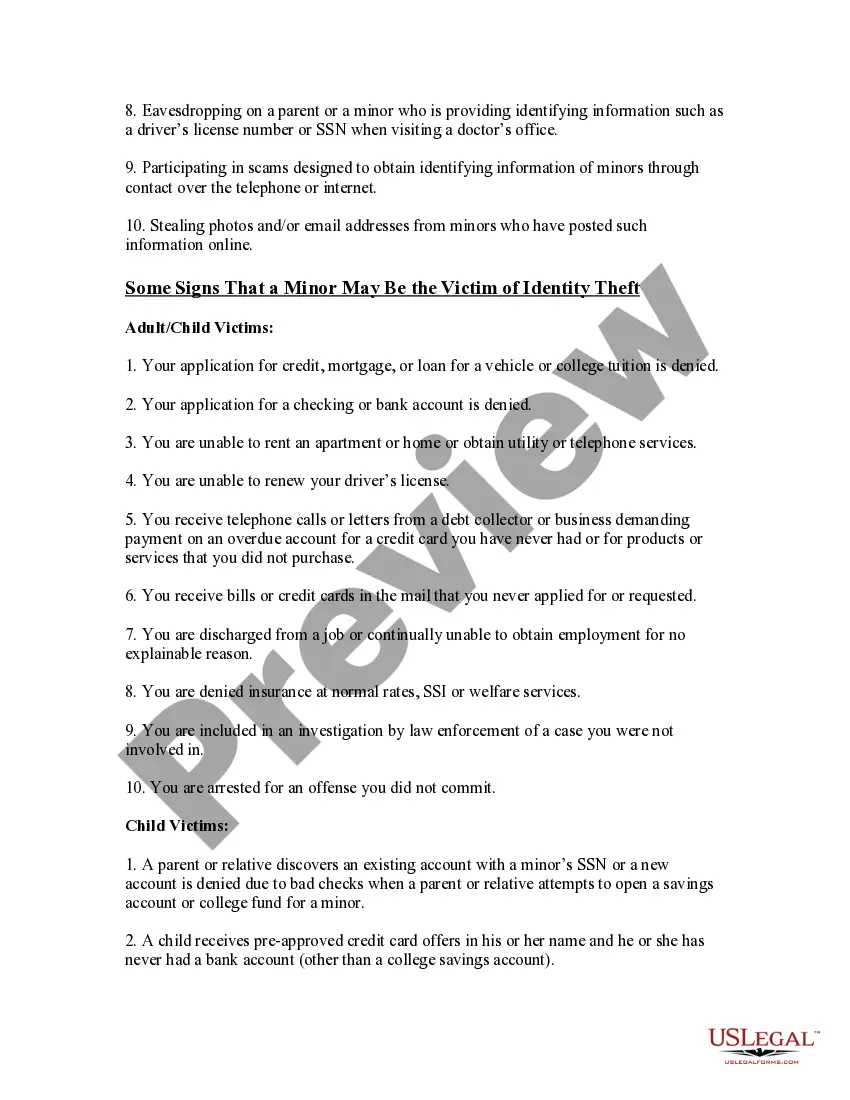
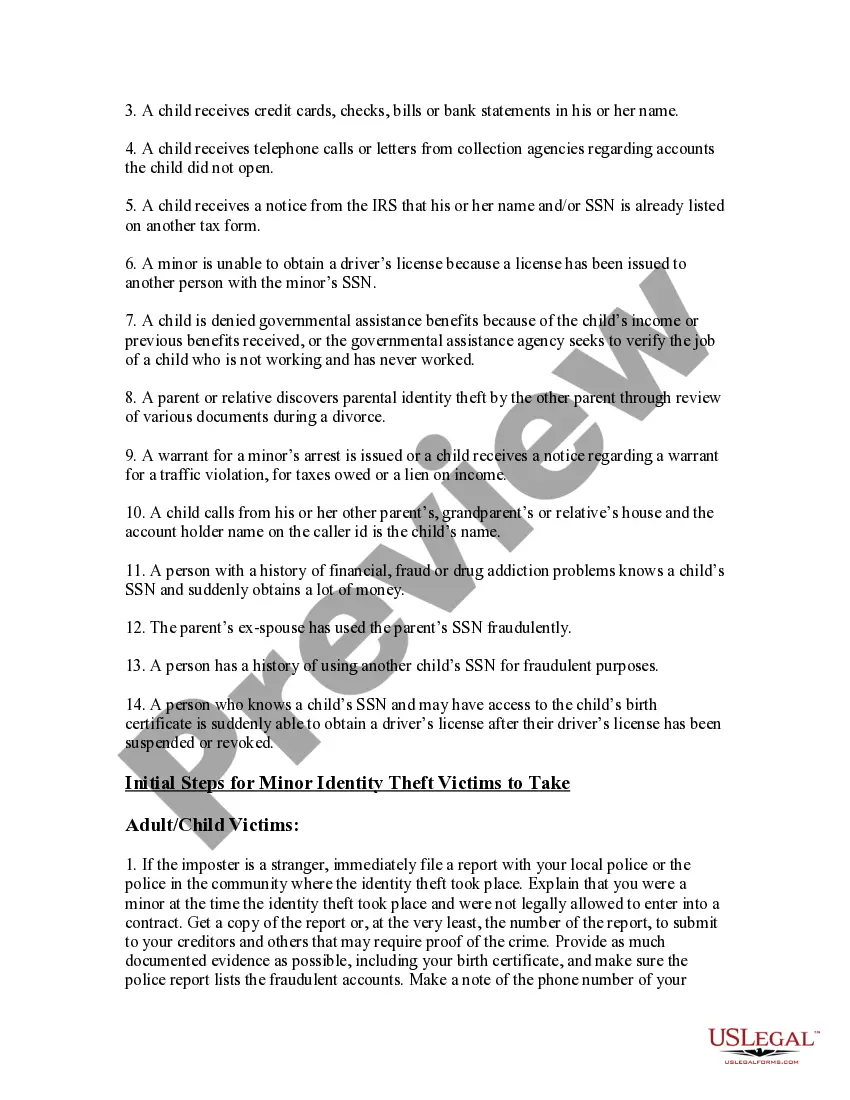
- Signs that a minor may be a victim of identity theft.
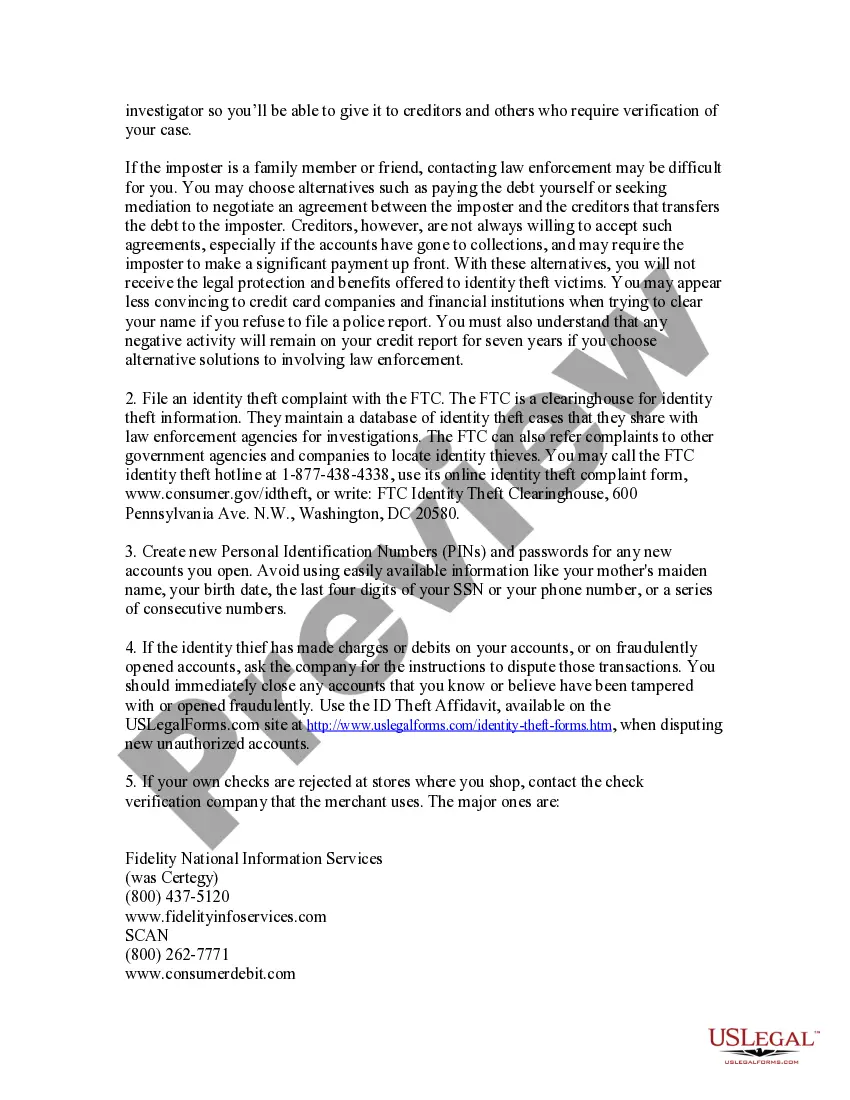
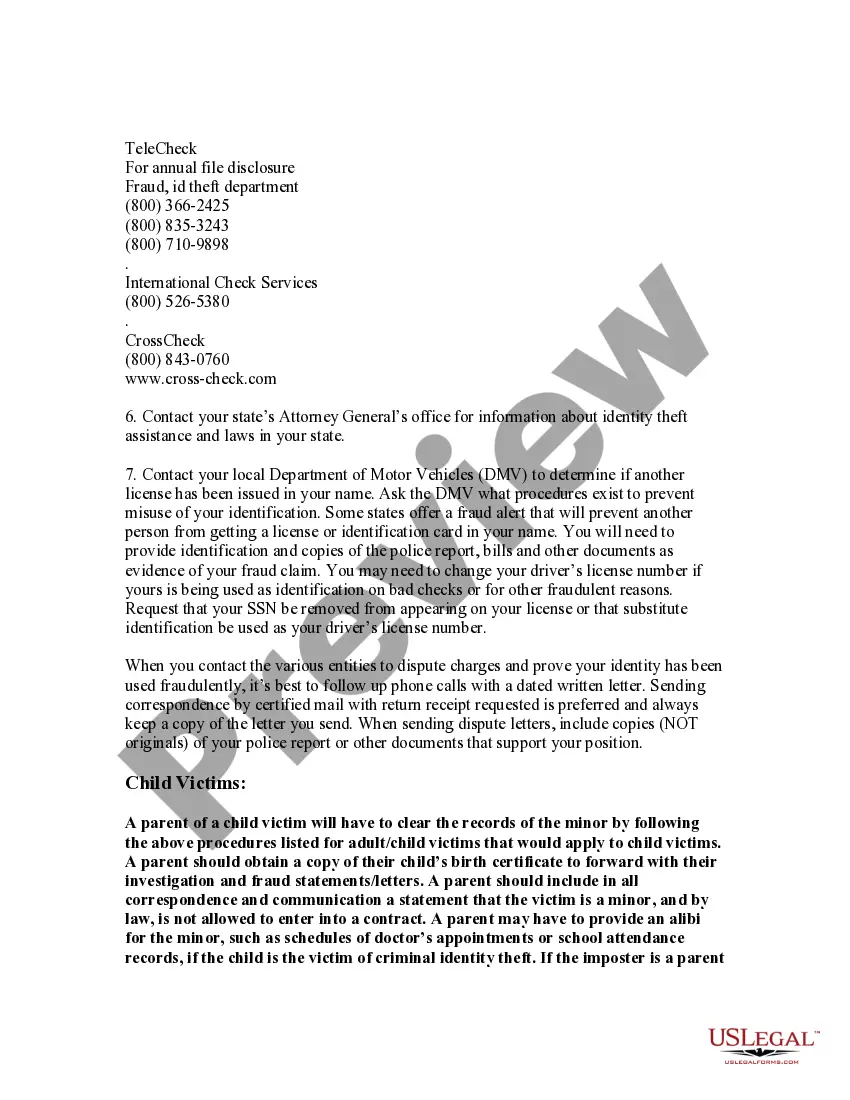
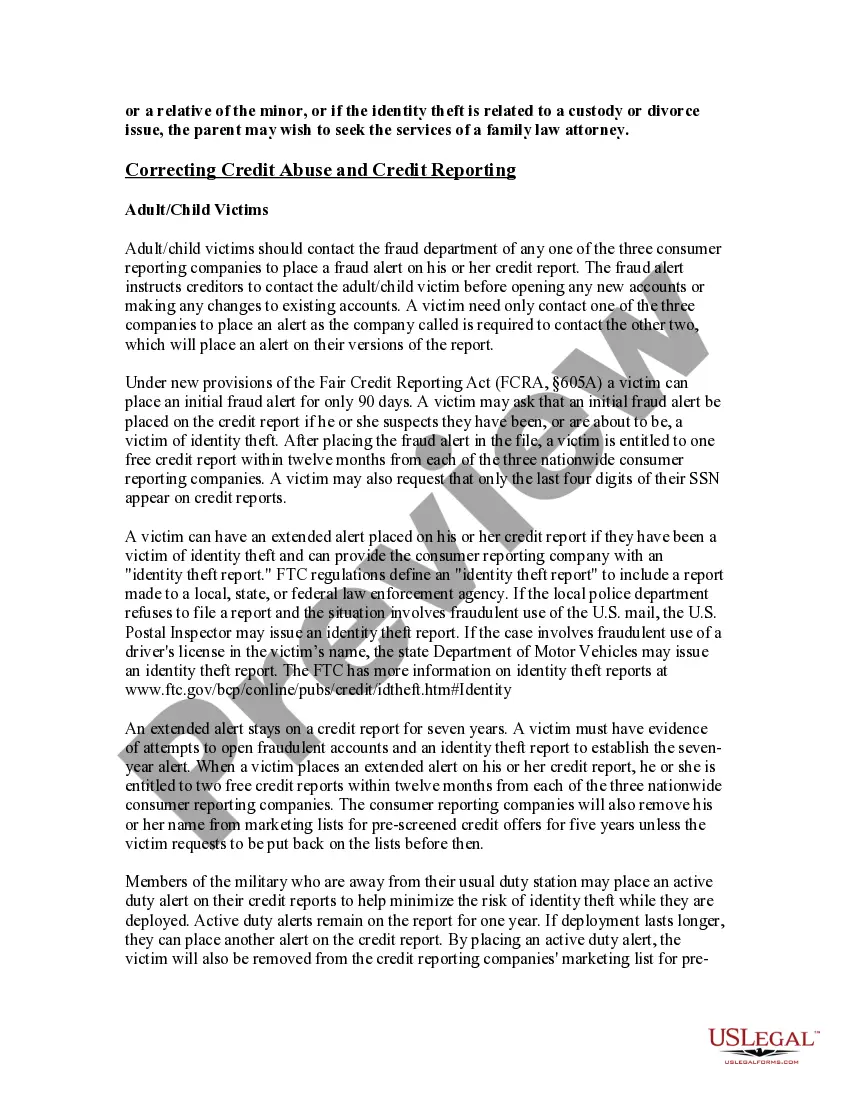
- Specific steps to take if identity theft is detected.
- Resources for reporting and resolving identity theft issues.
- Preventative measures to protect minors from identity theft.

When to use this document
This guide should be used when a parent or guardian suspects that a minor's identity has been compromised or stolen. It serves as a vital tool in situations where there are indications of identity theft, such as denied credit applications, unexpected bills, or collection notices addressed to the minor. Additionally, it can be utilized proactively to educate parents about measures that can prevent identity theft before it happens.
Who can use this document
- Parents or guardians of minors.
- Caregivers responsible for the financial wellbeing of a minor.
- Individuals who suspect that a minor's identity has been stolen.
- Educators and community leaders involved in child welfare.
Completing this form step by step
- Start by reviewing the symptoms of identity theft outlined in the guide.
- If theft is suspected, document all occurrences and gather evidence.
- File a report with local law enforcement to create a record of the incident.
- Contact the relevant credit reporting agencies to place a fraud alert on the minor's credit report.
- Use the suggested resources in the guide for further assistance with recovery.
Notarization guidance
Notarization is generally not required for this form. However, certain states or situations might demand it. You can complete notarization online through US Legal Forms, powered by Notarize, using a verified video call available anytime.
Get your form ready online
Our built-in tools help you complete, sign, share, and store your documents in one place.
Make edits, fill in missing information, and update formatting in US Legal Forms—just like you would in MS Word.
Download a copy, print it, send it by email, or mail it via USPS—whatever works best for your next step.
Sign and collect signatures with our SignNow integration. Send to multiple recipients, set reminders, and more. Go Premium to unlock E-Sign.
If this form requires notarization, complete it online through a secure video call—no need to meet a notary in person or wait for an appointment.
We protect your documents and personal data by following strict security and privacy standards.

Make edits, fill in missing information, and update formatting in US Legal Forms—just like you would in MS Word.

Download a copy, print it, send it by email, or mail it via USPS—whatever works best for your next step.

Sign and collect signatures with our SignNow integration. Send to multiple recipients, set reminders, and more. Go Premium to unlock E-Sign.

If this form requires notarization, complete it online through a secure video call—no need to meet a notary in person or wait for an appointment.

We protect your documents and personal data by following strict security and privacy standards.
Common mistakes
- Failing to report the identity theft promptly to law enforcement.
- Not documenting all communications with creditors regarding fraudulent activities.
- Ignoring alerts or letters from debt collectors and credit agencies.
- Overlooking preventative measures to safeguard personal information in the first place.
Benefits of completing this form online
- Immediate access to essential information and steps for protecting minors.
- Downloadable format allowing for ease of use and sharing.
- Convenient resource for reference at any time without needing to consult multiple sources.
- Guidance curated by licensed attorneys specializing in identity theft issues.
Looking for another form?

Form popularity
FAQ
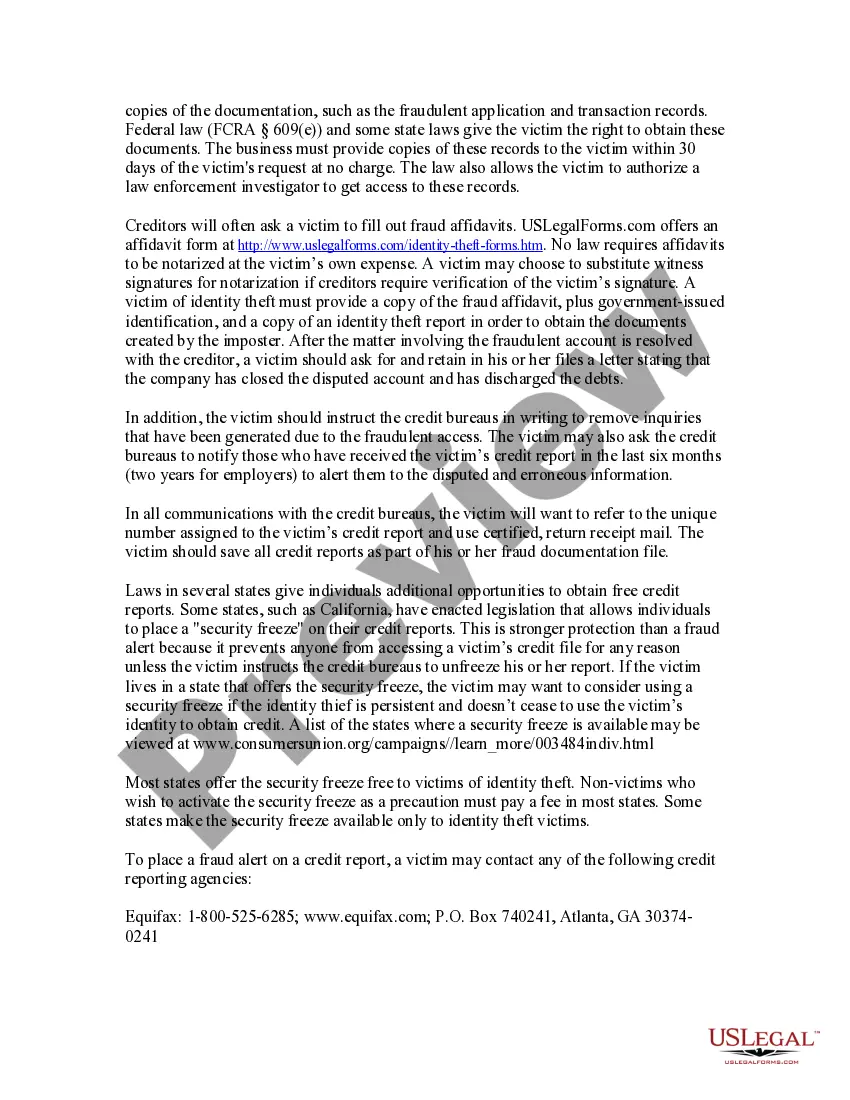
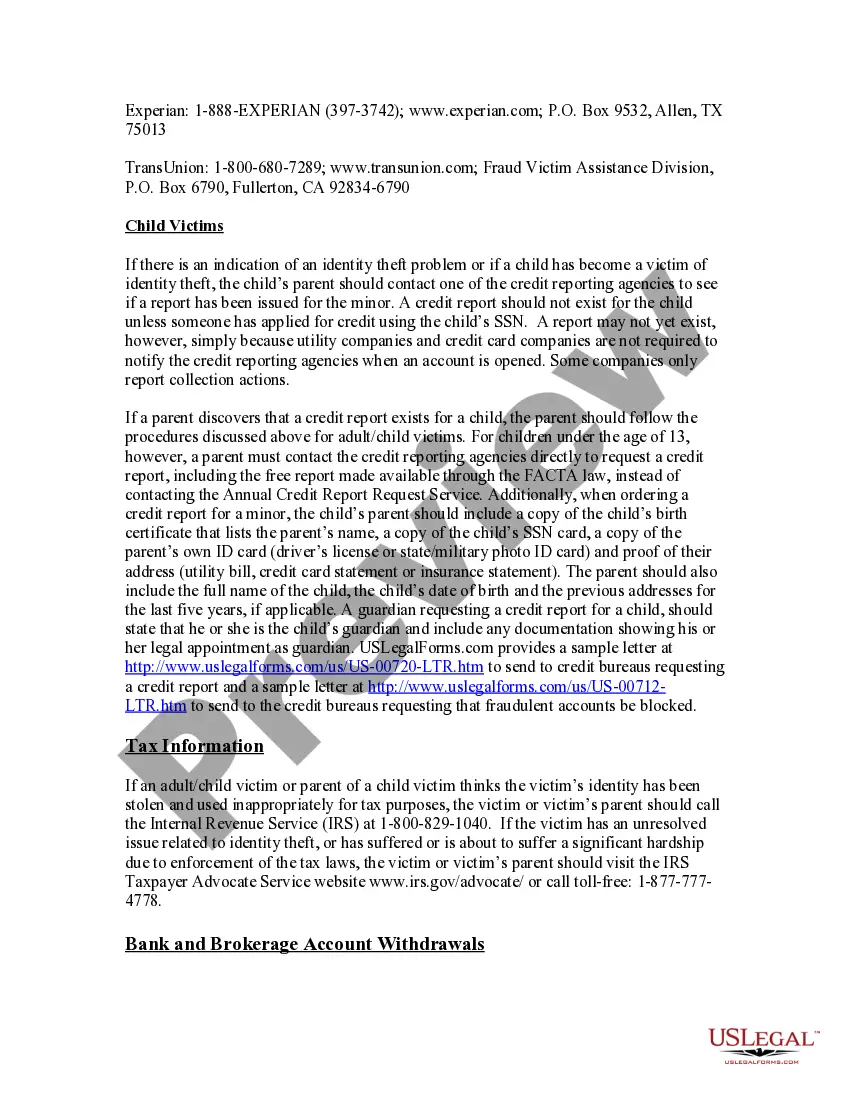
Gather the needed documents. The three major credit bureaus (Experian, Equifax and TransUnion) have slightly different requirements. Print out child freeze request forms. 3. Mail the request and document copies. Wait for confirmation, then store it securely.
Now a child's number can more easily be used to establish a credit history. Minors are especially vulnerable because they are likely to have an unblemished credit history.In some cases, thieves get access to a child's stolen Social Security number.
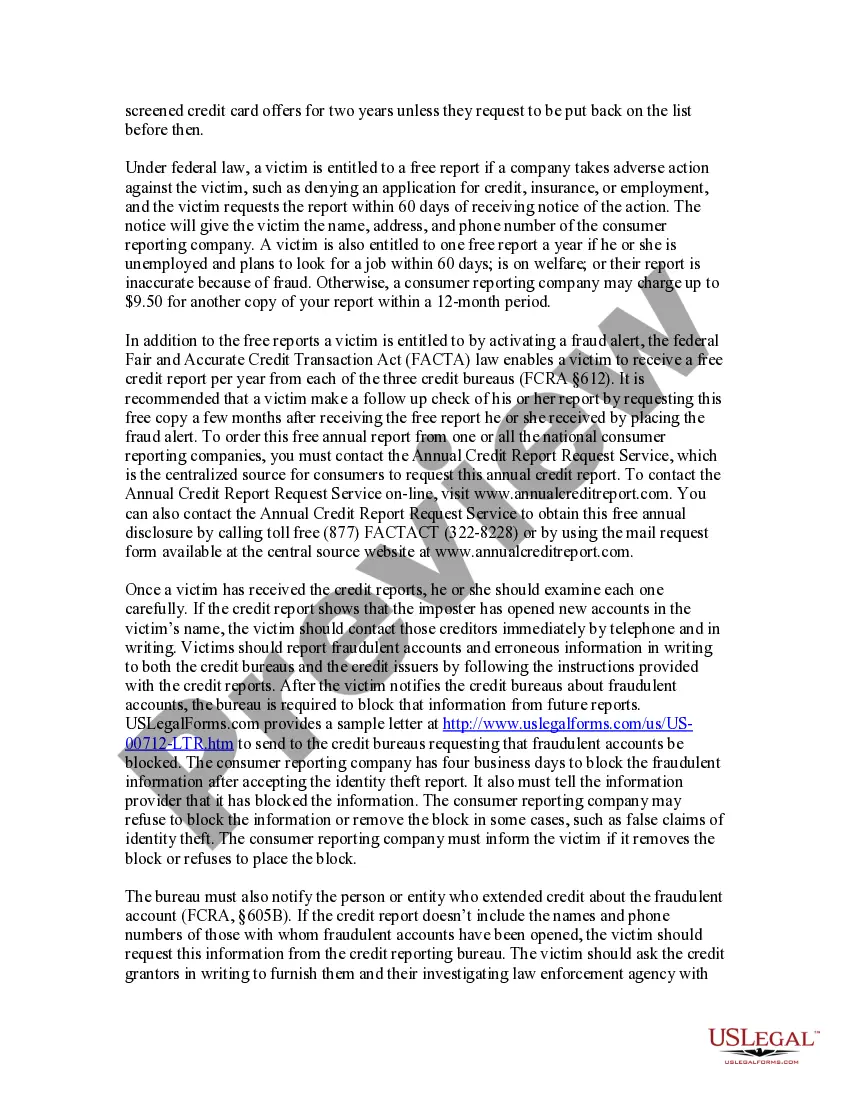
First, you need to check with the Social Security Administration once a year to make sure no one is using your child's SSN. Secondly, you need to check your child's credit report (free Equifax -1-800-525-6285; Experian-1-888-397-3742; TransUnion-1-800-680-7289.)
Identity thieves can also use your identity when they commit other crimes, such as entering (or exiting) a country illegally, trafficking drugs, smuggling other substances, committing cyber crimes, laundering money and much more. In fact, they can use your identity to commit almost any crime imaginable in your name.
Contact Companies Where Fraud Occurred. Contact the Credit Bureaus. Consider a Child Credit Freeze. Report Identity Theft to the FTC. Find Out Who Has Access to Your Child's Personal Information. Pay Attention to Forms from School. Read the Notices from Your Child's School.
Parents and legal guardians have unfettered access to their children's personal information. In many cases, a parent, a close relative, or a legal guardian might use the child's Social Security number to commandeer their identity (and clean credit history).
Password-Protect Your Devices. Use a Password Manager. Watch Out for Phishing Attempts. Never Give Out Personal Information Over the Phone. Regularly Check Your Credit Reports. Protect Your Personal Documents. Limit Your Exposure.
A child's identity is very attractive to thieves. It's also a relatively easy crime to commit; a thief could pair any name and birth date with a stolen Social Security number, essentially creating a false identity.
Contact the Federal Trade Commission (FTC) to report the ID theft and get a recovery plan. Contact your local law enforcement and get a police report. Contact the fraud departments of companies where accounts were opened in your child's name.