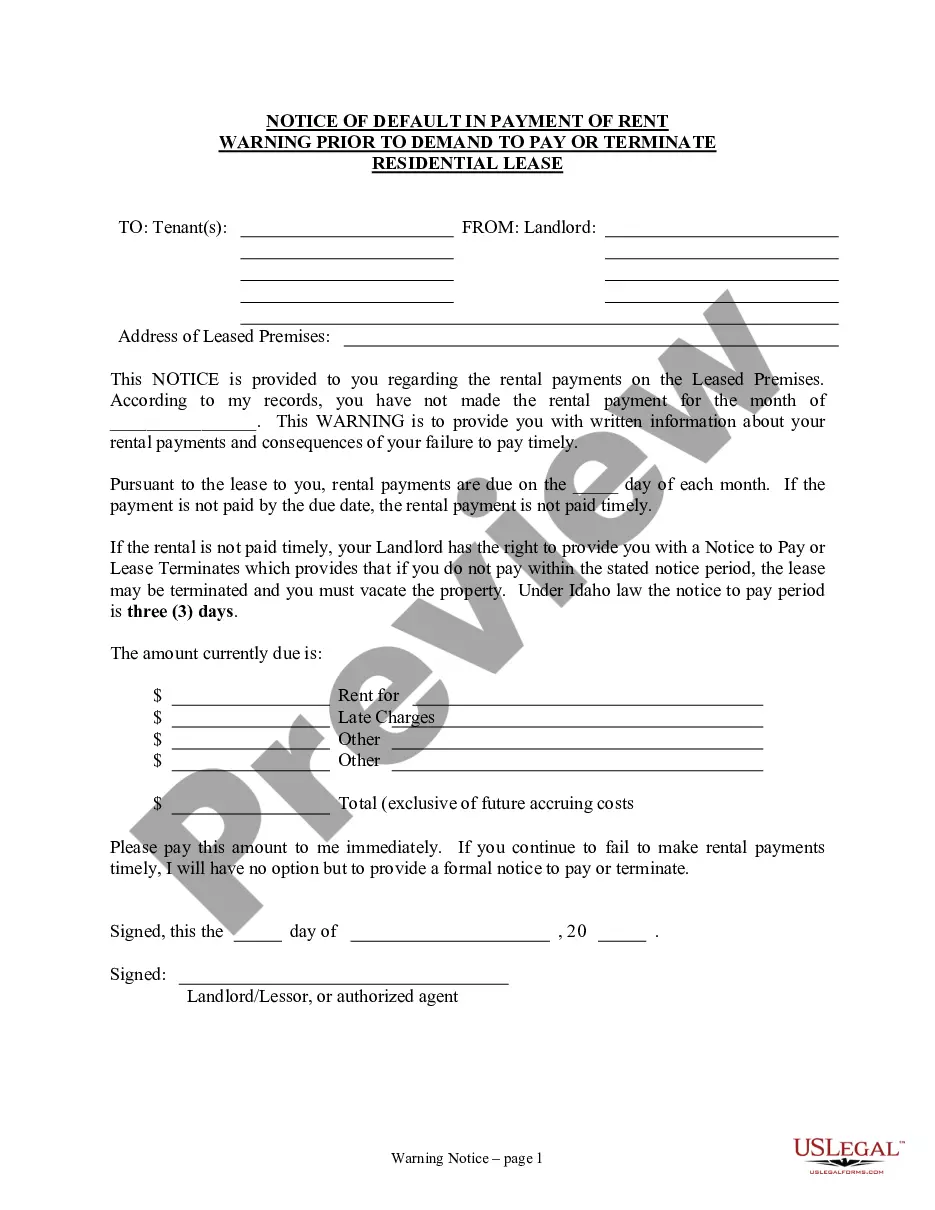
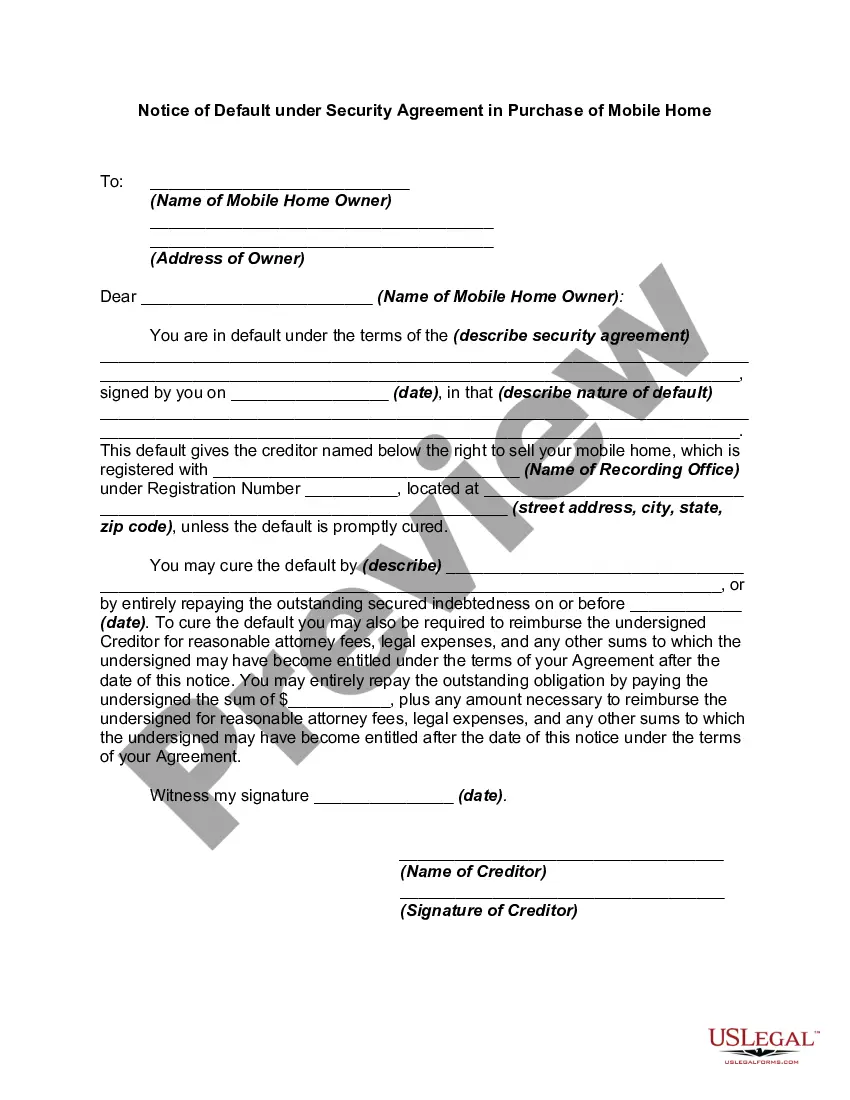
This Notice of Default in Payment of Rent as Warning Prior to Demand to Pay or Terminate for Non-Residential or Commercial Property form is for use by a Landlord to inform Tenant of Tenant's default in the payment of rent as a warning prior to a pay or terminate notice. The form advises the Tenant of the due date of rent and the consequences of late payment. This form may be used where you desire to remind the Tenant of payment terms, the default, demand payment and inform the Tenant that under the laws of this state or lease the Landlord may terminate in rent is not paid timely.
Idaho Notice of Default in Payment of Rent as Warning Prior to Demand to Pay or Terminate for Residential Property
State:
Idaho
Control #:
ID-1300LT
Format:
Word;
Rich Text
Instant download
Description
Free preview
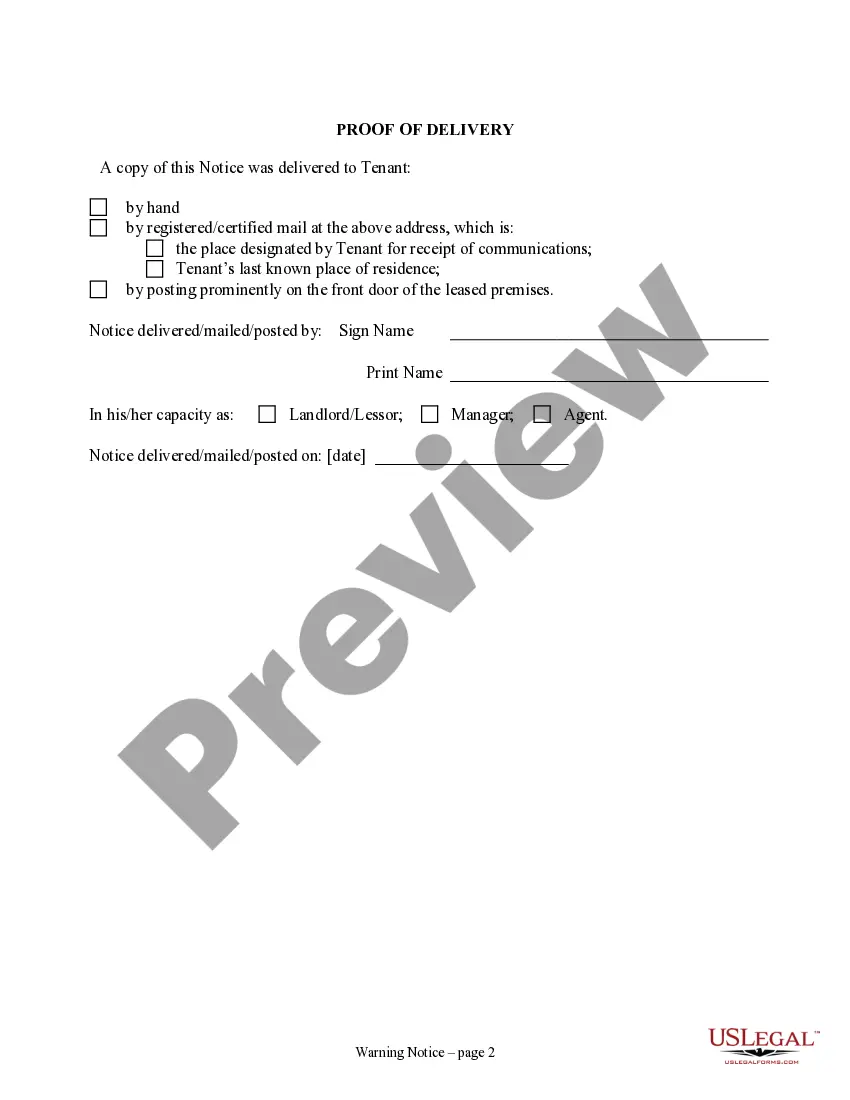
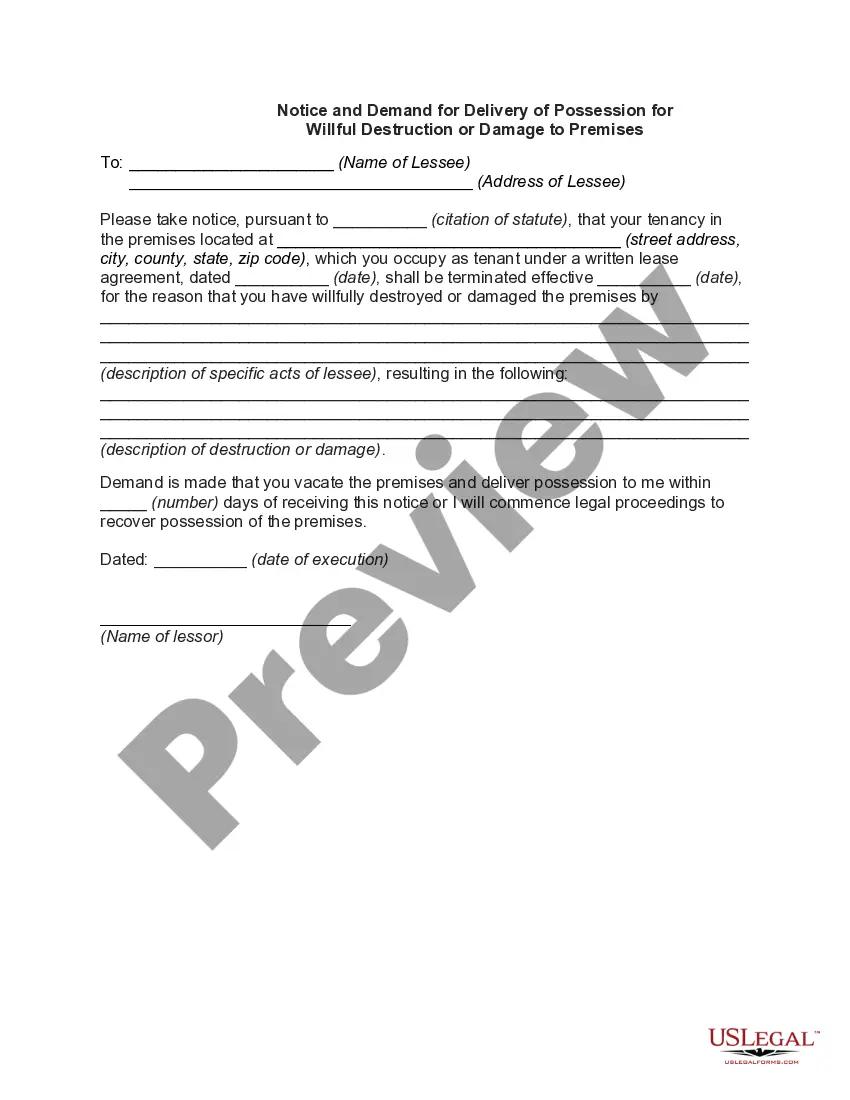
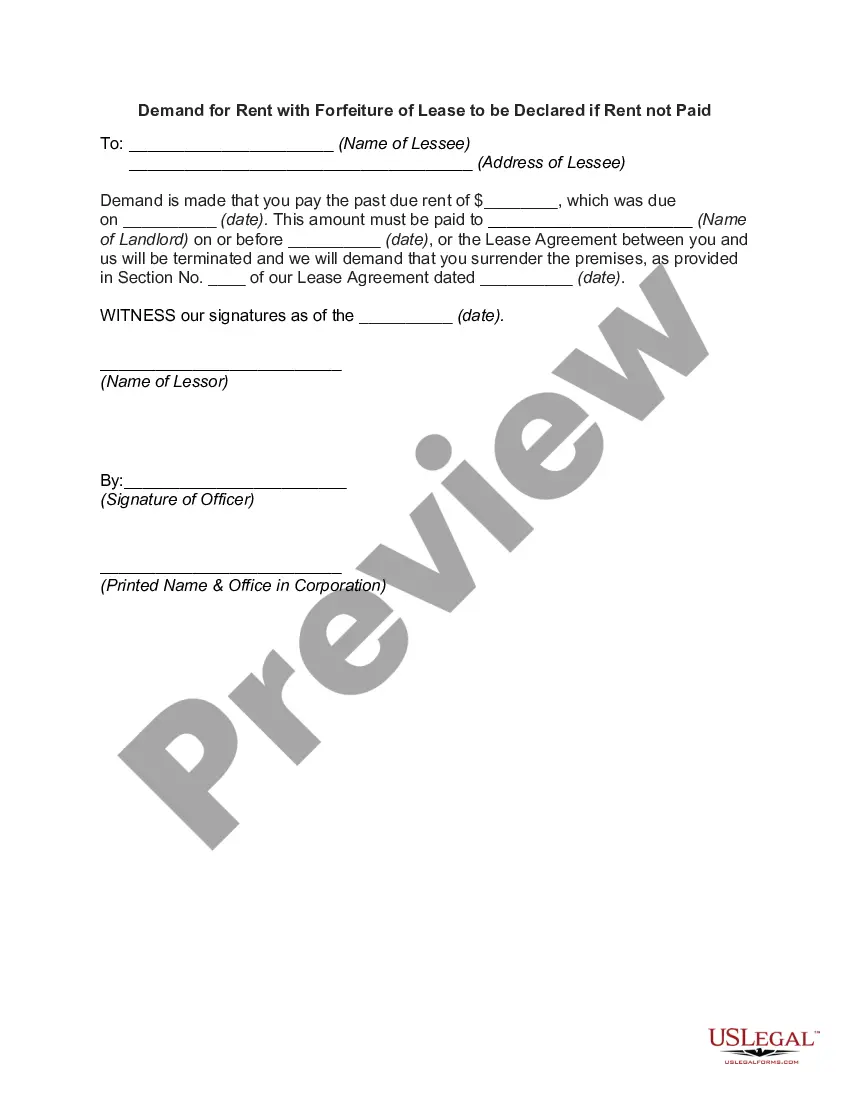
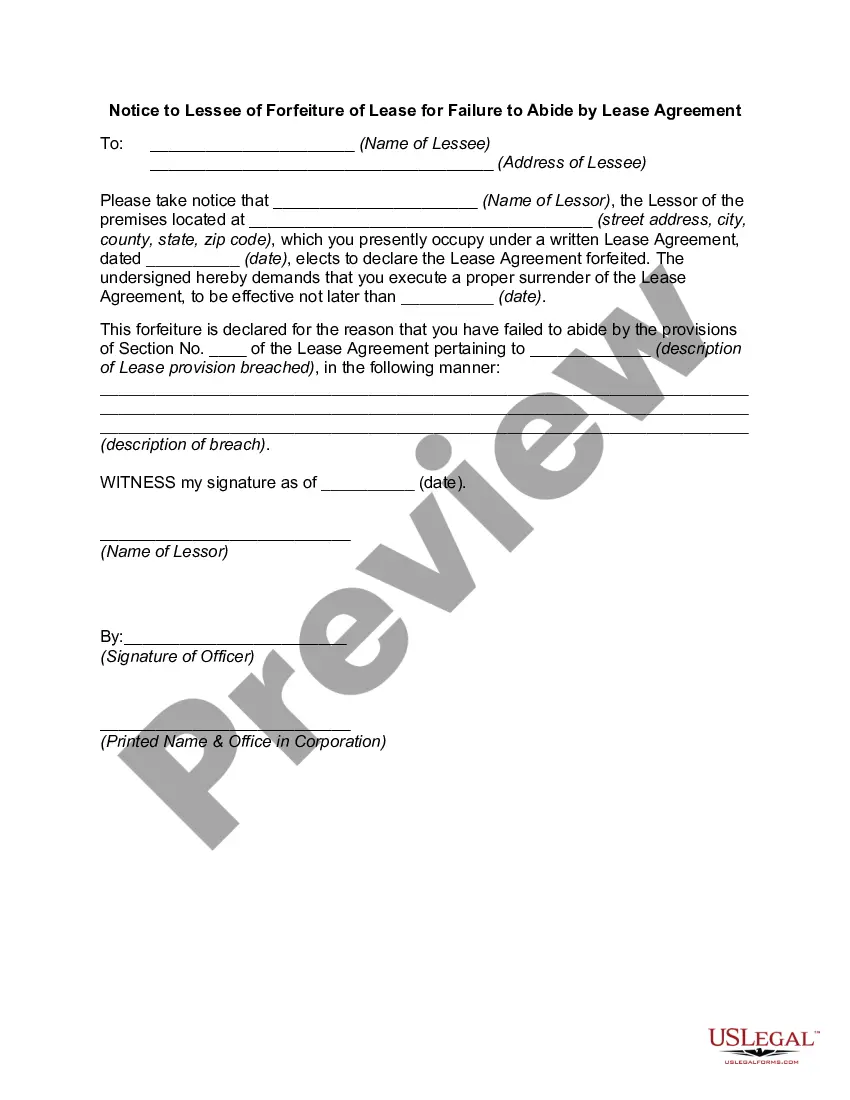


How to fill out Idaho Notice Of Default In Payment Of Rent As Warning Prior To Demand To Pay Or Terminate For Residential Property?
Gain entry to one of the broadest collections of legal documents.
US Legal Forms serves as a venue where you can discover any state-specific document in just a few clicks, such as the Idaho Notice of Default in Payment of Rent as Warning Prior to Demand to Pay or Terminate for Residential Property examples.
There's no necessity to squander hours searching for an adjudicable document. Our skilled professionals guarantee that you obtain current templates consistently.
After choosing a pricing plan, create an account. Make the payment via credit card or PayPal. Download the document by clicking Download. That’s it! You need to fill out the Idaho Notice of Default in Payment of Rent as Warning Prior to Demand to Pay or Terminate for Residential Property template and verify it. To ensure all is accurate, reach out to your local legal advisor for assistance. Register and casually browse through approximately 85,000 useful templates.
- To utilize the document repository, select a subscription, and set up an account.
- If you’ve accomplished that, simply Log In and hit Download.
- The Idaho Notice of Default in Payment of Rent as Warning Prior to Demand to Pay or Terminate for Residential Property form will promptly be saved in the My documents section (a section for all documents you download from US Legal Forms).
- To establish a new account, adhere to the brief guidelines outlined below.
- When intending to use a state-specific document, be sure to indicate the correct state.
- If available, examine the description to understand all aspects of the document.
- Use the Preview feature, if it exists, to review the details of the form.
- If everything looks correct, press the Buy Now button.
Form popularity
FAQ
There are no limits on the number of times or the amount a landlord can increase the rent unless there is a provision in the lease. A tenant can move rather than pay the increase. Idaho Code Section 55-307.
Allow the landlord to enter the rental unit without providing proper notice as provided by law or the lease agreement; require the tenant's security deposit to cover damages not caused by the tenant or the tenant's guests;allow the landlord to seize a tenant's personal property if the tenant fails to pay rent.
The Idaho law enacted in 1977 clearly specifies the rights of landlords and tenants. Some of the tenant rights include: Right to remain on the property until they're properly evicted by a court order. Right to have repairs made within a reasonable amount of time after a request is made.
Idaho does not regulate the amount of rent, deposits or fees that landlords can charge.
Idaho does not currently enforce any kind of rent control so landlords are able to charge whatever they want in rental prices. Rental increases. Idaho landlords are not limited in how much they can raise rental prices but they must give tenants at least 15 days' advance notice before doing so.
Idaho is a fairly landlord-friendly state because there are few limits on fees and other charges, and landlords can manage security deposits how they wish. Tenants are also not allowed to withhold rent, although they can make repairs and deduct the cost for smoke detectors alone.
If the resident does not follow the notice and pay rent or move out in the stipulated time (3 days), then you have the right order for their eviction. For a lease violation, Idaho landlord-resident laws require that you must give your resident a 3-Day Notice to Comply or Vacate to begin the eviction process.
The big take-away is that in most circumstances a landlord cannot enter a property without agreement from the tenant. And If the landlord ignores the law and enters the property without permission, the tenant may be able to claim damages or gain an injunction to prevent the landlord doing it again.