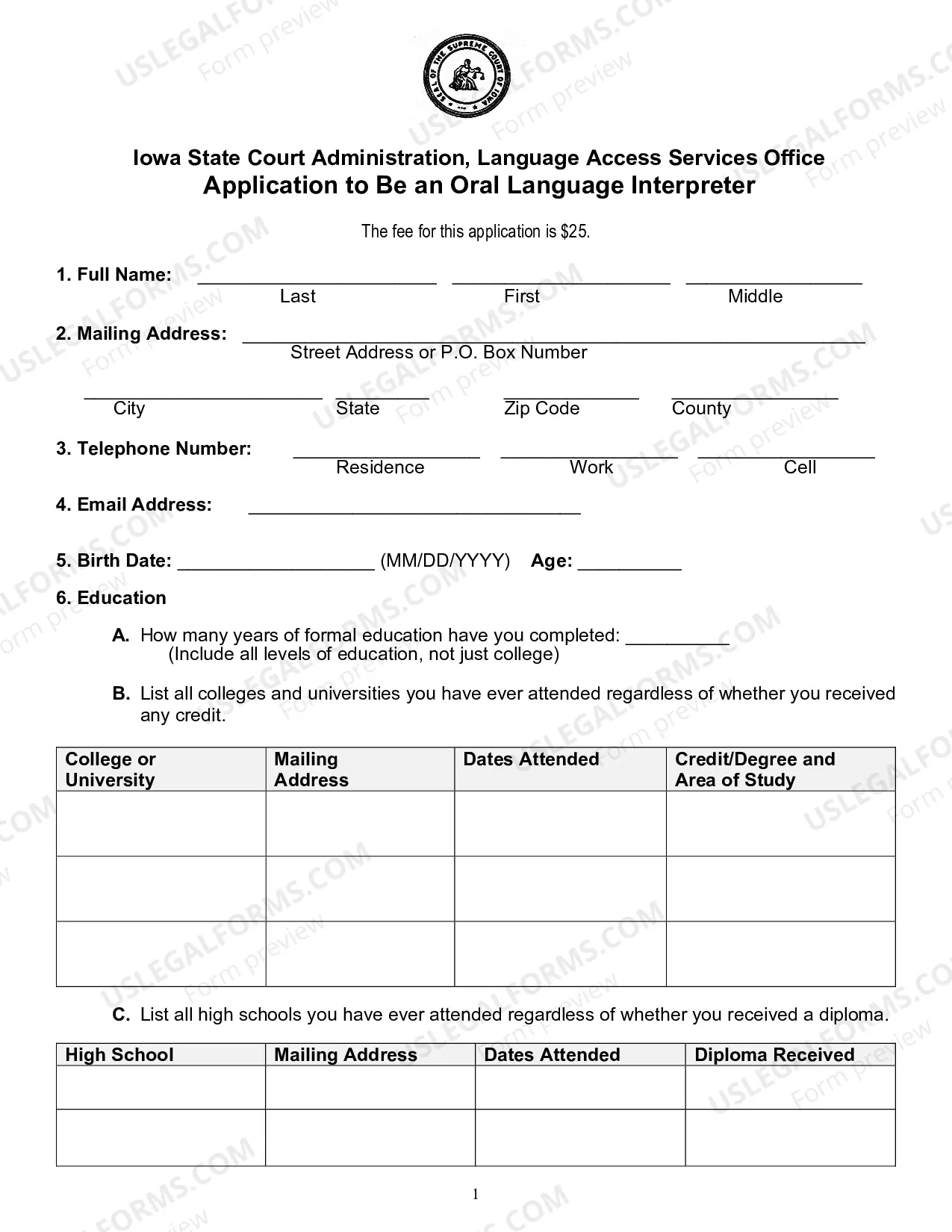
Iowa Application To Be An Oral Language Interpreter
Description
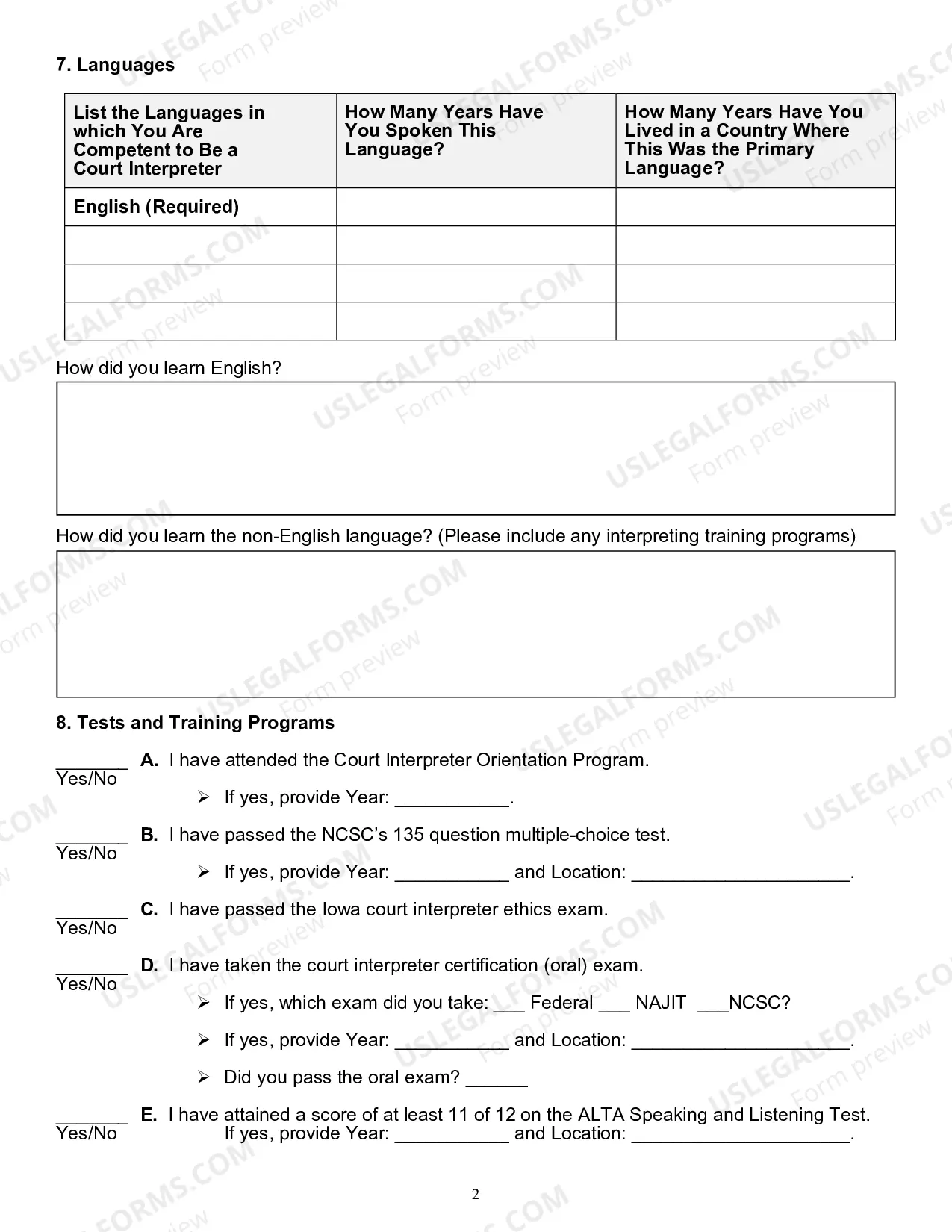
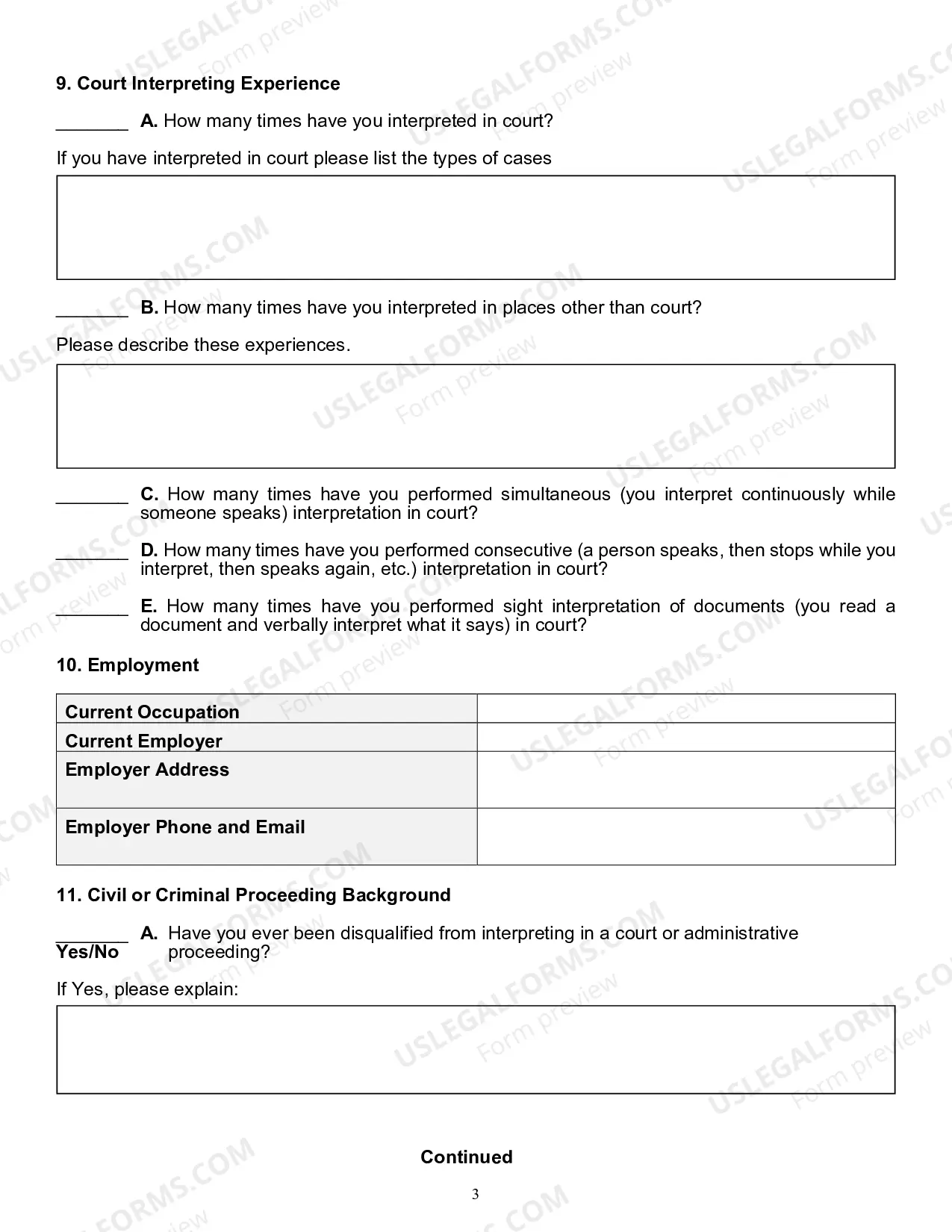
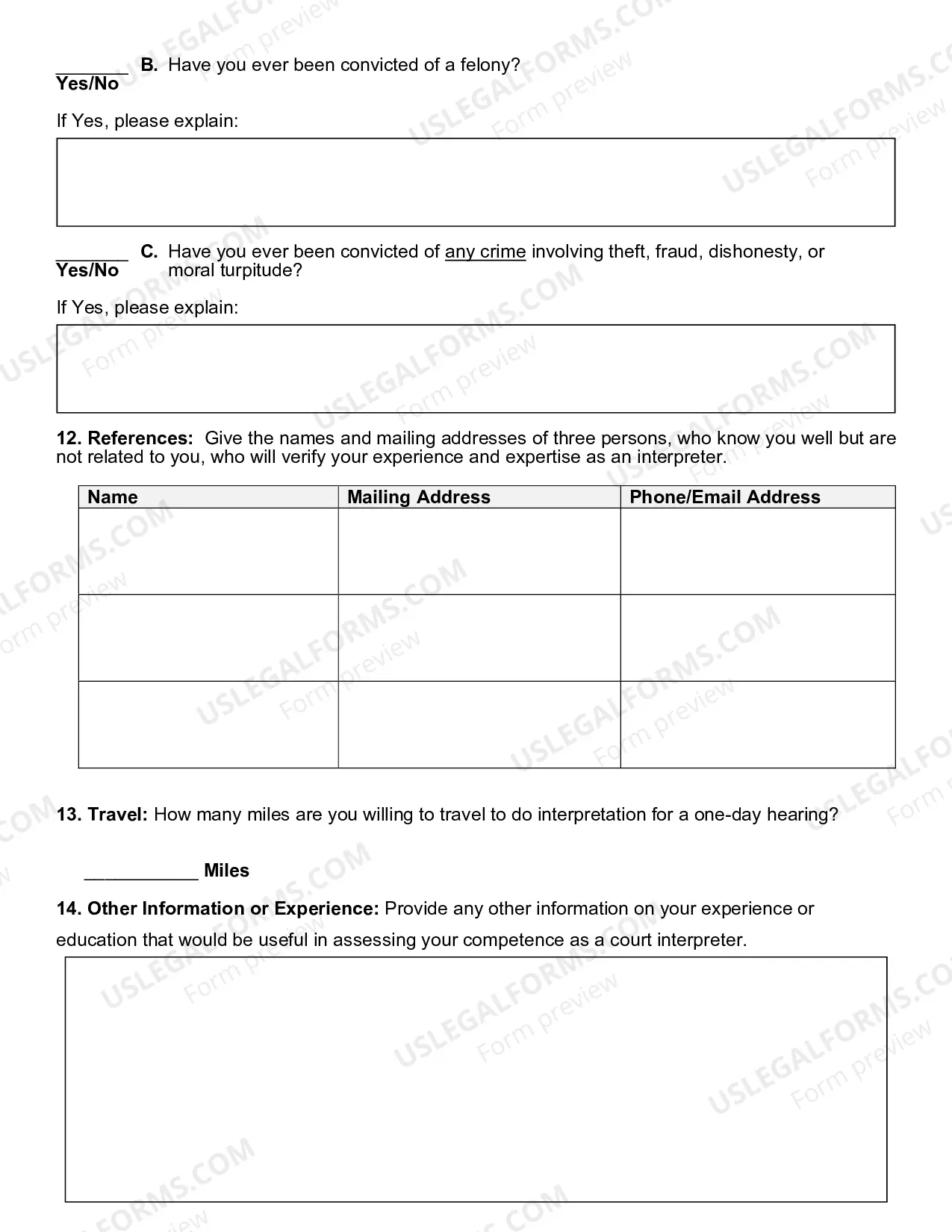
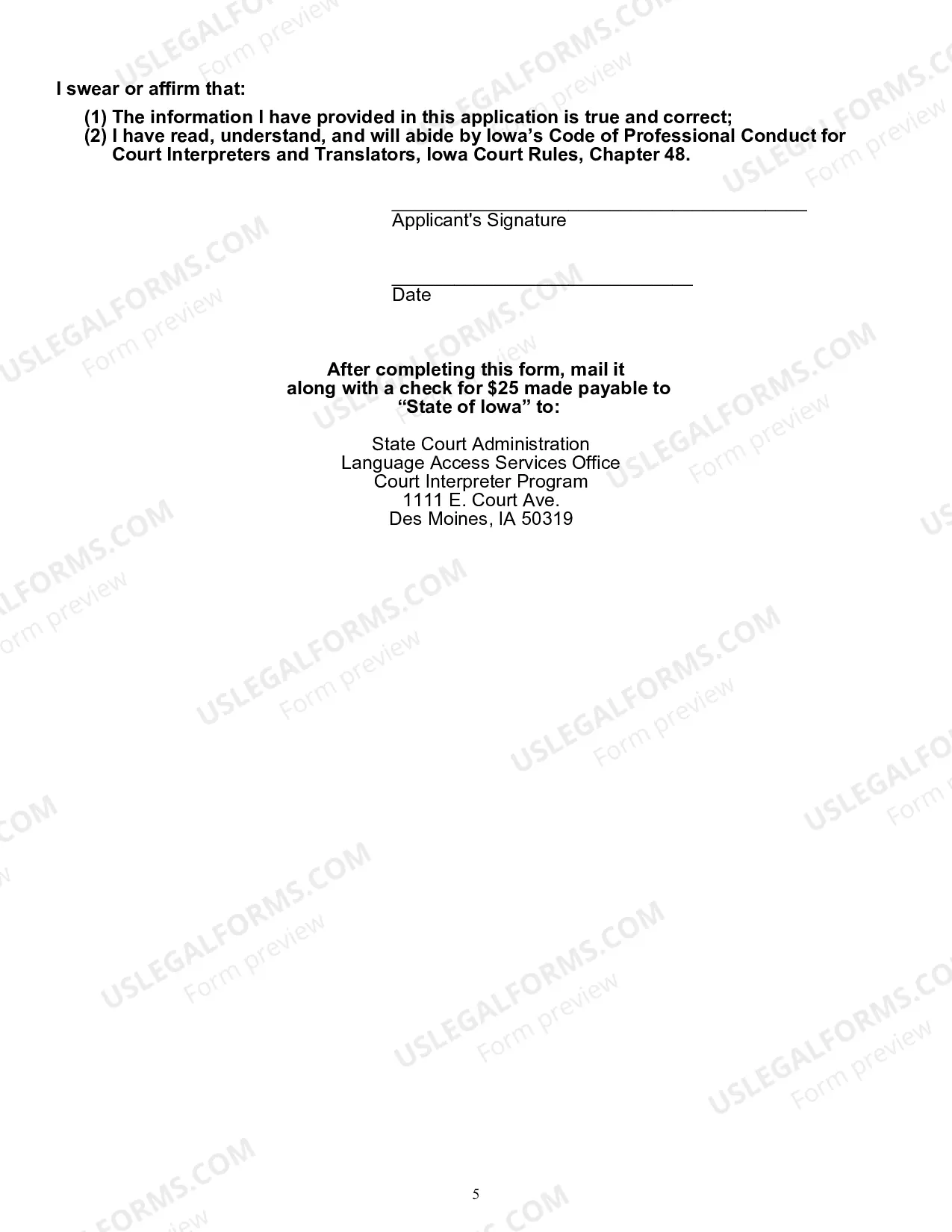
Get your form ready online
Our built-in tools help you complete, sign, share, and store your documents in one place.
Make edits, fill in missing information, and update formatting in US Legal Forms—just like you would in MS Word.
Download a copy, print it, send it by email, or mail it via USPS—whatever works best for your next step.
Sign and collect signatures with our SignNow integration. Send to multiple recipients, set reminders, and more. Go Premium to unlock E-Sign.
If this form requires notarization, complete it online through a secure video call—no need to meet a notary in person or wait for an appointment.
We protect your documents and personal data by following strict security and privacy standards.

Make edits, fill in missing information, and update formatting in US Legal Forms—just like you would in MS Word.

Download a copy, print it, send it by email, or mail it via USPS—whatever works best for your next step.

Sign and collect signatures with our SignNow integration. Send to multiple recipients, set reminders, and more. Go Premium to unlock E-Sign.

If this form requires notarization, complete it online through a secure video call—no need to meet a notary in person or wait for an appointment.

We protect your documents and personal data by following strict security and privacy standards.
Looking for another form?


How to fill out Iowa Application To Be An Oral Language Interpreter?
How much time and effort do you generally allocate for creating formal documents.
There’s a more efficient way to obtain such forms than engaging legal experts or spending hours searching online for an appropriate template. US Legal Forms is the premier digital library that provides professionally crafted and verified state-specific legal documents for any purpose, such as the Iowa Application To Be An Oral Language Interpreter.
Another advantage of our library is that you can access previously downloaded documents that you securely save in your profile under the My documents tab. Retrieve them at any time and redo your paperwork as often as required.
Conserve time and energy drafting legal documentation with US Legal Forms, one of the most reliable online solutions. Become a member today!
- Review the document content to ensure it meets your state specifications. To do this, verify the document description or utilize the Preview option.
- If your legal template does not satisfy your needs, locate another one using the search bar at the top of the page.
- If you are already a member of our service, Log In and download the Iowa Application To Be An Oral Language Interpreter. If not, continue to the subsequent steps.
- Click Buy now once you discover the appropriate document. Select the subscription plan that fits your preferences to access the full range of our library’s services.
- Register for an account and pay for your subscription. Payments can be made with a credit card or through PayPal - our service is completely trustworthy for that.
- Download your Iowa Application To Be An Oral Language Interpreter onto your device and finish it on a printed hard copy or electronically.
Form popularity
FAQ
Hospital Interpreter: What's the Difference? Translators and interpreters both work to provide meaningful communication between different languages. However, they use different mediums: Translators work with written words, while interpreters work with spoken words.
The FCICE is offered only for Spanish/English, since that is the primary interpreting need in the federal judiciary.
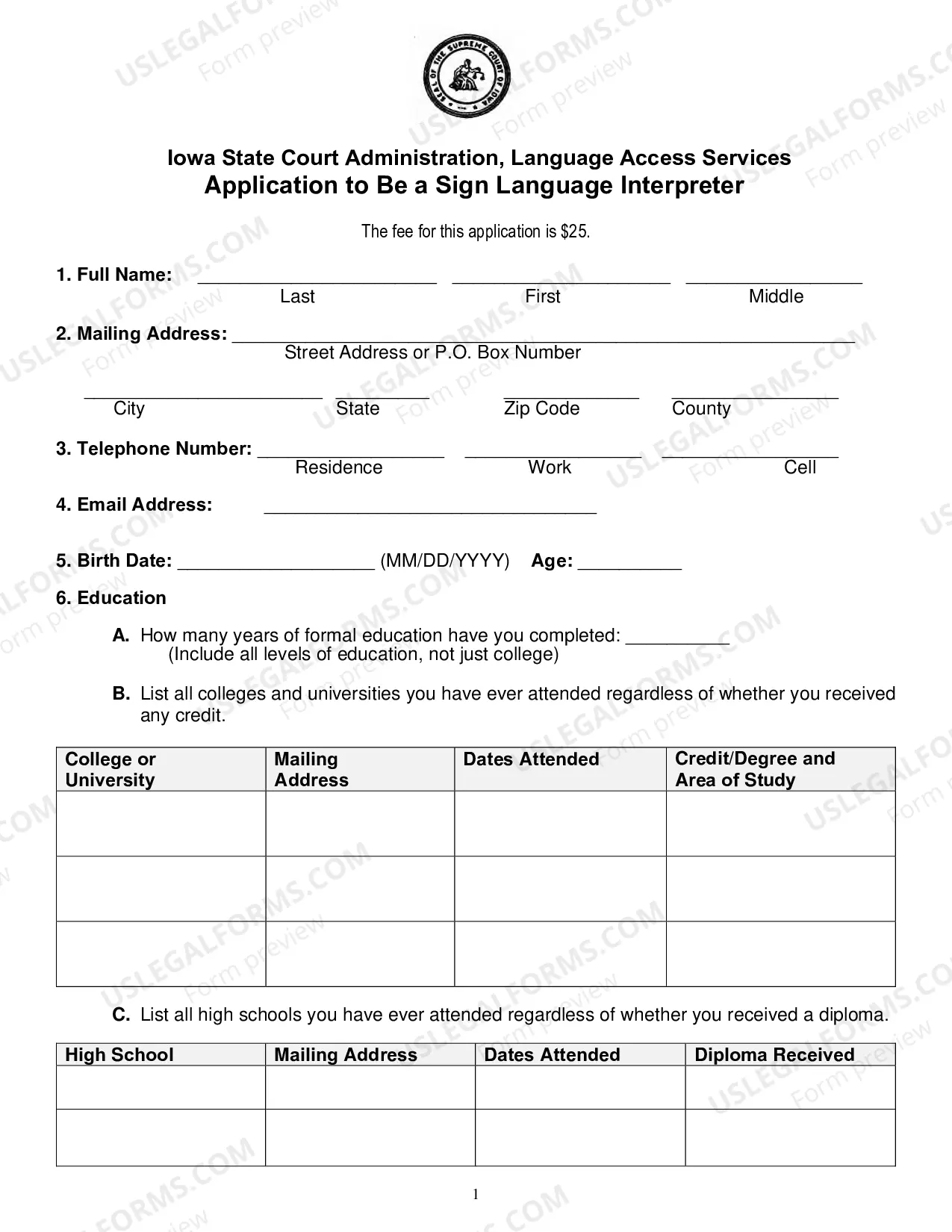
Minimum Certification Requirements: Submit official application to be a court interpreter and pay $25 application fee. Pass NCSC written exam. Pass Iowa's interpreter ethics exam (25 multiple choice questions)
How to get certified as a translator CIOL level 7 DipTrans exam (Diploma in Translation)University-awarded translation qualifications.Governmental translation certification.Certification exams offered by translators' associations.
To become a healthcare interpreter through CCHI, you must first take and pass the CoreCHI exam....The National Board for Certified Medical Interpreters Be the minimum age of 18 years old. Proof of at least a U.S. high school diploma (or GED). Successful completion of at least 40 hours of medical interpreting training.
Becoming a Licensed Court Interpreter Complete the Exam Orientation Course.Submit the Application for Licensure and Exam Registration Form.Submit the application fee.Pass a criminal history background check by DPS and the FBI.Pass all parts of a Commission-approved examination.
Medical interpreters work as a limited patient advocate, while legal interpreters adhere to the role of a strictly impartial party. Both types of interpreters have to deal with private and sensitive information, and are obliged to keep them confidential.
Minimum Certification Requirements: Submit official application to be a court interpreter and pay $25 application fee. Pass NCSC written exam. Pass Iowa's interpreter ethics exam (25 multiple choice questions)