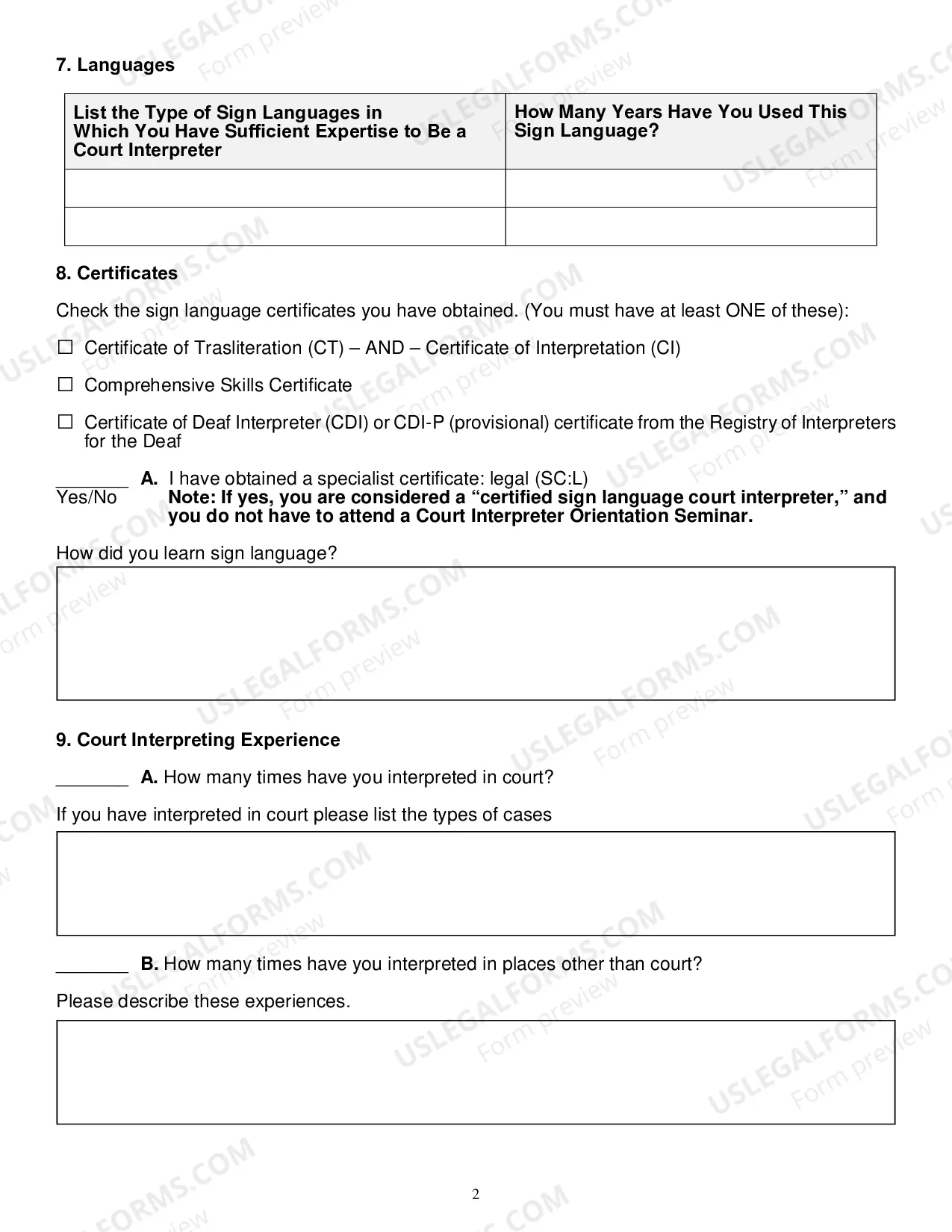
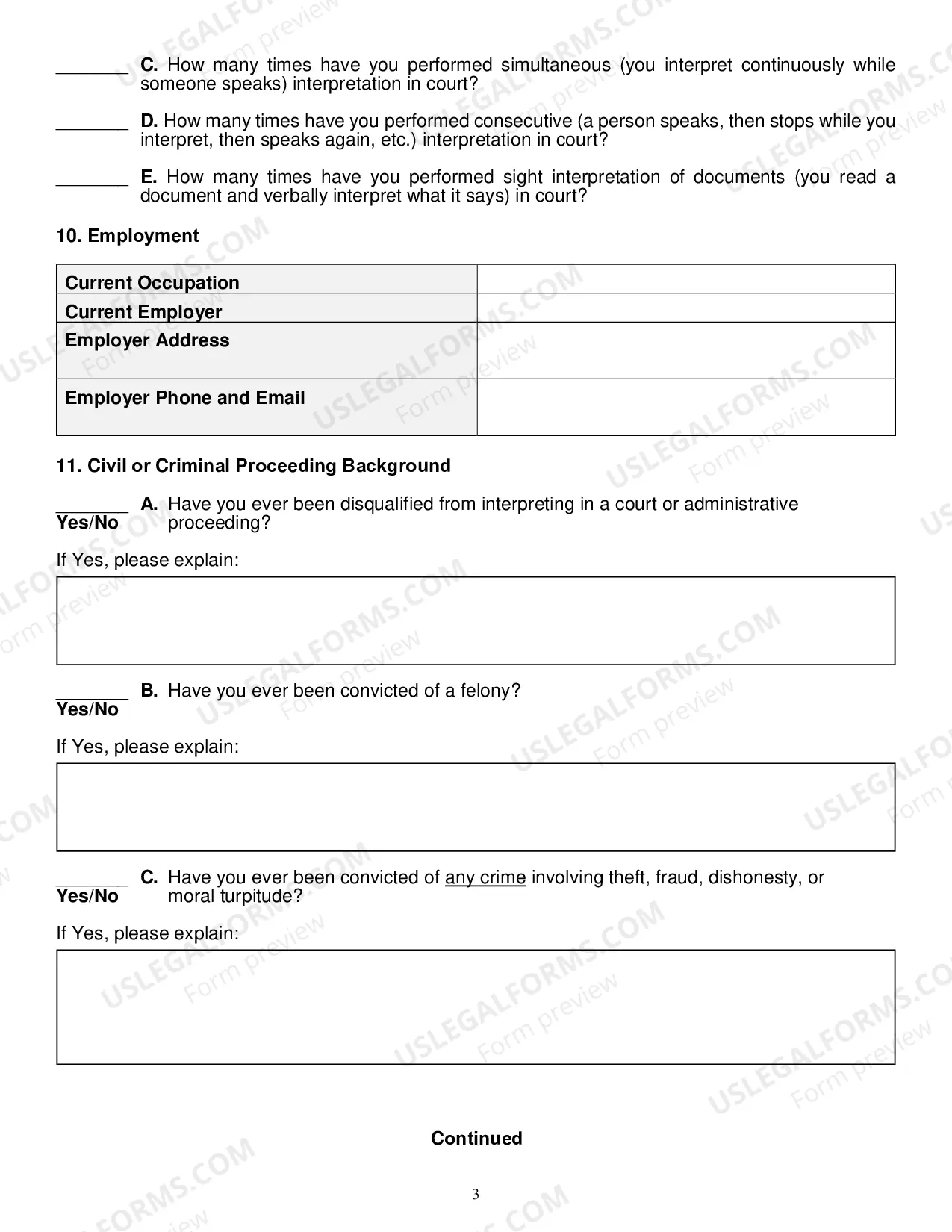
Iowa Application To Be A Sign Language Interpreter In Court
Description
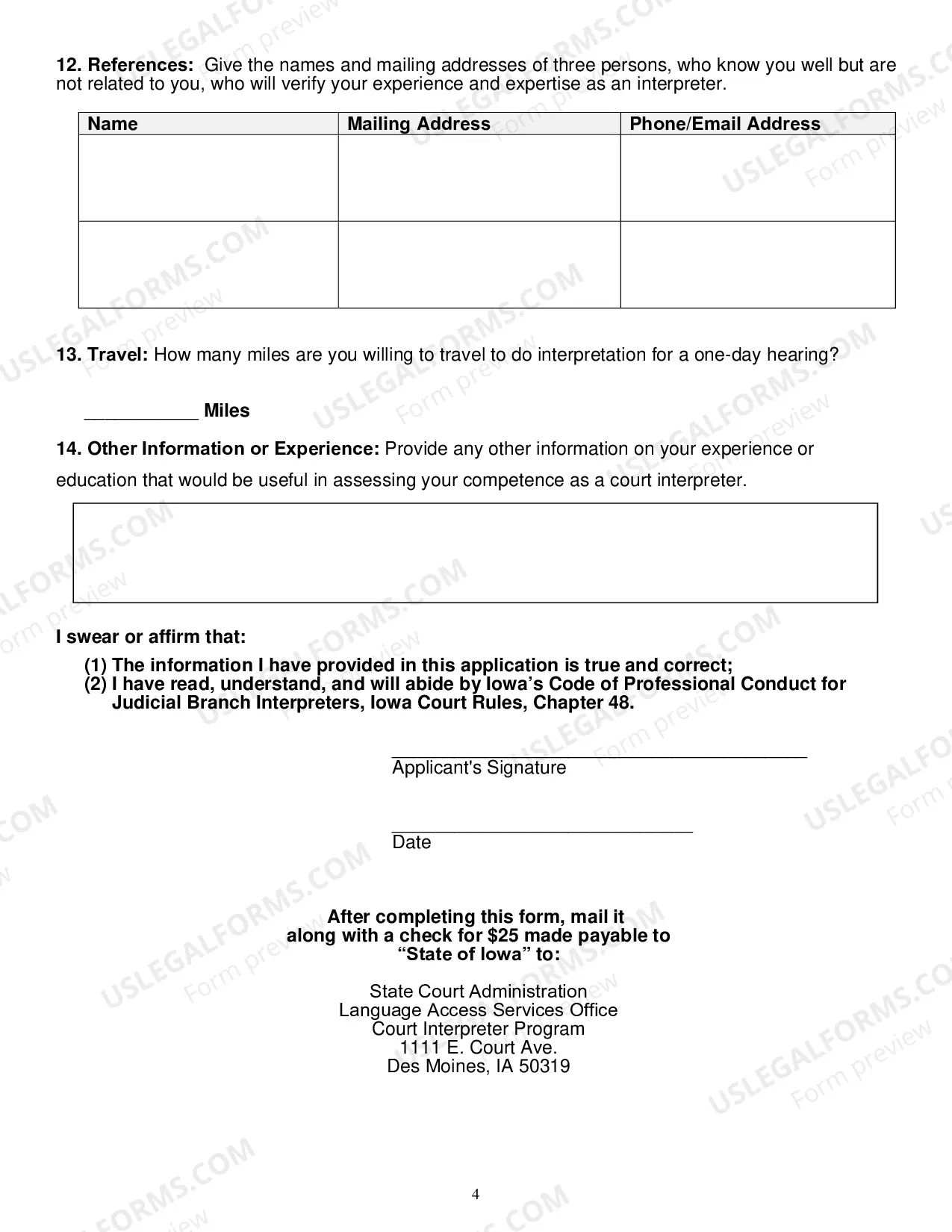
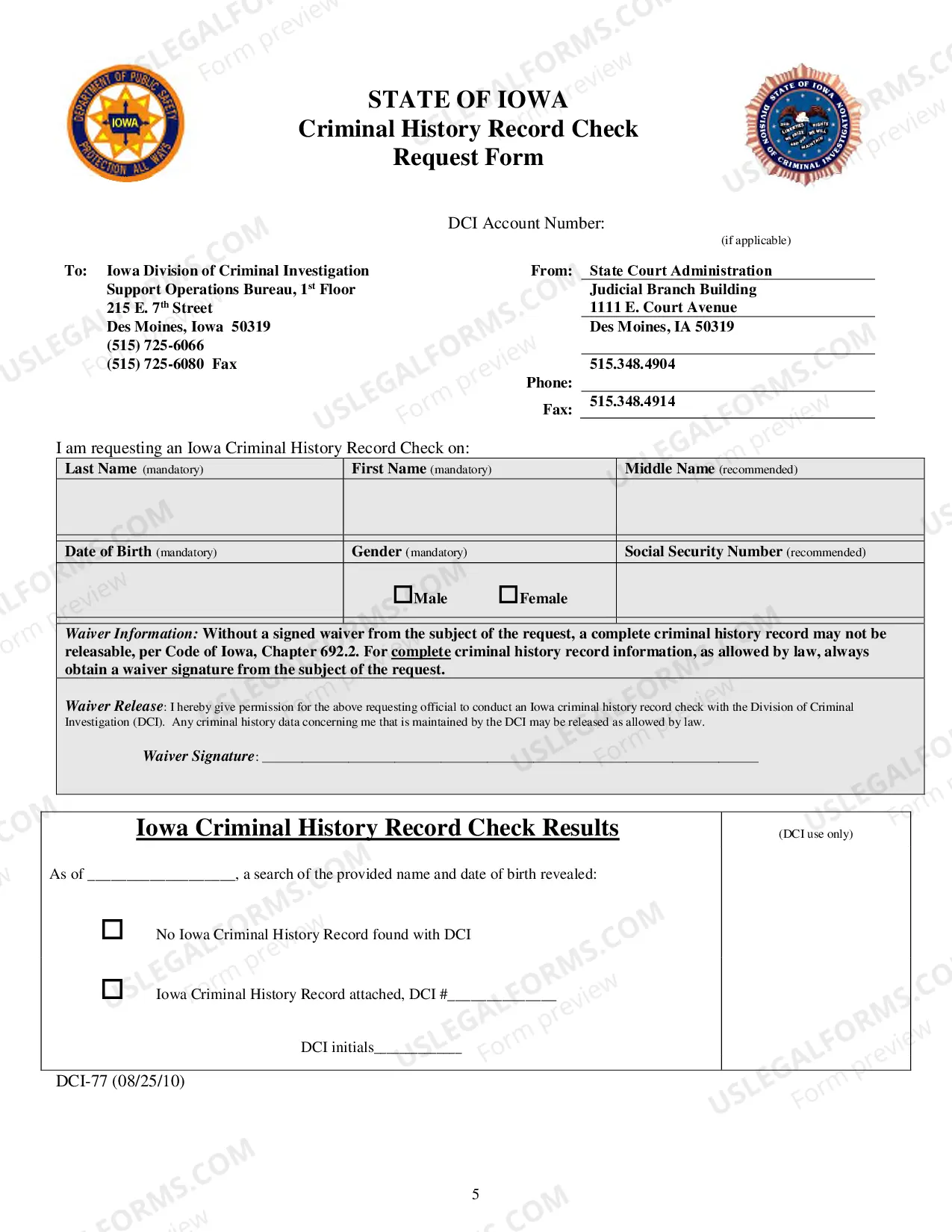
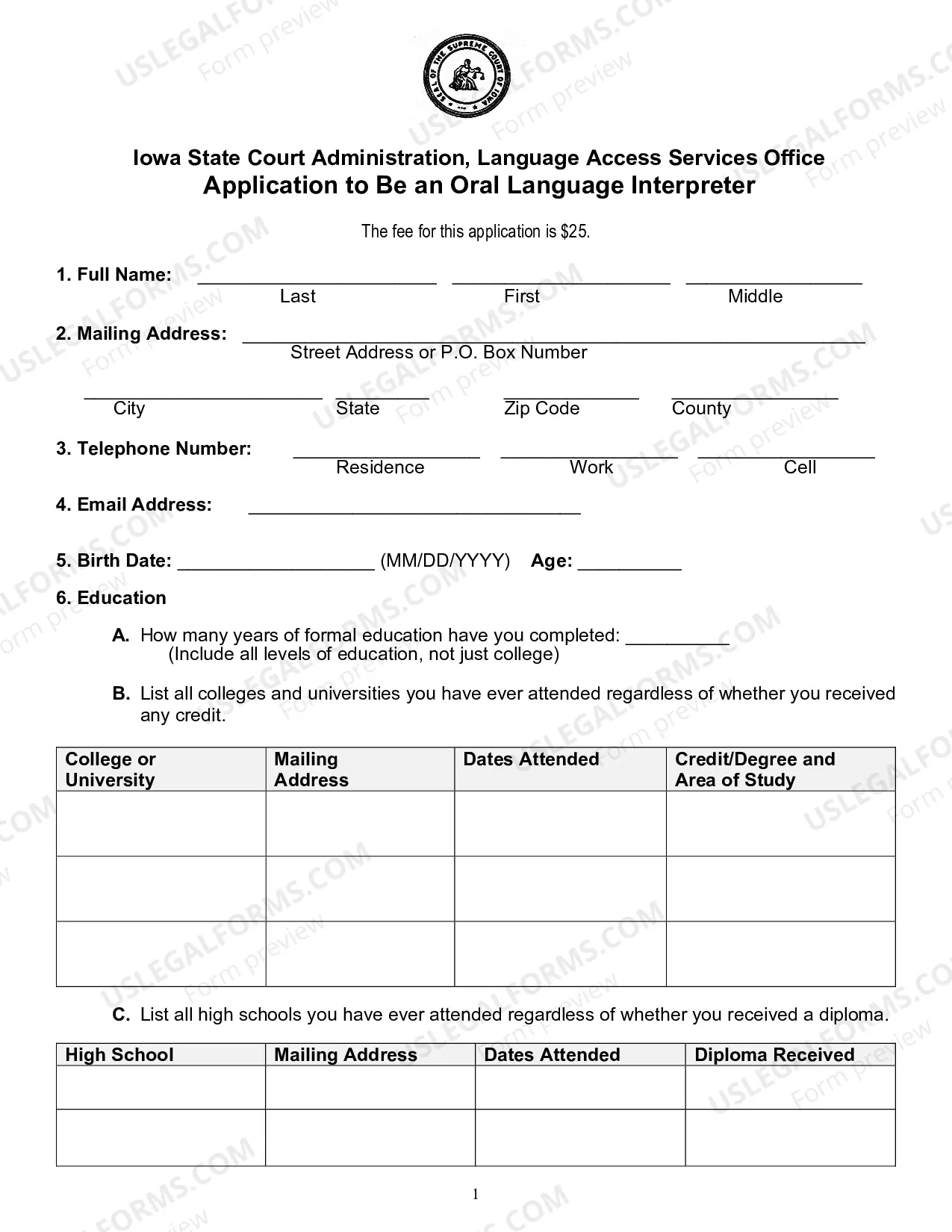
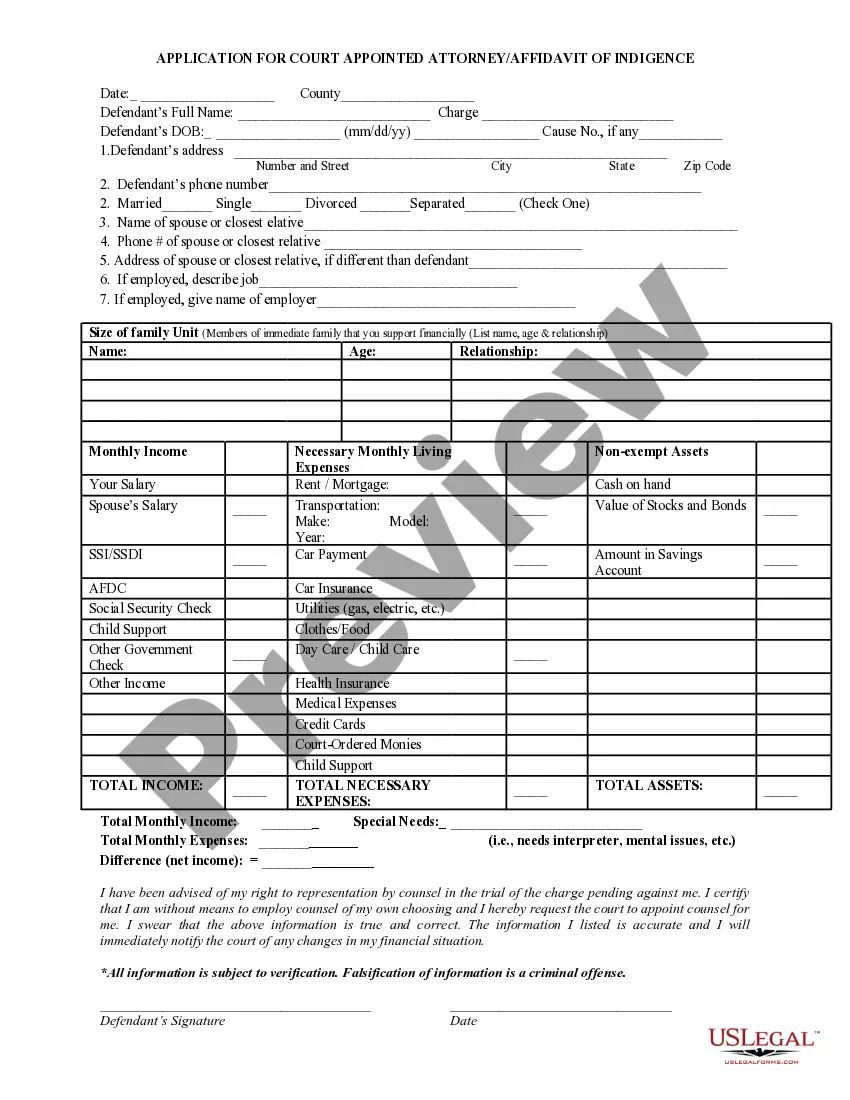
Get your form ready online
Our built-in tools help you complete, sign, share, and store your documents in one place.
Make edits, fill in missing information, and update formatting in US Legal Forms—just like you would in MS Word.
Download a copy, print it, send it by email, or mail it via USPS—whatever works best for your next step.
Sign and collect signatures with our SignNow integration. Send to multiple recipients, set reminders, and more. Go Premium to unlock E-Sign.
If this form requires notarization, complete it online through a secure video call—no need to meet a notary in person or wait for an appointment.
We protect your documents and personal data by following strict security and privacy standards.

Make edits, fill in missing information, and update formatting in US Legal Forms—just like you would in MS Word.

Download a copy, print it, send it by email, or mail it via USPS—whatever works best for your next step.

Sign and collect signatures with our SignNow integration. Send to multiple recipients, set reminders, and more. Go Premium to unlock E-Sign.

If this form requires notarization, complete it online through a secure video call—no need to meet a notary in person or wait for an appointment.

We protect your documents and personal data by following strict security and privacy standards.
Looking for another form?

How to fill out Iowa Application To Be A Sign Language Interpreter In Court?
US Legal Forms is the easiest and most economical method to locate appropriate formal templates.
It’s the largest online collection of business and individual legal documents prepared and validated by legal experts.
Here, you can access printable and fillable forms that adhere to federal and local regulations - just like your Iowa Application To Be A Sign Language Interpreter In Court.
- To acquire your template, you only need to follow a few straightforward steps.
- Users with an existing account and valid subscription just need to Log In to the online service and download the document onto their device.
- Subsequently, it can be found in their profile under the My documents tab.
- Here’s how you can obtain a professionally prepared Iowa Application To Be A Sign Language Interpreter In Court if you're using US Legal Forms for the first time.
Form popularity
FAQ
The Rehabilitation Act of 1973, specifically Section 504, mandates that any agency or institution receiving federal funds must provide accommodations, including sign language interpreters, to ensure equal access for individuals with disabilities. This law ensures that everyone has the ability to participate in programs and services. If you're looking into becoming an interpreter, the Iowa Application To Be A Sign Language Interpreter In Court is an essential step.
To achieve certification as a sign language interpreter, you must start by enrolling in a recognized training program that meets state standards. Next, you'll need to pass the relevant certification exam. Once you have completed these steps, you can submit the Iowa Application To Be A Sign Language Interpreter In Court for official recognition.
To become a healthcare interpreter through CCHI, you must first take and pass the CoreCHI exam....The National Board for Certified Medical Interpreters Be the minimum age of 18 years old. Proof of at least a U.S. high school diploma (or GED). Successful completion of at least 40 hours of medical interpreting training.
The average court interpreter salary in the USA is $72,307 per year or $34.76 per hour.
The goal of a court interpreter is to enable the judge and jury to react in the same manner to a non-English-speaking witness as they do with one who speaks English. Also, the limited ? or non-English-speaking defendant should be enabled to hear everything that an English speaker has the privilege to hear.
To become a certified court interpreter, you'll need to take Oral Proficiency Exams, the English-Only Written Exam, and the Bilingual Oral Interpreting Exam. Some languages also require certification status. To become a registered interpreter, you need to pass Oral Proficiency Exams and the English-Only Written Exam.
Minimum Certification Requirements: Submit official application to be a court interpreter and pay $25 application fee. Pass NCSC written exam. Pass Iowa's interpreter ethics exam (25 multiple choice questions)
In Iowa, the Registry of Interpreters for the Deaf (RID) is the primary organization that offers certification for ASL interpreters. To become certified, you will need to pass a series of exams that test your knowledge and skills in ASL interpretation.
A legal interpreter converts verbal communication from one language to another. Translators translate written words from a source language to a target language. Interpreters perform their work on the spot without sources or aids.