Hawaii Last Will and Testament for a Domestic Partner with No Children
About this form
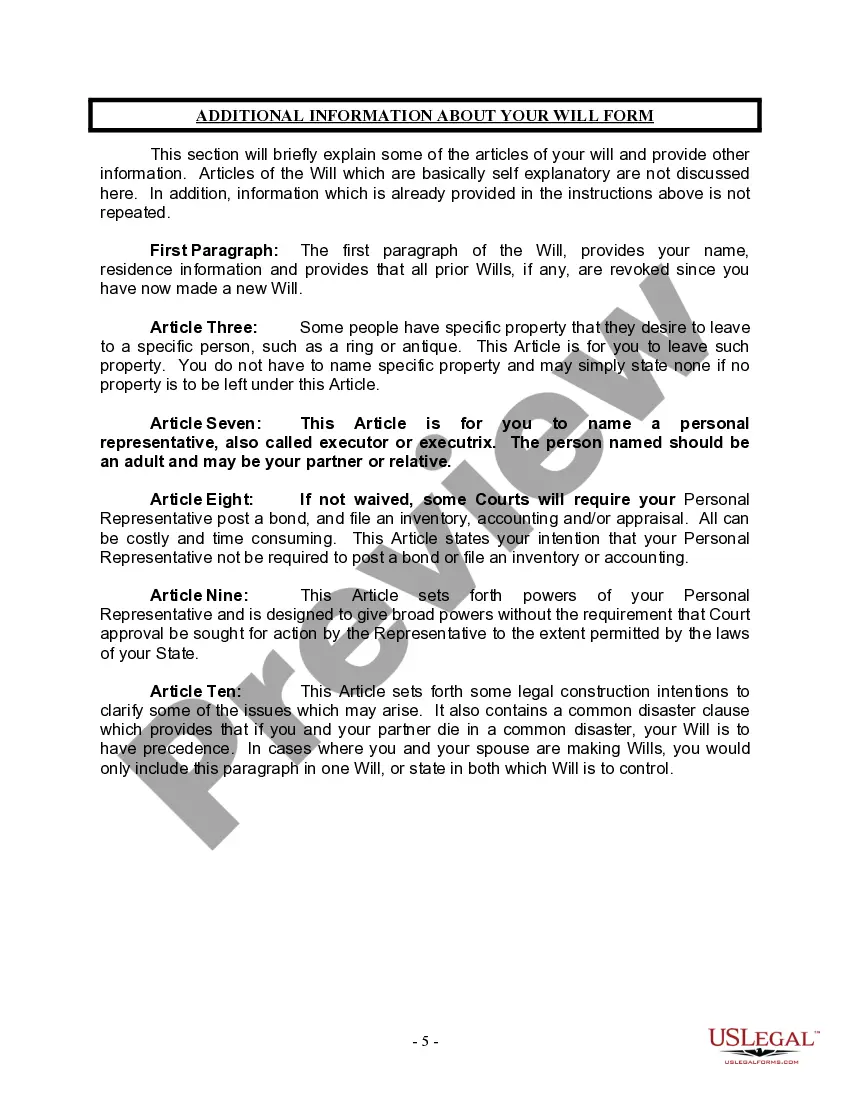
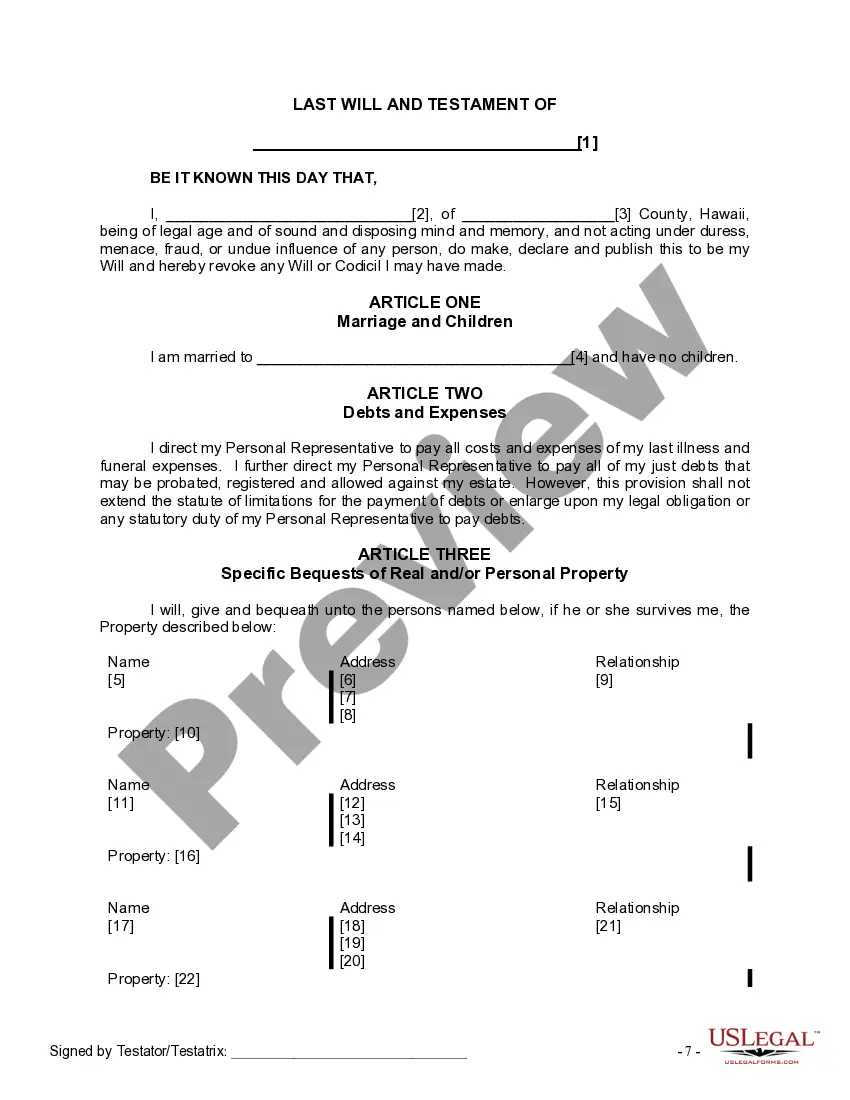
This Last Will and Testament for a Domestic Partner with No Children is a legal document that outlines how your property and assets will be distributed upon your death. It specifically caters to individuals in domestic partnerships without children. The form allows you to appoint a personal representative, designate beneficiaries, and specify how your estate should be divided, ensuring your wishes are honored. This form differs from other wills as it focuses on domestic partners, reflecting the unique legal considerations applicable to such relationships.
Key parts of this document
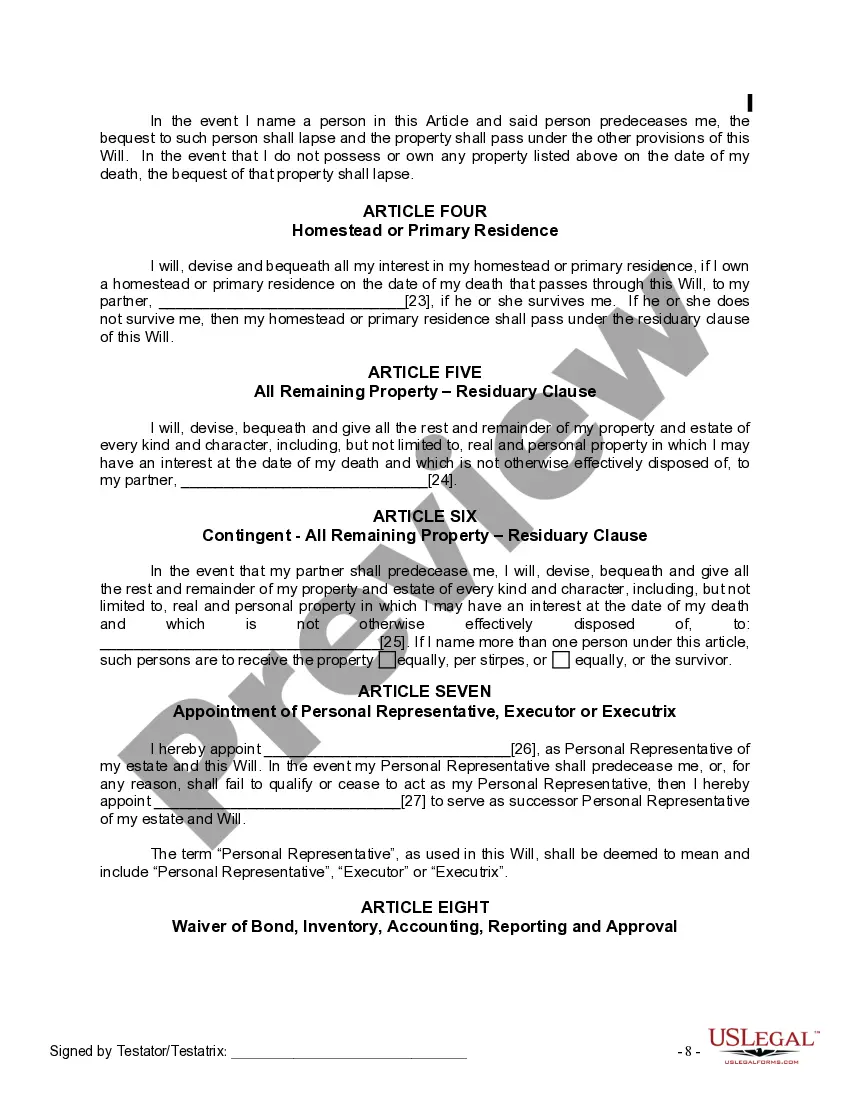
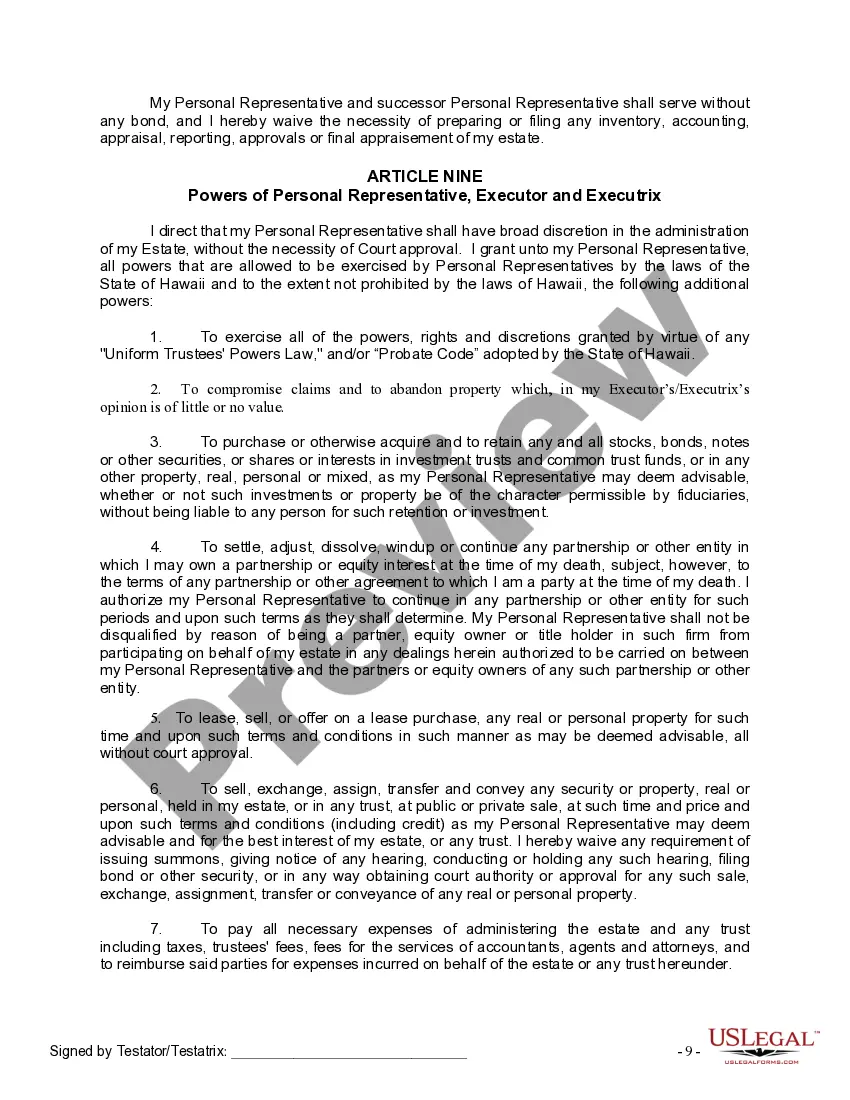
- Personal representative appointment: You appoint an executor to manage your estate.
- Specific bequests: You can list particular items or property to be given to designated individuals.
- Homestead and primary residence provisions: You can specify what happens to your main home.
- Residuary clause: Any remaining property after specific bequests will be distributed according to your instructions.
- Optional provisions: You can include additional wishes such as burial arrangements.

Situations where this form applies
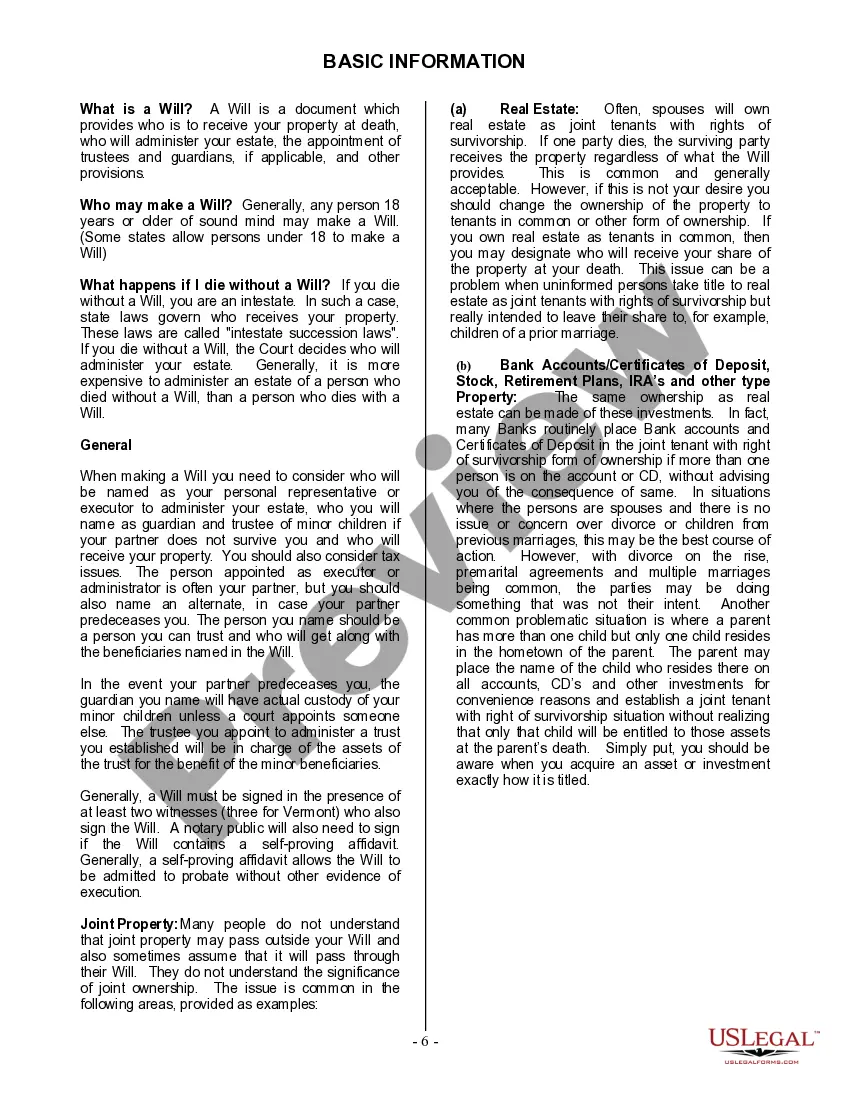
This form is essential when you want to ensure that your domestic partner receives your assets after your passing and you do not have children. It is applicable if you wish to explicitly outline your preferences for property distribution, including any specific items you want to bequeath. This document is also important to prevent intestate succession, where state laws would dictate the distribution of your property without your input.
Intended users of this form
- Individuals in a domestic partnership without children.
- Anyone wishing to formalize their wishes regarding asset distribution.
- Those looking to ensure legal clarity and prevent disputes after death.
- Individuals who want to appoint a personal representative for their estate.
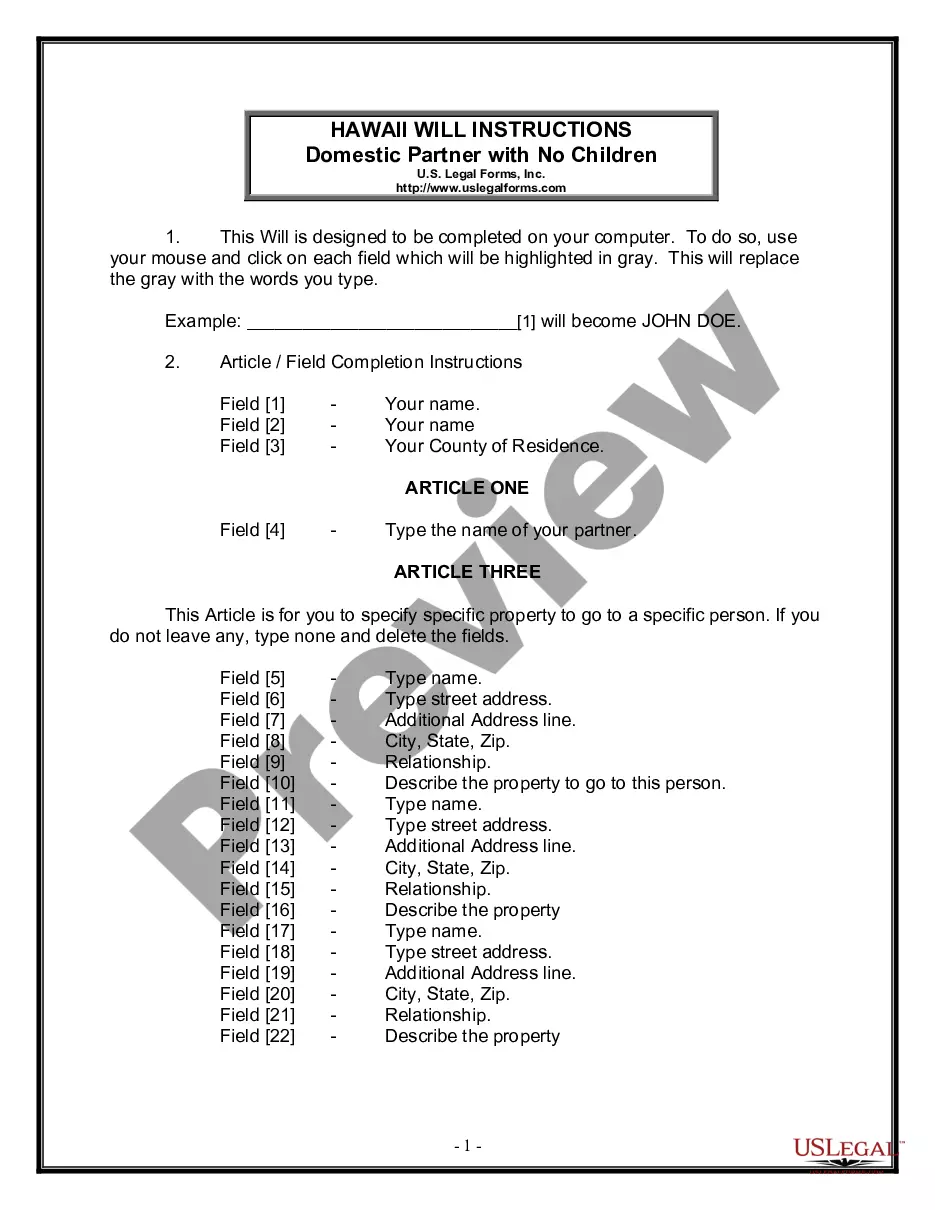
Instructions for completing this form
- Enter your name and county of residence at the top of the form.
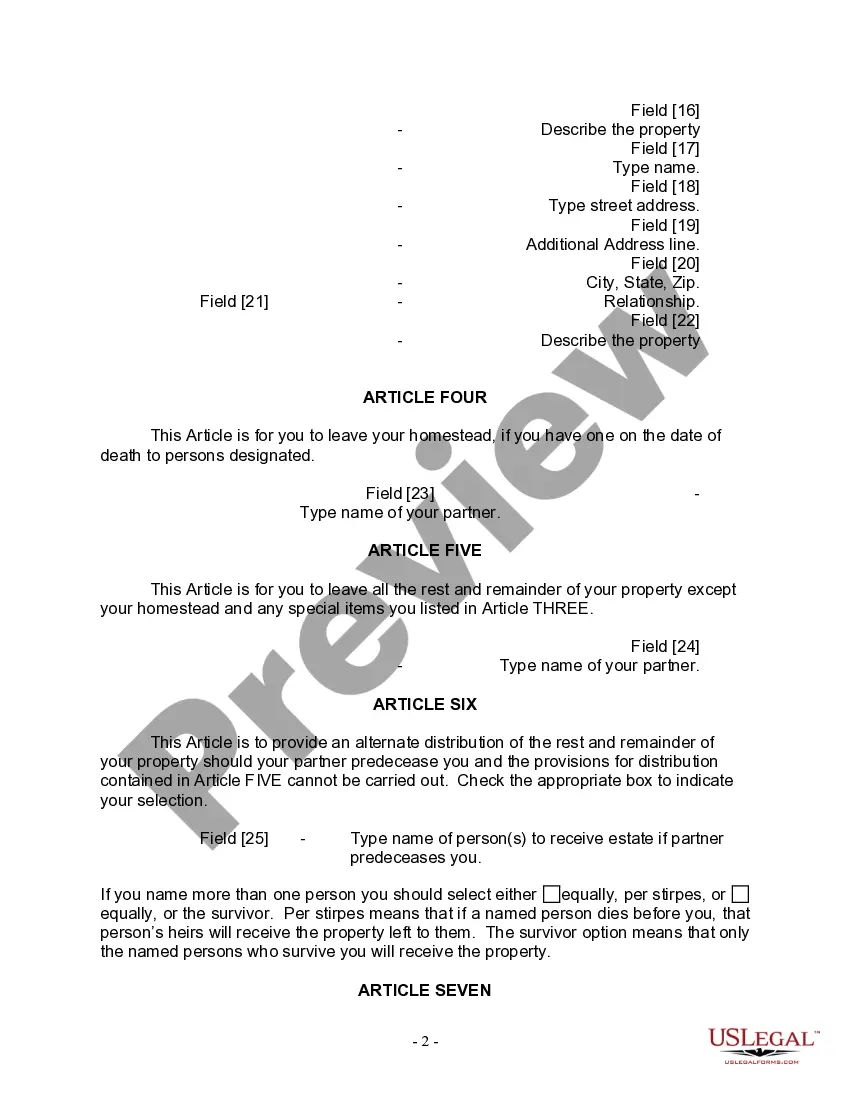
- Provide the name of your domestic partner and specify any particular bequests in the relevant sections.
- Fill out the homestead clause if you wish to designate your primary residence to your partner.
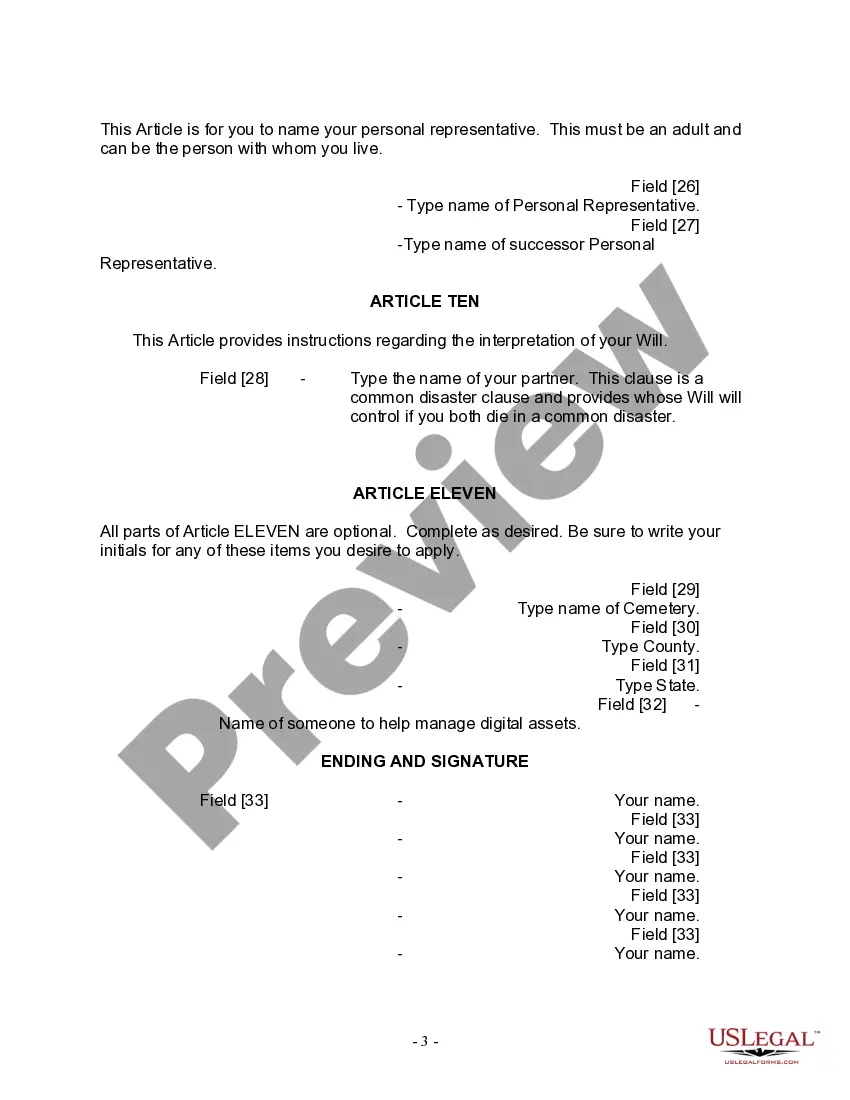
- List any alternate beneficiaries in case your partner predeceases you.
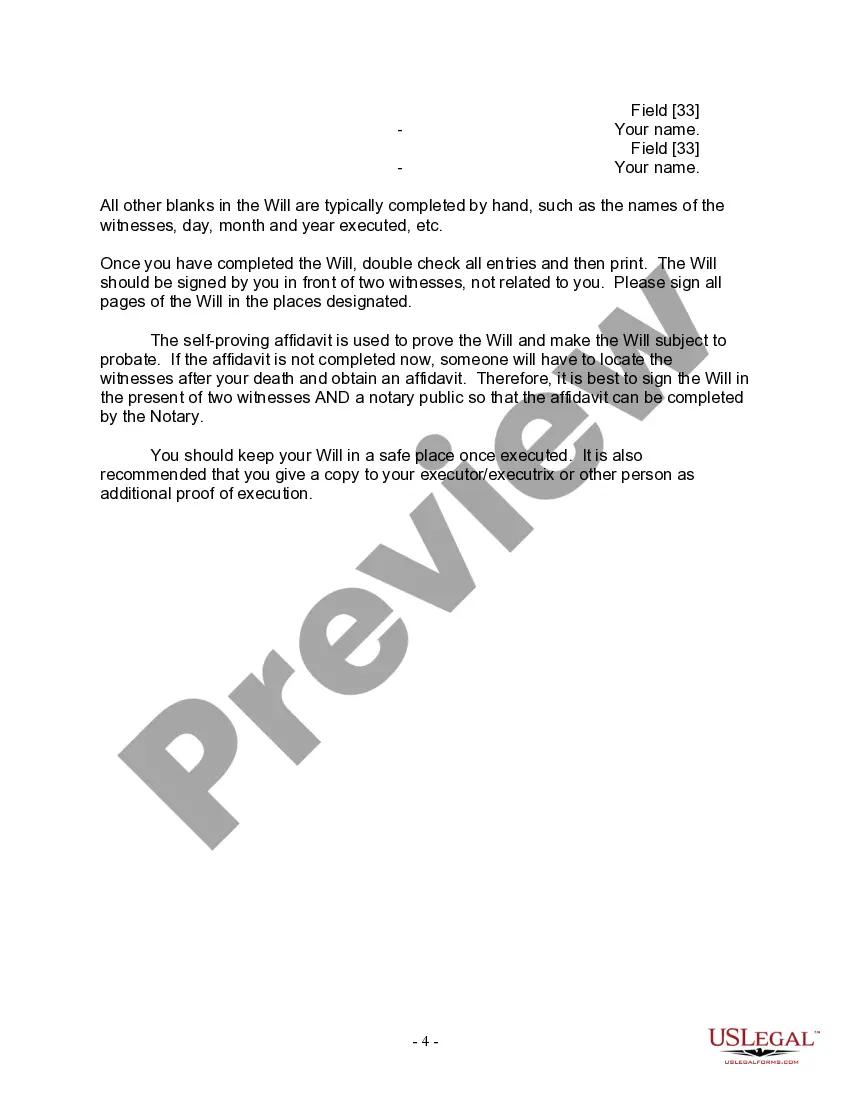
- Sign the document in the presence of two witnesses and have it notarized if required by state law.
Is notarization required?
Notarization is required for this form to take effect. Our online notarization service, powered by Notarize, lets you verify and sign documents remotely through an encrypted video session, available 24/7.
Get your form ready online
Our built-in tools help you complete, sign, share, and store your documents in one place.
Make edits, fill in missing information, and update formatting in US Legal Forms—just like you would in MS Word.
Download a copy, print it, send it by email, or mail it via USPS—whatever works best for your next step.
Sign and collect signatures with our SignNow integration. Send to multiple recipients, set reminders, and more. Go Premium to unlock E-Sign.
If this form requires notarization, complete it online through a secure video call—no need to meet a notary in person or wait for an appointment.
We protect your documents and personal data by following strict security and privacy standards.

Make edits, fill in missing information, and update formatting in US Legal Forms—just like you would in MS Word.

Download a copy, print it, send it by email, or mail it via USPS—whatever works best for your next step.

Sign and collect signatures with our SignNow integration. Send to multiple recipients, set reminders, and more. Go Premium to unlock E-Sign.

If this form requires notarization, complete it online through a secure video call—no need to meet a notary in person or wait for an appointment.

We protect your documents and personal data by following strict security and privacy standards.
Typical mistakes to avoid
- Failing to have the Will signed by two witnesses.
- Not updating the Will after significant life changes, such as a new relationship.
- Leaving out important personal property or assets.
- Not properly designating an alternate beneficiary if your partner predeceases you.
Benefits of using this form online
- Convenience: Complete the form online from the comfort of your home.
- Editability: Make changes easily if your circumstances alter.
- Reliability: Access professionally drafted templates tailored to your needs.
Legal use & context
- This Last Will and Testament is enforceable and helps ensure that your wishes are honored.
- It is essential to keep the will updated to reflect your current situation and intentions.
- Without a properly executed will, your estate may be subject to intestate laws, where state laws dictate asset distribution.
Key takeaways
- This Last Will and Testament is specifically for domestic partners without children.
- Clear designations prevent disputes and uphold your wishes after death.
- Correct completion and notarization are crucial for the Will's enforceability.
Looking for another form?

Form popularity
FAQ
Yes, you can write your own will in Hawaii, but it is crucial to adhere to specific legal guidelines to ensure validity. A properly drafted Hawaii Last Will and Testament for a Domestic Partner with No Children should include your full name, a declaration of revocation of prior wills, and a clear distribution of assets. While it is possible to create your own will, consider using USLegalForms to access templates and resources that simplify this process and help you avoid common pitfalls.
Writing a will in Hawaii involves a few key steps to ensure your wishes are honored. First, decide on the distribution of your assets in your Hawaii Last Will and Testament for a Domestic Partner with No Children. Then, outline your wishes clearly, appoint an executor to manage your estate, and ensure you have witnesses sign the document. Utilizing platforms like USLegalForms can streamline this process, providing guidance and templates tailored for your needs.
In Hawaii, a last will and testament does not necessarily need to be notarized to be valid, but it is strongly recommended. A Hawaii Last Will and Testament for a Domestic Partner with No Children can benefit from notarization as it helps in the probate process by establishing authenticity. Notarizing your will adds an extra layer of protection against potential disputes among heirs. Take the time to ensure your will meets all legal requirements for peace of mind.
Yes, you can create a will without your spouse's knowledge. However, when preparing a Hawaii Last Will and Testament for a Domestic Partner with No Children, consider the potential consequences of withholding this information. Transparency can foster understanding and prevent disputes over your estate after your passing. Using uslegalforms can guide you through the creation of a will that reflects your wishes.
If your spouse dies while you are separated, you may retain rights under their Hawaii Last Will and Testament for a Domestic Partner with No Children. Generally, separation does not terminate your legal relationship, meaning you could inherit under their will unless they specifically excluded you. It is wise to consult a legal expert to navigate the complexities of inheritance in this situation.
Yes, a married man can create a will without his wife's knowledge or consent. When drafting a Hawaii Last Will and Testament for a Domestic Partner with No Children, it is crucial to consider how such decisions may affect family dynamics. Open communication can often ease potential tensions and ensure that your wishes are understood.
A will does not automatically avoid probate in Hawaii. When you create a Hawaii Last Will and Testament for a Domestic Partner with No Children, it generally still requires probate for validation. However, specific estate planning strategies, such as setting up trusts or designating beneficiaries, can help streamline the process and reduce probate complications.
Yes, you can leave your husband out of the will when creating a Hawaii Last Will and Testament for a Domestic Partner with No Children. In Hawaii, individuals have the right to decide how to distribute their assets. It is important to consider the implications this decision may have, especially in the context of your relationship and any potential legal claims.
A will is legal in Hawaii if it meets specific requirements outlined by state law. These include being in writing, signed by the testator, and witnessed by at least two individuals who are not beneficiaries. Creating your Hawaii Last Will and Testament for a Domestic Partner with No Children with tools from U.S. Legal Forms can help ensure you adhere to these legal standards. Following these guidelines will strengthen the enforceability of your wishes.
In Hawaii, you do not need to register your will for it to be valid. However, it is necessary for your Hawaii Last Will and Testament for a Domestic Partner with No Children to be properly executed. Once you pass away, the will should be presented for probate to validate its terms. Ensuring you have a clear and properly signed document can bring peace of mind.