Resignation Letter without Reason
Overview of this form
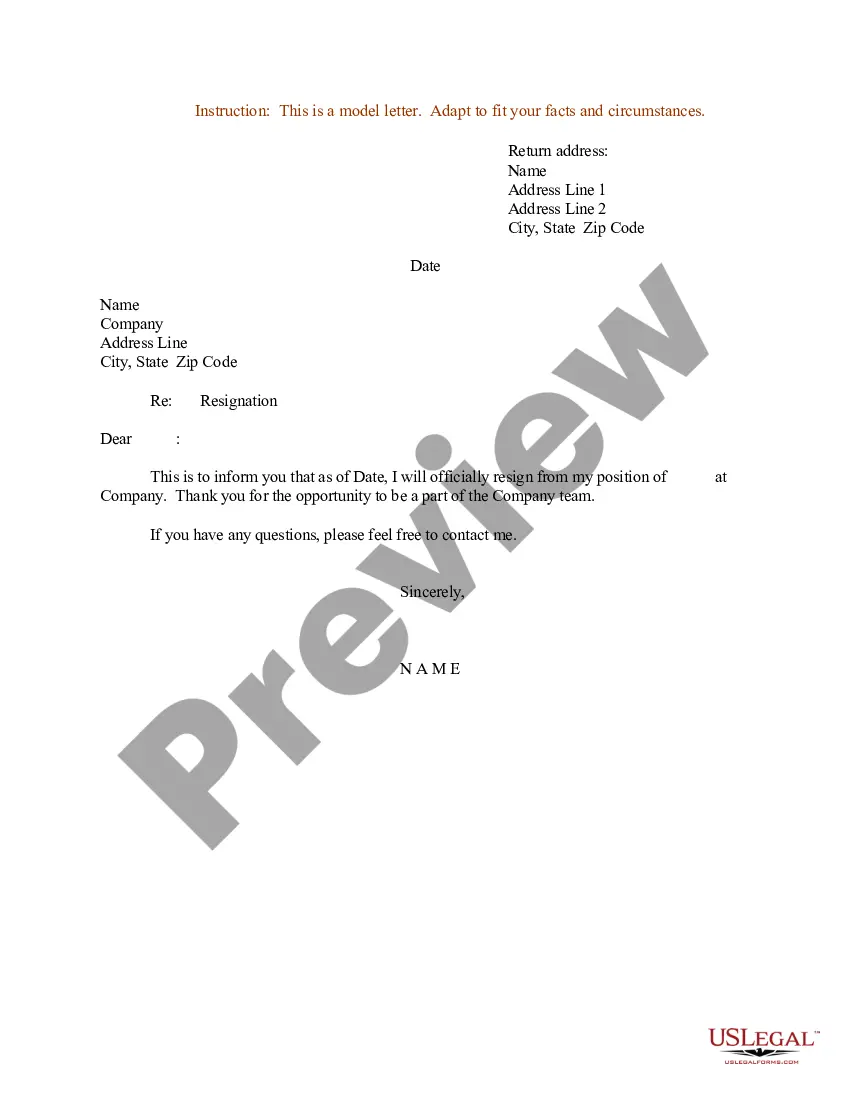
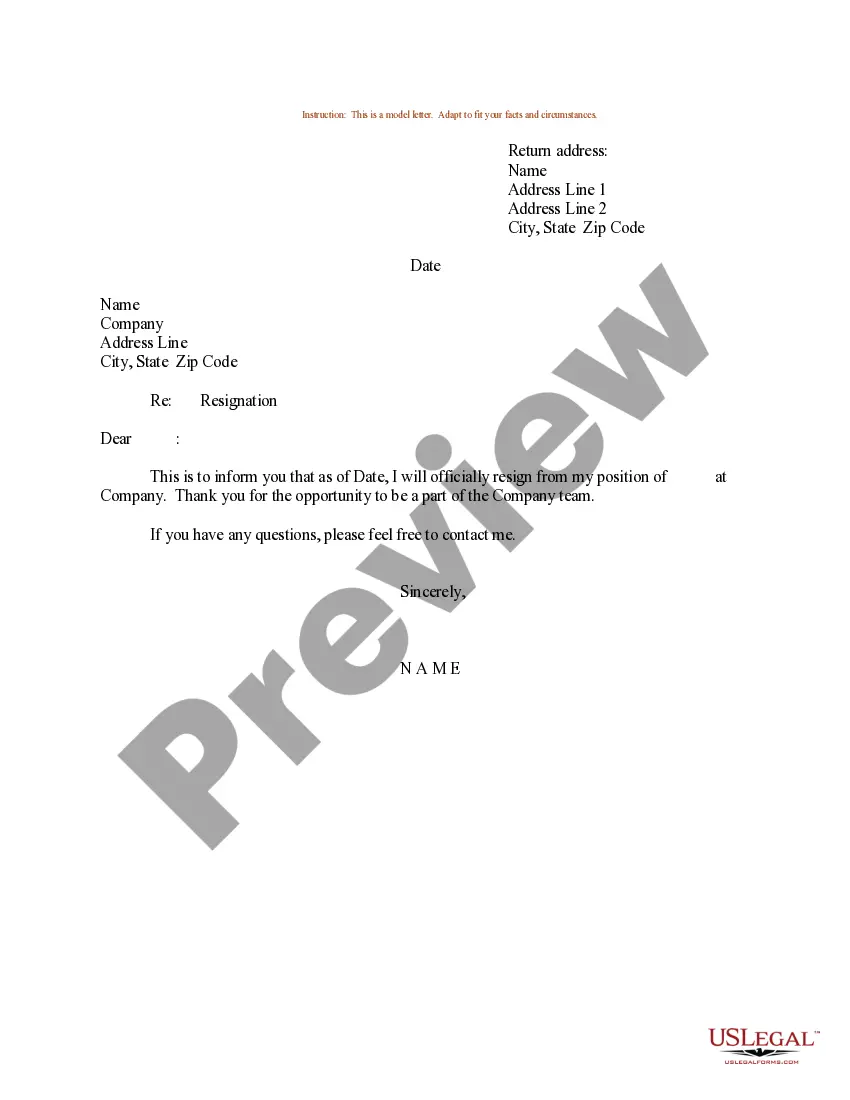
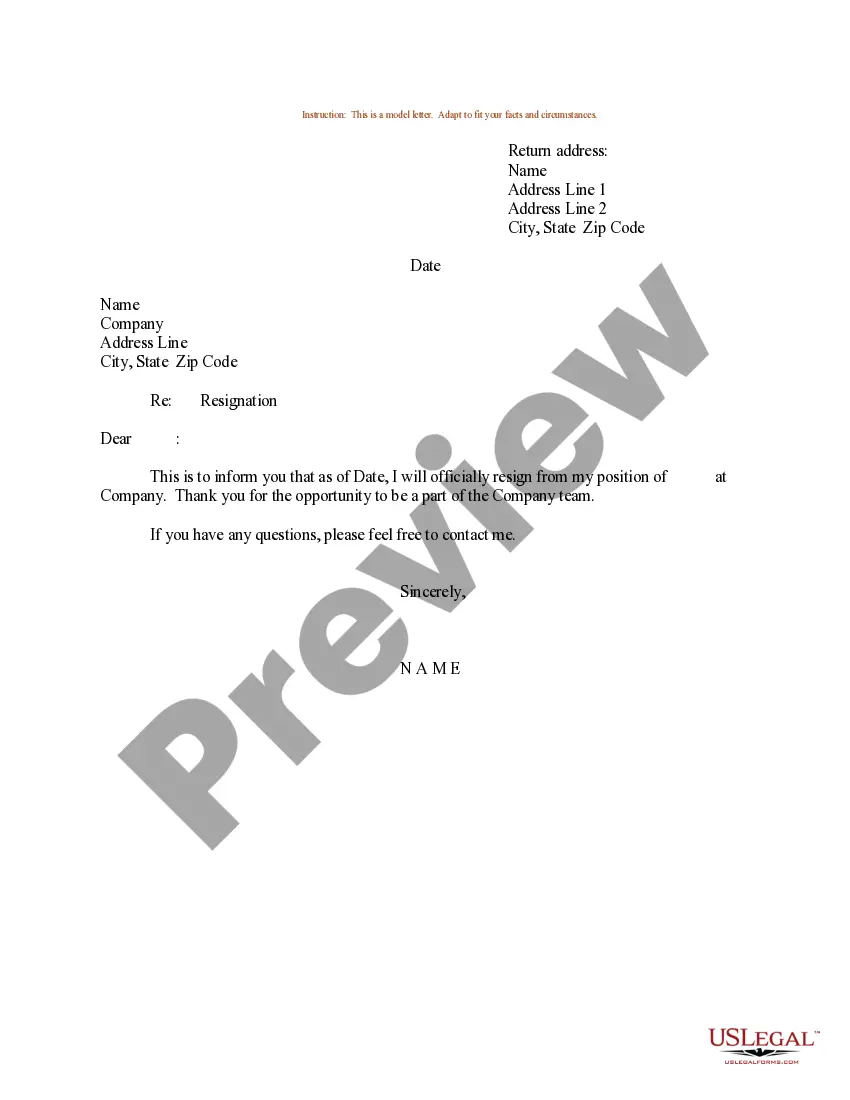
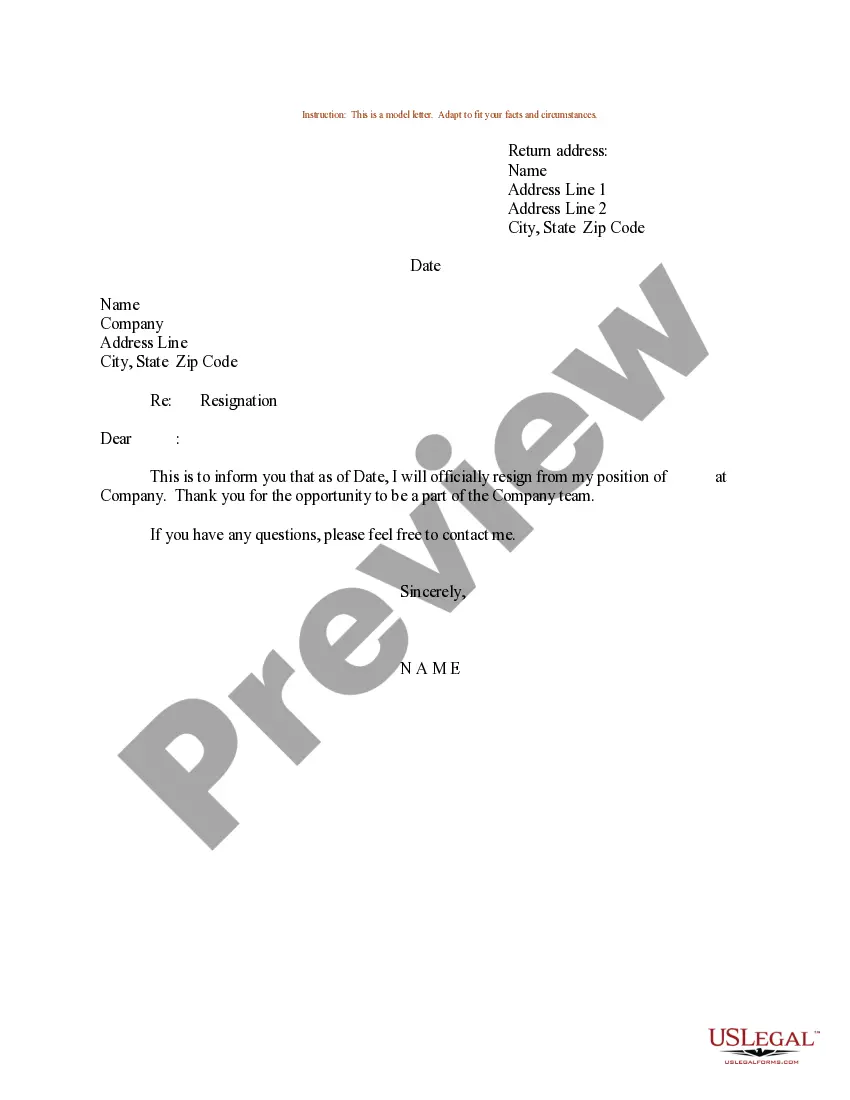
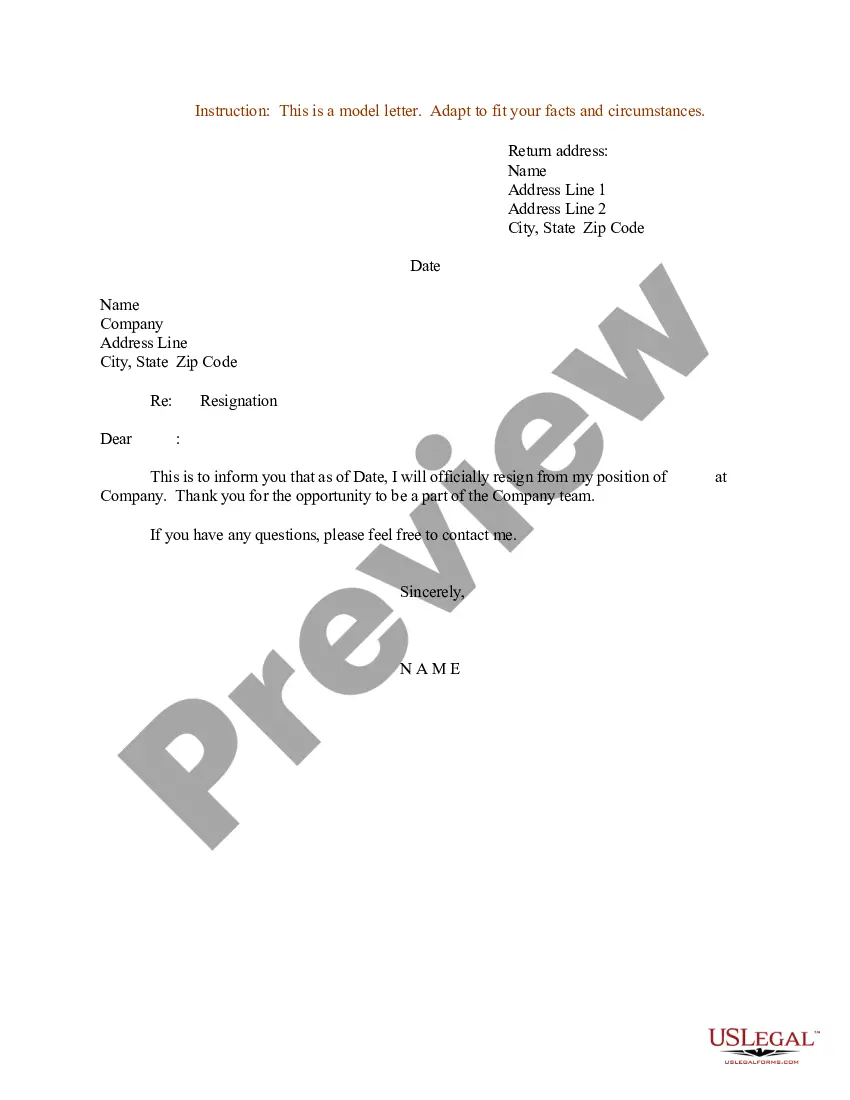
The resignation letter without reason is a formal document used by an employee to notify their employer of their decision to leave a job without providing a specific reason. This form is essential for ensuring a professional exit from the workplace and differs from other resignation letters, which might require explanations or additional details. Using this template allows the employee to complete the process efficiently while maintaining a respectful tone.
What’s included in this form
- Return address: Includes your details for correspondence.
- Date: The date you submit your resignation.
- Employer's address: The recipientâs workplace details.
- Subject line: Clearly states that this is a resignation letter.
- Closing remarks: A respectful sign-off to maintain professionalism.
When this form is needed
This form is needed when you have decided to resign from your position but prefer not to disclose the reason behind your decision. It may be used in various scenarios, such as when you feel it's best to part ways due to personal reasons, when you are moving to another location, or simply when you wish to minimize conversations about your departure.
Intended users of this form
- Employees looking to resign from their job without providing a reason.
- Individuals who want to ensure a professional and formal resignation process.
- Workers who are transitioning to another opportunity or taking a break from employment.
Completing this form step by step
- Identify your return address: Include your name and current mailing address.
- Enter the date: Fill in the date you are submitting the resignation.
- Provide your employer's address: Fill in the company name and address for proper delivery.
- Write the subject line: Clearly label the document as a resignation letter.
- Sign off professionally: Include your name at the bottom of the letter.
Does this form need to be notarized?
This form does not typically require notarization unless specified by local law. Most employers accept a signed resignation letter without the need for a notary, but it is wise to confirm any requirements with your HR department.
Get your form ready online
Our built-in tools help you complete, sign, share, and store your documents in one place.
Make edits, fill in missing information, and update formatting in US Legal Forms—just like you would in MS Word.
Download a copy, print it, send it by email, or mail it via USPS—whatever works best for your next step.
Sign and collect signatures with our SignNow integration. Send to multiple recipients, set reminders, and more. Go Premium to unlock E-Sign.
If this form requires notarization, complete it online through a secure video call—no need to meet a notary in person or wait for an appointment.
We protect your documents and personal data by following strict security and privacy standards.

Make edits, fill in missing information, and update formatting in US Legal Forms—just like you would in MS Word.

Download a copy, print it, send it by email, or mail it via USPS—whatever works best for your next step.

Sign and collect signatures with our SignNow integration. Send to multiple recipients, set reminders, and more. Go Premium to unlock E-Sign.

If this form requires notarization, complete it online through a secure video call—no need to meet a notary in person or wait for an appointment.

We protect your documents and personal data by following strict security and privacy standards.
Avoid these common issues
- Failing to include the date and contact information.
- Using a casual tone instead of a professional one.
- Not proofreading for spelling or grammar errors.
- Sending the letter without notifying your supervisor in person first.
Why use this form online
- Convenience: Access and fill out the form from anywhere at any time.
- Editability: Easily customize the letter to fit your personal details.
- Reliability: Use a professionally drafted template to ensure compliance with legal standards.
Looking for another form?
Form popularity
FAQ
When you need to resign from a job for personal reasons, it can be difficult to know how to tell your employer, and how much information to share. Surprisingly, you don't necessarily need to provide details to your employer. For example, you can simply state that you are leaving for personal reasons or family reasons.
You Found a New Job. Obviously, the best reason for quitting a job is that you've found a new one. You Hate Your Job. Don't quit your job right away, even if you hate it. Illness. Difficult Work Environment. Schedules and Hours. Going Back to School. Career Change. Relocation.
If you have less than 1 months' service, and no notice provisions in your contract of employment, then you can resign with immediate effect. You otherwise need to give 1 week's statutory notice (or longer if your contract provides for this).
Any of the following would be considered just cause for quitting your job:Excessive overtime or an employer's refusal to pay for overtime work. Major changes in work duties. Difficult relations with a supervisor, for which you are not primarily responsible.
Surprisingly, you don't necessarily need to provide details to your employer. For example, you can simply state that you are leaving for personal reasons or family reasons.If you'd like to provide your employer with a reason for your resignation, there are some good reasons you can share to leave on a positive note.
The date of writing. The name of your supervisor or manager. A few highlights of your time with the company. Your reason for leaving (unsatisfactory conditions) A brief description of the issue(s) Your last day of work.
You can simply say, I am resigning for personal reasons, or I am resigning because of a family problem that requires all of my time. If you want to go into more detail (for example, to say you are leaving to be a stay-at-home parent, or because of family illness), you can explain.
Speak to Your Employer First. If possible, tell your boss in person that you will be leaving the company. State The Date. Don't Go into Details. Express Gratitude. Ask Any Questions. Provide Contact Information. Follow Business Letter Format.