Hawaii Heirship Affidavit - Descent

What is this form?
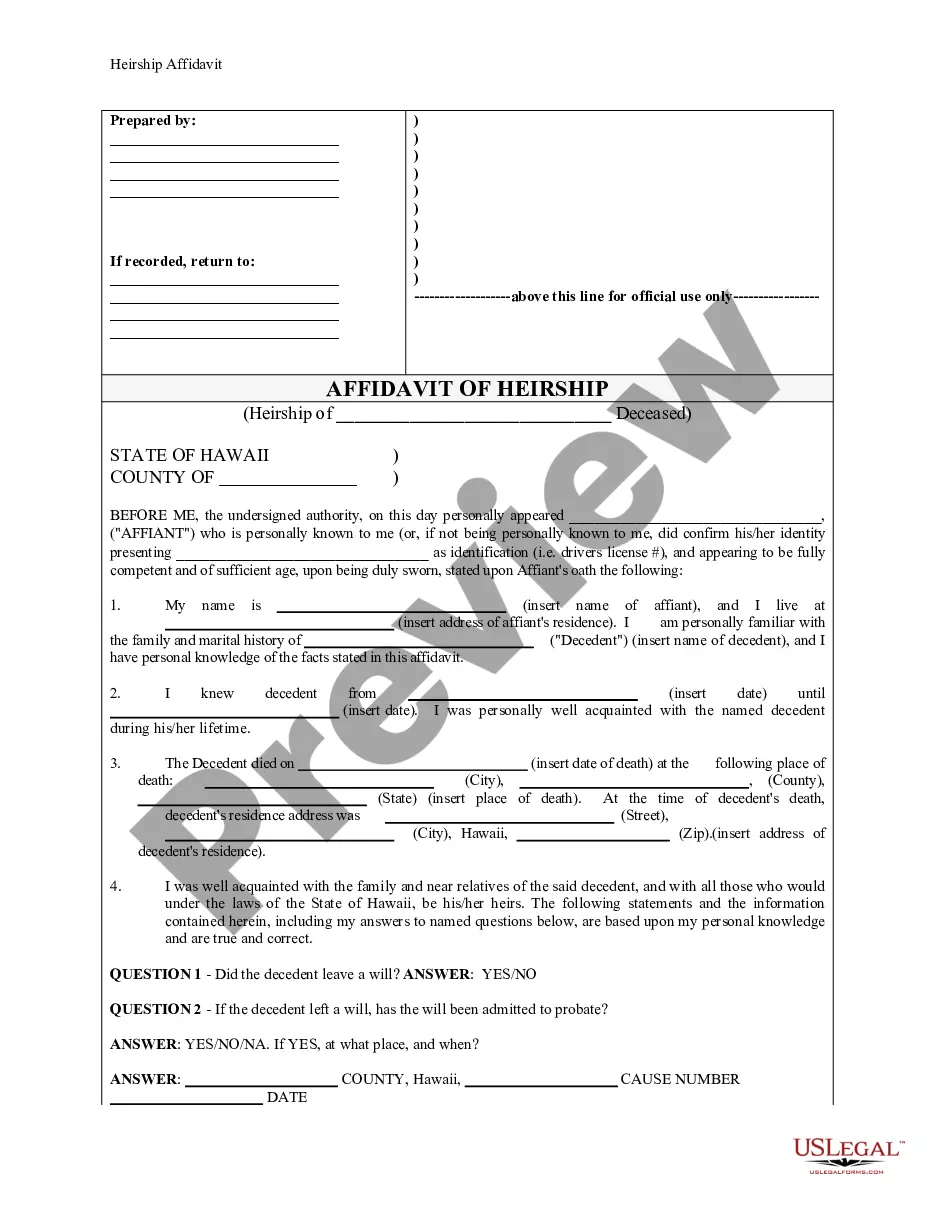
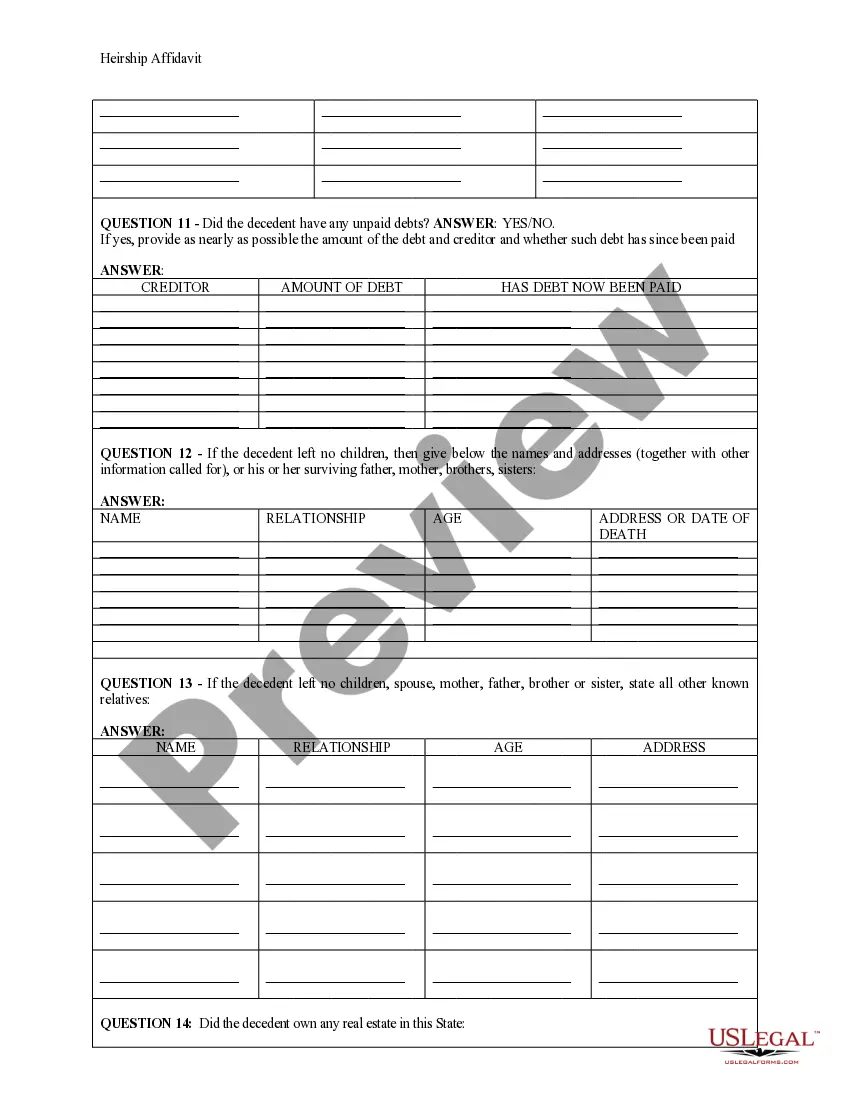
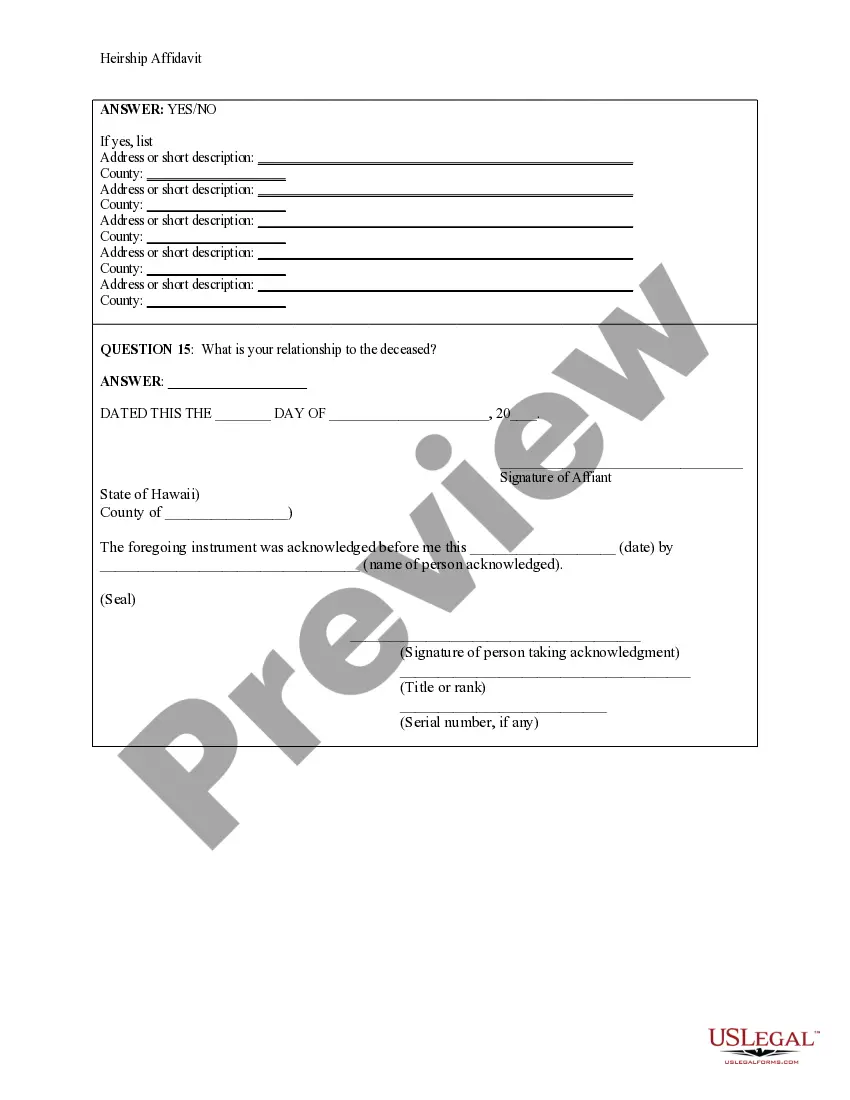
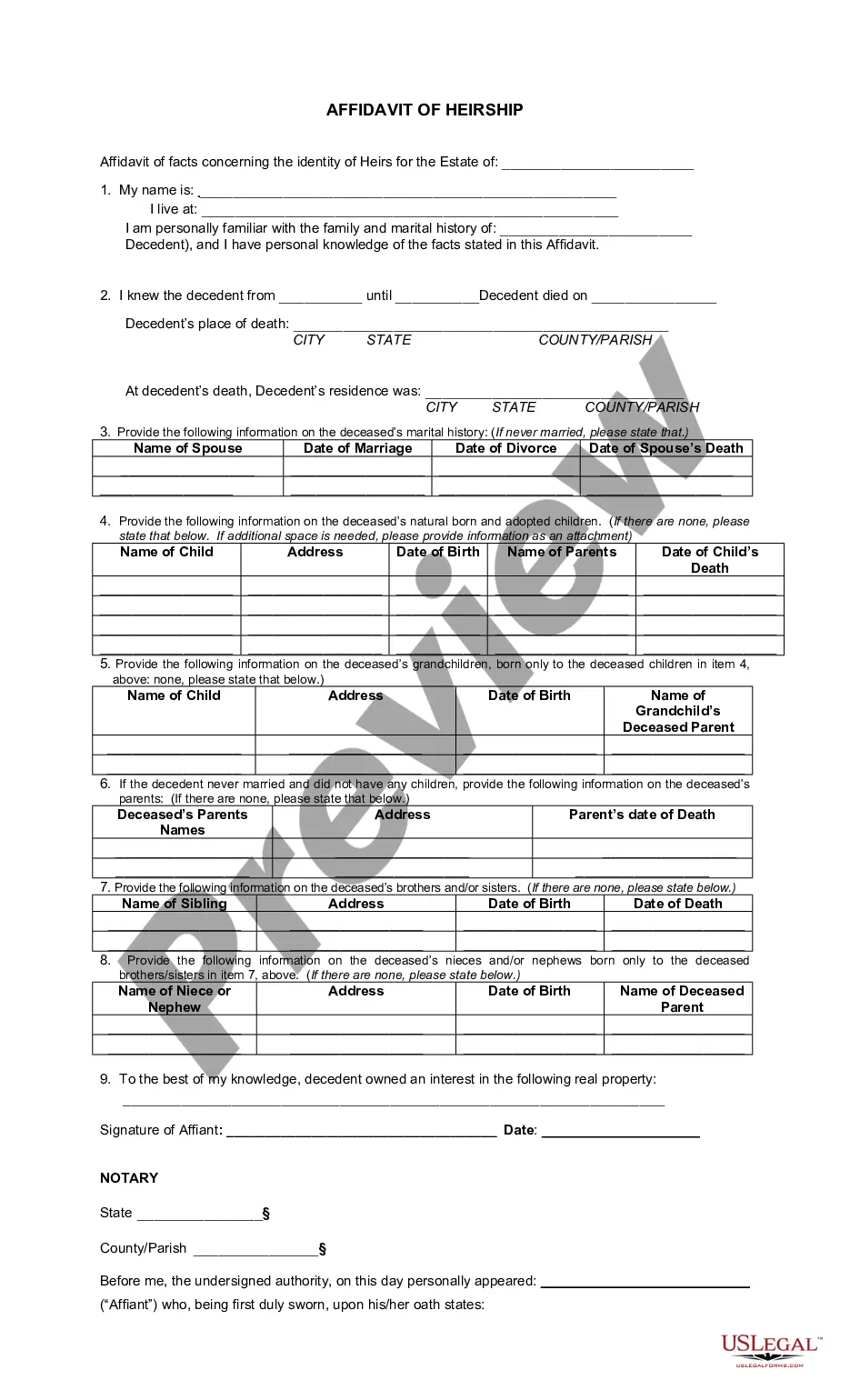
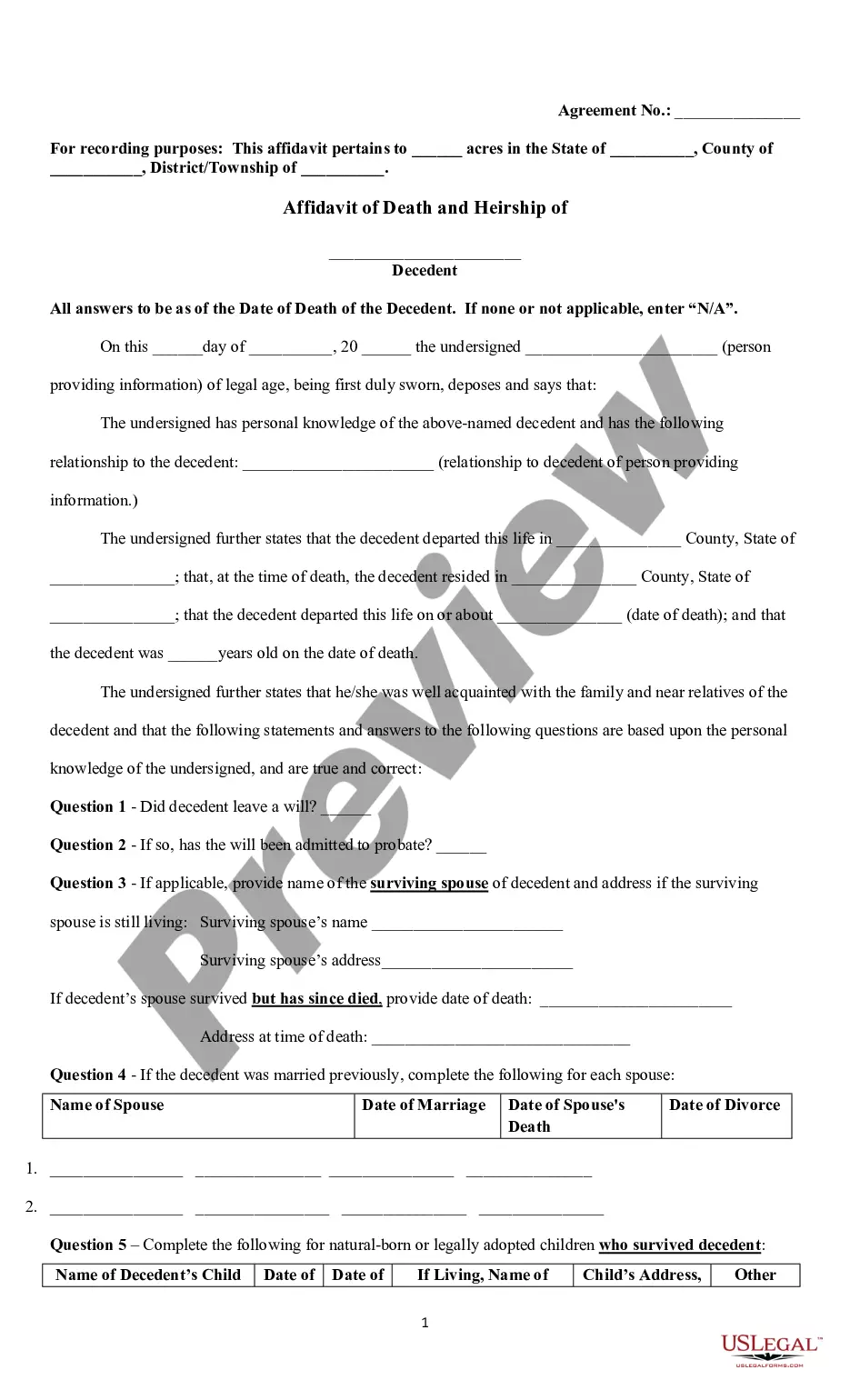
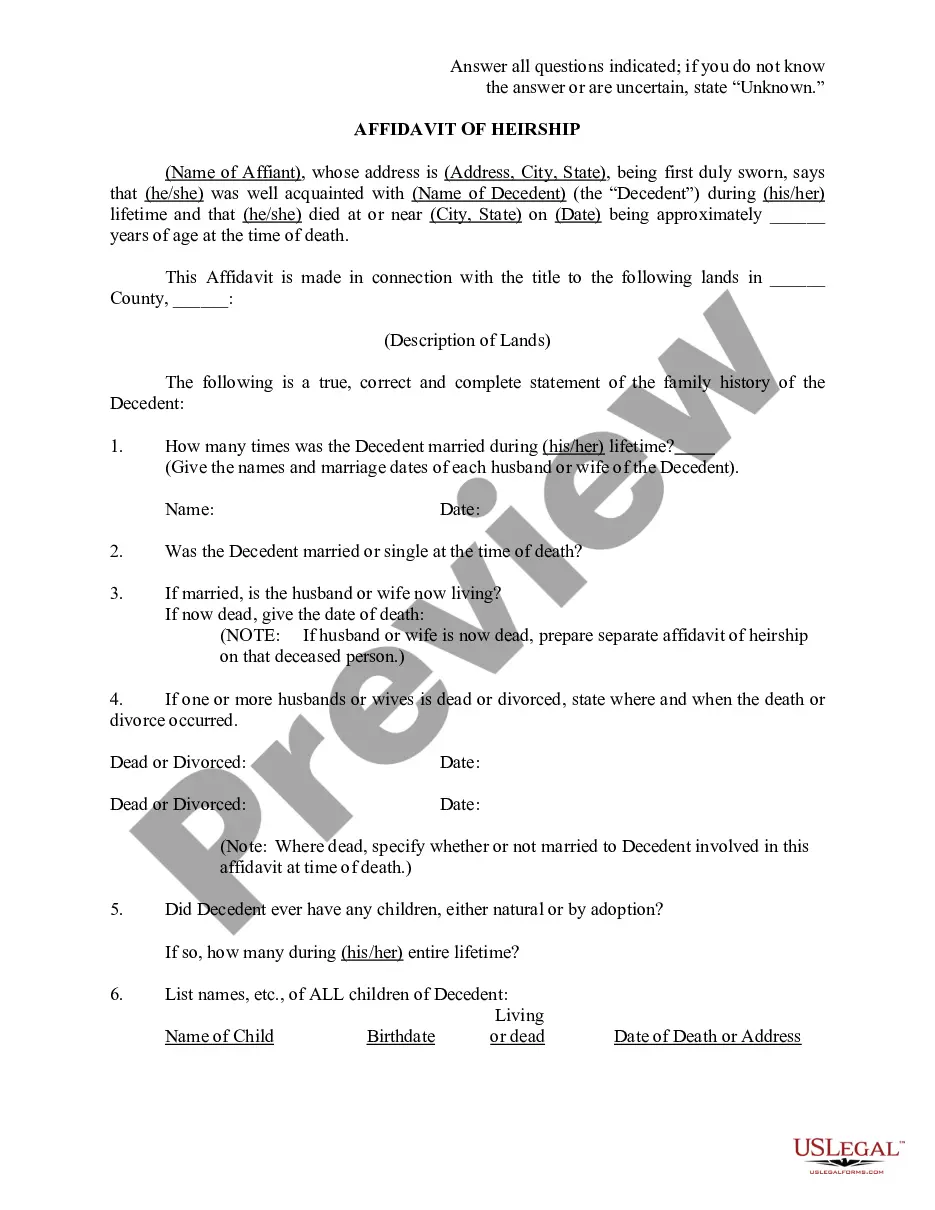
The Heirship Affidavit - Descent is a legal document used to declare the heirs of a deceased person. This form establishes ownership of personal and real property when an estate has not been formally opened, often used in situations involving intestacy (dying without a will). It differs from other affidavits as it focuses specifically on confirming the heirs and their relationships to the deceased in order to facilitate legal transfers of property.
Main sections of this form
- Affiant's information and relationship to the deceased.
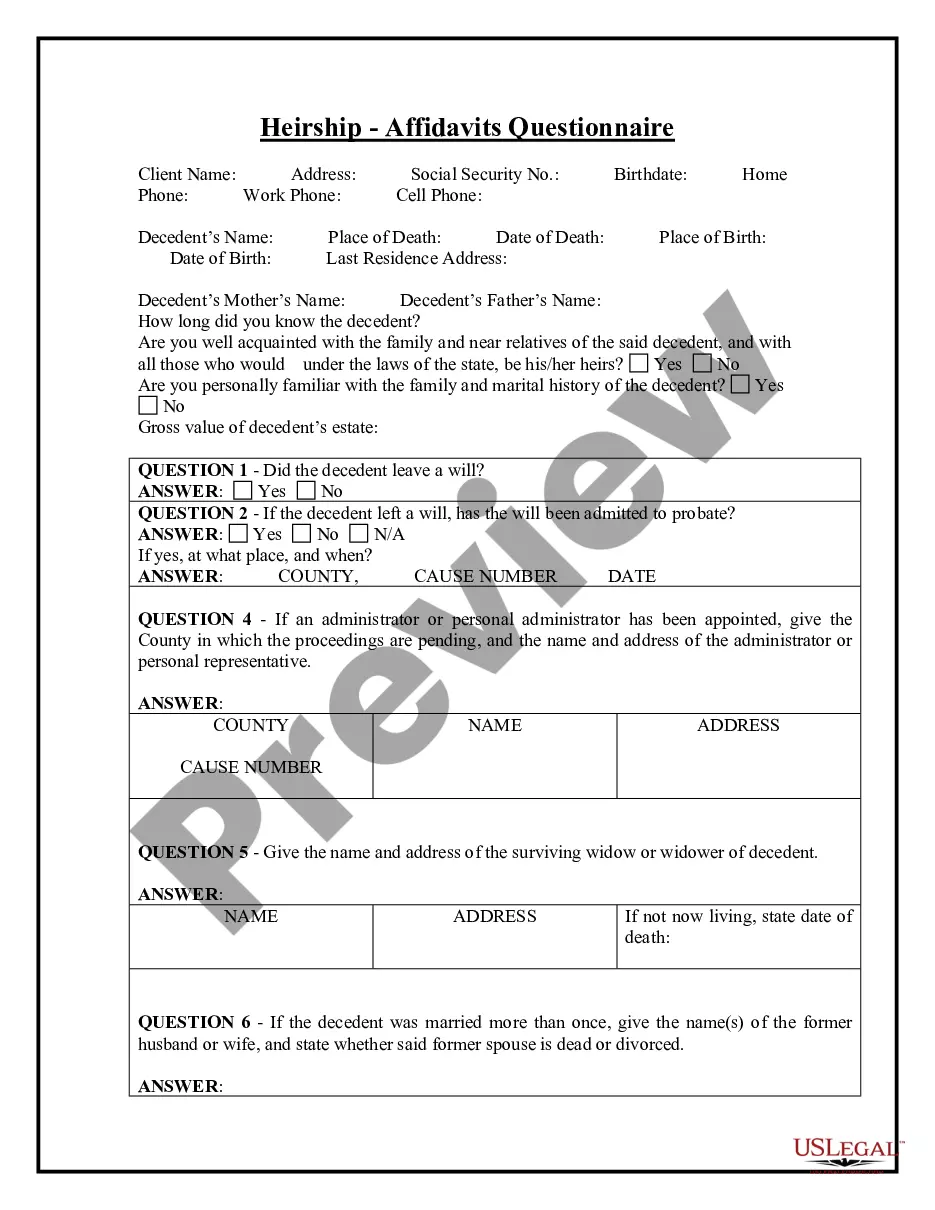
- Details about the decedent, including name, date of death, and last residence.
- Questions regarding the existence of a will and probate status.
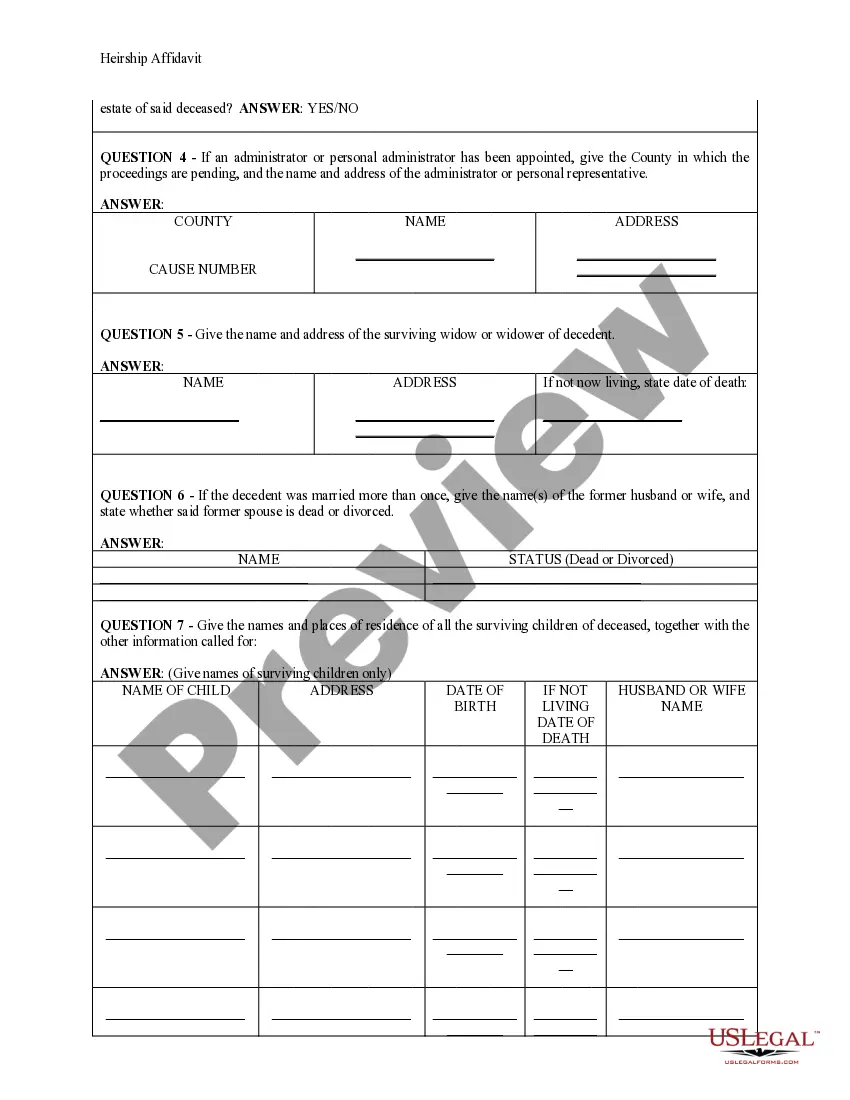
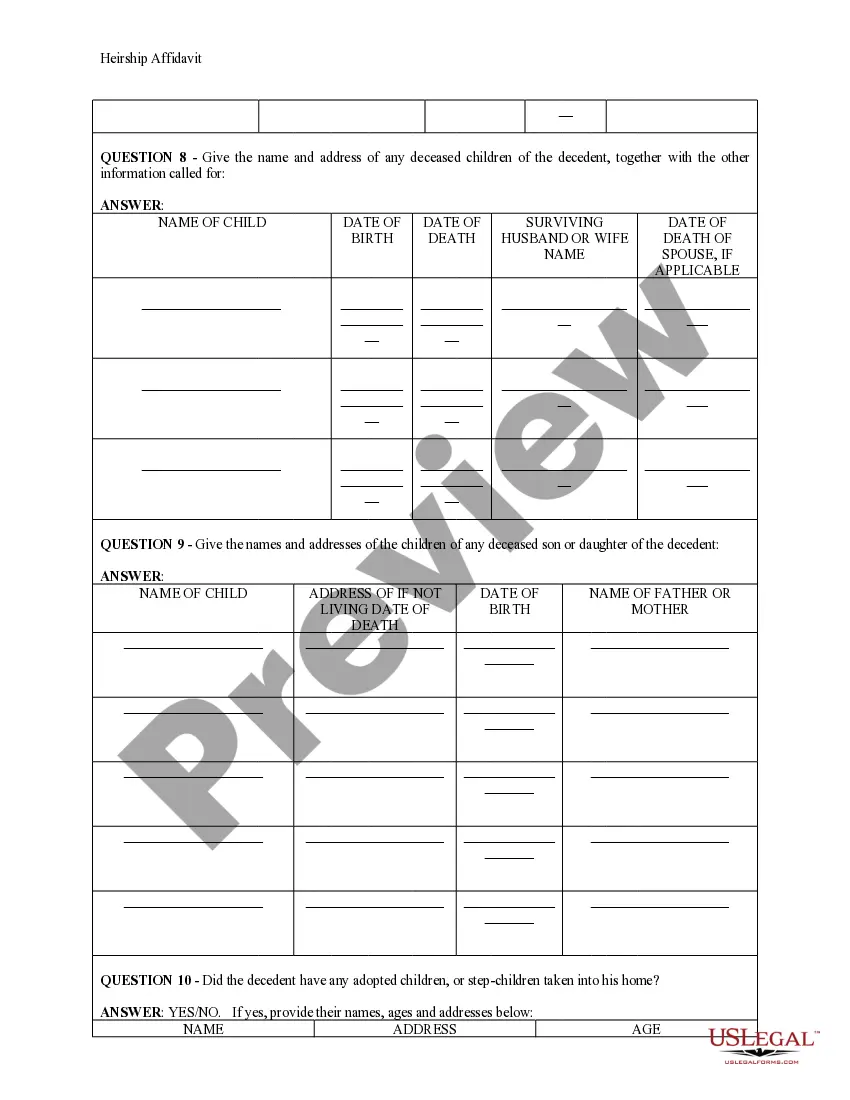
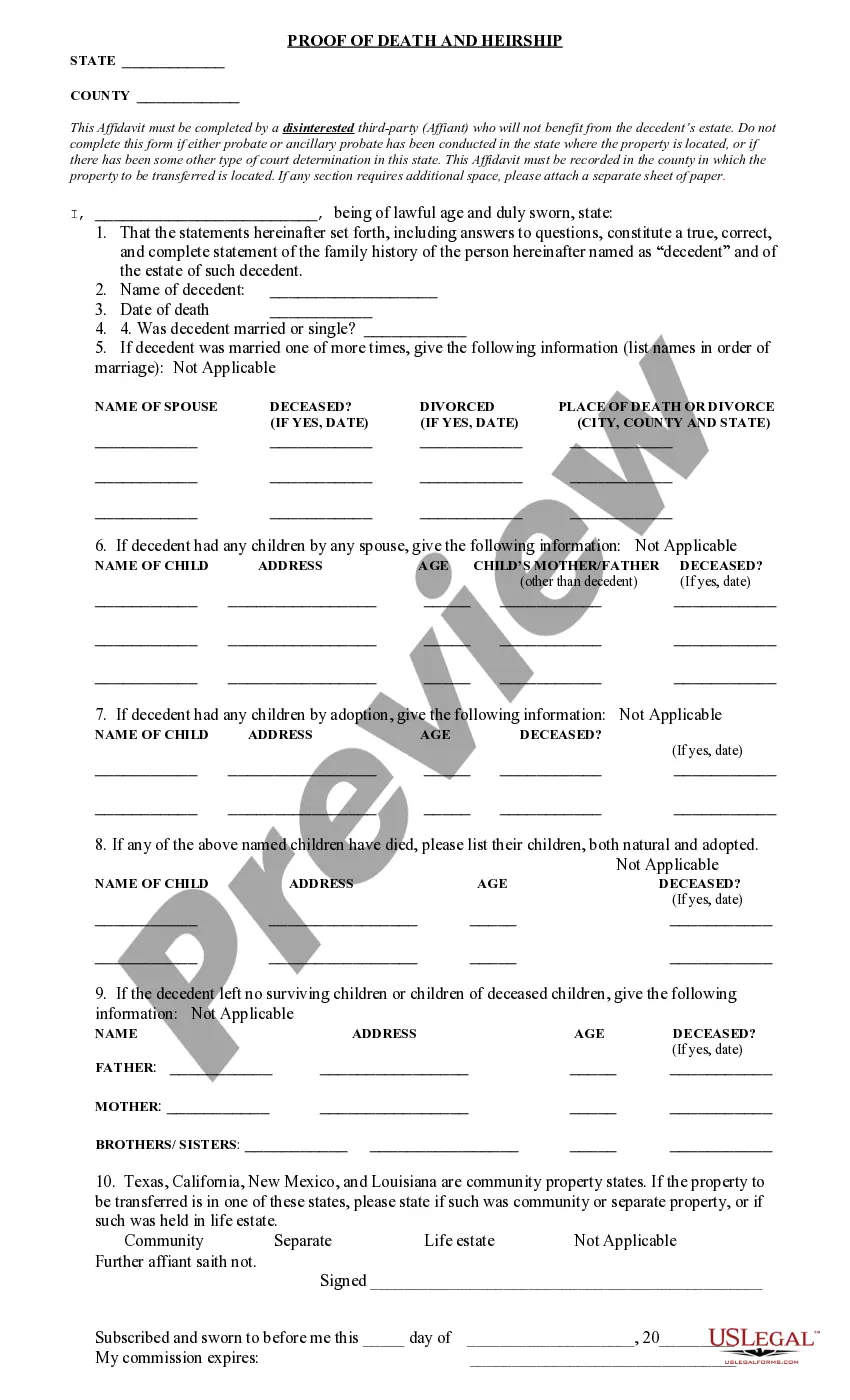
- Information about the heirs, including surviving children and spouse.
- Real property ownership details.
- Signatures and notarization section for legal validation.
When this form is needed
This form is used when a person dies without a will and there is a need to confirm the heirs to manage or transfer property. It is typically required by property registries when an heir wishes to sell or transfer property that belonged to the deceased. For example, if a son inherits land from a deceased parent, he would complete this affidavit before selling that land.
Who needs this form
- Individuals who need to establish the heirs of a deceased relative.
- Heirs who require legal documentation to facilitate property transfer.
- Persons acting on behalf of an estate without a formal probate process.
Instructions for completing this form
- Identify the affiant and their relationship to the deceased.
- Provide the decedent's personal information, including name, date of death, and last known address.
- Answer questions about the existence of a will, whether it has been probated, and details about heirs.
- List any real property owned by the deceased.
- Sign the affidavit in the presence of a notary public.
Notarization requirements for this form
This form needs to be notarized to ensure legal validity. US Legal Forms provides secure online notarization powered by Notarize, allowing you to complete the process through a verified video call, available anytime.
Get your form ready online
Our built-in tools help you complete, sign, share, and store your documents in one place.
Make edits, fill in missing information, and update formatting in US Legal Forms—just like you would in MS Word.
Download a copy, print it, send it by email, or mail it via USPS—whatever works best for your next step.
Sign and collect signatures with our SignNow integration. Send to multiple recipients, set reminders, and more. Go Premium to unlock E-Sign.
If this form requires notarization, complete it online through a secure video call—no need to meet a notary in person or wait for an appointment.
We protect your documents and personal data by following strict security and privacy standards.

Make edits, fill in missing information, and update formatting in US Legal Forms—just like you would in MS Word.

Download a copy, print it, send it by email, or mail it via USPS—whatever works best for your next step.

Sign and collect signatures with our SignNow integration. Send to multiple recipients, set reminders, and more. Go Premium to unlock E-Sign.

If this form requires notarization, complete it online through a secure video call—no need to meet a notary in person or wait for an appointment.

We protect your documents and personal data by following strict security and privacy standards.
Common mistakes to avoid
- Failing to provide complete information about the decedent's heirs.
- Not signing the affidavit in front of a notary public.
- Leaving questions unanswered or marked incorrectly.
Benefits of using this form online
- Convenient access allows for easy downloading and printing.
- Editable fields enable customization to fit specific situations.
- Reliable formats drafted by licensed attorneys ensure legal compliance.
Looking for another form?
Form popularity
FAQ
Rule 101 in Hawaii probate outlines the jurisdiction of probate courts over decedent estates. This rule helps define which cases fall under court jurisdiction and ensures that legal procedures are followed correctly. Familiarizing yourself with Rule 101 is vital when considering a Hawaii Heirship Affidavit - Descent, as it affects where and how you can file.
Rule 42 in Hawaii probate addresses uncontested matters, allowing simpler proceedings for straightforward cases. This rule helps expedite the probate process, enabling heirs to access assets more quickly. Knowing Rule 42 can be beneficial when preparing a Hawaii Heirship Affidavit - Descent, as it may streamline your filing.
The duration of probate in Hawaii can vary significantly based on the complexity of the estate and any disputes that may arise. Typically, probate can take several months to a year. In some cases, it may take longer if there are complications or if a Hawaii Heirship Affidavit - Descent needs to be filed to settle asset distribution.
Yes, you can file your own affidavit of heirship in Hawaii, provided that you understand the requirements and processes involved. It’s crucial to gather all necessary information and documents to support your claim. Using a tool like USLegalForms can simplify this process by providing templates and guidance for preparing a Hawaii Heirship Affidavit - Descent.
Rule 50 in Hawaii probate pertains to the requirements and regulations around the submission of pleadings and motions. This rule simplifies certain procedures and ensures that all necessary documents are properly served and filed. For estate matters, adhering to Rule 50 may be essential when preparing a Hawaii Heirship Affidavit - Descent.
In Hawaii, the probate threshold is set at a value of $100,000 for real property and $25,000 for personal property. This means that if the total value of an estate falls below these amounts, you may not need to pursue a formal probate process. Understanding the probate threshold can help you determine if you need to file a Hawaii Heirship Affidavit - Descent to claim inheritance or assets.
Typically, an affidavit of heirship is prepared by someone who has a clear understanding of the family dynamics and the deceased's relationships. This person can be a family member, a friend, or even a legal professional. In the realm of a Hawaii Heirship Affidavit - Descent, using platforms like USLegalForms can help you navigate the preparation process effectively, ensuring all necessary information is documented properly.
While it is not legally required to have a lawyer draft an affidavit of heirs in Illinois, seeking legal assistance is often advisable. A lawyer can provide valuable insights and ensure that the Hawaii Heirship Affidavit - Descent meets all legal standards. Utilizing legal support can prevent potential complications and validate the document's acceptance during estate administration.
In Texas, an affidavit of heirship can be filled out by a person familiar with the deceased's family history, such as a family member or a reputable friend. This individual should have clear knowledge of the relationships between the deceased and their heirs. A well-prepared Hawaii Heirship Affidavit - Descent may often help streamline the probate process in Texas, acknowledging rightful heirs without extensive legal interventions.
An affidavit of heirship is typically completed by an individual who has personal knowledge of the deceased's family and their heirs. In many cases, this is a close relative or a trusted friend who can confidently attest to the heirs' identities. When dealing with a Hawaii Heirship Affidavit - Descent, it's crucial that the person filling it out understands the legal implications and requirements involved.