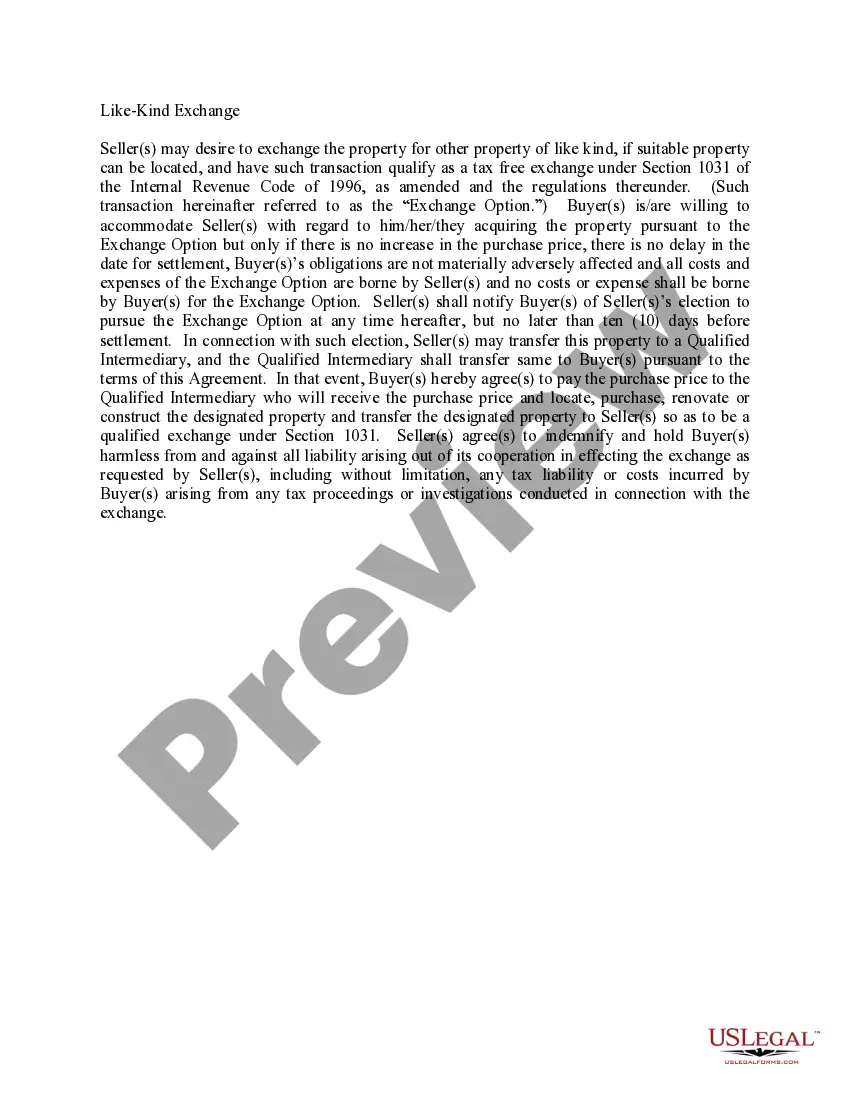
Hawaii Renunciation And Disclaimer of Property from Will by Testate
Description
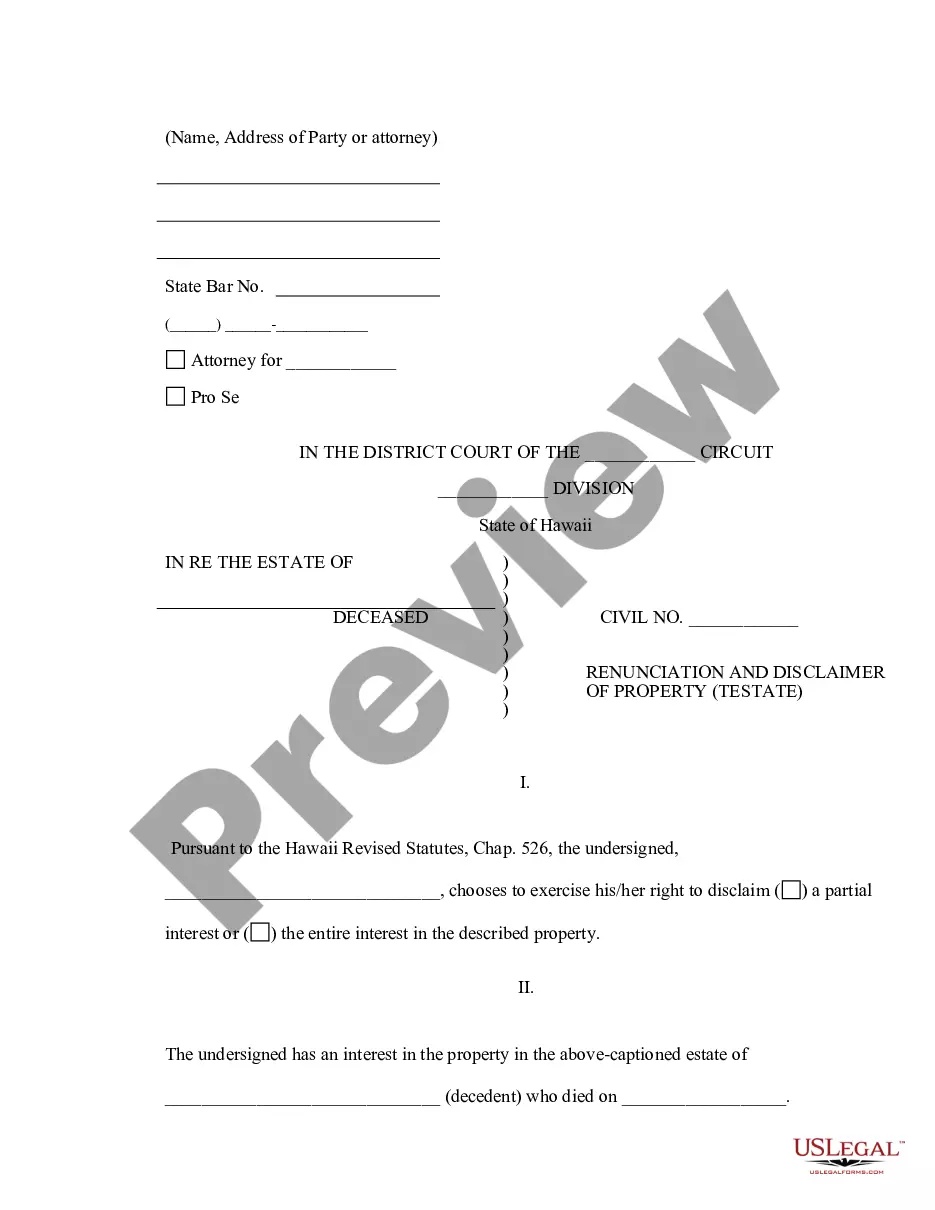
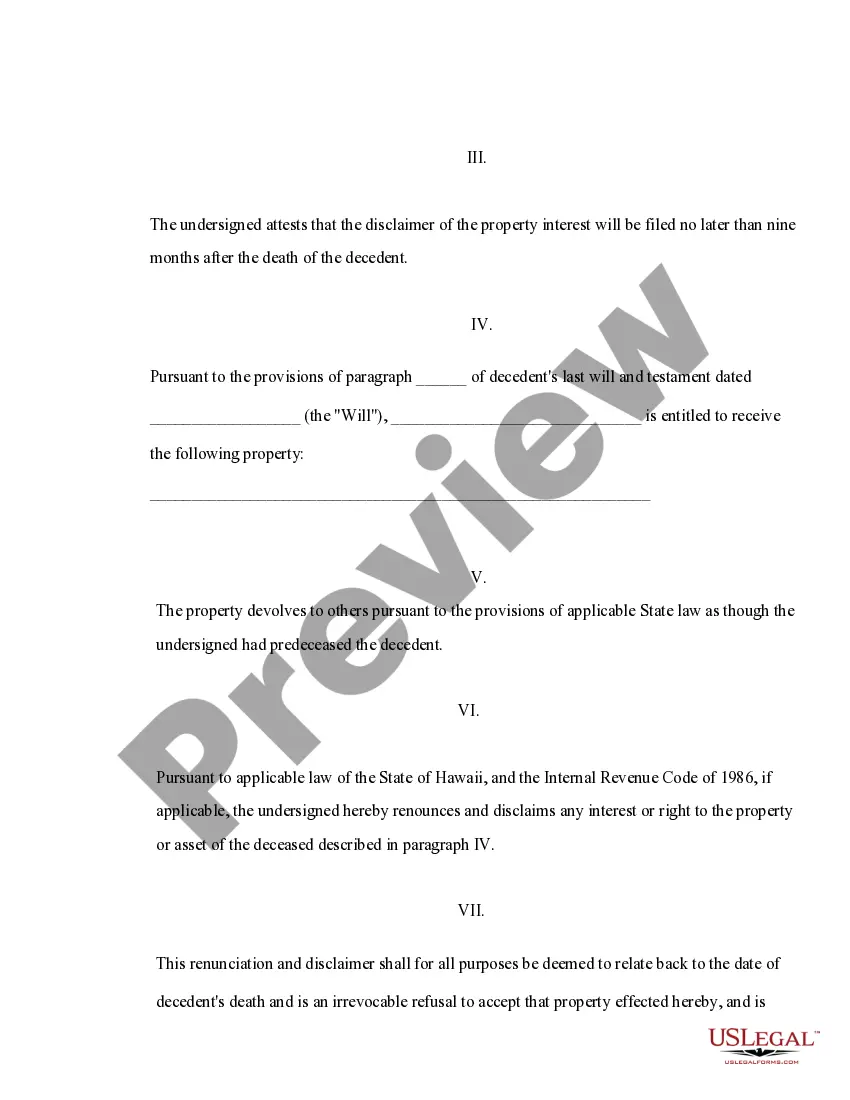
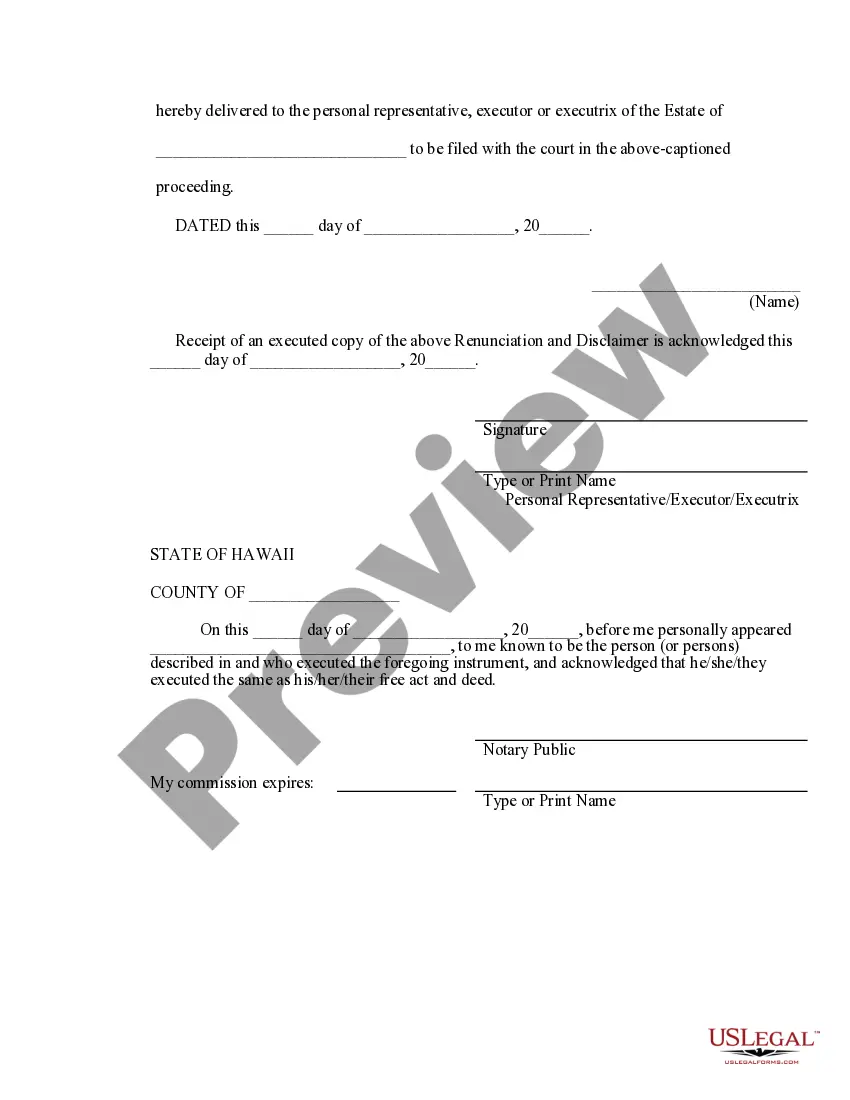
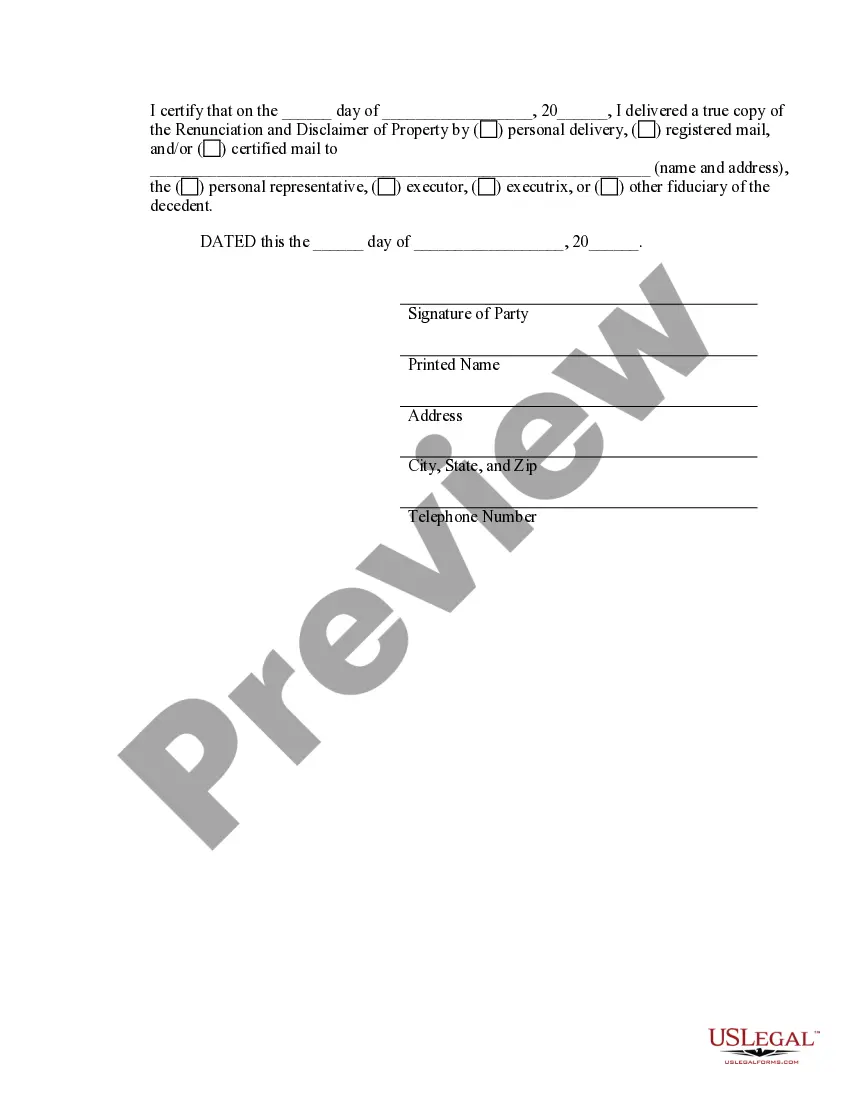
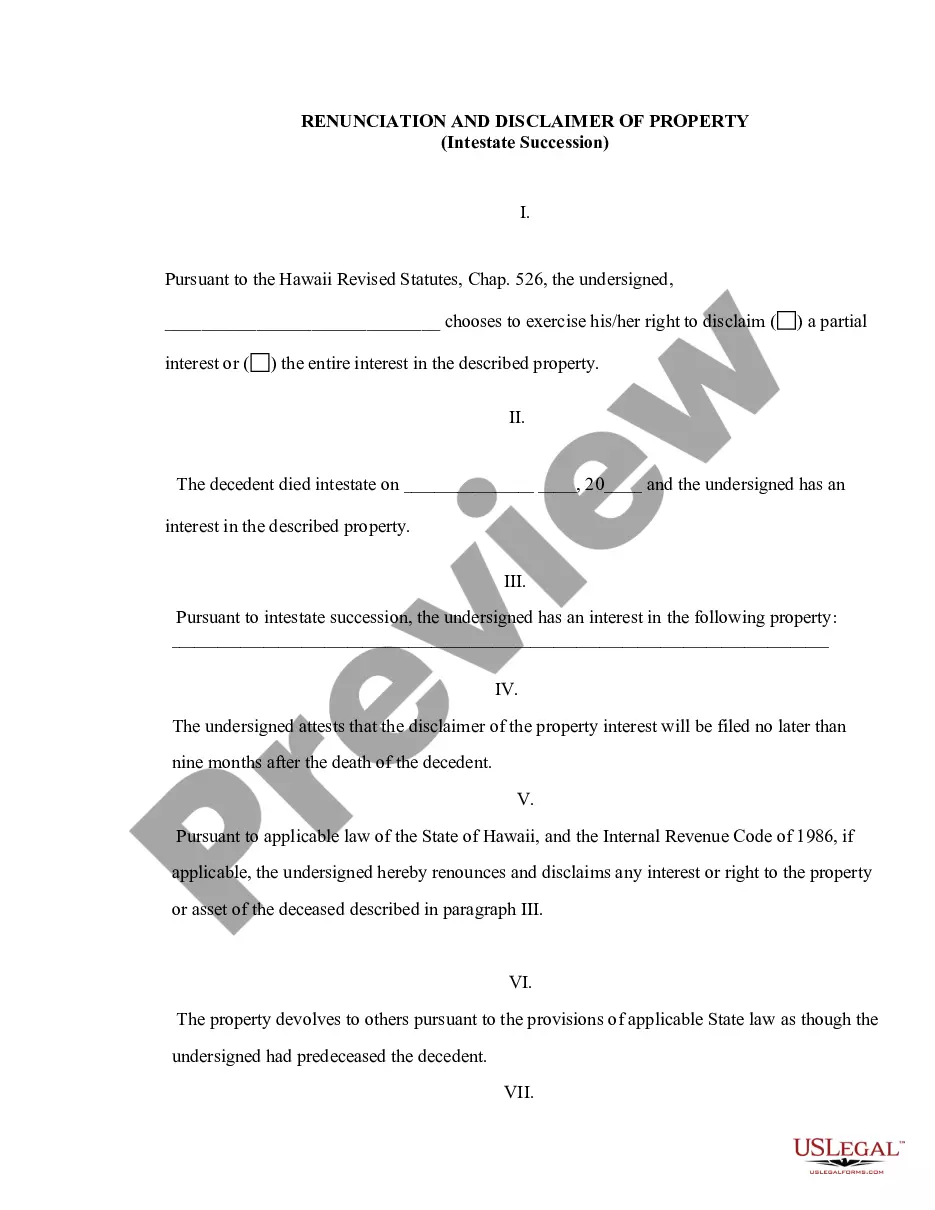
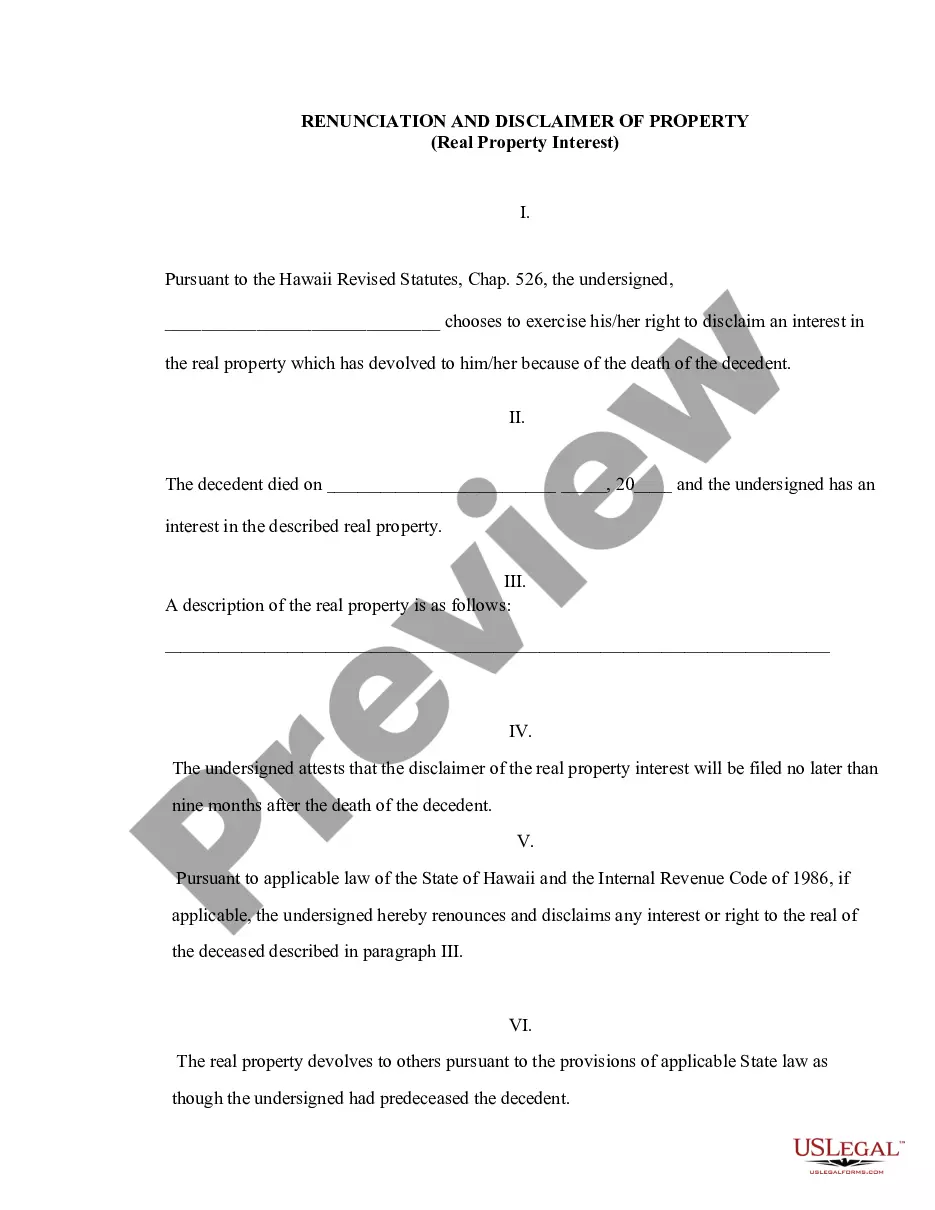
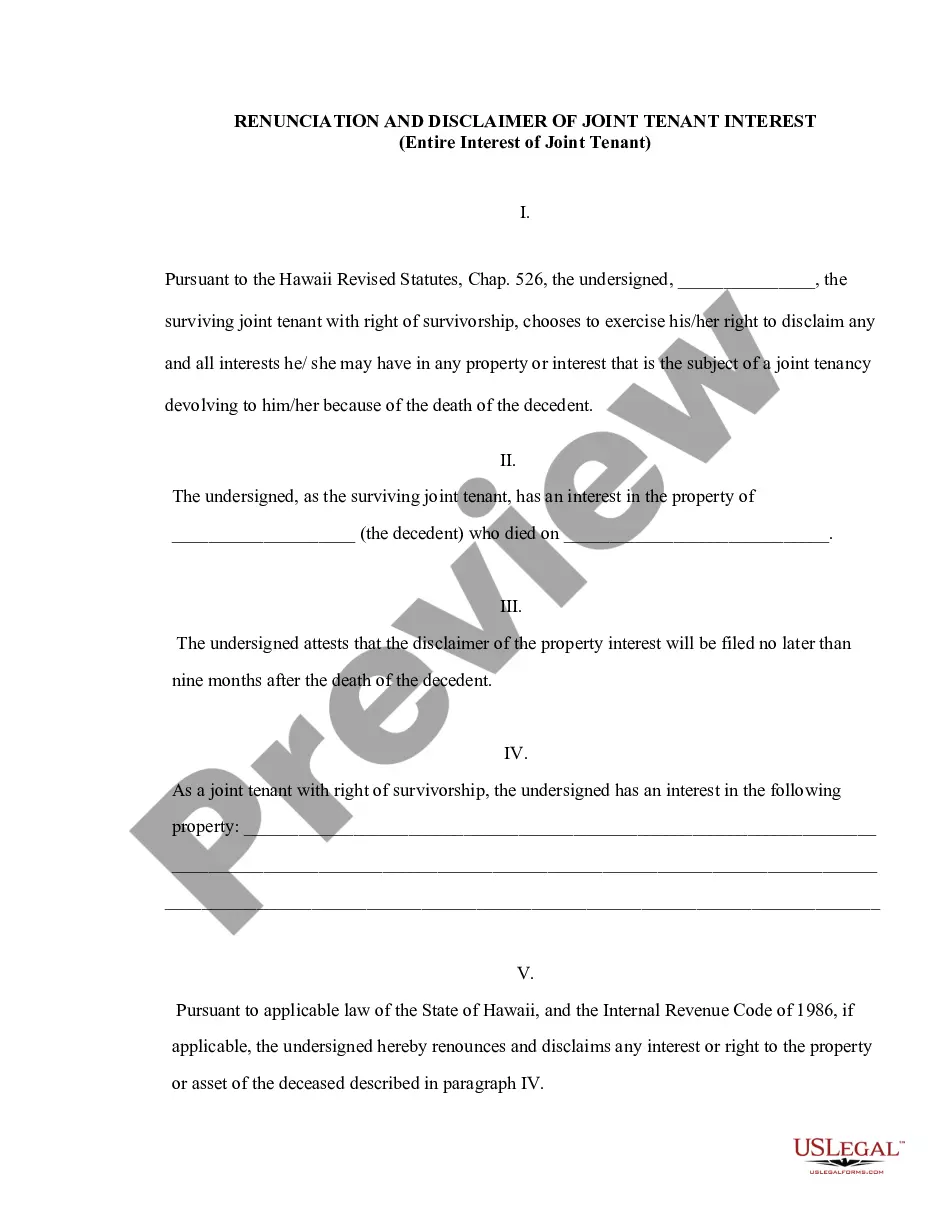
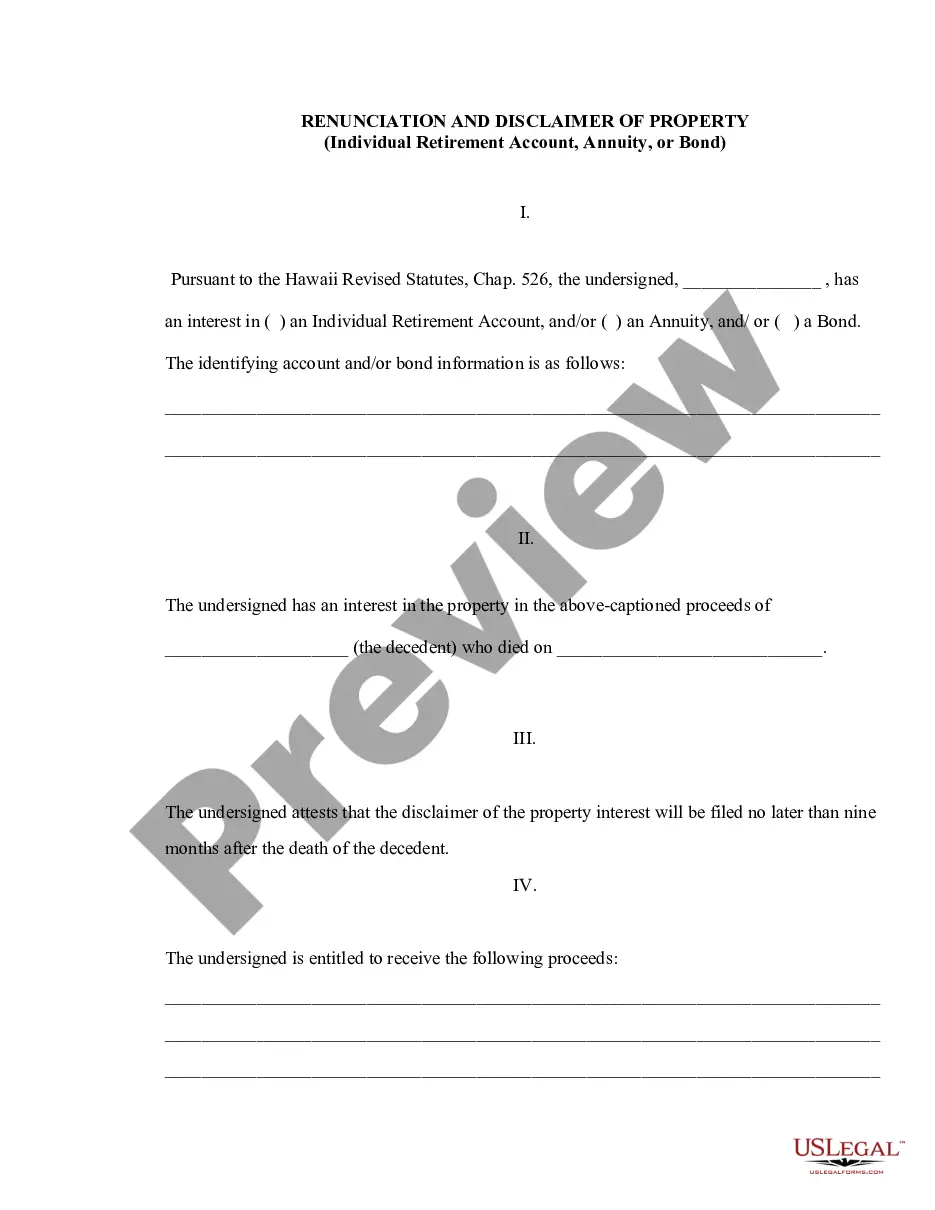
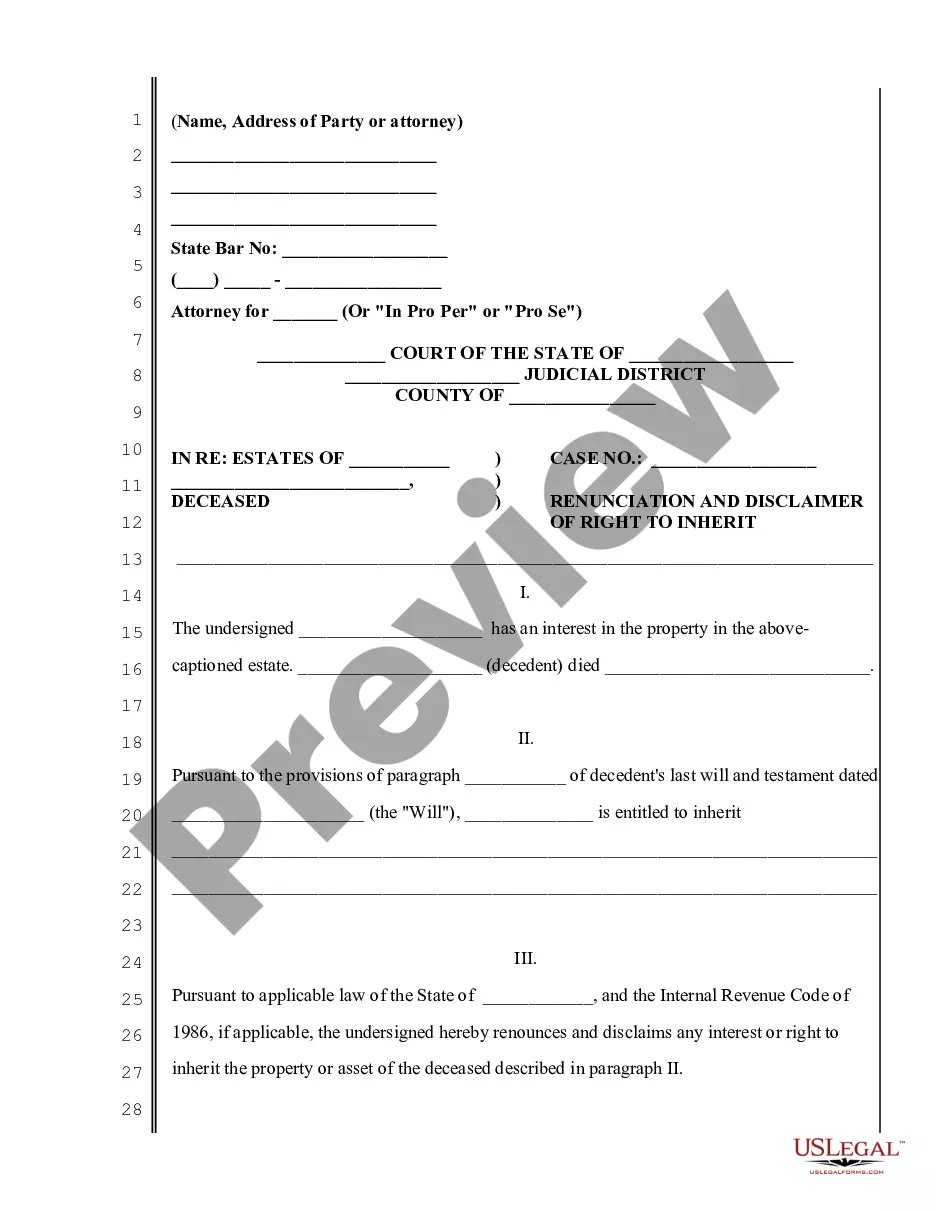
How to fill out Hawaii Renunciation And Disclaimer Of Property From Will By Testate?
Obtain the most comprehensive collection of legal documents.
US Legal Forms is essentially a platform where you can locate any state-specific document in just a few clicks, including the Hawaii Renunciation And Disclaimer of Property from Will by Testate examples.
There's no need to waste numerous hours searching for a court-admissible document.
Utilize the Preview option if available to verify the document's details. If everything looks accurate, click Buy Now. After selecting a pricing plan, create your account. Make a payment via credit card or PayPal. Download the document to your computer by clicking on Download. That's it! You should fill out the Hawaii Renunciation And Disclaimer of Property from Will by Testate form and review it. To ensure everything is correct, contact your local legal advisor for assistance. Sign up and easily browse over 85,000 useful templates.
- Our expert professionals guarantee that you receive updated samples continuously.
- To access the forms library, select a subscription and create your account.
- If you have already registered, simply Log In and hit the Download button.
- The Hawaii Renunciation And Disclaimer of Property from Will by Testate template will be automatically saved in the My documents section (which stores all forms you download from US Legal Forms).
- To create a new profile, refer to the straightforward instructions provided below.
- If you need to use a state-specific document, ensure you specify the correct state.
- If possible, review the description to understand all the specifics of the document.
Form popularity
FAQ
In Hawaii, you do not need to register a will for it to be valid, but filing it with the probate court after the testator's death is advisable. This filing ensures that the will is officially recognized and allows the probate process to begin. Not registering can lead to complications later on, especially during estate disputes. Familiarizing yourself with Hawaii Renunciation And Disclaimer of Property from Will by Testate can further assist with this process.
Yes, you can write your own will in Hawaii, and getting it notarized adds an extra layer of authenticity. However, to be considered self-proving, it should also include the signatures of at least two witnesses who are present during its signing. A properly executed will can help prevent disputes among heirs. You might want to explore Hawaii Renunciation And Disclaimer of Property from Will by Testate to help clarify your intentions.
For a will to be valid in Hawaii, it must be in writing, signed by the testator, and witnessed by at least two individuals. Moreover, the testator must be of legal age and mentally competent when creating the will. Failing to meet these requirements can lead to challenges in the will's enforcement. If you’re worried about meeting the estate requirements, consider looking into Hawaii Renunciation And Disclaimer of Property from Will by Testate for clarity.
In Hawaii, the threshold for probate applies to estates valued over $100,000. If the estate exceeds this amount, it typically requires formal probate proceedings. For smaller estates, simpler methods may allow for quicker asset distribution without going through probate. Knowing about Hawaii Renunciation And Disclaimer of Property from Will by Testate can provide insights into managing estate properties.
Intestate succession refers to the process by which property is distributed when someone dies without a valid will. Under the Hawaii Revised Statutes, the deceased's heirs inherit according to a specified order, including spouses, children, and other relatives. This process can be complex, especially if there are multiple heirs. Understanding Hawaii Renunciation And Disclaimer of Property from Will by Testate could help clarify your situation regarding property distribution.
A handwritten will, also known as a holographic will, is considered valid in Hawaii if it meets specific criteria. The testator must write the will in their own handwriting and sign it. It's essential that the will clearly indicates the testator's intentions regarding property distribution. Remember, Hawaii Renunciation And Disclaimer of Property from Will by Testate may affect how a handwritten will is executed.
Yes, you can write a will on a piece of paper, but it must meet Hawaii's legal requirements to be valid. This includes having your signature and being witnessed appropriately. If you're exploring options like Hawaii Renunciation And Disclaimer of Property from Will by Testate, it's beneficial to ensure that your will complies with the law to avoid future complications.
No, a will does not need to be notarized in Hawaii. However, if you choose to have it notarized, it can provide added assurance during the probate process. Take into consideration Hawaii Renunciation And Disclaimer of Property from Will by Testate, as ensuring your will is executed properly is vital for your estate planning.
For a will to be valid in Hawaii, it must be in writing, signed by the testator, and witnessed by two individuals who are not beneficiaries. Additionally, the testator must be at least 18 years old and of sound mind at the time of writing. These requirements are essential, especially if you are navigating situations related to Hawaii Renunciation And Disclaimer of Property from Will by Testate.
Generally, a will does not avoid probate in Hawaii. Instead, it provides a formal process to manage and distribute assets after death. If you're concerned about the probate process and are looking into Hawaii Renunciation And Disclaimer of Property from Will by Testate, it's wise to explore estate planning strategies that might minimize probate complications.