Georgia Protecting Deceased Persons from Identity Theft
Overview of this form package
The Georgia Protecting Deceased Persons from Identity Theft form package provides essential documents to help reduce the risk of identity theft pertaining to deceased individuals. This package assists families in notifying creditors, government agencies, and other entities about the death while also taking necessary steps to protect the deceased's identifying information. It is designed specifically for Georgia residents and includes comprehensive resources to address identity theft issues unique to deceased persons, differentiating it from other identity theft forms that may not cater specifically to this sensitive situation.
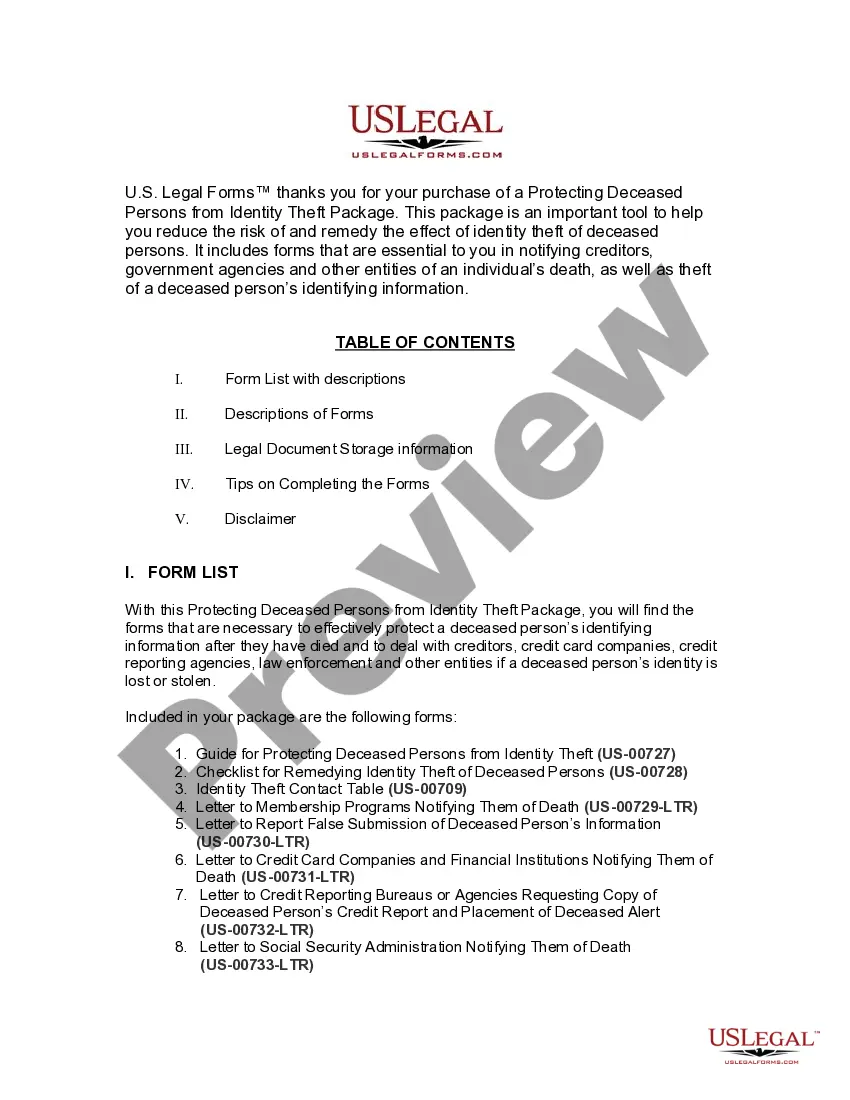
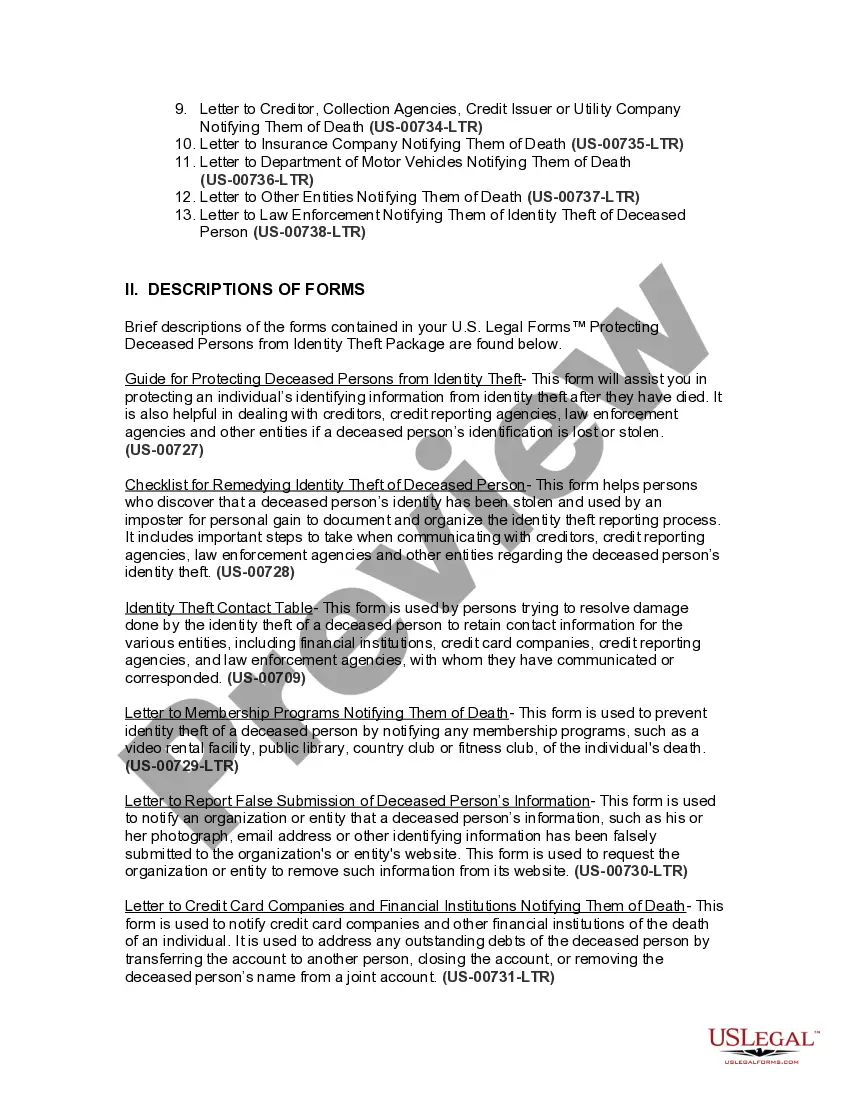
Forms provided in this package
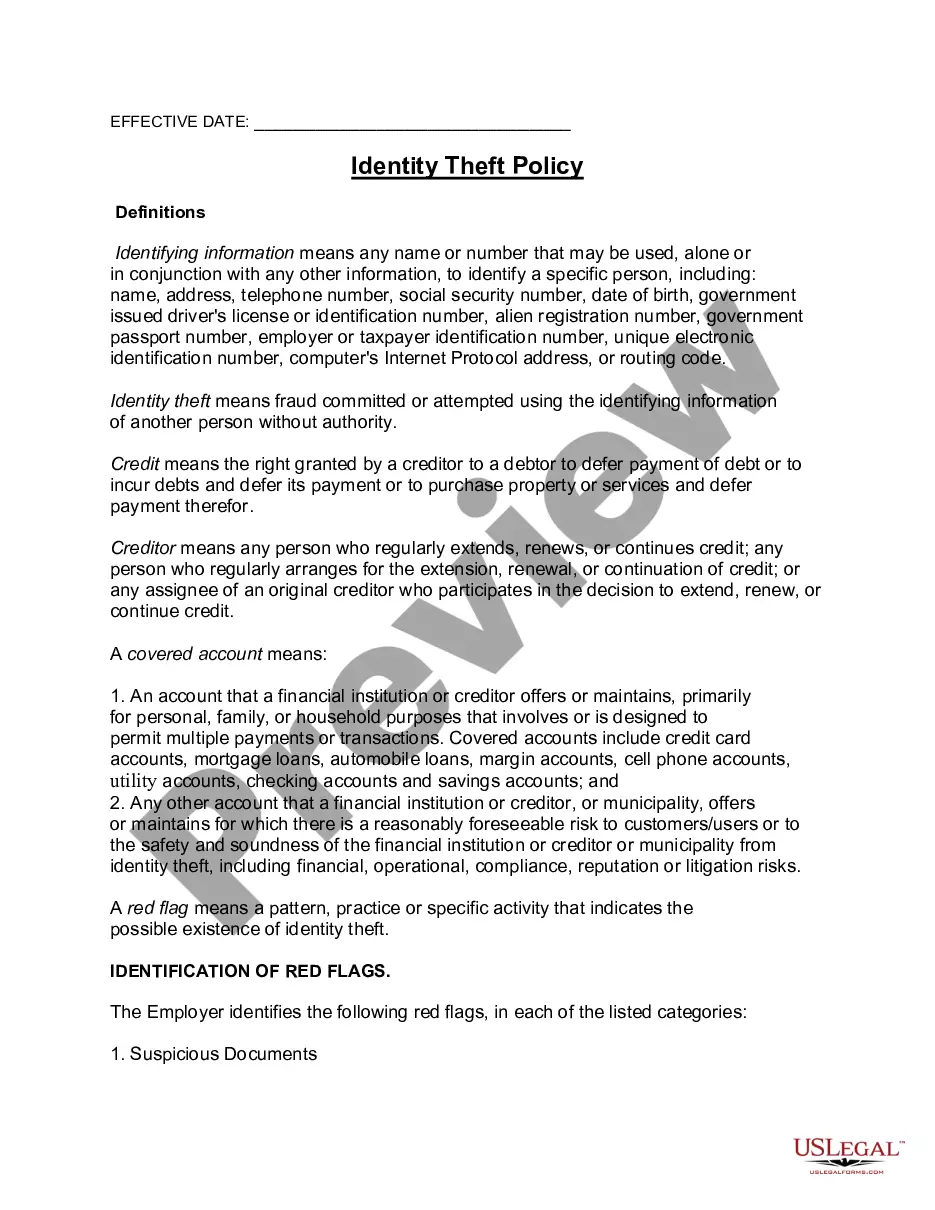
- Identity Theft Contact Table
- Guide for Protecting Deceased Persons from Identity Theft
- Checklist for Remedying Identity Theft of Deceased Persons
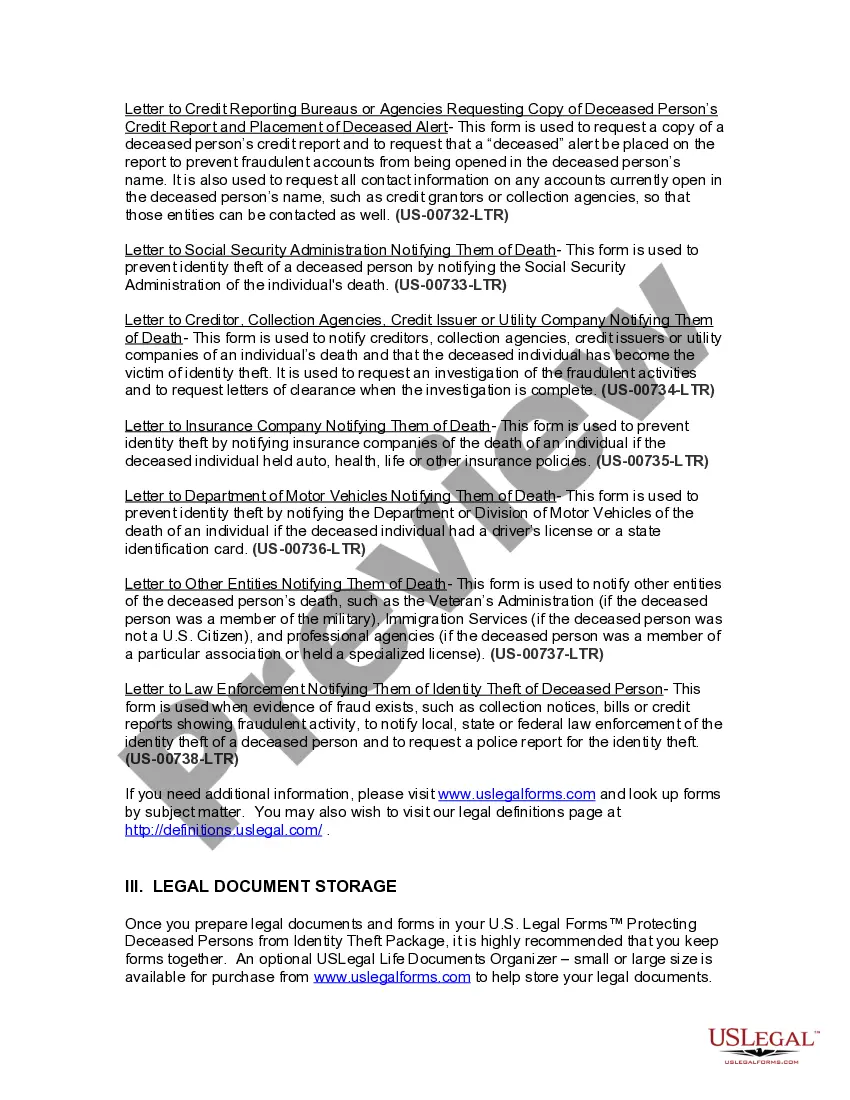
- Letter to Membership Programs Notifying Them of Death
- Letter to Report False Submission of Deceased Person's Information
- Letter to Credit Card Companies and Financial Institutions Notifying Them of Death
- Letter to Credit Reporting Bureaus or Agencies Requesting Copy of Deceased Person's Credit Report and Placement of Deceased Alert
- Letter to Social Security Administration Notifying Them of Death
- Letter to Creditor, Collection Agencies, Credit Issuer or Utility Company Notifying Them of Death
- Letter to Insurance Company Notifying Them of Death
- Letter to Department of Motor Vehicles Notifying Them of Death
- Letter to Other Entities Notifying Them of Death
- Letter to Law Enforcement Notifying Them of Identity Theft of Deceased Person
Situations where these forms applies
This form package is vital in various scenarios, including:
- After the passing of a loved one, to ensure their identity is safeguarded from fraudulent activities.
- When you suspect that a deceased person's identity may have been used fraudulently.
- To notify financial institutions and government bodies about the death to prevent unauthorized transactions.
- If there is a need to formally report identity theft involving a deceased person to law enforcement or credit bureaus.
Who should use this form package
- Family members or close relatives of a deceased person.
- Executors or personal representatives handling the affairs of a deceased estate.
- Anyone responsible for managing the financial and legal matters of a deceased individual.
Instructions for completing these forms
- Carefully review the included Guide for Protecting Deceased Persons from Identity Theft.
- Identify the necessary forms based on your situation, utilizing the Checklist for Remedying Identity Theft.
- Fill out the forms with accurate details regarding the deceased person and relevant parties.
- Send the provided letters to appropriate organizations to formally notify them of the death.
- Retain copies of all correspondence for your records.
Notarization details for included forms
Most forms in this package do not require notarization. However, local laws or specific situations may demand it. Our online notarization service, powered by Notarize, lets you complete the process through a verified video call, available anytime.
Get your form ready online
Our built-in tools help you complete, sign, share, and store your documents in one place.
Make edits, fill in missing information, and update formatting in US Legal Forms—just like you would in MS Word.
Download a copy, print it, send it by email, or mail it via USPS—whatever works best for your next step.
Sign and collect signatures with our SignNow integration. Send to multiple recipients, set reminders, and more. Go Premium to unlock E-Sign.
If this form requires notarization, complete it online through a secure video call—no need to meet a notary in person or wait for an appointment.
We protect your documents and personal data by following strict security and privacy standards.

Make edits, fill in missing information, and update formatting in US Legal Forms—just like you would in MS Word.

Download a copy, print it, send it by email, or mail it via USPS—whatever works best for your next step.

Sign and collect signatures with our SignNow integration. Send to multiple recipients, set reminders, and more. Go Premium to unlock E-Sign.

If this form requires notarization, complete it online through a secure video call—no need to meet a notary in person or wait for an appointment.

We protect your documents and personal data by following strict security and privacy standards.
Avoid these common issues
- Failing to notify all relevant creditors and entities, which could leave the deceased's identity vulnerable.
- Not keeping copies of all forms and letters sent for your records.
- Overlooking specific requirements or deadlines from organizations regarding notifications.
Benefits of using this package online
- Convenience of downloading the forms instantly, without waiting for physical delivery.
- Editability allows you to customize forms easily based on the specific details of the deceased.
- Reliability of professionally drafted documents by licensed attorneys, ensuring legal compliance.
Looking for another form?
Form popularity
FAQ
Identity theft can victimize the dead. Identity thieves can strike even after death.The file contains the following information: Social Security number, name, date of birth, date of death, state of last known residence, and zip code of last lump sum payment.
The Social Security Administration (www.ssa.gov) does not reappoint a Social Security number to someone else after the original owner's death. The SSA estimates that there are enough new number combinations to last well into the next SEVERAL generations.
You may be able to have your identity theft charges dropped if: You didn't obtain use a person's information unlawfully If you did not obtain or use someone else's personal information unlawfully, you are not guilty of identity theft.
10 Ways To Protect Yourself From Identity Theft. Destroy private records and statements. Secure your mail. Safeguard your Social Security number. Don't leave a paper trail. Never let your credit card out of your sight. Know who you're dealing with. Take your name off marketers' hit lists.
Identity Theft of a Deceased PersonIdentity thieves can get personal information about deceased individuals by reading obituaries, stealing death certificates, or searching genealogy websites that sometimes provide death records from the Social Security Death Index.
When a Social Security beneficiary dies, the death is usually reported to SSA by a family member, a funeral home, or a government agency. Whoever does the reporting, according to SSA, the death should be reported as soon as possible.
Password-Protect Your Devices. Use a Password Manager. Watch Out for Phishing Attempts. Never Give Out Personal Information Over the Phone. Regularly Check Your Credit Reports. Protect Your Personal Documents. Limit Your Exposure.
Identity thieves can strike even after death. An identity thief's use of a deceased person's Social Security number may create problems for family members.The Social Security Administration (SSA) maintains a national file of reported deaths for the purpose of paying appropriate benefits.
For joint accounts, remove the deceased's name. Report the death to Social Security by calling 800-772-1213. Contact the department of motor vehicles to cancel the deceased's driver's license, to prevent duplicates from being issued to fraudsters.