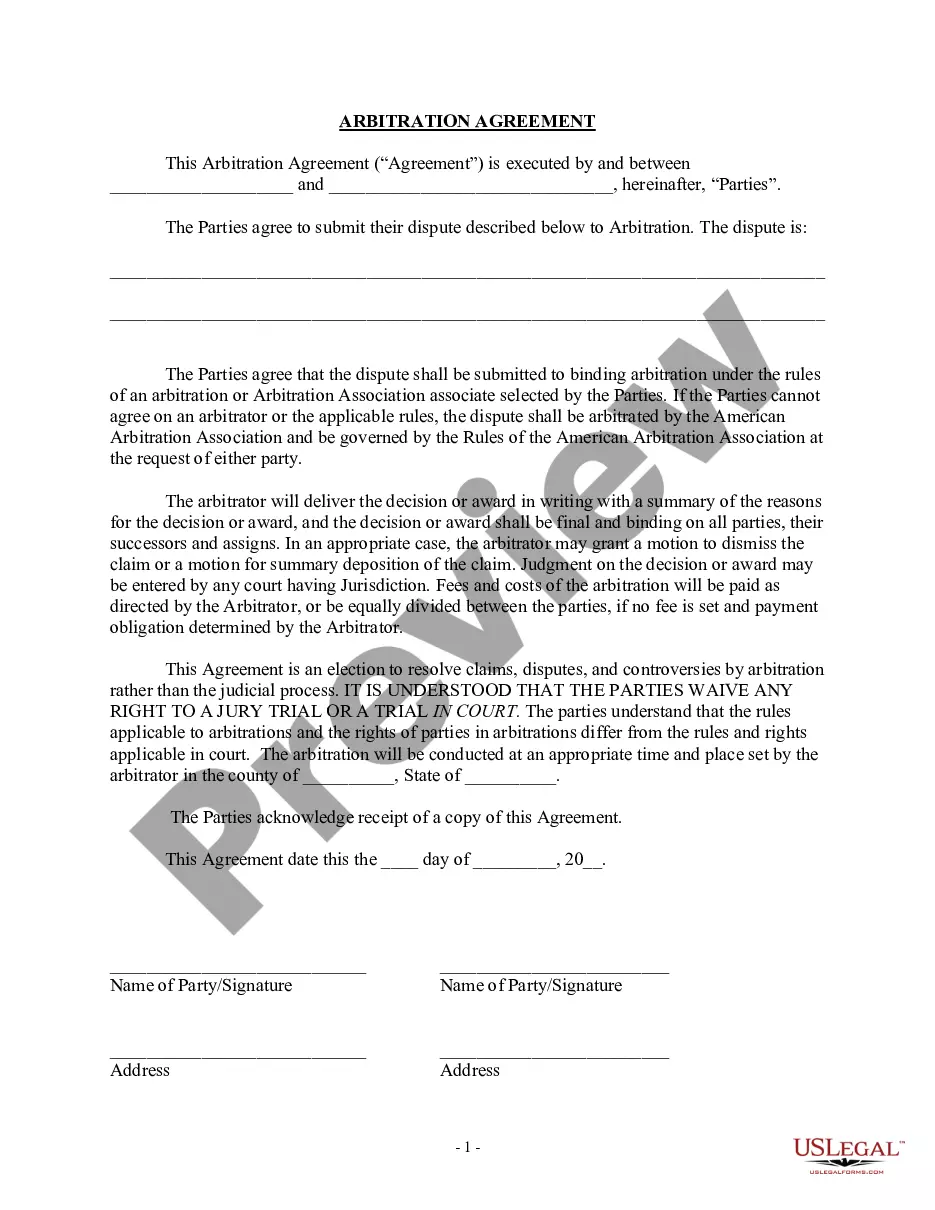
Georgia Insulation Contract for Contractor
What this document covers
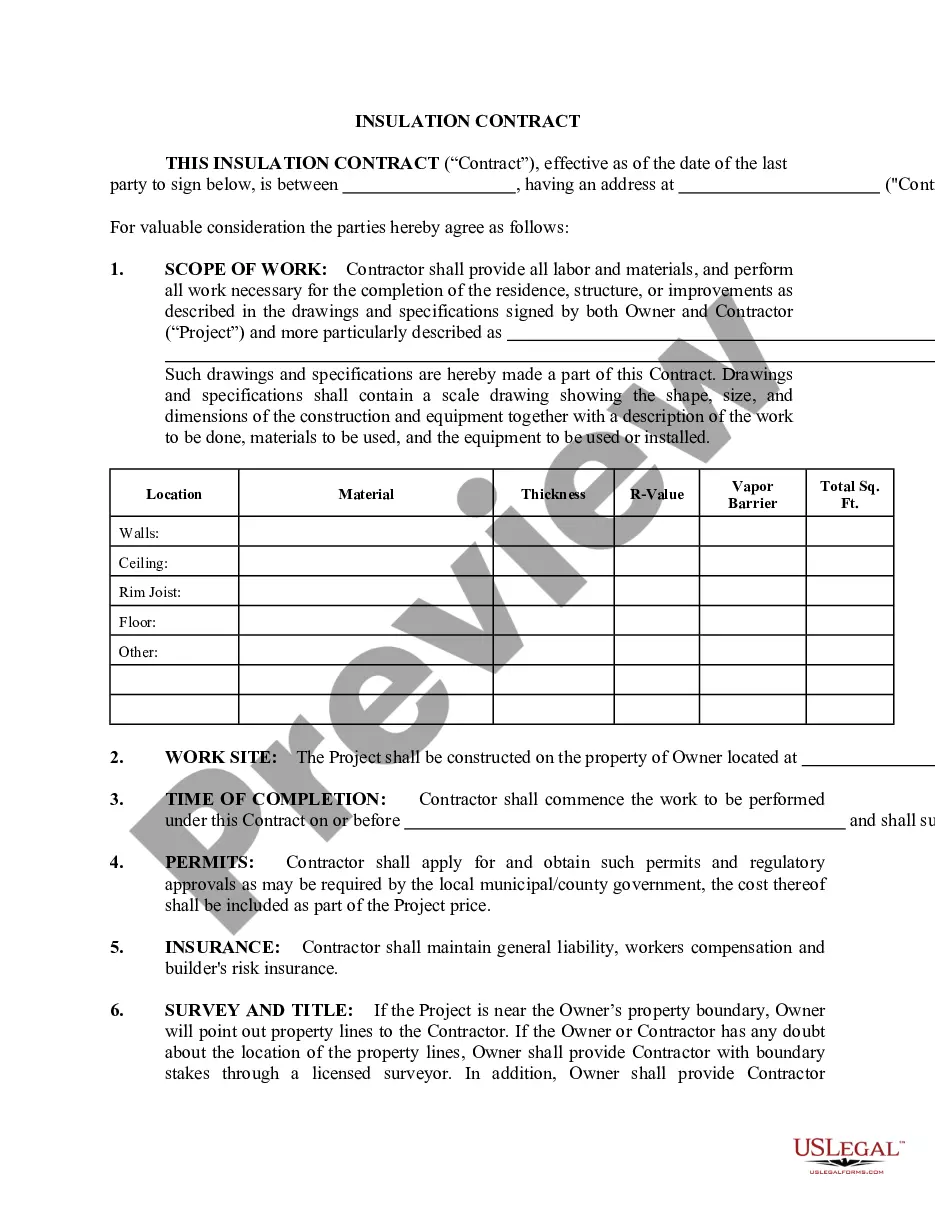
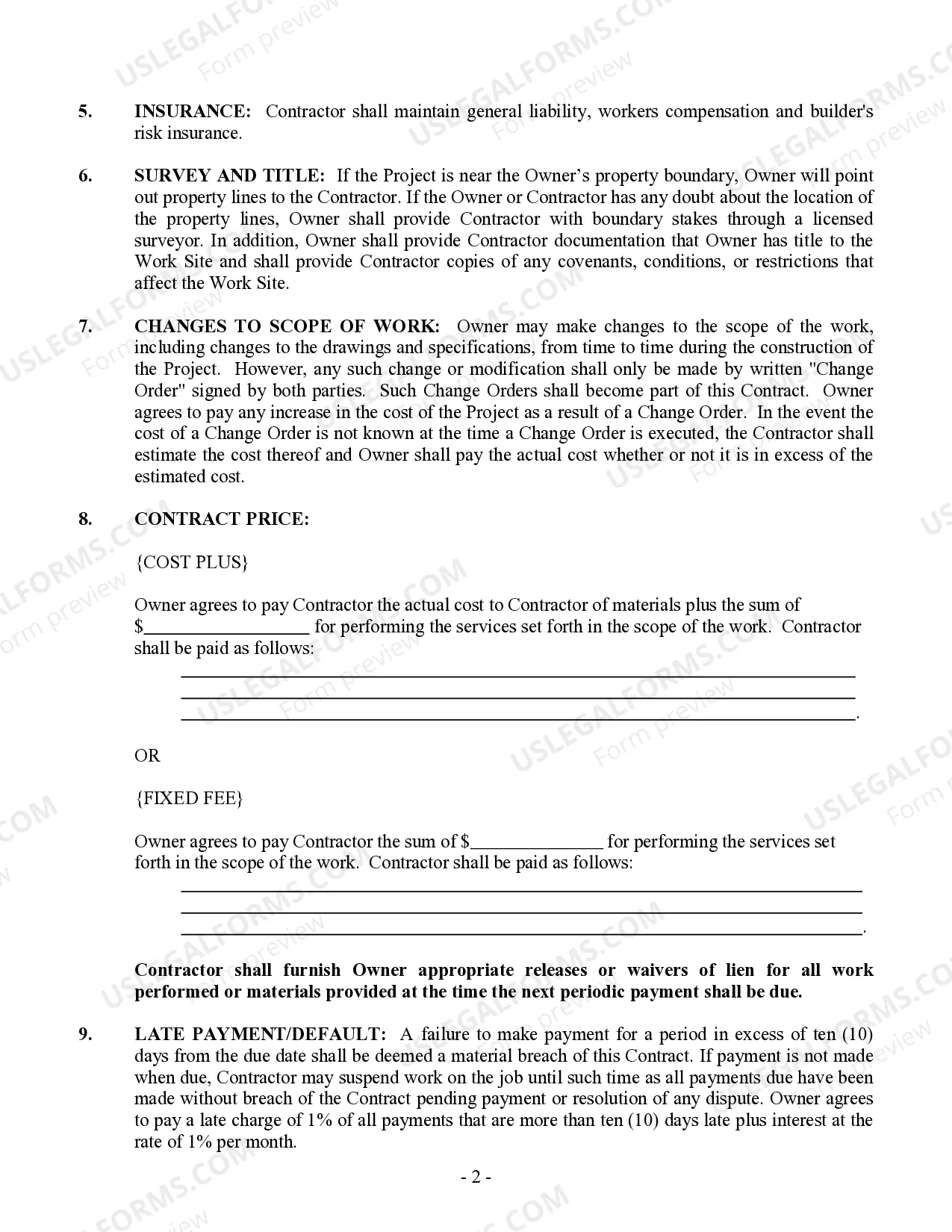
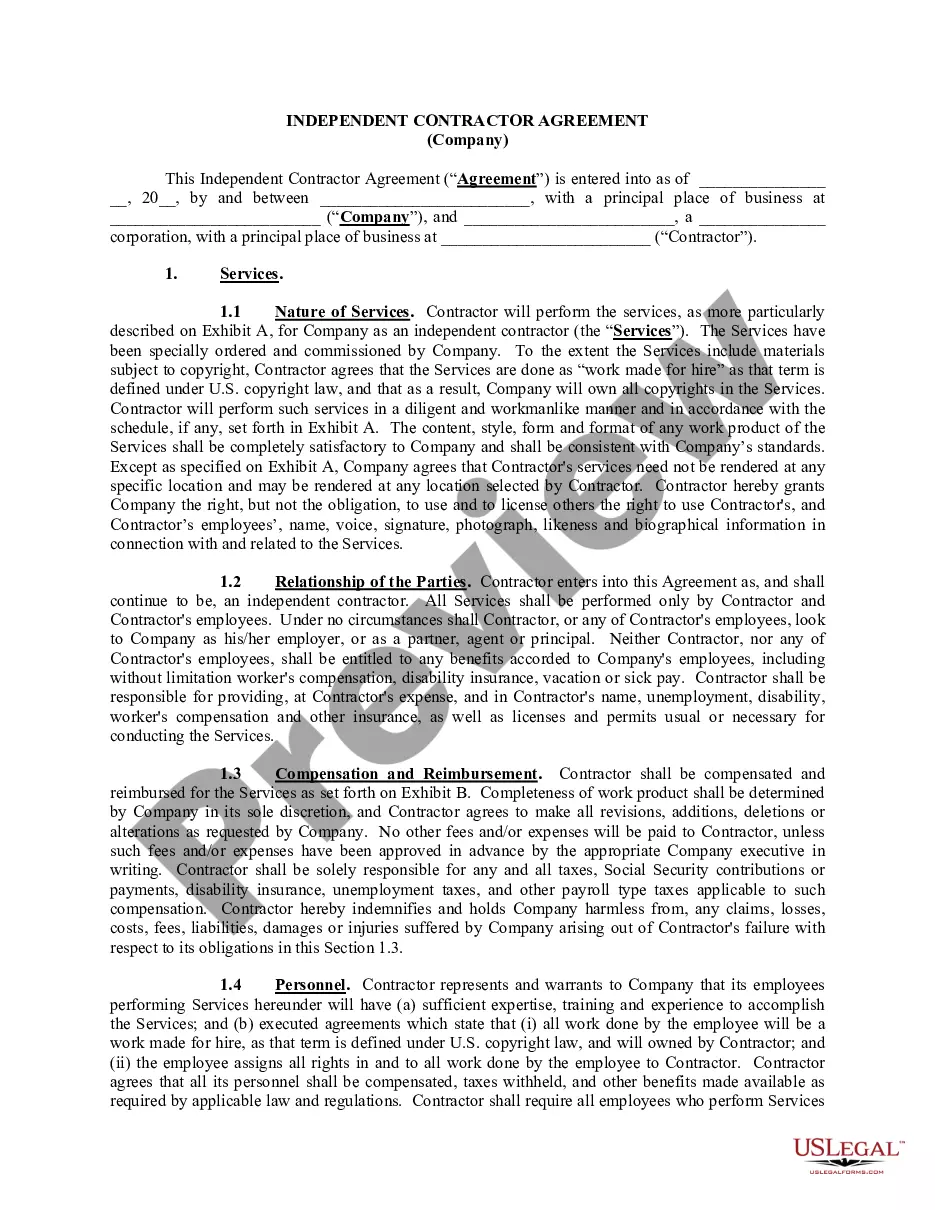
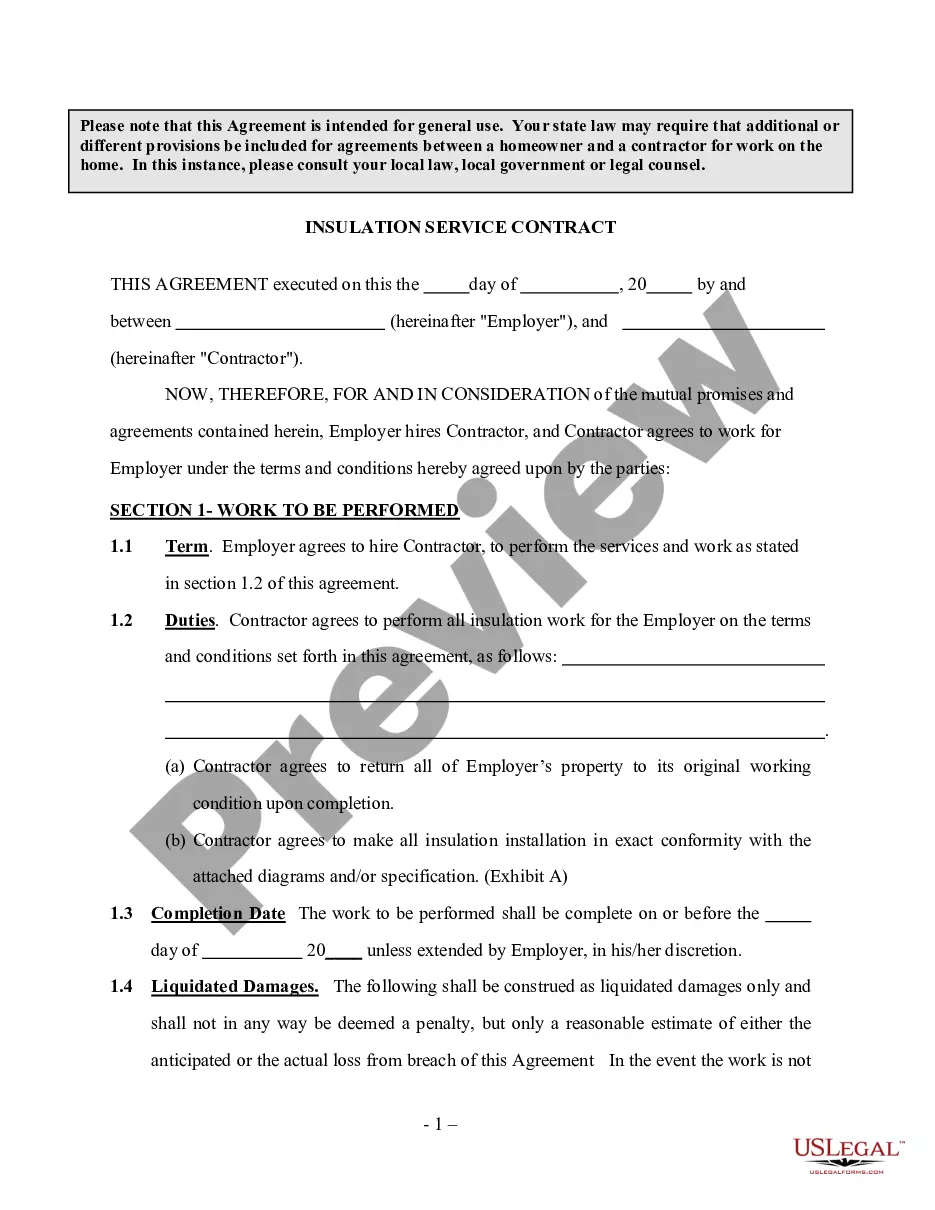
The Insulation Contract for Contractor is a legal document used to outline the agreement between insulation contractors and property owners. This contract specifically addresses the payment arrangement, either cost plus or fixed fee, and includes essential details such as change orders, permits, insurance, and warranties. By utilizing this form, both parties can ensure clarity and compliance with Georgia law, setting clear expectations for the insulation project.
What’s included in this form
- Location and specifications for the insulation project, including material and thickness.
- Details on permits and regulatory approvals required for the project.
- Insurance requirements for the contractor, including general liability and workers' compensation.
- Conditions for changes to the work scope, requiring written change orders.
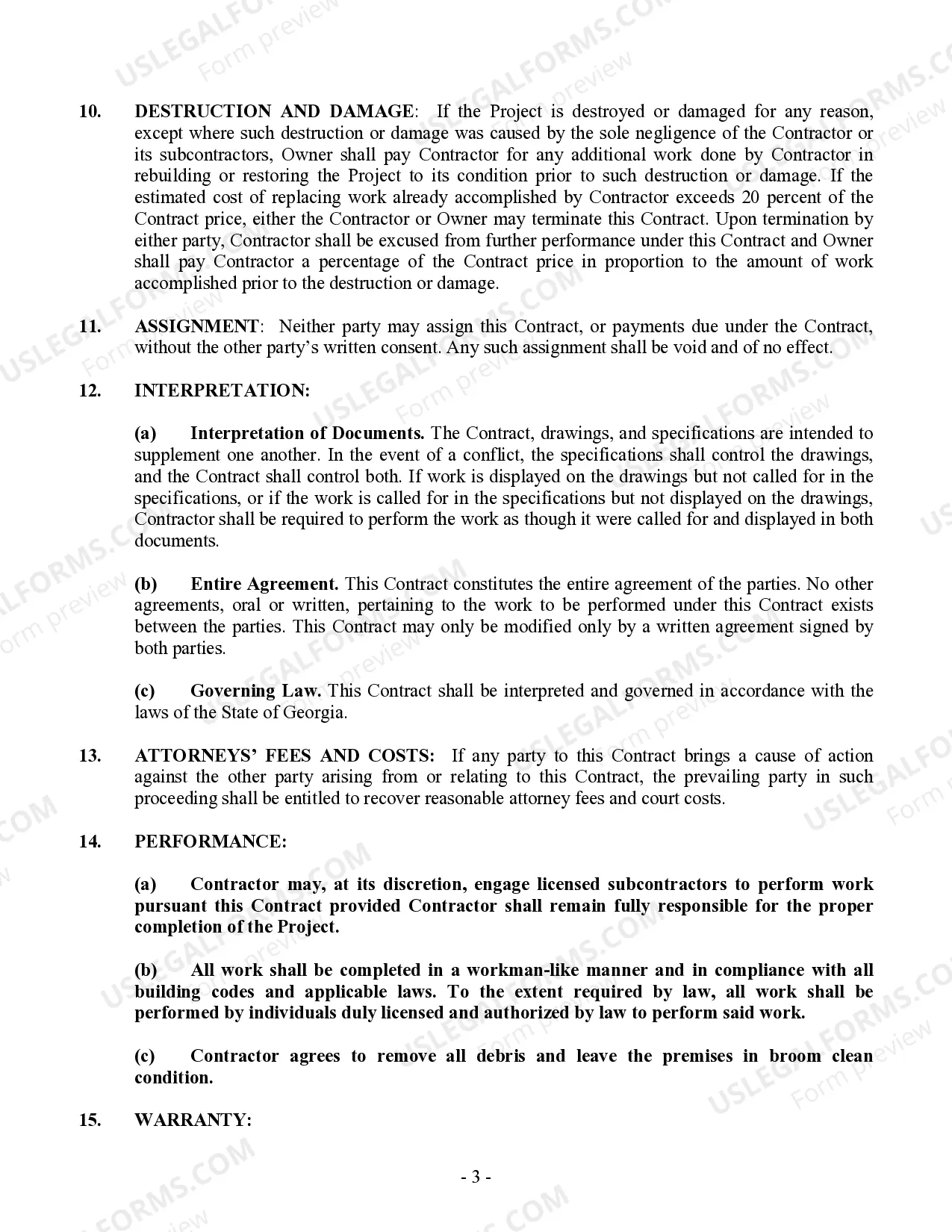
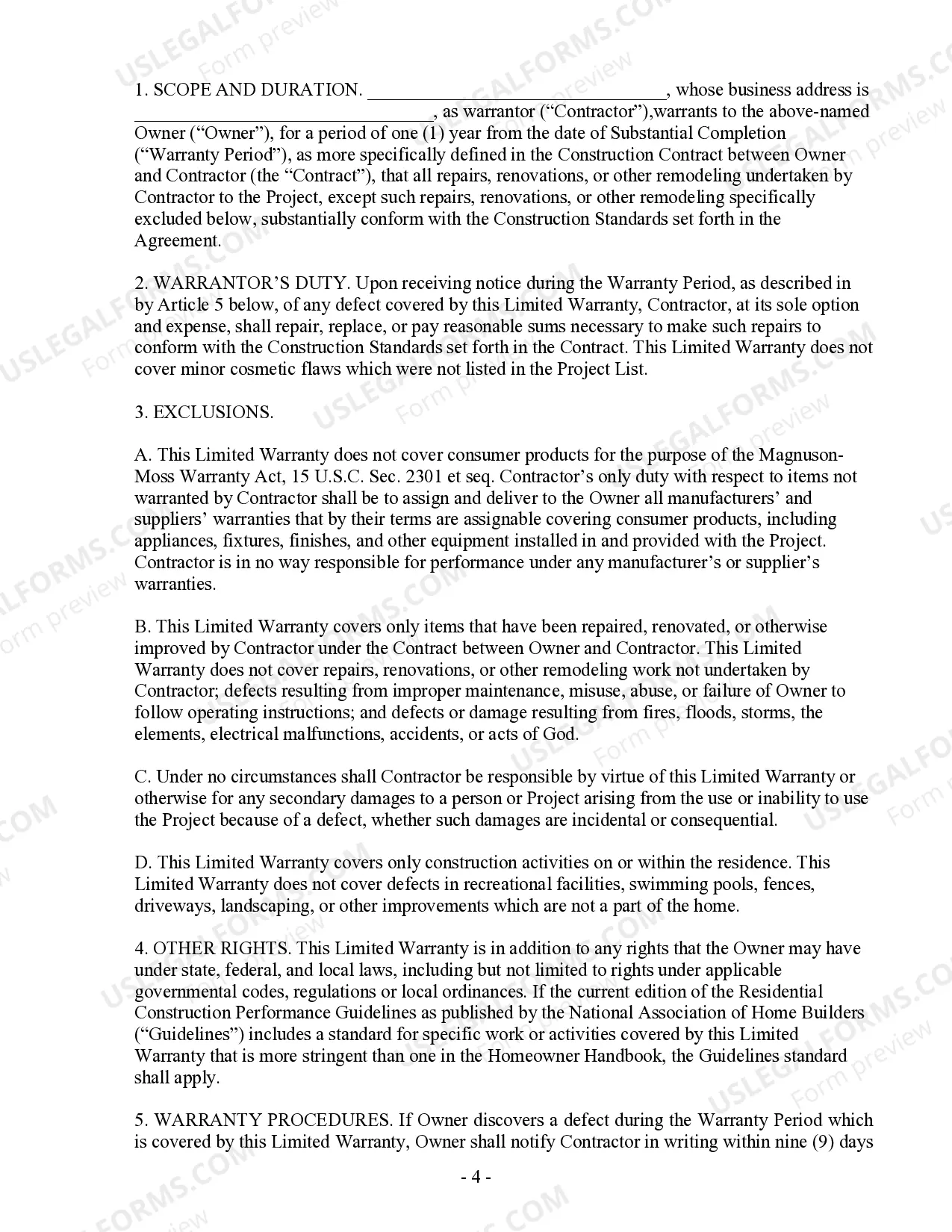
- Warranty terms covering repairs and defects for a specified period after completion.
- Clauses addressing destruction or damage to the project and the associated responsibilities.


Situations where this form applies
This insulation contract should be used whenever a property owner and an insulation contractor agree to perform insulation work on a property. It is particularly important when there is a complex scope of work, changes during the project, or if insurance and warranty terms need to be clearly defined. Use this form to establish a legally binding agreement that clarifies each party's expectations and obligations.
Who can use this document
- Property owners looking to hire an insulation contractor for specific insulation projects.
- Insulation contractors seeking to formalize their agreements with clients about insulation work.
- Individuals in Georgia requiring a legally compliant contract that addresses specific insulation project needs.
How to complete this form
- Identify the parties involved, including name and address of the property owner and contractor.
- Specify the location and details of the insulation work, including materials and thicknesses.
- Outline the agreed payment structure (cost plus or fixed fee) and any relevant timelines.
- Review and complete permits and insurance sections, ensuring compliance with local regulations.
- Ensure both parties sign and date the contract to make it legally binding.
Notarization guidance
Notarization is generally not required for this form. However, certain states or situations might demand it. You can complete notarization online through US Legal Forms, powered by Notarize, using a verified video call available anytime.
Get your form ready online
Our built-in tools help you complete, sign, share, and store your documents in one place.
Make edits, fill in missing information, and update formatting in US Legal Forms—just like you would in MS Word.
Download a copy, print it, send it by email, or mail it via USPS—whatever works best for your next step.
Sign and collect signatures with our SignNow integration. Send to multiple recipients, set reminders, and more. Go Premium to unlock E-Sign.
If this form requires notarization, complete it online through a secure video call—no need to meet a notary in person or wait for an appointment.
We protect your documents and personal data by following strict security and privacy standards.

Make edits, fill in missing information, and update formatting in US Legal Forms—just like you would in MS Word.

Download a copy, print it, send it by email, or mail it via USPS—whatever works best for your next step.

Sign and collect signatures with our SignNow integration. Send to multiple recipients, set reminders, and more. Go Premium to unlock E-Sign.

If this form requires notarization, complete it online through a secure video call—no need to meet a notary in person or wait for an appointment.

We protect your documents and personal data by following strict security and privacy standards.
Common mistakes
- Failing to specify the scope of work, leading to misunderstandings later.
- Not including proper insurance requirements, which can expose parties to liability.
- Omitting necessary signatures, making the contract unenforceable.
- Neglecting to address changes in the scope of work and associated costs.
Benefits of using this form online
- Convenience of instantly downloading and printing the form when needed.
- Editability to customize details specific to the project or parties involved.
- Reliability as the form is drafted by licensed attorneys to ensure legal compliance.
Looking for another form?
Form popularity
FAQ
In Georgia, a 1099 contractor is not strictly required to have a business license; however, obtaining one is advisable. A business license can lend credibility and legitimacy to their services. Additionally, it ensures compliance with local business regulations. When working with a 1099 contractor for insulation projects, consider using a Georgia Insulation Contract for Contractor to formalize agreements and clarify responsibilities.
Yes, you can issue a 1099 form to a contractor even if they do not have a formal business license. However, this may raise questions regarding their legitimacy and status as a contractor. It is essential to confirm the contractor's qualifications and ensure compliance with all relevant regulations within Georgia. Using a Georgia Insulation Contract for Contractor can help document the relationship and the payment terms more formally.
Yes, a general contractor can handle insulation projects, provided they have the expertise and knowledge in this field. Many general contractors take on various roles, including insulation installation. When you choose to work with a general contractor, ensure that they have experience specifically in insulation projects. Use a Georgia Insulation Contract for Contractor to ensure that the scope of work is well-defined.
Yes, in Georgia, subcontractors generally need to hold a valid license to operate legally. This requirement ensures that they comply with state regulations and quality standards. When hiring subcontractors for insulation work, verify their licensing to maintain professionalism and avoid liability. A well-drafted Georgia Insulation Contract for Contractor can help outline licensing requirements clearly.
An unlicensed handyman can handle minor repairs and maintenance tasks in Georgia, such as drywall patching or installing fixtures. However, significant work, particularly involving electrical or plumbing changes, requires proper licensing. When considering a Georgia Insulation Contract for Contractor, ensure the professional you hire meets all licensing requirements to guarantee safe and compliant work.
Hiring an unlicensed contractor in Georgia is not strictly illegal, but it carries risks. If an unlicensed contractor fails to meet obligations, you may struggle with legal recourse. Always consider using licensed professionals for Georgia Insulation Contract for Contractor projects to ensure quality and avoid legal troubles.
In Georgia, certain construction tasks do not require a license, but performing extensive work typically does. Each county may have different regulations, so it's crucial to check local laws. If you're unsure, seek guidance through resources that help with Georgia Insulation Contract for Contractor jobs, which often outline licensing requirements.
To fill out a contractor agreement, start by entering the parties' names and the project's description. Include payment details, start and completion dates, and terms for changes or cancellations. It’s a good idea to review a sample Georgia Insulation Contract for Contractor to ensure you include all necessary clauses and protect your rights.
Writing a construction contract involves a few key steps. First, clearly outline the project scope, including timelines and payment terms. Specify materials, labor expectations, and any necessary permits. Utilizing a comprehensive Georgia Insulation Contract for Contractor template can simplify this process and ensure all essential elements are covered.
In Georgia, you can perform minor repairs and maintenance without a contractor's license. These activities include tasks like painting and basic plumbing work. However, for larger projects, it's essential to have the proper licensing. Without it, you may find it challenging to secure a Georgia Insulation Contract for Contractor work.