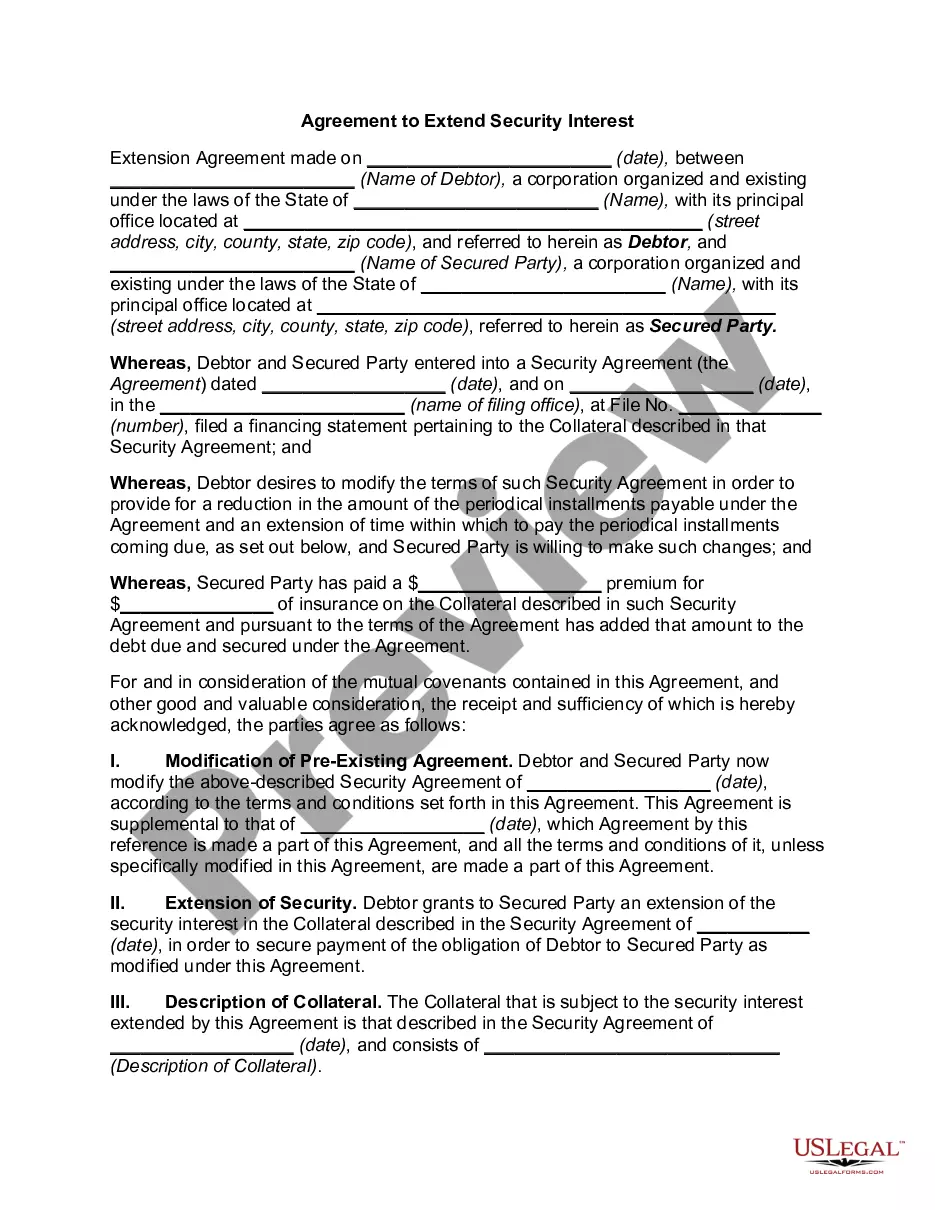
Georgia Trim Carpenter Contract for Contractor
About this form
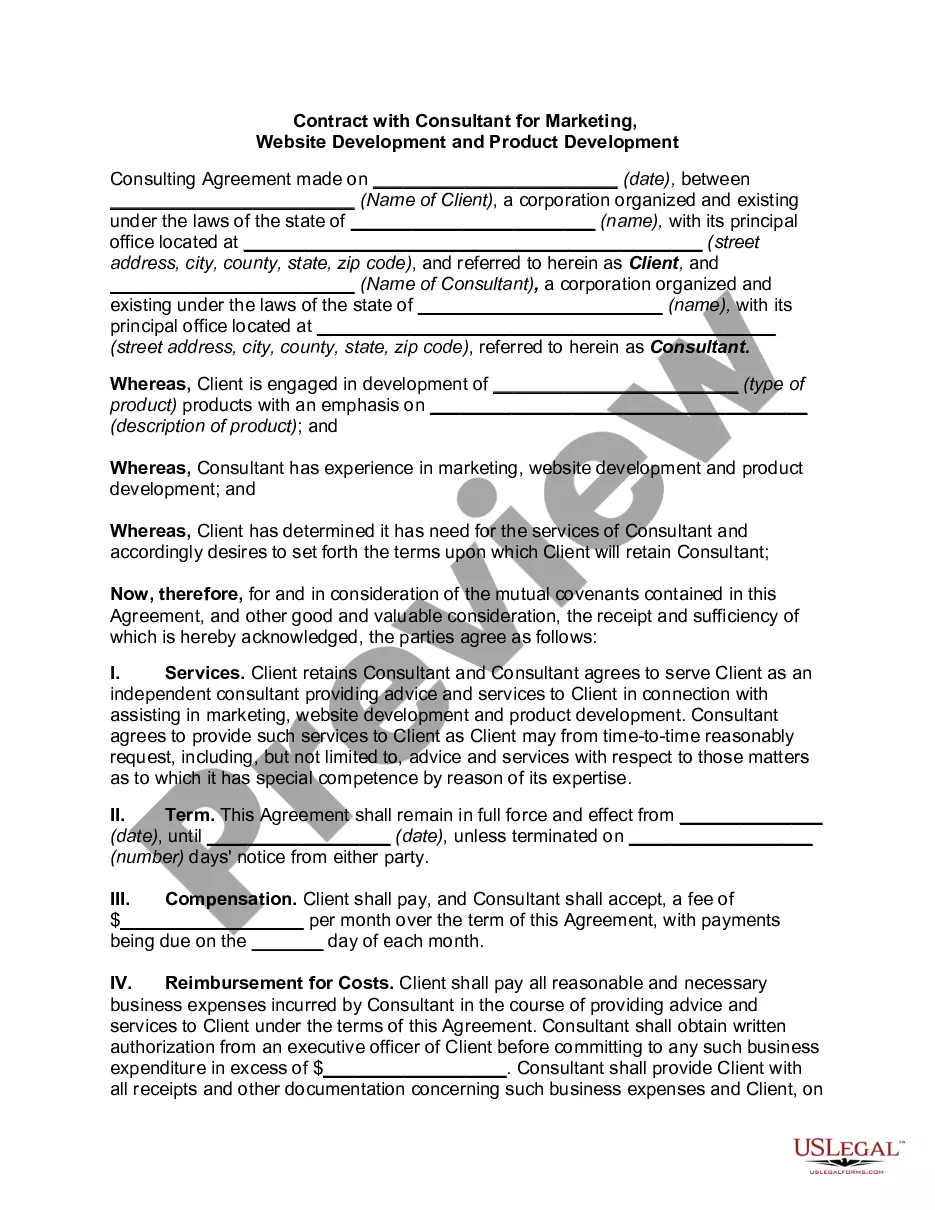
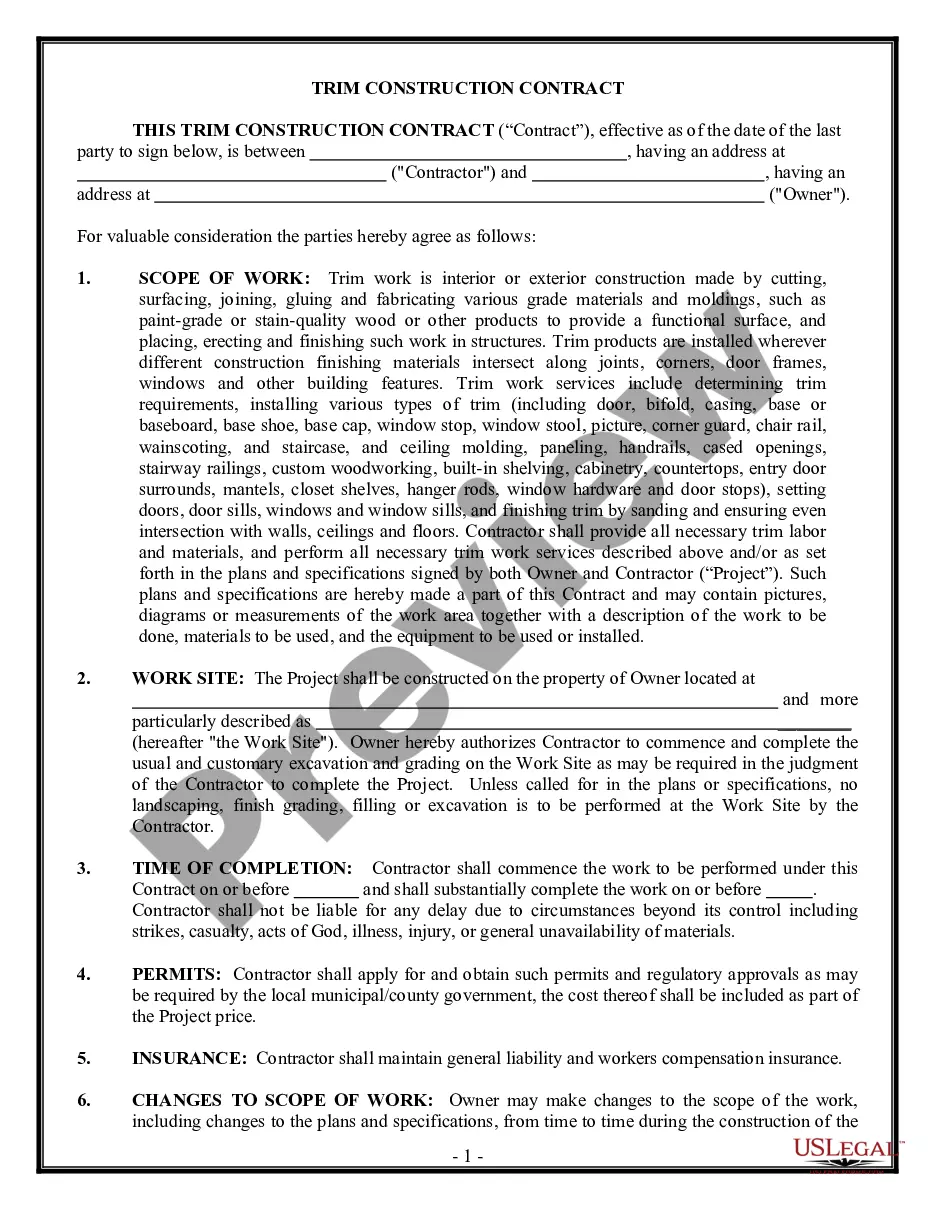
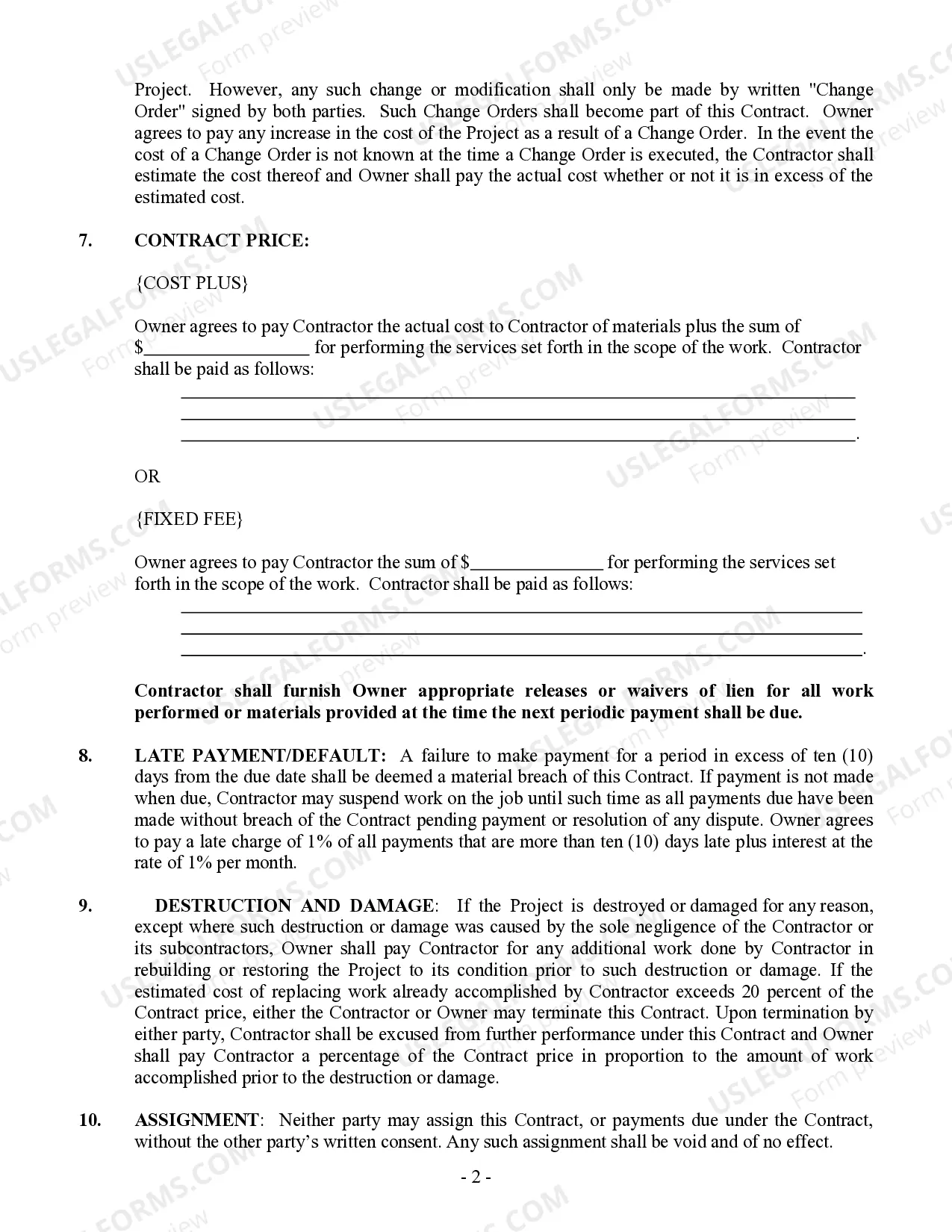
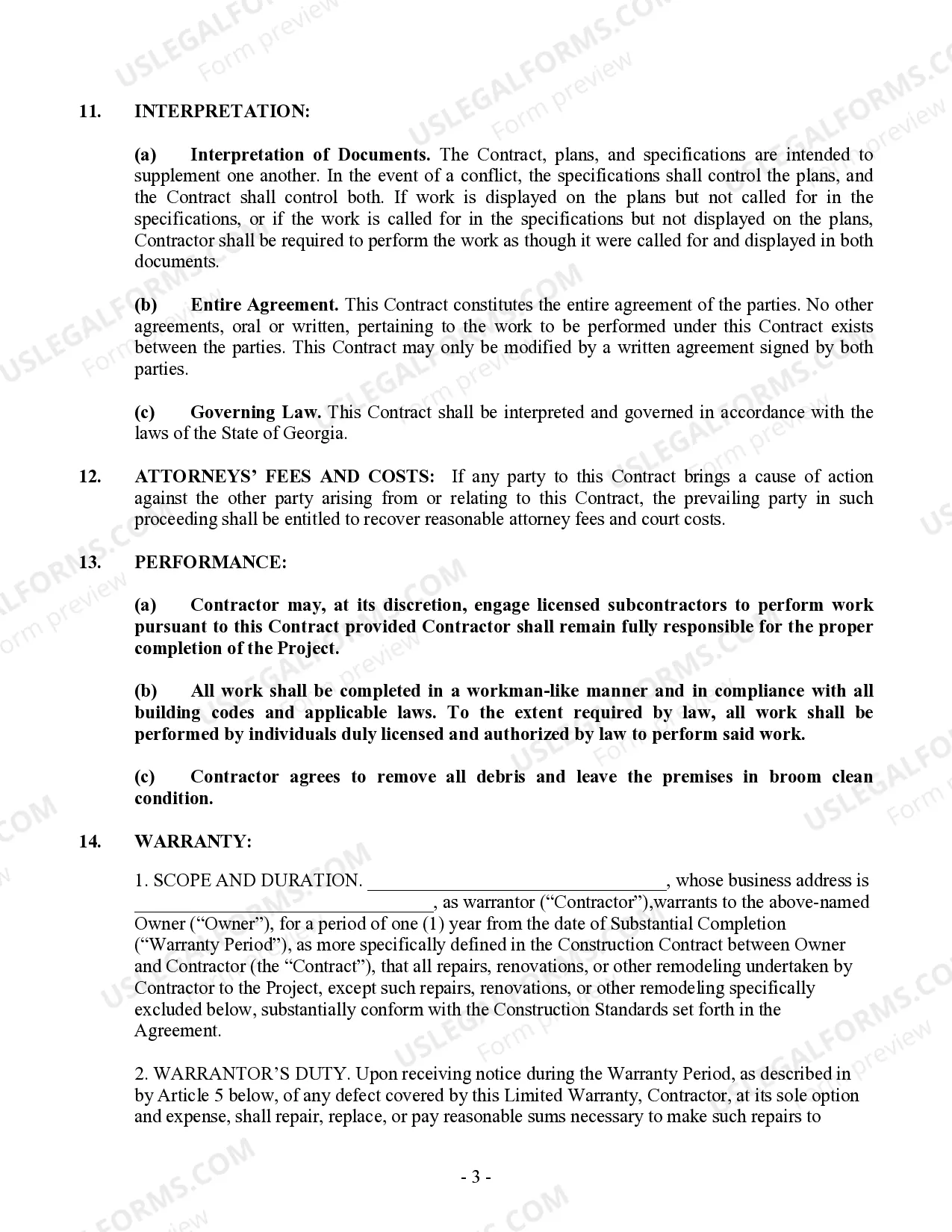
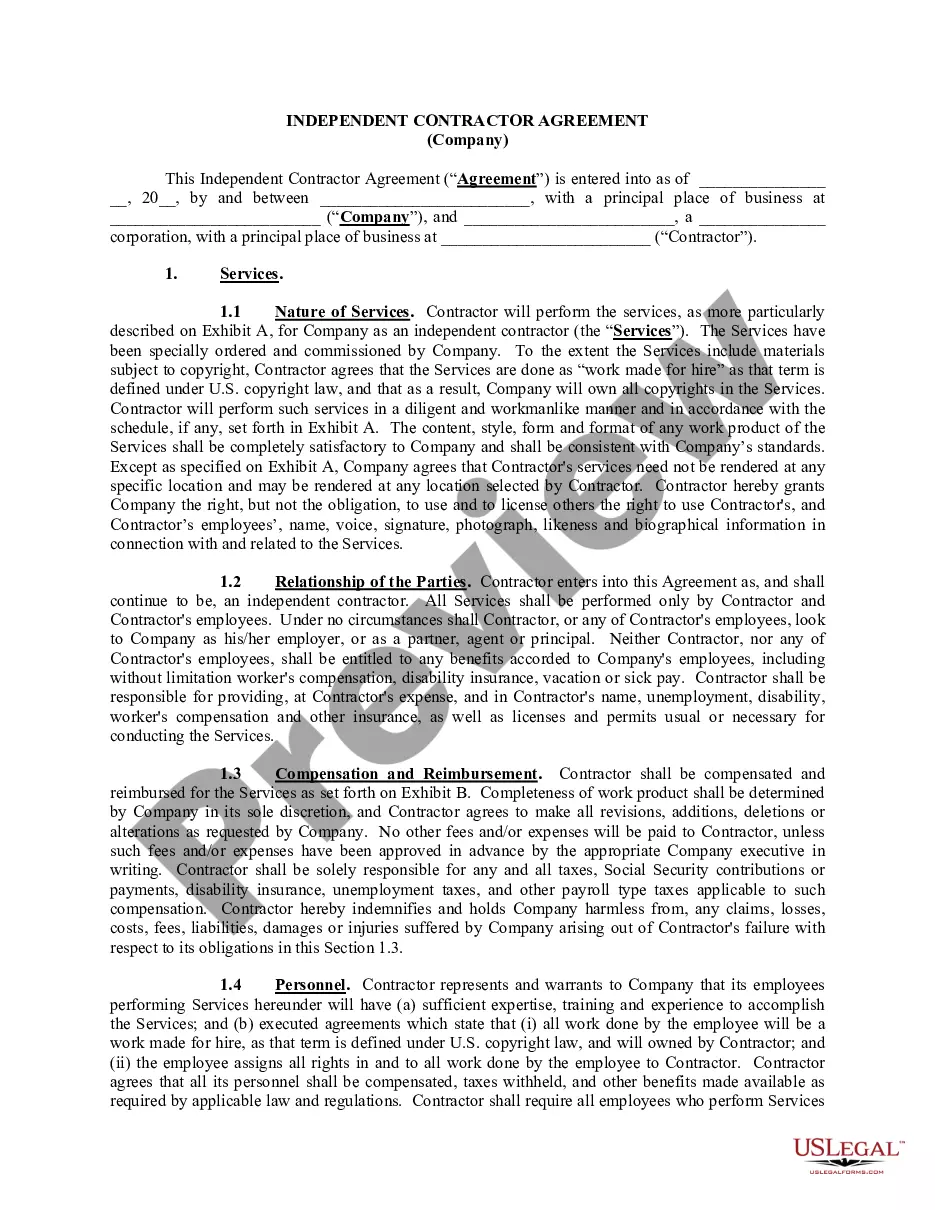
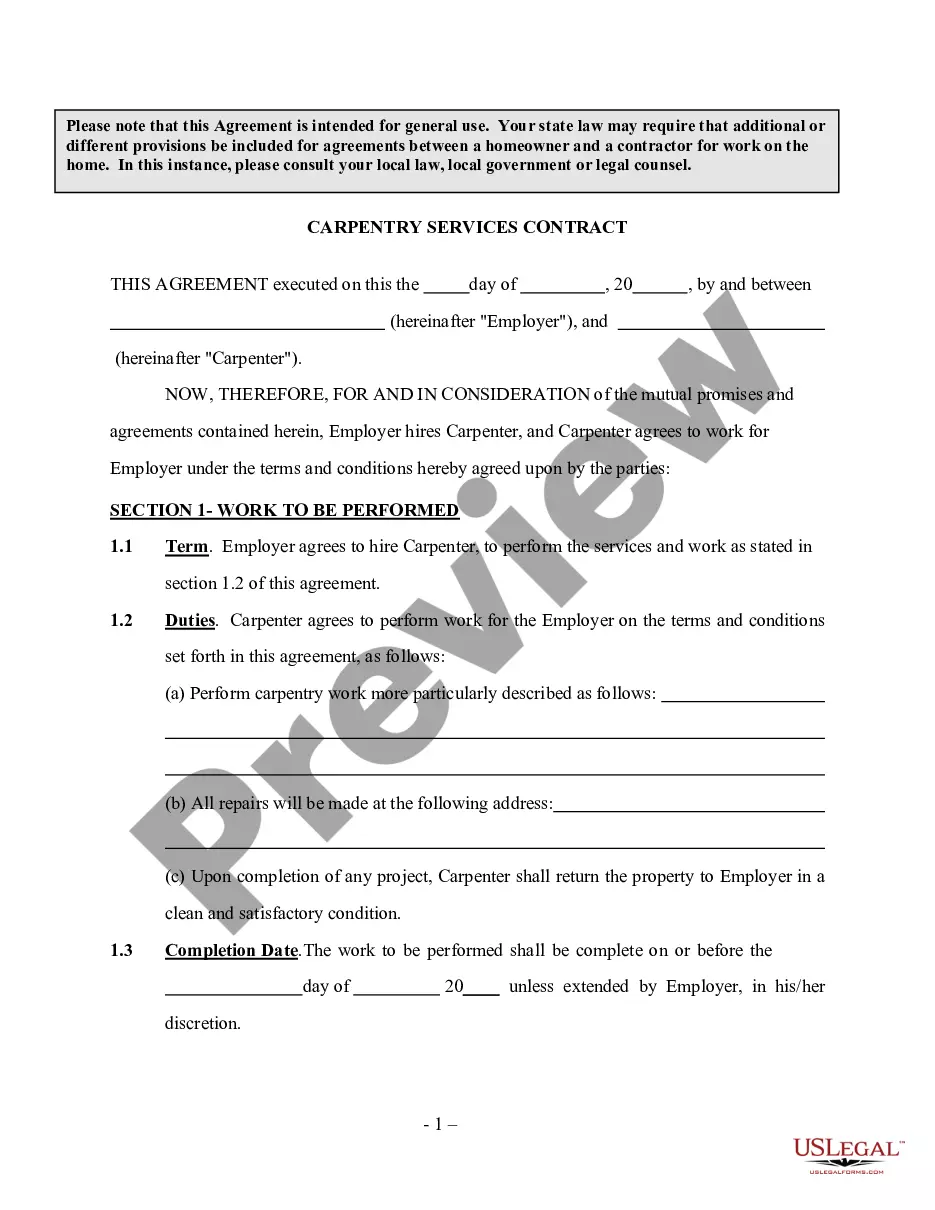
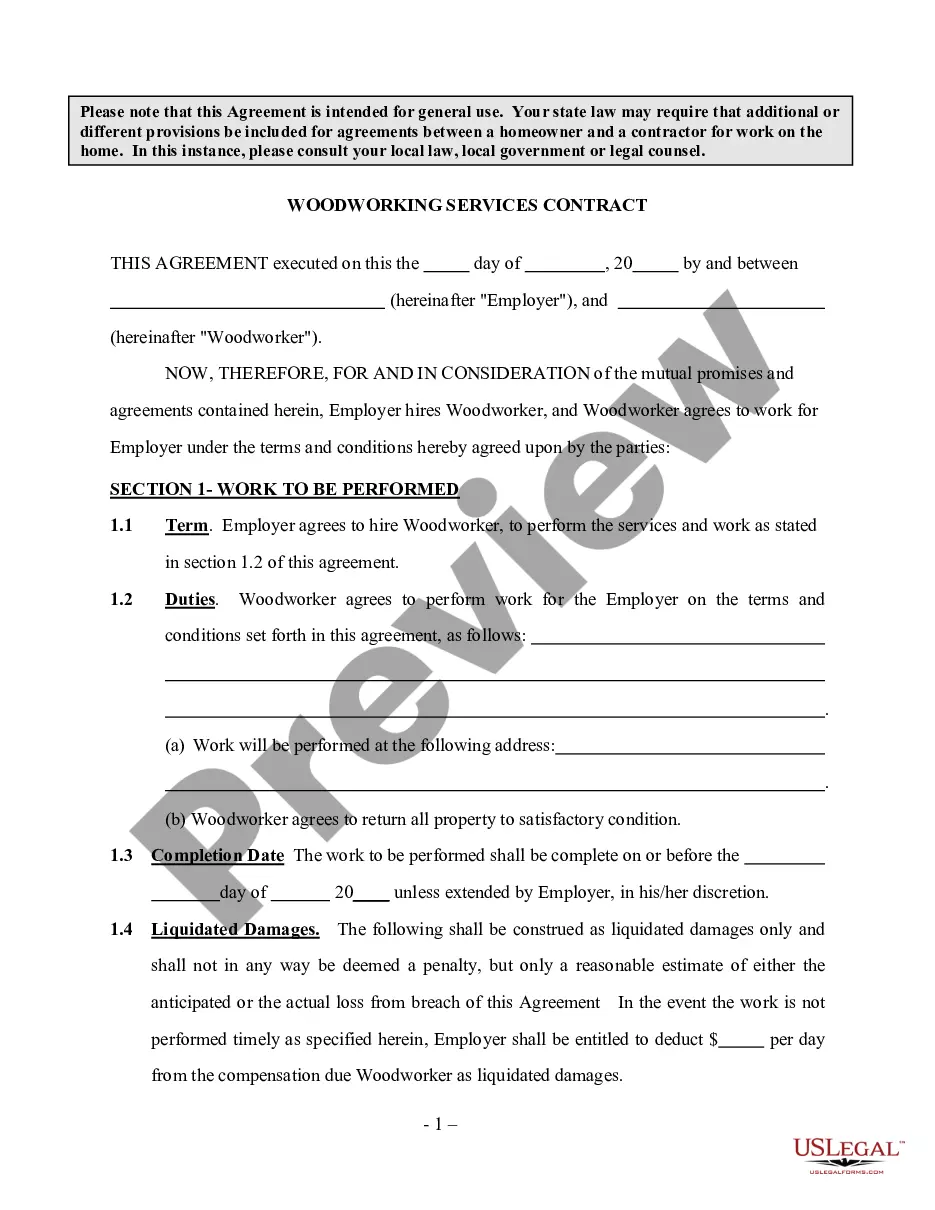
The Trim Carpenter Contract for Contractor is a legal document used to outline the relationship between a trim carpenter and a property owner. It specifies the terms under which the contractor will complete carpentry work, including payment arrangements, project details, and responsibilities regarding changes, permits, and warranties. This contract is compliant with the laws of Georgia, ensuring that both parties understand their rights and obligations. Unlike general contracts, this form is tailored specifically for trim carpentry services, making it an essential tool for both contractors and property owners in managing their project efficiently.
What’s included in this form
- Permits: Contractor is responsible for obtaining necessary permits and approvals.
- Insurance: Contractor must maintain general liability and workers compensation insurance.
- Changes to Scope of Work: Outlines the process for making changes to the project, requiring written change orders.
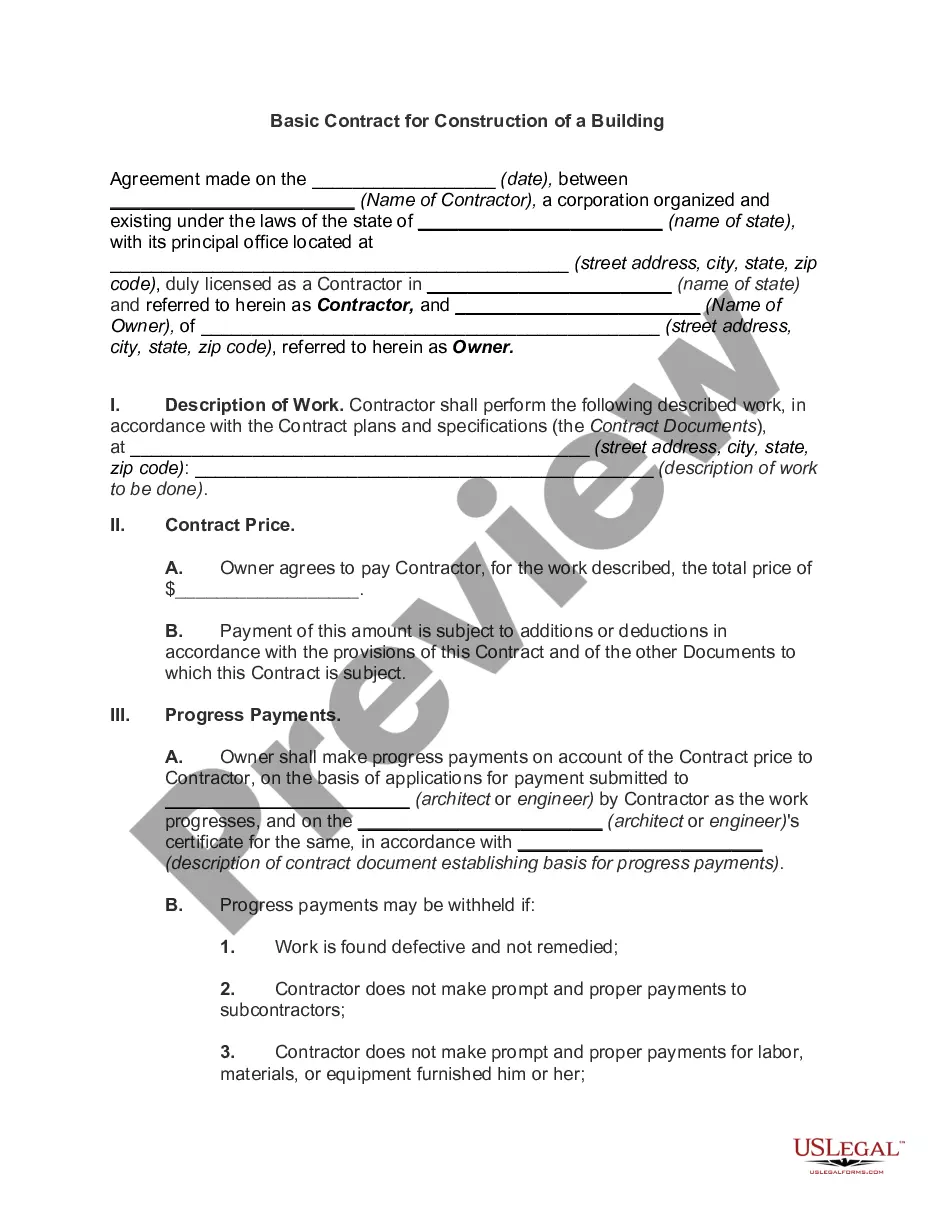
- Contract Price: Details on the total price and payment terms for the project.
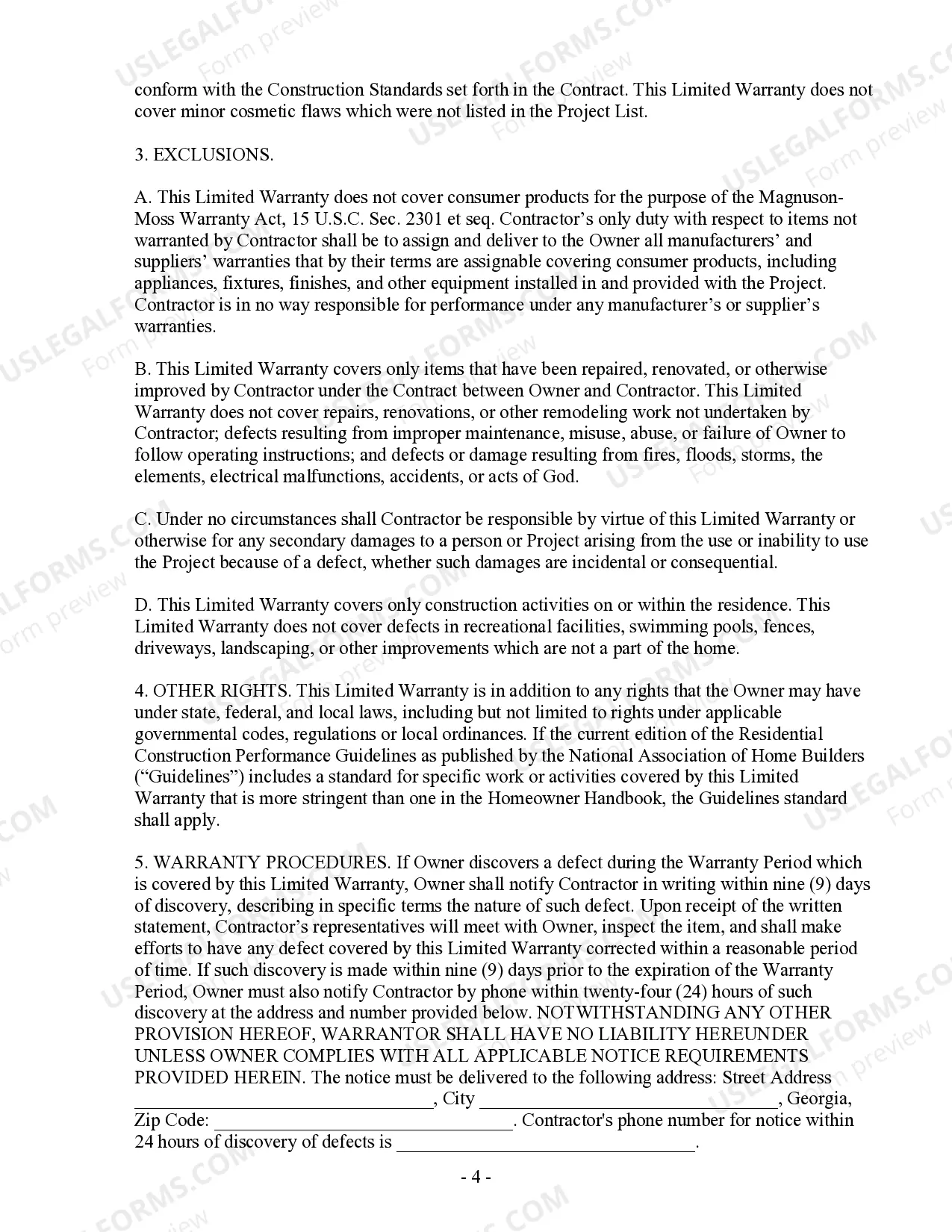
- Warranty: Specifies a one-year warranty period for work completed, along with procedures for addressing defects.
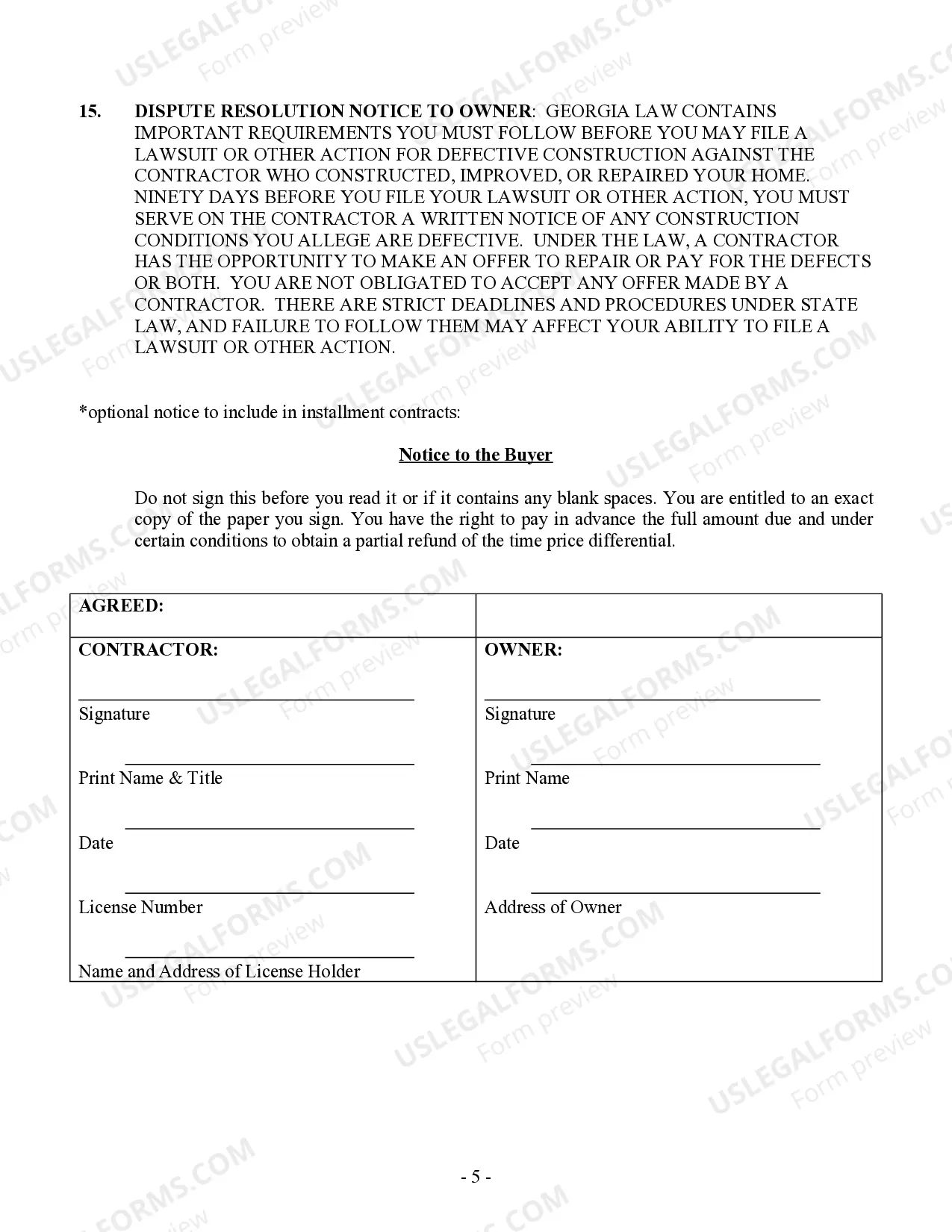
- Dispute Resolution: Requirements for notifying the contractor of defects before legal actions can be taken.
When this form is needed
This form should be used when a property owner wants to hire a trim carpenter for specific carpentry services, such as installing trim, moldings, or custom woodworking. It is particularly useful when there is a need for clarity in contractual obligations to avoid disputes later on. This document is also appropriate for situations where changes to the project scope are anticipated, ensuring both parties have a clear framework for any adjustments.
Who can use this document
This form is intended for:
- Trim carpenter contractors looking to establish a formal agreement with property owners.
- Property owners engaging the services of a trim carpenter for renovations or new installations.
- Any parties in Georgia that require a detailed contractual arrangement for carpentry work.
Completing this form step by step
- Identify the parties involved: Include names and addresses of both the contractor and the property owner.
- Specify the scope of work: Describe in detail the carpentry services to be provided.
- Enter payment terms: Indicate whether the payment will be a fixed fee or on a cost-plus basis.
- Outline any change orders: Ensure the form includes sections for detailing changes during the project.
- Complete warranty and insurance clauses: Fill in the specifics regarding the warranty and required insurance.
- Obtain signatures: Ensure both parties sign and date the contract to make it legally binding.
Notarization guidance
This form does not typically require notarization unless specified by local law. It is crucial to verify any additional requirements that may apply in your jurisdiction.
Get your form ready online
Our built-in tools help you complete, sign, share, and store your documents in one place.
Make edits, fill in missing information, and update formatting in US Legal Forms—just like you would in MS Word.
Download a copy, print it, send it by email, or mail it via USPS—whatever works best for your next step.
Sign and collect signatures with our SignNow integration. Send to multiple recipients, set reminders, and more. Go Premium to unlock E-Sign.
If this form requires notarization, complete it online through a secure video call—no need to meet a notary in person or wait for an appointment.
We protect your documents and personal data by following strict security and privacy standards.

Make edits, fill in missing information, and update formatting in US Legal Forms—just like you would in MS Word.

Download a copy, print it, send it by email, or mail it via USPS—whatever works best for your next step.

Sign and collect signatures with our SignNow integration. Send to multiple recipients, set reminders, and more. Go Premium to unlock E-Sign.

If this form requires notarization, complete it online through a secure video call—no need to meet a notary in person or wait for an appointment.

We protect your documents and personal data by following strict security and privacy standards.
Typical mistakes to avoid
- Failing to specify details about the scope of work, leading to misunderstandings.
- Not including a clear method for change orders, which can result in conflict over project modifications.
- Omitting insurance details, increasing liability risks.
- Not obtaining all necessary signatures, making the contract unenforceable.
Benefits of completing this form online
- Convenience: Easily fill out and download the contract from anywhere at any time.
- Editability: Customize the contract to meet the specific needs of the project.
- Reliability: The form is drafted by licensed attorneys to ensure compliance with state laws.
- Time-saving: Quickly create a comprehensive contract without the need for legal consultations.
The Trim Carpenter Contract for Contractor is legally enforceable, provided all parties adhere to the terms outlined in the agreement. However, it is essential to follow the state-specific notice and dispute resolution requirements to maintain the contract's validity.
Looking for another form?
Form popularity
FAQ
The five essential elements of a construction contract include an offer, acceptance, consideration, mutual consent, and a legal purpose. Each element is crucial for the contract's enforceability. Incorporating these elements in your Georgia Trim Carpenter Contract for Contractor will ensure it stands up under scrutiny.
A contract can be poorly written if it contains ambiguous terms, lacks a clear timeline, or does not detail payment schedules. Additionally, using complicated language can confuse parties and lead to disputes. The Georgia Trim Carpenter Contract for Contractor addresses these issues by presenting clear, straightforward language.
When writing construction contracts, avoid vague language, incomplete terms, and lack of timelines. Ensure all necessary details are explicit to prevent misinterpretations. A well-drafted Georgia Trim Carpenter Contract for Contractor can help you avoid these pitfalls by providing clear terms.
To fill out a contractor agreement, begin by entering the parties' names, the project location, and the specific tasks to be completed. Next, specify payment methods and deadlines. This process is simplified with the Georgia Trim Carpenter Contract for Contractor, which helps outline what to include in your contract.
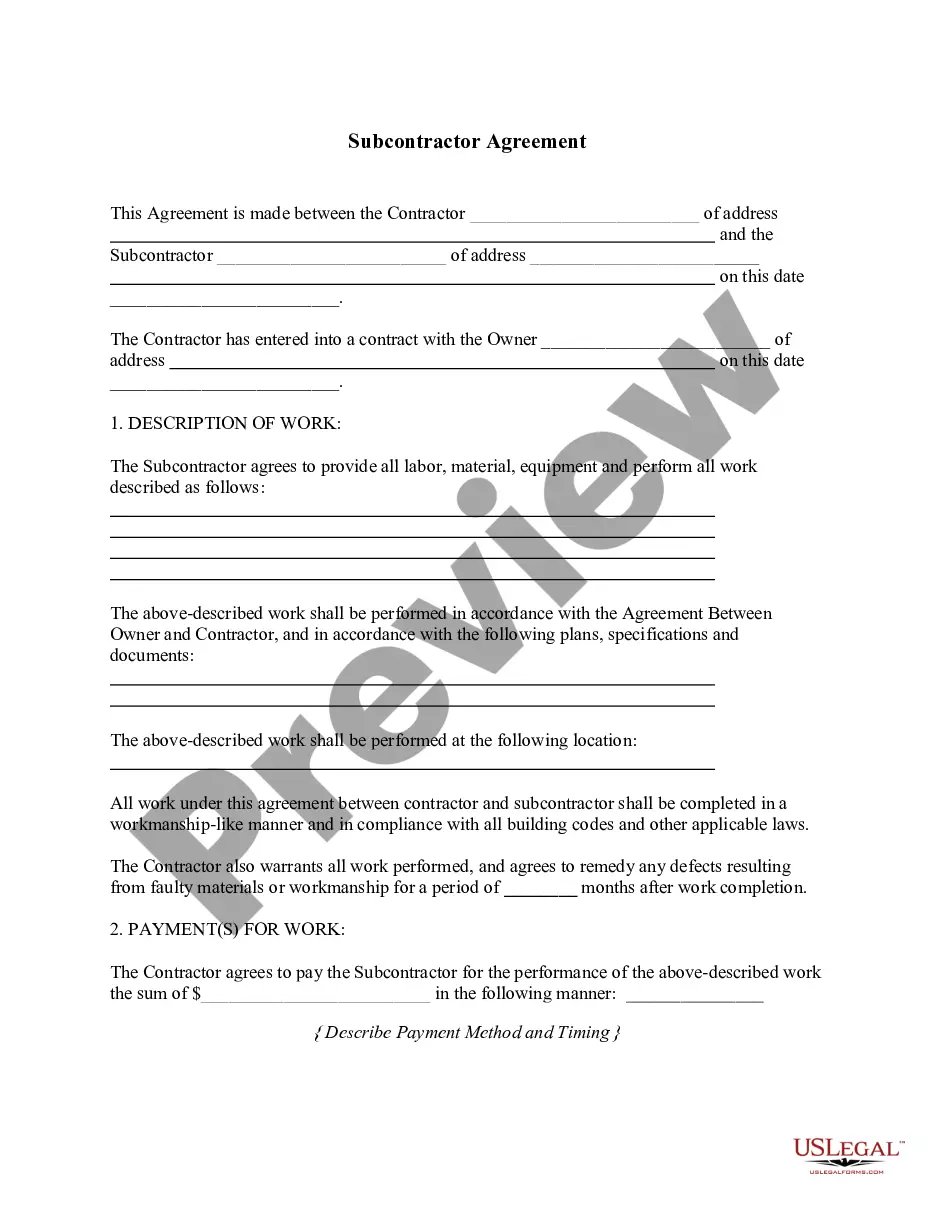
When writing a subcontract agreement, include essential details like the scope of work, payment terms, and deadlines. Be clear about responsibilities, and ensure all parties agree to the terms. Utilizing a standard template for a Georgia Trim Carpenter Contract for Contractor can streamline this process and ensure all vital elements are included.
A construction contract can become invalid for several reasons, such as lack of consideration, incapacity of parties, or if the purpose is illegal. Additionally, if essential details, like scope or timeline, are missing, it may not hold up. It’s crucial to ensure that your Georgia Trim Carpenter Contract for Contractor contains all necessary elements to avoid invalidation.
In many construction contracts, parties often overlook the 'Dispute Resolution' clause. This section outlines the process for resolving disagreements, which can prevent costly delays later. By including this clause in your Georgia Trim Carpenter Contract for Contractor, you establish a clear pathway for mediation or arbitration.
Contractors often acquire contracts through bidding processes, referrals, and networking. Increasing visibility by joining local trade organizations or platforms like US Legal Forms can also help. Implementing a solid Georgia Trim Carpenter Contract for Contractor enhances your professionalism and might attract more clients.
Government contracts that require a smaller scope of work, like maintenance or small renovation projects, may be easier to obtain. Additionally, many local governments in Georgia facilitate opportunities specifically for contractors like you. Utilizing a Georgia Trim Carpenter Contract for Contractor can strengthen your proposal when bidding on these contracts.
During discussions, avoid disclosing your entire budget or making promises you can't keep. Instead, focus on clarity regarding your needs and expectations for the Georgia Trim Carpenter Contract for Contractor. Honest communication builds trust and better understanding between you and the contractor.