Florida Last Will and Testament for Widow or Widower with Minor Children
What this document covers
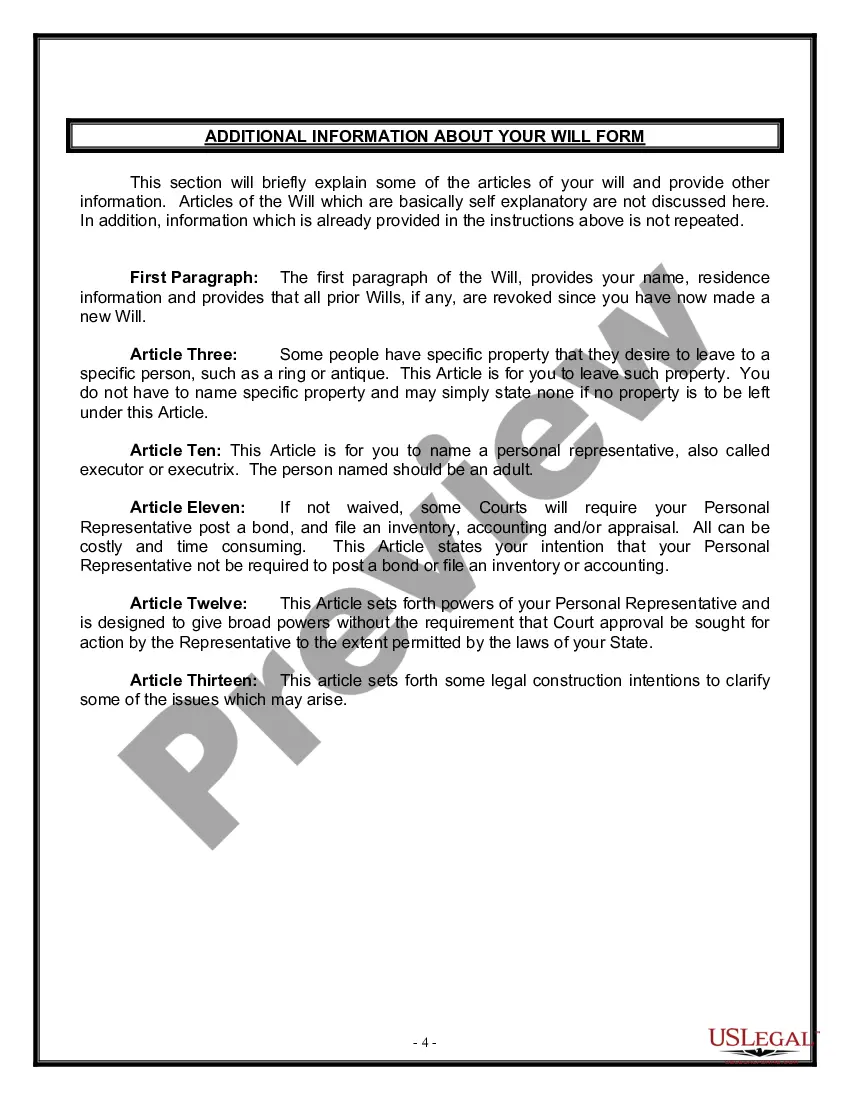
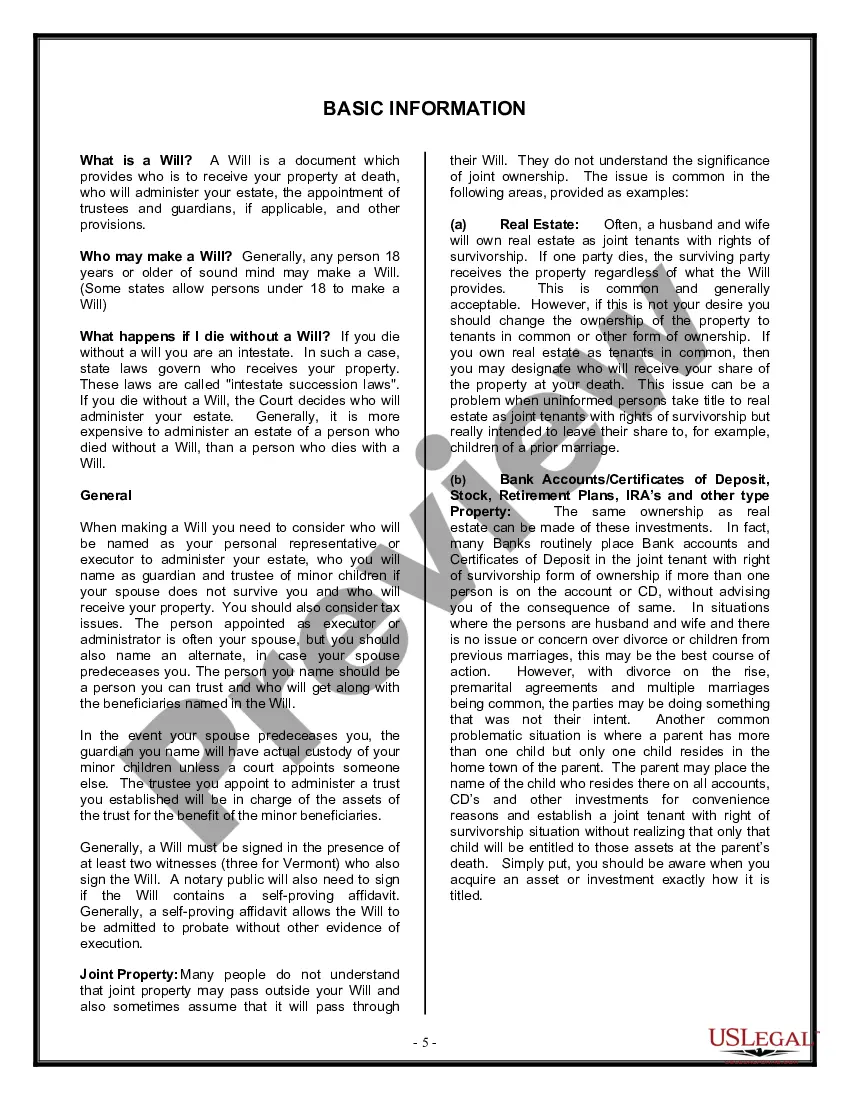
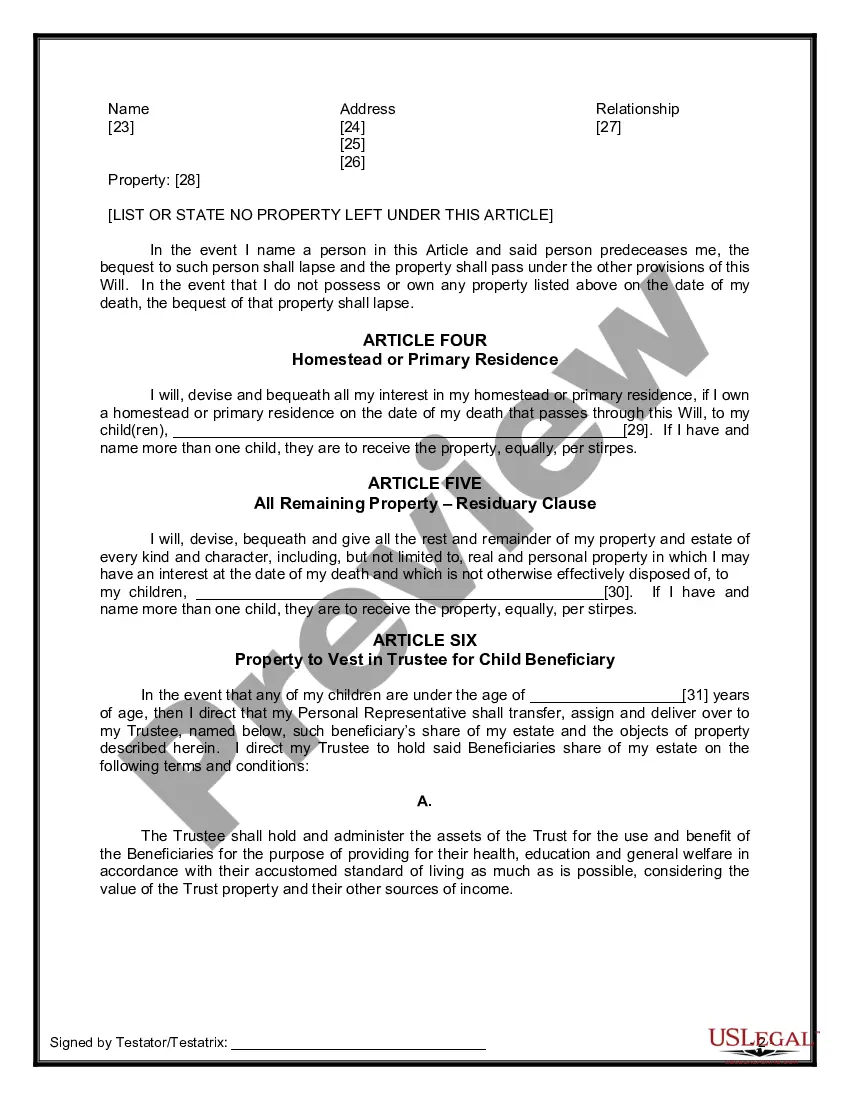
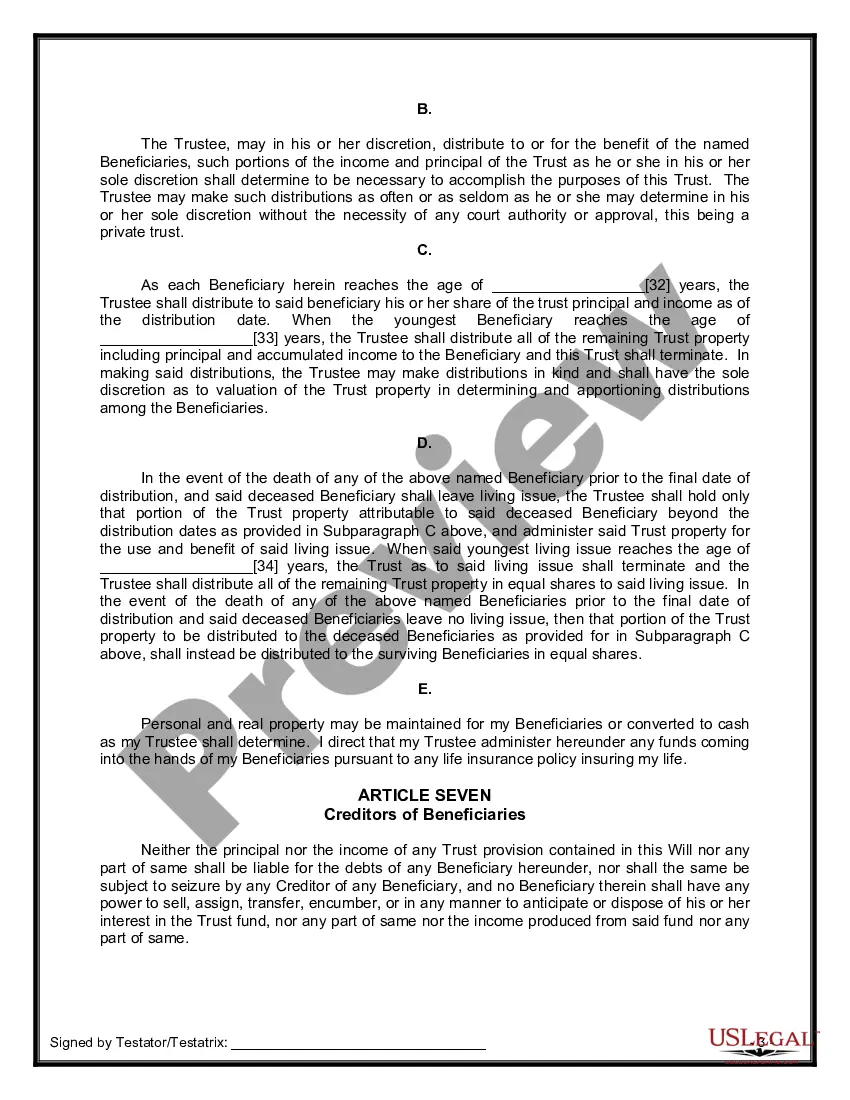
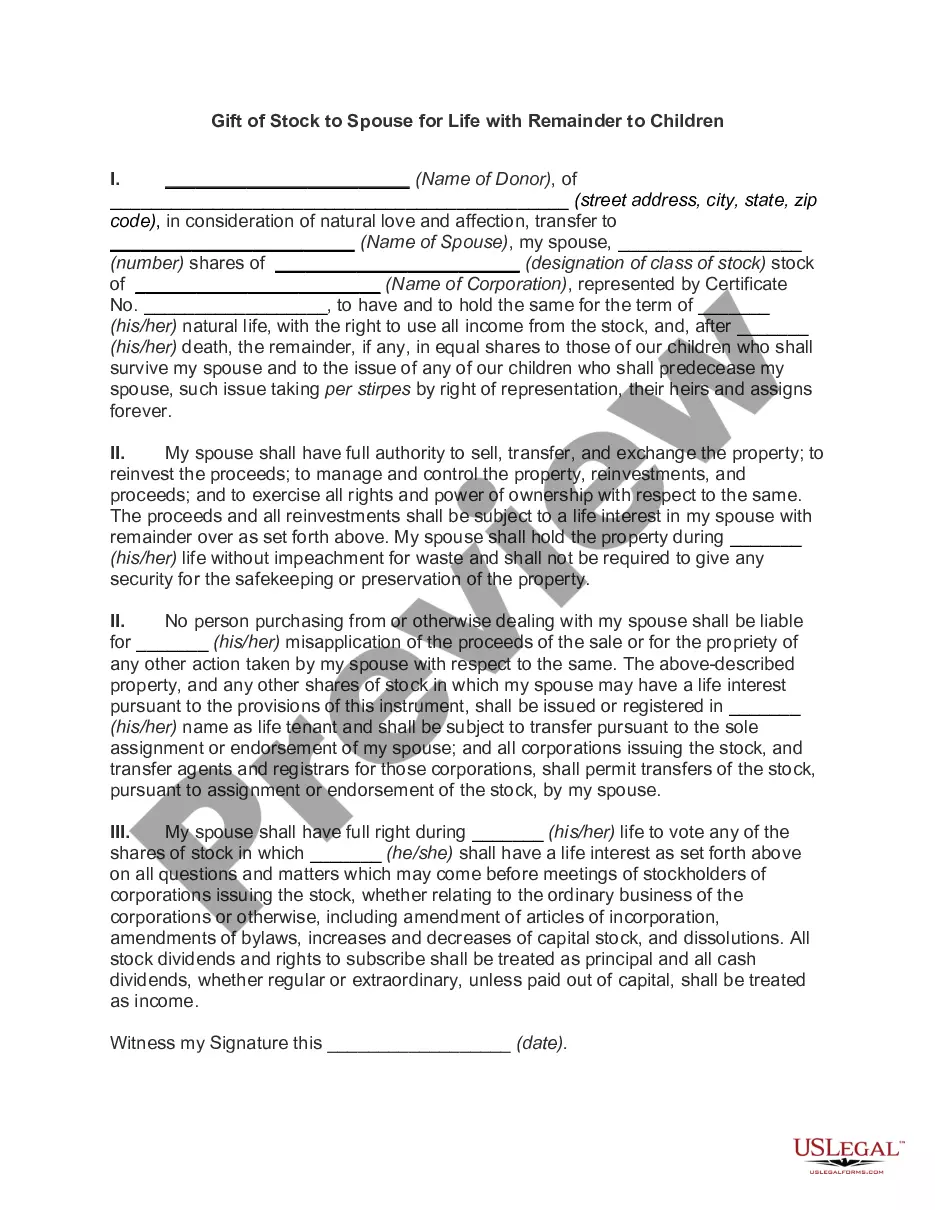
The Last Will and Testament for Widow or Widower with Minor Children is a legal document designed to specify how a deceased person's estate will be distributed after their death. This form is particularly tailored for individuals who are widows or widowers and have minor children, ensuring their assets are allocated appropriately and care for their children is addressed. It includes provisions for appointing a personal representative, determining beneficiaries, and setting up a trust for minor children.
What’s included in this form
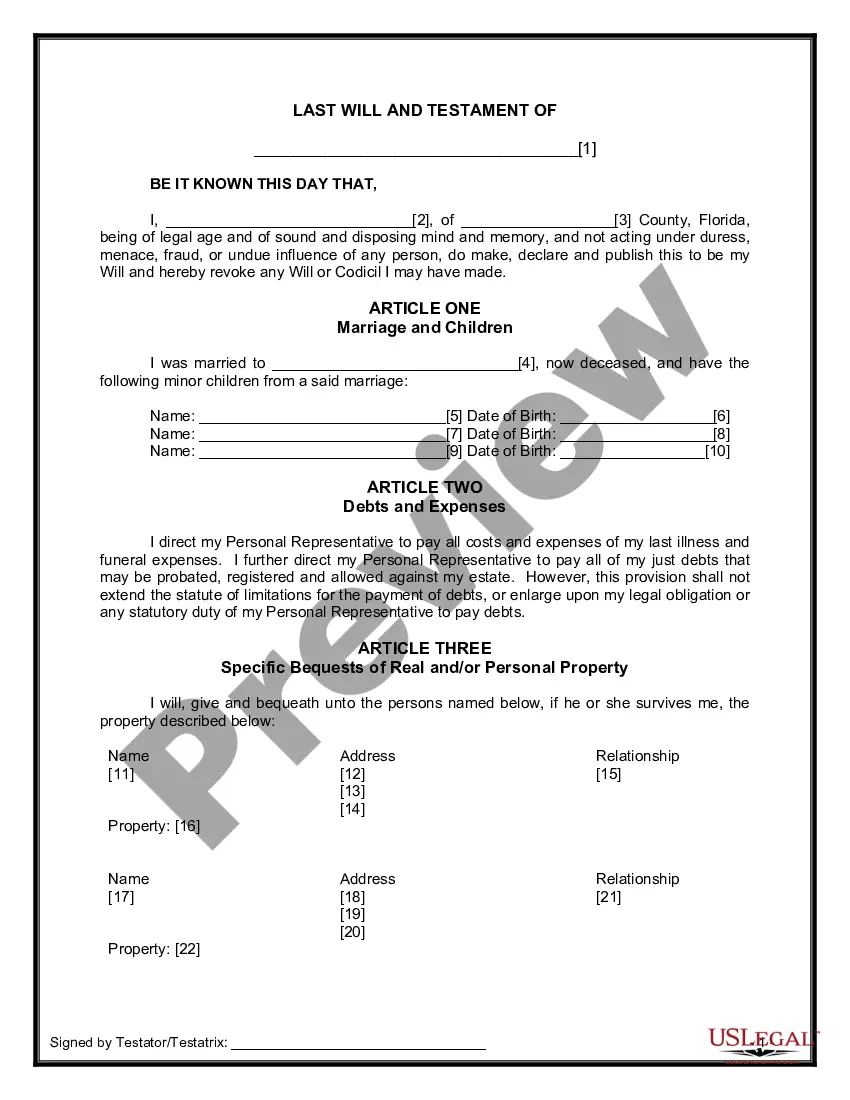
- Identification of the testator, including marital status and children.
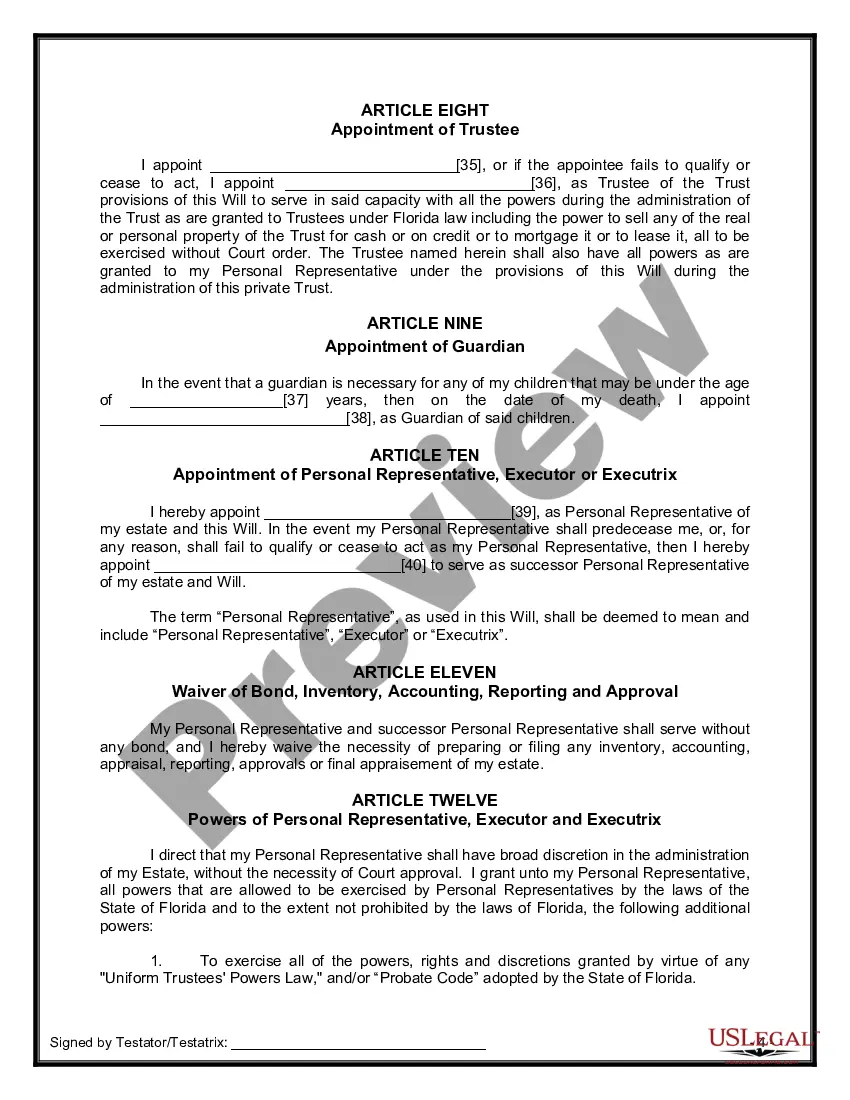
- Appointment of a personal representative to manage the estate.
- Specific bequests outlining property distribution among beneficiaries.
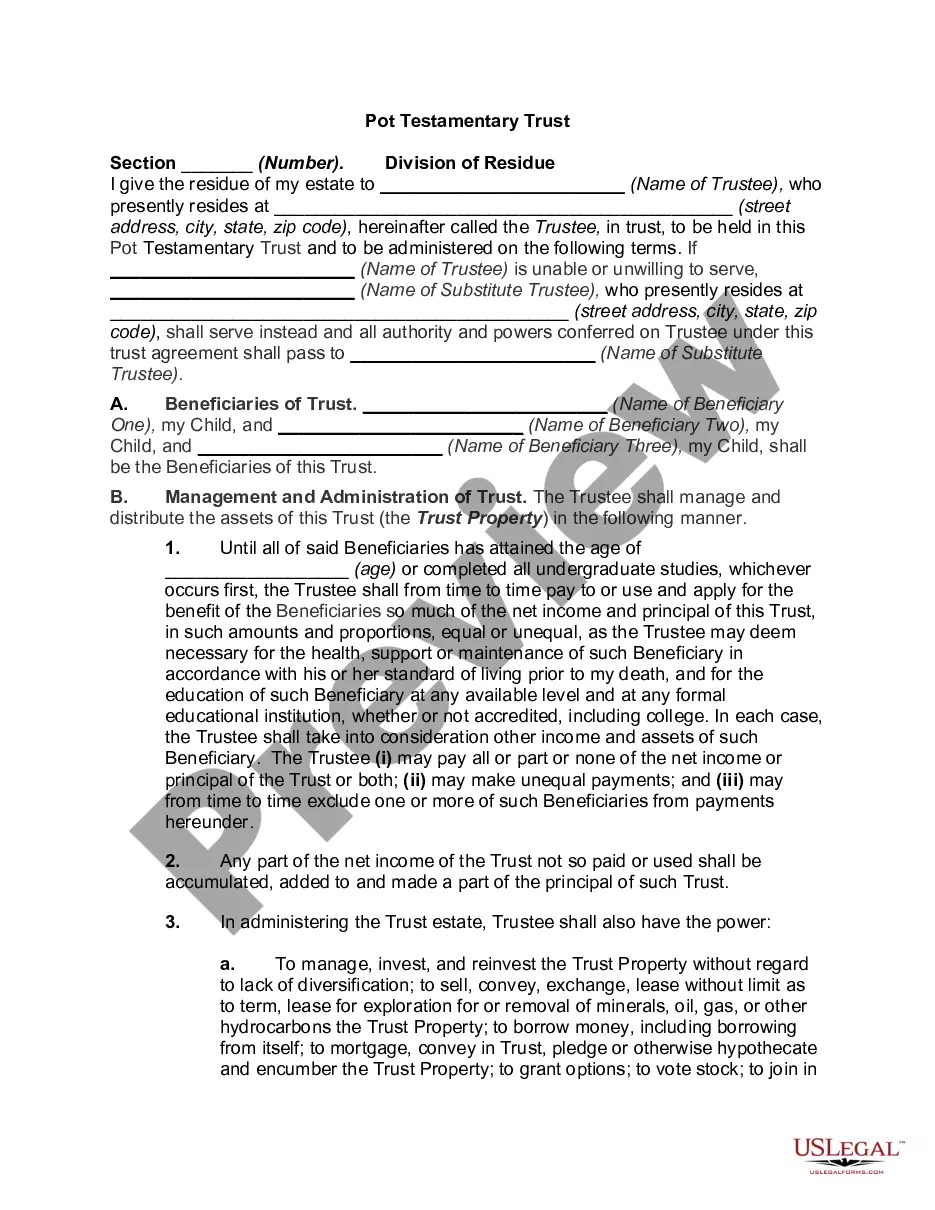
- Establishment of a trust for assets designated for minor children.
- Provisions for debt repayment from the estate.
- Appointment of a guardian for minor children if necessary.



When this form is needed
This form should be used when a widow or widower with minor children wishes to create a legally binding document that outlines their wishes regarding asset distribution upon their death. It is essential in scenarios involving remarriage, complexities in child custody, or when there are specific wishes for property to be held in trust for the children until they reach adulthood.
Who should use this form
- Widows or widowers who have minor children.
- Individuals looking to ensure their assets are managed and distributed according to their wishes.
- Parents who want to designate a guardian for their children in the event of their passing.
- Those who have specific bequests or intentions for their estate.
Instructions for completing this form
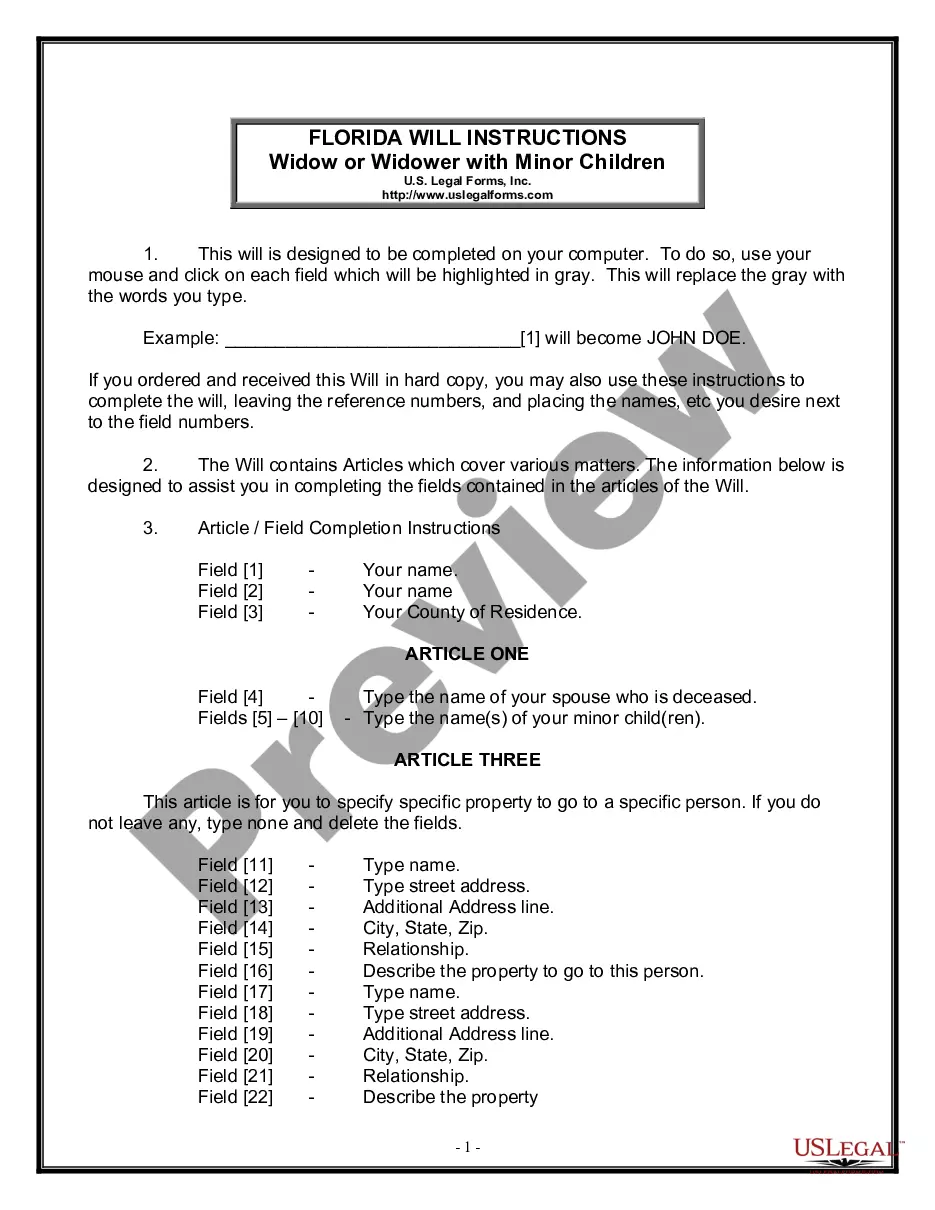
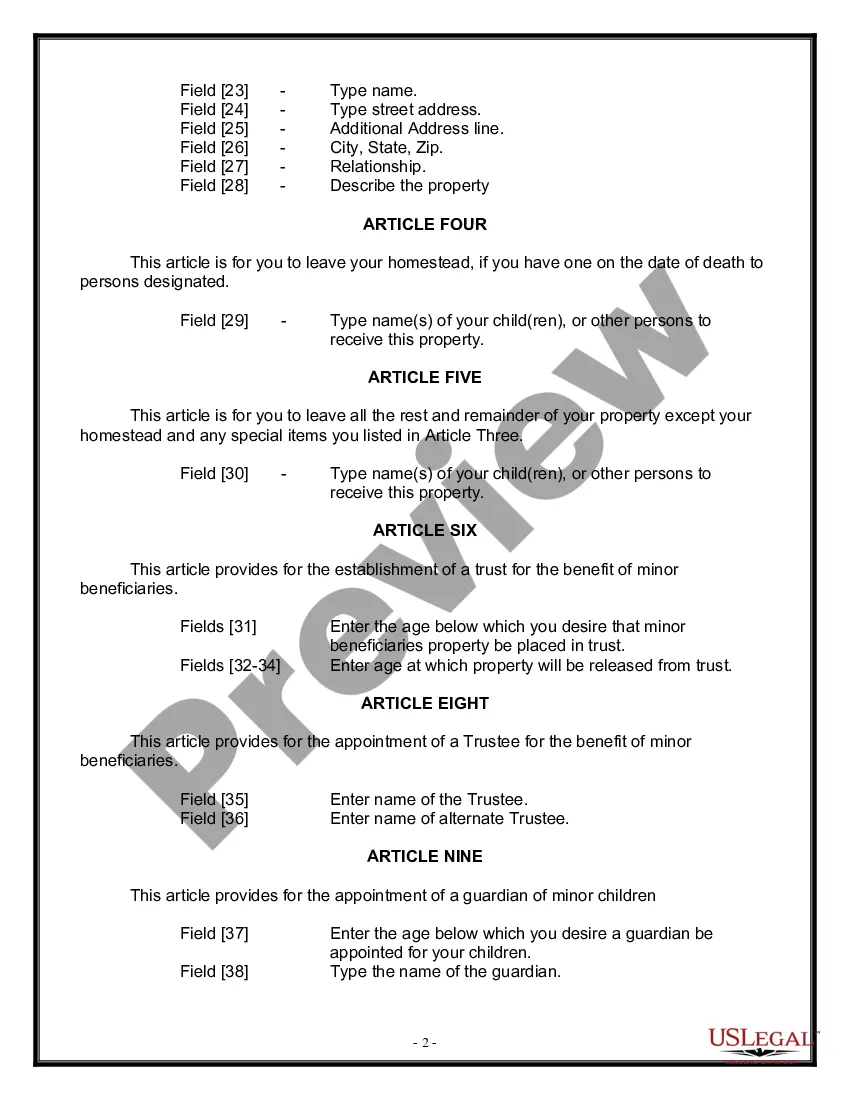
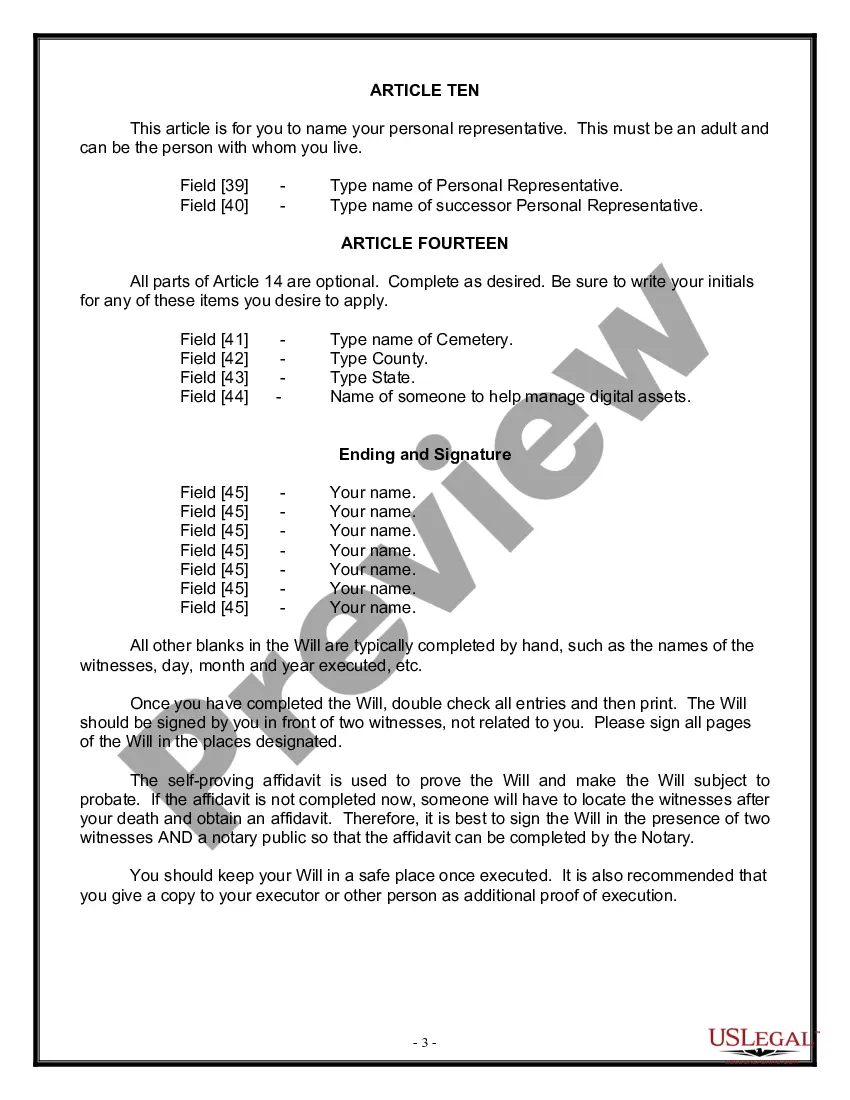
- Identify yourself as the testator, including your full name and address.
- List your marital status and children's names and dates of birth.
- Designate a personal representative and specify any trustees if applicable.
- Outline specific bequests and any property or assets you intend to distribute.
- Appoint a guardian for your minor children, if necessary.
- Sign the document in the presence of two witnesses who are not beneficiaries.
Does this document require notarization?
This form must be notarized to be legally valid. The notarization process typically requires the presence of a notary public who can confirm your identity and witness the signing of the will. US Legal Forms offers integrated online notarization, making it easy to complete your documents securely and conveniently.
Get your form ready online
Our built-in tools help you complete, sign, share, and store your documents in one place.
Make edits, fill in missing information, and update formatting in US Legal Forms—just like you would in MS Word.
Download a copy, print it, send it by email, or mail it via USPS—whatever works best for your next step.
Sign and collect signatures with our SignNow integration. Send to multiple recipients, set reminders, and more. Go Premium to unlock E-Sign.
If this form requires notarization, complete it online through a secure video call—no need to meet a notary in person or wait for an appointment.
We protect your documents and personal data by following strict security and privacy standards.

Make edits, fill in missing information, and update formatting in US Legal Forms—just like you would in MS Word.

Download a copy, print it, send it by email, or mail it via USPS—whatever works best for your next step.

Sign and collect signatures with our SignNow integration. Send to multiple recipients, set reminders, and more. Go Premium to unlock E-Sign.

If this form requires notarization, complete it online through a secure video call—no need to meet a notary in person or wait for an appointment.

We protect your documents and personal data by following strict security and privacy standards.
Common mistakes to avoid
- Failing to sign the will in the presence of witnesses.
- Not designating a backup personal representative.
- Leaving out details for asset distribution, which may lead to confusion.
- Not appointing a guardian for minor children.
Advantages of online completion
- Convenience: Access and fill out the form at any time.
- Editability: Easily make changes to reflect your current wishes.
- Reliability: Provides templates drafted by licensed attorneys to ensure legal compliance.
Quick recap
- The Last Will and Testament is essential for widows and widowers with minor children to ensure their wishes are legally recognized.
- The form provides structure for asset distribution and appointments of guardians and executors.
- Proper execution, including witness signatures and notarization, is necessary for the will's enforceability.
Looking for another form?

Form popularity
FAQ
Creating a will in Florida without a lawyer involves several key steps to ensure validity. First, you need to determine the format of your Florida Last Will and Testament for Widow or Widower with Minor Children and draft it according to state laws. After writing the will, have it signed in front of two witnesses who are not beneficiaries. For extra assistance, platforms like USLegalForms offer templates and instructions to simplify the process for you.
Yes, you can legally write your own will in Florida, including a Florida Last Will and Testament for Widow or Widower with Minor Children. Florida law allows for handwritten or typed wills, provided they meet certain criteria, such as being signed in the presence of two witnesses. This option gives you the flexibility to customize your wishes without professional assistance. However, ensure you understand the legal requirements to avoid complications.
You do not need a lawyer to create a Florida Last Will and Testament for Widow or Widower with Minor Children. However, having legal guidance can ensure that your will meets all Florida requirements and effectively addresses any unique family situations. If you have complex assets or specific wishes, consulting a lawyer might be beneficial. Consider using platforms like USLegalForms for straightforward guidance tailored to your needs.
After a husband's death, the wife has specific rights under Florida law, which can include the right to inherit a share of the estate and make decisions regarding minor children. If a will exists, the wife should review it to understand her entitlements. Utilizing a Florida Last Will and Testament for Widow or Widower with Minor Children can provide clarity and safeguard her rights during a challenging time.
Yes, if you possess a valid will, you typically need to file it with the court in Florida after the passing of the testator. This filing initiates the probate process, which manages property distribution. A Florida Last Will and Testament for Widow or Widower with Minor Children should be properly filed to ensure your intentions are upheld and the process moves smoothly.
In Florida, a surviving spouse may not receive all the deceased spouse's assets, especially if there are minor children or other heirs. Florida's intestacy laws determine asset distribution in absence of a will. To protect your interests as a widow or widower, consider creating a comprehensive Florida Last Will and Testament for Widow or Widower with Minor Children to clearly express your wishes.
In most cases, a surviving spouse does not automatically inherit everything in Florida, particularly if there are children involved. According to state rules, the distribution depends on whether the deceased had a will and how assets were titled. A well-drafted Florida Last Will and Testament for Widow or Widower with Minor Children can clarify inheritances and ensure that all parties are treated fairly.
In Florida, when a spouse passes away, the surviving widow or widower may inherit a significant portion of the estate, even with a will in place. According to Florida law, the widow or widower has rights to certain assets, which can include both community property and additional allowances. It's important to have a clear Florida Last Will and Testament for Widow or Widower with Minor Children to ensure that these rights are explicitly stated.
In Florida, a last will and testament does not necessarily need to be notarized to be valid. However, notarizing your Florida Last Will and Testament for Widow or Widower with Minor Children can provide significant benefits, such as simplifying the probate process. This notarization proves the authenticity of your signature, which may prevent potential challenges to the will later on. To ensure your will is executed correctly, consider using platforms like US Legal Forms, which can guide you in creating a will that meets all legal requirements.
When a parent dies in Florida, children are entitled to a portion of the estate based on whether there is a will. A Florida Last Will and Testament for Widow or Widower with Minor Children specifies how assets are divided, ensuring that all children receive their entitled shares. If no will exists, Florida’s intestacy laws dictate the distribution, often providing equal shares to all surviving children.