Letter regarding Sale of Assets
Overview of this form
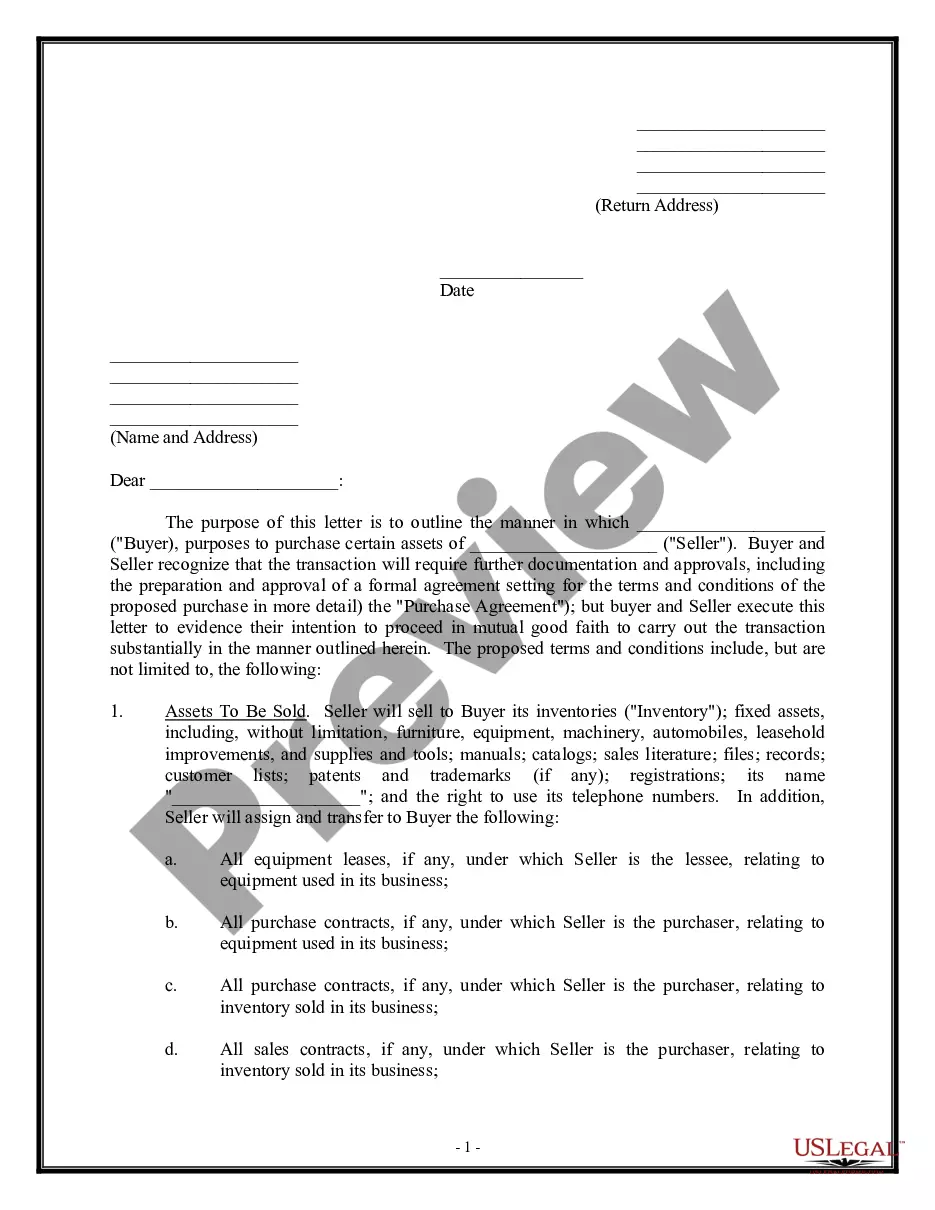
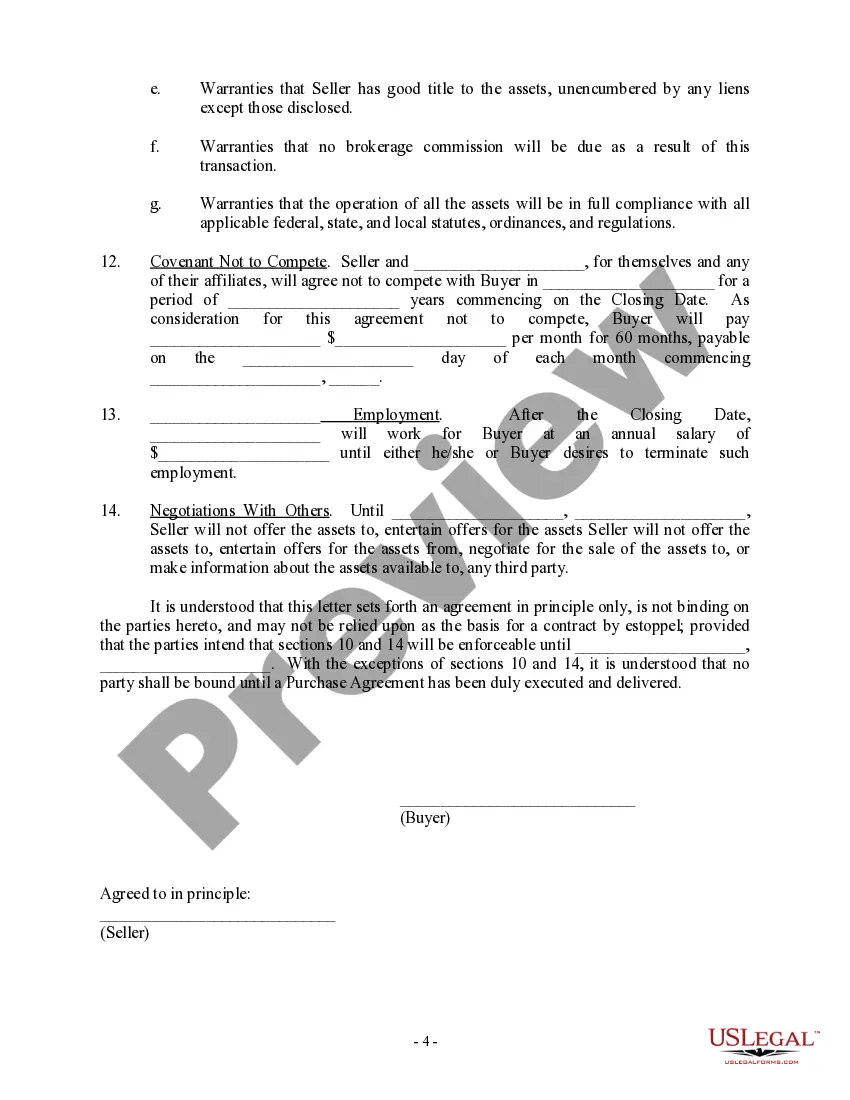
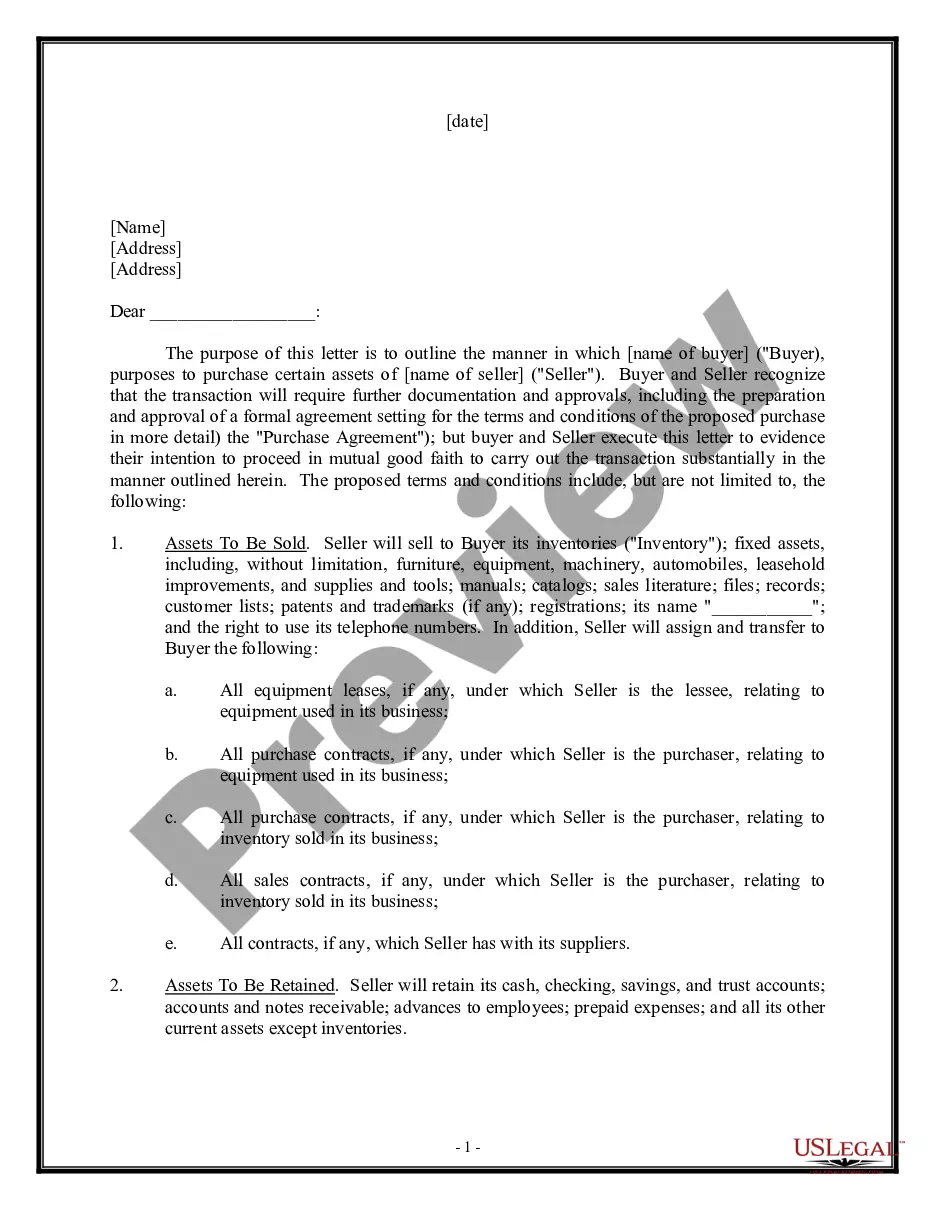
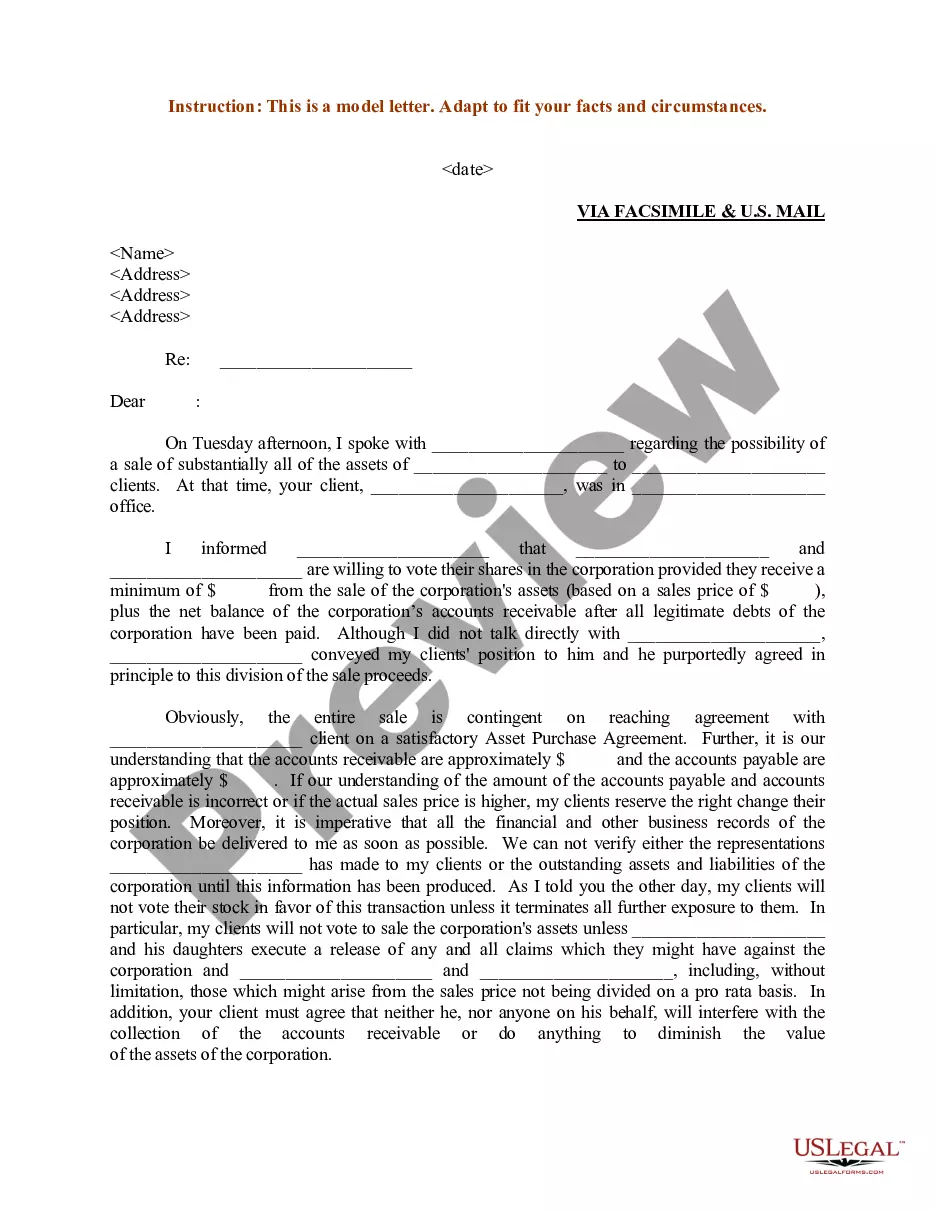
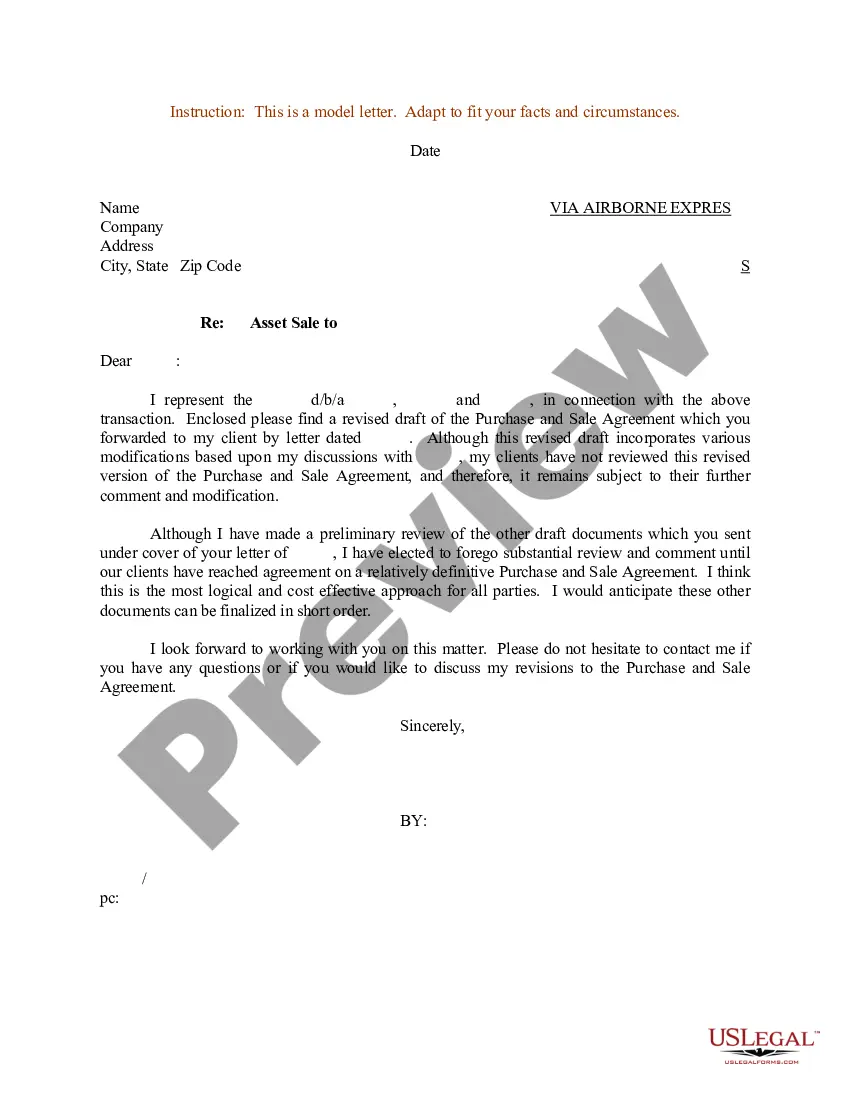
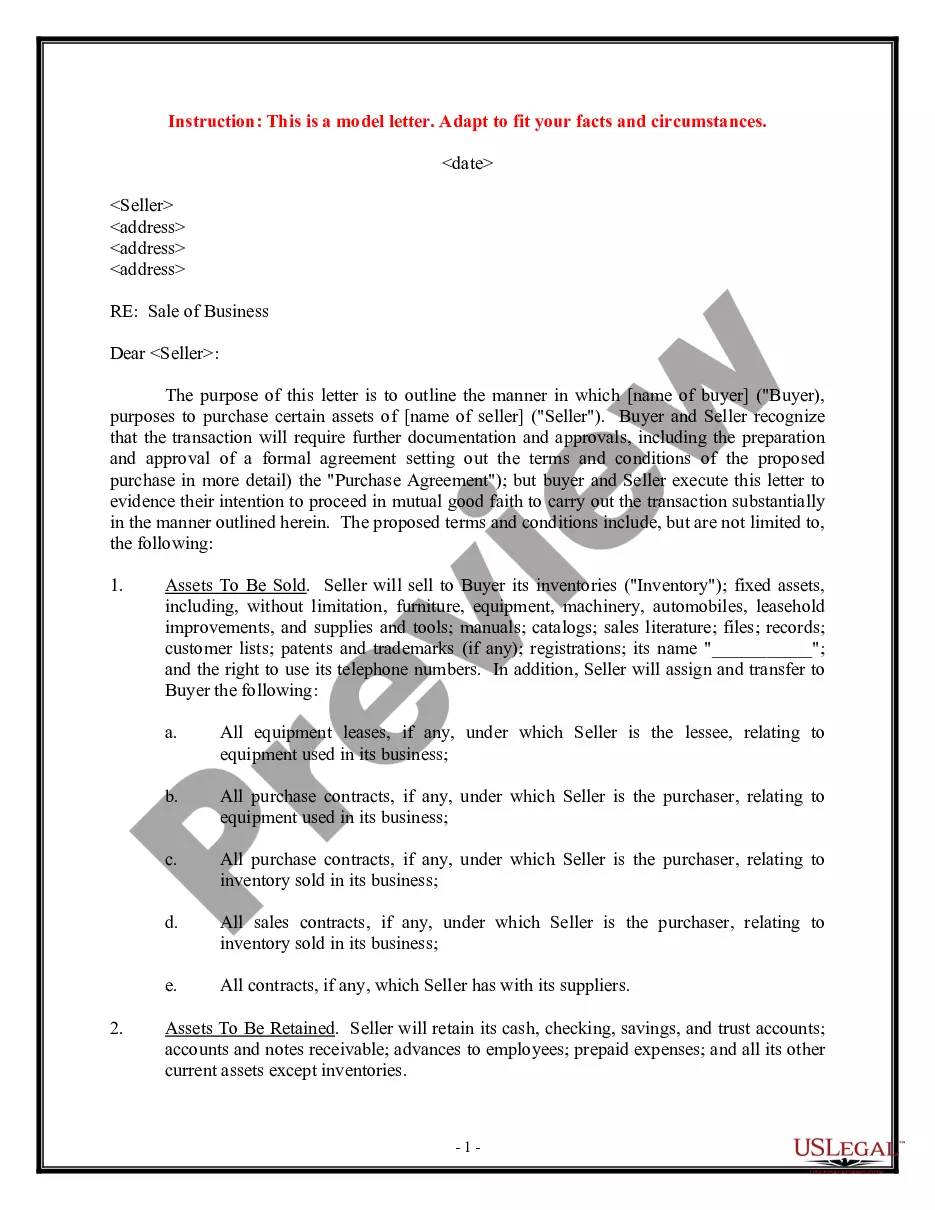
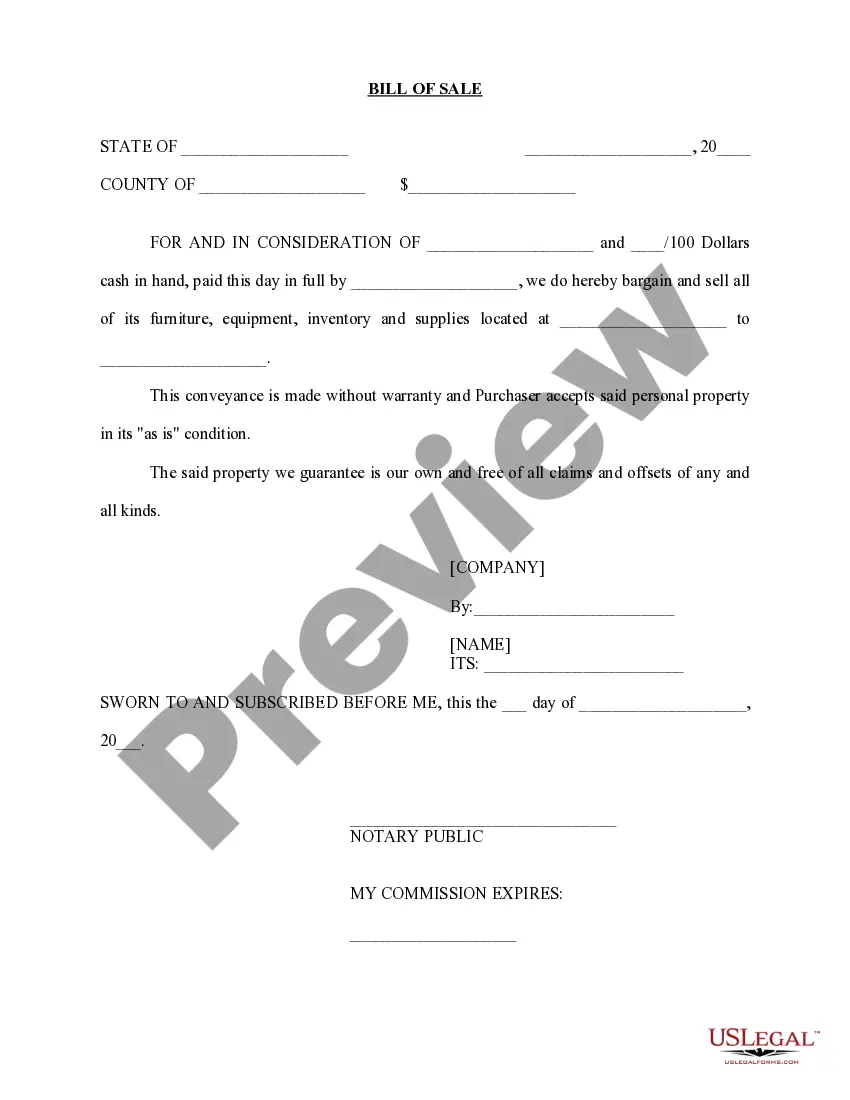
The Letter Regarding Sale of Assets is a formal document used to outline the intention of a buyer to purchase specific assets from a seller. This letter serves as a preliminary agreement that summarizes the transaction details before a formal purchase agreement is drafted. It helps both parties understand the terms of the sale and sets the stage for further negotiations and documentation, differentiating it from other agreements focused solely on sales contracts or lease agreements.
Key parts of this document
- Return address and date for correspondence
- Identification of the buyer and seller
- Details on the specific assets to be sold
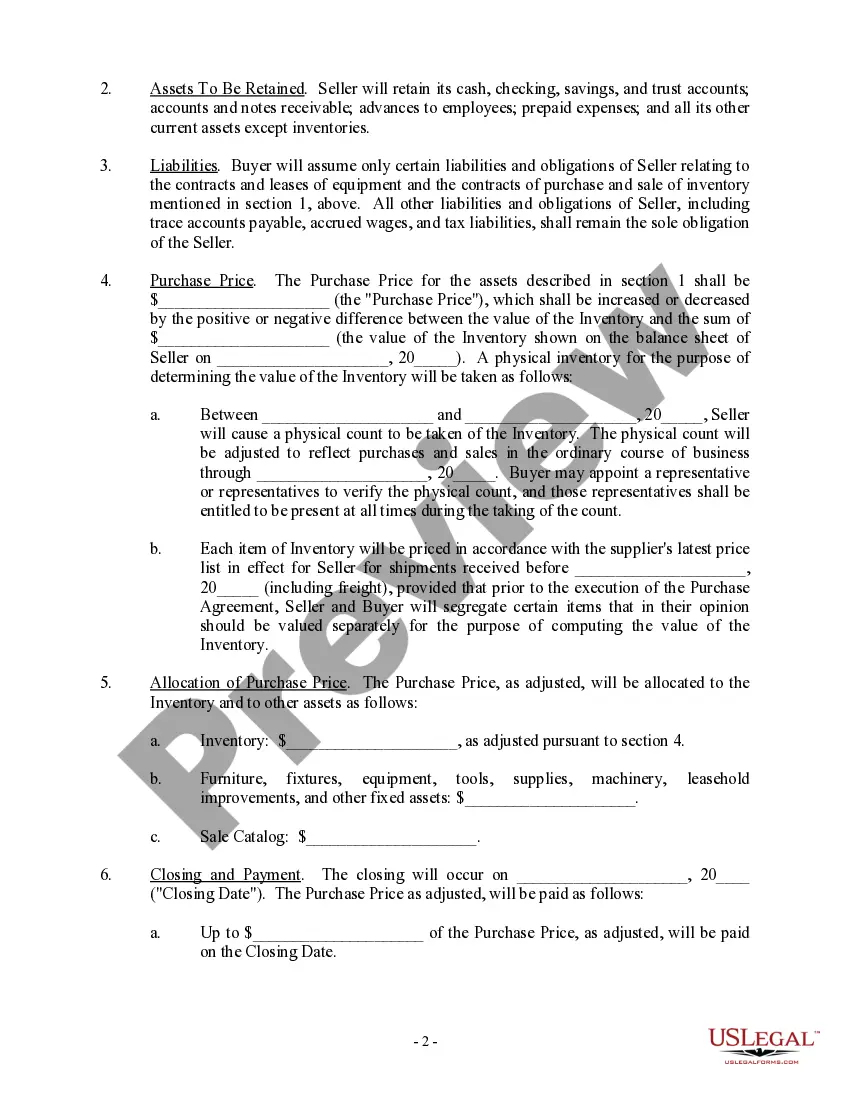
- Terms regarding retained assets by the seller
- Assumption of liabilities related to the transaction
- The agreed purchase price and its adjustment based on inventory value
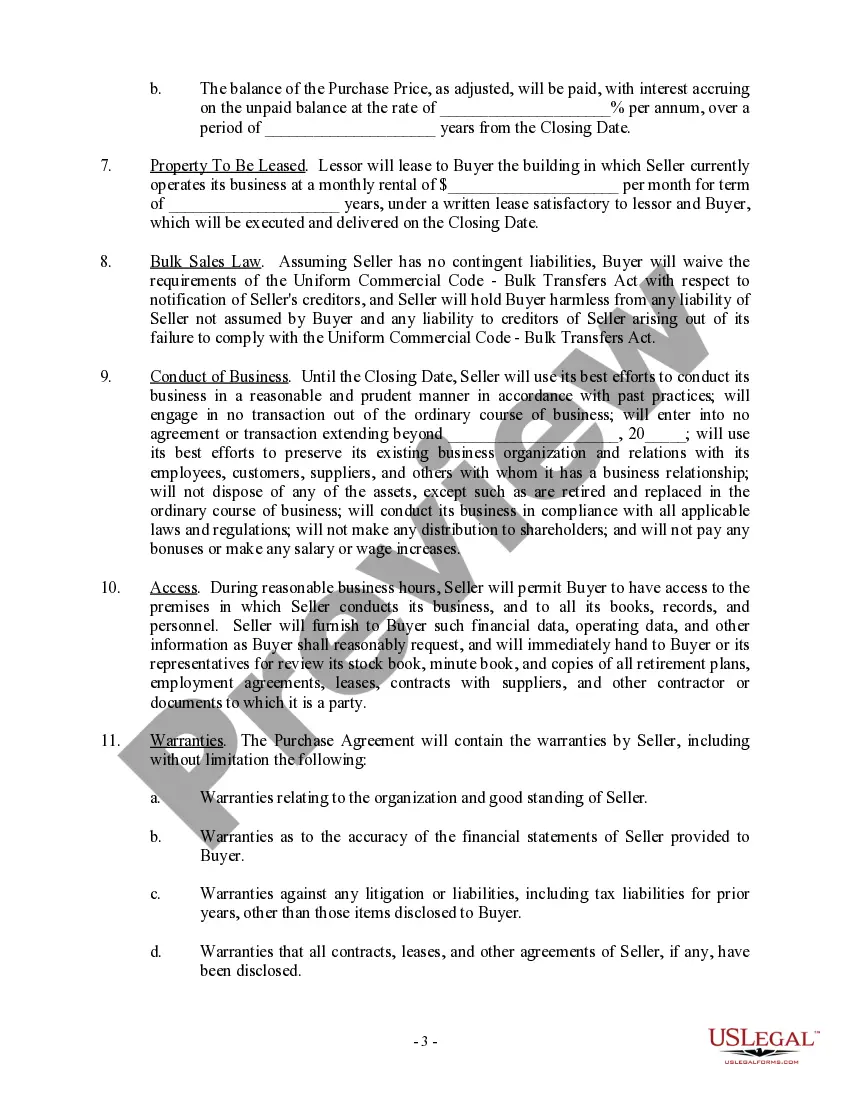
- Closing date and payment terms
- Covenants regarding competition post-sale
- Access rights to business records until closing date
- Warranties provided by the seller regarding the assets
When to use this document
This form is essential for businesses or individuals engaged in the sale or transfer of assets from one party to another. It is particularly useful in asset purchase transactions where the buyer and seller wish to outline their intentions clearly before creating a more detailed contract. This letter can serve in various situations, including mergers, business consolidations, or sales of equipment or inventory between companies.
Who needs this form
- Business owners looking to sell specific assets of their business
- Buyers interested in acquiring assets as part of a purchase transaction
- Legal professionals drafting or reviewing business sale documents
- Parties engaged in negotiations for asset sales
Instructions for completing this form
- Identify the parties involved by clearly stating the names and addresses of the buyer and the seller.
- List the specific assets to be sold, including any inventories or equipment.
- Specify any assets that will be retained by the seller after the sale.
- Determine and write down the purchase price and conditions for any adjustments based on asset evaluations.
- Enter the closing date and any payment terms that should be followed.
- Ensure all parties sign the document to signify agreement to the outlined terms.
Notarization requirements for this form
Notarization is not commonly needed for this form. However, certain documents or local rules may make it necessary. Our notarization service, powered by Notarize, allows you to finalize it securely online anytime, day or night.
Get your form ready online
Our built-in tools help you complete, sign, share, and store your documents in one place.
Make edits, fill in missing information, and update formatting in US Legal Forms—just like you would in MS Word.
Download a copy, print it, send it by email, or mail it via USPS—whatever works best for your next step.
Sign and collect signatures with our SignNow integration. Send to multiple recipients, set reminders, and more. Go Premium to unlock E-Sign.
If this form requires notarization, complete it online through a secure video call—no need to meet a notary in person or wait for an appointment.
We protect your documents and personal data by following strict security and privacy standards.

Make edits, fill in missing information, and update formatting in US Legal Forms—just like you would in MS Word.

Download a copy, print it, send it by email, or mail it via USPS—whatever works best for your next step.

Sign and collect signatures with our SignNow integration. Send to multiple recipients, set reminders, and more. Go Premium to unlock E-Sign.

If this form requires notarization, complete it online through a secure video call—no need to meet a notary in person or wait for an appointment.

We protect your documents and personal data by following strict security and privacy standards.
Typical mistakes to avoid
- Failing to clearly identify all assets involved in the transaction.
- Omitting critical terms related to the purchase price adjustments.
- Not specifying retained assets leading to disputes later on.
- Ignoring local laws that may impact the sale of assets.
Advantages of online completion
- Convenience of immediate access and download from any location.
- Editability allows users to customize the form to meet specific needs.
- Reliability of using a template drafted by licensed attorneys.
- Time-saving through a streamlined process without needing a formal office visit.
Looking for another form?
Form popularity
FAQ
Asset sales In an asset sale, the seller retains possession of the legal entity and the buyer purchases individual assets of the company, such as equipment, fixtures, leaseholds, licenses, goodwill, trade secrets, trade names, telephone numbers, and inventory.
A letter of intent to purchase business assets refers to a document that sets forth the terms that a buyer and seller have agreed on in relation to a sale of business assets.
Asset Sale. An asset sale involves the purchase of individual assets and liabilities. Asset sales, like most transactions, are generally cash-free, debt-free transactions. The seller retains its cash and long-term debt obligations and stays in control of the legal entity.
Sale Agreement Letter Writing Tips The letter should be made taking into consideration the interest of both parties. There should not be any space for ambiguity, and the terms and conditions should be clear to both parties. The language of the letter being drafted should be in simple language.
The money is not a company's assets in most cases, and the seller is allowed to keep the money in the bank. The only time the money would be considered an asset is if the owner put money in a particular bank account to sell the business. Accounts receivable are also not generally considered assets of the business.
Asset Letter means letter(s) / disbursement requests to be issued from time to time by the Borrower to ICICI Bank prior to seeking disbursement(s) / drawals under the Facility and providing details of the Asset(s) offered as security / secured as also amount of drawals under the Facility required.
Basis is generally the amount of your capital investment in property for tax purposes. Use your basis to figure depreciation, amortization, depletion, casualty losses, and any gain or loss on the sale, exchange, or other disposition of the property. In most situations, the basis of an asset is its cost to you.
In an asset sale, a firm sells some or all of its actual assets, either tangible or intangible. The seller retains legal ownership of the company that has sold the assets but has no further recourse to the sold assets. The buyer assumes no liabilities in an asset sale.